

Key Takeaways
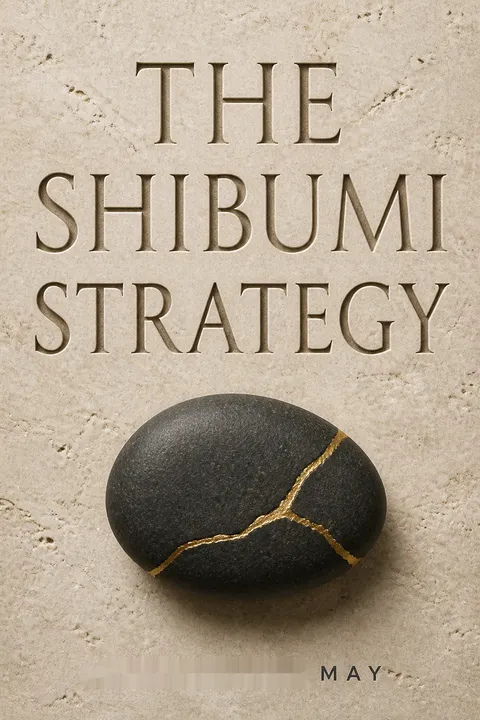
Aim for shibumi: make the needed impact with less force and clutter
Effect without excess. Shibumi is a Japanese aesthetic idea the book applies to work and life: elegant simplicity, understated excellence, and effectiveness that appears almost effortless. It is not minimalism for its own sake. It is the fitting solution that achieves a strong effect without unnecessary motion or decoration. Mariko demonstrates the idea through aikido: instead of meeting an attacker’s force head-on, she redirects it, using a small movement to change the encounter.
Practice beneath ease. Andy initially thinks the idea is the opposite of his frantic efforts to sell a car. The story suggests that ease is not laziness or a shortcut. It can be the visible result of preparation, attention, and finding a better fit between a person’s strengths and the problem at hand.
What's striking is the book's distinction between effort and strain. A polished result can look simple precisely because the difficult thinking has already happened beneath the surface. This connects shibumi to good design: a product or process feels intuitive when needless decisions have been removed. The caution is that ease can be mistaken for a lack of labor. Andy's eventual effectiveness depends on repeated observation, practice, and adjustment, not a mystical talent for effortless success.
Treat a crisis as both danger and opportunity, then commit to one next move
Choose before certainty. When Mega Box closes its Twin Falls call center, Andy loses his job without warning. He fears that staying in town may leave his family with few options, but decides to remain and ask the local car dealership for work. The job is commission-only, uncertain, and far from his previous career. He commits anyway, turning panic into a concrete next step.
Notice the second face. Mariko teaches Andy to view crisis as holding danger and opportunity at once. A Daruma doll, a traditional symbol of persistence and recovery in the story, gives the idea a physical form: Andy paints one eye when he begins his new undertaking and leaves the other blank until he reaches his goal. The choice does not guarantee success. It gives him a direction to test.
The useful move here is not forced optimism. It is the disciplined refusal to let the most visible risk become the only imaginable future. In decision-making, a small action can generate information that abstract worry cannot provide, as Andy's meeting with the dealership does. The story also preserves an important limit: reframing cannot erase lost income, local job scarcity, or family obligations. Commitment creates movement, but it does not make uncertainty harmless.
Observe the real work before choosing a strategy
See before solving. Genchi genbutsu means go to the place and see for yourself. Axel teaches Andy that observation should precede planning, using the example of a manufacturing instructor who asked workers to watch an operation closely and keep asking why. Andy follows that principle at the dealership: he studies how vehicles are detailed, how customers are served, how financing works, and how salespeople handle walk-in shoppers.
Fit the plan to reality. What Andy sees is a reactive sales system in which consultants wait for customers and compete for each visit. He then builds a different plan around his strengths: relationships, phone experience, and outside sales. He proposes calling likely buyers, using dealership customer records, and cultivating referrals instead of depending mainly on showroom traffic.
This is a practical case for epistemic humility: a strategy built from a distance can solve the wrong problem elegantly. Direct observation brings tacit details into view, including customer behavior and the friction hidden inside routine work. Still, looking is not automatically understanding. An observer can mistake a few encounters for a stable pattern, or see only what existing assumptions make visible. Andy's approach is strongest when observation continues after the plan begins.
Turn improvement into a repeatable practice, not a burst of ambition
Make the next step learnable. Kaizen means continuous improvement through small, steady changes. A kata is a standard sequence of actions practiced until it becomes reliable enough to adapt. At The Dojo, children learn progressively longer movement patterns, from 27 moves to 54 and then 108, mastering one before advancing. The point is not to worship a fixed routine, but to build a dependable base for improvisation.
Test and adjust. The book's practical cycle is IDEA: Investigate the situation, Design a possible improvement, Execute a small test, and Adjust based on what happened. Andy's product study and sales presentation are preparation, but his real routine develops through actual customer encounters. A standard gives him somewhere to begin; experience shows where it needs to change.
The strength of this model is that it makes improvement less dependent on inspiration. Repetition lowers the mental load of basic actions, leaving more attention available for a changing situation. The crucial distinction is between a standard as a starting point and a standard as a commandment. In stable work, consistency can prevent avoidable errors; in unfamiliar work, rigid adherence can block useful adaptation. The cycle works only if the learner is allowed to revise the routine.
Use every outcome, including success, as evidence for your next adjustment
Reflect without blame. Hansei means reflection or introspection. Axel introduces Andy to an after-action review, a simple way to compare intention with reality: What was supposed to happen? What actually happened? Why was there a difference? The review is meant to identify learning, not assign fault. It applies after a failed attempt, but also after a strong result, because both can reveal useful gaps between expectation and outcome.
Record the evidence. Andy reviews each customer interaction and notices that he improves even before he makes a sale. Axel recommends a performance journal that tracks actions, expected results, and actual results. Over time, repeated observations can show which situations bring out a person's strengths and which habits are not working. Reflection turns a discouraging string of attempts into information for a revised plan.
Hansei offers a middle path between self-excuse and self-criticism. Separating what happened from why it happened makes feedback more actionable, while reviewing successes can expose the conditions that produced them. This resembles learning loops in organizations: data matters only when people can discuss it honestly and alter their practice. The book's safeguards against blame are therefore central, not decorative. Without trust, a review can become performance surveillance and teach people to conceal the very facts needed for improvement.
Make room for insight by easing pressure and questioning convention
Create useful space. Andy keeps pushing without making a sale, until Grady sends him home for a break. The book argues that struggle can prepare the mind, while stepping away allows new connections to form. Andy's country drive does not begin as a search for a sales tactic. It gives him distance from the dealership and its familiar assumptions. In the story, rest and quiet are not rewards for finishing the work; they are part of how new thinking becomes possible.
Design with restraint. Mariko's garden illustrates the shibumi seven: kanso is simplicity, koko is austerity, seijaku is quiet, fukinsei is asymmetry, datsuzoku is release from convention, shizen is naturalness, and yugen is subtle suggestion. Together, these principles favor removing excess, leaving room for interpretation, and making purposeful breaks in a pattern.
The section brings two kinds of space together: mental downtime and design restraint. Both can loosen a person's attachment to the first available answer. This is a useful counterweight to workplaces that treat visible busyness as proof of progress. But rest is not a guaranteed creativity machine, and time away is not equally available to everyone. The sounder lesson is modest: when effort stops producing insight, changing the conditions can be more productive than increasing the pressure.
Solve the customer's overlooked problem, not the product you were hired to sell
Find the unmet need. On his drive, Andy stops to help Zeke, a farmer whose old truck has broken down. Their conversation reveals that nearby farmers keep vehicles for years, dislike dealership visits, and prefer dealing with someone they know. Andy sees a market his dealership has overlooked: farmers who may want reliable vehicles but do not want the usual showroom experience.
Change the setting. Andy offers to bring a used truck to Zeke's farm so he can inspect and drive it there. At a gathering with Zeke's neighbors, Andy answers questions, demonstrates the vehicle, and listens to what people need. He sells Zeke a truck, receives five more orders, and sets four follow-up appointments. The breakthrough comes from changing the way the service reaches people, not from changing the basic product.
This is a strong example of service design: the value lies not only in what is offered, but in how well the offer fits the customer's circumstances. Andy discovers that convenience and trust matter more than a polished showroom pitch. The approach also depends on listening rather than treating the community as a sales target. That distinction matters. A relationship-based strategy can create genuine value, but it becomes manipulative if helpfulness is merely a disguise for pressure.
Build a livelihood around the help people actually need
Connect strength to service. After the farm gathering, Andy recognizes that his advantage is not simply selling cars. He enjoys building relationships and can use that ability to make other people's decisions easier. Lizzy helps him describe his purpose as using his strengths to help others succeed. That shift changes how he approaches work: he becomes a source of useful information and connections, not just a person trying to close a transaction.
Let value travel. Andy works from home, earns trust in the farming community, and becomes a resource people consult even when he does not have the answer himself. He holds workshops for new car owners and introduces customers to other local professionals. His business grows through referrals, while he spends more time with his family. The story's transformation is therefore personal and organizational: Andy changes his role, and his new approach influences the dealership's culture.
The ending makes meaning concrete by linking personal strengths to benefits other people can recognize. Andy's credibility grows because he offers guidance beyond the immediate transaction, creating value that can circulate through a community. This is a richer model of work than measuring each interaction by its immediate sale. It is not, however, a universal escape from economic pressure. The story's success relies on trust, local networks, and a manager willing to give Andy latitude, conditions that matter as much as individual purpose.
Analysis
The book is a business fable, but its real subject is how people learn to move through a destabilizing change without confusing activity with progress. Andy's layoff initiates a sequence: commitment gives him a direction, observation grounds his understanding, practice makes action possible, reflection improves it, and rest loosens assumptions. The farm encounter then converts these habits into a new business model. The narrative's central insight is that a breakthrough is not a bolt from nowhere. It is a new connection made possible by preparation, contact with reality, and enough openness to notice an opportunity outside the original plan.
The Japanese concepts provide a useful vocabulary for combining operational discipline with aesthetic restraint. Kaizen and kata emphasize repetition; genchi genbutsu insists on firsthand knowledge; hansei turns outcomes into learning; shibumi points toward effectiveness without excess. Their value lies in how they correct one another. Standards without reflection become routine, while reflection without action becomes rumination. Minimalism without observation can simply remove the wrong things.
The fable's neat resolution is also its limit. Andy's success follows from a plausible fit between his relational strengths and an ignored market, but the story compresses the time, resources, and uncertainty involved in rebuilding a livelihood. A layoff does not reliably conceal a better career, and some crises leave people little room to experiment. The book's neuroscience discussions also make complex processes sound more controllable than they are: breaks and meditation may support attention, but they cannot guarantee a sudden insight. The most defensible reading is not that adversity is secretly beneficial. It is that, when circumstances permit, people can improve their odds of useful change by observing carefully, testing small steps, learning without blame, and creating room for alternatives.
Review Summary
The Shibumi Strategy received positive reviews for its concise exploration of Japanese concepts like kaizen and shibumi. Readers appreciated its simple fable format, finding it inspirational and instructive for personal development. Many found value in its lessons on simplicity, continuous improvement, and self-reflection. The book's quick-read nature and practical application of Eastern philosophies to business and life were highly praised. Some readers noted its effectiveness in promoting work-life balance and productivity, while others enjoyed its unique approach to self-help concepts.
People Also Read







Glossary
Shibumi
Effortless, understated effectivenessA Japanese aesthetic term the book applies to personal and professional excellence. It describes elegant simplicity, understated quality, and strong effect achieved without unnecessary means. Shibumi is not merely doing less. It is a quality that may emerge when skill, judgment, and restraint make a solution feel natural and fitting.
Kiki
Crisis seen from two sidesIn the fable, Mariko uses the Japanese word for crisis to teach Andy to recognize both danger and opportunity in a difficult event. The story uses this interpretation as a prompt for flexible attention, not as a promise that every crisis contains an easy or equal opportunity.
Kaizen
Continuous improvementA Japanese term meaning continuous improvement, used in the book as a philosophy, principle, and practice. It treats perfection as an ongoing aim rather than a final state, and favors small, steady steps. Its practical cycle is to establish a standard, follow it, and search for a better way.
Kata
A practiced standard routineA basic form or sequence of actions practiced until it becomes familiar and reliable. In martial arts, a kata trains foundational movements; in the book's broader use, it offers a standard from which a person can respond, improve, and eventually adapt. A kata is a starting structure, not a substitute for judgment.
Genchi genbutsu
Go and see directlyA Japanese practice meaning go to the place and see for yourself. It calls for firsthand observation before drawing conclusions or making a plan. The book illustrates it through close attention to how work actually happens, followed by questions that uncover facts, problems, and opportunities.
Hoshin
Strategic direction and alignmentA Japanese term for an aim, direction, or plan. The book uses hoshin planning to connect an overarching direction with supporting objectives and actions, so that effort points toward a shared goal. It emphasizes that plans should reflect the actual situation and that people affected by the direction should understand it.
Hansei
Reflection for learningA Japanese term for reflection or introspection, used as a deliberate practice of examining actions and results. The book adapts the after-action review into three questions: what was expected, what happened, and why there was a difference. The purpose is learning and adjustment, not blame, and the practice applies to successes as well as failures.
The shibumi seven
Seven design principlesA group of aesthetic principles Mariko uses to guide design and conduct: kanso, simplicity; koko, austerity; seijaku, quietude; fukinsei, asymmetry; datsuzoku, a break from convention; shizen, naturalness without pretense; and yugen, subtlety and suggestion. The principles are presented as interconnected guides, not a checklist of separate techniques.
Kyosei
Harmony between opposing forcesA term the book uses for balance between a person's inner identity and outward presentation. Lizzy describes strain as arising when those sides do not match, and kyosei as the harmony that comes when they support each other. It is presented as a direction of growth rather than a state that can be permanently perfected.
IDEA
An improvement cycleThe book's four-part cycle for creative problem solving: Investigate the situation, Design a response, Execute a test, and Adjust from the results. It combines direct observation, solution design, a scoped experiment, and reflection. The cycle is meant to turn a proposed improvement into something testable and revisable.
Hirameki
Sudden insightA Japanese term Axel uses for the moment of sudden insight Andy experiences after meeting Zeke. In the story, the insight is not disconnected from earlier work: Andy has learned the dealership, struggled with its approach, and built relationships before seeing a new way to serve the farming community.
Niwa
A Japanese friendship gardenA Japanese term for a garden, presented in the story through Mariko's small arrangement of rocks, stones, gravel, and open space. The garden serves as a setting for discussing simplicity, quiet, asymmetry, and suggestion. Its apparent spareness is intentional, inviting the viewer to notice relationships rather than decorative abundance.
Daruma doll
A symbol of persistenceA rounded Japanese good-luck figure associated in the book with resilience and recovery from misfortune. The story's doll has blank eyes. A person paints one eye when beginning a goal and the other when the goal is achieved, making it a visible marker of commitment and completion.
FAQ
1. What is "The Shibumi Strategy" by Matthew E. May about?
- Fable of Personal Change: The book is a business fable that follows Andy Harmon, who loses his job and must reinvent himself, illustrating the process of creating meaningful change in life and work.
- Eastern and Western Wisdom: It blends ancient Eastern philosophy, especially Zen and Japanese concepts, with modern Western neuroscience and business practices.
- Breakthrough Process: The story is structured around the journey from crisis to breakthrough, highlighting the steps of commitment, preparation, struggle, breakthrough, and transformation.
- Practical Application: Alongside the narrative, the book provides practical tools and exercises for readers to apply the principles of shibumi to their own lives.
2. Why should I read "The Shibumi Strategy" by Matthew E. May?
- Guidance Through Change: The book offers a powerful framework for navigating personal and professional transitions, especially during times of unexpected challenge or crisis.
- Unique Blend of Ideas: It introduces readers to Japanese concepts like shibumi, kaizen, hoshin, and hansei, making them accessible and actionable for Western audiences.
- Inspiring and Relatable Story: Through Andy’s journey, readers see themselves reflected in the struggles and triumphs of meaningful change.
- Actionable Practices: The book doesn’t just inspire; it equips readers with concrete routines and reflection questions to foster continuous improvement and personal growth.
3. What is the meaning of "shibumi" in "The Shibumi Strategy" by Matthew E. May?
- Elegant Simplicity: Shibumi is a Japanese word denoting understated excellence, effortless effectiveness, and elegant simplicity.
- Untranslatable Essence: The term has no direct English equivalent and is used to describe moments or things that are both refined and unpretentious, beautiful in their imperfection.
- Zen Aesthetic Roots: Shibumi is rooted in Zen aesthetics, emphasizing qualities like subtlety, naturalness, and the power of suggestion.
- Personal Excellence: In the context of the book, shibumi represents the height of personal mastery—achieving maximum effect with minimal effort.
4. What are the key takeaways from "The Shibumi Strategy" by Matthew E. May?
- Breakthrough Requires Struggle: Meaningful change often begins with an involuntary challenge or crisis, which can become a catalyst for transformation.
- Small Steps Matter: The philosophy of kaizen—continuous, incremental improvement—is more sustainable and less intimidating than seeking dramatic leaps.
- Reflection is Essential: Regular introspection (hansei) and after-action reviews help align actions with goals and foster ongoing learning.
- Harmony and Authenticity: True success comes from aligning your internal values with your external actions, achieving a state of kyosei (balance) and shibumi.
5. How does the fable in "The Shibumi Strategy" illustrate the process of meaningful change?
- Andy’s Journey: The protagonist, Andy Harmon, faces sudden unemployment and must navigate uncertainty, self-doubt, and resistance to find a new path.
- Commitment and Preparation: Andy commits to staying in his community and prepares by learning new skills and adopting new mindsets.
- Struggle and Breakthrough: He experiences setbacks and frustration, but through reflection and a change in approach, he discovers an innovative way to serve his community.
- Transformation: Andy’s breakthrough leads to personal and professional transformation, benefiting not just himself but those around him.
6. What are the main Japanese concepts introduced in "The Shibumi Strategy" by Matthew E. May?
- Shibumi: Effortless effectiveness and understated excellence.
- Kaizen: Continuous improvement through small, steady steps.
- Hoshin: Goal alignment and strategic direction-setting.
- Hansei: Reflection and introspection for learning and growth.
- Genchi Genbutsu: "Go look, go see"—the practice of direct observation to understand situations deeply.
- Kata: Standardized routines or forms that become second nature through practice.
7. How does "kaizen" (continuous improvement) work in "The Shibumi Strategy" by Matthew E. May?
- Philosophy and Practice: Kaizen is presented as both a mindset and a process—treating perfection as an ongoing pursuit rather than a fixed goal.
- Small Steps, Big Impact: The book emphasizes making small, manageable changes that accumulate over time to produce significant results.
- Three-Step Process: Kaizen involves creating a standard (kata), following it, and then searching for a better way.
- Overcoming Resistance: By focusing on incremental change, kaizen helps bypass the brain’s fear response to big, sudden shifts.
8. What is the role of "hansei" (reflection) in "The Shibumi Strategy" by Matthew E. May?
- Regular Introspection: Hansei is the discipline of reflecting on actions and outcomes, regardless of success or failure.
- Learning from Experience: The process involves asking what was supposed to happen, what actually happened, and why any gaps exist.
- Continuous Adjustment: Insights from hansei feed back into goal-setting (hoshin) and improvement (kaizen), creating a loop of learning and adaptation.
- Practical Tools: The book recommends keeping a performance journal to track decisions, expectations, and results over time.
9. How does "The Shibumi Strategy" by Matthew E. May connect Eastern philosophy with Western neuroscience and business?
- Zen Principles in Action: The book translates Zen concepts like shibumi, kaizen, and hansei into practical routines for personal and organizational change.
- Neuroscience of Change: It explains how the brain’s amygdala reacts to change, and why small steps (kaizen) are more effective for overcoming resistance.
- Business Applications: Concepts like hoshin (goal alignment) and genchi genbutsu (direct observation) are shown to improve business processes and leadership.
- Scientific Support: The narrative is supported by research on creativity, insight, and the benefits of practices like meditation and reflection.
10. What practical methods and exercises does "The Shibumi Strategy" by Matthew E. May recommend for creating meaningful change?
- Genchi Genbutsu Kata: Practice direct observation by describing, inquiring, and concluding based on facts before acting.
- Hoshin Planning: Use a simple framework to align goals, strategies, and actions, involving all stakeholders.
- Kaizen Cycle (IDEA): Investigate, Design, Execute, and Adjust—an iterative loop for continuous improvement.
- Hansei Journaling: Set aside time daily to reflect on actions, outcomes, and lessons, using a journal to spot trends and generate new ideas.
11. What are the "Shibumi Seven" aesthetic principles in "The Shibumi Strategy" by Matthew E. May, and how do they apply to life and work?
- Kanso: Simplicity—removing the non-essential for clarity and focus.
- Koko: Austerity—embracing minimalism and restraint.
- Seijaku: Quietude—finding stillness and calm as a source of creative energy.
- Fukinsei: Asymmetry—valuing imperfection and the beauty of imbalance.
- Datsuzoku: Break from convention—encouraging creativity through surprise and nonconformity.
- Shizen: Naturalness—authenticity and being without pretense.
- Yugen: Subtlety—leaving things open to interpretation, engaging others as co-creators.
- Application: These principles guide not just art and design, but also decision-making, problem-solving, and personal growth.
12. What are the best quotes from "The Shibumi Strategy" by Matthew E. May and what do they mean?
- “Shibumi is a Japanese word, the meaning of which is reserved for just these kinds of experiences... Elegant simplicity. Effortless effectiveness. Understated excellence. Beautiful imperfection.”
- This quote encapsulates the core of shibumi, highlighting the paradoxical blend of simplicity and excellence.
- “If you don’t make a total commitment to whatever you’re doing, then you start looking to bail out the first time the boat starts leaking.” – Lou Holtz
- Emphasizes the importance of full commitment in the face of adversity.
- “When you improve a little bit each day, eventually big things occur. Don’t look for big, quick improvement. Instead, seek small improvement one day at a time.” – John Wooden
- Captures the essence of kaizen and the power of incremental progress.
- “To do without doing, act without acting, think without thinking, this is shibumi.”
- Points to the Zen ideal of effortless mastery, where action flows naturally and effectively.
- “Opportunities to find deeper powers within ourselves come when life seems most challenging; we must be willing to get rid of the life we’ve planned, so as to have the life that is waiting for us.” – Joseph Campbell
- Reflects the book’s message that crisis can be a doorway to transformation and deeper fulfillment.
About the Author

Download PDF
Download EPUB
.epub digital book format is ideal for reading ebooks on phones, tablets, and e-readers.








