

Key Takeaways
Start compounding before you feel ready; time turns small advantages into a snowball.
A boy counts forward. At six, Warren Buffett sold chewing gum and soft drinks, keeping careful track of each coin. At eleven, he invested $120, much of it earned through small jobs, in Cities Service Preferred for himself and his sister Doris. He sold when the price recovered from $38.25 to $40, relieved to avoid a loss. The stock later rose to $202. Buffett remembered the cost of selling too soon, but the larger lesson had come from a book he found as a teenager: money that earns returns, then earns returns on those returns, can grow dramatically over time.
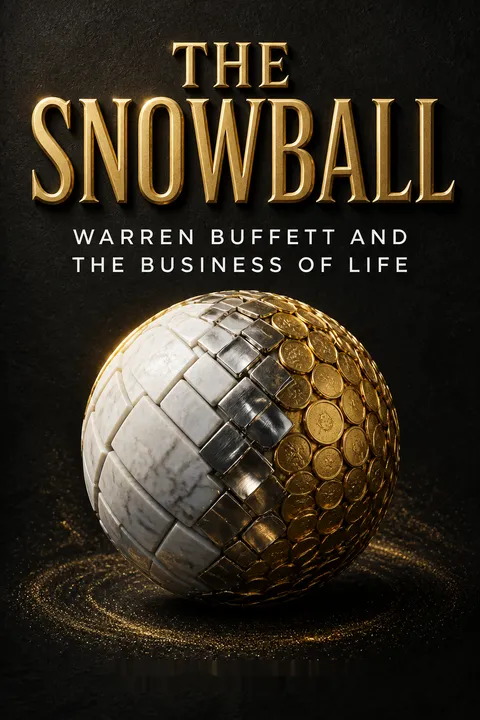
Time was his first partner. Buffett imagined becoming a millionaire by thirty-five and kept reinvesting rather than consuming his early earnings. The snowball is his metaphor for wealth that gathers mass as it rolls, with time and compounding doing much of the work.
The image makes compounding memorable because it joins arithmetic to a child’s physical experience of building a snowball. It also clarifies why starting early matters: time can amplify modest returns. Yet compounding is not magic. It depends on earning returns, avoiding catastrophic losses, and staying invested long enough. Buffett also acknowledged luck in being born in the United States to intelligent, supportive parents. The snowball is therefore both a model of disciplined accumulation and a reminder that starting conditions influence how quickly it can grow.
Buy a business with room for error, not a stock with a persuasive story.
A share means ownership. At Columbia, Buffett studied Benjamin Graham’s approach to valuing companies. A stock was not merely a price moving across a screen; it represented a small claim on a real business. Graham’s margin of safety means buying substantially below a cautious estimate of a company’s worth, leaving protection if the estimate is wrong. His Mr. Market model treats the market as an erratic business partner: its daily offers can be useful, but its moods should not dictate judgment.
Innovation is not enough. In 1999, Buffett reminded a Sun Valley audience that about 2,000 American carmakers had appeared during the auto boom, yet only three survived. He also noted that airline investors, in aggregate, had failed to make money despite aviation’s transformative effect. A technology can change society without rewarding every investor who buys into it.
This distinction between a product’s social importance and an investment’s return is one of the book’s sharpest correctives to boom-time storytelling. It asks investors to examine the economics beneath the excitement. The margin-of-safety idea also resembles engineering tolerances: a bridge is not designed on the assumption that every calculation is exact. The limit is that intrinsic value is an estimate, not a measurable fact. A confident valuation can still be wrong, especially when technology or competition changes the business itself.
Turn curiosity into an information edge, and stay within what you can judge.
Collect before you conclude. As a child, Buffett counted license plates, sorted bottle caps to estimate which soft drinks were popular, and searched for discarded winning tickets at the racetrack. These hobbies trained him to gather details and look for patterns. Horse racing taught him to compare a horse’s past performance with the odds, rather than bet on a name or hunch. He also learned a painful limit: after losing more than $175 by chasing losses, he recognized that emotional attempts to recover money can turn one mistake into a larger one.
Draw a boundary. Buffett’s Circle of Competence is the area of business he believes he understands well enough to evaluate. Outside it, he tries not to confuse familiarity with expertise. Munger’s related technique of inversion asks what could make a decision fail, then works backward to avoid those conditions.
Buffett’s edge begins less with secret information than with the patience to notice neglected information and the discipline to interpret it. That is a transferable form of expertise: collect evidence, compare it with probabilities, and revise beliefs when the evidence disagrees. The Circle of Competence is useful only if its boundary can move. A narrow circle can protect against bluffing, but it can also become an excuse to ignore unfamiliar opportunities. Curiosity expands competence; humility keeps expansion from becoming overconfidence.
Keep an inner standard when market applause starts grading your decisions.
The crowd is a noisy judge. Buffett called an Inner Scorecard the habit of evaluating oneself by personal standards rather than by other people’s approval. Its opposite, an Outer Scorecard, makes reputation and praise the measures of success. The distinction mattered acutely in 1999. At Sun Valley, Buffett warned that technology shares had outrun business results. Berkshire stock fell while the NASDAQ soared, and commentators asked what had gone wrong with him.
He did not switch teams. Buffett had most of his fortune invested in Berkshire and knew the criticism threatened both his status and his wealth. Still, he refused to buy companies whose economics he could not assess simply to regain approval. His position was not that he could never be wrong. It was that popularity could not settle the question of whether an investment made sense.
An internal standard can protect judgment from social contagion, especially when a crowd treats rising prices as proof of sound reasoning. It also supports the independence required for long-term investing. But conviction should not become immunity to criticism. An inner scorecard is valuable when paired with evidence and a willingness to update, not when it turns disagreement into proof of virtue. Buffett’s record helped distinguish disciplined patience from stubbornness, but no single investor’s success makes that distinction easy for everyone else.
Prefer durable businesses and capable managers to a lifetime of bargain hunting.
Cheap can still be a trap. Graham’s cigar butts were companies trading so cheaply that a buyer might recover value from their assets, even if the business itself was poor. Buffett learned this method, but Munger pushed him to look for businesses with lasting advantages. See’s Candies made the contrast vivid: Berkshire and its partners paid $25 million for a company earning about $4 million before tax, valuing its reputation and customer loyalty, not just its physical assets. See’s could also raise prices without immediately losing customers.
A moat earns its keep. Buffett found a different kind of advantage in GEICO, which sold auto insurance directly and targeted customers it considered safer risks. Customers paid premiums before claims came due, giving the insurer money to invest in the meantime. He later bought Nebraska Furniture Mart, impressed by Rose Blumkin’s relentless attention to buying, pricing, and service.
This shift from cheap assets to durable economics shows intellectual adaptation rather than allegiance to a single formula. A strong brand or cost advantage can create value that never appears cleanly on a balance sheet. The manager matters too: Blumkin’s operating intensity was part of the asset Buffett was buying. Still, a respected brand is not automatically a moat, and customer loyalty can fade. The analytical task is to identify why competitors cannot easily copy the advantage, then check whether the company’s returns confirm the story.
Treat capital allocation as the central job of owning a company.
Money needs a destination. Buffett built Berkshire into a holding company that could shift capital among operating businesses, securities, and insurance. Insurance float is money collected as premiums before claims are paid. When underwriting is sound, that timing provides investable funds at low cost. Buffett acquired National Indemnity in 1967, then used its capital and float to support other investments. The model let cash generated in one business be directed toward opportunities elsewhere.
The structure cannot rescue every mistake. Buffett also kept Berkshire’s failing textile mills long after it was clear they had little future. In 1985, the mill equipment sold for only $163,122, and hundreds of workers lost their jobs. His attachment to the business and its people delayed a clean decision. The same discipline that helped him move capital effectively could be weakened by loyalty, regret, or the wish to avoid confrontation.
Capital allocation connects the investor’s choices to the company’s design. A holding company can redirect cash toward its highest-value use instead of forcing every division to reinvest locally. Insurance float can be powerful, but it is not free money: poor underwriting or unexpectedly large claims can turn the apparent advantage into a liability. The textile episode adds an ethical dimension. Rational allocation can still impose real costs on workers, while keeping a weak business alive can prolong decline rather than protect them.
Protect your reputation as carefully as capital; trust can vanish faster than money.
Conduct is part of the balance sheet. Buffett’s friendship with Katharine Graham helped bring him into Salomon Brothers during the 1991 Treasury-bidding scandal. Once he learned that employees had submitted false bids and senior managers had delayed disclosure, he took over as interim chairman, demanded cooperation with investigators, and pushed to remove the executives who had mishandled the crisis. Salomon’s franchise depended on trust; without it, clients and lenders could leave at once.
Accountability required more than a slogan. At Berkshire, Buffett repeatedly stressed that a business should be run in a way its owners could understand and defend. His newspaper, the Omaha Sun, won a Pulitzer for exposing Boys Town’s enormous reserves and weak oversight. The investigation centered on stewardship: those entrusted with money must explain how they use it.
The Salomon episode shows reputation operating as economic infrastructure. In finance, counterparties must believe that promises will be honored; when they stop believing, liquidity can disappear with startling speed. Buffett’s response also demonstrates that an ethical stance can be strategically valuable without being mere public relations. Yet personal credibility cannot substitute for systems that surface misconduct. Salomon’s failures involved incentives, oversight, and delayed disclosure, not only a few bad actors. Integrity becomes durable when institutions make honesty easier to verify.
A remarkable career can still leave the people closest to you feeling unseen.
Success occupied the room. Susie Thompson Buffett supported Warren’s ambitions, raised their three children, and helped him manage the human world he often found difficult. He devoted extraordinary attention to investing and gave less attention to family life. Susie eventually moved to San Francisco, while the two remained married and continued a close relationship. Warren later described the separation as his failure to notice how much she needed a life beyond caring for him.
Grief changed the measure. Susie developed a singing career, built friendships, and gave extensive support to people in need. When she died after oral cancer and a stroke, Buffett could not attend her funeral service and later regretted the distance between them. He had spent decades treating time as an investment resource; her illness made the human cost of that allocation impossible to ignore.
The biography refuses the easy story that achievement simply compensates for sacrifice. Susie’s care enabled Buffett’s focus, but the arrangement was unequal: her labor made his ambitions easier while her own needs stayed largely private. Her independent life was not just a reaction to his success; it was a claim to personhood beyond the role of supporter. The narrative also shows how grief can reveal what routine concealed. Productivity is measurable, but attention is relational, and its absence may only become legible when repair is no longer possible.
Give inherited advantage a purpose while you can still choose how it helps.
Luck carries obligations. Buffett’s Ovarian Lottery is his term for the accident of birth that determines a person’s starting advantages. He believed that wealth created through society’s institutions came with some responsibility to society. He described accumulated wealth as claim checks: purchasing power saved for future use, which could be spent by the owner or passed to others. For years, however, he delayed large-scale giving, arguing that compounding would create more money to distribute later.
He eventually changed the timetable. In 2006, Buffett committed the great majority of his Berkshire shares to philanthropy, with most directed to the Bill and Melinda Gates Foundation and the rest to family foundations. The decision favored an established organization capable of deploying large sums rather than creating a new Buffett institution. It was also an acknowledgment that a fortune can keep growing long after its owner has enough.
The Ovarian Lottery challenges the comforting belief that wealth is purely a personal achievement. Buffett’s own life depended on talent and sustained work, but also on family, geography, institutions, and historical timing. Giving to an organization with proven capacity can make philanthropic capital more useful than building a namesake empire. The trade-off is control: delegation means trusting another institution’s priorities and methods. His example raises a difficult question for any wealthy person: when does preserving wealth for future impact become a way to postpone responsibility in the present?
Analysis
The Snowball is both an investment biography and a study of how one person organizes a life around a single appetite. Buffett’s financial method is not presented as a detachable checklist. It grows from childhood habits of counting, collecting, and competing, then meets Graham’s valuation discipline and Munger’s insistence that a sound business can matter more than a cheap one. The result is a distinctive operating system: gather unusually much information, estimate value, avoid ruin, and direct capital toward its most productive use.
The biography’s harder insight is that the same traits produce both achievement and damage. Focus makes Buffett unusually effective, but it also narrows his attention. Loyalty sustains partnerships, but can delay firing failing managers. His dislike of confrontation can look like patience until it becomes avoidance. His devotion to integrity is genuine, yet his role in a network of powerful institutions creates conflicts that cannot be settled by personal virtue alone. The book is strongest when it places his public reputation beside private relationships and shows the gap between Buffett’s self-image as a teacher and the family members who received little teaching or attention.
The narrative also complicates the mythology of merit. Buffett worked with exceptional intensity, but he repeatedly acknowledged the advantages of birthplace, family, education, and timing. His fortune depended on a rare ability to convert those advantages into compounding returns, not on effort alone. That distinction matters because his example is more useful as a model of judgment than as a promise of replication. Few readers can reproduce his access, temperament, or record. Many can still ask better questions about incentives, uncertainty, opportunity cost, and what a success is costing elsewhere.
Ultimately, the snowball is not just money growing through reinvestment. It is a life accumulating habits, relationships, obligations, and a public identity. Buffett’s central challenge is therefore not simply how to grow the snowball, but how to decide what it is for, who gets carried along, and when accumulation should give way to stewardship.
Review Summary
The Snowball is a comprehensive biography of Warren Buffett, offering insights into his personal life, investment philosophy, and business acumen. Readers appreciate the book's depth and detail, though some find it overly long. The biography portrays Buffett as a complex individual, driven by an intense focus on making money while maintaining strong moral values. It covers his childhood, early business ventures, and rise to become one of the world's wealthiest individuals. While praised for its thoroughness, some critics argue the book could have been more concise and balanced in its portrayal.
People Also Read








Glossary
The Snowball
Compounding over a lifetimeBuffett’s metaphor for an asset or advantage that grows as it is repeatedly reinvested and carried forward. It refers most directly to money compounding over time, but the biography also uses it to evoke the accumulation of knowledge, relationships, and reputation. Early gains matter because they have longer to generate further gains.
Inner Scorecard
Self-set standardsBuffett’s term for judging success by standards a person believes in, rather than by public praise or disapproval. Its contrast is an Outer Scorecard, in which reputation and other people’s opinions determine whether a person feels successful. Buffett used the distinction to explain why he stayed with his investment approach during periods when the market favored technology stocks.
Circle of Competence
An area of real expertiseThe boundary around businesses or subjects a person understands well enough to evaluate. Buffett argued that investors should know where their knowledge is reliable and avoid pretending expertise outside that area. The circle is not a credential or a claim to know everything inside it; it is a practical limit on decisions made under uncertainty.
Margin of Safety
Room for valuation errorA principle associated with Benjamin Graham’s approach to investing. An investor buys a security for substantially less than a cautious estimate of its underlying value, leaving a buffer if the estimate is wrong or conditions worsen. The margin does not eliminate risk; it reduces dependence on precise forecasts and protects against errors in judgment.
Mr. Market
The market’s changing offersBenjamin Graham’s imagined character who offers to buy or sell securities at changing prices. Mr. Market can be reasonable one day and wildly pessimistic or optimistic the next. Investors should treat his prices as opportunities to consider, not commands to obey. The model separates a business’s estimated worth from the changing price investors assign to it.
Cigar butts
Cheap, declining businessesBuffett’s label for Graham-style investments in neglected companies whose assets or earnings appear worth more than their market price. Like a discarded cigar with one usable puff left, such a business might offer a limited gain at a bargain price. The strategy can work, but the underlying company may be weak, shrinking, or difficult to improve.
Float
Premiums held before claimsMoney an insurer receives from policyholders before paying claims. An insurer can invest that money during the interval, making float a potentially valuable source of capital. It is not automatically free: if underwriting is poor or claims exceed expectations, the cost of holding the funds can be high. Berkshire used insurance businesses to generate investable float.
Ovarian Lottery
The accident of birthBuffett’s phrase for the circumstances a person receives by being born into a particular family, country, era, and social position. It highlights how opportunity is partly shaped by luck rather than personal effort. Buffett used the idea to challenge the belief that successful people are entirely self-made and to support a case for social responsibility.
Claim checks
Saved purchasing powerBuffett’s metaphor for wealth accumulated by earning more than one spends. The saved money represents a future claim on goods, services, or other resources. A person can use those claims during life, transfer them to heirs, or give them to charity. Buffett questioned whether inherited claims should let descendants consume far more than they produce.
Twenty Punches
A limit on major decisionsBuffett’s teaching metaphor asks a person to imagine having only a limited number of opportunities to make major financial decisions over a lifetime. If each decision used one punch, choices would receive far more scrutiny and casual speculation would decline. The idea favors selectivity and careful preparation, not literal avoidance of all routine decisions.
FAQ
What's The Snowball: Warren Buffett and the Business of Life about?
- Biography of Warren Buffett: The book chronicles the life and career of Warren Buffett, detailing his journey from a young boy with a passion for business to becoming one of the world's most successful investors.
- Investment Philosophy: It explores Buffett's investment strategies, including his focus on value investing, long-term growth, and the importance of understanding the businesses he invests in.
- Personal Life Insights: The narrative delves into Buffett's personal relationships, particularly with his late wife, Susie, and how these relationships influenced his life and decisions.
Why should I read The Snowball: Warren Buffett and the Business of Life?
- Inspiration from Buffett's Journey: Readers can find inspiration in Buffett's humble beginnings and his relentless pursuit of knowledge and success, which can motivate anyone to pursue their own goals.
- Investment Wisdom: The book provides valuable insights into Buffett's investment strategies and principles, making it a great resource for both novice and experienced investors.
- Understanding Human Nature: It offers a deep understanding of Buffett as a person, showcasing his values, ethics, and the impact of personal relationships on his business decisions.
What are the key takeaways of The Snowball: Warren Buffett and the Business of Life?
- Value Investing Principles: Buffett's core investment philosophy revolves around buying undervalued stocks and holding them for the long term. He emphasizes understanding a company's intrinsic value and competitive advantages.
- Importance of Relationships: The book illustrates how personal relationships, particularly with family and friends, play a crucial role in Buffett's life and decision-making.
- Learning from Mistakes: Buffett's reflections on his past mistakes highlight the importance of learning from failures and adapting strategies accordingly.
What are the best quotes from The Snowball: Warren Buffett and the Business of Life and what do they mean?
- “Cash combined with courage in a crisis is priceless.”: This quote reflects Buffett's belief in the importance of having liquidity during challenging times, allowing for strategic opportunities.
- “The most important investment you can make is in yourself.”: This reflects Buffett's philosophy that personal development and education are crucial for success, encouraging readers to prioritize self-improvement.
- “Risk comes from not knowing what you’re doing.”: This quote highlights the significance of understanding investments and markets, suggesting that informed decisions reduce risk.
How did Warren Buffett's upbringing influence his investment philosophy in The Snowball?
- Early Exposure to Business: Buffett's childhood experiences, such as running a paper route and selling gum, instilled in him a strong work ethic and entrepreneurial spirit.
- Family Values: His parents emphasized the importance of education, integrity, and hard work, influencing his approach to investing and commitment to ethical business practices.
- Mentorship from Ben Graham: Buffett's education under Ben Graham, a pioneer of value investing, played a crucial role in shaping his investment philosophy.
What investment strategies does Warren Buffett advocate in The Snowball?
- Long-Term Focus: Buffett advocates for a long-term investment approach, emphasizing that “time is your friend” when it comes to compounding returns.
- Value Investing: He stresses the importance of buying undervalued companies with strong fundamentals, which he refers to as “buying a dollar for fifty cents.”
- Circle of Competence: Buffett advises investors to stay within their “circle of competence,” meaning they should only invest in businesses they understand well.
How does The Snowball illustrate the concept of compounding?
- Metaphor of the Snowball: The title itself refers to the idea of a snowball gaining size and momentum as it rolls down a hill, illustrating how small, consistent investments can grow significantly over time.
- Long-Term Investments: The book highlights Buffett's strategy of holding investments for the long term, allowing them to appreciate in value and exemplifying the power of compounding.
- Patience in Growth: Buffett's success is attributed to his patience in allowing investments to mature, reinforcing the idea that wealth accumulation is a gradual process.
What role did personal relationships play in Warren Buffett's success as described in The Snowball?
- Building Trust: Buffett's ability to build and maintain trust with partners, investors, and employees has been crucial to his success, emphasizing the importance of reputation and integrity.
- Mentorship and Learning: His relationships with figures like Ben Graham and Charlie Munger significantly influenced his investment strategies and decision-making.
- Family and Personal Connections: The book illustrates how Buffett's family relationships, particularly with his late wife Susie, shaped his values and priorities.
How did Warren Buffett's investment strategies evolve throughout The Snowball?
- From Cigar Butts to Quality Companies: Initially, Buffett focused on "cigar butt" investments—cheap stocks with little left to offer. Over time, he shifted to investing in high-quality companies with strong growth potential.
- Emphasis on Management: Buffett began to prioritize the quality of management in his investment decisions, believing that strong leaders are crucial for a company's long-term success.
- Adaptation to Market Conditions: Buffett's strategies evolved in response to changing market conditions and economic environments, learning to be flexible while staying true to his core investment principles.
How does The Snowball address Warren Buffett's personal life and relationships?
- Family Dynamics: The book explores Buffett's relationships with his family, including his children and his late wife, Susie, highlighting the challenges and complexities of balancing personal and professional life.
- Philanthropic Efforts: Buffett's commitment to philanthropy is a significant aspect of his personal life, believing in using his wealth to make a positive impact on society.
- Struggles with Fame: The narrative addresses the challenges Buffett faced as he gained fame and wealth, discussing how he navigated public scrutiny while maintaining his values and principles.
What challenges did Warren Buffett face in his career as described in The Snowball?
- Market Volatility: Buffett faced significant challenges during market downturns, such as the dot-com bubble and the 2008 financial crisis, testing his investment strategies.
- Criticism and Scrutiny: As a high-profile investor, Buffett has faced criticism and scrutiny from analysts and the media, often defending his investment decisions against public opinion.
- Personal Loss: The death of his wife, Susie, was a profound personal challenge, impacting his emotional well-being and requiring him to navigate his grief while continuing to lead Berkshire Hathaway.
How did Warren Buffett's relationship with Susie Thompson impact his life and career as described in The Snowball?
- Emotional Support: Susie provided Buffett with the emotional stability and support he needed, helping him navigate personal and professional challenges throughout his life.
- Social Skills Development: Her influence helped him improve his social skills, particularly in public speaking, which was crucial for his career as an investor and businessman.
- Shared Values: Their partnership was built on shared values, including a commitment to philanthropy and community service, which shaped Buffett's approach to wealth and responsibility.
Download PDF
Download EPUB
.epub digital book format is ideal for reading ebooks on phones, tablets, and e-readers.








