

Key Takeaways
Practice philosophy where life resists you, especially before the day begins
Wisdom requires practice. Information is a collection of facts; knowledge organizes them; wisdom helps decide what matters and how to act. The book treats philosophy not as a museum of theories but as training for living. Its train journeys make that idea physical: each philosopher becomes a companion for a particular human difficulty.
Start with the next action. Marcus Aurelius struggled to leave bed despite commanding an empire. His private notes repeatedly turn abstract virtue into a practical question: what does a decent human being do now? Epictetus sharpens the same approach by separating events outside our control from our judgments and choices. Philosophy earns its keep not by eliminating difficulty, but by changing how a person meets it.
The book’s strongest premise is that wisdom is procedural: it appears in choices, not in how many ideas someone can repeat. That resembles the difference between knowing a musical score and being able to play it. The train structure reinforces this by making philosophy a traveling practice rather than a destination. There is a useful caution, though: action-oriented counsel can sound like every obstacle is an individual mindset problem. The distinction between changing one’s response and changing unjust conditions matters, especially when inner discipline risks becoming an excuse for tolerating what should be challenged.
Ask questions that could change your mind, not questions that display certainty
Ignorance can clarify. Socrates questioned respected Athenians who claimed expertise, then found that many could not explain the virtues they praised. His advantage was not knowing everything, but recognizing the limits of what he knew. This made philosophy a practice of examining how people live, not merely speculating about the universe.
Stay inside the question. Jacob Needleman calls this “deep questioning”: allowing a question to occupy the mind instead of rushing to a convenient answer. A friend asked the narrator what success would actually look like, exposing that he had pursued it without defining it. A serious question risks changing the questioner. It may produce silence before it produces a solution.
Socratic questioning is valuable because it tests the frame, not just the answer. In everyday reasoning, people often debate how to achieve a goal before asking whether they have chosen the right goal. The friend’s question about success interrupts that automatic sequence. Yet questioning is not automatically wise: it can become a performance of cleverness or a way to avoid commitment. Its ethical test is whether it makes a person more honest and capable of action, rather than merely more doubtful.
Give your body room to think by walking without rushing toward a destination
Thought has a gait. Rousseau relied on solitary walks because movement helped him think and feel more fully. In 1749, while walking to visit the imprisoned Denis Diderot, he encountered an essay contest that helped launch his career. He believed the walk had prepared his mind for the idea. Thoreau also walked to shake off routine and return to direct experience.
Move without turning it into a race. The book contrasts walking with faster travel: a moderate pace gives the mind enough stimulation to wander without demanding constant decisions. Rousseau’s walks could cover great distances, but the point was not athletic achievement. The body participates in reflection, and a walk can loosen the mental grip of work, worry, and self-consciousness.
Walking offers a productive middle ground between forced concentration and passive distraction. Its modest demands occupy the body while leaving attention available for association, memory, and new connections. That helps explain why movement can feel mentally generative without guaranteeing a revelation. The distinction matters: treating every walk as a productivity tool merely adds another performance target. Rousseau’s example is most useful when walking is allowed to be both ordinary exercise and unplanned mental space.
Delay naming what you see, and ordinary places recover their strangeness
Seeing takes time. Thoreau resisted turning every observation into a quick label. The brain identifies an object, files it away, and moves on; that efficiency can erase its particular qualities. Thoreau studied ponds, birds, and small changes in the landscape, sometimes for hours. He argued that noticing details required both patient observation and physical contact with the world.
Make your own Walden. His cabin by Walden Pond was an experiment in seeing, not a prescription for abandoning society. The narrator tries to observe closely in a Starbucks rather than worship the famous pond. At first he sees little, but changing his position and scanning the room reveals gestures, sounds, and relationships. A place becomes vivid partly through the attention brought to it.
Thoreau’s method counters the brain’s useful but costly habit of categorizing quickly. Recognition makes daily life manageable, but it can flatten differences between one moment and the next. Deliberate observation reopens those distinctions. This is not an argument against knowledge: knowing a bird’s name can deepen attention, but can also replace looking with classification. The practical challenge is to use knowledge as a doorway into particulars, rather than as a reason to stop noticing.
Listen without turning every sound or person into material for yourself
Noise can bury meaning. Schopenhauer regarded noise as an attack on thought, while music offered a rare break from the endless striving he called the Will, an impersonal force that generates unending desire. In his view, music can reveal feeling without attaching it to a particular demand or story. It briefly loosens the mind’s usual pursuit of things.
Attend to the speaker. In Frankfurt, the narrator shares a table with a homeless woman who speaks German he cannot understand. Instead of leaving, he listens, notices her gratitude when a waiter brings coffee, and recognizes that attention itself can communicate care. The episode challenges the idea that listening matters only when it produces useful information.
Listening becomes more than sensory reception when it suspends the demand to extract something: a fact, a story, or a useful quote. That shift can make room for another person’s presence even when words are inaccessible. Music offers a parallel experience, inviting attention without requiring a practical payoff. Still, listening should not be romanticized as a substitute for material help. Its value is real, but attention and action are distinct forms of care.
Choose pleasures that leave you peaceful after the craving passes
Desire has categories. Epicurus distinguishes necessary desires, such as food and water, from enjoyable but optional ones, and from empty desires such as status or luxury. The last category can create anxiety because satisfaction is difficult to secure and quickly fades. He also distinguishes the pleasure of satisfying a need from the calmer pleasure of being free of it, called ataraxia, or freedom from disturbance.
Enough is a decision. Tom Merle, an Epicurean living in Napa, drinks inexpensive wine because costly wine adds little to the pleasure he wants. Epicurus does not reject every luxury; he asks whether its pleasure outweighs its costs. Friendship, simple meals, and peace of mind can be richer than a constant hunt for upgraded experiences.
Epicurus offers a useful alternative to treating consumption as a reliable route to greater happiness. The question is not whether a pleasure feels good, but whether pursuing it creates a larger burden than the satisfaction is worth. This resembles opportunity-cost reasoning: time, money, and attention spent on one desire cannot be spent elsewhere. The framework should not turn pleasure into joyless accounting, however. Its point is to protect enjoyment from compulsive escalation, not to audit every cup of wine.
Give suffering your attention before rushing to fix or classify it
Attention can be generous. Simone Weil treats attention not as tense concentration but as patient receptivity, which she calls “negative effort.” Instead of forcing a solution, the mind waits long enough to see what is actually present. Weil connects this discipline to compassion: to attend to a suffering person is to recognize an individual, not merely a problem or category.
Do not turn people into outputs. While reporting in Jerusalem, the narrator focused on obtaining a compelling recording from a man who believed he was the Messiah. The man noticed the reporter’s impatience. The episode reveals how someone can appear attentive while mentally reducing another person to material for a project. For Weil, attention without expectation is an unusually demanding form of care.
Weil’s distinction between concentration and attention is especially sharp in a culture that often measures focus by speed and output. Patient receptivity can expose details that an instrumental mindset misses, particularly in encounters with distress. It also gives a demanding account of respect: another person is not simply a case to solve. But attention alone cannot meet every need. The ethical sequence is not to observe forever, but to see accurately enough that any response fits the person rather than the observer’s assumptions.
Resist injustice without making your opponent into an enemy
Nonviolence is active resistance. Gandhi developed satyagraha, a form of resistance grounded in truth and firm, nonviolent action. After being removed from a first-class train in South Africa because he was Indian, he chose to challenge racial discrimination rather than retreat. Later, the Salt March turned a small act of civil disobedience into a public challenge to British rule.
Means shape outcomes. Gandhi believed violence harms both its target and its user, so a just end cannot be built through corrupt means. In ordinary disputes, that means stating a real disagreement rather than surrendering resentfully or forcing a win. Nonviolent campaigns have not succeeded in every circumstance, but the book cites research finding that they succeeded more than half the time across roughly 300 movements.
Gandhi’s approach treats conflict as a moral and imaginative problem, not merely a contest of strength. Refusing to dehumanize an opponent can preserve the possibility of a different relationship after the dispute. The distinction between resistance and retaliation is crucial: restraint is not passivity when it exposes injustice and mobilizes pressure. The method also has limits. Its effectiveness depends on context, organization, and an adversary capable of being influenced, so it cannot be presented as a universal substitute for protection.
Build kindness into repeatable rituals, beginning with people nearest you
Kindness needs a form. Confucius calls human-heartedness ren, a quality expressed through respect, sincerity, generosity, earnestness, and kindness. He also values li, the rituals and standards of conduct that give care a practical shape. Good manners are not enough by themselves; ritual matters when it expresses real regard rather than empty performance.
Practice close to home. Confucius treats family life as a place to develop moral habits before extending concern outward. The book compares this to training: care for parents and children exercises capacities that can widen toward neighbors and strangers. The narrator searches for kindness on New York’s F train and finds that even crowded public spaces rely on small, understood behaviors that help people share them.
Confucius makes a persuasive point about the infrastructure of virtue: goodwill without habits can remain an intention, while repeated forms of consideration make care legible. This connects ethics to design. A shared custom can reduce friction and help strangers coordinate. Yet ritual can also preserve hierarchy or punish those who do not conform. Its moral value therefore depends on whether it expresses reciprocal regard, rather than demanding obedience for its own sake.
Train your eye on small, temporary beauty before it disappears
Delight lives in particulars. Sei Shōnagon’s tenth-century Pillow Book contains 297 short observations, lists, and anecdotes from court life. She notices the right paper for a message, the smell of incense, a child eating fruit, and the small features that make a scene pleasing. Her Japanese aesthetic term okashii describes delight that includes surprise, not just simple pleasure.
Impermanence sharpens attention. Cherry blossoms are beautiful partly because they last only a few days. Shōnagon’s attention to fragile, imperfect things invites appreciation without demanding permanence. The narrator practices by listing the small features of a Japanese bullet train, from a conductor’s bow to the way rain gathers on the window. Making a list becomes a way to notice what routine would otherwise erase.
Shōnagon’s lists show how attention can create value without claiming that every detail is equally important. Naming a small pleasure makes it available to memory and gives everyday life texture. The emphasis on impermanence also shifts appreciation away from possession: a moment can matter without being kept. The risk is aesthetic selectivity, since refined attention can privilege pleasing details while overlooking discomfort or injustice. Beauty enlarges perception most when it does not narrow the field of concern.
Test your life as if every ordinary day must recur forever
Imagine no edits. Nietzsche’s Eternal Recurrence of the Same is a thought experiment: imagine that every moment of your life returns in exactly the same sequence, without end. Nietzsche never established it as scientific fact. Its force lies in asking whether a person can affirm a life with all its pain, mistakes, and small pleasures included.
Audit the whole life. The narrator recalls a moment when he answered his young daughter’s vulnerable question too coldly and wishes he could redo it. Nietzsche’s test refuses that revision. His daughter objects that no collection of good moments can make severe suffering worth repeating. That resistance matters: the thought experiment is not proof that all pain is good, but a challenge to live deliberately rather than assume there will be time to correct everything.
The recurrence test makes abstract regret concrete by turning a life into a complete package rather than a highlight reel. It can reveal which habits and choices a person would rather not repeat. Its danger is equally clear: taken literally, it could romanticize suffering or burden people with guilt for circumstances they did not choose. Its best use is diagnostic, not punitive. The question is what can still be changed, not whether every past event deserves celebration.
Meet aging and death with active curiosity, not denial or resignation
Age is not only biology. Simone de Beauvoir argues that old age is shaped partly by society’s treatment of older people, not just by physical decline. Her life offers a counterexample to passive stereotypes: she kept friendships, pursued political and creative projects, and remained curious. Her approach is not forced cheerfulness, but a refusal to let others define what an older person can be.
Death belongs to living. Michel de Montaigne studied his fear of dying after a serious riding accident left him close to death. He concluded that reflecting on mortality can make life more vivid, while trusting personal experience more than borrowed certainties. Together, Beauvoir and Montaigne suggest that finitude calls for both engagement and acceptance: keep choosing meaningful projects, while admitting that control has limits.
These thinkers resist two familiar evasions: pretending age is merely a medical problem and treating death as a topic best left to specialists. Beauvoir emphasizes the social conditions that can restrict older lives; Montaigne turns mortality into a prompt for self-knowledge. Their combination is stronger than either stance alone. Acceptance without projects can become withdrawal, while activity without acceptance can become frantic denial. Neither philosopher supplies a universal script, and that is appropriate: aging and dying are lived, not solved.
Analysis
The book’s organizing idea is not that fourteen philosophers agree on how to live. They do not. Its stronger claim is that philosophy becomes useful when treated as a set of practices for meeting recurring human situations: hesitation, uncertainty, desire, conflict, attention, aging, and death. The train journey supplies the form. It connects otherwise distant thinkers while preserving the sense that wisdom is encountered in motion, through places, bodies, conversations, and mistakes.
The adaptation’s central tension is between inward discipline and outward responsibility. Stoicism asks what remains within one’s control; Gandhi asks how to confront injustice without reproducing its violence; Weil insists that another person deserves attention before becoming a problem to manage. These are not interchangeable lessons. Used carelessly, acceptance can excuse avoidable harm, while activism can become self-righteousness. The reader’s task is to distinguish circumstances that require endurance from those that require resistance.
The book also makes a persuasive case against disembodied wisdom. Walking changes the conditions of thought; looking and listening change what becomes perceptible; ordinary rituals make ethical intentions concrete. This does not reduce philosophy to wellness technique. The point is not to become calmer or more productive at any cost, but to perceive more accurately and act more responsibly. Its plurality is a strength, although the brief encounters cannot resolve every philosopher’s historical context or internal contradictions. The result is best read as an invitation to experiment, not a final doctrine: try a lens, notice what it reveals and conceals, then judge it by the life it helps make possible.
Review Summary
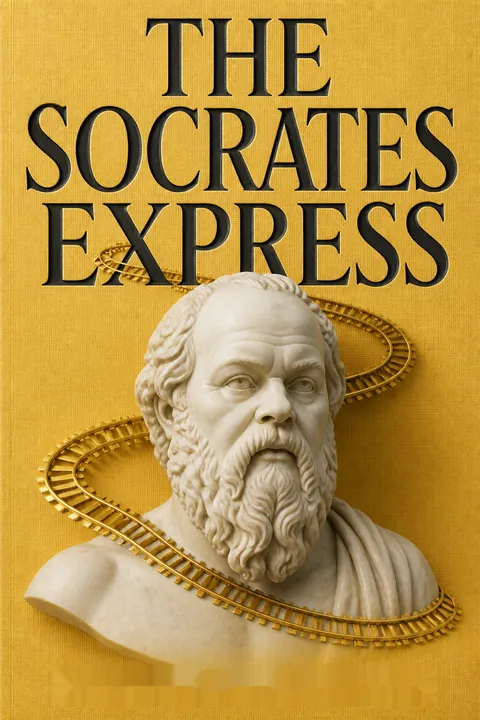
The Socrates Express is praised as an engaging and accessible introduction to philosophy, presenting complex ideas through personal anecdotes and train journeys. Readers appreciate Weiner's humorous and relatable approach, making philosophy more approachable for beginners. The book covers 14 philosophers, offering practical life lessons and insights. While some critics find it superficial, most readers enjoy the blend of travelogue and philosophical exploration. The book is commended for its ability to inspire further interest in philosophy and its application to everyday life.
People Also Read





Glossary
deep questioning
patient, transformative inquiryA sustained engagement with a question rather than a quick attempt to solve it. The question remains active in the mind, reshaping what the questioner notices and sometimes changing the goal itself. Eric Weiner uses the term in connection with Socrates and Jacob Needleman’s distinction between asking for information and undergoing a question.
indifferents
things outside moral controlIn Stoic thought, external conditions such as health, wealth, reputation, and other people’s success do not determine virtue or inner freedom. They may be preferred or disliked, but they are not good or bad in the deepest moral sense. The person’s judgments, intentions, and responses are the central objects of ethical responsibility.
Will
endless striving forceSchopenhauer’s name for the underlying force he believed drives all existence. It is not ordinary willpower or a conscious decision. The Will continually strives and generates new desires without reaching lasting satisfaction, producing conflict and suffering. Schopenhauer thought art and ascetic practice could offer temporary relief from its demands.
ataraxia
freedom from mental disturbanceEpicurus’s term for a tranquil state in which anxiety and disturbance are absent. It is not simply the excitement of acquiring a desired pleasure. Epicurean practice seeks to reduce unnecessary desires and fears so that a person can enjoy basic needs, friendship, and the untroubled experience of being alive.
negative effort
receptive, unforced attentionSimone Weil’s description of attention as a readiness to receive what is present, rather than an act of straining toward a desired answer. It involves patience, suspension of premature judgment, and willingness to wait. Weil treats this receptive stance as both a way of seeing clearly and a form of moral regard for others.
satyagraha
truth-based nonviolent resistanceGandhi’s method of active resistance, built around truth and a firm refusal to use violence. Practitioners confront injustice through disciplined action and accept hardship without retaliating. The aim is not merely to defeat an opponent, but to challenge injustice while preserving the possibility of changing the opponent’s understanding.
ren
human-heartednessA central Confucian virtue often translated as benevolence, compassion, or human-heartedness. It describes a humane quality expressed through relationships and conduct, including respect, sincerity, generosity, earnestness, and kindness. In Confucian teaching, ren is cultivated through practice rather than possessed as a merely abstract ideal.
li
ritual forms of conductConfucian standards of proper conduct, including ceremonies, social manners, and repeated everyday practices. Li gives relationships a recognizable structure and can help express respect and care. Its ethical value depends on genuine reverence and humane intent, not blind compliance with rules or tradition.
okashii
surprising delightIn Sei Shōnagon’s historical usage, a quality of delight that includes an element of surprise. It may arise from a small detail, an apt moment, or an unexpected beauty. The term differs from simple pleasure because the experience feels newly discovered rather than merely satisfying a familiar desire.
Eternal Recurrence of the Same
life repeated without alterationNietzsche’s thought experiment asks a person to imagine living the exact same life, with every event and feeling repeated endlessly. Nietzsche did not establish the idea as a scientific fact. Its philosophical purpose is to test whether a person can affirm a life in its entirety, including its pain, errors, and ordinary moments.
Four-Part Cure
Epicurean remedy for fearA compact summary of Epicurean therapy: fear of the gods is unnecessary, death need not be feared, basic goods are relatively easy to obtain, and severe pains are limited in duration. The cure aims to reduce the anxieties and mistaken desires that prevent tranquility.
kairos
the fitting or ripe momentAn ancient Greek term for the opportune or appropriate time, distinguished from chronos, measured chronological time. Kairos concerns whether a moment is right for a particular choice or action. In the book, it helps explain why certain opportunities for connection or change should not be postponed automatically.
Constructive Disengagement
caring without clingingEric Weiner’s term for a way of loosening one’s grip on life without becoming apathetic. A person remains involved with others and with the world, but is less controlled by every setback or by the need to reach a particular destination. It is presented as a possible orientation toward aging and finitude.
FAQ
What's The Socrates Express about?
- Philosophical Journey: The Socrates Express by Eric Weiner is a blend of travel and philosophy, exploring life lessons from historical figures like Socrates, Gandhi, and Confucius.
- Personal Reflection: Weiner uses his travels to reflect on philosophical ideas and their application to modern life, making the book both a memoir and a philosophical treatise.
- Diverse Philosophers: Each chapter focuses on a different philosopher, presenting their core ideas and how they can help navigate contemporary challenges.
Why should I read The Socrates Express?
- Accessible Philosophy: Weiner makes complex philosophical ideas relatable through humor and personal anecdotes, inviting readers to engage with philosophy practically.
- Life Lessons: The book offers valuable insights from historical figures, encouraging readers to reflect on their own lives and choices for deeper understanding and fulfillment.
- Engaging Narrative: Combining travel writing with philosophical exploration, Weiner's storytelling keeps readers engaged while imparting wisdom.
What are the key takeaways of The Socrates Express?
- Wisdom vs. Knowledge: Weiner distinguishes between knowledge as facts and wisdom as the meaningful application of those facts, emphasizing the importance of understanding.
- Embrace Uncertainty: The book highlights the value of accepting life's unpredictability, suggesting that uncertainty can lead to growth and new experiences.
- Practice Kindness: Inspired by Confucius, Weiner underscores the significance of kindness and compassion in transforming relationships and communities.
What are the best quotes from The Socrates Express and what do they mean?
- “Sooner or later, life makes philosophers of us all.”: This quote suggests that everyone eventually grapples with life's big questions, highlighting the universality of philosophical inquiry.
- “The most precious thing in life is its uncertainty.”: Emphasizes that life's unpredictability can lead to growth and new experiences, encouraging readers to find joy in the unknown.
- “In wildness, there is preservation of the world.”: Thoreau's quote suggests that embracing the wild aspects of life can lead to a deeper understanding of ourselves and the world.
How does Eric Weiner explore the concept of wisdom in The Socrates Express?
- Wisdom as Action: Weiner argues that wisdom involves action and application, requiring effort and intention beyond mere knowledge.
- Philosophical Practices: He discusses practices like reflection, meditation, and dialogue as pathways to wisdom, encouraging active engagement in daily life.
- Personal Growth: Weiner illustrates how wisdom can lead to personal growth and fulfillment, suggesting that learning from philosophers can help navigate life effectively.
What role does travel play in The Socrates Express?
- Metaphor for Exploration: Travel serves as a metaphor for Weiner's philosophical journey, with each train ride representing a step toward understanding deeper truths.
- Connection to Philosophers: Visiting places significant to various philosophers creates a tangible connection between their ideas and the world, enriching the narrative.
- Reflection and Insight: Traveling allows Weiner to reflect on his life and the lessons learned from philosophers, gaining insight into his struggles and aspirations.
How does Weiner differentiate between knowledge and wisdom in The Socrates Express?
- Knowledge as Information: Weiner defines knowledge as a collection of facts, which can be overwhelming and lead to confusion without proper application.
- Wisdom as Understanding: Wisdom involves understanding and applying knowledge meaningfully, discerning what is truly important and acting accordingly.
- Practical Application: He emphasizes that wisdom is a skill cultivated through practice and reflection, likening it to learning a musical instrument.
What insights does The Socrates Express provide about nonviolence?
- Gandhi’s Philosophy: Weiner explores Gandhi’s commitment to nonviolence as a powerful means of resistance, emphasizing ethical conduct in the struggle for justice.
- Creative Conflict: Nonviolence requires creativity and courage, challenging the notion that violence is necessary for change, and encouraging innovative solutions.
- Moral High Ground: By refusing violence, individuals and movements maintain the moral high ground, inspiring others and fostering genuine change.
How does Weiner incorporate personal anecdotes in The Socrates Express?
- Relatable Experiences: Weiner shares personal stories that resonate with readers, making philosophical concepts more relatable and humanizing the narrative.
- Humor and Reflection: His use of humor creates an engaging tone, inviting readers to join his philosophical journey without feeling overwhelmed.
- Connection to Philosophers: Personal experiences are often linked to philosophers' teachings, illustrating how their wisdom can be applied in modern life.
How does The Socrates Express address the theme of kindness?
- Confucian Principles: Weiner emphasizes Confucius's teachings on kindness, arguing that it needs a framework to flourish in society.
- Practical Application: The book provides examples of cultivating kindness in everyday interactions, suggesting that small acts can transform communities.
- Moral Responsibility: Kindness is portrayed as a moral responsibility, with Weiner urging readers to extend compassion to create a harmonious world.
How does The Socrates Express relate to the concept of living authentically?
- Existentialist Influence: Weiner draws on existentialist ideas to discuss authenticity, encouraging readers to take ownership of their choices.
- Rejecting Societal Expectations: The book challenges norms dictating how we should live, advocating for a life true to oneself.
- Self-Discovery: Weiner's journey serves as a metaphor for self-discovery, illustrating that authenticity comes from understanding and embracing one's unique path.
What is the significance of the title The Socrates Express?
- Socrates as a Guide: The title suggests Socrates serves as a guiding figure throughout Weiner's journey, central to exploring life's questions.
- Metaphor for the Journey: "Express" conveys urgency and purpose in philosophical exploration, reflecting a dynamic journey.
- Connection to Travel: Emphasizes the link between travel and philosophy, suggesting the journey itself is as important as the destination.
Download PDF
Download EPUB
.epub digital book format is ideal for reading ebooks on phones, tablets, and e-readers.








