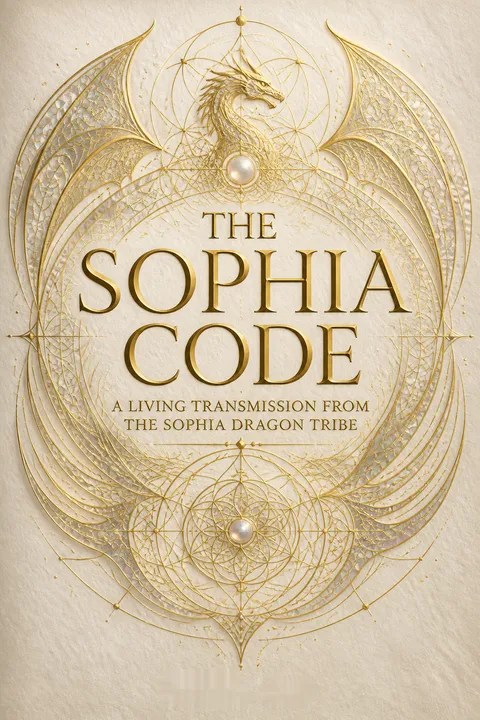


Key Takeaways
Stop outsourcing your sacred worth; this book places divinity inside every person.
A revelatory beginning. Kaia Ra recounts meeting Sophia, whom she describes as the divine source, during a writing retreat near Mount Shasta in 2009. She says Sophia commissioned the book as a guide to human sovereignty. Ra also describes surviving severe childhood abuse and credits spiritual practice and channeling with supporting her recovery. These are her spiritual and personal claims, not independently verified events or medical conclusions.
A promise of remembrance. The book's central invitation is to stop treating divinity as a power reserved for authorities, saints, or a distant God. Each person, it says, is a distinct expression of the sacred and can learn to live from that recognition. The chapters pair this belief with guided visualizations, prayers, and spoken initiations.
The book's opening binds personal testimony to a sweeping spiritual claim: self-worth is innate, not awarded by institutions. That can be liberating, especially for readers alienated by religious hierarchies. Its account is best approached as memoir and devotional teaching, rather than proof of a supernatural commission. The distinction does not erase its emotional meaning. It simply lets readers ask what the practices offer in lived experience without needing to settle the metaphysics.
Read the divine genome as a spiritual map, not laboratory biology.
A personal blueprint. The Sophia Code is the book's name for the soul's complete inheritance of divine qualities, including love, creativity, and free will. Each person's particular expression of those shared qualities is called a Keycode. The book compares this spiritual blueprint to a genome and describes it as crystalline chromosomes alongside biological DNA. These are claims within its cosmology, not established descriptions of human genetics.
A change in self-perception. The author says the blueprint becomes active through conscious choice and alignment with one's inner divine nature. In practical terms, the metaphor asks readers to treat dignity and creative capacity as inherent, even when hardship, family history, or social conditioning suggest otherwise. It also frames spiritual growth as expressing one's individuality, not copying a single ideal.
The genome metaphor gives an abstract belief a tangible image: a person can imagine latent capacities becoming available through practice. Its risk is also clear. DNA and quantum terminology can make spiritual assertions sound scientifically demonstrated when the text provides no biological evidence for them. Readers can preserve the metaphor's motivational force while keeping categories distinct. A symbolic blueprint may help organize reflection; it should not be mistaken for genetic diagnosis or a mechanism of physical healing.
Make ordinary life your mystery school, and practice self-guidance in real time.
Practice beyond the temple. The book calls daily life a modern mystery school: relationships, choices, emotions, and setbacks become material for spiritual learning. Its Higher Self is the inner divine guide that, in this worldview, connects everyday awareness to a wider soul intelligence. Readers are invited to build that relationship through prayer, meditation, visualization, and attention to inner responses.
Use ceremony as rehearsal. The initiations are designed to be spoken aloud, often in a quiet or sacred space, and approached gradually. The book describes five teaching modes: stories that mirror the reader, language meant to prompt recognition, spoken self-initiation, imagined mentorship, and visionary imagery. The sequence aims to make spiritual ideas felt and practiced, rather than merely understood.
This approach makes spiritual practice portable: the kitchen, workplace, or difficult conversation can become a site of reflection instead of a distraction from it. Ritual also gives intention a repeatable form, which can support attention and emotional engagement. A useful safeguard is to treat inner guidance as something to examine, not automatically obey. Intuition can inform a choice, while evidence, trusted relationships, and practical consequences help test whether that choice is wise.
Claim authority over your body and sexuality without treating either as shameful.
Isis as embodied leadership. In the book's account, Isis becomes a spiritual leader through ordinary acts of care, motherhood, intimacy, and service, as well as through ritual work and communion with the natural world. Her example links personal sovereignty to responsibility: spiritual power matters when it helps a community thrive. The text also presents sexuality as a possible source of connection and self-knowledge, rather than something inherently separate from spiritual life.
Reclaim without pressure. Isis's teaching challenges religious shame and the idea that the body is an obstacle to holiness. It invites readers to approach sensuality with respect, consent, and care. The broader lesson is that bodily dignity need not depend on denying human needs or submitting to someone else's definition of purity.
The reclaiming of sexuality is a pointed feminist intervention in traditions that have often linked women's bodies with danger or impurity. The book's strongest ethical implication is agency: no spiritual teaching should override a person's boundaries or consent. Its account of tantric practice is one particular sacred framework, not a universal requirement for growth. Readers can take the challenge to reject shame while choosing forms of intimacy, celibacy, or spiritual practice that genuinely fit their lives.
Treat speech as creative practice, because words shape attention and action.
Hathor and the voice. Hathor's teaching centers on the throat chakra, the book's subtle-energy center associated with speech and expression. It presents careful language, sound, and song as tools for focusing intention. The text's mystical account says words can direct manifestation; its everyday counsel is more readily tested: repeated language influences what people notice, expect, and communicate to others.
Speak deliberately. The book recommends pausing before speaking, asking whether a phrase reflects one's deeper values, and using voice to express clear intentions. It also describes chanting and singing as ways to join bodily feeling with speech. Hathor's cosmic claims about electrons and parallel lives belong to the book's metaphysical system, not established physics. The practical invitation is to notice how words become choices and relationships.
Speech is not magic in the literal sense presented by the book, but it is consequential. Language can frame a problem as permanent or workable, and an intention becomes more useful when it changes behavior. The focus on voice also makes communication a bodily practice rather than a purely abstract one. Care is needed not to imply that people cause every circumstance through their words. Language influences experience; it does not control all events or erase material constraints.
Meet suffering with Green Tara's mantra, without making pain your identity.
A route through distress. Green Tara teaches compassion, innocence, and release from fear. Her mantra, OM TARE TUTTARE TURE SOHA, is presented as a spoken practice for seeking support, loosening suffering's grip, and returning attention to connection with life. The book also frames forgiveness as freeing the present from domination by the past, not as excusing harm or requiring reconciliation with someone unsafe.
Feel, then soften. Green Tara's teaching argues that emotions need not be treated as enemies. The practice is to notice suffering without making it the whole definition of the self, and to respond with patience and self-forgiveness. Its language about illusion does not make pain unreal: the text explicitly treats human suffering as deeply felt, even while interpreting it through a spiritual worldview.
A mantra can provide a steady focus when distress makes thought feel chaotic, and the book's emphasis on compassion keeps the practice from becoming a demand to simply cheer up. Its distinction between forgiving and condoning is especially important. The limitation is that spiritual reframing cannot by itself resolve danger, injustice, or untreated illness. Used alongside appropriate support, the mantra can be a ritual of grounding, not a substitute for practical protection or care.
Let the heart inform your destiny, then make its guidance concrete.
Mary's rose imagery. Mother Mary teaches that the heart is a place to listen for inner guidance, and describes destiny not as a fate imposed from outside but as a path shaped by the soul's intentions. Her Rose represents a heart that can hold human complexity, including vulnerability and strength, without rejecting either. The teaching asks readers to notice which interests and activities bring a sense of meaning and commitment.
Turn feeling into direction. The book recommends asking the heart direct questions, making space to hear an answer, and following through in small steps. It treats emotions as information about alignment, not as defects to suppress. Yet it does not offer a fixed external test for distinguishing intuition from fear. Its practical contribution is an ongoing conversation between feeling, reflection, and action.
The heart-centered model gives emotions a role in judgment without requiring them to be the sole judge. That is a productive correction to the idea that good decisions are purely analytical. Feelings can reveal neglected needs and values, but they can also reflect temporary stress or bias. Pairing inner listening with concrete planning and feedback from reality helps preserve the book's respect for emotion without treating every impulse as a prophecy.
Pair spiritual authority with solidarity, as Mary Magdalene's story models.
A public ministry together. The book portrays Mary Magdalene as an educated, independent spiritual teacher who prepares for public work alongside Jesus. In its account, their partnership gives her a platform while preserving her standing as a teacher in her own right. Her story challenges the assumption that women's spiritual authority must be hidden, dependent, or secondary.
Leadership is relational. Magdalene's work includes teaching, healing, organizing gatherings, and helping people feel safe enough to participate. The book presents her as a model for using personal gifts in collaboration rather than competition. It also connects her mentorship with advocacy, public speaking, and recovering confidence after trauma. These elements make her a figure of shared leadership, not merely a symbol of private devotion.
The narrative's force lies in imagining spiritual authority as something women exercise publicly and in partnership, rather than receiving as borrowed status. It also emphasizes the often invisible work that makes collective action possible: organizing, care, and creating safety. Because this is a channelled retelling, it should not be treated as settled historical biography. Its value here is as a contemporary spiritual interpretation of gender, collaboration, and leadership.
Practice karuna: give your wounded self the care it needed.
Compassion as closeness. Quan Yin's teaching names karuna as a form of compassion that stays present with suffering instead of abandoning the person who feels it. In the book's story, a girl called Yoshinami survives a massacre and sexual violence, then lives in isolation until a patient spiritual teacher offers food, water, and respectful care. The narrative traces her recovery through safety, time, meditation, and supportive relationships.
Become a reliable caregiver. Quan Yin asks readers to treat the wounded inner child as worthy of attention, and to practice self-forgiveness without blaming themselves for what others did. Water serves as an image for care that can reach neglected parts of the self. The book's account is spiritual storytelling, not a clinical protocol; its central practical lesson is to meet vulnerability with steadiness and kindness.
The story insists that healing begins with safety and patient presence, not a demand to recover on someone else's schedule. That is a humane counterweight to approaches that moralize resilience. Its imagery can help readers approach painful memories gently, but traumatic experiences may call for qualified, trauma-informed support. Compassion is not a claim that wounds vanish through belief, nor a reason to replace professional care with ritual.
Make prayer a practice of reciprocity with people, animals, and Earth.
The pipe as relationship. White Buffalo Woman's chapter tells of giving the Sioux a sacred pipe, the chanunpa, as a teaching about prayer and right relations. Its bowl represents Earth and the body, while its joined parts symbolize complementary forces. In the story, prayer is not only asking for help. It is also a commitment to gratitude, community, ancestors, and the other forms of life that sustain people.
Bring the ethic into daily life. The chapter presents nature as a source of knowledge and urges people to act as stewards rather than owners of the living world. The pipe's community use also offers a model for addressing conflict through shared attention and respect. The author frames the story as a spiritual transmission; readers should distinguish that retelling from the living diversity of Indigenous traditions.
The chapter's strongest contribution is to make spirituality answerable to relationships: what matters is not only what a person believes, but how that belief shapes care for community and habitat. Its use of a culturally significant Indigenous sacred object also calls for humility. A modern spiritual adaptation should not flatten Lakota practice into a universal technique or imply ownership of it. Reciprocity is a useful ethic; cultural specificity deserves equal respect.
Imagine the Golden Dragon as creative power bound to loving responsibility.
The culminating image. The Sophia Dragons are presented as creators and protectors, and their Golden Dragon Light Body is described as a spiritual form that surrounds the human body and anchors at the heart. The book says this imagined body can help a person embody confidence, discernment, and creative capacity. Its final initiation uses visualization, breath, and attention to the body's energy centers to make the image vivid.
Power must serve life. The dragons' creativity is not framed as license to control others. It is meant to be aligned with love and service, with the individual using personal gifts to help create a more peaceful world. Readers can treat the dragon as a symbol or visualization rather than a literal biological or protective technology. Its ethical test is what kind of action the image encourages.
The dragon is a memorable synthesis of the book's themes: agency, imagination, protection, and creation. As a visualization, it can give abstract confidence a strong sensory form, much like a personal emblem or guided-imagery exercise. The text's claims that this light body can filter pollutants or alter physical reality are not substantiated by the material presented. The image is most useful when it strengthens grounded action, not when it promises immunity from real-world risks.
Analysis
The Sophia Code is part spiritual cosmology, part guided ritual manual, and part autobiographical testimony. Its argument is less a sequence of propositions than a repeated act of address: the reader is told that worth, creative power, and spiritual access already belong to them. The seven named teachers and the dragons give different emotional textures to that claim. Isis asserts bodily authority, Hathor emphasizes expression, Green Tara offers release from fear, Mary models inward discernment, Magdalene represents public leadership, Quan Yin teaches self-compassion, and White Buffalo Woman links prayer to communal and ecological responsibility. The final dragon imagery gathers these strands into a picture of creative agency held within love.
The book's most coherent practical method is ritualized attention. Reading aloud, imagining a mentor, repeating a mantra, and tracking the body's response can make an abstract intention emotionally vivid. A reader need not accept channeling or multidimensional beings as literal facts to explore those methods as devotional or imaginative practices. However, the text frequently borrows the authority of genetics and quantum physics while making claims that are not supported by scientific evidence. Its terms should be understood as spiritual language, not biological explanation.
There is also a tension between empowerment and responsibility. The book rejects external religious hierarchy, yet often tells readers to surrender to an infallible Higher Self. That can encourage trust and persistence, but it risks making a person's interpretation of inner guidance difficult to question. Similarly, the promise that personal transformation can affect collective suffering is inspiring, but it must not become a suggestion that individuals are responsible for circumstances beyond their control. Trauma recovery requires compassion, practical safety, and, for many people, professional care. The book is most valuable when its expansive imagery supports those grounded commitments rather than replacing them.
Review Summary
The Sophia Code has received mixed reviews, with ratings ranging from 1 to 5 stars. Positive reviews praise its spiritual insights, healing potential, and empowering message. Critics express concerns about cultural appropriation, the author's credibility, and the book's cult-like feel. Some readers find it transformative and enlightening, while others describe it as confusing, poorly written, or off-putting. The book's content and the author's claims have sparked controversy, with some readers questioning the authenticity of her experiences and teachings.
People Also Read







Glossary
The Sophia Code
Soul's divine blueprintThe book's name for the soul's inheritance of divine qualities, such as love, creativity, and sovereignty. It is described as a unique spiritual blueprint present alongside biological DNA and activated through conscious alignment with one's higher nature. The book's genetic language belongs to its metaphysical framework, not established biology.
Keycode
Unique soul expressionA Keycode is the book's term for a distinct arrangement of divine qualities expressed by an individual soul. The author also uses it for the spiritual teaching embodied by an Ascended Master, whose example is meant to help readers recognize similar qualities in themselves. It is a metaphysical concept, not a genetic classification.
Higher Self
Inner divine guideThe Higher Self is the book's term for the divine aspect of a person that guides everyday awareness and choices. It is described as a bridge between human consciousness and the wider soul, or Oversoul. The text encourages readers to seek its guidance through prayer, meditation, emotions, intuition, and perceived signs.
Oversoul
Self across lifetimesThe Oversoul is described as the larger, nonphysical identity that coordinates a person's many incarnations and experiences. In the book's cosmology, a Higher Self conveys the Oversoul's guidance to human awareness. The term helps explain how the author views individual lives as connected parts of a much wider spiritual existence.
The Way
Journey of self-realizationThe Way is the book's name for the lived journey of spiritual self-realization. It involves becoming present to human experience, listening for inner guidance, and integrating emotions and challenges rather than trying to escape earthly life. The path is both the process of practice and the personal life being shaped by it.
Beauty Way
Beauty-centered spiritual teachingThe Beauty Way is the book's approach to spiritual instruction that emphasizes beauty and the positive qualities within a teaching. It is intended to soften resistance and encourage receptivity, rather than focusing primarily on judgments of right and wrong. In practice, stories, imagery, and affirming language are used to invite reflection and self-recognition.
karuna
Unconditional compassionKaruna is the Sanskrit term the book uses for compassion expressed as sustained care for oneself and others in suffering. Quan Yin's teaching emphasizes staying present with painful experience, offering kindness, and refusing to abandon the wounded parts of the self. The practice does not require approving harmful actions or denying the need for safety.
chanunpa
Sacred Lakota pipeChanunpa is the sacred pipe featured in the book's White Buffalo Woman narrative. The story presents it as a ceremonial object and a symbol of prayer, community, and relationship among people, Earth, and other forms of life. It is a culturally specific sacred object, not simply a general-purpose meditation tool.
Golden Dragon Light Body
Imagined sovereign light bodyThe Golden Dragon Light Body is a spiritual technology in the book's cosmology, visualized as a luminous dragon form surrounding a person and centered at the heart. It represents an integrated expression of wisdom, creativity, and sovereignty. A guided initiation uses visualization and bodily attention to cultivate this image; claims of physical protection are not established.
FAQ
What's The Sophia Code about?
- Spiritual Awakening Focus: The Sophia Code is a spiritual guidebook that aims to awaken readers to their divine nature and personal empowerment. It features teachings from the Sophia Dragon Tribe, a council of Ascended Masters.
- Key Themes: The book emphasizes self-love, forgiveness, and embodying divine qualities. It introduces "Keycodes," which are teachings and initiations from Divine Feminine Ascended Masters.
- Living Transmission: Described as a "living transmission," the text is meant to resonate personally with readers, facilitating a connection to their Higher Self and inner wisdom.
Why should I read The Sophia Code?
- Empowerment and Sovereignty: The book empowers readers to embrace their sovereignty and divine potential, recognizing their inherent worth and unique gifts.
- Guidance from Ascended Masters: It offers insights and practical advice from the Sophia Dragon Tribe, helping readers align with their true purpose and navigate life's challenges.
- Transformative Practices: The text includes practices and initiations that can lead to profound personal transformation, fostering a deeper connection with oneself and the universe.
What are the key takeaways of The Sophia Code?
- Sovereignty and Self-Love: Embracing sovereignty and practicing unconditional self-love are central for personal healing and empowerment.
- Keycodes as Initiations: The Keycodes are teachings from Ascended Masters that serve as initiations for spiritual growth, each corresponding to a different aspect of divine consciousness.
- Living in Alignment: Readers are encouraged to live in alignment with their Higher Self and embody Divine Feminine qualities for a life of joy, peace, and purpose.
What are the best quotes from The Sophia Code and what do they mean?
- "You are my inspiration...": This quote highlights the reader's role in creating a new reality based on love and sovereignty, emphasizing individual contributions to collective transformation.
- "Your Oversoul is an immaculate conception...": It reinforces the idea of each person as a divine being with inherent worth, encouraging recognition of one's divine connection and potential.
- "It is safe to be seen.": This quote addresses the fear of expressing one's true self, reassuring readers that embracing authenticity is vital for their spiritual journey.
What are the Keycodes in The Sophia Code?
- Divine Feminine Ascended Masters: Keycodes are teachings from various Divine Feminine Ascended Masters, each representing different aspects of spiritual wisdom and serving as initiations.
- Sequential Learning: Each Keycode builds upon the previous one, creating a structured path for spiritual growth and deeper understanding.
- Practical Applications: They include practical exercises and meditations to facilitate spiritual awakening, making the teachings accessible and applicable to daily life.
How does The Sophia Code define sovereignty?
- Personal Empowerment: Sovereignty is the recognition and embrace of one's divine power and authority, involving responsibility for one's life and choices.
- Connection to the Divine: It is rooted in understanding one's connection to the divine, empowering individuals to manifest their highest potential and live authentically.
- Collective Responsibility: Sovereignty extends to the collective, encouraging positive contributions to the world for greater harmony and unity.
How can I apply the teachings of The Sophia Code in my daily life?
- Daily Affirmations: Incorporating affirmations that resonate with the teachings reinforces principles of sovereignty and self-love, encouraging a positive mindset.
- Engaging with Keycodes: Actively working with Keycodes and their practices facilitates personal transformation and embodiment of the teachings.
- Community and Support: Connecting with like-minded individuals provides support and encouragement, enhancing understanding and fostering a sense of belonging.
What is the significance of the Divine Feminine in The Sophia Code?
- Reclaiming Balance: The Divine Feminine represents a return to balance in spiritual practices, emphasizing nurturing qualities like compassion and intuition.
- Empowerment of Women: The book highlights the empowerment of women and their roles as leaders and teachers, essential for collective healing and ascension.
- Integration of Masculine and Feminine: It encourages integrating both Divine Feminine and Masculine qualities for a harmonious expression of one's true self.
How does The Sophia Code address healing and forgiveness?
- Healing Through Self-Love: Healing begins with self-love and acceptance, allowing individuals to heal past wounds and traumas.
- Forgiveness as Liberation: Forgiveness is a tool for liberation from suffering, encouraging readers to forgive themselves and others to release past burdens.
- Transformative Practices: Specific practices and meditations facilitate healing and forgiveness, helping readers navigate emotional landscapes and foster growth.
What role do the Ascended Masters play in The Sophia Code?
- Guidance and Support: Ascended Masters serve as guides and mentors, offering wisdom and teachings for personal transformation.
- Embodiment of Divine Qualities: Each Master embodies specific divine qualities that readers can aspire to integrate, modeling alignment with one's Higher Self.
- Collective Wisdom: Their collective wisdom addresses various aspects of the human experience, helping readers navigate challenges and embrace their spiritual paths.
How does The Sophia Code address the concept of destiny?
- Destiny as a Personal Journey: Destiny is presented as a unique journey each individual is called to fulfill, emphasizing the importance of following one's heart.
- Role of the Higher Self: The Higher Self guides individuals toward their destiny, aligning them with their true purpose through inner guidance.
- Celebration of the Journey: Fulfilling one's destiny is a joyful process, with each experience contributing to personal growth and understanding.
What is the overall message of The Sophia Code?
- Empowerment through Sovereignty: The book encourages readers to reclaim their sovereignty and divine rights, emphasizing the potential to create one's reality and fulfill unique purposes.
- Unity and Interconnectedness: It promotes unity and interconnectedness, highlighting compassion and love for a harmonious world and collective responsibility for the planet.
- Living as a Divine Being: Readers are invited to recognize and embody their true nature as divine beings, leading to a deeper understanding of their place in the universe and the power of love.
Download PDF
Download EPUB
.epub digital book format is ideal for reading ebooks on phones, tablets, and e-readers.








