

Key Takeaways
Treat the womb as a symbol of embodied knowledge, not a universal anatomy.
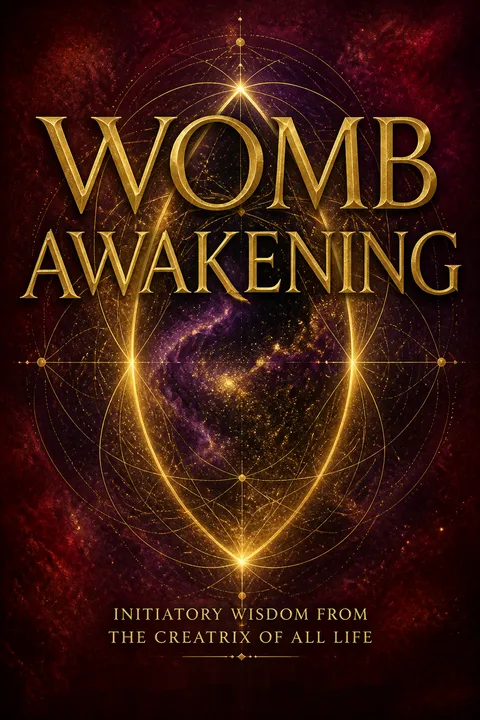
A wider meaning of womb. The authors use womb for both a physical organ and a spiritual image of creation, connection, and renewal. They extend the idea to people without a uterus, including men, whose corresponding center they call the hara. Their term Womb Consciousness means an intuitive, embodied awareness that they believe reconnects a person with life and nature. The claim is spiritual, not a medical definition, and readers are invited to test ideas against their own experience rather than accept a doctrine.
A personal awakening. Seren describes menstruating without menstrual products and feeling shame give way to a sense of freedom, especially when her partner responded with respect. The episode shows the book's central move: treat bodily experience as worthy of attention, rather than something to hide.
What's compelling is the effort to restore dignity to experiences that many cultures make private or shameful. Embodied attention can also be understood through interoception, the ability to notice internal bodily signals, which supports emotional awareness without requiring a supernatural explanation. The inclusive use of womb as metaphor helps broaden the book's reach. At the same time, its language sometimes links anatomy, gender, and spiritual qualities too tightly. A reader can retain the invitation to respect bodily knowledge without assuming every person experiences the body in the same way.
Ground spiritual insight in the body, relationships, and living ecosystems.
Descent before transcendence. The book argues that spiritual growth should not mean escaping the body or Earth. Its recurring image is a descent into darkness, feeling, and physical life before any ascent into expanded awareness. The authors call this return to the source a journey into the Cosmic Womb, a spiritual metaphor for the origin and renewal of existence.
A wilderness initiation. Azra recounts spending months in remote Alaska, sleeping outdoors and living with few conveniences. The experience made him feel less separate from the land and helped him recognize that his longing for nature was also a longing for connection. The practical invitation is to notice the body and the natural world before reaching for abstract explanations.
The book's emphasis on descent has a useful counterpart in ecological psychology: attention, mood, and behavior are shaped by the environments people inhabit. Time outdoors can support restoration, while relationships provide a reality check that solitary spiritual practice may lack. The authors' language about cosmic portals and gravity, however, should be read as metaphor rather than physics. That distinction does not weaken the basic insight. It makes the invitation clearer: become more present to the body and the conditions of life, rather than treating transcendence as escape.
Treat trauma as a call for care, not proof of cosmic destiny.
The body remembers experience. The authors connect early relationships and experiences with later patterns of safety, intimacy, and self-worth. They draw on prenatal development and epigenetics, the study of how conditions can influence gene activity, to argue that stress and care can affect development across time. They extend this into a spiritual account of inherited wounds and describe healing as returning to experiences that remain emotionally unresolved.
A careful return. The book encourages readers to notice bodily reactions, feelings, and recurring relationship patterns rather than dismiss them. That can be a meaningful starting point, but the authors sometimes treat dreams and altered states as access to literal prenatal or ancestral memories. Those experiences may carry emotional meaning without proving that their apparent scenes happened as remembered.
The strongest version of this insight is that distress can be embodied, relational, and shaped by early environments, not merely corrected by positive thinking. Trauma-informed practice likewise prioritizes safety, choice, and gradual attention to bodily responses. A crucial boundary is that vivid images produced in dreams or intense states are not reliable historical records by themselves. Treating them as facts can create false certainty or distress. The book's inward inquiry is most responsible when paired with grounded support and when symbolic meaning is distinguished from verifiable memory.
Make birth and early care central measures of a humane culture.
Care shapes beginnings. The authors argue that conception, pregnancy, birth, and early bonding deserve far more attention than modern society gives them. They describe how a parent's stress or support may influence a developing child, and urge families and communities to make room for touch, safety, and responsive care. Their examples include gentle birth settings, time for parents and babies to bond, and treating the placenta as meaningful rather than disposable.
A social responsibility. The point is not simply to prescribe a particular birth method. It is to regard mothers, babies, and caregivers as deserving practical and emotional support. The book imagines children arriving into a welcoming community, rather than being treated as private burdens after birth.
This is one of the book's most practical ethical arguments: healthy development depends not only on individual choices but also on the support surrounding families. Developmental research supports the importance of responsive caregiving, while policy choices such as parental leave and access to respectful healthcare shape whether care is possible. The risk is turning an ideal of natural or ecstatic birth into a standard that burdens parents whose births involve complications, medication, or intervention. A humane culture protects choice and support, not one approved birth experience.
Use lunar rhythms as prompts for reflection, not biological commandments.
Cycles invite attention. The book treats the moon as a guide to cycles of activity and rest. It connects the waxing and full moon with outward energy, and the dark moon and menstruation with retreat, reflection, and release. The authors extend this pattern to men and communities, imagining menstruation as a shared period of renewal rather than an isolated inconvenience.
A personal practice. Readers are encouraged to observe changes in mood, energy, and desire over time, then make space for rest when needed. The book also describes offering menstrual blood to the Earth as a ritual of connection. This is a spiritual practice, not a necessary health measure, and the book's broad claims about lunar effects should not be mistaken for universal biological rules.
The cycle metaphor can help people notice that energy and attention are not constant. That is valuable even if the moon is not the cause. Human sleep and circadian rhythms respond strongly to light, and menstrual cycles vary substantially among individuals. Claims that lunar phases reliably govern everyone are much less secure. Used as a reflective calendar rather than a prescription, the model offers a humane alternative to expecting steady productivity every day. Its usefulness comes from attentive observation, not from forcing personal experience to match a cosmic timetable.
Open to intimacy without surrendering discernment or personal boundaries.
Love needs judgment. The authors describe a Trickster, a shadow archetype that exposes unresolved desires, shame, and vulnerability through seductive or destabilizing encounters. They also use the term anti-soulmate for someone whose familiar intensity may reflect a person's wounds rather than a safe, lasting bond. The lesson is to notice what a relationship brings to the surface without confusing intensity with love.
Keep choice intact. Their relationship path asks people to reveal hidden fears and needs, but it also stresses discernment and self-respect. The book warns that surrender without love can become submission. If a relationship is abusive or harmful, the invitation is to protect oneself and seek support, not to interpret injury as a necessary spiritual test.
The Trickster image can help explain why a relationship feels magnetic even when it repeats painful patterns. In psychology, repetition of familiar dynamics can be compelling without being healing. The book's insistence on discernment is therefore essential, especially because its language of surrender could otherwise blur the line between vulnerability and coercion. Consent, autonomy, and safety are not obstacles to intimacy. They are conditions that make mutual openness possible. A transformative relationship should expand each person's agency, not demand that one person endure harm to prove devotion.
Balance active force with receptive care instead of choosing one.
A map of paired energies. The authors present a Womb medicine wheel, their map of bodily and spiritual energies, and a Twin spiral chakra system, their model of paired centers working together. They contrast active and receptive qualities, heart and womb, upper and lower body, and inner life and outward action. Their eight-gate map uses bodily locations and elemental images to organize reflection and ritual; it is a spiritual framework, not an anatomical system validated by medicine.
The practical value. Rather than treating one side as superior, the model asks readers to notice imbalances. Someone who acts constantly may need rest and emotional receptivity; someone who retreats may need to express desire and take action. The goal is a flexible relationship between both modes.
This paired model has a useful systems insight: parts of a person can be in tension without either being the enemy. Contemporary psychology also recognizes that effective self-regulation involves both action and reflection, while relationships often require a balance between autonomy and connection. The framework becomes less persuasive when it assigns fixed masculine and feminine traits to brain regions, body sides, or organs. Those mappings are not established neuroscience. Readers can use the model as a flexible metaphor for balance while avoiding rigid claims about gender or physiology.
Read myths as meaning-making, not automatic evidence of ancient history.
A symbolic history. Across the book, the authors interpret caves, wells, crosses, chalices, goddesses, and Grail stories as traces of a once widespread womb-centered religion. They connect traditions from Europe, Africa, Asia, and the Americas, and propose that later patriarchal societies suppressed this feminine heritage. Their reading gives recurring images a shared spiritual meaning, with Mary Magdalene and the Holy Grail serving as central symbols.
Separate pattern from proof. Archaeological sites and sacred stories are real, but the book's claim that they demonstrate one ancient global religion is an interpretation. A cave, a triangle, or a fertility image can have different meanings in different cultures. The authors' historical reconstruction is best approached as a provocative lens, not settled scholarly consensus.
Comparative mythology can reveal recurring human concerns, including birth, death, fertility, and the desire for renewal. The book makes those patterns vivid by reading symbols through an embodied, feminine perspective often neglected in older religious histories. But resemblance is not proof of common origin. Archaeology requires local context, dating, and competing explanations, while myths change as communities retell them. Keeping that distinction protects the book's imaginative value. Its symbolic interpretations can invite new questions even where its sweeping historical claims remain speculative.
Measure spiritual renewal by consent, caregiving, and repair of the living world.
A moral test for renewal. The book closes by asking people to protect the conditions that sustain life: respectful relationships, care for children, honoring the body, and reciprocity with the Earth. Men are urged to become guardians of the feminine, while women are invited to reclaim authority over their own bodies and desires. The larger image is a community in which power protects rather than controls, and spiritual practice changes how people treat one another.
Make it tangible. This vision can be translated into ordinary choices: listen to a partner's boundaries, share care work, support parents, and treat land and water as more than resources. The authors frame these acts as part of a spiritual return. Their point is that reverence matters most when it alters conduct.
The ending works best as an ethical proposal rather than a prediction of a new cosmic age. Consent, caregiving, and ecological responsibility are observable standards by which spiritual claims can be tested. The language of men protecting women can carry a paternal tone, so the strongest interpretation is mutual responsibility: everyone safeguards bodily autonomy and the conditions of shared life. This also anchors the book's expansive spirituality in public consequences. A belief in sacred interdependence becomes meaningful when it changes who does the work, whose choices are respected, and what communities preserve.
Analysis
Womb Awakening is a spiritual manifesto presented as a seven-cycle pilgrimage. Its 33 spirals braid memoir, ritual instruction, comparative mythology, religious reinterpretation, and claims about biology. That mixture is also its main challenge: readers move quickly from a personal account of menstruation or wilderness immersion to sweeping claims about prehistoric religion, neuroscience, epigenetics, and cosmic physics. The book's most durable contribution is ethical and experiential. It insists that bodies are not obstacles to spiritual life, that emotional repair happens in relationship, and that care for people and land belongs at the center of any account of renewal. Its repeated movement from descent, through feeling and shadow, toward integration gives otherwise sprawling material a coherent narrative shape.
The authors' symbolic re-reading of caves, wells, menstrual blood, the Grail, and Mary Magdalene is imaginative and often illuminating as a critique of traditions that marginalized women. It should not, however, be confused with established history. Similar symbols across cultures do not establish a single ancient global religion, and a visionary experience cannot verify a historical event. The same caution applies to biology. Prenatal development and epigenetic regulation are genuine fields of research, but they do not establish that love activates immortality, that menstrual stem cells reverse aging, or that lunar cycles govern everyone. The book's brain and gender mappings are likewise speculative, not standard neuroscience.
A careful reader can preserve the practical insight while setting aside unsupported certainty: attend to bodily experience, respect consent, seek appropriate help for trauma or health concerns, and build relationships and communities that make care possible. The result is not a scientific guide or a reliable history of religion. It is a bold spiritual lens for revaluing embodiment, intimacy, and ecological responsibility, best used with curiosity and a clear boundary between metaphor, personal testimony, and evidence.
People Also Read




Glossary
Womb Consciousness
Embodied intuitive awarenessThe authors' term for a form of awareness grounded in bodily feeling, intuition, and connection rather than primarily in analytical thought. They describe it as a spiritual state that reconnects a person with the body, relationships, Earth, and a creative source. It is a spiritual concept, not a recognized medical or neurological category.
Grail Gate
Womb energy portalA physical or imagined location in the yoni, lingam, or body that the authors treat as a portal for spiritual, emotional, and energetic experience. Their Grail Gate model uses bodily imagery and archetypes to guide reflection and ritual. The gates are not anatomical structures recognized by medicine.
Womb medicine wheel
Map of elemental energiesThe authors' spiritual map for exploring qualities they associate with the womb, including bodily centers, elemental forces, archetypes, and directions. It is used in meditation and self-reflection to identify perceived strengths, blocks, and patterns. The book's version is a personal framework, not a standardized Indigenous or clinical system.
Twin spiral chakra system
Paired body energy mapA model that describes the body's spiritual energy centers as paired relationships, such as heart and womb, upper and lower body, or active and receptive qualities. The authors favor a dynamic spiral over a linear hierarchy of centers. Its anatomical and gendered associations are speculative rather than established physiology.
endocrine alchemy
Spiritual reading of hormonesThe authors' name for a proposed relationship between spiritual states, bodily fluids, hormones, and emotional experience. They use it to explain how love, sexuality, and ritual might affect the body and consciousness. The term combines spiritual interpretation with biological language, but the book's broad claims are not established endocrinology.
wombtime
Prenatal dreamlike awarenessThe authors' term for the developing child's experience in the womb, which they describe as intuitive, dreamlike, and connected to a wider field of consciousness. They use this idea to connect prenatal development with shamanic experience and later emotional patterns. The spiritual interpretation goes beyond what prenatal science can demonstrate.
Soul Shakti
Creative life-force essenceThe authors' phrase for a person's innermost creative and vital essence, understood as an expression of Shakti, or life force. They associate it with desire, sensuality, intuition, and the capacity to create and love. It is a spiritual vocabulary for personal experience, not a measurable biological substance.
Trickster
Shadow revealing archetypeA figure or energy the authors use to describe experiences that expose hidden desires, shame, fear, or misuse of power. The Trickster may appear in dreams, myths, or intense relationships, and is framed as a teacher rather than inherently evil. The concept is an interpretive archetype, not a diagnosis of a person.
Download PDF
Download EPUB
.epub digital book format is ideal for reading ebooks on phones, tablets, and e-readers.








