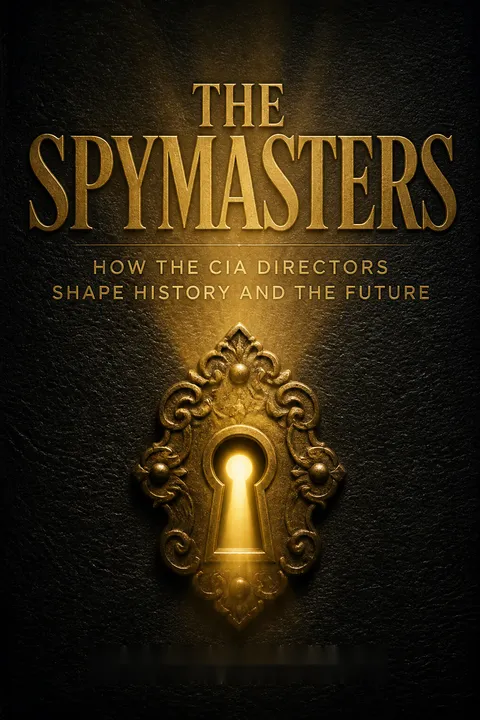


Key Takeaways
A CIA director’s greatest leverage is access, and greatest duty is candor
Power depends on proximity. The CIA director commands analysts, spies, and covert forces, but those tools matter only if the president listens. The job is therefore a balancing act: serve the elected leader while providing an independent account of what the evidence supports. John McCone helped John F. Kennedy avoid a potentially catastrophic invasion of Cuba by arguing that Soviet nuclear missiles were there. Richard Helms gave Lyndon Johnson unwelcome assessments of the Vietnam War, though he sometimes softened the flow of bad news when the president stopped listening.
Candor has consequences. George Tenet challenged claims that Iraq and Al Qaeda were linked, yet later endorsed a weak case for Iraqi weapons of mass destruction. Leon Panetta built trust with Barack Obama by promising to report facts even when they were inconvenient. The record suggests that access without independence can make a director useful to a president but dangerous to the country.
What's striking is that access is both the director's most valuable resource and a source of dependence. A director who is shut out cannot shape decisions, but one who prizes proximity too highly may begin to anticipate what the president wants to hear. The office resembles an internal auditor who must remain close enough to understand decisions while retaining enough distance to challenge them. That tension cannot be solved by appointing a supposedly incorruptible individual. It requires habits of candid reporting, protected channels to Congress, and a president willing to hear disagreement.
A warning matters only when leaders build a system that acts on it
Warnings need a route. Before September 11, 2001, the CIA reported a rising Al Qaeda threat. On July 10, counterterrorism officials told National Security Adviser Condoleezza Rice that spectacular attacks against Americans were likely, but no full meeting of senior agency leaders followed. The CIA also had clues that future hijackers Khalid al-Midhar and Nawaf al-Hazmi were in the United States, yet they were not found in time. The failure was not simply that nobody imagined an attack. Information did not produce a coordinated defensive response.
The same gap recurs. Before Iran's 1979 revolution, official assessments repeatedly underestimated the danger to the Shah. In early 2020, intelligence briefings warned of pandemic risk, but the warnings did not prompt an adequate response. A warning is only one link in a chain: intelligence must be shared, understood, assigned, and acted upon. Missing any link can turn foresight into hindsight.
The book usefully shifts attention from whether an agency issued a warning to whether government had a mechanism for acting on it. That is a systems problem, not merely a question of individual intelligence. Competing agencies can each possess part of the picture while no one has authority to force a joint response. The account also resists a simple defense of the CIA: its handling of the hijacker leads was itself deficient. Accountability is clearest when it follows the whole chain, from collection through analysis to decision and execution.
Treat thin evidence as uncertainty, not permission to confirm a president’s theory
Confidence can outrun evidence. In 2002, a National Intelligence Estimate concluded that Iraq possessed chemical and biological weapons and might build a nuclear weapon within months if it obtained fissile material. The report contained caveats and weak sources, and specialists questioned key judgments. Yet public discussion flattened those qualifications into a confident case for war. George Tenet later acknowledged that the estimate was wrong, while insisting that analysts had not deliberately manufactured evidence to satisfy the White House.
Bad analysis still matters. The book distinguishes intentional politicization from a subtler danger: repeated pressure to answer a question can make uncertain evidence appear more settled than it is. Tenet's description of the case as strong helped the administration present its argument, even if the decision for war had deeper political causes. The lesson is not that intelligence can prevent every misguided policy. It is that an agency must make uncertainty visible, especially when the costs of error are enormous.
The Iraq estimate illustrates a classic problem of decision-making under uncertainty: leaders often demand a clear answer precisely when the evidence cannot support one. Caveats are not a technical nuisance; they are part of the finding. Once stripped away, an assessment can become a confidence signal that analysts never intended to send. At the same time, the book avoids treating politicization as an easy explanation for every failure. Analysts can reach sincere but mistaken judgments, and policymakers may act for reasons beyond intelligence. Those distinctions matter if reforms are to improve analysis rather than merely assign blame.
Learn the society beneath the headlines before predicting its politics
Local assumptions mislead. The CIA failed to anticipate the Iranian revolution despite having thousands of Americans in the country and an active station. The United States relied heavily on the Shah's secret police, SAVAK, and had little contact with the opposition. The Iran desk was small, and its assessments treated the Shah's rule as stable even as protests spread. Analysts struggled to imagine that a religious movement could organize a mass challenge to a Western-backed monarch.
Information is not understanding. The agency had reports about Iran, but its dependence on the Shah and its limited grasp of the country's political and religious currents distorted what those reports meant. Similar gaps appear in the book's accounts of Vietnam, Iraq, Syria, and Afghanistan. CIA director Richard Helms argued that intelligence officers needed deeper knowledge of societies, not just military capabilities and elite politics. Even excellent cultural understanding cannot predict every upheaval, but without it, familiar assumptions can masquerade as insight.
This is an argument about the difference between collecting facts and interpreting a world on its own terms. A government can have abundant reporting and still be poorly informed if its categories exclude the possibility that events are changing. Institutional diversity and regional expertise can challenge those categories, though neither guarantees accurate forecasts. The most useful caution is against treating culture as a decorative detail added after analysis. It shapes what people consider legitimate, what they fear, and which forms of authority can command loyalty.
Treat covert action as a wager with blowback, not a shortcut
A covert action hides sponsorship. It is a secret operation meant to influence events abroad without openly attributing the action to the United States. Early coups in Iran and Guatemala appeared to validate this tool, and CIA-supplied Stinger missiles helped Afghan fighters drive Soviet forces out of Afghanistan. But covert action is rarely as controllable as its planners hope. The United States' 1953 coup in Iran fed lasting resentment, while the anti-Soviet Afghan struggle helped create conditions from which Al Qaeda emerged.
Success can reverse itself. Blowback is the unintended harm that returns to damage the country responsible for an operation. The Bay of Pigs invasion failed; the Iran-contra scheme traded arms for hostages and diverted money to the Nicaraguan contras, violating congressional restrictions. Richard Helms regarded clandestine action as a dangerous gamble, not a universal remedy. Its apparent efficiency can be deceptive: secrecy may bypass public debate, but it cannot erase consequences.
The book's strongest contribution here is to separate tactical success from strategic success. An operation can achieve its immediate objective and still produce a hostile political legacy, strengthen a future adversary, or weaken trust in American commitments. That longer time horizon makes covert action unusually difficult to evaluate. The opposite mistake is to assume every operation must fail: Afghanistan shows that clandestine support can alter a major conflict. The more precise question is whether the expected benefit is achievable, whether the political aftermath has been considered, and who is accountable if the wager goes badly.
Keep secrecy answerable to law, or scandal will consume the agency
Secrecy can conceal abuse. In 1973, CIA director James Schlesinger ordered employees to report activities that might violate the agency's charter. The resulting Family Jewels collection documented past misconduct, including domestic surveillance, illegal wiretapping, drug experiments on unwitting people, and assassination plots. When reporter Seymour Hersh exposed the CIA's surveillance of antiwar groups, director William Colby chose to cooperate with congressional investigations and release the records. The agency's old guard saw betrayal; reformers saw a chance to restore legitimacy.
Oversight changed the rules. Congressional investigations helped establish permanent intelligence committees. Covert operations thereafter required a presidential finding, and senior committee members had to be briefed. Helms had refused Nixon's attempt to involve the CIA in the Watergate cover-up, but he had also approved the illegal domestic surveillance program MHCHAOS under Johnson and was convicted for misleading Congress about CIA activity in Chile. The record shows why an oath of secrecy cannot replace a duty to obey the law.
The tension is not between total secrecy and total disclosure. Intelligence work requires protected sources, but secrecy without independent review makes it difficult to distinguish legitimate protection from institutional self-defense. Colby's disclosure carried operational and reputational costs, yet the system that followed gave elected representatives a formal role. Oversight can itself become partisan or careless, so it needs access to classified facts and clear procedures. Its purpose is not to make covert work public, but to ensure that secrecy remains a limited instrument rather than a license.
Hunt moles without turning suspicion into an institutional disease
Counterintelligence protects the source. The CIA must identify enemy agents inside its own ranks, but suspicion can also become self-destructive. James Angleton, the agency's counterintelligence chief, believed Soviet deception reached deep into the CIA. After Soviet defector Anatoliy Golitsyn warned of a vast plot, Angleton treated other defectors as possible plants. Yuri Nosenko was confined and interrogated for nearly two years, and multiple officers saw their careers damaged by unsubstantiated accusations. Angleton's paranoia made it harder to separate real penetrations from imagined ones.
Neglect is dangerous too. British intelligence officer Kim Philby, secretly working for the Soviets, maintained a close friendship with Angleton and betrayed Western agents. Decades later, CIA officer Aldrich Ames sold secrets to the Soviets, helping expose agents who were arrested and executed. Ames showed warning signs, including a lavish lifestyle and serious performance problems, but the agency failed to act. Effective counterintelligence must avoid both false accusations and complacent trust.
This history exposes a difficult organizational tradeoff: counterintelligence must be skeptical, but skepticism can become unfalsifiable. Angleton's theories protected themselves from disproof by treating contrary evidence as evidence of deeper deception. Ames represents the opposite failure, when visible anomalies did not trigger serious scrutiny. A sound process needs corroboration, independent review, and a way to distinguish a credible warning from a colleague's suspicion. Otherwise, the agency either punishes innocent people or leaves its real vulnerabilities untouched.
Earn trust across analysts and operators before demanding their loyalty
Different work needs different leadership. CIA analysts interpret information and write assessments; operatives recruit spies and run clandestine missions. Their habits and incentives differ, and the agency's history is marked by rivalry between the two groups. New directors who arrived determined to purge or remake the workforce often weakened it. James Schlesinger fired about one thousand operations officers in five months. Stansfield Turner later cut 820 positions, damaging morale and trust.
Respect can restore capacity. George H. W. Bush, an outsider with little intelligence experience, made personnel changes more carefully and listened to agency veterans. Leon Panetta also retained experienced deputies and earned support by defending the workforce in battles with the White House and the director of national intelligence. Porter Goss's congressional aides, nicknamed the Gosslings, alienated officers through political pressure and poor management. The pattern is not that change is unnecessary; it is that leaders need the institution's knowledge to change it well.
The agency's internal culture is not mere workplace atmosphere. Analysts and operatives see different parts of the world, so distrust between them can become an intelligence problem. A director who silences one group loses access to its knowledge, while a leader who protects everyone from accountability risks preserving poor performance. The practical challenge is to distinguish necessary reform from symbolic purging. Trust grows when a director explains decisions, understands the craft, and protects lawful work without promising immunity for misconduct.
Make lethal security powers answerable to law and moral judgment
Authorization does not settle ethics. After September 11, the CIA established secret prisons and used enhanced interrogation techniques, including sleep deprivation and waterboarding, on some detainees. Supporters argued that urgent threats justified the methods and that they yielded information; a Senate investigation found no evidence that the program disrupted plots or saved lives. Critics also questioned the legal basis and the damage to American principles. The dispute cannot be reduced to whether lawyers approved a technique or whether an individual officer believed it worked.
Remote killing creates another dilemma. CIA drones gave directors the power to approve strikes far from a conventional battlefield. In 2011, the United States killed Anwar al-Awlaki, an American citizen who had joined Al Qaeda, without a trial. Drone strikes could limit risk to U.S. personnel, but they could also kill civilians and lower the political threshold for lethal force. Leon Panetta described such decisions as personal and grave, not routine administrative choices.
The section makes clear that legality, effectiveness, and morality are separate tests. Legal authorization can protect officers from arbitrary punishment, but it does not prove a method is wise or ethically defensible. Claims of emergency also deserve scrutiny because decision-makers rarely know with certainty what information a harsh method produced or what violence a strike prevented. Independent review is especially important when the executive branch both defines the threat and authorizes the response. The burden of justification should rise with the irreversibility of the act.
Keep intelligence independent when a president’s political interests are at stake
Political pressure can distort the mission. In 2016, the CIA concluded that Russia had directed an operation to interfere in the U.S. election and help Donald Trump. President Barack Obama hesitated to speak publicly, fearing partisan backlash, and efforts to win bipartisan support in Congress failed. Under Trump, conflict intensified: he attacked intelligence officials who contradicted him, and his call to Ukraine asking for investigations of a political rival led a CIA officer to file a whistleblower complaint. The complaint was initially withheld from Congress, exposing a weakness in the channels meant to protect it.
The stakes reach beyond elections. The intelligence community's 2019 threat assessment warned of a possible pandemic, but Trump often ignored written briefings and resisted unwelcome information. The director's responsibility is not to make policy or to campaign against a president. It is to report evidence accurately, preserve lawful oversight, and protect the channels through which wrongdoing can be reported.
The book's final challenge is institutional rather than partisan: can an intelligence service preserve its credibility when the president treats adverse facts as political attacks? That question matters because intelligence depends on trust, but trust cannot mean agreement with the executive. A director must avoid becoming either a political opponent or a compliant messenger. Protected whistleblowing and regular congressional oversight provide safeguards when that balance fails. The account also shows that independence is not self-executing. It depends on officials being willing to use procedures even when doing so risks their access, status, or job.
Analysis
The book is best read as an institutional biography: the directors' personalities matter, but their larger significance lies in how they mediate between secret knowledge, presidential power, and democratic accountability. Across the administrations, the same office can warn, enable, conceal, or resist. McCone's role during the Cuban Missile Crisis and Helms's refusal to join the Watergate cover-up show how a director's access can prevent disaster. Helms's approval of illegal domestic surveillance, Casey's role in Iran-contra, and Tenet's public confidence in the Iraq weapons assessment show that access can also become complicity.
The book's most important distinction is between intelligence failure and policy failure. The CIA missed political ruptures in Iran and misjudged Iraq's weapons, yet it also warned of Al Qaeda before September 11 and of the Russian assault on the 2016 election. In each case, the outcome depended on whether leaders recognized, shared, and acted on what the agency knew. This means institutional remedies must address the full decision chain, not merely demand better analysts or install a new director.
The narrative also complicates the idea that secrecy is either a necessary virtue or an inherent threat. Intelligence requires concealment, but secrecy without review weakens the agency's legitimacy and invites political misuse. The Family Jewels disclosures and later congressional oversight show that accountability can preserve an institution rather than simply constrain it. Yet disclosure can expose methods, damage sources, and invite partisan spectacle, so oversight must be both informed and disciplined.
The book's biographical approach has limits. It relies heavily on directors, colleagues, and agency veterans, whose memories are shaped by self-defense, loyalty, and institutional perspective. Whipple presents conflicting accounts of disputed episodes, but some events remain unknowable. That uncertainty is fitting: the history of intelligence is partly a history of what cannot be verified. Its enduring lesson is not that one ideal director can solve the problem, but that a democracy needs leaders and procedures capable of hearing unwelcome evidence without confusing secrecy with immunity or loyalty with obedience.
Review Summary
The Spymasters is a comprehensive overview of CIA directors from the 1960s to present, examining their relationships with presidents and impact on U.S. history. Readers appreciate Whipple's access to former directors and insightful interviews, though some note potential bias. The book explores intelligence successes and failures, agency challenges, and evolving roles. While experts may find little new information, casual readers gain a solid introduction to CIA history. Most reviewers found it engaging and well-written, praising Whipple's ability to weave complex narratives into an accessible format.
People Also Read



Glossary
President’s Daily Brief (PDB)
daily presidential intelligenceA classified daily briefing prepared for the president, summarizing significant intelligence and threats. The CIA traditionally produced the brief and often delivered it in person, though responsibility and briefing practices shifted among intelligence officials. The PDB can put urgent information before the president, but it cannot ensure that the president reads, accepts, or acts on it.
covert action
secret influence operationAn operation intended to influence political, economic, or military conditions abroad while concealing or withholding public acknowledgment of U.S. sponsorship. Examples in the book include support for coups, insurgents, propaganda campaigns, and paramilitary operations. Covert action can offer presidents an alternative to open military force, but it can fail, violate law, or create consequences that outlast its immediate objective.
blowback
unintended returned harmUnintended consequences of a covert operation that later damage the country responsible for it. The book uses the term to describe how an operation's short-term gains can contribute to future hostility, instability, or new threats. Support for Afghan fighters against the Soviet Union, for example, helped create conditions from which Al Qaeda emerged.
Family Jewels
record of CIA abusesThe name given to a highly classified CIA collection of reports on activities that might have violated the agency's charter or law. Compiled after Director James Schlesinger asked employees to report questionable conduct, the files included domestic surveillance, illegal wiretapping, drug experiments, and assassination plots. Their exposure prompted public controversy and congressional investigations.
MHCHAOS
domestic surveillance programA CIA program begun under President Lyndon Johnson to investigate possible foreign influence in antiwar activity in the United States. Despite the agency's prohibition on domestic police work, the program collected information on thousands of Americans and infiltrated protest and other groups. It found no evidence of the foreign subversion Johnson suspected and was later exposed.
enhanced interrogation techniques (EITs)
coercive detainee methodsThe CIA's label for a set of coercive methods used to question some terrorism suspects after September 11, including sleep deprivation, stress positions, and waterboarding. The Bush administration and CIA argued that the methods were legally approved and could yield urgent intelligence. Critics called them torture, challenged their legality, and disputed whether they produced information that prevented attacks.
National Intelligence Estimate (NIE)
interagency intelligence assessmentA formal assessment that draws on information and judgments from across the U.S. intelligence community to address a major national security question. The 2002 estimate on Iraq concluded that the country possessed chemical and biological weapons and might develop a nuclear weapon under certain conditions. Its judgments were later found to be wrong, and its caveats were often lost in public argument.
HUMINT
human-source intelligenceIntelligence collected from human sources, including foreign agents recruited to provide information. In the book, CIA officers recruit and manage these sources, also called agents or assets, while CIA employees themselves are officers. Human intelligence can reveal information unavailable through technical collection, but recruiting sources is difficult and their reliability or access can be uncertain.
SIGINT
signals intelligenceIntelligence derived from intercepted communications or other electronic signals. The book contrasts SIGINT with HUMINT and open-source information when John Brennan assembled evidence about Russian interference in the 2016 election. Signals intelligence can reveal communications and activity, but it is only one source and must be interpreted alongside other evidence.
Download PDF
Download EPUB
.epub digital book format is ideal for reading ebooks on phones, tablets, and e-readers.








