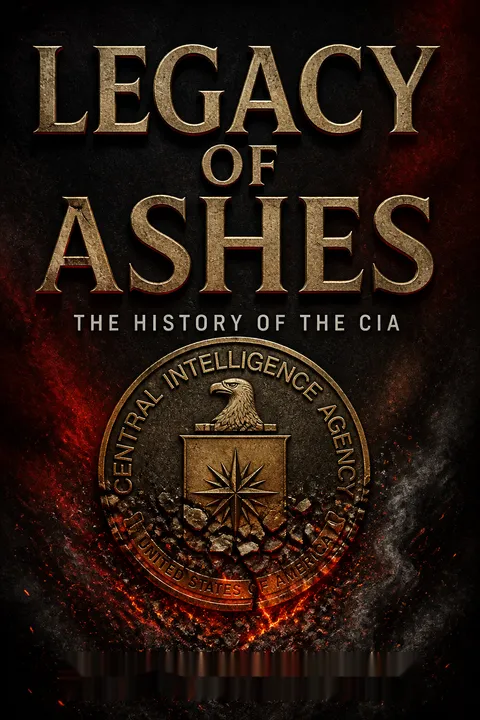


Key Takeaways
Build an agency that warns presidents, not one that flatters them
The first mission was clarity. Harry Truman wanted a concise daily account of world events, not a secret army. Yet the CIA grew into an organization where covert action often outranked the slower work of gathering and weighing intelligence. Its leaders learned that unwelcome assessments could cost them influence, so bad news was softened, buried, or ignored. During Vietnam, officials reshaped estimates to fit claims of progress. Before the Iraq War, the agency presented thin evidence as a persuasive case for weapons it could not find.
The pattern outlasted presidents. Truman, Eisenhower, Kennedy, Johnson, and their successors alternated between expecting the CIA to solve every problem and dismissing it when its findings disappointed them. That instability weakened the agency, but it did not absolve its leaders of choosing self-protection over candor.
What's striking is the clash between intelligence as a service and intelligence as an institution seeking survival. Organizational research on principal-agent problems shows how a subordinate can shape information to preserve access to its powerful principal. The remedy is not simply a more independent agency: independence can also shelter self-serving operations. Credibility requires a protected channel for dissent, clear standards for uncertainty, and leaders who reward accurate warning even when it complicates policy.
Define the mission and authority before secret operations start
Ambiguity became permission. The National Security Act of 1947 created the CIA in six brief paragraphs. It required the agency to coordinate and report intelligence, then added a vague provision for other duties related to national security. That opening was used to launch covert action without a clear public mandate. The CIA Act of 1949 granted broad administrative powers and made secret spending easier, while the director remained responsible for an agency he could not fully control.
The result was an unstable bargain. Presidents, cabinet officials, and intelligence chiefs could authorize or conduct operations with little routine review. The agency's leaders sometimes acted before policy was settled, then presented their choices as necessary. Secrecy protected legitimate sources, but it also blurred who had approved an operation, who was accountable, and what counted as success.
The institutional problem resembles a classic delegation dilemma: elected leaders need discretion for secret work, but discretion without monitoring invites mission expansion. Clear authorization can protect an agency as much as constrain it, because it distinguishes approved risk from freelancing. Oversight should not require publishing operational details. It should require a traceable record of who authorized objectives, what evidence supported them, and how results were reviewed.
A coup can succeed tactically and still damage national interests
A quick victory looked decisive. In 1953, the CIA and British intelligence helped remove Iran's prime minister, Mohammad Mossadeq, after he nationalized the oil industry. They paid politicians, religious figures, and street groups, while a military faction helped restore the shah. In Guatemala in 1954, the agency backed a small rebel force, propaganda, and military pressure that drove President Jacobo Arbenz from office. Both operations became celebrated as proof that the CIA could change governments cheaply.
The aftermath was harder to control. The shah built a repressive security service, while Guatemala endured decades of military rule and violence. In Iran, the memory of foreign interference fed lasting hostility toward the United States. These outcomes had many causes, but the coups tied American policy to rulers whose stability and legitimacy proved fragile.
What's striking is the difference between an operation's immediate output and its strategic outcome. A government can be removed on schedule while the political legitimacy needed for durable cooperation is destroyed. Policy evaluation therefore needs a longer time horizon and a counterfactual: what likely happens without intervention, and what alternatives were available? The book's cases support caution, not a claim that every covert intervention inevitably produces disaster.
Vet sources and local networks before sending agents into hostile territory
The early operations often mistook hope for access. In 1949, the CIA parachuted Ukrainian agents into Soviet territory, expecting them to reach anti-Soviet resistance groups. Soviet security forces quickly captured them. In Albania, the agency kept sending exiles into a network already penetrated by Soviet intelligence. The betrayal was worsened by James Angleton's sharing of operational details with Kim Philby, a British intelligence officer secretly working for Moscow.
Korea showed the cost of weak validation. In 1952, the CIA sent more than 1,500 Korean agents north. Its Seoul station relied on reports that were invented or controlled by the enemy, including a celebrated account of communist troop positions that proved false. Agents disappeared, and commanders acted on fabricated information. A source's willingness to cooperate was not proof of access, reliability, or independent control.
These cases expose a principal-agent problem in unusually literal form: the agency depends on people whose incentives, loyalties, and information it cannot fully observe. Good tradecraft must test a source's access independently, look for corroboration, and assess what the source gains from each report. A warning follows, though: extreme suspicion can become its own pathology. Counterintelligence protects operations only when evidence, not generalized fear, drives judgments.
Protect analytic dissent when evidence conflicts with policy
Political pressure changed the numbers. During the Vietnam War, military commanders argued that fewer than 300,000 enemy fighters faced the United States, while CIA analysts believed the total exceeded 500,000. The larger figure threatened the public story of progress. The CIA ultimately accepted a lower count because it was politically acceptable. In the Gulf of Tonkin episode, intelligence from a confused night at sea was treated as proof of a second attack, helping justify a major escalation.
The same weakness surfaced in Iraq. Before the 2003 invasion, analysts repeated claims about chemical, biological, and nuclear weapons despite having few reliable sources. Some warnings and doubts existed, but they did not shape the agency's central assessment. When analysis is bent toward a preferred policy, its volume can create an illusion of support without adding independent evidence.
This is a version of Goodhart's law: when a measure becomes a target, it stops being a reliable measure. If leaders demand evidence of progress, analysts may produce tidy figures that serve the demand rather than describe the conflict. An institution needs formal space for competing assessments and a record of unresolved disagreement. Dissent is not automatically right, but suppressing it removes the very mechanism that can reveal faulty assumptions.
Use satellites to count weapons, not to infer intentions
Technology improved observation, not understanding. The U-2 aircraft and spy satellites gave the United States unprecedented views of Soviet military installations. In 1960, estimates projected 500 Soviet intercontinental missiles by 1961; the Soviet Union had four. The CIA could photograph launch sites and count aircraft, but those images did not reveal what Soviet leaders intended or how weak their economy had become.
The Cuban missile crisis showed both value and limits. CIA imagery eventually exposed Soviet missiles in Cuba, but flights had been paused amid political caution, creating a dangerous gap. John McCone argued that Moscow might place missiles there; most experts dismissed the possibility. The satellites supplied evidence, but judgment still depended on people willing to challenge assumptions and interpret what the images could not show.
Sensors produce observations, not explanations. This distinction matters in any data-rich field: a precise measurement can still answer the wrong question. Counting military equipment is easier than estimating intent, resilience, or political risk, so technical precision can encourage overconfidence. Better collection helps, but it must be paired with models that make assumptions explicit and analysts who can distinguish what a sensor detects from what decision-makers hope it means.
Track the human costs and long tail of covert action
Secret allies do not become disposable when policy changes. In Laos, the CIA armed and organized Hmong forces to fight communist armies and protect the Ho Chi Minh Trail. When the American war ended, the agency had no adequate evacuation plan for its allies. Thousands of Hmong and their families crowded an airstrip, while only a few planes were available. Many were left behind, and their old way of life was destroyed.
An apparent success carried another risk. In Afghanistan, CIA weapons helped Afghan fighters inflict heavy losses on Soviet forces. But the agency did not plan for what followed the Soviet withdrawal or fully account for the militant groups strengthened by the war. The United States had helped create an effective anti-Soviet force without a clear strategy for what that force might do next.
The moral problem is also operational: abandoned partners can become liabilities, while arms and networks persist after the original mission ends. This is not automatic blowback. Local actors retain their own aims, and outside sponsors rarely control the whole chain of consequences. Still, an endgame review should ask who bears the risk after withdrawal, what capabilities remain in circulation, and whether a tactical gain creates obligations the sponsor is unwilling to meet.
Make secrecy answerable, or agencies will conceal failure and abuse
Secrecy protected more than sources. The CIA opened private mail, spied on American antiwar groups through Operation CHAOS, and ran covert plots against foreign leaders. After Watergate, the agency disclosed a much wider record of domestic surveillance, drug experiments, and assassination plans. Earlier, directors had buried internal reports on failed missions to protect the agency's reputation and their own standing.
Oversight arrived after trust had eroded. For years, a small number of legislators received secret budgets without meaningful review of many operations. The Iran-contra affair showed how a covert program could evade Congress, move arms, and divert profits to a forbidden war. Secrecy can be essential to intelligence, but secrecy without independent inspection gives leaders an incentive to describe failure as success and unlawful conduct as necessity.
The challenge is designing oversight that is both secure and consequential. Public disclosure of agent identities can be dangerous, but confidential review can still test legality, evidence, and performance. Political oversight also has risks: legislators may use secrets for partisan advantage or punish unwelcome analysis. The strongest system protects sources while preserving auditable decisions, independent investigators, and sanctions for deception.
Invest in language skills and local expertise before the next crisis
The agency repeatedly arrived without the people it needed. Early officers in China, Korea, and Eastern Europe often lacked language skills and reliable local contacts. In Iran before the 1979 revolution, a small, inexperienced station had little understanding of the religious movement that displaced the shah. After the Cold War, the CIA lost more than 3,000 experienced people, including roughly one-fifth of its senior personnel, while reducing overseas stations and recruitment.
Technology and head count could not replace expertise. By 2001, the agency had only a small cadre focused on al Qaeda and few specialists able to interpret key languages and cultures. Training a capable case officer takes years. Crisis hiring cannot instantly produce the judgment, trust, and local knowledge that accumulate through sustained work.
Human expertise is a form of infrastructure, not a luxury that can be switched on during emergencies. Language fluency and cultural familiarity are built through repetition, relationships, and time. A larger budget can restore capacity only if recruitment and retention reward those skills. At the same time, local knowledge should not be confused with automatic insight: specialists still need room to question their own assumptions and compare interpretations.
Demand calibrated uncertainty before intelligence becomes a warrant for war
The Iraq estimate turned weak evidence into a confident verdict. Before the 2003 invasion, the CIA had fewer than a handful of useful Iraqi sources. One key source, code-named Curveball, claimed Iraq had mobile biological weapons laboratories, but his reporting was unreliable. The agency's estimate nevertheless asserted that Iraq had chemical and biological weapons and was rebuilding a nuclear program. Colin Powell presented the conclusions to the United Nations as firm fact.
Inspection found the arsenal absent. David Kay, who led the postwar search, concluded that the intelligence had been wrong. The failure was not simply that analysts failed to predict the future. They failed to show how little they knew, how dependent they were on questionable sources, and how much uncertainty remained. A judgment presented without its limits can become a political authorization for war.
Intelligence is probabilistic evidence, not a verdict. Decision-makers still choose whether to act, but they cannot judge risk properly if confidence levels and source weaknesses are hidden. Forecasting research emphasizes calibration: a claim made with high confidence should prove right more often than a low-confidence claim. The Iraq case argues for explicit uncertainty, alternative explanations, and independent challenge, especially when the cost of being wrong is war.
Analysis
Legacy of Ashes is a history of an institution caught between two incompatible demands: it must keep secrets from adversaries while telling elected leaders truths they may not want to hear. Weiner's central argument is that the CIA repeatedly failed at the second task because covert action offered visible movement, presidential access, and institutional prestige, while espionage and analysis required patience, language skills, and a willingness to report uncertainty. Across Iran, Vietnam, the Cold War, and Iraq, the agency's pattern is not simply bad prediction. It is the interaction of weak sources, political pressure, poor oversight, and organizational self-protection.
The book's strongest evidence comes from the recurrence of the same mechanisms across different administrations. A failed operation is hidden to protect reputation; a warning is softened to preserve access; a source is believed because the report fits expectations; a tactical achievement is sold as strategic success. This makes the history more than a parade of scandals. It is a study of how institutions learn badly when failure carries no clear cost and success is defined by the people who authorized the mission.
The account is also deliberately prosecutorial. Its focus on failure can understate intelligence work that was useful but less dramatic, and it cannot fully reconstruct operations whose records remain sealed. That limitation does not erase the pattern, but it counsels against treating every covert action as futile or every intelligence judgment as corrupted. The more durable lesson is institutional: secrecy needs independent review, analysts need protection from policy demands, and leaders must see intelligence as a disciplined account of evidence rather than a guarantee of certainty. A capable agency cannot prevent every surprise. It can, however, make clear what it knows, what it suspects, and what it cannot know.
Review Summary
Legacy of Ashes receives mixed reviews averaging 3-4 stars. Readers praise Tim Weiner's extensive research using 50,000 declassified documents and interviews with CIA directors. The book chronicles decades of CIA failures: missed predictions, botched covert operations, penetration by foreign agents, and catastrophic intelligence errors. Critics note the overwhelmingly negative portrayal may lack balance, with successes barely mentioned. Some find the writing dry and episodic, jumping rapidly between events. Reviewers appreciate the documentation of CIA involvement in coups, assassinations, and regime changes worldwide. Many found the book eye-opening, revealing incompetence rather than omnipotence, though some question the bias and political agenda.
People Also Read

Glossary
covert action
Secret influence abroadCovert action is secret activity intended to influence political or military events in another country, rather than merely gather information about them. In the book, it includes propaganda, financial support for politicians, sabotage, support for armed groups, and efforts to overthrow governments. Its secrecy is meant to conceal the role of the United States.
plausible deniability
Concealed government responsibilityPlausible deniability is the effort to keep a covert operation sufficiently hidden that the government can credibly deny responsibility if it is exposed. The concept shaped CIA planning and presidential oversight. In practice, operations often became known locally or internationally, while the doctrine encouraged officials to conceal responsibility from the public and sometimes from other parts of government.
National Intelligence Estimate
Shared intelligence judgmentA National Intelligence Estimate is a coordinated assessment of a major foreign-policy or security question, drawing on information from multiple U.S. intelligence agencies. It is meant to present the best collective judgment to national leaders. The book shows how estimates can mislead when sources are weak, uncertainty is obscured, or political expectations shape the conclusions.
counterintelligence
Defense against foreign spiesCounterintelligence is the effort to identify and thwart foreign intelligence operations, including the recruitment of insiders, the compromise of agents, and the spread of deception. The CIA's counterintelligence work was intended to protect its sources and operations. The book also shows how suspicion can become excessive, causing officials to dismiss valuable information and damage their own organization.
Operation Ajax
1953 Iran coup operationOperation Ajax was the CIA's code name for the 1953 operation, conducted with British intelligence, to remove Iranian prime minister Mohammad Mossadeq and restore the shah's authority. It relied on political payments, propaganda, street mobilization, and military support. Its initial success helped create a long American relationship with the shah's government and its security service.
Project Mongoose
Covert campaign against CastroProject Mongoose was a Kennedy-era program directed at undermining Fidel Castro's government in Cuba. Its plans included intelligence collection, sabotage, propaganda, and attempts to organize opposition. The operation reflected the White House's demand for action after the Bay of Pigs, despite the CIA's limited access to reliable information inside Cuba.
Curveball
Unreliable Iraqi sourceCurveball was the CIA's code name for an Iraqi source who claimed that Saddam Hussein's government had mobile biological weapons laboratories. The CIA relied heavily on this secondhand reporting in its prewar assessment, despite doubts about the source's reliability. After the invasion, investigators found no such weapons program, and the source's claims were discredited.
Download PDF
Download EPUB
.epub digital book format is ideal for reading ebooks on phones, tablets, and e-readers.








