

Key Takeaways
Trace the Contra-linked cocaine pipeline behind South Central’s crack market.
A tip became a trail. In 1995, a woman connected to an imprisoned Nicaraguan trafficker urged Gary Webb to examine a witness named Danilo Blandón. Court records showed that Blandón had moved large quantities of cocaine and was cooperating with federal prosecutors. His testimony and other records linked him to the Contras, the U.S.-backed Nicaraguan rebels. Webb followed the trail through court files, interviews, government records, and a cache of Senate investigation materials that had received little attention.
The link is consequential. Webb’s reporting connects Contra-associated traffickers to cocaine sold in Los Angeles, including the supply that reached crack dealer Ricky Ross. The evidence supports a network of traffickers, Contra fund-raising, and government awareness of drug allegations. It does not, by itself, prove that the CIA designed or directed the crack market.
What gives the investigation its force is its attempt to follow the commodity upstream, from neighborhood sales to suppliers and political networks. That approach corrects a common blind spot: visible street crime is easier to police than the financing and protection surrounding wholesale supply. The distinction between connection and command remains essential, however. Evidence that traffickers supported the Contras, and that officials knew of allegations, is not identical to proof that the CIA ordered cocaine sales in Los Angeles.
A cheap, smokeable product turned elite cocaine into a street-level market.
The product changed the market. Webb traces crack’s appeal to a shift from expensive powder, associated with affluent users, to small retail portions of smokeable cocaine that cost far less per purchase. Researchers had warned about cocaine smoking years before it became a major Los Angeles problem. In South Central, dealers could sell small rocks for a few dollars, bringing new customers into the market and making repeat purchases easy.
Ross scaled distribution. Ross began with small amounts, then used lower prices, steady supply, and a growing network of dealers to sell far more. Webb cites testimony that Blandón supplied Ross’s operation and describes Ross moving from street sales to wholesale sales for other dealers. Estimates of their volume vary, but the scale and reach of the operation are central to Webb’s account.
The book’s strongest market insight is that distribution design can matter as much as a drug’s pharmacology. Smaller units lowered the price of entry, while smokeable delivery made the product attractive to customers who would not buy powder. Ross’s business model then multiplied access through other dealers. That explains a route to rapid expansion, not the whole cause of addiction or neighborhood damage. The distinction helps avoid turning a persuasive account of supply into a claim that one dealer created every consequence.
Do not let a political cause excuse criminal allies.
The war created incentives. After the Sandinistas overthrew Somoza in 1979, former regime supporters organized opposition groups that became the Contras. Webb describes the early FDN as short of money and supplies, while some of its supporters had criminal connections. He reports that Blandón and Norwin Meneses sold cocaine while raising funds or providing material support to Contra organizations. Their accounts differ on how much money went to the rebels and when those contributions ended.
Oversight weakened. Webb cites CIA reporting about drug smuggling by Contra-linked figures and describes officials continuing relationships with people accused of trafficking. A 1982 CIA and Justice Department agreement, as summarized in the book, excluded certain nonemployees and drug offenses from required reporting. Such rules could make politically useful allies harder to scrutinize.
The moral hazard is clear: when a covert mission is treated as more important than ordinary law enforcement, questionable partners can become operational assets. Webb’s account shows how anti-Communist purpose supplied a ready justification for tolerating criminal conduct. That mechanism does not require a single order from the top; fragmented agencies and selective priorities can produce protection without a centralized plan. The reader should still distinguish a political organization’s documented contact with traffickers from proof that every leader approved each crime.
Separate documented complicity from claims of a master CIA plan.
The evidence has layers. Webb presents court testimony, DEA and FBI reports, CIA cables, and interviews linking Contra supporters to cocaine trafficking. One prominent example is the 1983 San Francisco “Frogman” case. Contra representatives claimed money seized from a defendant belonged to their organization. After CIA officials objected to planned depositions, the government returned the money and the depositions were canceled. The records show intervention around a damaging inquiry, even though they do not establish every participant’s knowledge.
The larger claim needs care. The book makes a strong case that officials sometimes protected or retained relationships with accused traffickers. It offers less direct proof that CIA leaders instructed dealers to seed crack in Black neighborhoods. Webb himself distinguishes evidence of tolerated trafficking from proof of a deliberate crack strategy.
This distinction strengthens rather than weakens the account. Historical claims become more credible when they are divided into testable propositions: who trafficked, who knew, who intervened, and who ordered what. Webb’s records support some propositions much more firmly than others. Institutional protection can be documented without proving a unified conspiracy, and the book is most persuasive when it lets that uneven evidentiary landscape remain visible instead of flattening it into a single accusation.
Question drug panics that punish street sellers but ignore supply.
Warnings came early. In 1979, Yale researcher Robert Byck told Congress that smoking cocaine could become a severe public health problem. The committee moved on to other subjects, and the federal response concentrated on reducing coca cultivation abroad. By the time crack became a national media story in 1986, officials claimed the drug had appeared almost overnight, despite its earlier spread in Los Angeles.
Punishment outran knowledge. Congress passed a 100-to-1 weight ratio that imposed the same five-year mandatory sentence for about $750 worth of crack as for roughly $50,000 worth of powder cocaine. Webb argues that the law fell hardest on low-level crack defendants while doing little to explain or disrupt wholesale supply. The public panic also helped political leaders appear forceful without resolving the conditions that made the market flourish.
The chapter’s sharpest institutional contrast is between neglect before the crisis and certainty during it. Officials could overlook warnings when the problem seemed confined, then claim urgency once it became politically visible. The sentencing disparity made that urgency concrete, but harsher penalties did not answer the book’s central supply-chain questions. A fair reading should also distinguish the reality of severe harm from exaggerated claims of a sudden, nationwide wave. Alarm can attract attention while distorting where responsibility lies.
Read the files officials dismissed before accepting their denials.
The record already existed. Webb’s reporting drew on the Kerry Committee’s investigation, which assembled roughly 1,100 pages of testimony and exhibits concerning Contra-linked drug trafficking. Pilots, traffickers, and officials described drugs moving through Central America and money or supplies reaching Contra groups. In California, court records from the Frogman case contained testimony about cocaine profits and the Contras, even though that evidence received little mainstream coverage at the time.
Corroboration matters. Webb did not rely only on convicted traffickers’ claims. He compared their accounts with records, law enforcement reports, wiretaps, and statements from investigators. Yet informants have incentives to mislead, and government files can be incomplete or censored. The strongest conclusions come where independent records and witnesses converge, not where one source makes the most sensational allegation.
A document trail is not automatically a verdict, but it lets readers examine what official summaries leave out. Webb’s approach is valuable because it places testimony beside contemporaneous records and exposes how old claims can disappear when institutions stop pursuing them. The same discipline should apply to the book itself: a source’s credibility, the purpose of a report, and the difference between firsthand knowledge and rumor all matter. Transparency makes scrutiny possible; it does not eliminate the need for it.
When a newsroom retreats, ask whether facts changed or pressure did.
The reporting met resistance. Webb recounts how earlier journalists who pursued Contra drug allegations were dismissed or ignored. When “Dark Alliance” appeared in 1996, the San Jose Mercury News gave it unusual space and placed supporting documents online. The series drew intense public attention, while the Washington Post and Los Angeles Times challenged its interpretation and causal claims. Their criticism raised legitimate questions about scale and the difference between CIA awareness and CIA direction.
The paper changed course. In 1997, editor Jerry Ceppos published a column acknowledging shortcomings in the series. Webb believed the column overstated the errors, minimized evidence, and helped end further reporting. The follow-up stories he had prepared were not published. The episode leaves two responsibilities in tension: correct weaknesses openly, and do not abandon well-supported facts simply because defending them is difficult.
A newsroom’s correction can be an act of accountability, but it can also become a substitute for continued reporting. The useful test is whether editors identify specific errors, preserve claims that remain supported, and keep investigating unresolved questions. Webb’s account makes the pressure around institutional reputation impossible to ignore, though his own perspective is understandably shaped by the paper’s treatment of him. Readers should assess the correction and the underlying record separately rather than treating either as a final judgment.
Publish the evidence trail when a government drug story sounds unbelievable.
The Web changed access. The Mercury News placed source documents, photographs, maps, audio, and court material alongside the series online. Readers could inspect much of the underlying record instead of relying only on a reporter’s summary. That transparency helped the story circulate through talk radio and online discussion, especially when major newspapers had not yet taken it up.
Access is not certainty. The online archive helped make the reporting auditable and gave readers a way to compare claims with documents. It could not resolve every contradiction, prove every informant truthful, or establish that the CIA directed the crack market. The lasting lesson is narrower and practical: when powerful institutions deny a contested story, make the evidence as accessible as possible, label what it does and does not prove, and invite readers to test the chain of reasoning.
The online archive turns journalism from a request for trust into an invitation to inspect. That is especially valuable when the dispute concerns what a government knew, what it concealed, and how reporters reached their conclusions. Yet raw documents do not interpret themselves. Selection, context, and uncertainty still shape what readers see. The most responsible version of open-source reporting pairs access with a clear map of evidentiary strength, so transparency informs judgment rather than merely amplifying suspicion.
Analysis
Dark Alliance is an investigative history built as a chain of people, transactions, and institutional choices. Its narrative begins with Webb’s skepticism toward a tip about the CIA, then follows court records toward Danilo Blandón, Norwin Meneses, Contra organizations, and South Central Los Angeles. The storytelling matters because the alleged connection is not one document but a network assembled from testimony, indictments, wiretaps, agency reports, and interviews.
The book’s analytical strength is its focus on tolerated relationships. It shows how covert policy, intelligence work, and drug enforcement could overlap without a clean division of responsibility. The reported return of seized money in the Frogman case, the use of Meneses as a DEA informant, and the continued dealings with Contra-linked figures illustrate how institutions can protect useful sources while publicly denying broader involvement. This is a consequential argument about incentives and oversight, not merely a tale of individual corruption.
The central causal claim needs narrower wording than the book’s most dramatic framing. Evidence that Contra supporters trafficked cocaine, and that government agencies knew of allegations or intervened in cases, is not equivalent to proof that CIA leaders planned the crack market. Webb’s own material supports the former more securely than the latter. Nor does identifying Ross and his suppliers explain every local or national pathway by which crack spread. The book is strongest when it establishes a specific pipeline and documents official accommodation; it is less conclusive when it treats that pipeline as the principal origin of a much broader epidemic.
The journalism narrative adds a second subject: how institutions decide what counts as credible. Webb’s insistence on records and public access is a meaningful response to earlier neglect, while criticism of his causal framing is not inherently proof of a cover-up. The most durable reading holds both points together: the evidence warrants serious scrutiny of government conduct, and the limits of that evidence warrant equally serious scrutiny of the book’s conclusions.
Review Summary
Dark Alliance exposes the CIA's involvement in cocaine trafficking to fund the Contras in Nicaragua. Readers praise Webb's meticulous research and compelling narrative, describing the book as eye-opening and world-changing. Many express anger at government corruption and the devastating impact on black communities. Some find the detailed reporting challenging to follow but ultimately rewarding. Reviewers commend Webb's courage in pursuing the story despite personal and professional consequences. The book is widely regarded as essential reading for understanding this dark chapter in American history.
People Also Read


Glossary
FDN (Fuerza Democrática Nicaragüense)
CIA-backed Contra organizationThe principal Nicaraguan Contra organization based in Honduras and formed from earlier anti-Sandinista groups. The CIA helped unite and support it, and Enrique Bermúdez became its military commander. Webb describes drug traffickers and supporters linked to the FDN, while noting disputes about their official roles and the extent to which drug proceeds reached the organization.
Frogman case
San Francisco cocaine prosecutionA major early 1980s San Francisco drug case involving cocaine couriers who retrieved hundreds of pounds of cocaine from a cargo ship while wearing diving gear. Testimony and court records linked some defendants and cocaine proceeds to Contra supporters. Webb emphasizes that government officials later sought to prevent depositions that could have publicly explored those connections.
NADDIS
DEA trafficker information systemThe Drug Enforcement Administration’s Narcotics and Dangerous Drugs Information System, used to store intelligence profiles on suspected traffickers and their associates. Webb describes investigators using it to find that Blandón and Meneses had long-running records, known connections, and prior investigative references, despite the absence of corresponding prosecutions at the time.
Boland Amendment
Limits on Contra aidA series of congressional restrictions on U.S. assistance to the Nicaraguan Contras. The 1982 measure prohibited funds for overthrowing Nicaragua’s government or provoking a military conflict, while a stricter 1984 measure barred government agencies from providing aid to support the Contras. The restrictions prompted covert efforts to keep the Contra war supplied.
100-to-1 weight ratio
Crack versus powder sentencing disparityA federal sentencing rule that treated crack cocaine quantities as one hundred times more serious than equal quantities of powder cocaine. Webb describes the rule as producing the same five-year mandatory sentence for about $750 worth of crack as for roughly $50,000 worth of powder. He argues that the disparity fell disproportionately on low-level crack defendants.
NHAO (Nicaraguan Humanitarian Assistance Office)
Contra aid distribution officeA State Department office established to distribute congressionally authorized humanitarian assistance to the Contras. Webb describes Oliver North and CIA personnel exerting influence over its operations, including the selection of carriers and intermediaries. Some contractors and associated businesses had reported links to drug trafficking, raising questions about oversight and the tracing of funds.
FAQ
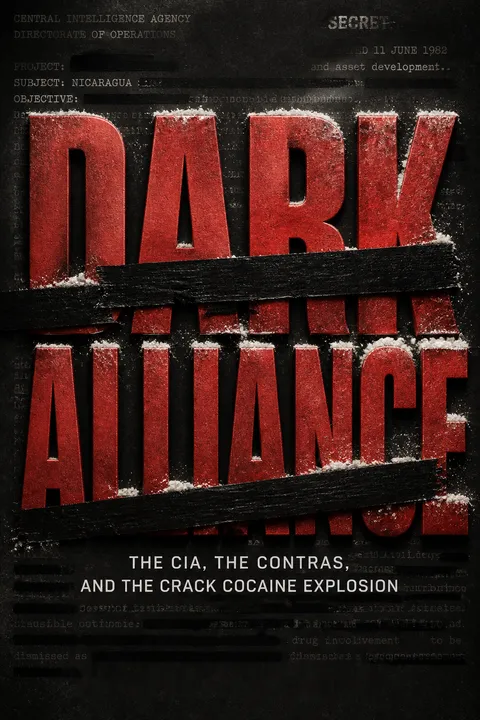
What is Dark Alliance: The CIA, the Contras, and the Crack Cocaine Explosion by Gary Webb about?
- Investigative exposé on CIA-Contra drug links: The book uncovers how CIA-backed Nicaraguan Contras were involved in cocaine trafficking that fueled the crack epidemic in Los Angeles and other U.S. cities during the 1980s.
- Focus on drug smuggling and political cover-ups: Webb documents how drug dealers connected to the Contras imported tons of cocaine into the U.S., with the knowledge or complicity of U.S. government agencies.
- Personal stories and government complicity: The narrative follows key traffickers and government insiders, exposing how agencies turned a blind eye or actively protected these operations.
- Historical and political context: Webb situates the drug trade within the Cold War, the fall of the Somoza dictatorship, and the Reagan administration’s covert war against the Sandinistas.
Why should I read Dark Alliance by Gary Webb?
- Unveils hidden history: The book exposes a covert and disturbing chapter of U.S. history involving government agencies, drug trafficking, and the destruction of inner-city communities.
- Challenges mainstream narratives: Webb’s work counters official denials and media dismissals, showing how the truth was suppressed for political convenience.
- Groundbreaking investigative journalism: Webb’s meticulous research and use of public records, court documents, and firsthand interviews set a new standard for investigative reporting.
- Humanizes the crisis: The book tells the story through the lives of traffickers, victims, and government insiders, illustrating the human cost of the crack epidemic.
What are the key takeaways from Dark Alliance by Gary Webb?
- CIA-Contra drug trafficking link: The CIA-backed Contras used cocaine trafficking as a major source of funding, with drug shipments reaching U.S. cities, especially Los Angeles.
- Government agencies’ complicity or negligence: The CIA, DEA, FBI, and others either ignored or facilitated drug trafficking to support the Contra war, prioritizing geopolitical goals over public health.
- Media and political cover-up: Major newspapers and officials attacked Webb’s reporting to protect the establishment, leading to his professional ruin despite the accuracy of his findings.
- Crack epidemic’s roots in foreign policy: The devastating crack explosion in African American communities was linked to covert U.S. foreign policy decisions and illegal activities abroad.
Who are the main figures involved in the CIA-Contra drug trafficking network in Dark Alliance?
- Norwin Meneses ("The King of Drugs"): A major Nicaraguan cocaine trafficker and Contra supporter, who worked closely with the DEA and CIA as an informant.
- Danilo Blandón ("Chanchin"): Head of a multiton cocaine distribution ring in Los Angeles, the first to connect South Central gangs to Colombian cartels, and a key Contra fundraiser.
- Freeway Ricky Ross: South Central L.A.'s first major crack distributor, who rose from street dealer to kingpin, supplied by Blandón and Meneses.
- CIA and Contra leaders: Figures like Enrique Bermúdez and Adolfo Calero, who facilitated or ignored drug trafficking to fund the Contra war.
How did the crack cocaine epidemic begin and spread, according to Dark Alliance by Gary Webb?
- Cocaine smoking origins: The book traces the rise of cocaine smoking in South America in the 1970s, which spread northward to the U.S.
- Transformation to crack: California traffickers reverse-engineered cocaine powder into freebase and then crack, making it cheaper, smokable, and more addictive.
- Mass distribution in L.A.: Crack was marketed in small, affordable doses, making it accessible to a broad demographic and fueling rapid adoption in poor urban neighborhoods.
- Contra-funded drug trafficking: The Contras’ cocaine shipments provided the raw material for crack, fueling the epidemic in African American communities.
What role did the CIA and U.S. government agencies play in the Contra drug trafficking network, as described in Dark Alliance?
- Political priorities over enforcement: The CIA prioritized overthrowing the Sandinista government over combating drug trafficking by Contra forces, often ignoring or downplaying reports of Contra involvement.
- Protection and complicity: Key traffickers like Meneses and Blandón were protected by the CIA and DEA, sometimes acting as informants while continuing to traffic cocaine.
- Covert operations and cover-ups: The CIA and National Security Council managed Contra supply operations that included drug flights and arms shipments, often obstructing or suppressing investigations.
- Secret agreements: A 1982 agreement between the CIA and Justice Department exempted CIA assets from drug crime reporting, shielding traffickers from prosecution.
How did Gary Webb investigate and uncover the CIA-Contra drug connection in Dark Alliance?
- Initial tip and court case: Webb was tipped off by a woman connected to a convicted trafficker whose case involved Oscar Danilo Blandón, who admitted selling cocaine for the Contras.
- Extensive use of public records: He filed numerous Freedom of Information Act requests, scoured court files, congressional hearings, and interviewed key figures to piece together the network.
- Collaboration and fieldwork: Webb worked with other journalists to access foreign court files and conduct interviews in Central America.
- Innovative use of the Internet: Webb and the San Jose Mercury News published source materials online, allowing readers to verify evidence and engage with the story.
How did the relationship between Freeway Ricky Ross and his suppliers shape the crack epidemic, according to Dark Alliance?
- Early supplier dynamics: Ross initially sourced cocaine from local suppliers, then moved to larger, more reliable sources like Danilo Blandón, who offered high-purity cocaine at low prices.
- Mentorship and business acumen: Blandón became Ross's mentor, advising him on business and security, which enabled Ross to dominate the crack market.
- Bulk sales and market expansion: Ross pioneered selling in bulk to smaller dealers and rock houses, increasing volume and profits while reducing street-level competition.
- Supplier competition: Ross diversified his suppliers, creating rivalry and ensuring supply continuity, which further expanded the crack market.
What was the significance of "rock houses" and the marketing strategy behind crack cocaine in Dark Alliance?
- Centralized distribution: Rock houses operated as crack-selling establishments where users could buy and consume crack in one location, increasing sales volume and customer retention.
- Standardized packaging and pricing: Crack was sold in small, prepackaged doses at affordable prices, making it accessible to a broad demographic and maximizing market penetration.
- Democratization of dealing: The low entry cost enabled users to become dealers, expanding the sales force and increasing overall market size.
- Intensified addiction cycles: The convenience and social acceptability of smoking crack contributed to its rapid spread and devastating social consequences.
How did U.S. law enforcement and intelligence agencies respond to the Contra drug trafficking and crack epidemic, according to Dark Alliance?
- Suppression and obstruction: Investigations into Contra drug trafficking were often stifled or redirected by agencies like the CIA, DEA, and State Department to protect political interests.
- Use of informants and protected traffickers: Drug lords like Meneses acted as informants for the DEA and were shielded from prosecution, undermining anti-drug efforts.
- Limited media coverage: Mainstream media initially ignored or downplayed the crack epidemic and its links to Contra drug trafficking, delaying public understanding and policy responses.
- Internal resistance: Agents who tried to investigate Contra drug links faced internal resistance and were often ordered to halt inquiries.
What was the reaction to Dark Alliance by Gary Webb upon its publication?
- Initial silence, then explosive interest: The series initially received little attention but quickly gained traction through talk radio and the Internet, especially within African American communities.
- Government and media backlash: Major newspapers published critical stories attacking Webb’s conclusions, often relying on unnamed sources and CIA denials.
- Internal pressure and suppression: Webb faced editorial pressure, demands to rewrite or cut the series, and eventual public disavowal by his newspaper.
- Personal and professional consequences: Webb was reassigned, marginalized, and eventually resigned from journalism, while his follow-up stories were suppressed.
What are the most notable quotes from Dark Alliance by Gary Webb, and what do they mean?
- "For the better part of a decade, a Bay Area drug ring sold tons of cocaine to the Crips and Bloods street gangs of Los Angeles and funneled millions in drug profits to a Latin American guerrilla army run by the U.S. Central Intelligence Agency, a Mercury News investigation has found."
This opening line encapsulates the core revelation of the book: the direct link between drug trafficking in U.S. cities and CIA-backed Contra forces, challenging official denials. - "The fact that a government-connected drug ring was dumping tons of cocaine into the black neighborhoods in L.A.—and to a lesser extent in San Jose, Oakland, San Francisco, Portland, Houston, Oklahoma City, Alabama and New Orleans—goes a long way towards explaining why crack developed such deep roots in the black community."
This quote highlights the systemic nature of the crack epidemic and its roots in covert government operations, explaining the disproportionate impact on black communities. - "Every government is run by liars and nothing they say should be believed." — I. F. Stone
This sets the tone for Webb’s investigation, emphasizing skepticism toward official narratives and the need for independent inquiry. - "They're going to forget I was a drug dealer." — Freeway Ricky Ross
This poignant statement reflects Ross’s desire for redemption and the human cost of the drug epidemic, as well as the challenges of escaping a criminal past.
Download PDF
Download EPUB
.epub digital book format is ideal for reading ebooks on phones, tablets, and e-readers.








