

Key Takeaways
Treat covert action as a third policy choice, not a secret shortcut
Between talks and war. After World War II, U.S. leaders added covert action to diplomacy and open warfare. The Latin phrase Tertia Optio means this third option: secret government activity intended to influence events abroad without publicly admitting U.S. responsibility. The 1947 National Security Act and later directives placed much of this work under CIA authority, while the military operated under a separate framework called Title 10.
A hidden hand. Covert action could involve propaganda, sabotage, support for rebel forces, or killing a designated person. Administrations repeatedly changed the language for that last act, using terms such as neutralization or targeted killing. The central question is not only whether a target is dangerous, but how removing that person advances policy, and what follows.
The three-option model clarifies why covert action appeals to presidents: it promises influence without the visible costs of invasion or the slow bargaining of diplomacy. But secrecy is not a free-standing substitute for either. It can shorten decision time while weakening public scrutiny, making a tactic appear more controlled than it is. In democratic governance, the relevant test is not merely whether a president can authorize an operation. It is whether citizens and their representatives can later assess its purpose, evidence, and consequences.
Count the retaliation a strike invites as part of its cost
A target, then a reckoning. In 1942, British-trained Czech operatives Jan Kubiš and Josef Gabčík attacked Reinhard Heydrich, a senior Nazi official and architect of mass murder. Their weapons malfunctioned, but a bomb wounded Heydrich, who died days later. The operation disrupted Nazi authority and spread fear among officials. It also triggered savage reprisals: the Nazis destroyed Lidice, killed its men, and sent women and children to concentration camps. The book cites a Czech intelligence officer's estimate that about 5,000 people ultimately paid with their lives.
Victory has a radius. The strike's organizers saw it as justified resistance to a brutal regime. The civilian population endured the retaliation. That is not proof the operation was wrong, but it makes consequences part of the moral calculation, not an afterthought.
This episode exposes a familiar problem in strategic reasoning: the attacker evaluates the immediate target, while civilians experience the opponent's response. A narrow measure of success, such as whether a leader died or an organization was disrupted, can therefore conceal the operation's wider cost. The case also resists easy condemnation. Leaving a mass murderer in power carries its own human price. The hard question is how decision-makers compare foreseeable risks without treating the people most exposed to retaliation as expendable variables.
Do not mistake covert activity for reliable intelligence
A war of bad information. During the Korean War, the CIA tried to send Korean and Chinese agents behind enemy lines to gather intelligence and conduct sabotage. Many recruits came from refugee camps; handlers often could not verify their backgrounds, language skills, or loyalties. In one 1952 operation, a recruited fighter threw a grenade inside an aircraft, killing or endangering the mission team. Some agents were double agents, and reports from the field were sometimes fabricated.
Failure concealed. Thousands of locally recruited fighters and American handlers were sent into North Korea, many never returning. The Agency's own later assessment found that the operations produced little useful intelligence at immense human cost. Leaders feared that admitting failure would damage the CIA's standing, so poor results were hidden rather than used to stop the program.
The Korean episode is a warning about confusing activity with knowledge. A large operation generates reports, missions, and apparent momentum, yet none guarantees that the underlying picture is accurate. Secrecy compounds the danger when the institution responsible for evaluating performance also has an incentive to defend its reputation. This resembles a broader organizational failure: when bad news is punished, evidence becomes less trustworthy precisely when leaders most need it. Independent review and clear measures of mission value are operational safeguards, not bureaucratic luxuries.
A coup can topple a government faster than it can build legitimacy
Guatemala's engineered overthrow. In 1954, the CIA backed a force led by Carlos Castillo Armas to depose Guatemala's elected president, Jacobo Arbenz. Arbenz's land reforms threatened United Fruit Company holdings, while U.S. officials feared communist influence. The plan included propaganda, sabotage, pressure on military officers, and lists of people to be eliminated. Arbenz resigned; Castillo Armas took power. The CIA initially presented the operation as an extraordinary success, although its own briefing understated deaths.
The bill outlasted the coup. Repression and civil conflict followed. Che Guevara, then a young doctor in Guatemala, watched the violence and became more committed to revolution. In Iran, the 1953 coup against Prime Minister Mohammad Mossadegh helped restore the Shah to power after Mossadegh nationalized oil. Both operations achieved immediate political aims, but neither could guarantee a stable, broadly accepted order.
These cases distinguish control from legitimacy. A covert sponsor may help remove a leader, but it cannot simply manufacture trust in the replacement, especially when local grievances are real and visible. The operation's short timetable rewards a dramatic transition; institution-building requires patience, compromise, and accountability. The book's account is strongest when it traces how an apparent tactical win can seed future resistance. Still, consequences have multiple causes, and later upheaval should not be attributed to one foreign intervention alone.
Train local fighters only when their incentives match your mission
Vietnam's borrowed army. The CIA and U.S. Special Forces trained local forces to fight communist insurgents, first in Laos and then through South Vietnam's Civilian Irregular Defense Group. The program grew rapidly: by 1963, more than 87,000 South Vietnamese peasants were on the U.S. payroll. Yet many had little commitment to the government's cause. One Pentagon officer observed that they often saw the program as an American project. When enemy forces attacked, some units fled.
The costs reached the trainers. Billy Waugh, who trained local fighters and led combat missions, was badly wounded in a 1965 ambush. Later, MACV-SOG teams crossed into Laos despite a neutrality agreement, trying to disrupt North Vietnamese supply routes. Their work was dangerous, and it could not turn an unpopular political project into a durable one. The war ended with 58,000 Americans dead and South Vietnam defeated.
Foreign military assistance is a principal-agent problem: the sponsor supplies money, weapons, or training, while the local force pursues its own priorities. Shared enemies can produce temporary cooperation, but they do not prove shared political aims. The scale of the CIDG program shows how resources can grow faster than local ownership. A useful test is whether a partner force would keep defending the same communities and institutions if outside funding stopped. If not, tactical capacity may be masking a political deficit.
Secrecy can hide failure from the people who must judge it
Denial by design. Plausible deniability is the ability to conceal a government's responsibility for covert action, or to make that responsibility disputable if exposed. It was built into postwar U.S. policy. In Vietnam, the 1969 Green Beret Affair showed how secrecy could blur command and responsibility: soldiers killed a suspected double agent after receiving what they understood as CIA orders. They were charged with murder, but the case collapsed when a fair trial would have exposed classified operations.
Oversight arrives late. The 1975 Church Committee revealed assassination plots and other hidden programs. President Ford then prohibited political assassination by executive order, but not by a new law passed by Congress. Presidential Findings and Memoranda of Notification formalized covert-action authority, while leaving room for presidents to interpret which killings counted as assassination.
Secrecy can protect operational sources, but it can also fracture responsibility: the people who authorize an action may remain distant from those who carry it out, while those operators bear the visible legal risk. The Green Beret case makes that asymmetry concrete. Oversight is most useful when it examines decisions before a crisis and outcomes afterward, rather than merely confirming that a classified document exists. Yet disclosure itself can endanger people and operations. The institutional challenge is to preserve necessary secrecy without making accountability impossible.
Remote killing changes the optics, not the moral and strategic risks
From field teams to drones. After the September 11 attacks, a 2001 Memorandum of Notification gave the CIA broad authority to capture, detain, interrogate, and use lethal force against terrorists. The Agency expanded its paramilitary operations and weaponized Predator drones. The 2011 raid that killed Osama bin Laden was conducted by a military team operating under CIA authority, not by drone.
Scale changes perception. The book estimates that President Bush authorized 52 drone strikes outside war zones over eight years, compared with 542 under President Obama. It estimates that Obama's strikes killed 3,797 people, including 324 civilians and at least three U.S. citizens. These are estimates, not settled counts. A missile strike can seem cleaner than close combat, but distance does not remove uncertainty about identity, civilian harm, or what a killing does to the conflict.
Technology can improve surveillance and strike precision, but precision is not the same as certainty about the target or wisdom about the outcome. Remote systems also change the public's emotional distance from violence: an operation can feel abstract because the decision-maker does not see the person killed. The comparison between drone strikes and a close-range raid usefully challenges the assumption that one method is inherently more humane. Evaluation should include intelligence quality, civilian risk, legal authority, and whether the operation reduces or reproduces the threat.
A partner force can be indispensable and morally corrosive
The Afghan bargain. After 9/11, CIA teams worked with Afghan warlords and local fighters to find Al-Qaeda and overthrow the Taliban. The partnership offered language skills, access, and knowledge that outside forces lacked. It also meant reliance on corrupt power brokers, including Ahmed Wali Karzai, whose fighters supplied the CIA's Kandahar base. Ground Branch operators suspected one fighter, Saif Mohammad, of spying for the Taliban. They debated killing him, then chose to undermine his standing in a staged boxing match instead.
No clean substitute. The suspicion later appeared serious: explosives and a plan to attack the base were reportedly found, though Saif was released and disappeared. Meanwhile, a 2018 inspector general report documented 5,753 cases of gross human-rights abuses by Afghan forces, including sexual abuse of boys. Partnership provided practical access, but it also tied U.S. operations to forces whose conduct and loyalties could not be controlled.
The account captures a recurring paradox in irregular warfare: local allies can be essential precisely because they understand the terrain and social networks, yet those advantages come with independent interests and abusive practices. The problem is not solved by demanding perfect partners, which may leave a mission blind, or by excusing misconduct as cultural difference. A more honest standard asks which abuses are tolerated, by whom, and at what strategic cost. Otherwise, the partner force can discredit the political order it is meant to defend.
Set a nuclear red line before fear makes escalation seem sensible
A weapon small enough to carry. In the early 1960s, Billy Waugh's Green Light Team trained to transport and assemble a tactical nuclear device behind enemy lines. The team rehearsed with a real weapon and demonstrated that it could be delivered and prepared for use. During the Vietnam War, planners considered using a nuclear device at Mu Gia Pass to disrupt the Ho Chi Minh Trail. A scientific advisory group warned that doing so could encourage insurgents to seek nuclear weapons and create a future of nuclear blackmail.
Offense meets protection. Waugh believed a nuclear strike might have ended the war. The book sets his view beside the work of Lew Merletti, a former Green Beret who helped protect U.S. presidents from assassination. One pursued threats; the other tried to prevent a single attack from becoming a national catastrophe. Both careers point to the same question: what risks can a government take in the name of preventing worse ones?
The nuclear proposal sharpens the book's central ethical problem because its consequences cannot be contained to the intended target. A tactic might offer immediate military advantage while changing what adversaries consider acceptable, or what future leaders feel compelled to answer. That is why deterrence depends not only on capability but on credible limits. Waugh's confidence that a strike could end a war reflects the seductive clarity of battlefield reasoning; the scientists' warning highlights the longer strategic horizon. Neither prediction can be treated as certain, which makes restraint a decision, not passivity.
Analysis
The book's strongest organizing choice is to make a long institutional history follow two human careers. Billy Waugh embodies the offensive side of covert action, from Korea and Vietnam to surveillance missions against later terrorist figures. Lew Merletti represents its defensive counterpart, trying to keep a president alive in a world where leaders authorize lethal operations against others. Their contrast prevents the history from becoming only a catalogue of operations. It makes the reader consider how national security looks from both the hunter's and the protector's position.
The narrative's most important argument is that covert action is not simply a smaller, more discreet version of war. Its distinctive weakness is political insulation. When operations are hidden, uncertain intelligence and local alliances can escape public correction; when they succeed, their consequences may be credited too narrowly. Korea, Guatemala, Vietnam, Iraq, and Afghanistan recur as variations on the same difficulty: external sponsors can create capability more readily than legitimacy or reliable loyalty. The book also shows how changing labels, from elimination to neutralization to targeted killing, can preserve a policy while making its moral premises harder to examine.
The reporting's strength is its combination of interviews with operators and declassified records. Its constraint is the same secrecy that gives the subject its drama. Some claims depend on retrospective recollection, incomplete documents, or sources whose identities and access cannot be checked publicly. The book signals disputes in several cases, but a reader should distinguish documented authorization from a source's account of an operation's precise sequence or impact.
The deepest question is not whether governments will use force in secret. The history suggests they will. It is whether democratic oversight can remain meaningful when the executive defines the target, the authority, and the vocabulary. The book offers no simple answer, but it supplies a durable test: judge covert action by evidence, accountability, civilian consequences, and the political order left behind, not by secrecy or tactical success alone.
Review Summary
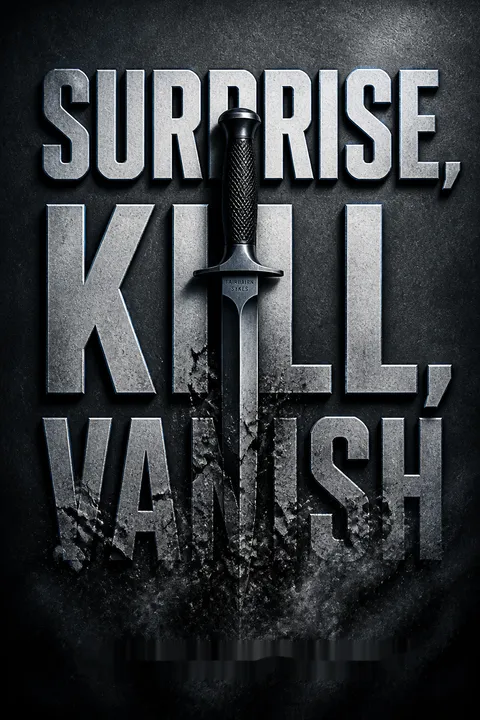
Surprise, Kill, Vanish receives mostly positive reviews for its engaging narrative on CIA paramilitary operations and assassinations. Readers appreciate Jacobsen's research, interviews, and focus on key figures like Billy Waugh. Some criticize the book's pro-CIA bias and factual errors. Many find it enlightening about covert operations and morally complex. The book is praised for its readability and historical context, though some note it lacks depth on certain topics. Overall, it's considered a captivating, if sometimes controversial, exploration of CIA activities.
People Also Read



Glossary
Tertia Optio
The covert third optionLatin for the president's third foreign-policy option after diplomacy and open war. In the book, it means covert action: secret government-sponsored activity intended to influence foreign events while keeping U.S. responsibility hidden or deniable. The option was developed after World War II and includes activities ranging from propaganda and sabotage to support for armed groups and lethal operations.
Title 50
U.S. intelligence authorityA section of U.S. law used in the book to describe the authority governing intelligence activities and covert action. Under this framework, the CIA can conduct classified operations abroad when directed by the president. Title 50 is contrasted with Title 10, which concerns the armed forces. The distinction shapes who directs an operation and whether the government publicly acknowledges it.
Title 10
U.S. military authorityThe legal framework associated in the book with the Department of Defense and the armed forces. It is contrasted with Title 50, the authority used for intelligence activities and covert action. The distinction matters because military operations and CIA covert actions have different command structures, disclosure practices, and reporting obligations, even when personnel from both organizations cooperate in the same conflict.
Plausible deniability
Concealed government responsibilityA policy design in which an operation is planned and carried out so that, if exposed, the government can deny or obscure its responsibility. The concept became part of U.S. covert-action policy after World War II. In the book, it protects presidents from immediate political consequences, but can also conceal failures, weaken oversight, and blur responsibility between senior officials and field operators.
Presidential Finding
Presidential covert-action authorizationA formal document recording a president's approval of a covert-action program. The book describes it as the legal mechanism used to authorize classified operations and inform congressional intelligence committees. A Memorandum of Notification, or MON, can alter or expand an existing Finding. These documents establish presidential authority, but their classified language can leave the public unable to assess the operation's scope.
Ground Branch
CIA ground combat operatorsA paramilitary component of the CIA's Special Activities organization that conducts ground-based covert operations. In the book, Ground Branch personnel carry out reconnaissance, surveillance, and lethal direct-action missions, sometimes alongside locally recruited fighters and military special operations forces. Its work is classified, and operators often use pseudonyms and cover identities while deployed.
MACV-SOG
Secret Vietnam operations groupThe Studies and Observations Group, established under the U.S. Military Assistance Command in Vietnam. Despite its innocuous name, MACV-SOG conducted highly classified reconnaissance and direct-action missions, including cross-border operations in Laos and Cambodia. Its teams combined American Special Forces personnel with local fighters and operated under cover to conceal U.S. involvement.
Find, Fix, Finish
A target-to-strike sequenceA targeting concept described in the book's account of post-9/11 counterterrorism. First, intelligence identifies a person of interest. Next, surveillance and other information establish that person's location. Finally, a capture or lethal operation is conducted. The sequence links human sources, signals intelligence, imagery, and operational forces, but each stage depends on the accuracy of the previous one.
HUGINT
Human and signals intelligenceA term used in the book for combining human intelligence with signals intelligence. Human sources can provide access, context, and personal information, while signals intelligence can track communications and confirm identities or patterns. In the account of the hunt for Hezbollah commander Imad Mugniyah, the combined approach helped intelligence services identify and monitor a target who had long evaded surveillance.
FAQ
1. What is Surprise, Kill, Vanish by Annie Jacobsen about?
- Secret history of CIA paramilitary operations: The book uncovers the evolution of CIA paramilitary armies, operators, and assassins from World War II through the post-9/11 era, focusing on covert action as a “third option” in U.S. foreign policy.
- Covert action and assassination: It details how the CIA institutionalized sabotage, guerrilla warfare, and targeted killings, often under legal and euphemistic frameworks, to influence global events.
- Human stories and moral dilemmas: Through interviews and declassified documents, Jacobsen explores the personal experiences, psychological toll, and ethical ambiguities faced by those involved in clandestine warfare.
2. Why should I read Surprise, Kill, Vanish by Annie Jacobsen?
- Unprecedented insider access: Jacobsen interviewed dozens of CIA operatives, OSS veterans, and intelligence officers, providing rare firsthand insights into secret operations.
- Comprehensive historical scope: The book covers major covert actions from WWII to the War on Terror, revealing how these shaped U.S. foreign policy and modern warfare.
- Exploration of moral and legal complexities: Readers gain a nuanced understanding of the ethical, legal, and psychological challenges inherent in covert action and assassination.
3. What are the key takeaways from Surprise, Kill, Vanish by Annie Jacobsen?
- Covert action as a “third option”: The CIA’s paramilitary operations serve as a hidden hand for U.S. presidents when diplomacy and open warfare are inadequate.
- Evolution of assassination policy: The book traces how assassination shifted from taboo to a regulated, yet secretive, tool authorized by presidential findings.
- Unintended consequences and complexity: Covert operations often produce unforeseen outcomes, such as regional instability or empowering radical groups, highlighting the risks of clandestine warfare.
4. What is the concept of “Tertia Optio” in Surprise, Kill, Vanish by Annie Jacobsen?
- Definition and origin: “Tertia Optio” (Latin for “third option”) refers to covert action as the president’s alternative when diplomacy fails and war is undesirable.
- Legal and organizational framework: Established post-WWII, it gave the CIA authority to conduct covert paramilitary operations under Title 50 of the U.S. Code, with oversight from the National Security Council.
- Strategic importance: Tertia Optio enabled the U.S. to counter Soviet covert activities and act secretly, forming the basis for the president’s “hidden hand” in foreign policy.
5. How did the OSS and British SOE influence CIA paramilitary operations according to Annie Jacobsen?
- Foundational legacy: The CIA’s Special Activities Division and Ground Branch trace their roots to the OSS and British SOE, both of which specialized in guerrilla warfare, sabotage, and assassination during WWII.
- Training and tactics: OSS Jedburgh teams and SOE commandos were trained in unconventional warfare, operating behind enemy lines and rejecting traditional “gentlemanly” combat.
- Postwar evolution: Many OSS veterans joined the CIA, shaping its paramilitary capabilities and influencing Cold War covert operations worldwide.
6. How does Surprise, Kill, Vanish by Annie Jacobsen describe the evolution of assassination as a covert-action tool?
- Legal and euphemistic framing: Assassination, though illegal under international law, was conducted under euphemisms like “Executive Action” or “neutralization,” with legal cover from presidential findings.
- Operational details: The CIA developed manuals and training for assassins, emphasizing stealth, psychological readiness, and plausible deniability.
- Moral and psychological toll: The book highlights the ethical dilemmas and psychological burdens faced by operatives tasked with covert killing.
7. What was the Phoenix Program and its significance in Surprise, Kill, Vanish by Annie Jacobsen?
- CIA pacification effort: The Phoenix Program was an intelligence-driven initiative during the Vietnam War aimed at dismantling the Vietcong infrastructure through interrogation and neutralization.
- Controversial tactics: The program was accused of using torture, murder, and assassination, setting a precedent for later targeted killing operations.
- Legacy and influence: Phoenix influenced future CIA and military counterterrorism efforts, demonstrating the challenges and controversies of intelligence-driven warfare.
8. What is the “moral twilight zone” concept in Surprise, Kill, Vanish by Annie Jacobsen?
- Ethical ambiguity: The “moral twilight zone” describes the ambiguous ethical environment in which CIA paramilitary operators and their indigenous partners operate.
- Real-world examples: The book details issues like betrayal, human rights abuses, and cultural clashes, especially in Afghanistan, where local forces often engaged in criminal behavior.
- Operational dilemmas: Operators faced difficult choices regarding suspected double agents and criminal acts, highlighting the tension between mission success and moral accountability.
9. How did the CIA and Mossad respond to Black September and related terrorist threats in Surprise, Kill, Vanish by Annie Jacobsen?
- Black September’s threat: The group, founded by Yasser Arafat, conducted high-profile terrorist attacks, including the Munich Olympics massacre.
- Mossad’s targeted assassinations: Mossad launched Operation Wrath of God, a campaign of targeted killings against Black September operatives, including Ali Hassan Salameh.
- CIA’s complex involvement: The CIA used Salameh as a clandestine asset, balancing intelligence gathering with moral ambiguity, until his assassination by Mossad shifted the landscape of Middle East covert operations.
10. How did the CIA’s paramilitary operations shape the wars in Afghanistan and Iraq according to Annie Jacobsen?
- Afghanistan covert war: After 9/11, the CIA’s Special Activities Division led the initial invasion, working with local warlords and integrating intelligence for targeting.
- Operational challenges: Teams faced dangers such as friendly fire, shifting allegiances, and unreliable local partners, setting the stage for ongoing counterterrorism.
- Iraq covert preparation: The CIA trained Iraqi paramilitary forces for sabotage and assassination missions ahead of the 2003 invasion, aiming to destabilize Saddam Hussein’s regime.
11. Who is Billy Waugh and what role does he play in Surprise, Kill, Vanish by Annie Jacobsen?
- Veteran CIA operative: Billy Waugh is a central figure, with a six-decade career in the CIA’s Special Activities Division and Ground Branch, operating in 64 countries.
- Pioneer of covert missions: He participated in dangerous missions, including hunting terrorists, training indigenous forces, and conducting paramilitary operations from Vietnam to the War on Terror.
- Embodiment of the “hidden hand”: Waugh’s story illustrates the personal sacrifices, moral dilemmas, and operational challenges faced by CIA operators.
12. How does Surprise, Kill, Vanish by Annie Jacobsen explain the legal and ethical framework surrounding CIA assassinations?
- Presidential Findings and MONs: Covert assassinations require a Presidential Finding or Memorandum of Notification, which authorizes lethal direct action and is shared with congressional intelligence committees.
- Executive orders and international law: Executive Order 12333 prohibits assassination of political leaders but allows targeted killing of terrorists as acts of war, with administrations interpreting these rules to justify covert killings.
- Plausible deniability and secrecy: Operations are conducted with plausible deniability to protect U.S. government involvement, highlighting the tension between legal frameworks, moral considerations, and operational secrecy.
About the Author
Other books by Annie Jacobsen

Download PDF
Download EPUB
.epub digital book format is ideal for reading ebooks on phones, tablets, and e-readers.








