

Key Takeaways
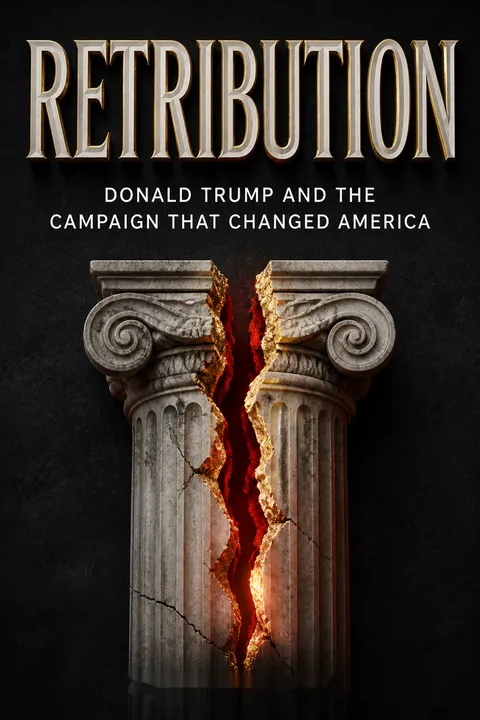
Retribution turned elite rejection into Trump's most durable campaign promise.
A grievance became a coalition. After January 6, political, business, legal, and media leaders rejected Trump. He turned that exclusion into a campaign asset, arguing that the same powerful people who had condemned him had also failed ordinary Americans. At a 2023 rally, he promised to answer the grievances of people who felt betrayed, making personal vengeance sound like public representation.
Anger found a target. The book presents this as more than a story about Trump’s personality. Voters facing frustrations over prices, immigration, and trust in institutions could see him as a weapon against an establishment they already resented. His opponents’ denunciations often reinforced his claim that elites were united against his supporters. That did not make every grievance accurate, but it made the promise politically potent.
What's striking is how effectively a personal defense can be translated into a collective one. The campaign's emotional logic was simple: if institutions seem distant or unresponsive, an attack on those institutions can feel like recognition. That helps explain why condemnation alone did not isolate Trump. It also cautions against treating his voters as a single bloc or assuming they shared every part of his agenda. A political coalition can unite around the belief that the existing system has failed, even when its members disagree about what should replace it.
Trump turned his felony conviction into evidence for his persecution story.
The verdict became campaign material. In May 2024, a New York jury found Trump guilty on 34 counts of falsifying business records connected to reimbursements for a hush-money payment. The case centered on how the payment was recorded, not on whether making the payment itself was illegal. Prosecutors argued the records concealed an effort to influence the 2016 election, using an unusual legal theory to make the charges felonies.
Scale shaped perception. Trump was also facing more serious federal cases concerning classified documents and efforts to overturn the 2020 election, but those cases had not gone to trial. The comparatively narrow New York case made it easier for him to call the prosecution political. The conviction did not meaningfully weaken his standing with voters, and his later sentence was an unconditional discharge, with no prison, probation, or other punishment.
The episode shows that a legal verdict does not automatically settle a political argument. Its meaning depends on whether voters trust the institution, understand the charge, and see the punishment as proportionate. A jury's finding remains a finding, regardless of the defendant's campaign response. Yet when a case appears less consequential than the accusations surrounding it, it can become a vehicle for disputing the legitimacy of the whole process. Precision about what was proved is therefore essential, especially when both sides have incentives to overstate what a prosecution means.
Biden's late exit turned a succession problem into a campaign crisis.
The warning signs accumulated. Biden had described himself as a bridge to a younger generation, yet he chose to seek a second term without a serious internal debate about whether he should run. In a February 2024 poll cited by Karl, 86 percent of respondents, including 73 percent of Democrats, thought Biden was too old for another term. Potential challengers stayed out, and the party's primary process was organized around the incumbent.
Loyalty narrowed the options. Biden and his advisors had reasons for continuing: he had legislative accomplishments, feared a second Trump presidency, and believed leaving early could weaken his ability to govern. But when doubts became impossible to contain, there was little time for voters to compare alternatives. Biden withdrew in July, endorsed Harris, and left the party to unite around a replacement in the middle of the campaign.
This is an organizational failure as much as a candidate's misjudgment. A healthy succession process gives a party permission to test assumptions before a crisis makes the choice for it. Here, loyalty and career risk discouraged dissent, so private concern could not become public evaluation. The charitable reading is that Biden believed continuity offered stability and a better chance to stop Trump. The cost was that Democrats had no tested successor, no settled argument for a change in leadership, and very little time to build either.
One disastrous debate transformed private doubts about Biden into public certainty.
The contrast was immediate. Before the June 27 debate, Biden's team hoped an early appearance would shift attention from his age to the choice between the candidates. Instead, he spoke haltingly, lost his train of thought, and made factual errors, including a claim about American troops dying during his presidency that was not true. Trump appeared more assured, even when making false claims of his own. More than 50 million viewers watched.
Spin could not erase sight. The next day, Biden delivered a stronger speech to a friendly crowd, but the debate had made existing concerns vivid to millions at once. Campaign allies initially blamed a cold and defended him, while Democratic officials privately reconsidered his chances. Subsequent interviews and public appearances failed to restore confidence. Biden withdrew three weeks after the debate, following mounting pressure and a COVID-19 illness.
A debate is not a clinical assessment, and one poor performance cannot establish a person's full capacity. But it can function as a public signal when it confirms a suspicion voters already hold. The campaign's mistake was treating the event mainly as a messaging opportunity instead of a high-stakes demonstration of readiness. Once viewers had formed their own judgment, assurances from allies sounded less persuasive than the performance they had just seen. In high-visibility leadership roles, credibility depends partly on the ability to meet the moment in public.
Butler's bloodied image gave Trump a comeback symbol in seconds.
The attack exposed a security breakdown. At a July rally in Butler, Pennsylvania, a gunman fired eight shots from a nearby rooftop. Trump was wounded in the ear; attendee Corey Comperatore was killed, and two others were injured. Local officers had noticed the gunman and passed along warnings, but the information did not reach the agents protecting Trump in time. A Secret Service sniper killed the shooter.
The image changed the campaign. Trump resisted agents trying to move him from the stage, stood, and raised a fist toward the crowd. A photograph of that moment became an emblem of survival and defiance. For a few days, Trump urged unity, while his future running mate JD Vance blamed Democratic rhetoric. The episode brought sympathy and attention, but it also revealed how quickly a political shock could be turned into competing stories.
The scene's power comes from the collision of real danger and political spectacle. The photograph condensed survival, fear, and defiance into an image that could travel faster than explanations of the security failures. Yet it should not eclipse the people killed and wounded, or turn an assassination attempt into proof that one side has moral authority. The book's account also distinguishes Trump's brief call for unity from the more inflammatory responses around him. Political leaders do not control every interpretation of violence, but their first words can widen or narrow the space for escalation.
Harris's sudden surge could not replace scrutiny or a clear policy case.
The handoff created energy. Once Biden withdrew, Harris quickly secured endorsements from Democratic leaders, raised $81 million in her first 24 hours, and drew large, enthusiastic crowds. The party avoided a prolonged convention fight, but voters did not get a competitive process to examine alternatives. Harris had only 107 days before Election Day and entered the general election with little time to define how she differed from Biden.
Momentum met unanswered questions. Harris's debate performance against Trump was strong, but she often gave vague answers about the economy and the administration she had served. Asked on The View what she would have done differently, she could name nothing. A costly Trump ad highlighted her past comments about taxpayer-funded transition surgeries for prisoners; her campaign tested a response but never aired it. Her early surge peaked before the campaign resolved these vulnerabilities.
A burst of enthusiasm can repair morale without answering the questions that determine trust. Harris's rapid rise gave Democrats a fresh story and a capable messenger, but avoiding interviews and specifics left opponents room to define her. There is a real strategic trade-off: a campaign leading in the polls may avoid risks, while a candidate under scrutiny may lose control of the news cycle. Still, message discipline is not the same as policy clarity. Voters need enough substance to distinguish renewal from continuity, especially when the candidate served in the administration being judged.
When powerful people repeat viral rumors, falsehoods acquire institutional reach.
A rumor became a debate moment. Online accounts spread a false claim that Haitian immigrants in Springfield, Ohio, were stealing and eating residents' pets. JD Vance repeated the allegation before the September debate, and Trump repeated it onstage. ABC had asked local officials about the story; Springfield's city manager said there were no credible reports supporting it. The claim nevertheless gained national attention, and schools in the city later faced bomb threats.
Corrections traveled differently. After the debate, an anonymous account circulated a fake affidavit alleging ABC had secretly helped Harris. Influential figures shared it before verifying it, and some later corrected themselves, but their corrections reached fewer people. The book shows how an unverified claim can move from obscure online posts to a candidate's speech or a senator's feed, where the speaker's status lends it credibility.
The pattern is not simply that misinformation exists. It is that repetition by recognizable figures can make a rumor seem institutionally validated, even when the underlying evidence is weak. Corrections have a harder task: they must persuade people to revise a story that already fits their expectations. That makes verification a form of civic responsibility, not merely a newsroom procedure. The account also leaves room for caution about causal claims. The book documents threats and amplification, but it does not show that every person who repeated a rumor believed it or that a particular falsehood decided the election.
A clear promise about prices outlasted Trump's chaotic campaign behavior.
Material frustration mattered. Trump repeatedly asked voters to compare life under his presidency with life under Biden, meaning the pre-pandemic economy rather than the shutdown year. By Election Day, prices were about 20 percent higher than when Biden took office. Trump offered a simple account of that frustration, tied to inflation, the border, and a claim that the country had been better off before. Harris often struggled to explain how her approach would differ.
Spectacle carried the message. Trump's campaign paired that case with memorable events, including his staged shift at a Pennsylvania McDonald's and a garbage truck appearance after Biden's remark about Trump supporters. A Trump ad attacking Harris's past comments on transgender surgeries was estimated by a Harris-aligned group to shift the race 2.7 points in markets where it ran. Trump won all seven battleground states and the popular vote, though his electoral margin was not a historic landslide.
The contrast is between message simplicity and candidate discipline. Trump often wandered into personal feuds or extreme rhetoric, but his campaign could still return to an emotionally legible comparison about costs and conditions. The numbers and stunts mattered partly because they gave that comparison concrete form. This account should not be reduced to a single cause: the book also describes party strategy, media dynamics, and voter alienation. Nor does a winning slogan prove its diagnosis was complete. It shows how a concise explanation can dominate when a rival's response feels abstract or evasive.
The transition turned personal loyalty into the machinery of government.
Planning began before the oath. A transition document listed more than 50 possible first-day actions, including mass deportations, tariffs, and pardons for January 6 defendants. Trump made key staffing decisions at Mar-a-Lago, favoring people he knew and trusted. The transition initially declined federal resources, including routine FBI background checks, while loyalists and media figures competed for influential posts.
Personal conflicts entered public office. Trump's former defense lawyers Todd Blanche and Emil Bove moved into senior Justice Department positions. Bove oversaw the firing of officials connected to the Trump investigations and ordered prosecutors to drop a corruption case against New York Mayor Eric Adams without assessing its evidence. Seven prosecutors resigned rather than comply. The sequence made the campaign's demand for loyalty a practical question about who would direct law enforcement.
The institutional risk is not merely that a leader appoints allies. Governments need trusted appointees, and political direction is part of democratic authority. The sharper question is whether loyalty becomes a substitute for competence, independent judgment, or equal treatment under law. The Adams case illustrates the danger of tying prosecutorial decisions to a mayor's cooperation with federal policy. Resignations can signal that professional norms still matter, but they are also evidence of a system under strain when compliance becomes a test of allegiance.
A peaceful transfer can coexist with a radical break from restraint.
Tradition survived the ceremony. Biden welcomed Trump to the White House and shared the customary ride to the inauguration, restoring a transfer-of-power ritual Trump had refused to honor in 2021. Yet on his first day back, Trump pardoned or commuted the sentences of nearly everyone convicted in connection with January 6, including people who had attacked police officers. Pamela Hemphill, a former defendant, rejected her pardon because she did not want the act to erase her responsibility or the officers' experience.
Other boundaries looked fragile. In June 2025, Trump delivered partisan attacks at Fort Bragg, where political merchandise was sold and soldiers in uniform cheered. The episode raised concerns about the military's nonpartisan role. The book also describes Trump's public confrontation with Ukrainian President Volodymyr Zelensky, a stark departure from the posture of an American ally. Formal continuity, Karl argues, does not by itself guarantee restraint.
The closing argument is about norms as practiced behavior, not just written rules. A peaceful handoff matters, but it cannot answer whether the winner will respect institutional independence, political neutrality, or the limits of office. Hemphill's refusal is a useful counterpoint to blanket claims of innocence: personal accountability can survive even when political leaders offer absolution. The Fort Bragg episode makes the same issue visible in another institution. A military can be legally subordinate to elected leaders while still needing a strong norm against partisan performance.
Analysis
Retribution is the book's organizing idea, but it functions at two levels. For Trump, it is a personal promise to punish opponents. For voters alienated from institutions, it becomes a claim that someone will finally act against a distant political class. That translation helps explain why indictments and a felony conviction failed to dislodge him, while the book's account of Biden's age and delayed withdrawal shows how an opposing party can make a strong incumbent coalition vulnerable through its own choices.
The narrative is built around reversals: Trump appears politically finished, then becomes a front-runner; Biden's debate converts private anxiety into a crisis; Butler briefly changes the emotional climate; Harris's unexpected candidacy restores Democratic hope; and Trump's election turns campaign rhetoric into governing power. These episodes make the book readable as political history, but also as a study in how timing shapes public interpretation. A debate, image, or appointment acquires force because it arrives when institutions and campaigns are already under pressure.
Karl's access is a strength. He reports conversations with candidates, aides, lawyers, and officials, and often reconstructs scenes from firsthand observation. It is also a limit worth remembering: the account is shaped by a Washington reporter's access to elite actors and by the retrospective narratives those actors give him. Their explanations can illuminate decisions, but they can also distribute blame strategically. The book is most persuasive when it distinguishes verified outcomes from claims, such as separating the New York jury's verdict from the unresolved federal cases.
Its deepest warning is not that a single election ends democracy. It is that elections can empower leaders who treat victory as permission to weaken restraints, while opponents may have helped create the conditions for that result. The distinction between a lawful transfer and a healthy system matters. A country can follow the ceremonial steps of succession while its norms of prosecutorial independence, military neutrality, and political accountability grow less secure.
People Also Read




Glossary
the weave
Trump's digressive speaking styleTrump's label for his habit of moving among several subjects, briefly leaving one point, then returning to it. He describes the pattern as purposeful and effective, while critics and some allies characterize it as rambling or distracting. In the campaign account, the term captures the gap between Trump's preferred explanation of his speeches and the discipline his strategists wanted.
lawfare
Claim of political prosecutionA political accusation that legal investigations or prosecutions are being used as weapons against an opponent rather than applied impartially. Trump and his allies used the term to describe cases brought against him. The book treats the accusation as politically powerful, while distinguishing it from the separate question of what evidence prosecutors presented and what a jury actually decided.
J6 hostages
Trump's label for January 6 defendantsA phrase Trump used for people prosecuted or imprisoned for crimes connected to the January 6, 2021, attack on the US Capitol. The label casts defendants as victims of government abuse, including some convicted of violence. Trump used it to support broad clemency, while critics argued that pardoning attackers would diminish the seriousness of the assault and its harm to police officers.
Download PDF
Download EPUB
.epub digital book format is ideal for reading ebooks on phones, tablets, and e-readers.








