

Plot Summary
A House After Hiding
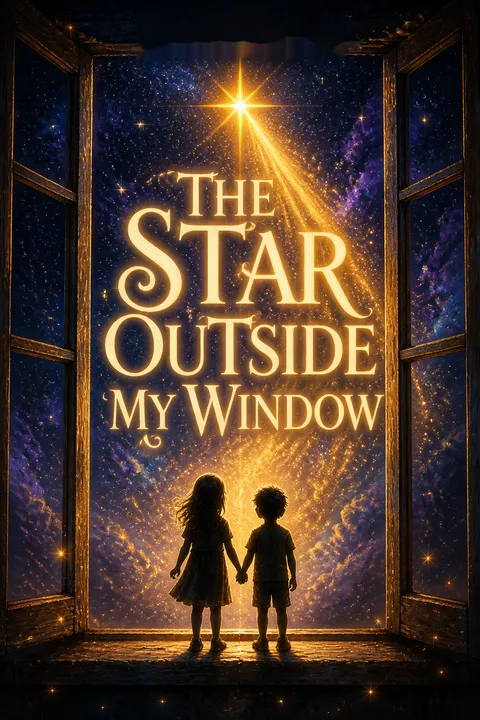
Ten-year-old Aniyah and five-year-old Noah are placed in foster care after their mother disappears from the temporary refuge where she had been hiding them. Their father is still somewhere beyond their reach, and Aniyah has lost her voice. She clings to Noah and to a silver locket their parents gave her, trying to make sense of the new house through its rules.
Foster mother Mrs. Iwuchukwu welcomes mess, tears, and noisy music, freedoms that unsettle Aniyah because at home she had learned to anticipate her father’s anger. Sophie, Mrs. Iwuchukwu’s adopted daughter, resents the new arrivals and targets them when adults are not watching. Aniyah turns to the stars for steadiness, believing her mother has become one.
Aniyah’s silence is not simply a symptom of grief. It is also the remnant of a household where speaking plainly could be dangerous, so she has learned to read moods and rules before acting. Her star story gives an unbearable absence a structure she can survive: her mother has not vanished, but changed form. Mrs. Iwuchukwu’s permissive house unsettles Aniyah because safety initially feels less predictable than the threat she knows. Sophie’s hostility adds another uncertainty, while Aniyah’s care for Noah gives her a role she can still perform when everything else has been taken from her.
The Star on Television
At dinner, Aniyah accidentally knocks her spaghetti bowl to the floor. Sophie falsely claims she threw it, and Aniyah cannot explain herself; Travis quietly backs her up, while Ben tries to comfort her afterward.
Later, the children see a news report about a newly observed star moving unusually close to Earth. Noah recognizes it as their mother, and Aniyah’s voice returns as she calls out to her. She explains her belief that her mother’s heart has become a star and finds that Ben and Travis will listen, even if they are unsure.
Sophie mocks the idea and provokes Noah into biting her. Mrs. Iwuchukwu disciplines Noah without hearing the full story, but Ben and Travis promise Aniyah access to Travis’s computer so they can investigate the star.
The dropped bowl turns an ordinary accident into a test of Aniyah’s expectations: she braces for punishment because that response has been trained into her. Travis’s defense and Ben’s apology offer a different pattern, though the children are not yet able to challenge Sophie effectively. The star report changes more than the plot. Aniyah’s voice returns when she finds a way to imagine connection with her missing mother, suggesting that expression becomes possible when grief has a form she can approach. Her friends’ willingness to help does not depend on sharing her belief; their first act of solidarity is to take her seriously enough to investigate.
A Deadline in Oxford
Using Travis’s computer, the children find the Royal Observatory’s competition to name the new star. The name will be selected within days, and Aniyah fears strangers will give her mother the wrong one. The contact page offers no quick route to the astronomers, so she decides to reach them in person. Then Ben and Travis reveal that the foster house is near Oxford, not London, where Aniyah thought she was.
At a meeting with caseworker Ms. Trevors and Detective Lewis, questions about her mother’s last day leave Aniyah’s memories fragmented and painful. She learns London is about an hour away by train, but the contest clock keeps shrinking. Back at the house, she starts quietly gathering information about bikes, maps, and a flashlight.
The competition gives Aniyah’s grief a practical deadline. That urgency is both a source of agency and a distortion: she believes that securing the correct name may restore what was taken, so a public naming contest becomes a task she can control. Discovering the distance to London also exposes how little the adults have explained about her new circumstances. The interview with Ms. Trevors presses against memories Aniyah cannot yet organize, while her attention fixes on travel logistics instead. Her problem-solving is resourceful, but it also protects her from questions whose answers might be more painful than any route map.
The Mission Takes Shape
Aniyah tests Mrs. Iwuchukwu for useful information, learning that the house has bikes and a London street map. When Ben and Travis return from school, they find a route to Greenwich and realize the bicycle journey would take hours.
They agree to help, and Aniyah finally accepts them as a team rather than insisting the mission belongs only to her. Noah will come too, riding with her. Together they plan to print directions, collect lights and food, and leave during Halloween trick-or-treating.
Their preparations unfold around the children’s ordinary routines, with Aniyah trying to win permission for Noah and herself to join the outing. The mission gives the foster children a shared purpose, but Sophie overhears enough to threaten the fragile secrecy on which it depends.
The planning marks a shift from Aniyah’s solitary duty to a fragile collective undertaking. Her first impulse is to guard the mission as if accepting help would weaken her claim to her mother; she relents when she recognizes that Ben and Travis have already made the effort possible. Noah’s inclusion carries the same emotional logic. Aniyah cannot imagine pursuing her mother while leaving her brother to wake alone. The children’s secret plan is risky, but it also creates a temporary family organized around mutual contribution rather than blood ties or adult permission.
The Locket's Price
While the children secretly print their route, Sophie catches Aniyah near Mrs. Iwuchukwu’s office and threatens to expose them. Aniyah stalls long enough for Ben to hide the pages, but Sophie later finds the map in his room. She offers to return it only if Aniyah gives up her silver locket, the one object linking her to both parents.
Fearing that Sophie will get the group separated, Aniyah hands it over. Sophie keeps the locket and returns the directions. The children proceed with their Halloween disguise plan, even though the stolen keepsake leaves Aniyah feeling newly bereft. At the house, they wait for Mrs. Iwuchukwu to turn away, retrieve bikes and supplies, and slip into the dark garden before anyone can stop them.
Sophie understands that the locket is not merely jewelry. It carries Aniyah’s last tangible claim to her parents, so the demand makes the children’s escape depend on surrendering a piece of her security. Aniyah’s choice is not free in any meaningful sense: Sophie weaponizes the threat of separation, a fear already sharpened by foster care. The returned map lets the mission continue, but it does not undo the coercion. This scene echoes the larger pattern of control in Aniyah’s life, while also showing her making a painful decision to protect Noah and her companions.
Rain Stops the Escape
The children leave on bikes with Aniyah riding Mrs. Iwuchukwu’s larger bicycle and Noah in its rear basket. A passing car forces them into a hedge; Aniyah and Noah fall, Noah is scratched, and Aniyah injures her ankle. She hides the pain and keeps cycling until a storm drives them to shelter in Oxford.
There, while waiting, Ben explains that his father’s violence led to his and his sister’s removal, and Travis reveals that his mother died when he was young and an aunt treated him cruelly. They also explain that Sophie fears losing Mrs. Iwuchukwu’s affection to other foster children. Aniyah realizes their losses are different but related. When a coach passes, they decide to continue toward London in the morning.
The physical danger strips away the adventure’s bright surface. Aniyah’s decision to conceal her injury repeats her learned habit of minimizing pain so that others will not become angry or the plan will not collapse. The shelter scene complicates the children’s relationships: Ben’s humor, Travis’s stutter, and Sophie’s cruelty are linked to histories of instability, without making those histories excuses for harm. Aniyah listens rather than trying to rank their suffering against her own. Their next decision emerges from shared vulnerability, not from the fantasy that courage means never stopping.
The Coach Without Tickets
The next morning, Aniyah can barely walk on her swollen ankle, but the children reach Oxford’s coach station. They lack money for all the tickets, so Aniyah studies the loading routine and slips aboard with Noah while the driver checks luggage.
Ben and Travis miss the chance to follow. On the coach, a girl and her grandmother share snacks with the hungry siblings, but Aniyah worries that she has abandoned her friends. At Victoria Coach Station, Ben and Travis emerge from hiding in the back of the coach, having secretly boarded after all.
Their reunion is brief: the driver spots them, and the four children flee into the station. Above them, a news screen shows their faces in an appeal for missing children, linking their disappearance to a search for a murder suspect.
The coach sequence tests the difference between initiative and control. Aniyah’s quick observation gets her and Noah moving, but acting without the others leaves her convinced she has failed them. Ben and Travis’s reappearance repairs the separation, though the public missing-child alert introduces a threat beyond the children’s private understanding. The news identifies them as part of a larger crisis, yet Aniyah cannot make sense of why they might be connected to a murder suspect. Her limited knowledge remains central: she is competent at reading procedures, but the adults’ withheld information keeps her interpretation of events incomplete.
Four Children on the News
At Victoria, the children hide their faces and try to use the souvenir guide to find Greenwich. Travis’s satnav runs out of power, so Ben asks a tourist information worker for help but gets only the chance to follow a school group heading toward the river.
The children board the group’s bus without tickets. Traffic and an emergency diversion slow them, but the bus eventually reaches Greenwich. Near the foot tunnel, an ice-cream seller recognizes Noah from the missing-child coverage and warns them away from danger.
The children bolt down the stairs and into the tunnel, with Travis carrying Noah and Ben helping Aniyah over her injured ankle. The seller’s warning suggests the police may be close, so they keep moving beneath the Thames toward the observatory.
The city’s public spaces repeatedly offer both cover and exposure. The children can move among tourists and school groups, but each encounter carries the possibility that an adult will recognize them and stop them. Their improvised route depends on other people’s ordinary routines, a bus diversion, a guidebook, a kind stranger’s food, until recognition turns help into danger. The tunnel narrows the story’s physical and psychological field: the children are literally below ground, still pursuing an explanation they do not possess. Their interdependence becomes practical, especially as they carry Aniyah rather than demand that she abandon the goal.
Greenwich's Locked Gates
Emerging from the foot tunnel, the children reach Greenwich and use the guidebook to orient themselves past the Cutty Sark and toward the Royal Observatory. A passerby warns that the grounds are closing for a private gala.
At the entrance, guards check guests arriving for the event, leaving the children no legitimate way inside. Aniyah finds a gap between the iron railings and squeezes through, then helps Noah and Travis follow. Ben gets stuck briefly, but the others pull him free, leaving his hair misshapen and sweets scattered.
They are inside the grounds, though the observatory still lies uphill and the clock is against them. The music from the gala draws them onward through the dark park, where they must find another way past security.
The railings turn exclusion into a literal obstacle, and Aniyah solves it by testing the boundary with her own body. The act suits her mixture of ingenuity and desperation: she does not wait for permission because she believes the adults inside are about to make an irreversible choice. Ben’s awkward passage keeps the scene comic without erasing its risk. The gala’s closed grounds also contrast public science with private access. A competition advertised to everyone has culminated in an event protected from the children whose lived experience might complicate its official account.
Squirrels Sound the Alarm
Near the observatory, guards block the children from the entrance. Travis spots the parked cars and devises a diversion: the children toss chocolate-covered sweets onto the roofs, where squirrels chase them and trigger a chain of car alarms.
As the guards run to quiet the commotion, Aniyah, Noah, Ben, and Travis dash across the road and reach the building. Inside, they follow signs downstairs toward the gala. A display showing how stars form catches Aniyah’s attention; its images give her a new way to imagine the explosion she believes accompanied her mother’s transformation.
Applause from the banquet room pulls her back to the urgent task. She peers through the door as the ceremony begins, with the winning name sealed in an envelope and the announcement only moments away.
The squirrel diversion is the children’s most collaborative solution: Travis supplies the idea, Ben and the others carry it out, and an accidental force turns their sweets into an alarm system. Their success depends not on strength but on close attention to the environment. Inside, the star-formation display briefly gives Aniyah an image for an experience she has been unable to explain. Yet the ceremony’s countdown makes science and emotional meaning collide. The adults are preparing to assign a name through a computer, while Aniyah believes that the name must answer to a particular person and history.
Isabella, Not a Number
Aniyah bursts into the gala but trips over her tiger costume and injures her ankle. Professor Grewal and astronomer Alex Withers listen as she identifies the star with her mother, Isabella Hildon.
Hearing the name, Aniyah remembers the news report and the officers’ words: her father is the murder suspect, and her mother did not choose to leave. The observatory team takes the children to the telescope, where Aniyah and Noah see the star moving toward the Pleiades. Mrs. Iwuchukwu arrives with Sophie, who returns the locket and apologizes.
Back at the ceremony, Audrey Tahania announces that the organizers have chosen Isabella as the star’s name, and Withers traces its course toward the Seven Sisters. Aniyah’s mother has a name, and Aniyah is no longer alone with the truth.
The revelation breaks the protective story Aniyah built, but the book does not treat that story as foolishness. It has kept a child connected to her mother while adults failed to give her the truth in a way she could understand. Naming Isabella cannot reverse murder; it can, however, restore a person’s identity against the anonymity of a news alert and a computer-generated choice. The telescope scene makes the change visible rather than resolving grief. The adults finally listen, while Mrs. Iwuchukwu and Sophie’s arrival bring the foster household into the same room as Aniyah’s past.
A Name on Her Wrist
An injury to her ankle keeps Aniyah in the hospital for two days after the observatory. Ben and Travis bring her newspapers so she can save the stories about the newly named star. Once home, she opens a gift from Professor Grewal and Withers: a commemorative Kronos watch designed by Audrey Tahania. On its face, the stars form the name Isabella.
Aniyah now has the locket back, but understands it differently; she can keep it as a reminder without pretending her parents’ history was simple. Noah, Ben, and Travis gather around her, and Mrs. Iwuchukwu photographs the moment. The watch makes her mother’s name portable, while the people around Aniyah give her something the sky alone could not: a family present in the room.
The ending gives Aniyah two forms of remembrance: the locket, which carries her parents’ shared past, and the watch, which publicly carries her mother’s name. Neither object erases the truth or substitutes for the person who is gone. Their meanings have changed because Aniyah’s understanding has changed. The newspapers and photograph turn private loss into a record she can preserve, while her companions make remembrance communal. The story’s resolution is therefore not a return to the family as it was, but an expansion of what family can mean after violence, separation, and grief.
Analysis
The novel makes a child’s interpretation of events central without confusing imaginative belief with factual understanding. Aniyah’s star-hunting idea is a form of emotional organization: it gives absence a direction and grief a task. Readers see how this model protects her, then how it reaches its limit when she learns that her mother did not choose to leave. The revelation does not invalidate the comfort the stars provided. Instead, the story distinguishes emotional truth, the enduring bond Aniyah feels, from the violence adults failed to explain.
Its account of trauma is grounded in behavior rather than diagnosis. Aniyah monitors adults for signs of anger, loses her voice, and remembers her mother’s final day in fragments. Noah’s distress, Travis’s stutter, Ben’s humor, and Sophie’s possessiveness show different adaptations to insecurity. The novel contextualizes these responses without making harm harmless. Sophie’s fear of losing her place helps explain her cruelty, but the children still experience its consequences.
The adults and institutions are not all presented as equally capable of care. Mrs. Iwuchukwu offers a home whose rules contradict the children’s expectation of punishment, while the caseworker and police have procedures Aniyah cannot fully understand. The observatory, initially a distant authority that seems ready to let a computer decide the star’s name, becomes responsive when its astronomers listen to the children. That movement matters: care begins when adults take a child’s account seriously, not when they merely manage her behavior.
The conclusion offers neither reunion with the family Aniyah lost nor an easy cure for grief. The public name Isabella, the returned locket, and the watch make remembrance visible, while the foster household supplies ongoing relationships. The story’s hopeful claim is specific: after violence fractures a family, children can build new attachments without being asked to forget the people they love or pretend that the harm never occurred.
Review Summary
The Star Outside My Window receives overwhelmingly positive reviews for its sensitive portrayal of domestic violence and loss from a child's perspective. Readers praise the book's warmth, humor, and hopeful tone despite the heavy subject matter. Many find the characters endearing, especially the foster mother Mrs. Iwuchukwu. The astronomy theme and adventure plot are highlighted as engaging elements. While some reviewers note the book's emotional impact, most agree it's a powerful, important story for both children and adults, effectively balancing difficult topics with innocence and resilience.
People Also Read

Characters
Aniyah
The determined star hunterTen-year-old Aniyah is observant, protective of Noah, and fascinated by astronomy. She tries to make unsettling events legible by turning them into rules, clues, and constellations. When grief leaves her unable to speak, she relies on careful watching and on the stories she has built around stars. Her fierce responsibility for Noah can make her feel that every outcome depends on her, so accepting help is difficult. Yet her curiosity is more than an escape: it helps her ask questions adults have not answered and gives her a language for preserving connection. Aniyah’s perspective is imaginative and sincere, though her understanding of the crisis around her is necessarily incomplete.
Noah
Aniyah's little brotherFive-year-old Noah is frightened by separation and shows distress through tears, hiccups, and clinging to Aniyah. His dependence on her gives her a powerful sense of purpose, but he is not simply a burden she must carry. Noah is affectionate, impulsive, and capable of making the others laugh, often cutting through tension with an uncomplicated response. He shares Aniyah’s belief in their mother’s star and helps anchor her to the family they have lost. His growing trust in the foster household and in Ben and Travis widens the circle of people he can rely on.
Ben
The questioning foster friendBen is a ten-year-old foster child with an exuberant manner, a taste for snacks, and an instinct to ask questions. His jokes and apparent carelessness can conceal a history of family instability and a deep wish to belong. He initially struggles to understand Aniyah’s belief about the star, but he does not use disbelief as a reason to abandon her. His practical experience, humor, and willingness to join the dangerous journey make him an important ally. Ben longs for permanence, and his bond with Travis shows how children can create loyalty even when the adults in their lives have changed.
Travis
The quiet route-finderEleven-year-old Travis is tall, shy, and often has difficulty getting his words out. His silence and watchfulness can be mistaken for distance, but he is attentive to details and willing to act when someone needs help. Comics, computers, and numbers offer him dependable structures, while his friendship with Ben gives him room to participate without having to compete for attention. Travis’s stutter reflects fear and past distress, not a lack of intelligence or resolve. He contributes practical ideas to the group and is especially gentle with Noah, whose excitement and need for reassurance he understands.
Sophie
The guarded eldest childThirteen-year-old Sophie is Mrs. Iwuchukwu’s adopted daughter and the oldest child in the house. Clever, watchful, and quick to use her social advantage, she treats new arrivals as possible rivals for her mother’s attention. Her cruelty toward Aniyah, Noah, Ben, and Travis reflects fear of displacement, though that fear does not excuse the harm she causes. Sophie knows what it means to be a foster child and to long for a secure home, but she tries to protect her place by controlling others. Her guardedness makes her difficult to read, especially when her behavior shifts between open hostility and concealed concern.
Mrs. Iwuchukwu
The exuberant foster motherMrs. Iwuchukwu runs a lively foster home where children are allowed to cry, make messes, and be noisy. Her music, warmth, and conspicuous cheerfulness contrast with Aniyah’s expectation that adults will punish mistakes. She tries to give each child room to settle in, although her trust in Sophie can leave her unaware of conflict between the children. Her own experience of foster care informs her commitment to caring for others. Mrs. Iwuchukwu combines generosity with practical responsibility, and she is determined to keep the children safe even when they test the limits of her rules.
Isabella Hildon
Aniyah's missing motherIsabella is the warm, imaginative mother around whom Aniyah and Noah organize their memories of home. She shares stories, makes ordinary moments playful, and gives Aniyah her early fascination with the night sky. Aniyah remembers her through her smile, her care for the children, and the reassurance she offered when the household felt frightening. Because the story is filtered through Aniyah’s partial understanding, Isabella is present both as a person remembered and as the center of a sustaining belief. Her role is emotionally central even when she is physically absent.
Aniyah's father
The feared parentAniyah’s father is a controlling presence in her memories, associated with strict household rules and the anger she learned to anticipate. His absence does not make him emotionally distant from the story; Aniyah continues to wonder where he is and whether he will find the children. Because she is young and her memories are fragmented, she does not initially understand the full history between her parents. He represents the danger and confusion that Aniyah is trying to interpret.
Professor Jasmine Grewal
The observatory astronomerProfessor Grewal is a scientist at the Royal Observatory who explains the unusual star to the public. She is thoughtful and professionally cautious, but she also takes Aniyah’s account seriously when the child reaches the gala. Her willingness to listen changes the observatory from a distant institution into a place where Aniyah can be heard. Grewal balances scientific expertise with compassion, recognizing that the children’s needs cannot be reduced to the event they have disrupted.
Alex Withers
The observatory astronomerAlex Withers is an older astronomer who appears alongside Professor Grewal in the news coverage and at the gala. He helps interpret the star’s movement and guides Aniyah toward a view through the observatory telescope. His role connects the large public spectacle to the children’s immediate need to understand what they are seeing. Withers brings technical knowledge to the story while making space for a child’s account that does not fit ordinary scientific explanation.
Audrey Tahania
The gala's famous guestAudrey Tahania is a celebrated actor and the public face of the Kronos gala. She notices Aniyah after the child falls and treats her as a person rather than a disruption, helping her stand and making room for her to explain herself. Audrey’s attention gives the frightened children a moment of safety in a room full of strangers and cameras. Her presence also links the observatory’s formal ceremony to the children’s urgent, deeply personal request.
Ms. Trevors
The children's caseworkerMs. Trevors is the caseworker who meets Aniyah and Noah with Detective Lewis. She offers Aniyah the option of answering difficult questions through writing or drawing, recognizing that speech may be hard for her. Her interview helps establish the children’s situation, although Aniyah cannot yet give a complete account of her memories.
Detective Carolyn Lewis
The investigating officerDetective Lewis works with Ms. Trevors to understand the events surrounding Aniyah and Noah’s separation from their mother. Her questions focus on what Aniyah remembers, including details the child finds difficult to revisit. She represents the formal investigation that surrounds the children’s story.
Plot Devices
The new star
A sky-sized bondAniyah believes her mother’s heart has become a star, drawing on astronomy and stories her mother shared with her. The belief gives the child a way to imagine continued connection while she cannot understand the circumstances of her mother’s disappearance. The book holds Aniyah’s conviction alongside the scientists’ account of an unexplained astronomical event rather than reducing one to the other. The star becomes a destination, a source of hope, and eventually the focus of a public naming that restores the mother’s name to the story.
The naming contest
A ticking deadlineThe Royal Observatory’s global competition invites the public to name the newly observed star. Its closing time gives Aniyah a concrete objective and pushes her to travel from Oxford to Greenwich with Noah, Ben, and Travis. The contest’s computer-selected winner creates tension between impersonal procedure and Aniyah’s insistence that the star has a human history. Its gala announcement provides the point toward which the children’s journey moves.
The silver locket
A keepsake under threatThe locket was given to Aniyah by her parents and is one of her few tangible reminders of home. Sophie recognizes its emotional importance and uses the threat of exposing the children’s plan to take it from her. The exchange makes the escape more costly and shows how control can be exerted through fear of losing family. Its return later carries a changed meaning, because Aniyah can value the keepsake without treating it as proof that her parents’ past was uncomplicated.
Maps and satnav
Improvised ways forwardA printed bicycle route, a souvenir map, and Mrs. Iwuchukwu’s satnav help the children move toward Greenwich. The devices provide practical direction, but they also show the limits of planning: a crash, rain, a dead battery, and missed connections repeatedly force the group to adapt. Aniyah’s attention to printed routes and Travis’s use of the satnav turn navigation into shared work, helping each child contribute something essential to the journey.
Aniyah's fractured memories
Trauma's delayed truthAniyah’s recollections of her mother’s final day arrive in broken images and missing stretches of time. She explains the gaps through a story about Father Time, an imaginative way to describe an experience she cannot yet organize. The fragmented memory postpones her understanding of why the police removed her and Noah, while allowing the reader to recognize that the adults have not given her the whole truth. At the gala, the news report and the words murder suspect finally connect the missing pieces.
About the Author
Other books by Onjali Q. Raúf
Download PDF
Download EPUB
.epub digital book format is ideal for reading ebooks on phones, tablets, and e-readers.








