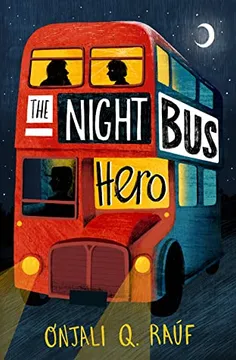


Plot Summary
Snakes and Unseen Talent
Hector Landis drops two rubber snakes into the school soup, splashing the principal and earning another detention. He enjoys being feared by classmates and dismissed by adults, though his drawings show a talent nobody has bothered to encourage openly.
When teacher Mrs. Vergara catches him holding a funny drawing made by another pupil, she blames him anyway. Hector protests, but her certainty confirms what he already believes: grown-ups have decided who he is.
In detention, he overhears Mrs. Vergara and the principal discussing his comic art and a possible national competition. The principal rejects the idea because Hector might embarrass the school. Stung by praise that is never allowed to become opportunity, Hector decides his next stunt must be bigger.
Hector’s misbehavior is real, but the adults’ habit of treating every accusation as settled fact gives him little reason to trust correction. The scene makes recognition feel conditional: his artistic ability is visible, yet the principal treats it as a reputational risk rather than a way to reach him. Hector responds by making the role of troublemaker his own, where at least he controls the performance. This does not excuse the harm he causes. It shows how a child can turn a label into armor, then use that armor to avoid the vulnerability of asking to be seen differently.
Thomas's Yellow Hat
After school, Hector’s friends Will and Katie urge him to bully younger pupils, then mock him when he hesitates. To recover his standing, Hector points out an older man sitting beside a trolley in the park and proposes stealing his bright yellow hat. The man, Thomas, wakes and catches Hector, but the three children toss the hat between them until Thomas drives them away with handfuls of pebbles.
Will and Katie laugh at Hector for being chased by a homeless man. Their ridicule sharpens his humiliation into a promise of revenge. Thomas walks away with his hat restored, while Hector leaves the park determined to make the next encounter happen on his terms.
The prank is a small act of group cruelty, but it reveals how Hector’s friendships reward dominance more than judgment. Will and Katie do not need to force him; their laughter is enough to make him choose a target and risk hurting someone. Thomas’s defense of himself disrupts Hector’s assumption that an older, homeless person will simply endure whatever children do. Instead of reconsidering that assumption, Hector experiences the encounter as a loss of status. The scene establishes the emotional mechanism that drives the next harm: Hector mistakes humiliation for injury and tries to repair it through retaliation.
The Trolley in the Lake
At home, Hector hears that thieves have stolen a Paddington statue and a golden angel, leaving strange yellow marks. His father points out how little some people have, but Hector focuses on the thief’s ability to make valuable things disappear. The next day he disguises himself with a hoodie and mask, then pushes Thomas’s trolley down a park hill, intending to hide it.
Its crooked wheels drag Hector along until the trolley crashes into the lake. Thomas reaches the shore and breaks down as his belongings sink. Mei-Li, a classmate Hector despises, sees his uncovered face; a passerby also recognizes him, so he runs. Will and Katie praise the spectacle, and Hector pretends the destruction was deliberate, though he knows his plan went wrong.
The trolley is not a disposable prop. It is Thomas’s means of collecting recycling and a mobile store of the few possessions he can protect. Hector does not know this yet, but the consequences are larger than his intention, which is precisely what makes the scene a moral turning point. His borrowed disguise lets him imagine he is playing the part of a clever thief, while the uncontrolled wheels expose the gap between fantasy and responsibility. The public laughter from Will and Katie gives him an easy story to hide behind. Thomas’s grief gives the reader a different measure of the event.
Mei-Li's Repair Ultimatum
Hector’s father confronts him about a drawing he did not make and insists he write an apology to Mrs. Vergara. The next morning, Hector sees Thomas near the sweet shop with a police officer, then hands his teacher a sarcastic letter instead of accepting blame for the drawing. Mei-Li confronts him about the trolley and says Thomas’s name.
She also reveals that she witnessed Hector’s act and will expose him unless he apologizes and replaces what he destroyed. Hector threatens her rather than agree. He still does not understand what the trolley held, but Mei-Li’s demand turns the damage into a responsibility he cannot dismiss as a prank. For now, he keeps resisting and watches Thomas disappear from his familiar bench.
Mei-Li changes the terms of the conflict by refusing to let Hector control the story through threats or jokes. She does not ask for a vague expression of regret; she identifies a concrete loss and demands repair. Hector’s sarcastic letter to Mrs. Vergara shows how strongly he equates apology with admitting to something false, since adults have repeatedly blamed him unfairly. Yet the trolley incident is different: he did cause it. His refusal exposes the defensive logic that lets genuine injustice become an excuse to evade genuine accountability.
Piccadilly's One-Minute Blackout
On Saturday, Hector travels into central London with Will to skateboard, then stays behind alone after his friend leaves. Near Piccadilly Circus, he watches a man emerge from a doorway and move toward the famous fountain. The stranger uses a small device, and the surrounding lights and giant screens go dark together.
In the brief blackout, Hector sees him climb the statue, remove its bow, and spray three yellow strokes onto the steps. One minute later the lights return. The man bows to the statue and billboards before vanishing into the streets. Hector crosses to the fountain and finds the bow gone. He has witnessed the Invisible Thief, but he cannot yet separate what he saw from the face he expects to see.
Hector’s first glimpse of the thief gives him a rare kind of authority: he possesses evidence that the adults and police do not. But an observation is not yet an interpretation, and the book keeps those two acts distinct. The sudden blackout turns London into a stage on which the thief controls visibility, while Hector remains an unseen spectator. His loneliness in the city makes the encounter feel almost private, encouraging certainty where caution is needed. The yellow mark is especially important: it seems to confirm the public story about homeless people, although its meaning has not yet been tested.
Thomas's Missing Years
Hector goes looking for the man he believes he saw at Piccadilly, and Mei-Li leads him through the park to Thomas’s tent. Thomas recognizes Hector as the boy who sank his trolley and rejects the claim that he came to make amends. Hector instead accuses him of being the statue thief. Thomas shows him a wallet holding an old driving licence and photographs of his wife and baby daughter.
Mei-Li explains that they died in a car crash while Thomas was driving, after which grief cost him his job, home, and stability. The trolley held recyclable papers he sold for food and an album of family photographs. Hector sees the lake again in his mind, now understanding what else he destroyed.
Thomas’s wallet replaces Hector’s caricature with evidence of a life: a name, a former occupation, a family, and memories kept close. The revelation does not make Thomas a saint or erase his anger. It makes his anger legible. Hector’s attention shifts from the surface signs of homelessness to the sequence of losses that preceded it, while the lost album gives his own act a permanent, intimate cost. Mei-Li serves as a moral interpreter, but she cannot feel remorse on Hector’s behalf. He must decide whether the facts will change his behavior or merely give him another argument.
The Wrong Man Poster
At a school visit by police officers, Hector claims he knows the Invisible Thief and identifies Thomas. Officers take his account seriously, and an artist draws the features Hector describes. The sketch becomes a wanted poster circulated around London, making Hector briefly famous as the anonymous witness.
Then Hercules colors a copy at home, and Hector remembers the crucial mismatch: the thief had silver hair above a dark beard, while Thomas’s hair and beard were both dark. His observation was real, but his identification was wrong.
Before he can correct the mistake, news reaches school that police have questioned seventy-two homeless men. Hector also recalls the blue-dragon To Let signs near the stolen objects, a detail his little brother had noticed while looking at theft photographs.
The poster makes Hector’s error public and consequential. He has told the truth about seeing a crime, but attached that truth to a suspect selected by familiarity and prejudice. The distinction matters because sincerity cannot guarantee accuracy, and confidence can magnify a mistake into institutional harm. The seventy-two questioning of homeless men gives his private doubt a human scale. Hercules’s coloring, usually an annoyance to Hector, becomes an accidental instrument of perception: the difference in hair and beard forces him to revise what he thought he knew.
Grating Cheese for Truth
Hector follows Mei-Li to the Lotus Soup Kitchen to explain that the wanted poster may identify the wrong man. Mei-Li’s father, Cheng, puts him to work grating cheese for meals, while volunteers distribute food, clothing, and supplies to people who need them. Hector sees Mei-Li welcomed by name and watches Cheng help a mother whose family is struggling to keep their home.
He learns that Mei-Li has been volunteering there with her father, though she hides Hector’s identity by introducing him as Kevin. When Hector admits that he cannot safely correct the police alone, Mei-Li agrees to help find Thomas and the real thief, because she wants the homeless community cleared of suspicion.
The kitchen gives Hector direct contact with a community he has so far treated as a category or a target. Its people are not presented as interchangeable objects of charity: they cook, joke, ask for help, and recognize one another. Hector’s work is ordinary and physical, which matters. He contributes before he understands everything, and service begins as an action rather than a feeling. Mei-Li’s decision to help is also carefully bounded. She does not forgive the bullying or trust him without conditions; she chooses to correct a public injustice that affects people beyond either of them.
Thomas's Map of Warnings
At the soup kitchen, Mei-Li introduces Hector to Catwoman, a streetwise woman who lives with her cats, and Mason, a former Fortnum and Mason employee who has been sleeping rough. They know Thomas and help the children reach him.
Hector apologizes for the trolley and false accusation, then describes the Piccadilly theft, including a gold ring on the thief’s right little finger. Thomas brings out his map of London, where he has logged each stolen object beside the yellow symbol left behind.
He explains that the symbols belong to a homeless code meant to warn people of danger or offer help. The thief has exposed that code while making it appear that homeless people are responsible, encouraging suspicion against the very people the signs were created to protect.
The map turns scattered crimes into a language, but the ethical issue lies in who controls that language. The homeless code exists for practical survival, not spectacle; the thief’s use of it converts a resource for mutual care into false evidence. Thomas, Catwoman, and Mason possess knowledge that official investigators lack because they live within the networks the police have misread. Hector’s apology matters here because it is followed by listening. His role shifts from self-appointed expert to witness who can contribute a clue without claiming to understand the whole system.
The Blue Dragon Signs
Hector connects the crimes to blue-dragon To Let signs visible on buildings near several theft sites, suggesting the yellow marks are a distraction from property interests. Thomas notes that each robbery has happened on a Saturday and that most cluster along the N15 night-bus route.
The latest symbol, a cross associated with churches, may have been left early by mistake. Together they predict a possible target: St Paul’s Cathedral, where a major VE Day event will leave the building busy before nightfall.
Thomas plans to enter through a small window, and Mei-Li offers her grandfather’s bus pass. Hector refuses to have her visit his home because he fears his friends will tease him, hurting her. Still, she later throws the pass to his bedroom window.
Hector’s insight grows from a small, easily dismissed detail, but it becomes useful only when placed beside Thomas’s map and Mei-Li’s pattern recognition. The clues model collaborative reasoning: no one person owns the full solution. The property signs redirect attention from the visible victims of homelessness toward those who may profit from their displacement. At the same time, Hector’s treatment of Mei-Li shows that moral progress is uneven. He is willing to risk a dangerous break-in with her help, yet still protects his social image at her expense. Her choice to send the pass does not erase that injury.
Night Bus to St Paul's
Hector escapes through his bedroom window after his parents go to sleep and meets Thomas at a bus stop. Disguised in borrowed winter clothes and Thomas’s yellow hat, he uses Mei-Li’s grandfather’s pass to board with him. During the ride, Thomas explains that Mei-Li’s mother died of leukemia and that volunteering helps her and her father continue work her mother valued.
They reach St Paul’s as the VE Day display ends. Thomas spots an unlit window that should remain illuminated, and they enter an administration building through a small round window before descending an old passage into the cathedral crypt. The lights and alarms inside are disabled. From the main hall, they see five bearded thieves cutting a golden disc from the floor.
The night journey makes Hector’s change measurable through choices: he accepts discomfort, follows Thomas’s instructions, and risks being recognized. Thomas’s account of Mei-Li’s mother deepens what Hector has already seen at the kitchen, connecting her competence to grief and continuity rather than simple perfectionism. Their route into the cathedral also reverses the thief’s method. The criminal uses darkness to erase accountability; Hector and Thomas enter that darkness to gather evidence. Yet the sight of five thieves, not one, unsettles their plan and tests whether Hector’s new courage can survive fear rather than merely promise itself.
Five Beards Beneath the Dome
Thomas confronts the thieves to draw attention away from Hector, who is meant to reach the cathedral doors and signal their allies. Hector freezes, then moves when the gang begins to hurt Thomas. He dodges through the hall, topples candles, throws hymn books, and uses the benches to confuse his pursuers.
When he bursts outside, one thief catches him and removes his false beard. Hector recognizes Sir Nesbit, the wealthy businessman whose charity donation he saw on television, and spots his daughter Felicity among the gang.
Catwoman, Mason, and soup-kitchen volunteers emerge from hiding as police officers Miriam and Philip arrive. Sir Nesbit’s plan to blame homeless people and clear valuable central London properties is exposed, along with his alliance with Mayor Bainbridge.
Hector’s courage is not a sudden absence of fear. He first freezes, then acts because Thomas is in danger and because he can no longer treat the investigation as a route to personal fame. His improvised use of ordinary objects echoes his earlier creativity, now redirected from humiliation toward protection. The capture also reverses the public spectacle: a wealthy figure who relied on disguises and political influence is exposed by people he considered powerless. The homeless network does not simply wait to be rescued by police. It gathers evidence, coordinates witnesses, and helps make the arrest possible.
A Bench Remembers
After the arrests, Thomas explains that Sir Nesbit funded distant shelters to push homeless people away from the properties he hoped to profit from, while the mayor backed the plan. Hector returns home with Thomas and finds his family relieved rather than furious.
The next morning, he admits how deeply he has felt overlooked, and his parents tell him they love him and value his abilities. At the police station, the group receives a fifty-thousand-pound reward, which they share among Thomas, Catwoman, Mei-Li, and Hector.
Thomas rents a flat and begins bus-driving lessons; Mei-Li expands the kitchen; Catwoman secures housing and support. Hector helps restore Thomas’s album, funds a shower van, and dedicates a bench plaque to Thomas’s wife and daughter.
The resolution does not treat recognition as a prize that cancels harm. Hector receives affirmation from his family, but he also uses money and effort to address specific damage: the album, the bench, and practical support for people living rough. Thomas’s new home and plans for a night bus preserve his ties to the community rather than asking him to abandon them. Mei-Li’s kitchen grows, and Catwoman’s cats remain part of her home. These outcomes define heroism as sustained repair, not a single arrest or a flattering public title.
Analysis
The novel builds its mystery around a distinction between seeing and understanding. Hector witnesses the Piccadilly theft accurately, yet identifies the wrong man because Thomas already fits the stereotype he has formed. The mistake becomes more than a private failure when the police circulate a poster and question dozens of homeless people. In this way, the plot shows how prejudice can enter a process that believes itself to be evidence-based: a witness supplies details, an authority formalizes them, and a community bears the cost. Hector’s change is therefore not simply a movement from cruelty to kindness. He must learn to separate remorse from self-protection. At first he fears punishment and public embarrassment; later, he helps because Thomas and the people around him are in danger, even when no reward or applause is guaranteed. The trolley, especially its lost photo album, gives accountability a material shape. Saying sorry is insufficient while the damage remains unaddressed, so the ending returns Hector to the lake, the bench, and practical forms of repair.
The book also contrasts two kinds of power. Sir Nesbit can command technology, influence public opinion, and use political connections, while the homeless community possesses knowledge, trust, and a network of care. The criminal plot reveals that the public story of disorder can be manufactured to serve private profit. Against it, the soup kitchen and night buses create forms of belonging that do not depend on property ownership. The resolution does not pretend that one arrest ends homelessness. Instead, it imagines concrete support: housing, food, a shower van, recovered photographs, and a bus designed to help people at night. Hector’s heroism begins when he stops treating other people as scenery in his own performance and accepts that seeing them clearly creates obligations.
Review Summary
The Night Bus Hero receives an overall rating of 4.13/5, with readers praising Onjali Q. Rauf's sensitive handling of homelessness and bullying through protagonist Hector's transformation. Many highlight the book's value as a classroom read, commending its blend of mystery, humour, and social commentary. Critics note issues with pacing, Hector's cartoonish villainy, and an abrupt ending. Most agree the character development is powerful, with the homeless community portrayed with dignity, making it an important read for young audiences.
People Also Read


Characters
Hector Landis
Defensive schoolyard ringleaderHector is a bright, imaginative child who uses pranks, bullying, and jokes to control how other people see him. He reads adult suspicion as proof that he is already disliked, so he often chooses to perform the role others assign him rather than risk asking for trust. His comic drawings and quick practical thinking reveal abilities that his discipline record obscures. Hector’s cruelty toward classmates and Thomas is consequential, not harmless mischief, but his behavior also grows from loneliness and a hunger for recognition. His relationships with Will and Katie reward bravado, while Mei-Li and Thomas challenge his assumptions. His story asks whether a child can take responsibility without being reduced forever to his worst choices.
Thomas Chilvers
Streetwise night-bus veteranThomas is a homeless man who protects his dignity with sharp humor, strong boundaries, and practical knowledge of London. His yellow hat, battered trolley, and familiarity with night buses make him visible to Hector only as a caricature at first. Thomas refuses to accept mistreatment quietly, but he also gives help and affection to people he trusts, especially Mei-Li. He understands the hidden networks and survival practices of people sleeping rough, knowledge that formal authorities overlook. The losses he carries shape his guardedness without defining all of him. Thomas becomes a counterweight to Hector’s belief that power belongs to whoever can frighten others: his authority comes from endurance, loyalty, and earned trust.
Mei-Li
Sharp-eyed community volunteerMei-Li is Hector’s academically successful classmate, but her importance rests less on grades than on her disciplined attention to people and patterns. She volunteers with her father at the Lotus Soup Kitchen and has built real relationships with people Hector has never tried to understand. She is compassionate without being passive: she challenges Hector directly, sets conditions, and refuses to protect him from consequences merely because he is a child. Her precision makes her a strong investigative partner, while her humor and impatience keep her from becoming only a moral lesson for Hector. She wants the homeless community treated fairly and expects her friends to respect her even when doing so costs them social comfort.
Will
Eager evasive school friendWill is Hector’s longtime friend and an accomplice in many schoolyard pranks. He is funny and willing to encourage Hector’s schemes, but he is more cautious and more easily frightened than Hector. His approval helps sustain Hector’s need to look fearless, even when Will is not prepared to share the consequences. Will’s loyalty is real, though it often takes the form of cheering rather than questioning. He reflects how a group can normalize cruelty by treating it as entertainment.
Katie
Daring fast-running friendKatie is tall, quick, and confident, and she uses dares and teasing to push Hector toward the bold behavior she admires. Her sharp eyebrows and blunt challenges make her presence memorable, while her own history of expulsion hints at a child who does not easily fit school expectations. Like Will, she joins Hector’s bullying rather than interrupting it. Her friendship shows how companionship can encourage a child’s worst instincts when the group values daring more than empathy.
Catwoman
Protective cat-loving survivorCatwoman is an older woman living rough with a group of cats, whom she treats as family. Her prickly manner is a defense against repeated harassment, and she is quick to judge Hector because she has reason to distrust children who approach her. Beneath her suspicion, she is resourceful, connected, and willing to act when the homeless community is endangered. She understands the value of mutual aid and does not confuse vulnerability with helplessness. Her humor and fierce attachment to her cats give her a vivid life beyond her circumstances.
Cheng Zhou
Generous soup-kitchen organizerCheng is Mei-Li’s father and a central volunteer at the Lotus Soup Kitchen. He welcomes people with practical warmth, organizing meals and supplies while paying attention to individual crises, including a mother struggling to keep her home. His care is not sentimental; it is expressed through food, work, and follow-up. Cheng also connects the schoolchildren to a wider community of people who support one another. His patient example gives Hector a model of usefulness based on consistent action rather than public recognition.
Leonora and Christian Landis
Well-meaning traveling parentsHector’s parents are Leonora, an environmental campaigner, and Christian, a documentary filmmaker whose work focuses on overlooked people. Their work keeps them away from home, and they rely on carers and school authorities to manage family life. Both love their children, but they often approach Hector through warnings and comparisons, leaving him convinced that he is a problem rather than a person. Christian’s interest in homelessness gives Hector an unexpected route toward understanding Thomas, while Leonora’s warmth becomes clearer when Hector speaks honestly about feeling excluded. Their care is genuine, though their attention has not always reached him in the way he needs.
Hercules
Glitter-covered little brotherHercules is Hector’s four-year-old brother, an affectionate, cheerful child who draws with glitter and invents games wherever he goes. His closeness to Hector exposes a softer side of the older boy, even when Hector pushes him away. Hercules notices visual details without understanding their importance, and his playful coloring helps Hector notice a discrepancy in the thief’s appearance. He represents the uncomplicated affection Hector both resists and quietly values.
Helen
Conscientious older sisterHelen is Hector’s thirteen-year-old sister, an organized student who enjoys books, school activities, and her violin. She often takes on a bossy, parent-like role, which irritates Hector, and he responds by attacking her appearance. Their exchanges reveal a family where irritation can mask attention: she notices when he comes home hurt or in trouble, even if neither sibling knows how to speak gently. Helen is responsible without being presented as flawless or universally admired.
Mason
Displaced department-store gentlemanMason is a former Fortnum and Mason employee who keeps his formal manners and affection for the store even while living without a home. His polished vocabulary and bright bow ties contrast with his precarious circumstances. He knows the homeless community well and contributes its perspective to the search for the thief. Mason’s presence unsettles the assumption that poverty erases a person’s history, skills, or tastes.
Sir Nesbit
Influential philanthropic businessmanSir Nesbit is a wealthy businessman whose public image includes high-profile donations and close ties to London’s political leadership. He appears in the news as a benefactor and presents himself as someone invested in the city’s improvement. His money and influence place him near debates about development, public space, and homelessness. His polished status stands in deliberate contrast to the people whose lives are usually discussed by institutions rather than heard directly.
Felicity
Prominent businessman's daughterFelicity is Sir Nesbit’s daughter, a confident public figure whose polished image gives her access to influential circles. She is part of the story’s world of wealth, publicity, and political power, where appearances can conceal private motives. Her presence links family privilege to the broader civic conflict.
Sam
Guarded station-side sleeperSam is a homeless man Hector encounters sleeping near the police station. He is blunt about boundaries and makes clear that people living on the street deserve respect, not harassment. His brief warning gives Hector a direct correction from someone accustomed to being treated as a target.
Mrs. Vergara
Patient but mistaken teacherMrs. Vergara is Hector’s teacher, a caring adult who sees promise in his art but too readily assumes he is responsible for classroom trouble. She wants him to engage and behave, yet her misplaced accusation confirms his distrust. Her good intentions do not prevent her from contributing to his sense of being judged before he is heard.
Mr. Lancaster
Exasperated school principalMr. Lancaster is the school principal, known to Hector chiefly through detentions, warnings, and public reprimands. He sees Hector’s disruptive behavior clearly but discounts the boy’s potential when discussing the art competition. His rigid approach reinforces the conflict between discipline and guidance.
Miriam and Philip
Community crime investigatorsOfficers Miriam and Philip visit Hector’s class to discuss the statue thefts and later investigate his account. They try to engage the pupils and gather information, working within the pressures of a highly publicized case. Their presence shows how easily an honest witness can be mistaken and how formal investigation needs more than confidence to establish identity.
Malcolm
Welcoming night-bus driverMalcolm drives one of London’s night buses and recognizes Thomas as a regular passenger. His easy familiarity makes the bus feel like a small, dependable refuge within the city. By welcoming Thomas’s companion aboard, he helps the pair travel without drawing unnecessary attention.
Plot Devices
The homeless code
Warnings repurposed as blameThe code is a set of symbols used by people sleeping rough to identify danger, safety, or possible help. Thomas records the marks left at each theft and explains their meaning to Hector, Mei-Li, Catwoman, and Mason. The thief copies the code but makes its use visible, encouraging the public to believe homeless people are responsible for the robberies. This device connects street-level knowledge to the mystery and shows how information meant to protect a vulnerable community can be manipulated into false evidence.
Thomas's bus map
A map that links the crimesThomas marks each theft on a map of London’s bus routes, recording the location, stolen object, symbol, and the code’s meaning. The map allows the group to see patterns that isolated news reports conceal, including the clustering of robberies in central London and their relationship to the N15 route. It also turns Thomas’s long experience of night travel into investigative knowledge. The map does not solve the mystery by itself, but it gives the children and the homeless community a shared structure for testing clues and predicting the next target.
The blackout remote
A minute of engineered darknessThe thief uses a small remote device to switch off lights and screens across a target area, creating a brief window to remove statues without being seen. Hector witnesses the effect at Piccadilly Circus, and the same method later appears inside St Paul’s, where alarms and building systems have also been disabled. The device makes the criminal seem almost invisible, but it also provides a distinctive method that links the thefts. Its sophistication suggests access to resources far beyond those available to the homeless people being blamed.
The blue-dragon To Let signs
Property clues beneath the spectacleBlue-dragon rental signs appear on buildings near several theft locations. Hercules notices them while looking at pictures of the stolen statues, and Hector remembers the detail when the group considers who benefits from making homeless people seem dangerous. Their repetition suggests a property connection beneath the visible thefts. Paired with the robberies’ concentration in expensive central London, the signs help the group suspect that the crimes are meant to clear public space and raise the value of nearby properties. The clue redirects attention from the people accused to those with money and influence.
The night-rider network
A community beyond official sightThomas, Catwoman, Mason, Mei-Li, the soup-kitchen volunteers, and sympathetic bus drivers form a practical network of information and mutual support. Catwoman’s cats carry small messages, Thomas relies on night-bus routes, and volunteers can watch a location without attracting suspicion. This network helps Hector find Thomas, interpret events, and gather people near the cathedral. It counters the story’s public assumption that homeless people are isolated and helpless. Their relationships are not a magical solution: they are built through familiarity, shared need, and people choosing to act for one another.
About the Author
Other books by Onjali Q. Raúf


Download PDF
Download EPUB
.epub digital book format is ideal for reading ebooks on phones, tablets, and e-readers.








