

Key Takeaways
A school's real moral curriculum is how it treats students every day.
Daily practice teaches. The book opens with a student asking why a college-educated teacher would choose to work in a filthy, neglected school. The building, supplies, class sizes, and adult conduct all answer him, whether or not anyone intends them to. The authors call the responsibility behind this message the moral contract: schools require young people to attend and prepare them for citizenship, so their institutions must demonstrate the respect and care they expect students to show.
Actions outweigh slogans. A school may praise honesty and fairness, yet teach their opposites through favoritism, adult hypocrisy, or rules applied without thought. Moral education is not just a list of virtues. It is the repeated practice of making and explaining choices, including what the institution chooses to fund, tolerate, and repair.
What's striking is the shift from asking whether a school teaches character to asking what its ordinary operations train people to accept. This resembles the distinction in organizational theory between stated values and enacted culture: the latter is visible in who receives time, attention, and protection. The opening example makes the material environment part of the moral message, not mere scenery. Still, poor conditions do not determine every student's experience; individual teachers can create care inside an unjust system. That possibility is a reason to value those teachers, not a reason to excuse the system.
Show students how to reason through hard choices, not just which virtues to praise.
Judgment can be modeled. When Dave tells his social studies teacher he wants to leave America, she does not mock him or offer a patriotic lecture. She asks what troubles him, listens to his anger, and helps him consider other countries and the possibility of meaningful work at home. Her response treats his moral frustration as serious while keeping inquiry open.
Build purposeful communities. The authors also describe youth groups they call urban sanctuaries: small, supportive settings where young people are valued, rules are clear, adults mentor, and students undertake work they find worthwhile. Science teams, drama groups, and similar communities can offer belonging and challenge. Their lesson is not that every school must be small, but that students need adults and peers who make thoughtful action possible.
This approach connects moral learning with social learning: young people absorb not only what adults say, but how adults handle disagreement, uncertainty, and power. Dave's teacher neither endorses every conclusion nor shuts down the feelings that produced it. That combination can make reflection feel like a form of respect. The small-group examples also suggest why a large institution needs more than a warm mission statement. Yet mentorship alone cannot resolve structural neglect; caring relationships need time and institutional support to last.
Use demanding academic work to make moral questions concrete and debatable.
Inquiry beats slogans. Grappling means working carefully through a difficult question, using evidence and context rather than relying on a ready-made moral rule. Carl, a student eager to help a substitute operate unfamiliar computers, is told to return to class instead. His attempt might have failed, but trying would have put his knowledge to use and helped him learn. Instead, the school treats him as if he has nothing to contribute.
Content gives judgment depth. A class reading To Kill a Mockingbird can examine evidence, injustice, and how communities justify discrimination. Historical cases, scientific definitions, and even mathematical ideas can likewise raise questions about proof, fairness, and responsibility. The point is not to force a single approved answer. Students need practice making claims, testing them against details, and revising their views.
The book's distinctive claim is that moral education belongs inside serious academic study, not in a separate sermon or behavior program. Complex material gives students something to reason about beyond their own first impressions. This aligns with a broader view of expertise: good judgment depends on both principles and domain knowledge. The risk is that a teacher can steer an open discussion toward a preferred conclusion while calling it inquiry. Evidence-based debate therefore requires genuine room for students to challenge the teacher, not just one another.
When students or teachers bluff, inspect the workload and rules that reward it.
Bluffing can be systemic. It is the attempt to create a misleading impression without necessarily making a direct false claim. Angela avoids reading The Old Man and the Sea, hoping to pass through class unnoticed. Her teacher, Elaine, has also failed to prepare fully, overwhelmed by grading, family demands, and a load of 118 students. Each improvises rather than openly failing the other.
Look upstream. The authors argue that corner-cutting flourishes when too much work is expected, students remain anonymous, assignments lack clear purpose, and the school leaves no time for reflection. Tests that reward only machine-gradable answers can make deeper work seem pointless. The problem is not solved by scolding individual students. Schools must align expectations with available time, meaningful tasks, and honest assessment.
The useful insight is diagnostic: apparent dishonesty may be a rational adaptation to a badly designed system. In human-factors thinking, reliable performance depends not only on individual virtue but on whether the environment makes the desired action feasible. This does not erase responsibility; Angela and Elaine still make choices. It does change where reform begins. A school that praises integrity while setting impossible workloads teaches people to perform competence rather than build it.
Make academic placements revisable, specific, and based on demonstrated growth.
Categories can harden. Sorting means deciding who studies where, with whom, and at what level. Some choices, such as joining a chess group, are largely voluntary. Rigid academic tracks can instead reproduce divisions of race and class, while labeling students before their abilities have time to change. The book cites research finding that faster tracks do not reliably improve learning, while low tracks can reinforce low expectations.
Judge work, not labels. Gil is asked to build a portfolio and defend his readiness for a more advanced program. When his work falls short, his adviser explains why and helps him improve it, rather than treating his age or past record as decisive. The authors also caution that standardized test scores predict college performance most usefully in the first year, not a person's long-term potential. Fair placement takes individual attention and transparent standards.
This argument distinguishes useful differentiation from fixed hierarchy. Students do need work suited to their current knowledge, but an early label can become a self-fulfilling forecast when it limits access to strong teaching and challenging material. Gil's portfolio offers a more informative picture than a single score because it shows work, feedback, and revision. The tradeoff is real: flexible placement takes staff time and can invite disputes about standards. Transparent criteria and regular chances to demonstrate new learning are therefore essential.
Teach students to distinguish harmful intrusion from principled dissent.
Boundaries need interpretation. Shoving is the authors' broader term for crossing another person's boundaries, physically or socially. A playful nudge may be welcome to one student and intimidating to another; a joke can invade someone's privacy or demean a group. Samantha's school asked students to help define when horseplay stopped being harmless, and the resulting policy helped reduce incidents.
Not every intrusion is wrong. Scholarship also requires questioning accepted ideas. The book describes a nine-year-old who tested whether practitioners of therapeutic touch could sense a person's energy field without seeing their hand. Her results challenged the claim and were published in a medical journal. The useful distinction is not simply obedience versus rule-breaking. Responsible dissent relies on evidence and restraint, while cruelty and cheating seek advantage at someone else's expense.
The metaphor is valuable because it makes invisible harms easier to discuss without pretending every boundary is obvious. Consent and power matter: the same behavior can carry different meanings depending on who initiates it and who can safely object. The scientific example adds a necessary counterweight, since schools should not teach politeness as automatic deference to authority. Still, celebrating disruption without examining its costs can glamorize aggression. Evidence, attention to affected people, and willingness to accept scrutiny help separate constructive challenge from domination.
Pair high expectations with enough personal knowledge to avoid paralyzing students.
Pressure affects students differently. Dick Tomasino threatens his English class with a major test on The Great Gatsby after many students seem unprepared. Jacob welcomes the competition; Althea freezes; Byung barely registers the warning; others respond in still different ways. Fear can focus some students, but it can also block the very thinking the test is meant to measure.
Aim for an achievable challenge. The book calls the desired balance unanxious expectation: clear, serious standards without so much anxiety that students shut down. A teacher needs to know students well enough to judge whether pressure will help or harm, and to adapt when necessary. That is difficult in schools where teachers carry very large student loads and lack authority to adjust routines.
The classroom illustrates a basic problem in motivation: identical demands do not produce identical effort or performance. A challenge can signal confidence in a student's ability, but only if the student has a plausible route to meeting it. The book rightly resists both relentless pressure and empty reassurance. Its practical limit is that close knowledge of every learner is costly, especially in large schools. That makes manageable class structures and shared advising responsibilities part of good teaching, not optional extras.
Make belonging and serious work possible for students adults might otherwise overlook.
Anonymity can become abandonment. Jane attends school while largely on her own, sells drugs, and is rumored to carry a knife. Some teachers suspect danger but do not know her well or have a clear way to help. When they finally question her, she offers explanations; later, after threatening another student, she disappears from school. The story leaves hard questions about safety, rights, and how adults can intervene without reducing a vulnerable teenager to a suspect.
Design for connection. The authors argue that students should not be allowed to become unreachable simply because they are difficult to engage. Smaller school units, adults who know students, meaningful work, and the flexibility to respond can make belonging more real. The opening image of a neglected school makes the larger point: respect requires more than individual kindness. It also requires institutions willing to improve the conditions in which young people learn.
The tension here is ethically serious: protecting a student from neglect can conflict with protecting classmates and respecting due process. The authors reject the comfortable fiction that leaving a troubled young person alone is neutral. That insistence connects belonging to institutional responsibility, not just a student's social popularity. At the same time, interventions based on rumor can deepen mistrust or cause harm. The strongest response combines trusted relationships with clear safeguards, so care does not become either surveillance or passivity.
Analysis
The book's central move is to treat moral education as an institutional property, not simply a lesson delivered by a virtuous teacher. Its six action words provide a set of lenses for examining how schools shape conduct: adults model norms, students grapple with ideas, people bluff under pressure, institutions sort learners, communities negotiate boundaries, and fear can either motivate or disable. This structure keeps the argument close to ordinary school life, where values become consequential through assignments, schedules, disciplinary decisions, and relationships.
Its strongest contribution is joining intellectual rigor to moral development. Students do not become thoughtful citizens by memorizing virtue labels; they need knowledge, cases, evidence, and repeated practice judging competing claims. That account avoids the false choice between academic learning and character formation. It also treats students as developing agents rather than empty recipients, a stance visible in the examples of student-led inquiry and work with real stakes.
The book's institutional emphasis is equally important. Overload, anonymity, rigid tracking, and neglected facilities are not merely operational problems. They shape what students learn about whose time and effort matter. This makes reform a question of design and resource allocation, as well as personal ethics.
The argument also carries a demanding tension. Context-sensitive judgment is necessary, but discretion can become favoritism unless decisions are explained and reviewable. The authors recognize the need for shared standards, yet their confidence in dialogue and local judgment requires institutions capable of making time for both. Their proposal is therefore neither rulelessness nor a universal checklist. It is a disciplined community that applies principles to particulars, makes its reasoning visible, and accepts that adults must be judged by the same moral expectations they impose on students.
Review Summary
The Students are Watching receives mixed reviews, with an average rating of 3.55/5. Readers appreciate its insights on school culture, moral education, and the impact of educators' behavior on students. Many find it thought-provoking and valuable for teachers, highlighting the importance of relationships and student engagement. However, some critics find it obvious, dry, or too focused on high school. The book's emphasis on modeling good citizenship and creating a positive school environment resonates with many educators, despite its occasionally repetitive or bland content.
People Also Read








Glossary
Moral contract
School's duty to studentsThe obligation created when schools require young people to attend and claim responsibility for preparing them for adult life and citizenship. The contract is demonstrated through school routines, relationships, policies, and conditions, not only through explicit lessons about values. Students learn from the institution's conduct whether it respects them and believes they can grow.
Urban sanctuaries
Supportive youth communitiesNeighborhood groups that offer young people a safe, purposeful setting in which they are treated as resources rather than problems. In the book's account, successful sanctuaries combine clear membership expectations, supportive adult mentors, youth participation, meaningful challenges, and accomplishments that matter to both young people and the wider community.
Grappling
Evidence-based moral inquiryThe sustained examination of a difficult question using relevant knowledge, evidence, context, and competing interpretations. In school, grappling asks students to contribute their ideas and test them rather than simply repeat a rule or accept a teacher's conclusion. It joins academic learning to moral judgment by requiring students to consider how principles apply in particular situations.
Bluffing
Misleading without direct falsehoodPresenting a misleading impression without necessarily making an explicit lie. The book uses the term for students and teachers who pretend to be prepared or competent when they are not, often because of overload, unclear expectations, or insufficient time. Bluffing can also serve a benign social purpose, so the key question is whether it protects others or evades responsibility.
Sorting
Placing people into groupsThe process by which schools assign students to institutions, tracks, classes, programs, and status categories. Some sorting reflects voluntary interests or changing needs; rigid academic sorting can restrict opportunity and reinforce social divisions. The book argues for placements that are carefully justified, responsive to individual growth, and open to revision.
Shoving
Crossing another's boundariesA broad metaphor for entering another person's physical or social space without welcome. It includes physical horseplay, invasive jokes, disrespect, and actions that claim status or advantage. The term also covers forms of principled intellectual challenge, which may cross accepted boundaries constructively when supported by evidence, restraint, and attention to others.
Unanxious expectation
Serious, achievable challengeA balance in which students face clear and demanding expectations without anxiety so intense that it disrupts learning. The right balance varies among learners: pressure may focus one student and paralyze another. Schools need adults who know students well enough, and have enough flexibility, to maintain high standards while adapting how students are supported.
FAQ
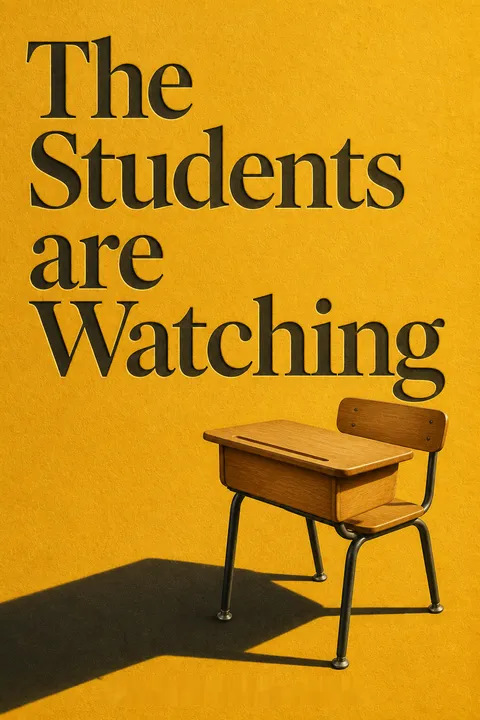
What’s "The Students Are Watching: Schools and the Moral Contract" by Nancy Faust Sizer and Theodore R. Sizer about?
- Focus on Moral Education: The book explores how schools, through their routines, structures, and adult behaviors, teach students about morality—often more through example than explicit instruction.
- Verbs Over Nouns: Sizer and Sizer argue that moral education is best understood as a set of actions (verbs like modeling, grappling, bluffing, sorting, shoving, fearing) rather than static virtues (nouns).
- Institutional and Individual Influence: The authors emphasize that both individual teachers and the design of school institutions play crucial roles in shaping students’ moral development.
- Real-Life Stories: The book uses fictionalized but realistic stories drawn from decades of educational experience to illustrate how students learn from what adults do, not just what they say.
Why should I read "The Students Are Watching" by Nancy Faust Sizer and Theodore R. Sizer?
- Insight into School Culture: The book provides a nuanced look at how the hidden curriculum of schools shapes students’ values and character.
- Practical Guidance: Educators, parents, and policymakers can find actionable advice on fostering environments that support moral growth.
- Challenges Assumptions: It questions common practices in education, such as overemphasis on rules, grades, and standardization, and suggests more thoughtful alternatives.
- Relevance Beyond Schools: The lessons about modeling, honesty, and community apply to any setting where adults influence young people.
What are the key takeaways from "The Students Are Watching"?
- Students Learn by Watching: Young people are constantly observing adults and institutions, learning more from actions than words.
- Moral Education is Active: Moral development is a process involving action, reflection, and engagement, not just memorizing virtues.
- School Design Matters: The structure and routines of schools teach as much as the formal curriculum; impersonal or inconsistent environments undermine moral growth.
- Importance of Relationships: Knowing students well and building trust are essential for effective moral and academic education.
How do Sizer and Sizer define the "moral contract" in schools?
- Mutual Responsibility: The moral contract is an implicit agreement that schools and teachers will help students become thoughtful, principled citizens.
- Beyond Academics: It encompasses not just academic learning but also the development of character, judgment, and agency.
- Institutional Obligation: Schools must create environments that respect and believe in students, supporting both their intellectual and moral growth.
- Modeling and Consistency: Adults are expected to model the behaviors and values they wish to see, avoiding hypocrisy and sustained inconsistency.
What are the six key concepts (verbs) explored in "The Students Are Watching" and what do they mean?
- Modeling: Adults and institutions demonstrate values through their actions, setting examples for students to follow.
- Grappling: Encouraging students to engage deeply with complex, often ambiguous moral and intellectual questions.
- Bluffing: The prevalence and consequences of pretending or cutting corners, both by students and teachers, and its impact on honesty.
- Sorting: The ways schools categorize and rank students, and the moral implications of tracking, awards, and social groupings.
- Shoving: Examining boundaries, respect, and the line between assertiveness and aggression in school interactions.
- Fearing: The role of anxiety, threat, and expectation in motivating students, and the fine balance between productive and paralyzing fear.
How does "The Students Are Watching" by Nancy Faust Sizer and Theodore R. Sizer suggest schools should approach moral education?
- Integrate Morality into Daily Life: Moral education should be woven into the routines, relationships, and curriculum, not treated as a separate subject.
- Encourage Reflection and Dialogue: Schools should foster environments where students and adults regularly discuss and reflect on moral issues.
- Focus on Process, Not Just Outcomes: Emphasize the journey of moral development—questioning, struggling, and learning from mistakes.
- Avoid Hypocrisy: Adults must strive for consistency between what they preach and what they practice, as students are quick to notice discrepancies.
What is the significance of "modeling" in "The Students Are Watching"?
- Central to Moral Learning: Modeling is presented as the most powerful way students learn values—by observing adults’ responses to dilemmas and daily challenges.
- Institutional Modeling: Not just individuals, but the school as a whole models values through its policies, priorities, and culture.
- Positive and Negative Examples: Both good and bad behaviors by adults are instructive; hypocrisy is especially damaging.
- Requires Self-Awareness: Teachers and administrators must be conscious of the messages their actions send, intentionally or not.
How does "The Students Are Watching" address the issue of "bluffing" in schools?
- Widespread Practice: Bluffing—pretending to know or do more than one has—is common among both students and teachers, often due to overload or unclear expectations.
- Systemic Problem: The book argues that bluffing is not just an individual failing but a result of institutional pressures, such as excessive workloads and lack of time for reflection.
- Moral Consequences: Regular bluffing undermines honesty and the integrity of the educational process, teaching students that superficiality is acceptable.
- Solutions: Schools should set realistic expectations, ensure students and teachers are known well, and design assessments that value genuine understanding over appearance.
What does "The Students Are Watching" say about "sorting" and its impact on students?
- Inevitable but Problematic: Sorting—through tracking, awards, and social groupings—is a natural part of school life but can reinforce inequality and limit opportunities.
- Need for Thoughtful Sorting: The authors advocate for flexible, individualized approaches that challenge each student appropriately, rather than rigid tracks.
- Transparency and Fairness: Schools should be open about their sorting criteria and ensure they are just and supportive of all students.
- Social and Academic Implications: Sorting affects students’ sense of belonging, self-worth, and future prospects, making it a deeply moral issue.
How does "The Students Are Watching" by Nancy Faust Sizer and Theodore R. Sizer recommend handling "shoving" and boundaries in schools?
- Recognize Complexity: "Shoving" includes both physical and social boundary-crossing, from horseplay to rudeness to intellectual challenge.
- Context Matters: The meaning and acceptability of shoving depend on intent, cultural norms, and the relationships involved.
- Encourage Constructive Challenge: Schools should teach students to question and push boundaries thoughtfully and respectfully, as part of intellectual and moral growth.
- Address Harmful Behavior: Clear discussions and agreed-upon norms are needed to distinguish between healthy assertiveness and harmful aggression or disrespect.
What role does "fearing" play in the moral development of students, according to "The Students Are Watching"?
- Double-Edged Tool: Fear can motivate students to work and grow, but excessive or misapplied fear leads to anxiety and disengagement.
- Unanxious Expectation: The ideal is to set high expectations without creating paralyzing anxiety, balancing challenge with support.
- Individual Differences: Teachers must know students well to apply the right amount of pressure or encouragement for each individual.
- Institutional Support: Schools should be structured to allow for flexibility and personal relationships, enabling teachers to respond to students’ needs effectively.
What are the best quotes from "The Students Are Watching" and what do they mean?
- "Our whole life is startlingly moral. There is never an instant’s truce between virtue and vice." — Henry David Thoreau. This quote underscores the book’s central theme: moral choices are constant and ever-present in daily life.
- "They watch us all the time. The students, that is. They listen to us, sometimes." This highlights the importance of adult modeling and the subtle ways students learn from adult behavior.
- "The routines and rituals of a school teach, and teach especially about matters of character." The book argues that the hidden curriculum—how things are done—is as important as what is formally taught.
- "Judge the school not on what it says but on how it keeps." This calls for evaluating schools by their lived values and daily practices, not just their stated missions or rules.
- "The students watch us, all the time. We must honestly ponder what they see, and what we want them to learn from it." The closing message: adults must reflect on the example they set, as students’ moral education depends on it.
Download PDF
Download EPUB
.epub digital book format is ideal for reading ebooks on phones, tablets, and e-readers.








