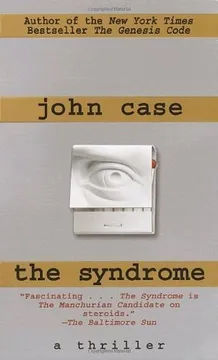


Plot Summary
Prologue
In 1996, researcher Lew McBride1 visits the Zurich Institute of Global Studies to tell its director, Gunnar Opdahl,4 that he will not renew his fellowship. Opdahl4 drugs him, transports him to a hidden operating room, and has him paralyzed while remaining conscious.
As McBride1 watches his own face on a monitor, Opdahl4 peels it back and works through his nasal passages toward the brain. The procedure makes the Institute’s polished rooms and peace-minded mission look like a cover for something far more intimate and brutal: the deliberate alteration of a person.
The opening gives the thriller a body before it gives it an explanation. McBride’s helpless awareness makes institutional power physical: Opdahl does not merely conceal information or manipulate careers, he reaches into the organ that makes a person know himself. The scene also plants the story’s central contradiction. The Institute speaks the language of peace, while its director conducts an operation that can destroy consent and memory. Because the reason for the procedure remains withheld, the prologue functions as a promise of explanation, but also as a warning that the characters’ recollections may have been manufactured by people with access to their bodies.
Nico Takes the Sunset Shot
In October 2000, Nico Sullivan3 arrives at a Longboat Key resort with a rifle, experimental pills, and an online routine she follows without fully understanding. She has been told to wait for an elderly wheelchair user named Calvin Crane.9 When Crane9 appears on the beach boardwalk at sunset, Nico3 assembles her sniper rifle on her balcony and shoots him through the back.
The shot kills him, but his Jamaican caretaker16 does not notice until the wheelchair reaches the pool. Nico3 watches police arrive, then pretends she knows nothing. Her controlled performance hides a stranger fact: the drug she takes blunts fear and disrupts memory, so the killing seems detached even to her.
Nico’s opening action reverses the usual thriller image of an assassin: the act is precise, but the person carrying it out is internally discontinuous. Her pills promise mastery over mood and behavior, yet their memory effects make her vulnerable to whoever supplies them and assigns her a target. Crane’s public death is almost noiseless, hidden among ordinary resort rituals, while Nico’s calm afterward resembles neither remorse nor conviction. The scene asks readers to distinguish agency from control. Nico physically makes the shot, but the gaps around her mission suggest that responsibility may have been engineered as carefully as the weapon.
A Session Turns Dangerous
Back in Washington, Nico3 visits Dr. Jeff Duran,1 a therapist whose own agoraphobia keeps him close to his apartment. Under hypnosis, she describes foster parents, a hidden basement tunnel, and a pornographic film in which her older sister Rosanna is killed. Duran1 believes the memories may explain Nico’s3 distress, although his leading prompts help shape what she recalls.
He mails session tapes to an insurer and urges Nico3 to take lithium, which she dislikes. A separate client, Dutch businessman Henrik de Groot,5 describes alien examinations and a worm in his heart that gives him commands. Duran1 treats both accounts as delusions rooted in buried trauma, not knowing that his own memories are equally unreliable.
Duran’s professional confidence rests on a distinction between a patient’s story and its source: he assumes he can guide a memory without authoring it. Yet the scene shows how therapeutic attention can become a feedback system. Nico’s distress is real, but Duran’s suggestions give it a particular plot, and her growing dependence makes that plot emotionally persuasive. De Groot’s parallel delusion should make Duran question the pattern, but instead it reinforces his clinical framework. The therapist is not simply a hypocrite who fails to examine himself. He is a man whose expertise has been arranged to keep him from recognizing that the same intervention is happening to him.
Adrienne Finds the Rifle
Nico3 misses a therapy appointment, then dies in her bathtub after tipping a space heater into the water. Her younger half-sister, Adrienne Cope,2 discovers her and is left to handle the cremation, the dog,13 and the will. The will names Duran1 and a children’s abuse charity among the beneficiaries, making Adrienne2 suspect that therapy helped push Nico3 toward suicide.
While looking through the apartment, Adrienne2 finds a locked case containing a precision rifle, scope, and suppressor. She hires her neighbor, private investigator Eddie Bonilla,6 to trace Nico’s3 missing settlement money and examine Duran.1 When Adrienne2 confronts the therapist,1 grief hardens into a determination to prove that his treatment harmed her sister.3
Adrienne begins as a person who responds to crisis by making lists, contacting institutions, and converting grief into tasks. That habit is not emotional avoidance so much as a survival skill: with no family left to share the work, she creates structure where the world offers none. The rifle disrupts that structure. It does not fit the image of Nico as a withdrawn woman whose life had narrowed to therapy and television, and it makes the sister’s private life newly dangerous. Adrienne’s accusation against Duran may be premature, but the discovery gives her a concrete reason to investigate rather than accept a tidy medical explanation.
Duran's Grave Is Occupied
Bonilla’s6 checks reveal that Duran’s1 psychology degrees and professional license cannot be verified. He also finds a death certificate for a child named Jeffrey Duran,1 born in 1968 and killed in a car accident in 1970. Duran1 insists the records must be wrong, but the Social Security index confirms the death.
He visits Rock Creek Cemetery and finds the child’s grave beside graves bearing his supposed parents’ names, all dated 1970. The discovery shakes his already thin connection to his childhood. Still, he takes a polygraph and truthfully says he believes his name and credentials are real. Adrienne2 and Bonilla6 leave with no simple answer, only the unnerving fact that Duran1 seems sincere.
The grave is more than evidence that Duran’s credentials are false. It severs the ordinary link between memory and identity: he knows a coherent biography, yet public records place its owner in the ground as a toddler. The polygraph deepens rather than resolves the mystery because sincerity cannot establish truth. Duran’s conviction becomes a clue to his condition, while Adrienne’s legal instincts collide with a fact that resists ordinary fraud logic. The scene makes identity less like a possession one can verify and more like a relationship among memory, records, and other people’s recognition, all of which can be manipulated.
The Office Becomes a Kill Zone
Adrienne2 returns to Duran’s1 apartment to inspect Nico’s3 medical file, but the file contains only a photograph. Two men arrive claiming to be police officers. Bonilla6 challenges their story, recognizes that their supposed precinct does not exist, and strikes one man before the second draws a silenced pistol.
The larger attacker kills his partner and shoots Bonilla,6 then turns his gun on Adrienne.2 Duran1 tackles him long enough to let Adrienne2 escape with him into a trash room. They hide as the attacker searches the corridor, then slip out through the health club and take a cab. At the station, detectives say they find no bodies or blood, turning their account of murder into a potential false report.
The attack converts Adrienne’s private investigation into a crisis of credibility. Bonilla’s skepticism briefly protects them, but it also provokes a killer who can erase the scene afterward. The police station then reproduces the same institutional problem in another form: the surviving witnesses tell the truth, but their evidence has vanished. Duran’s rescue matters precisely because it does not restore trust between him and Adrienne. She still believes he is dangerous and fraudulent, yet her survival now depends on him. Their alliance begins not with reconciliation but with a forced recognition that both are trapped inside a story whose authorities deny the visible facts.
A Room Across the Hall
After the police dismiss their report, Adrienne2 and Duran1 find her apartment ransacked. They return to Duran’s1 building, where a cleaning scent and a missing lamp conceal the recent violence in his office. His computer files have been overwritten, and Adrienne2 traces the changes to a late-night wipe.
They break into the neighboring apartment and find monitoring equipment aimed through a screened wall, along with two locked trunks. Duran1 reports the discovery to emergency services, but they cannot safely wait for help. Adrienne2 goes to her law office, hoping to preserve her job, while a black car follows her back to their motel. The hidden room proves their pursuers can observe Duran1 at home.
The surveillance apartment gives physical form to Duran’s isolation. His fear of leaving home looked like a private psychiatric limitation, but the equipment suggests it may also have been produced by a system that monitored and conditioned him. Adrienne’s legal skills help identify the computer erasure, yet evidence gathering is dangerous when the watcher can alter records and remove bodies. Her attempt to return to work is not merely denial: employment is the last surviving part of her ordinary identity. The episode shows how institutions and routines can be both shelter and trap, especially when someone else controls the information that makes those routines legible.
The Motel Stairwell Fight
At the motel, Duran1 spots the men waiting below and pulls Adrienne2 toward the stairwell, but one attacker blocks their descent. He throws Adrienne2 into the wall and fights Duran1 at close quarters. Duran1 unexpectedly uses a wrestling maneuver, then breaks the man’s neck with a kick. With Adrienne2 injured and the second pursuer searching outside, they escape in their rental car and head for Bethany Beach.
Duran1 expects to find his childhood cottage, Beach Haven, but the house he identifies is not the remembered building. The mismatch leaves him with no reliable childhood refuge. Adrienne,2 meanwhile, cannot return to her apartment or work, and must travel with the therapist1 she still fears.
Duran’s unexpected fighting skill is an early sign that his body may preserve knowledge his conscious biography cannot explain. The violence is both protective and destabilizing: he saves Adrienne, but does so with an instinctive competence that makes him less familiar to himself. The false cottage then removes the comfort of a stable past just as the external threat forces them to keep moving. Adrienne’s dependence on Duran does not erase her skepticism; the two conditions coexist. That tension gives their partnership its psychological texture. Trust here is provisional, built from actions that work before either person can explain what they mean.
The Program Answers Back
In the rented Bethany cottage, Adrienne2 searches Nico’s3 computer and finds repeated visits to a site that appears to be an error page. A transparent grid overlay, designed to fit the screen, helps reveal that the page has a concealed interactive layer. When Duran1 accesses it, images and sound seize his attention; he types responses while Adrienne2 cannot reach him.
A computer specialist traces the site to the Prudhomme Clinic in Switzerland. Adrienne2 briefly returns to Washington, where she learns that Nico’s3 rifle has disappeared, then goes back to Bethany. Someone has opened a propane line in the cottage cellar and lit a candle. Duran1 spots the danger in time, and they escape as the house explodes.
The website turns a familiar domestic object into an instrument of remote influence. Nico’s laptop is not merely a container of clues; its visual rhythm and sound can alter Duran’s state and make him communicate with whoever is watching. The grid overlay links the sisters through a shared technology, but their relationship to it differs: Nico obeyed a routine she scarcely understood, while Adrienne learns to investigate it. The gas explosion answers their discovery with physical force. The pattern is now unmistakable: when the pair approach the hidden system, someone tries to remove them. Evidence is not just dangerous to possess; it is dangerous to decode.
The Implant Comes Out
After the cottage explosion, Duran1 and Adrienne2 reach New York and consult neurologist Ray Shaw,7 who finds that Duran’s1 memories are unusually rigid and incomplete. Brain scans reveal a small foreign object near the hippocampus. Duran1 agrees to surgery, and neurosurgeon Nick Allalin14 removes a glasslike implant containing fine wires.
The procedure leaves Duran1 physically weakened but unusually clear-headed. Shaw7 suspects the implant may have interfered with memory, though its purpose is unknown. Adrienne2 also learns that the insurer Duran1 claimed to use for therapy tapes is only a private mail drop, not a real insurance company. The surgery offers a physical clue, but it cannot yet tell them who altered Duran1 or why.
The implant changes the mystery from psychological diagnosis to material evidence without making the mind mechanically simple. Shaw can point to an object near the hippocampus, but he cannot infer a complete biography from its location. Duran’s temporary clarity is therefore significant but not a cure: removing an instrument does not automatically restore the person it helped suppress. The bogus insurer also shows how the fabricated life extends beyond Duran’s memories into ordinary paperwork. Together, surgery and mail-drop expose an operation that has been designed to survive scrutiny by appearing mundane. Scientific knowledge helps, but it remains dependent on institutions willing to investigate what they find.
The Name Behind Duran
During hypnosis after surgery, Duran1 recalls studying at Bowdoin and recognizes himself as Lew McBride,1 a researcher who disappeared after a plane vanished in Haiti. The memory brings another, horrifying account: he believes he beat his wife and infant son to death. Adrienne2 searches newspaper archives and finds that McBride1 was reported missing in the 1996 crash, with no family murder attached to his name.
The account of killing his family is therefore another imposed memory, not a recovered crime. Before Shaw7 can continue helping, he is struck by a car and killed. McBride1 leaves the hospital shaken but more fully himself, while the death of his one expert ally makes the people behind the implant harder to reach.
The return of McBride’s name is not a triumphant recovery so much as a partial reopening of identity. His mind gives him a false atrocity alongside genuine biographical details, showing how truth and fabrication can occupy the same emotional register. Adrienne’s archival research becomes a counterweight to his conviction, but it cannot immediately relieve the guilt he feels. Shaw’s death removes the specialist who could have interpreted the implant and the memories, narrowing the characters’ access to legitimate expertise. The section makes verification an ethical act: Adrienne refuses to treat a vivid memory as proof, even when the person remembering it believes it completely.
Shapiro Names the Method
Shaw’s7 notes lead Adrienne2 and McBride1 to Sidney Shapiro,8 a retired intelligence official living in West Virginia. Shapiro8 recognizes the implant as a miniature depth electrode, capable of receiving signals that could influence the brain.
He describes earlier government experiments with drugs, hypnosis, sensory deprivation, and implanted suggestions, then explains how a false biography could be built around a subject’s psychological profile. The implant could help reinforce those suggestions and block access to other memories.
Shapiro8 believes the original research has been continued privately, beyond government oversight. His account gives Adrienne2 and McBride1 a mechanism for Nico’s3 abuse memories and Duran’s1 identity, but he refuses to claim that he knows who currently controls the system.
Shapiro’s explanation is chilling because it makes manipulation sound administratively achievable. Hypnosis, drugs, sensory deprivation, and radio signals become a toolkit for converting a person into a usable narrative. Yet Shapiro’s knowledge is also morally compromised: he can describe the machinery because he helped build the intellectual world that made it imaginable. His distinction between past state research and present private work offers no clean absolution. The characters gain a model, not a culprit. That gap matters. A theory can organize evidence and still leave the people who suffered it without justice, especially when the institution responsible has dissolved into less accountable hands.
Crane's Papers Reveal Jericho
Adrienne2 and McBride1 travel to Florida to learn why Nico3 killed Calvin Crane.9 Crane’s sister,11 Thea,11 and his longtime companion, Mamie Winkelman,10 describe his ties to the Institute and his recent conflict with its director, Gunnar Opdahl.4 Mamie10 lends them Crane’s papers.
In a draft letter, Crane9 condemns a proposed operation called Jericho and warns that the Institute has abandoned its original purpose. A second letter shows Opdahl4 demanding Crane’s9 approval for operational funds.
Newspaper clippings collected by Crane list prominent figures who died in suspicious or convenient circumstances across decades. The documents suggest that Nico’s3 target was not a random old man: Crane9 had tried to obstruct a covert organization with a long history of political killings.
Crane’s papers transform the case from a private medical conspiracy into a political one. His opposition is important not because it makes him morally spotless, but because it shows an institution preserving itself after the emergency that supposedly justified it has passed. The clippings convert scattered deaths into a pattern, though they remain leads rather than courtroom proof. Adrienne and McBride must therefore live with a familiar gap between knowledge and evidence. Their discovery also reframes Nico’s killing: the rifle was not a symptom of personal instability alone but possibly one element in a system that recruited a damaged woman to silence a former insider.
The Dutchman Is the Fuse
At a motel, Adrienne2 researches the name Albino Luciani and identifies him as Pope John Paul I, one of Crane’s clipped deaths. McBride1 connects Henrik de Groot’s5 recurring tune about Jericho to the assassin Dimitrio Tsafendas, who blamed his killing of South African leader Hendrik Verwoerd on a tapeworm in his heart.
De Groot5 has the same worm delusion, as well as racist beliefs that make him a plausible instrument against South Africa’s Black leadership. Crane’s letter names Jericho as an imminent disaster, and McBride1 concludes that Nelson Mandela, President Thabo Mbeki, and Archbishop Desmond Tutu are targets. They decide to travel to Switzerland, where Opdahl4 and de Groot5 are connected to the Institute and the World Economic Summit.
The pattern becomes legible through repetition: the worm in de Groot’s heart echoes an earlier assassin’s explanation, while his racism supplies the political motive the older case lacked. This does not mean the delusion is merely symbolic. It has been planted to make a violent act feel commanded, justified, or inevitable. Adrienne’s research turns the archive into a forecasting tool; McBride’s recovered expertise lets him recognize the operational link. Their decision to go to Switzerland marks a shift from survival to intervention. They are no longer trying only to learn what happened to them. They are trying to prevent a known mechanism from being used again.
McBride Reaches Opdahl
McBride1 and Adrienne2 reach Zurich and learn Opdahl4 is at the Prudhomme Clinic in Spiez. McBride1 buys a pump-action shotgun and disguises it in a box marked as curtain rods. At the Institute, Adrienne2 checks whether Opdahl4 is present, then returns with news that he is away until Tuesday and has gone to the clinic.
McBride’s1 memories of the original surgery suddenly return, confirming that Opdahl4 had operated on him years earlier. He enters the clinic posing as a deliveryman, but the receptionist recognizes him through a photograph and security guards seize him.
Opdahl4 orders a surgeon15 to repeat the memory-destroying procedure. McBride1 escapes his straitjacket, kills Opdahl4 and the surgeon,15 wounds a guard, and flees with another as a hostage.
McBride’s assault on Opdahl is both a reversal and a moral danger. The man who once lay paralyzed under the surgeon’s hands now holds lethal force, but his action does not restore the innocence taken from him. Opdahl’s confidence comes from treating people as cases and states as diseased tissue; McBride’s violence answers that dehumanization in the same bodily register. The scene also exposes a limitation in revenge: killing the director cannot by itself dismantle the organization or stop the planned attack. McBride escapes with information and a hostage, but the broader threat remains active, moving the story’s urgency from personal reckoning to public rescue.
The Fribourg Gala Burns
At Davos, McBride1 and Adrienne2 search clubs until a waitress directs them to De Groot’s5 apartment. De Groot5 captures them and reveals his plan: he has replaced the Fribourg Hotel’s fire-suppression gas with petrol, booby-trapped extinguishers with butane, and rigged a podium lightbulb to start a small fire during a South African reception.
McBride1 uses a thunderstorm’s flashing light to re-enter De Groot’s5 hypnotic safe place, frees himself and Adrienne,2 then races to the hotel. The bulb has already ignited the speaker’s clothing. McBride1 tackles a waiter before he can use the dangerous extinguisher, smothers the flames with a coat, and warns the room to evacuate. Security knocks him down, but the mass fire is prevented.
The climax turns the book’s most intimate instrument, hypnotic suggestion, toward interruption rather than control. McBride does not defeat De Groot by overpowering his delusion; he uses the same entrainment cues that shaped it to recover a therapeutic connection and create a pause. That pause gives him time to reach the gala, where the technical details of the trap matter as much as courage. The fire extinguisher is designed to intensify the fire, making ordinary emergency response dangerous. McBride’s warning disrupts the chain reaction. He cannot undo the Institute’s history, but he prevents its latest plan from converting political violence into mass casualty.
Epilogue
McBride1 spends a week in a Davos jail, where an American embassy official arranges a quiet return to the United States and warns him against making the story public. De Groot5 is sent for treatment, while the governments involved suppress the incident to avoid a public trial.
Back in Washington, Adrienne2 leaves her law firm and begins preparing to practice independently; McBride1 starts recovering his research career and finances. They live together while sorting out their damaged lives. At last, Adrienne2 buys a model yacht and places Nico’s3 ashes, flowers, and candles aboard. McBride1 guides the little vessel onto the Potomac, and the sisters’ story ends with a farewell carried by wind and tide.
The ending refuses the clean rewards of exposure and punishment. The state contains the crisis by suppressing it, repeating the secrecy that made the conspiracy possible, while McBride and Adrienne receive neither a public accounting nor a secure return to their former lives. Their recovery is practical and intimate: work, housing, legal independence, and the difficult task of honoring Nico. The model yacht converts the earlier motifs of sailing and lost memory into a chosen ritual. Unlike the Institute’s hidden operations, this act is witnessed by the people who loved Nico and governed by no covert command. The boat cannot repair what happened, but it gives grief a direction and a visible passage away.
Analysis
The novel treats memory as both a biological process and a political resource. Duran1 and Nico3 do not simply misremember; their recollections are shaped by technologies, drugs, and therapeutic encounters that make private identity available to outside control. This makes the book’s treatment of hypnosis especially uneasy. The same guided imagery can soothe a frightened patient, create a false history, or interrupt a command structure at a critical moment. Technique is never ethically neutral. Its meaning depends on who controls it, what the subject understands, and whether consent is possible.
The characters’ search for truth also exposes the limits of evidence. Duran’s1 polygraph responses are sincere but wrong; his grave and records contradict the life he remembers. Adrienne’s2 legal instincts help her test claims, yet bodies disappear and official investigations reject what she and Duran1 witnessed. Crane’s archive reveals a pattern but falls short of proof. The thriller’s suspense arises partly from this gap between knowing and proving. Institutions do not merely fail to protect the characters; some are designed to make the truth difficult to state without appearing irrational.
The Institute’s transformation from a peace-oriented foundation into a private political instrument gives the conspiracy historical depth. Its founders justify covert violence as prevention, then preserve the machinery after the original emergency fades. Opdahl’s4 medical language, especially his habit of describing political communities as diseased tissue, converts assassination into a supposedly clinical intervention. The novel links this rhetoric to real psychological harm: Nico3 and Duran1 become instruments by first being made uncertain about who they are.
Adrienne2 and McBride1 offer a counterpractice. They assemble fragments, check one another’s assumptions, and act before certainty is complete. Their partnership does not erase grief or restore lost years, but it makes their knowledge shared rather than imposed. The final memorial for Nico3 is small beside the political machinery, yet it matters because Adrienne2 chooses its meaning herself. In a story where hidden systems manufacture memory, mourning becomes an act of authorship.
Review Summary
The Syndrome is a mind-control thriller that earns mostly positive reviews for its suspenseful pacing, intriguing premise, and well-developed characters. Readers praise its realistic background detail and unpredictable plot twists, comparing it favorably to Jason Bourne-style action. Common criticisms include a slow start, a rushed or unsatisfying ending, an unnecessary romantic subplot, and some racial insensitivity in the writing. Overall, most readers found it a compelling page-turner despite its flaws, with several noting it sparked or rekindled their love of reading.
Characters
Jeff Duran
The enclosed therapistDuran is a Washington therapist whose professional manner is calm and methodical, even as panic attacks restrict his movements beyond home. He relies on routine, television, and clinical categories to keep uncertainty manageable. His work with Nico3 and Henrik de Groot5 reveals a weakness in that confidence: he believes careful interpretation can separate truth from delusion, but he is less attentive to the limits of his own memory. Duran’s instincts often exceed his conscious explanation, particularly when danger forces him to act. His character is shaped by the tension between expertise and vulnerability, and by the possibility that a person can sincerely inhabit a life whose foundations he cannot inspect.
Adrienne Cope
The methodical younger sisterAdrienne is Nico’s3 younger half-sister, a junior lawyer whose long hours and meticulous lists help her impose order on a life marked by family loss. She is practical, observant, and willing to challenge people who rely on authority rather than evidence. Her affection for Nico3 is complicated by frustration with her sister’s3 instability and by her own resistance to Nico’s3 claims about their childhood. Adrienne’s legal training makes her attentive to documents, timelines, and inconsistencies, but her strongest skill is emotional endurance: she keeps working when the facts become frightening and when the institutions meant to help her refuse to believe what she has seen.
Nico Sullivan
The volatile elder sisterNico is Adrienne’s2 older half-sister, a former model whose charm and impulsiveness sit beside serious mood swings and memory gaps. She values intensity and the sensation of being free from ordinary limits, which makes medication feel to her like a loss of self. Her experiences in Europe left her with amnesia, and she has become increasingly isolated in Washington. Through therapy, she searches for an explanation for her distress in memories of childhood abuse. Nico’s character holds the story’s central uncertainty: she is both a person trying to understand herself and someone whose perceptions may be shaped by forces she cannot see.
Gunnar Opdahl
The philanthropic surgeonOpdahl directs the Institute of Global Studies and presents himself as a cultured physician and benefactor. He is polished, socially skilled, and accustomed to treating other people’s lives as matters for expert management. His medical background lends authority to his public role, while his composure suggests a man who has learned to keep ethical doubts outside the room. Opdahl’s connection to the Institute’s fellows and clinics makes him a central figure in the novel’s political landscape. He embodies the danger of benevolent language when it is used to justify control over people who have less information and fewer choices.
Henrik de Groot
The troubled Dutch clientDe Groot is a multilingual Dutch businessman who moves easily through international corporate circles but struggles with frightening delusions. He believes a worm inside him issues commands and describes encounters that resemble alien abduction. His intelligence and physical confidence make his distress less obvious to strangers, while his racism complicates Duran’s1 efforts to understand him. De Groot’s case places him between professional competence and psychological vulnerability. He is especially important because his beliefs are not merely private symptoms: they affect how he interprets authority, danger, and his own actions.
Eddie Bonilla
The neighborhood investigatorBonilla is a retired military investigator turned private detective, known to Adrienne2 through their neighborhood. His comic bravado and intimidating manner help him challenge Duran’s1 credentials and uncover factual leads. Beneath the bluster, he is resourceful and loyal, taking Adrienne’s2 concerns seriously even when he doubts parts of her theory. He sees investigation as a practical craft: check records, ask direct questions, and follow money. His presence gives Adrienne2 an experienced ally as she moves from suspicion toward a case.
Ray Shaw
The memory specialistShaw is a neuropsychiatrist and researcher whose expertise concerns memory, learning, and the brain. He approaches Duran’s1 case with intellectual curiosity, but also with patience and care, willing to examine a puzzling patient rather than dismiss him. Shaw understands that recollection is reconstructed and vulnerable to suggestion, a principle that becomes central to the investigation. His professional independence has limits, however, because his work takes place within institutions and rules he cannot simply ignore. He offers the protagonists scientific language for their experience without pretending that science can immediately resolve it.
Sidney Shapiro
The compromised former spymasterShapiro is a retired intelligence official who has withdrawn to a quiet life in West Virginia, where meditation and deliberate simplicity contrast with his government past. He carries knowledge of experiments that explored hypnosis, drugs, sensory deprivation, and neurological control. Shapiro is frank about methods but guarded about responsibility, often framing past abuses as products of their political era. His discomfort reveals that remorse and self-justification can coexist. He helps Adrienne2 and McBride1 understand the technology, but cannot offer a complete account of who has inherited it.
Calvin Crane
The retired foundation patriarchCrane is a wealthy former head of the Institute, a public benefactor with a long career spanning law, wartime service, diplomacy, and philanthropy. He is remembered as intelligent, formidable, and deeply invested in the Institute’s mission. His relationships with Opdahl4 and the people who shaped the organization suggest a man who continued to exert influence after retirement. Crane’s life connects public respectability to covert politics, making him a figure whose charitable work and institutional power cannot be considered separately.
Mamie Winkelman
Crane's longtime confidanteMamie is Crane’s9 longtime companion, a Dutch woman who lives by the Florida coast and preserves photographs and personal papers from their shared past. Warm, perceptive, and a little theatrical, she remembers the private relationships behind Crane’s9 public stature. Her ease with Adrienne2 and McBride1 helps them gain access to documents that formal channels might never yield. Mamie is also careful about what she says, aware that old loyalties and political secrets have consequences beyond her household.
Thea Wilkins
Crane's estranged sisterThea is Crane’s9 elderly sister, sharp-minded and candid about the family’s strained relationship. She does not idealize her brother9 and describes his certainty as a source of conflict. Her perspective gives Adrienne2 and McBride1 a family account distinct from the Institute’s official history.
Ramon Gutierrez-Navarro
Nico's devoted doormanRamon is the doorman at Nico’s3 building, an aspiring actor who takes his small parts and his friendships seriously. His warmth toward Nico3 and willingness to care for her dog13 reveal a loyalty that is easy to overlook beside the larger conspiracy. He is an ordinary neighbor whose kindness gives Adrienne2 a glimpse of the community her sister3 had around her.
Jack
Nico's Jack RussellJack is Nico’s3 energetic terrier and constant companion. His needs give shape to her daily routine, and his presence provides a small, uncomplicated bond in a life increasingly narrowed by isolation.
Dr. Nick Allalin
The neurosurgical specialistAllalin is the skilled neurosurgeon who works with Shaw7 to examine Duran’s1 brain. Precise and confident in the operating room, he treats the procedure as a technical challenge while remaining attentive to its risks.
Frank Morgan
The clinic surgeonMorgan is a surgeon at the Prudhomme Clinic whose clinical competence is placed in service of the institution’s hidden practices. He represents the dangerous distance between medical skill and medical ethics.
Leviticus Benn
Crane's Jamaican caregiverBenn is Crane’s9 caretaker, responsible for his daily physical needs and for helping him enjoy the beach. He is candid about the indignity of police scrutiny and has little access to the powerful circles that shaped his employer’s9 life.
Plot Devices
The brain implant
A signal inside memoryThe tiny glasslike device near Duran’s1 hippocampus contains fine wires and can receive signals that bypass ordinary hearing. It supplies a physical mechanism for influencing attention, reinforcing suggestions, and interfering with access to memory. The implant does not explain every symptom by itself; its effects depend on other tools, including drugs, hypnosis, sensory deprivation, and monitoring equipment. Its discovery shifts the story from a dispute over whether characters are delusional to evidence that their minds may have been deliberately altered. The same kind of device is found in Nico’s3 remains, linking her experience to Duran’s1.
Screen memories
False stories that discreditA screen memory is an invented or distorted personal history designed to feel compelling while sounding implausible to outsiders. Nico’s3 memories of ritual abuse and Duran’s1 story of killing his family are examples of narratives that isolate their subjects by making their claims easy to dismiss. In the Institute’s logic, such memories can conceal real events, undermine a witness, and provoke self-destruction. The plot tests the difference between a sincere memory and a reliable one: emotional conviction does not prove that an event happened, while a false memory can still produce genuine fear and harm.
The hidden website
A remote trigger for tranceNico’s3 computer repeatedly connects to an apparently nonexistent website. A transparent grid overlay helps expose its concealed interactive layer, which responds to Duran1 with rapid images, sound, and prompts. The rhythm draws him into a trance state and allows him to provide information without ordinary awareness. The website connects the intimate technology of the implant to a remote surveillance network, and its address leads Adrienne2 toward the Prudhomme Clinic. It also demonstrates that the conspiracy can act through devices already present in a home, rather than relying only on face-to-face coercion.
Crane's archive
A paper trail to JerichoCrane’s9 photographs, correspondence, and newspaper clippings preserve evidence of his conflict with Opdahl4 and the Institute. His draft letter condemns Jericho, while another letter reveals a dispute over funding approval. The clippings create a pattern of political deaths but do not amount to proof that could easily survive a court case. As a device, the archive turns personal history into investigative evidence and gives Adrienne2 and McBride1 a route from Nico’s3 killing to a larger operation. It is also vulnerable: the characters must copy and interpret it while knowing that possession of the papers could expose them.
The Fribourg fire system
A gala rigged to explodeDe Groot5 exploits his expertise in fire suppression to turn the World Economic Summit’s security into a weapon. He substitutes petrol for the hotel’s inert suppression gas, alters extinguishers with butane, and prepares a lightbulb to start a small fire at a South African reception. The design depends on predictable responses: someone sees flames, reaches for an extinguisher, and activates the larger danger. McBride1 must recognize that the standard safety equipment has been compromised and warn the crowd before the fire spreads. The device makes the climax a contest between technical knowledge and the assumptions that usually make emergency procedures work.
Download PDF
Download EPUB
.epub digital book format is ideal for reading ebooks on phones, tablets, and e-readers.








