

Plot Summary
The Green Machine
Alex Callahan1 has his six-year-old twins, Kevin3 and Sean,4 for a month while their mother,2 Liz,2 tests whether he can put family before his demanding reporting career. He takes them to Maryland’s Renaissance Faire, a day he expects to endure but gradually enjoys as the boys explore its shows and games.
When Sean4 reaches the top of a climbing challenge, Alex1 lets the twins join children cheering for a jousting knight. During the next match, he looks toward the fence and cannot find them. He searches the crowd, then the grounds, refusing at first to leave the arena where he last saw them. By the time he asks security for help, the fair is closing and his sons3 are missing.
The disappearance grows directly from Alex’s ordinary parental inattention, not from a spectacular mistake. He is physically present, yet his attention has been trained by years of work to regard family life as something that can wait. The fair briefly reverses that habit: the boys’ pleasure draws him into their world, and his decision to let them join the cheering children becomes an act of trust. The sudden absence exposes the difference between loving his sons and knowing how they move through the world. His guilt is therefore immediate and intimate, not merely procedural.
A Shoe in the Dirt
Fair security chief Gary Prebble organizes announcements and searches, then Detective Ray Shoffler6 arrives and expands the effort into the performers’ residential area and surrounding woods. Alex1 spots a small Nike shoe by the jousting ring, but police cannot yet prove it belongs to Kevin.3 On the drive home, his phone records a call from his own house.
He hears a child address him as father,1 but the connection ends before he can learn where the boys are. Alex1 reaches home to find no one there. Instead, he notices an intricate folded rabbit on Sean4’s dresser and, later, a neat row of old dimes on the bathroom vanity. Both objects suggest that someone has entered the house, though Alex1 cannot explain what either means.
The clues turn domestic space into a second crime scene. The shoe offers a possible trace of physical violence, while the call seems to promise reunion and instead creates a new mystery: the boys have somehow been at home, but are gone again. The rabbit and coins are unnerving because they are not ordinary evidence of struggle. Their deliberate placement implies a visitor who wants to be noticed, yet withholds the key to understanding why. Alex’s home, once the place he expects to make things right, becomes a place where another person has already arranged the story.
The Father Under Suspicion
Police find Kevin’s yellow whale-print shirt in the house, soaked with what appears to be blood. The discovery pushes Alex1 into a five-hour interrogation and makes his family watch investigators treat him as a possible killer.
Liz,2 her father11 Jack,11 and Alex’s parents1 endure a press siege while the police test the shirt and question Alex1’s account. The result changes the case: the blood comes from a chicken, and witnesses place Alex1 with the boys at the fair throughout the relevant hours.
The shirt has not proved the twins are dead or explained their disappearance, but it has consumed precious time and damaged the family’s confidence in the investigation. Shoffler6 apologizes, then turns attention to witnesses who saw a tall costumed man5 with a whippet.
The false evidence exploits the investigation’s most predictable assumption: when children disappear, parents are scrutinized first. Alex’s profession makes the reversal sharper. He has built a career turning other people’s suffering into footage, and now cameras transform his private terror into a public performance of guilt. The chicken blood clears him only in the narrow legal sense; it does not restore the hours lost or the trust shaken. The episode also introduces a distinction between evidence and interpretation. A clue can be physically real and still be planted to make investigators look in the wrong direction.
The Pied Piper Witness
A reluctant fair employee remembers an unusual group leaving the grounds: a tall man dressed as the Pied Piper, a skinny whippet wearing a ruff, and two children who were not in costume. Other witnesses describe the man5’s flute and see him with the twins.
The image gives Alex1 and the police a direction, but not a name; sketch artists produce faces obscured by facial hair and theatrical collars. Meanwhile, a national search, reward fund, website, and volunteer network briefly keep Kevin3 and Sean4 in the news.
Liz2 cannot live indefinitely inside that public vigil and returns to Maine. Alex,1 convinced the boys may still be alive, resigns from his television job and commits himself to the search, despite the financial strain and his estranged wife’s2 growing anger.
The Piper costume supplies a memorable image but also performs concealment: it turns a man into a storybook role that witnesses can describe without truly identifying him. The whippet works the same way, drawing children toward its handler while seeming harmless. Alex’s decision to leave work marks a genuine point of no return. Earlier he had treated his career and family as competing obligations; now he relinquishes the career structure that once consumed him. Yet Liz’s departure shows that devotion after catastrophe cannot retroactively repair the neglect that preceded it.
The Sandling Parallel
Alex1 studies an earlier case in which Emma Sandling’s7 twin sons, Chandler19 and Connor,19 vanished from a restaurant and escaped weeks later at a California shopping mall. With private investigator Mary McCafferty’s12 help, he finds Emma7 living in Florida under the name Susie Whalen.7
She is frightened that renewed attention will expose her sons, but lets Alex1 speak with them. The boys describe a large isolated house, a captor they called Doc,5 daily physical training, and skinny dogs.
They also recall magic tricks with cards and coins. Their mother7 recognizes Alex1’s evidence: her boys had found a bowl of water and a line of dimes near their sleeping bags, just as Alex1 found them at home. The matching details convince Alex1 that the cases are connected.
The Sandling case gives Alex more than a parallel; it gives him a model of survival and a warning about the cost of public attention. Emma’s reluctance is not indifference but a practiced defense of the life she rebuilt after authorities doubted her. Her boys’ memories are partial, shaped by the captor’s lie that their mother had abandoned them. Their testimony shows how coercion can work through attachment rather than overt cruelty: the children cooperate because they are told obedience protects their family. The matching coins and water turn Alex’s private clues into a pattern.
The Showgirls’ Last Act
Ray Shoffler6 urges Alex1 to examine the unsolved murders of Clara and Carla Gabler,18 identical twins who performed as showgirls in Las Vegas. Alex1 interviews their former employer and roommate, learning that the sisters had been preparing to audition for a magic act.
Medical examiner Barry Chisworth describes Clara18’s body as cut through with a powered saw while she was alive, while Carla18 was shot once behind the head. At Red Rock Canyon, Alex1 understands the staging: Clara18 was the apparent victim in a sawing-in-half illusion, and Carla18 was presented as her living double.
The performance explains the elaborate equipment and the twins’ costumes. It also gives Alex1 a terrifying possibility: the kidnapper5 may be turning real deaths into magic tricks.
The Gabler murders transform Alex’s investigation from a search for a conventional predator into an inquiry about spectatorship. The killer’s method depends on the audience accepting the basic promise of stage magic: the endangered person will emerge unharmed. The twins’ sameness is not incidental; it is the mechanism that makes substitution possible. Alex’s insight comes when he stops asking only who killed the women and asks what the killing was made to resemble. In this story, interpretation is not an intellectual luxury. Seeing the performance structure may be the only way to anticipate what the missing boys face.
The Rabbit’s Maker
Alex1 traces the cases to Charley Vermillion,17 the man blamed for killing the Ramirez twins in California, and travels to Louisiana to question the facility that once held him. In its display case, Alex1 finds an origami rabbit identical to the one left in Sean4’s room. The folder who won a 1995 competition used only the name Byron B.5
A private investigator helps Alex1 identify him as Byron Boudreaux,5 a gifted, unsettling boy who once preached, performed magic, and later poisoned his disabled father. Boudreaux5 spent years at the forensic facility, where he studied psychology, religion, origami, and magic. A former neighbor recalls his childhood tricks and a history of cruelty toward animals. Alex1 now has a name, but not a location.
The rabbit becomes powerful not because it is inherently mysterious but because its craftsmanship links separate worlds: a child’s bedroom, a psychiatric institution, and a hidden history of performance. Boudreaux’s education suggests that confinement did not erase his capacities; it refined them. His studies in psychology and religion sit beside his technical training in magic, joining knowledge of belief to knowledge of misdirection. Alex’s discovery also revises the Ramirez case. A solved crime may be only a settled story, especially when its apparent perpetrator is dead and the evidence has never been tested against the larger pattern.
Buried Among Believers
In Morgan City, Alex1 and Pinky Streiber8 find Doctor Aristide Diment,9 the voodoo priest who taught the young Boudreaux.5 Diment9 says Boudreaux5 learned the rituals but used them for himself, treating sacrifice as a source of power rather than responsibility. To earn Diment9’s trust, Alex1 agrees to an initiation and spends the night buried in a coffin with an air tube.
Afterward, Diment9 explains that twins hold sacred significance and shows him a postcard Boudreaux5 sent from Point Arena, California, signed with his stage name, Maître Carrefour.5 Its message says he has left the Magic Castle behind and begun practicing real magic. The date is sacred to twins in Diment9’s faith, giving Alex1 a deadline as well as a place to investigate.
The burial forces Alex to experience helplessness in his own body, a sharp counterweight to his reporter’s habit of turning events into information. Diment’s demand for trust is ethically complicated: Alex must submit to a dangerous ritual to gain knowledge, but the experience also makes him confront how little control he truly has. Diment’s account distinguishes performance magic from his own religious practice while showing how Boudreaux has fused the two for violent ends. The twins’ sacred status provides a motive, but not a comforting one; reverence can be appropriated by someone who wants permission to dominate.
The Audience of One
At the Magic Castle in Los Angeles, curator John DeLand14 confirms that Maître Carrefour5 performed there and describes his increasingly graphic illusions. He also identifies Luc Mertz,10 a wealthy Belgian collector who followed Carrefour5 and collected books on the ancient rope trick.
Alex1 learns that the trick’s traditional version uses a boy assistant who climbs a suspended rope, is apparently dismembered, then returns alive. Customs agent Michael Aguilar reveals that Mertz10 commissioned videos of real torture and killings for a private circle of wealthy clients.
Before Alex1 can locate Mertz,10 the Piper5 leaves a cross of Mercury dimes and a white candy bird in Alex1’s hotel room, then lures him to a cemetery with a false grave display and a flute. The chase ends with the magician5 vanishing through an unknown escape route.
The story’s central deception expands from the stage to the audience. Mertz’s private films establish that some spectators do not merely tolerate violence; they pay to consume it without context or consequence. The old rope trick supplies Boudreaux with a structure in which apparent death and miraculous return are part of one spectacle. His message at the hotel is a deliberate breach of Alex’s search, a demonstration that the investigator is being watched. The cemetery chase turns Alex’s own trained attention against him: he recognizes the performance but still cannot see the mechanism that lets the performer disappear.
The Coastline Fortress
Alex1 traces Mertz10 through a rare-book dealer’s email and discovers a business address near Anchor Bay, close to Point Arena. He reaches the coast and learns that Mertz10 owns Mystère, a vast, guarded property beside the sea.
A slow drive past its surveillance cameras draws a police stop; officers find an illegally purchased pistol in Alex1’s rental car and arrest him. His father1 arranges a lawyer and bail, but the delay leaves Alex1 with almost no time before the predicted performance.
He studies the property map, rents a nearby Sea Ranch cottage, and approaches Mystère from the public shoreline. To avoid the cameras and locked gates, he wades through frigid surf and climbs across jagged rocks until he reaches a concealed outdoor theater. There he discovers the rope rig and the basket prepared for the show.
Alex’s approach is a physical enactment of the investigation’s changing logic. Records and interviews have taken him as far as they can; now he must cross terrain that cannot be made safe by expertise. The gun is a desperate attempt to regain control, but it instead costs him time and freedom. His decision to enter by the shoreline depends on reading the boundary between private property and public access, an improvised opening in Mertz’s fortress. The theater’s beauty sharpens its horror: the apparatus of murder has been arranged as an elegant venue, ready to convert violence into an event.
The Rope Above
At dusk, Alex1 finds that Boudreaux5’s stage is built between two high rock spires. A hidden platform holds cables, pulleys, and a remote mechanism designed to catch and tighten a rope thrown into the fog. He climbs one spire, injured and exhausted from the sea crossing, then hides above the rig.
At dawn, an assistant tests the machinery while Boudreaux5 prepares the theater below. Alex1 hears children among the arriving guests and recognizes Sean4’s laugh. When Kevin3 climbs the rope, he reaches the platform and finds his father.1
Kevin3 explains that Doc5 told the twins Alex1 had been injured and that the boys were helping him until their mother2 could collect them. Alex1 tells Kevin3 the truth, then orders him to hide and keep the backpack safe while the performance continues below.
The waiting is not passive suspense: Alex has to suppress the impulse to rush into an unequal fight and preserve one narrow chance to reach his sons. The rig externalizes Boudreaux’s worldview, a system where engineered effects make danger appear controlled. Kevin’s account reveals how the captor has kept the twins compliant by impersonating family concern, exploiting the children’s loyalty to their mother and father. Alex’s reunion with Kevin is immediately subordinated to rescue. Love here cannot remain an embrace; it has to become instruction, restraint, and trust in the child’s ability to act.
The Trick Breaks Open
Boudreaux5 climbs the rope with a knife, expecting Kevin3 to be waiting on the platform. Alex1 strikes him from above with the Maglite, but Boudreaux5 fights back and cuts Alex1’s arm before Alex1 pins him. Alex1 throws Boudreaux5 from the spire, scattering the audience and ending the performance.
Kevin3 then helps his father1 reach the theater, where Sean4 is hidden inside the basket, waiting for his cue. Alex1 throws the flashlight against the rocks to turn the spectators’ attention away, and Sean4 slips out unseen.
The twins guide their badly injured father1 toward the Sea Ranch beach. A couple walking there calls for help and teaches the boys to press on Alex1’s wounds. Alex1 loses consciousness as the rescuers take charge, certain that his sons3 are with him and alive.
The climax turns the magician’s own technique against him. Alex uses misdirection not to deceive an audience for pleasure, but to create a few seconds of safety for a child. The difference is moral as well as practical: Boudreaux makes people look away so they will consent to violence, while Alex redirects their gaze to interrupt it. Kevin and Sean are not merely rescued objects; each helps carry out the escape, and their cooperation completes the family reunion. Alex’s final surrender of control, collapsing into the care of strangers, contrasts with the solitary vigilance that has governed his search.
Analysis
The novel’s central subject is not simply the danger of strangers but the danger of trusting appearances when institutions, parents, and audiences all want a coherent story. Alex1 begins as a reporter skilled at framing other people’s crises, yet he has neglected the ordinary knowledge that makes him a father. His sons3’disappearance forces him to exchange professional distance for personal responsibility, and his search repeatedly tests whether attention can become care rather than surveillance.
Magic gives the plot a precise moral vocabulary. Every illusion asks an audience to cooperate: look here, ignore that, accept the impossible result. Boudreaux5 turns this voluntary pleasure into a mechanism for violence, while Mertz10 converts suffering into private entertainment. Their audience is not innocent merely because it does not wield the knife. The hidden spectatorship makes the novel’s critique sharper: people can help violence happen by paying, watching, or preferring a compelling spectacle to an uncomfortable truth.
The recurring twins complicate the idea of identity. Their resemblance makes substitution possible, but the story insists on the distinctions adults fail to notice. Alex1 has to learn Kevin3’s and Sean4’s separate voices, habits, and abilities, and his mistaken assumption about which boy conquered the climbing challenge shows how little he has attended to them. The rescue depends on recognizing each child as an individual while preserving their bond as twins.
Finally, the book treats investigation as a struggle against premature closure. Police first suspect Alex,1 later accept a convenient account of the Ramirez murders, and repeatedly encounter clues whose meaning remains uncertain. Alex1’s persistence matters, but the novel does not present instinct as infallible. Progress comes when he revises his theories, listens to survivors, and connects apparently unrelated details. The ending answers the opening’s deepest question: being a father is not a claim of possession or a public performance of grief. It is the difficult work of seeing the children in front of you and acting for their safety.
Review Summary
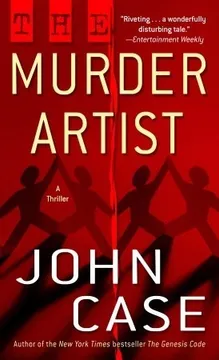
The Murder Artist receives mixed reviews, averaging 3.71/5. Many praise its gripping premise—twin boys kidnapped at a Renaissance Faire—and its atmospheric exploration of magic, voodoo, and origami. Readers consistently commend the fast pace, rich detail, and emotional depth portraying a father's desperate search. However, a recurring criticism is the abrupt, rushed ending that many found unsatisfying after 400 pages of intricate buildup. Some also felt the middle sections were overly detailed, slowing momentum. Overall, most found it an engaging, if imperfect, thriller.
People Also Read





Characters
Alex Callahan
The searching fatherAlex is a Washington television reporter whose work has taken him through wars and disasters while his wife, Liz2, carried most of the daily parenting. He loves Kevin3 and Sean4, but his professional instincts have often made family life feel postponable. When the boys disappear, his reporting skills become tools for a private investigation: he follows records, interviews witnesses, and tests patterns others dismiss. Alex is energetic and resourceful, but also impatient, proud, and prone to treating action as a substitute for emotional presence. His central struggle is not simply to locate his sons. He must learn to attend to them as particular children, with distinct voices and needs, rather than as the family he assumes will always wait for him.
Liz Callahan
The wounded motherLiz is Alex’s1 separated wife and the twins’ primary caregiver. She works at a children’s museum and values the ordinary labor of parenting: routines, school, meals, and the small knowledge that comes from being present. Her decision to send Kevin3 and Sean4 to Alex1 for an extended visit is also a test of whether he can change the habits that damaged their marriage. She is protective and perceptive, but catastrophe intensifies her guilt and anger, leaving little room for uncomplicated intimacy with Alex1. Liz’s guardedness is not a lack of love; it is the defense of someone who has spent years compensating for another person’s absence and now fears that one decision has put her children in danger.
Kevin Callahan
The watchful twinKevin is one of Alex1 and Liz’s2 six-year-old identical twins. He is observant, earnest, and attentive to the emotional meaning behind adult behavior. His close bond with Sean4 gives him security, but it also makes their separation and confinement especially frightening. Kevin often holds onto details other people overlook, and he tries to make sense of the world by asking direct questions. His relationship with Alex1 is affectionate but not effortless; Alex1 has missed enough of his life that the boy sometimes feels like a stranger to his father1. Kevin’s trust is therefore both a comfort and a responsibility, demanding that adults offer him truth and steadiness rather than convenient explanations.
Sean Callahan
The exuberant twinSean is Kevin’s3 identical twin and Alex1 and Liz’s2 six-year-old son. He is energetic, funny, and quick to turn an outing into a game, often pulling his more cautious father1 into the moment. Though the twins look alike, Sean has his own voice, habits, and way of meeting people; the distinction matters deeply to the family. He and Kevin3 share an instinctive partnership, finishing each other’s thoughts and checking one another for reassurance. Sean’s liveliness should not be mistaken for fearlessness. Like his brother, he depends on trusted adults to make the world legible, and he is vulnerable when someone manipulates that dependence.
Byron Boudreaux
The theatrical magicianByron is a Louisiana-born magician with a formidable memory, technical dexterity, and a gift for reading what other people want to believe. He is drawn to performance, religious language, and the mechanics of illusion, treating each as a way to shape an audience’s perception. His intelligence is inseparable from his need for control; he studies people and symbols not merely to understand them, but to influence them. Byron’s stage identity, Maître Carrefour, gives him room to move between roles and communities. He is difficult to know because performance is not a mask he occasionally puts on. It is the method through which he organizes his entire relationship to other people.
Ray Shoffler
The stubborn detectiveRay Shoffler is the Anne Arundel County detective assigned to the missing twins. He is practical, observant, and methodical, relying on notebooks, witness checks, and the discipline of procedure rather than dramatic hunches alone. His first obligation is to test the possibility that Alex1 is involved, a necessary but painful decision that strains their later rapport. Shoffler can be blunt and cynical, yet he recognizes when an investigation has reached the limits of its formal resources. He respects Alex’s1 persistence without romanticizing it, warning him that effort is not the same as progress. Their friendship develops through shared attention to the case and an increasingly honest respect for each other’s judgment.
Emma Sandling, later Susie Whalen
The guarded survivorEmma is a recovering addict and the mother of twin boys who survived an earlier abduction. Living under the name Susie Whalen, she has built a quieter life and is fiercely protective of the stability her sons regained. Her caution toward Alex1 comes from experience: authorities once treated her as a suspect, and renewed attention could expose her family again. Yet she understands the desperation of a parent whose children are missing. Emma’s mixture of shame, vigilance, and compassion makes her neither a simple helper nor a cautionary tale. She knows how easily institutions can mistake a difficult past for proof of guilt.
Pinky Streiber
The unflappable investigatorPinky is a New Orleans private investigator, an albino with a polished office, sharp instincts, and a wide network of local contacts. He accepts Alex’s1 case when the evidence points toward Louisiana and turns difficult archival work into a practical search. Pinky is funny and self-assured, but his humor does not make him careless. He understands that the path from a name to a person often runs through clerks, neighbors, old files, and favors. His willingness to accompany Alex1 into unfamiliar territory reflects a professional ethic grounded in personal loyalty: he is prepared to help because a desperate father1 should not have to investigate alone.
Aristide Diment
The guarded hounganAristide Diment is a voodoo priest and healer whose clinic serves people who have few other places to turn. He is physically frail but spiritually authoritative, and he guards the privacy of his bizango community with care. Diment once taught Byron5, believing that knowledge of ritual and the spirit world could be used responsibly. His later regret is complicated by the recognition that teaching alone cannot guarantee a student’s moral understanding. He speaks in terms of sacrifice, balance, and trust, but does not present faith as harmless or easily controlled. His relationship with Alex1 is a test of whether trust can be earned across profound differences in belief.
Luc Mertz
The wealthy collectorLuc Mertz is a wealthy Belgian with a deep interest in historical magic and rare books, especially material concerning the rope trick. He moves through exclusive circles and maintains a guarded presence in California, making him difficult to approach through ordinary channels. Mertz is not a performer in the same sense as the magicians he studies, but he is drawn to the boundary between spectacle and danger. His collecting suggests a desire to possess not only objects but access to experiences unavailable to ordinary audiences. He embodies the unsettling possibility that fascination with illusion can become an appetite for seeing what should remain private.
Jack Taggart
The commanding grandfatherJack Taggart is Liz’s2 father, a high-school principal whose formal manners and confidence make him a stabilizing presence during the first days of the search. He wants to help find his grandsons and expects institutions to act competently on their behalf. His authority can become bluster, especially when he confronts investigators, but it also gives Liz2 a source of support she trusts. Jack is deeply invested in family roles and rituals, from the children’s names for him to the obligations he believes adults owe one another. His certainty can comfort people in crisis, even when it cannot make the outcome certain.
Mary McCafferty
The private investigatorMary McCafferty is a missing-person investigator hired by Alex1 to widen the search beyond police resources. She is efficient, discreet, and skilled at navigating the databases and everyday records that link a person to a place. Her work helps Alex1 find Emma Sandling7, demonstrating the practical value of patient, methodical research. McCafferty does not promise miracles or encourage false certainty. She gives Alex1 useful information while reminding him that locating someone and persuading them to speak are different problems.
Karl Kavanaugh
The historian of magicKarl Kavanaugh is a retired magician and student of magic’s history. He explains how stagecraft depends on audience trust, practiced dexterity, and the management of attention. His knowledge connects modern performance to older traditions of danger, sacrifice, and apparent resurrection, giving Alex1 a framework for interpreting the murders. Kavanaugh is generous with his expertise but careful not to claim certainty beyond what he knows. He treats magic as a serious art rather than a collection of cheap tricks, and his scholarship helps Alex1 recognize that the crimes may be built around a historical illusion rather than a conventional motive.
John DeLand
The Castle’s curatorJohn DeLand is the Magic Castle’s curator, an old-fashioned scholar of performers, props, and stage traditions. He knows the institution’s history and remembers Maître Carrefour’s5 work, including the audience’s discomfort with his increasingly graphic act. DeLand is protective of the magician community but responds with compassion when he understands Alex’s1 personal stake. His knowledge gives Alex1 access to Mertz10 and the rope trick, while his account of how assistants and audiences function on stage sharpens the danger Alex1 sees ahead.
Jezebel Henton
The resourceful clerkJezebel is a teenage employee at a small Louisiana newspaper who helps Alex1 search its archives for old court notices. She is curious, enterprising, and unusually alert to how information can be found through local connections. Her knowledge comes from practice rather than formal authority, and she is proud of doing useful investigative work. Jezebel’s willingness to follow leads beyond the immediate assignment makes her a small but important link in Alex’s1 effort to identify Byron5.
Judy Jones
The FBI investigatorJudy Jones is a young FBI agent assigned to support the local investigation. She is careful, direct, and committed to procedure, explaining the Bureau’s role without promising more than it can deliver. Jones investigates the origami rabbit and Alex’s1 possible enemies, but her case load and institutional limits prevent her from becoming the hands-on partner Alex1 wants. She represents the gap between a thorough official investigation and the personal urgency of a parent who cannot accept that the available leads have run out.
Charley Vermillion
The convicted patientCharley Vermillion is a former patient at the Port Sulfur Forensic Facility whose name is tied to the earlier Ramirez twins case. He was a violent offender with serious mental illness, and the circumstances of his release became a public controversy. His connection to Byron5 places him at the edge of Alex’s1 investigation, where the difference between an apparent solution and a complete explanation becomes crucial.
Clara and Carla Gabler
The Vegas twin performersClara and Carla are identical twin showgirls who work in Las Vegas while hoping to move beyond an act they dislike. They are shy, hardworking, and more conventional in their private lives than their stage costumes suggest. Their plans for an audition and their shared identity make them central to Alex’s1 understanding of how twins can be used in performance. Their story exposes the danger of being treated as interchangeable, even by people who claim to admire the twin bond.
Chandler and Connor Sandling
The recovered twin witnessesChandler and Connor are Emma Sandling’s7 twin sons, who survived an earlier disappearance and retain memories of their captor’s isolated house. Their personalities differ: one is more wary and intuitive, while the other tends toward optimism. They share the quick coordination and mutual checking common to their twin relationship. Their recollections are limited by their age and by the explanations adults gave them, but together they provide Alex1 with important details about training, magic tricks, and the clues left behind.
Plot Devices
The Origami Rabbit
A signature across casesA finely folded rabbit appears on Sean’s4 dresser after the twins disappear. Alex1 initially cannot tell whether it is a child’s craft or a message. Its identical counterpart in the Port Sulfur facility’s art display leads him to a 1995 origami competition and the anonymous entrant Byron B.5 The rabbit converts a small domestic object into a traceable link between Alex’s1 home and the history of the man5 he seeks. Its importance comes from its precise construction and unusual placement, not from any supernatural property.
Dimes and Water
A coded ritual warningA line of Mercury dimes and a bowl of water are placed in Alex’s1 home, while the same arrangement appeared in Emma Sandling’s7 tent after her sons were taken. Police initially treat the objects as potential evidence without understanding their meaning. Scott, a television producer familiar with Haitian voodoo, explains that the coins can invoke Legba, a guardian of thresholds, while water is left for spirits. The repeated arrangement connects the abductions and suggests that the person responsible wants to leave a message as well as misdirect investigators.
The Bloodied Shirt
A deliberate false leadPolice discover Kevin’s3 whale-print shirt, stained with chicken blood, in the Callahan house. Because the shirt appears to contain the blood of a missing child, it shifts the investigation toward Alex1 and costs him hours of interrogation. Laboratory tests eventually show that the blood is not human, while witnesses independently confirm Alex’s1 movements at the fair. The shirt demonstrates how evidence can be engineered to exploit police expectations and delay a search. It is a physical clue, but its first effect is to obscure rather than reveal.
The Twin Illusions
One child replaces anotherThe Gabler killings teach Alex1 to see murder as a corrupted stage illusion. In the old rope trick, one twin appears to be cut apart while an identical twin emerges as if restored; a basket illusion can disguise a child assistant’s apparent death and return. Boudreaux’s5 crimes adapt these performances by making the injuries real. The twins’ resemblance allows an audience to accept substitution, while hidden compartments, ropes, lighting, theatrical direction, and misdirection conceal the mechanics. The illusion’s danger lies in the gap between what spectators believe they witnessed and what actually happened.
The Piper’s Costume
A lure and a disguiseAt the Renaissance Faire, the man Alex1 later calls the Piper5 uses a colorful costume, flute, and dressed-up whippet to attract children and blend into the crowd. The costume gives witnesses a memorable image but hides ordinary identifying features. The dog makes the man seem approachable, drawing children close enough for him to abduct them. Later, the flute and theatrical appearances continue to shape Alex’s1 pursuit, turning the search itself into a sequence of staged encounters.
Download PDF
Download EPUB
.epub digital book format is ideal for reading ebooks on phones, tablets, and e-readers.








