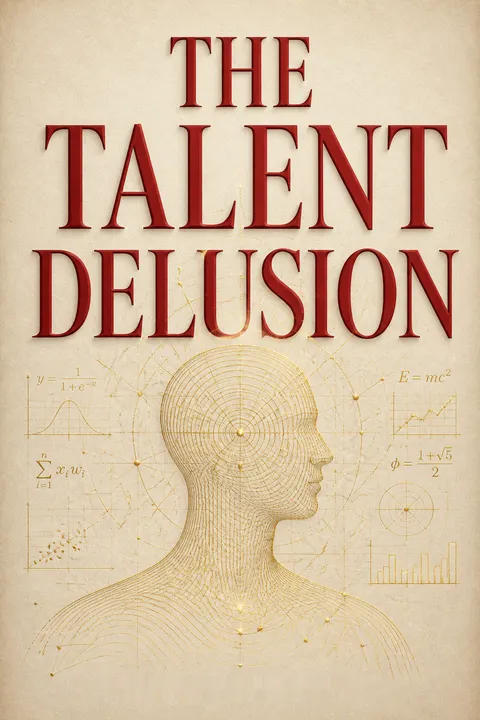


Key Takeaways
Stop fighting a talent war while your workplace drives talent away
The contradiction is measurable. The book opens with a mismatch: organizations call talent a strategic priority, yet most say they are poor at attracting, developing, engaging, and retaining it. The figures cited are stark: Gallup found only 13 percent of employees worldwide properly engaged, while about 70 percent were either not engaged or actively disengaged. Such categories depend on how surveys define engagement, but the broader pattern is hard to dismiss. In one account, Morgan coasts through a secure job; Sally arrives energized, learns quickly, and builds connections. The contrast is less about job title than about the contribution an employer manages to elicit.
The market sends signals. Around three quarters of full-time workers were described as passive job seekers, open to better offers even when not actively searching. The growing appeal of freelance work and entrepreneurship adds to the warning: skilled people may leave not because talent is scarce, but because workplaces fail to use it well.
What's striking is the reframing of labor-market churn as organizational feedback. A company can describe people as its greatest asset while designing roles that make their energy difficult to use. This connects talent management to service design: employees experience the organization through daily decisions, not the values printed on a careers page. Still, engagement surveys are imperfect instruments, and low reported enthusiasm does not automatically mean poor performance. The stronger lesson is to triangulate survey responses with retention, output, and employee behavior, then ask which working conditions explain the pattern rather than treating a single score as a diagnosis.
Judge talent by contribution, peak ability, effort, and role fit
Talent needs several tests. The book treats talent as an evidence-based prediction of future performance, not a mysterious substance or a synonym for effort. It offers four useful lenses: a person's contribution relative to others, what they can do when genuinely trying, how much effort comparable performance requires, and whether their natural tendencies fit the role. The Pareto effect, also called the rule of the vital few, describes how a minority may produce a disproportionate share of a group's output. The author uses Lionel Messi to illustrate context: at the time of writing, Messi had won 25 titles with Barcelona but no professional trophy with Argentina, suggesting that the same player can show different levels of talent in different settings.
Fit changes the forecast. The four lenses help explain both exceptional performance and apparent underachievement. A capable person placed in the wrong role may look mediocre, while a strong match can make abilities more visible.
This is a stronger model than asking whether someone simply has talent, because it separates demonstrated results from capacity, effort, and context. It also resembles person-environment approaches in psychology, where outcomes depend on the interaction between individual traits and situational demands. The Pareto pattern is useful for noticing concentrated impact, but it is not a universal quota or a moral ranking. Output measures can miss mentoring, risk prevention, and collaborative work. Organizations need to decide what counts as contribution before ranking people, or they may reward what is easiest to count rather than what sustains performance.
Use evidence, not intuition, to identify the right person for each job
Measure the relevant ingredients. The book's RAW model groups workplace talent into three ingredients: rewarding to deal with, able to do the work, and willing to work hard. Rewarding covers interpersonal conduct and cooperation; ability includes job expertise and general reasoning; willingness concerns motivation and work ethic. The mix required varies by role, but all three matter. A genial candidate without the necessary expertise may still fail, as may a brilliant specialist who refuses to contribute reliably.
Use proven tools. Structured interviews, assessment centres, cognitive tests, and personality assessments can predict job performance more consistently than unaided intuition. The cited meta-analytic estimates put structured interviews at about .51 and assessment centres at about .54. Supervisors' ratings of the same employee, by comparison, overlap only about 25 percent on average. Selection should therefore use defined criteria and more than one source of evidence, not a confident manager's impression.
The central move is from vague virtues to testable job requirements. That is a practical application of measurement theory: an assessment is useful when it captures a quality that matters for the outcome being predicted. The book also correctly resists treating personality as a substitute for expertise. Yet predictive accuracy alone does not settle whether a process is fair. Cognitive tests can produce unequal outcomes across demographic and socioeconomic groups, so selection systems need job relevance, auditing, and transparent use. Structured methods reduce arbitrary judgment, but they do not remove the responsibility to examine what a tool measures and whom it disadvantages.
Separate what candidates can do from what they usually choose to do
Capacity is not consistency. Maximum performance means the level someone can reach for a limited period when motivated and trying their best. Typical performance is what they tend to deliver in ordinary conditions, when effort may be lower or no one is watching. A selection test or interview often reveals capacity more than everyday behavior. The book cites a meta-analysis suggesting that maximum and typical performance overlap by less than 20 percent.
Design the right evidence. A running trial can reveal top speed, but it cannot show how fast someone will run during an unobserved commute. At work, group projects can invite social loafing when individuals expect others to carry the load. Conversely, high-pressure interviews can make anxious candidates underperform. Employers should therefore combine simulations of important tasks with evidence about sustained behavior, reliability, and motivation.
The distinction prevents a common inference error: treating a polished interview or impressive test as a complete portrait of future work. In evaluation research, performance under observation and behavior in natural settings answer different questions. A simulation is valuable for testing capability, while work samples and repeated observation reveal whether that capability becomes dependable output. Neither is sufficient alone. The challenge is to create realistic assessments without confusing familiarity with competence. A candidate's comfort with interview rituals may reflect practice and access to coaching as much as the underlying ability required on the job.
Match employee values to the culture leaders actually create
Motivation depends on fit. The book argues that employees are more likely to engage when work supports three broad motives: connecting with others, achieving status or accomplishment, and finding meaning. People differ in the routes they prefer. Some value recognition and competition; others prioritize affiliation, helping, predictability, creativity, or evidence. A role may suit someone's skills yet leave them unmotivated if its rewards conflict with their values.
Leaders shape the bargain. Organizational culture is more than its public mission statement. It includes the assumptions and everyday behaviors employees learn are rewarded. A leader who praises collaboration but gives all recognition to individual winners teaches a different culture from the one described on the website. The book links value alignment with stronger engagement, performance, retention, and fewer counterproductive behaviors, while emphasizing that direct managers strongly affect employees' daily experience.
The insight joins motivation to organizational culture instead of treating engagement as an employee's private attitude. It also explains why the same perk or management style can energize one person and frustrate another. This is compatible with self-determination research, which emphasizes the importance of autonomy, competence, and connection, though the book's categories are its own broader map of motives. Fit should not become a pretext for hiring people who resemble current leaders. Healthy organizations need shared standards and varied perspectives, not cultural clones. The useful question is whether the work can meet a person's important motives while still serving the team's purpose.
Coach specific behaviors with honest feedback, then measure durable change
Change is possible, not automatic. The book describes intelligence and personality as relatively stable, especially in adulthood, while allowing that behavior can change through effort and experience. Coaching can help, but it is not a personality transplant. Reviews cited in the book find average benefits for motivation, coping, self-awareness, well-being, and performance, although coaching methods and results vary widely.
Target what can move. Useful coaching begins with accurate feedback, selects a small number of consequential behaviors, and follows whether they change over time. The author favors approaches that examine unhelpful beliefs and practice more effective responses. He criticizes strengths-only coaching when it avoids meaningful weaknesses or treats every employee as equally valuable to develop. A reasonable goal is not to erase someone's disposition, but to help them manage its effects at work and maintain the improvement beyond the coaching session.
This account avoids two tempting extremes: that people are fixed, and that any person can become anything with enough encouragement. Behavior-specific goals make change observable and reduce the risk of vague development plans. The emphasis on sustained follow-up also matters, since an intervention can feel successful in the room without altering workplace conduct. At the same time, coaching outcomes depend on the client, coach, work environment, and power relationship between them. Feedback is not automatically constructive. It needs to be credible, specific, and tied to a behavior the person can influence, rather than a judgment about their worth.
Use reputation, not self-image, to spot talent and guide development
Other people see consequences. The book distinguishes identity, how people see themselves, from reputation, how others experience their behavior. Self-assessments are often inflated or inaccurate; the cited research finds only a weak relationship between people's estimates of their abilities and measured performance. In contrast, other people's observations can reveal patterns that individuals miss, especially in leadership, where behavior affects a team.
Make feedback concrete. A 360-degree assessment gathers ratings from several directions, such as managers, peers, and direct reports. Comparing those views with a person's self-rating can expose blind spots and guide development. Repeating the assessment after a period of focused effort can show whether colleagues notice a difference. Reputation is consequential because hiring, promotion, and trust depend partly on how others experience a person's work, even when that judgment is imperfect.
The argument treats self-knowledge as a social achievement rather than an act of solitary introspection. That is useful because people often have access to their intentions but less access to the effects of their actions. A multi-rater process can reveal those effects and turn abstract advice into behavioral evidence. Still, reputation is not a pure measure of merit: raters can share biases, reward conformity, or penalize people who challenge established norms. Strong feedback systems protect anonymity, gather varied perspectives, and distinguish observable behavior from popularity. The aim is calibrated self-understanding, not surrendering one's identity to a vote.
Manage dark-side traits before they turn talent into organizational damage
Strengths can become liabilities. The book's dark side refers to recurring traits that can disrupt relationships or judgment, especially under pressure or when people lower their guard. Confidence may become entitlement; creativity may lose follow-through; social skill may become manipulation. The dark triad names three studied patterns: narcissism, Machiavellianism, and psychopathy. They can help people appear charismatic or forceful, which may aid their rise, while also increasing risks such as bullying, deception, and other counterproductive work behaviors.
Context magnifies harm. These behaviors matter especially in leaders, whose decisions shape the conditions others work under. The author argues that organizations should assess both capability and likely derailers, then address risky behavior rather than celebrating a person's strengths alone. A technically gifted employee can still impose large costs on colleagues and the organization if destructive conduct goes unchecked.
The useful contribution is to treat talent as morally and socially incomplete unless its costs are considered. Individual success and collective benefit are not identical, particularly when a person's confidence or political skill helps them gain authority while weakening trust. This is also a systems problem: organizations that reward short-term results without accountability can make harmful conduct seem effective. Personality labels should not be used casually as diagnoses or substitutes for evidence. The actionable unit is behavior, its impact, and the conditions that reinforce it. A rigorous process protects teams without reducing a complex person to a single trait score.
Hire for curiosity and entrepreneurial execution, not credentials alone
A learning mind matters. In the book's account of future talent, curiosity helps people recognize what they do not know, seek information, and build expertise. It can also slow decisions when endless exploration displaces action, so curiosity needs judgment about which information is worth pursuing. Self-awareness helps people notice gaps in their abilities rather than mistaking confidence for competence.
Ideas need operators. Entrepreneurship is presented as behavior, not merely business ownership. The book identifies four ingredients: creativity to generate useful ideas, opportunism to notice openings, proactivity to carry work through, and vision to explain why an effort matters. In a large company, those behaviors are called intrapreneurship. They help organizations innovate without requiring every ambitious employee to leave and start a separate venture.
This framework usefully separates idea generation from innovation, which requires implementation and organizational support. Curiosity can expand expertise, while entrepreneurial behavior converts knowledge into practical change. Together they offer a more dynamic view of talent than credentials alone, especially when job requirements are shifting. However, exploration and risk-taking are not universally valuable in equal measure. In safety-critical or tightly regulated work, disciplined consistency may matter more than novelty. Organizations should identify where experimentation is beneficial, protect time for it, and reward useful learning even when an idea does not succeed, rather than simply praising employees for being innovative.
Let algorithms widen the talent pool, not quietly decide who counts
Digital traces offer new signals. The book surveys tools that analyze social media, work records, video interviews, voice, game-based assessments, and peer ratings. These methods may help organizations assess more people than traditional interviews and résumés allow. In one cited research program, combinations of Facebook Likes predicted substantial variation in measured personality and intelligence, illustrating how online behavior can reveal patterns beyond a person's explicit claims.
Prediction is not permission. The author presents digital assessment as promising, not as a proven revolution. Tools still need evidence that they predict job performance, and organizations must consider cost, privacy, legal limits, and candidate experience. A signal that correlates with a trait may not be relevant to a specific job. The goal is a better match between people and roles, not data collection for its own sake.
The promise is greater reach: digital methods could surface candidates who lack elite networks, polished résumés, or access to familiar hiring channels. But algorithmic scale can also reproduce old preferences in less visible form. A model trained on past hiring may learn whom an organization already favored, not who could succeed under fairer conditions. Privacy and consent are central because online traces were often created for purposes other than employment. A defensible system needs job-related validation, bias checks, understandable decisions, and a route for human review. More data can improve prediction, but it cannot decide which outcomes are worth pursuing.
Make ordinary work worth doing without promising universal fulfillment
Engagement is not constant bliss. The book distinguishes engagement, involving energy and involvement in work, from the broader promise that every job should make people happy. It argues that organizations care about engagement partly because it can support performance, persistence, and retention. The author is skeptical of workplace marketing that sells every role as meaningful, exciting, and life-changing, especially when many jobs are routine or constrained.
Improve the real job. People are more likely to take pride in work when they can perform well, receive fair treatment, face a suitable challenge, and have enough freedom to meet it. That is a more grounded goal than adding perks while leaving poor management or mismatched work untouched. The book's closing emphasis is practical: help employees achieve work they can value, rather than promising that happiness is an entitlement every role can deliver.
This is a useful correction to the tendency to turn work into a universal source of self-actualization. Unrealistic promises can make ordinary, necessary jobs seem like personal failures. Yet the distinction between happiness and performance should not be used to excuse avoidable stress or disrespect. Well-being and productivity are not simple opposites, and a humane workplace may be more sustainable precisely because it treats people as more than output. The strongest interpretation is not to abandon employee welfare, but to replace glossy promises with credible conditions: fair treatment, useful work, capable managers, and room to develop.
Analysis
The book's central argument is that talent management fails less from a shortage of human capability than from weak definitions, poor measurement, and workplace practices that squander what they identify. Its most useful contribution is a sequence of questions: What does success in this role require? What evidence distinguishes ability from motivation? Does the person's natural style fit the context? What does their behavior cost other people? That sequence links selection, engagement, development, and leadership rather than treating them as separate HR programs. The evidence-based case is compelling, but measurement does not eliminate judgment. A test can predict an outcome while leaving the outcome itself poorly chosen. Sales volume, for example, may omit whether customers return; managerial ratings may reward loyalty to a supervisor. Likewise, a Pareto distribution may describe unequal output without proving that resources should always flow to top performers. Concentrating development investment can raise immediate returns, but neglecting the broader workforce may weaken succession, cooperation, or organizational resilience.
The book also makes a productive tension visible: fit improves performance, yet excessive emphasis on fit can preserve existing culture and exclude people who would improve it. A strong talent system should distinguish shared behavioral standards from sameness of values or background. It should also treat employee development as reciprocal. Individuals can adapt, but leaders control many of the conditions that make effort productive or draining.
Finally, the proposed digital talent market sharpens the book's original concern. Data may make judgments more consistent and expose overlooked candidates, but prediction is not neutral when the measures encode prior decisions or when workers cannot contest their profiles. Evidence-based talent management therefore requires more than valid instruments. It needs transparent criteria, ongoing audits, proportional data use, and accountability for the consequences of selection. The book's lasting challenge is not simply to measure people better, but to make organizational decisions worthy of the precision they claim.
Review Summary
The Talent Delusion receives mixed reviews, with ratings ranging from 1 to 5 stars. Some readers praise its insights on talent management and data-driven approaches in HR, while others criticize its lack of cohesion and outdated information. Critics argue that the book fails to deliver on its promise of data-focused content, instead emphasizing personality traits. Positive reviews highlight the book's thought-provoking nature and its challenge to conventional HR practices. Several readers appreciate the examples provided and the book's exploration of negative personality traits in talent management.
People Also Read









Glossary
RAW model of talent
Three workplace talent ingredientsA framework grouping workplace talent into three broad qualities: rewarding to deal with, able to do the work, and willing to work hard. Rewarding concerns interpersonal conduct and cooperation; ability includes expertise and general reasoning; willingness concerns motivation and work ethic. The specific balance required depends on the role.
Pareto effect
Unequal distribution of outputThe pattern in which a relatively small share of people or causes accounts for a disproportionately large share of an outcome. Applied to organizations, the book uses the familiar 80/20 formulation as a way to think about concentrated productivity and talent. It is a diagnostic pattern, not a fixed quota that every organization must reproduce.
Maximum performance
Best effort under evaluationThe level of performance a person can produce for a limited period when asked to do their best, aware that their performance is being assessed, and given enough time for a reliable measure. It helps estimate capacity, but does not establish what the person will typically do in ordinary work conditions.
Typical performance
Usual behavior at workThe performance a person tends to show during ordinary work, especially when effort is not maximized and evaluation is less salient. It reflects motivation and personality as well as ability. The distinction from maximum performance matters because someone may demonstrate high capacity in a test yet fail to reproduce it consistently on the job.
Socio-analytic theory
Values explain social motivesA theory used in the book to explain how people's values and motives shape workplace behavior and engagement. It identifies broad human aims of getting along with others, getting ahead in social hierarchies, and finding meaning. Individual values influence which jobs and organizational cultures feel rewarding or frustrating.
Dark triad
Three socially harmful traitsA group of personality traits studied together: narcissism, Machiavellianism, and psychopathy. In work settings, these traits can involve entitlement, manipulation, low empathy, or disregard for others. Some may help an individual appear confident or politically skilled, while also raising the risk of harmful behavior and damaged relationships.
Counterproductive work behaviours (CWBs)
Intentional workplace harmIntentional acts that harm employees or an organization, including behaviors such as bullying, theft, rule-breaking, and abusive conduct. The book treats them as an important part of job performance because they reduce trust, morale, and productivity. Their likelihood reflects both personal tendencies and the conditions of the workplace.
Hogan Dark Side Personality Model
Map of career derailersA framework describing 11 recurring personality tendencies that can interfere with workplace relationships and performance, particularly under stress or when people lower their self-monitoring. The tendencies can have useful aspects as well as risks. Their effects depend on context, intensity, and the person's ability to recognize and manage their behavior.
Intrapreneurship
Entrepreneurial action inside organizationsEntrepreneurial behavior carried out within an existing organization rather than through a business someone has founded. It includes developing useful ideas, spotting opportunities, taking initiative to implement change, and communicating a direction others can support. The book presents these behaviors as potential drivers of innovation and organizational growth.
FAQ
What's The Talent Delusion about?
- Focus on Talent Management: The Talent Delusion by Tomas Chamorro-Premuzic delves into the science of talent management, emphasizing data-driven approaches over intuition.
- War for Talent: It discusses the "war for talent," highlighting the need for organizations to prioritize attracting and retaining top talent to succeed.
- Psychological Insights: The book integrates psychological principles to debunk common misconceptions about talent, offering practical guidance for HR professionals and leaders.
- Bright and Dark Sides: It also explores both the positive and negative attributes of talent, including counterproductive behaviors associated with certain personality traits.
Why should I read The Talent Delusion?
- Evidence-Based Approach: The book is grounded in scientific research, providing a clear, data-driven perspective on talent management.
- Practical Guidance: It offers actionable insights and strategies for effectively managing talent, making it essential for HR professionals and leaders.
- Debunking Myths: Chamorro-Premuzic challenges popular HR myths, helping readers understand the complexities of talent management.
- Relevance to Modern Workplaces: The book addresses contemporary issues like the rise of narcissism and the impact of technology on talent management.
What are the key takeaways of The Talent Delusion?
- Talent is Unequally Distributed: A small percentage of individuals contribute disproportionately to organizational success, emphasizing the need to focus on top talent.
- Importance of Measurement: Accurate measurement of talent through structured interviews and assessments is crucial for informed hiring and development decisions.
- Engagement Matters: Aligning employees' values with organizational culture is vital for maximizing performance and satisfaction.
- Dark Side of Talent: Recognizing and managing the negative traits associated with talent is essential for maintaining a healthy work environment.
What is the "war for talent" as described in The Talent Delusion?
- Concept Origin: Introduced by McKinsey in 1997, the "war for talent" suggests that organizational success depends on attracting and retaining top talent.
- Current Challenges: Many organizations struggle with talent management, leading to high employee disengagement and turnover.
- Need for Change: Chamorro-Premuzic advocates for a shift towards scientific and data-driven talent management methodologies.
- Long-Term Focus: Organizations should consider future development and retention of talent, not just immediate hiring needs.
How does The Talent Delusion define talent?
- Four Definitions of Talent: The book outlines principles like the rule of the vital few, maximum performance, effortless performance, and personality in the right place.
- Context-Specific Nature: Talent is often context-dependent, meaning individuals may excel in certain environments while underperforming in others.
- Performance Measurement: Talent should be assessed based on observable performance metrics, especially under conditions where individuals are motivated to do their best.
- Personality Fit: Placing individuals in roles that align with their personality traits enhances job satisfaction and performance.
What are the RAW components of talent in The Talent Delusion?
- RAW Model Explained: The RAW model stands for Rewarding, Able, and Willing, representing the core components of talent.
- Rewarding: This refers to a person's likeability and how enjoyable they are to work with, impacting career success.
- Able and Willing: "Able" pertains to expertise and intelligence, while "Willing" relates to motivation and work ethic.
- Comprehensive Picture: Together, these components create a holistic view of an individual's talent.
What methods does The Talent Delusion recommend for measuring talent?
- Structured Interviews: These are reliable for assessing candidates, designed to evaluate specific competencies and traits relevant to the job.
- Assessment Centers: Effective tools for evaluating talent through simulations and exercises that mimic real job tasks.
- Personality and IQ Tests: Scientifically validated assessments predict job performance and correlate with success in various roles.
- Comprehensive Evaluation: A holistic approach considering both bright and dark sides of personality is recommended.
How does The Talent Delusion address employee engagement?
- Engagement Definition: Defined as the level of energy and enthusiasm individuals have for their work, leading to better performance and lower turnover.
- Aligning Values: Organizations must align employees' personal values with the company's culture to enhance engagement.
- Impact of Leadership: Leaders play a crucial role in shaping engagement levels by providing feedback, resources, and a supportive culture.
- Feedback Mechanisms: Implementing systems that provide constructive feedback helps employees understand their performance and areas for improvement.
What are the dark sides of talent discussed in The Talent Delusion?
- Toxic Behaviors: High-performing individuals can exhibit toxic behaviors that undermine team dynamics and organizational culture.
- Overconfidence and Arrogance: Talented individuals may develop overconfidence, leading to poor decision-making and interpersonal conflicts.
- Importance of Self-Awareness: Self-awareness is crucial to mitigate these dark sides, with coaching and feedback helping individuals recognize and address shortcomings.
- Counterproductive Work Behaviors: Traits like narcissism, Machiavellianism, and psychopathy can lead to negative workplace behaviors.
What role does curiosity play in talent management according to The Talent Delusion?
- Curiosity as a Driver of Learning: It fosters continuous learning and adaptation, enhancing skills and knowledge.
- Impact on Innovation: Curiosity drives innovation, with curious employees more likely to explore new ideas and contribute to creative problem-solving.
- Mitigating Narcissism: Fostering curiosity can counteract the negative effects of narcissism, leading to more collaborative environments.
- Culture of Inquiry: Encouraging a culture of inquiry promotes openness and collaboration.
How does The Talent Delusion suggest organizations can improve talent management?
- Data-Driven Approaches: Organizations should use data and scientific research to inform talent management practices.
- Comprehensive Evaluation: A holistic approach considering both bright and dark sides of personality is essential.
- Focus on Development: Investing in employee development through coaching and feedback enhances self-awareness and performance.
- Effective Strategies: Developing effective talent management strategies is crucial for success in a competitive landscape.
What are the best quotes from The Talent Delusion and what do they mean?
- “Science is the great antidote to the poison of enthusiasm and superstition.”: Emphasizes the importance of relying on scientific evidence in talent management.
- “Talent is not equally distributed in the overall population.”: Highlights that a small percentage of individuals contribute disproportionately to success.
- “If a job is worth doing, it is worth doing properly.”: Stresses the importance of quality and diligence in work.
- "Nothing might spell our doom faster than failing to appreciate our limitations.": Emphasizes the need for self-awareness in personal and professional development.
About the Author
Other books by Tomas Chamorro-Premuzic
Download PDF
Download EPUB
.epub digital book format is ideal for reading ebooks on phones, tablets, and e-readers.








