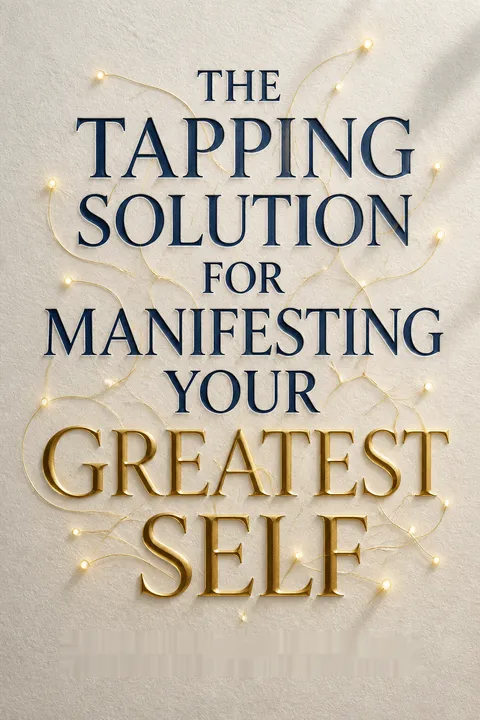


Key Takeaways
Uncover your greatest self by clearing stress, not chasing a flawless identity.
The book's central claim. Nick Ortner describes a period when debt, an unsatisfying job, relationship trouble, allergies, and insomnia persisted despite his efforts to think positively. After discovering tapping, he came to see personal growth less as inventing a better self than removing the emotional obstacles obscuring one.
A three-part journey. The program moves from noticing everyday panic, to exploring old emotional patterns, to acting on a clearer vision. Its 21 days are a suggested structure, not a requirement to finish on schedule. The practical aim is to feel and respond differently in ordinary life, then make choices that fit those changes.
The “greatest self” works best as a direction, not a hidden, perfect person waiting to be uncovered. That distinction keeps the book's spiritual language compatible with practical change: a reader can ask whether they are becoming more present, honest, or courageous without needing to prove they have reached an ideal state. The framing also resists self-improvement's familiar trap of making every difficulty evidence of personal failure. Its limitation is that emotional clearing alone cannot resolve every external problem; some need resources, treatment, or changes in circumstances.
Tap on one real problem, then measure whether its emotional charge changes.
A focused self-check. Ortner uses Emotional Freedom Techniques, or EFT, also called tapping: attend to a specific concern while tapping a sequence of points on the face and upper body. Begin with the Most Pressing Issue, the concern that feels most immediate. Notice its bodily and emotional effects, rate distress from 0 to 10, and use personalized words rather than memorized phrases.
Track, then reassess. After a round, breathe, rate the issue again, and notice whether another emotion or memory has surfaced. The author cites a one-hour study in which cortisol fell an average of 24 percent in the tapping group and 14 percent in a talk-therapy control group. These results are a research claim, not proof that tapping treats every condition.
The procedure's strongest practical feature is its feedback loop: choose a specific target, notice the response, and check whether it changes. This resembles exposure-based approaches that bring a difficult thought or memory into attention while the person remains present. The tapping may be one ingredient among several, including focused attention, rhythmic touch, and self-accepting language. The physiology claims deserve more restraint than the book gives them, particularly where small studies are used to imply broad health effects. A distress rating can guide reflection, but it is not a clinical diagnosis.
Treat worst-case thoughts as an ancient alarm, not an accurate forecast.
A bias toward danger. Ortner explains the negativity bias as the mind's tendency to give threats more attention than opportunities. His comic cave story contrasts Grog, who runs from a saber-toothed tiger, with Thor, who ignores it while meditating. Caution kept Grog alive, but the same alarm can misread an ambiguous text or a delayed reply as evidence of rejection.
Train attention deliberately. The author recommends noticing the negative assumption without shaming oneself, then making room for positive information. One exercise is to name small wins, such as completing a difficult task or responding more patiently, and pause to feel the satisfaction instead of instantly moving on to the next problem.
The evolutionary story is memorable because it explains why simply ordering oneself to be positive rarely works. The useful aim is calibration, not turning off threat detection: a real danger still calls for action, while an uncertain message may call for clarification rather than an imagined worst-case narrative. Savoring a small success can interrupt attention's tendency to discard good news quickly. Positivity becomes more credible when it includes accurate appraisal of risk, rather than a rule that unpleasant feelings must be replaced.
Name what is true before trying to cover it with positivity.
Start with the present. Ortner retells Louise Hay's lesson that cleaning requires seeing the dirt. Instead of leaping to affirmations, name what is actually happening in work, relationships, finances, health, or self-image. He invites readers to notice resistance and emotions, then use tapping to make honest reflection feel more manageable.
Include the body. A body scan can reveal tension, discomfort, or numbness that may accompany a stressful situation. Ortner calls attentive responsiveness to bodily signals attunement. He also encourages examining beliefs about the body, such as assuming it will never feel stronger. This is a prompt to listen, not a reliable method for diagnosing the medical cause of a symptom.
This is a persuasive corrective to forced optimism. Naming a feeling can make it easier to distinguish an emotion from a fact, and bodily awareness can help someone notice stress before it dictates a reaction. The important boundary is interpretive: a tight back does not establish that anger is stored there, and pain should not automatically be treated as a message about the past. Somatic attention is most useful as information to consider alongside medical care, practical circumstances, and the person's own account.
Make connection part of the change plan, not a reward afterward.
Loneliness distorts perception. Ortner recounts psychologist Guy Winch waiting for a birthday call from his twin, assuming his brother had forgotten him. The phone had been accidentally left off the hook, and Winch had not thought to call. The story shows how isolation can make a simple route back to connection hard to see.
Create shared momentum. Ortner describes relatives tracking daily steps together and encouraging one another through friendly competition. The point is not to win, but to make a desired behavior social and enjoyable. He also discusses hugs, helping others, and supportive online groups as ways people may feel more connected.
Social support can change the emotional conditions under which a person attempts change. A friend who joins a walk or checks in after a hard day adds accountability, but also reduces the sense that struggle must be handled alone. Digital groups can lower the barrier to contact, though the quality of interaction matters more than a screen's presence. Community is not a substitute for professional care or for addressing isolation caused by work, caregiving, disability, or other structural constraints.
Repeat a modest ritual until supportive choices need less negotiation.
Make practice repeatable. Ortner points to Michael Jordan's game-day routine, Benjamin Franklin's regular schedule, and Wade Boggs's distinctive pregame habits as examples of rituals. A ritual is a repeated routine, often tied to a time or place. It can be simple: a brief tapping practice in the morning or a short review before bed.
Use repetition without rigidity. Ortner says recurring exposure to books and ideas helped him absorb them more deeply. He also describes returning to Wayne Dyer's audiobooks while grieving, finding comfort and new meaning through repetition. A routine should support life, not become another standard to fail. Readers are encouraged to adapt the practice and revisit the days that feel useful.
Rituals can reduce the effort spent deciding whether to begin, leaving more attention for the activity itself. Repetition also gives a person multiple chances to notice what works, rather than treating one attempt as a verdict. The book's examples make routines feel personal rather than mechanical. Still, consistency is not the same as stubbornness: a ritual that becomes burdensome may need to shrink or change. The practical test is whether it supports the intended behavior without generating fresh guilt.
Treat old trauma responses as adaptations, and seek help when needed.
The past can shape the present. Ortner describes the adverse childhood experiences study, conducted with 17,421 adults, which found associations between difficult childhood experiences and later health risks. He distinguishes major trauma from less extreme but still painful experiences. His example of a woman freezing during a serious car crash illustrates how earlier helplessness may shape a later response.
Proceed with care. The book suggests tapping on a specific memory or recurring pattern, while stopping if the process feels overwhelming. For major trauma, Ortner recommends working with a qualified EFT practitioner or mental-health professional. He presents tapping as a way to reduce distress, but his broad claims that it outperforms conventional talk therapy should not be treated as settled fact.
The chapter's humane contribution is to frame some reactions as adaptations that once served survival, rather than character defects. That can reduce shame and open space for choice. The caution is equally important: not every current difficulty comes from childhood, and statistical associations do not establish an individual's cause. Trauma work can destabilize people when attempted without adequate support. A safe pace, informed consent, and access to a trained clinician matter more than completing an exercise or meeting a self-help schedule.
Release anger without confusing forgiveness with renewed access.
Anger can be felt safely. Ortner tells the story of Bobbie, who connected longstanding distress and knee pain with her abusive father's rejection. In a tapping session, she imagined confronting him and expressing the anger she had suppressed. The author reports that her pain eased, but this personal account cannot establish that suppressed anger caused the pain or that tapping will produce the same result for others.
Forgiveness is not permission. Ortner also recounts Wayne Dyer describing a shift toward forgiving his abusive, absent father. The book presents forgiveness as releasing the burden of resentment, not excusing harm, denying its impact, or restoring contact. A person can seek emotional distance while maintaining firm boundaries or no relationship.
This distinction protects forgiveness from becoming a demand placed on people who have been harmed. Anger can signal that a boundary was crossed; the goal is not to suppress that information or act it out destructively. Forgiveness may help some people loosen the hold of an injury, but it is neither universally necessary nor a measure of moral maturity. Reconciliation requires separate evidence of safety and changed behavior. The useful question is what response supports the person's well-being now.
Practice flourishing in the task you already have, not after life improves.
Make room for daily enjoyment. Ortner draws on Aristotle's term eudaimonia, meaning a life of flourishing rather than a passing burst of pleasure. He describes making writing more inviting with tea, a comfortable place, or background audio. The deadline remains, but the experience of working changes. The suggestion is to identify one necessary task and find a small way to make it more appealing.
Choose a way of being. The book asks readers to name how they want to feel in areas such as work, relationships, and money, instead of defining their future only by outcomes. Ortner's principle is that emotional state influences how someone shows up, and that action can begin from a more grounded state.
This approach makes flourishing less dependent on a dramatic life overhaul. Small pleasures can help a person begin an avoided task, while a feeling-based intention provides a broader guide than a single achievement. The relationship between feeling and action also runs both ways: action can shift mood, and waiting to feel fully calm may become another form of avoidance. The strongest version of the advice is not to make every task delightful, but to add manageable choice and meaning where possible.
Protect your yes by making no a normal act of self-respect.
Check before agreeing. Ortner tells of his wife feeling pressured to attend a playdate when she was tired and needed time to prepare for the week. He also describes a Harvard student who felt pushed to socialize despite needing solitude. Both examples show how people can agree to avoid disappointing others, then pay for it through exhaustion or resentment.
Set a workable boundary. The author suggests pausing before replying to requests, noticing the emotional reaction, and considering whether the answer is genuinely yes. He pairs this with a modest approach to self-acceptance: recognize one quality that can be appreciated without requiring total, unconditional approval of every habit or trait.
A pause creates room to distinguish generosity from compliance. That distinction matters because chronic overcommitment can erode the very care that made someone say yes. Boundaries do not require hostility; a brief refusal or alternative can preserve both time and connection. The advice also needs context: some people have less power to refuse a request because of economic dependence, caregiving, or workplace hierarchy. In those cases, identifying small areas of choice may be more realistic than treating every yes as freely chosen.
Remove one attention drain instead of trying to perfect your whole life.
Clutter takes many forms. Ortner includes crowded inboxes, overfilled calendars, unfinished projects, and unresolved emotional business. He describes deciding not to travel to meet the Dalai Lama because he needed rest and wanted to spend time with an uncle visiting from Argentina. The quieter choice felt more aligned with what mattered at that point in his life.
Choose one pile. Rather than overhaul everything, identify one source of dread, notice the feelings it triggers, and decide what to finish, discard, or postpone. Ortner also uses the question of whether an object brings joy to help readers sort possessions. A small completed task, or a deliberate decision to stop pursuing it, can free attention.
The useful insight is that clutter is not simply untidiness. An overfull calendar can crowd out rest, while an unfinished project can keep demanding attention even when its value has faded. The book's emphasis on choosing one target lowers the activation energy for change. Yet a personal preference test cannot resolve every obligation: some necessary tasks are tedious, and some possessions carry duties or memories. The goal is not an aesthetically perfect life, but a clearer choice about what deserves attention.
Tell a more workable future story, then prove it through small actions.
Imagine a different account. Ortner contrasts a story focused on Tony Robbins's childhood hardships with one that includes his later work and achievements. The facts can be the same while the emphasis changes. Readers are asked to notice the story they tell about a difficult area of life, explore the feelings and beliefs attached to it, and write a more hopeful account of what might be possible.
Move at a human pace. The book's 21-day structure is a guide, not a scientifically fixed deadline for changing a habit. Its closing tortoise-and-hare story favors steady practice over a burst of effort followed by exhaustion. Choose one concrete step toward the life envisioned, repeat it as circumstances allow, and use tapping when fear or setbacks make action harder.
A future-oriented narrative can expand perceived options, especially when a person has mistaken a past pattern for an unchangeable identity. Its credibility depends on being connected to behavior: a hopeful story without a next step can become another fantasy that feels good briefly. The tortoise image usefully counters all-or-nothing effort, while the flexible timeline avoids turning self-help into a race. A stronger narrative does not erase harm or guarantee success; it makes room for agency without pretending outcomes are fully controllable.
Analysis
The book's most coherent contribution is its sequence: regulate present distress, examine the patterns that keep recurring, then choose behavior aligned with a desired life. Tapping supplies a repeated procedure for that sequence, while stories make abstract emotional processes easier to recognize. The practical value does not depend on accepting every claim about energy channels, gene expression, or rapid physical healing. A reader can use the method as structured attention, emotional labeling, and self-monitoring, while treating claims about mechanism and treatment as questions for independent evidence.
The strongest ideas are the least magical: positive thinking is not a substitute for acknowledging pain; social connection supports change; repeated rituals reduce the need to renegotiate intentions; and forgiveness does not require renewed contact. The book's stress on small daily shifts also usefully resists the self-improvement industry's appetite for dramatic reinvention. Its language of an already-existing greatest self may be motivating, but it risks implying that external constraints are merely inner blocks. Money problems, unsafe relationships, illness, and trauma can require material help and professional care, not only emotional release.
The evidence is unevenly presented. The cortisol comparison and gene-expression pilot are interesting leads, but the text provides limited methodological context, and a small or narrowly described study cannot justify broad promises about health outcomes. Personal stories, including the account of pain relief, can illustrate possibility but cannot establish cause. The book itself does advise professional support for major trauma; that safeguard should be treated as central rather than incidental. A grounded use of the program therefore combines curiosity about emotional responses with realistic expectations, medical judgment, and concrete action. Tapping can be one useful practice in that larger toolkit, not a universal explanation or replacement for care.
Review Summary
The Tapping Solution for Manifesting Your Greatest Self receives mostly positive reviews, with readers praising its life-changing impact and practical approach to EFT. Many find it helpful for reducing anxiety, clearing emotional blockages, and establishing a consistent tapping practice. Some reviewers appreciate the 21-day format and audio guidance, while others find certain sections too intense or "woo-woo." A few criticize the repetitive nature of tapping scripts, but overall, readers recommend the book for those seeking personal growth and stress relief.
People Also Read






Glossary
Emotional Freedom Techniques (EFT)
Tapping while focusing on distressA self-help method that combines attention to a specific emotion, memory, or concern with tapping on a sequence of points on the body. Ortner presents EFT as a way to reduce emotional intensity and support reflection. The book describes it as useful across many difficulties, but its health claims should be distinguished from what any individual study can establish.
Most Pressing Issue (MPI)
The concern to address nowThe current problem that feels most immediate or emotionally charged to the person practicing EFT. It may be a major concern, such as a relationship conflict, or a small irritation, such as a stressful message. Focusing on one specific issue gives the tapping exercise a concrete target and makes it easier to notice changes in feeling.
Subjective Units of Distress Scale (SUDS)
A personal distress ratingA 0-to-10 scale used in the book to rate the intensity of distress before and after tapping. Zero represents no felt intensity and ten represents the most intense distress the person can imagine. The number is a subjective tracking tool, not an objective measurement or diagnosis; its purpose is to help the person notice change.
negativity bias
Attention tilted toward threatsThe tendency, as described in the book, for the mind to notice and remember possible dangers more readily than opportunities or reassuring evidence. The bias is framed as an evolved protective response that can overinterpret ambiguous events, such as an unclear text. Ortner recommends noticing the alarm without self-blame and deliberately registering positive experiences as well.
ACEs study
Childhood adversity and adult healthThe adverse childhood experiences study described by Ortner was conducted with the Centers for Disease Control and Prevention and included 17,421 adults. It examined links between difficult experiences in childhood and later health and behavior. The findings reported associations between higher adversity scores and elevated risks, but do not prove that a specific adult problem was caused by a particular childhood event.
freeze response
Shutdown when escape feels impossibleA defensive reaction in which a person becomes immobile, numb, or mentally blank when facing a perceived threat. The book contrasts freezing with fight-or-flight responses and suggests that an earlier experience of helplessness can shape reactions in later situations. This is a trauma-related concept, not a diagnosis that readers should assign to themselves from a single behavior.
attunement
Noticing bodily signals with careOrtner adapts this term to mean paying attention to the body's responses with presence and acceptance. In practice, a person notices sensations such as tightness, pain, or numbness and considers what was happening emotionally or situationally. Attunement is a way to become more aware of experience, not evidence that each physical symptom has an emotional cause.
energy leaks
Patterns that drain daily capacityOrtner's metaphor for recurring situations, thoughts, memories, or relationships that consume attention and emotional energy. A triggering message, unresolved conflict, or repeated self-criticism may start a chain of distraction and stress. The exercise is to identify the largest drains, explore the feelings and beliefs around them, and decide where attention or action could change.
eudaimonia
A life of human flourishingAn Aristotelian term Ortner uses for a sustained form of flourishing, rather than a passing pleasant feeling. The book connects it to making choices that support a meaningful life in ordinary circumstances. Enjoyment may be part of that life, but the concept is broader than pleasure or achievement and does not depend on obtaining a particular external reward first.
Version Two
A more empowering self-storyOrtner's label for a future-oriented account of a person's identity and possibilities. It does not erase adversity or deny the facts of a difficult history; it changes the emphasis from being permanently defined by hardship to considering what actions and capacities remain available. The book recommends pairing this story with tapping and concrete steps so it feels more credible.
The Longevity Project
Long-running study of lifespanA study discussed in the book that developed from Lewis Terman's long-term research on children and was later examined by Howard Friedman and Leslie Martin. Ortner highlights its finding that participants who lived longer often devoted themselves to helping others. The book uses this to emphasize contribution and connection, though a study of this kind cannot show that helping alone caused longer life.
FAQ
1. What is The Tapping Solution for Manifesting Your Greatest Self by Nick Ortner about?
- 21-day transformational program: The book offers a structured 21-day journey using Tapping (Emotional Freedom Techniques) to help readers release self-doubt, cultivate inner peace, and create a life they love.
- Integration of science and stories: It combines scientific research on neuroplasticity and gene expression with personal anecdotes and practical exercises.
- Holistic self-improvement: The approach addresses emotional clutter, past traumas, limiting beliefs, and self-acceptance, empowering readers to manifest their greatest selves.
- Three-week structure: Each week has a specific focus—choosing peace, experiencing relief, and manifesting your greatest self—with daily challenges and tapping meditations.
2. Why should I read The Tapping Solution for Manifesting Your Greatest Self by Nick Ortner?
- Proven, accessible method: The book presents Tapping as a scientifically supported tool for reducing stress, trauma, and limiting beliefs, with research showing positive effects on cortisol and gene expression.
- Practical, step-by-step guidance: It offers daily challenges, tapping scripts, and meditations, making it suitable for both beginners and experienced practitioners.
- Empowering and relatable: Nick Ortner shares his own struggles and successes, encouraging vulnerability, self-acceptance, and authentic transformation.
- Holistic benefits: The program integrates emotional, mental, and physical healing, fostering self-love, healthy boundaries, and lasting change.
3. What is Tapping (Emotional Freedom Techniques) and how does Nick Ortner use it in The Tapping Solution for Manifesting Your Greatest Self?
- Mind-body reset technique: Tapping involves stimulating specific acupressure points while verbalizing emotions or beliefs to release negative emotional charge and calm the nervous system.
- Personalized practice: Readers are encouraged to adapt tapping scripts to their authentic experiences, focusing on their own feelings rather than reciting set phrases.
- Daily application: Each day of the program includes guided tapping meditations targeting specific emotional challenges, supporting gradual healing and transformation.
- Scientific foundation: The method is grounded in research on neuroplasticity, stress reduction, and the body’s energy pathways.
4. What are the key takeaways and core concepts from The Tapping Solution for Manifesting Your Greatest Self by Nick Ortner?
- Choosing peace over panic: The journey begins by helping readers shift from stress and panic to a state of peace, using awareness and tapping to calm the brain’s negativity bias.
- Releasing emotional clutter: The book addresses the importance of letting go of past traumas, anger, and limiting beliefs to free up energy for growth.
- Manifesting your greatest self: The final week focuses on self-acceptance, setting boundaries, rewriting your personal story, and co-creating your future.
- Being before doing: The program emphasizes cultivating inner peace and self-acceptance as the foundation for external change.
5. How does Nick Ortner explain the brain’s negativity bias and its impact in The Tapping Solution for Manifesting Your Greatest Self?
- Evolutionary survival mechanism: The brain is hardwired to overestimate threats, leading to a default focus on negative outcomes (“paper tiger paranoia”).
- Daily life effects: This bias causes us to interpret ambiguous situations negatively, increasing stress and emotional reactivity.
- Reprogramming with awareness: Noticing when negativity bias is activated and using tapping to redirect focus helps retrain the brain for a more balanced outlook.
- Primitive brain and tapping: Tapping communicates with the primitive brain, helping to reduce its stress response and open up to positivity.
6. What is the structure of the 21-day program in The Tapping Solution for Manifesting Your Greatest Self by Nick Ortner?
- Three-week journey: The program is divided into Week One (choosing peace), Week Two (experiencing relief), and Week Three (manifesting your greatest self).
- Daily challenges and meditations: Each day features explanations, exercises, and guided tapping meditations targeting specific emotional themes.
- Flexible timeline: While based on Dr. Maxwell Maltz’s 21-day habit change guideline, the book emphasizes that transformation happens at each person’s own pace.
- Consistent practice: The key to success is regular, compassionate engagement with the process, not perfection or speed.
7. How does The Tapping Solution for Manifesting Your Greatest Self by Nick Ortner address forgiveness and its importance?
- Forgiveness as freedom: The book presents forgiveness as a powerful way to release anger and emotional burdens, unlocking energy and potential.
- Acknowledging difficulty: It recognizes that forgiveness can be challenging due to the primitive brain’s survival instincts and emotional resistance.
- Practical tapping exercise: Readers are guided through a tapping script (“I Refuse to Forgive”) to explore and gradually release anger, aiming for peace.
- Transformational stories: Real-life examples, such as Wayne Dyer’s experience, illustrate the profound impact of forgiveness on personal growth.
8. What role does self-acceptance play in Nick Ortner’s approach in The Tapping Solution for Manifesting Your Greatest Self?
- Realistic self-love: The book encourages readers to lower the bar on self-acceptance, suggesting that even “just a pinch more” kindness toward oneself is transformative.
- Practical exercises: Readers identify one positive attribute or skill to accept and use tapping to release resistance to feeling good about themselves.
- Embracing imperfection: The approach contrasts idealized spiritual purity with real-life imperfection, promoting acceptance within everyday contexts.
- Foundation for growth: Self-acceptance is positioned as essential for deeper transformation and manifesting one’s greatest self.
9. How does The Tapping Solution for Manifesting Your Greatest Self by Nick Ortner help readers set boundaries and say no?
- “You’re not chocolate” metaphor: The book uses this phrase to highlight the importance of not pleasing everyone at the expense of one’s own needs.
- Emotional release through tapping: Readers use tapping to release overwhelm and resistance around saying no, practicing boundary-setting in imagined scenarios.
- Practical challenge: The program encourages readers to pause before responding to requests, check in with their feelings, and choose responses that honor their needs.
- Empowerment and self-care: Setting boundaries is framed as a key aspect of self-respect and authentic living.
10. What is the “version two” story concept in The Tapping Solution for Manifesting Your Greatest Self by Nick Ortner, and how does it support transformation?
- Rewriting your narrative: The “version two” story is an empowering, inspiring self-story that embraces growth beyond past limitations and traumas.
- Tapping through resistance: The book guides readers to use tapping to address fear and disbelief about their new story, helping them commit to this positive identity.
- Real-life inspiration: Examples like Tony Robbins’ transformation illustrate how adversity can be turned into strength and success.
- Manifesting potential: The process encourages readers to see and embody their own capacity for transformation and greatness.
11. How does Nick Ortner’s The Tapping Solution for Manifesting Your Greatest Self address trauma, the freeze response, and somatic healing?
- Understanding the freeze response: The book explains that the freeze response is a natural reaction to trauma, leading to emotional and physical immobilization.
- Somatic release with tapping: Tapping is presented as a way to release the somatic imprint of trauma, helping the body and brain return to safety and empowerment.
- Guided trauma healing: The book recommends working with certified EFT practitioners for significant trauma and provides tapping meditations to create safety and gradually thaw the freeze response.
- Restoring power: The approach helps readers reclaim their sense of agency and move forward from past wounds.
12. What are the best quotes from The Tapping Solution for Manifesting Your Greatest Self by Nick Ortner and what do they mean?
- “You are not a project. You do not need fixing.” This quote encourages self-compassion and acceptance, reminding readers that imperfection is part of being human.
- “You’re not chocolate.” This metaphor emphasizes the importance of setting boundaries and not sacrificing oneself to please others.
- “Being before doing.” The phrase highlights the book’s core teaching that inner peace and self-acceptance must come before external action for lasting fulfillment.
- Quotes as guidance: These memorable lines encapsulate the book’s philosophy of self-love, authenticity, and empowered transformation.
About the Author

Download PDF
Download EPUB
.epub digital book format is ideal for reading ebooks on phones, tablets, and e-readers.








