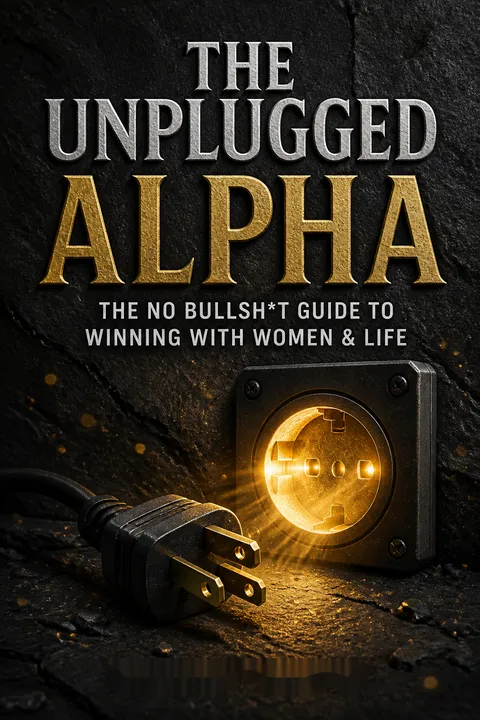


Key Takeaways
Turn painful evidence into agency, not a universal theory about women
A crisis became a reset. Cooper describes a divorce, a business under threat, and a later breakup that left him struggling with trauma and thoughts of suicide. He says recovery began when he questioned the assumptions that had guided him and took responsibility for changing his own choices. He calls this process unplugging: revising a worldview when experience shows that its comforting explanations are not working.
Learning is not certainty. His story gives the book its engine: painful experience can prompt self-examination rather than helplessness. But one person’s betrayals cannot establish universal rules about women or relationships. The useful move is to identify which beliefs failed, then test new ones against evidence rather than replacing one rigid story with another.
What's compelling is the movement from injury toward agency. Trauma can make familiar assumptions feel unsafe, and rebuilding a sense of control often requires both practical changes and a more accurate account of what happened. Yet a painful event can also make broad explanations feel especially persuasive. A sound recovery process separates observation from interpretation: a partner lied, for example, is evidence about that partner, not a whole gender. The book's strongest invitation is to update beliefs. Its weakest temptation is to treat a new lens as complete sight.
Build looks, income, status, and social skill for freedom first
Improve what you can control. Cooper groups male attractiveness into looks, money, status, and Game, meaning social and romantic skill. His advice is to improve fitness, grooming, clothing, work, and confidence rather than waiting for approval or blaming fixed traits. He argues that these qualities reinforce one another, and that the larger reward is autonomy, not simply more dates.
Dating apps reward presentation. The book cites data suggesting that many women on apps focus attention on a small share of men, though it supplies little methodological detail. Cooper recommends honest self-assessment, strong photographs, a concise profile, and moving from messages to a brief public meeting. The practical lesson is to treat your profile as a first impression, not as a substitute for developing a life worth showing.
This section joins self-development to choice: income can widen options, fitness can improve health as well as appearance, and social competence matters beyond dating. That broader payoff makes the advice more durable than pursuing attractiveness alone. The caution is that a four-part scorecard can make people seem like products ranked on a single market. App behavior also reflects platform design, local demographics, and swipe habits, not just universal preferences. Better photographs may earn attention, but character and compatibility still determine whether attention becomes a good relationship.
Judge romantic interest by reciprocal behavior, not promises or bargaining
Look for reciprocity. Cooper adapts the business tool Net Promoter Score to dating. In its original setting, customers rate their likelihood of recommending a business. He maps scores of 9 to 10 to enthusiastic interest, 7 to 8 to indifference, and 1 to 6 to rejection. In dating, his practical test is simpler: does the other person initiate, follow through, ask questions, and make time?
Do not negotiate attraction. He argues that affection obtained through pressure, favors, or a waiting-game bargain is not the same as mutual desire. For online dating, he recommends quality photos, brief messaging, and a short first meeting in a public place. These are screening tools, not guarantees. Interest can change, and a clear yes or no matters more than any score or supposed signal.
The business analogy is memorable because it redirects attention from hopeful interpretation to observable behavior. Reciprocity is a useful concept in relationship research and everyday life: consistent effort tends to reveal more than declarations. But a customer-satisfaction scale is not a validated instrument for measuring attraction, and short replies can reflect stress, personality, or circumstance. The better use of Cooper's categories is as a prompt to notice patterns, not assign a numerical verdict. Most importantly, enthusiasm is specific to the moment and never replaces ongoing consent.
Vet people by patterns, then leave when trust or safety fails
Actions outrank assurances. Cooper's workplace story gives the principle its shape. After clashing with a new executive, he lost his job and later understood that skill alone does not guarantee a good working relationship. In business and dating, he urges readers to take time to observe behavior, check whether actions match words, and act when repeated evidence breaks trust.
Screen for consequential problems. His warning list includes aggression, repeated dishonesty, addiction that disrupts daily life, unmanaged financial chaos, and chronic blame-shifting. These are more useful to assess than appearance or political labels. He also describes intuition as an early warning, not proof. A gut feeling can justify slowing down, asking questions, or seeking outside advice. It should not replace fair judgment or a direct conversation when one is safe.
The hiring analogy works because it highlights how trust is built from repeated behavior rather than a polished introduction. Organizational psychology similarly distinguishes technical skill from reliability, cooperation, and fit. The advice to leave unsafe situations is particularly important: physical aggression is not a communication puzzle to solve alone. At the same time, an intuition can be shaped by past experiences and bias. Treating it as a reason to gather more information is wiser than treating it as a diagnosis. The aim is not suspicion of everyone, but careful selection and timely boundaries.
Treat step-parenting as a deliberate commitment with real costs
Count the whole commitment. Cooper warns that dating a parent can involve time, money, emotional labor, and responsibility for children without equal authority in decisions. He recounts becoming involved with a woman and her two sons, then facing conflict when he tried to set limits and their mother did not support him. His experience taught him to slow down before meeting children and to avoid taking on a parental role by default.
Make the terms explicit. The book also raises financial entanglement, competing priorities, and children's safety when unrelated adults share a household. These deserve practical discussion, not assumptions. Cooper is strongly opposed to men dating single mothers, while allowing that a blended family may work under demanding conditions, including compatible parenting expectations and genuine commitment from both adults.
The central concern, responsibility without clear authority, is real in many blended families and deserves early discussion. Family systems work emphasizes that step-parent roles need time, coordination with the biological parent, and age-appropriate boundaries. But the book's blanket hostility to single parents is not supported by its anecdotes, and step-parents can form enduring, loving relationships with children. A more useful filter is not parental status alone, but the adults' communication, the child's needs, and the legal and financial arrangements. The child is a person in the relationship, not a cost category.
Keep relationships reciprocal instead of shrinking yourself through endless concessions
Notice the slow drift. Cooper describes an alpha-to-beta conversion process, his label for a partner gradually giving up preferences and independence to avoid conflict or earn affection. He illustrates it with a fictionalized pattern: small household requests accumulate, then larger decisions become one-sided, and the accommodating partner feels more like a utility than a companion. His prescription is to keep personal goals, friendships, and standards alive inside a relationship.
Define frame carefully. In the book, frame means the beliefs and boundaries that shape a relationship's direction. Cooper often describes this as one partner leading and the other entering that partner's frame. A healthier application is mutual: each person can state limits, negotiate shared decisions, and refuse coercion. Saying no is useful when it protects a genuine boundary, not when it is used to dominate or punish.
The warning about self-erasure has broad relevance. People often make small accommodations to preserve closeness, and those choices can become a pattern if only one person is expected to adapt. Relationship research points toward responsiveness and negotiated influence, not a permanent winner of the power contest. Cooper's language of alpha, beta, and frame can help readers notice passivity, but it can also recast ordinary disagreement as a threat to male authority. Durable boundaries are reciprocal, specific, and open to discussion. Control is not the same thing as self-respect.
Reduce obsession by building a full life before choosing exclusivity
Do not make one person your whole world. Cooper calls obsessive fixation on a romantic interest Oneitis. He says it can disrupt sleep, concentration, and purpose, especially when someone believes a single person is the only possible partner. His proposed antidote is building a life with meaningful work, friendships, and options rather than treating dating as a scarce-resource emergency.
Date deliberately and honestly. Cooper calls simultaneous nonexclusive dating spinning plates and presents it as a way to compare compatibility before commitment. He suggests waiting around six months before considering an exclusive relationship, but this is his rule, not a universal timetable. Nonmonogamy requires honesty and informed consent. Creating jealousy on purpose, concealing other partners, or assuming another person's agreement is not a healthy version of abundance.
The diagnosis of fixation is useful because intense romantic attention can crowd out the rest of a person's identity. A broader life creates resilience whether someone dates one person or several. The proposed solution, however, depends on transparent agreements. Research on attachment suggests that secure relationships can support independence rather than threaten it, so exclusivity itself is not evidence of scarcity or weakness. Nor is a fixed waiting period a reliable measure of readiness. The key distinction is between choosing commitment freely and using commitment to soothe fear or secure another person's behavior.
Treat marriage as a legal decision, not merely a romantic milestone
Know the local rules. Cooper's divorce left him fearful about losing wealth and access to his daughter. He uses that experience to argue that marriage can expose men to significant legal and financial risks, especially when one partner earns much more or children are involved. The book cites divorce, custody, and support figures, but the claims vary by jurisdiction and are not consistently documented in the text.
Get advice before signing. His actionable recommendation is to consult a qualified family lawyer about custody defaults, property division, support obligations, and the limits of prenuptial or postnuptial agreements. Couples should discuss finances and parenting candidly, and understand that agreements may be affected by changing circumstances. The book's alarm is strong; the practical core is sounder: learn the law where you live before making a consequential commitment.
Marriage is both an intimate promise and a legal status, so treating legal literacy as part of preparation is sensible. A lawyer can explain jurisdiction-specific rules far better than anecdotes or online slogans. The book's claims about systematic bias, financial outcomes, and custody should not be accepted without checking their sources and definitions; general statistics can conceal substantial variation. Legal risk also belongs to both partners, and a fair process protects children as well as adults. Caution is valuable when it leads to informed decisions, not when it turns every marriage into a forecast of betrayal.
Optimize health with measured medicine, not online hormone certainty
Start with symptoms and evidence. Cooper links energy, mood, body composition, sleep, and sexual function to men's endocrine health. He says testosterone tends to decline with age and describes seeking medical help when he experienced low energy and reduced motivation. His central practical advice is to use blood tests and a qualified physician rather than self-prescribing hormones or buying unverified boosters.
Do not copy a protocol. The book gives personal details about testosterone therapy and supplements, but treatment needs individual medical assessment and monitoring. Cooper also recommends reducing stress, improving sleep, eating well, and lowering excess body fat. These general health habits have broader support than his claims about electromagnetic fields or particular supplement combinations. The author cautions that testosterone therapy can suppress natural production and may affect fertility, making professional guidance essential.
The strongest part of this chapter is its insistence on clinical supervision and measurement instead of gym folklore. Symptoms can have many causes, so testing and a full medical history matter more than chasing an idealized number. Testosterone therapy has potential benefits for properly diagnosed patients, but it also carries risks and is not a general-purpose performance upgrade. The discussion of screens and electromagnetic fields is much less firmly grounded than the advice on sleep, nutrition, and body composition. Health optimization works best when confidence is proportional to the quality of evidence.
Spend attention on chosen work, and train competence outside dating
Protect limited attention. Cooper uses the phrase manage the fucks you give to describe choosing where to spend energy, time, and emotion. An angry driver or a draining dinner guest can consume attention without helping a person's goals. He recounts declining an invitation to avoid an exhausting social encounter, then connects self-control to the ability to choose which conflicts deserve a response.
Choose demanding pursuits. He describes motorcycles as an outlet that helped him process bad days and taught him to scan for danger. He also recommends martial arts for fitness, confidence, and situational awareness. These are personal examples, not medical prescriptions. Riding and combat sports carry real risks, so training, protective equipment, and sound instruction matter. The broader point is to build competence through activities that require attention and practice.
Attention is not merely a productivity resource; it also shapes what becomes emotionally salient. Choosing not to escalate every insult can preserve energy for relationships and work that matter. The book's motorcycle and martial arts stories add a physical dimension to that idea: competence grows through disciplined exposure to challenge. Still, cold showers and combat training should not be treated as universal cures for self-control or wellbeing. Different people regulate stress in different ways, and a demanding pursuit is valuable only when its risks are understood and managed.
Reject both bitterness and denial; adapt without turning people into enemies
Do not confuse awareness with resentment. Cooper describes Red Pill Rage as the anger some men feel when familiar beliefs about dating, family, and fairness collapse. He understands why men might withdraw through MGTOW, meaning Men Going Their Own Way, but argues that permanent isolation does not solve loneliness or improve a person's life. His preferred response is to recover, improve, and make decisions with clearer expectations.
Keep the claims human-sized. The book's closing position is that men should not hate women for behaving as the author believes biology and social incentives encourage. Yet many of its claims about female nature are sweeping and presented with more certainty than the evidence in the text warrants. The practical lesson is to recognize risk without turning every disappointment into proof that an entire group is untrustworthy.
This ending offers a useful distinction between stepping back to recover and organizing an identity around grievance. Communities built around perceived injury can provide belonging, but they can also reward increasingly extreme explanations. The author's rejection of permanent withdrawal is therefore a constructive counterweight to his more adversarial passages. At the same time, a claim about biology does not make a social pattern inevitable, and group-level generalizations can obscure individual variation. Realistic expectations should make people more discerning, not less capable of trust, affection, or mutual responsibility.
Analysis
The Unplugged Alpha is a memoir-inflected dating and self-improvement manual organized around one promise: men can recover agency by questioning inherited expectations, strengthening their lives, and approaching relationships with clearer eyes. Its emotional foundation is unusually direct. Cooper links his advice to divorce, business upheaval, and betrayal, giving the work urgency that a purely abstract rulebook would lack. Its most durable lessons are practical: observe conduct instead of relying on assurances, preserve health and purpose, learn the local legal consequences of major commitments, and leave situations that threaten safety.
The book is also difficult to summarize without separating useful caution from sweeping ideology. It treats gender as a near-fixed evolutionary script, often turning personal anecdotes and selected statistics into general claims about women, men, family law, and sexual behavior. That framework can make painful experiences intelligible, but it can also encourage confirmation bias: ambiguous events become evidence for a theory that is difficult to falsify. Several claims, including those about custody, paternity, and dating-app preferences, require careful sourcing and jurisdictional context that the text does not consistently provide.
Its strongest advice survives without its hierarchy of alpha and beta identities. Boundaries need not be dominance; honest nonmonogamy need not be a tactic; legal caution need not imply that a partner is an adversary. Read this as a forceful account of one man's attempt to rebuild after disillusionment, not as a comprehensive science of women or relationships. Readers can retain its emphasis on agency while testing its explanations, respecting other people's autonomy, and making decisions from evidence rather than fear.
Review Summary
The Unplugged Alpha receives mixed reviews, with ratings ranging from 1 to 5 stars. Positive reviews praise its no-nonsense approach to relationships and self-improvement for men. Critics argue it promotes misogyny and oversimplifies complex issues. Many readers find some valuable insights but disagree with certain aspects. Women who've read it often express disappointment with its generalizations. The book's controversial nature sparks debate about modern gender dynamics, relationships, and masculinity. Some view it as eye-opening, while others see it as perpetuating harmful stereotypes.
People Also Read









Glossary
Unplugging
Revising a failed worldviewCooper's term for questioning inherited beliefs after experience reveals that they are not helping a person navigate life. In the book, unplugging means adopting a more skeptical view of social expectations, dating, and relationships. The process is framed as a route to agency, though the author's conclusions should be distinguished from the general act of re-examining beliefs.
Genuine burning desire
Clear, reciprocal romantic interestCooper's label for strong romantic and sexual interest that is expressed through consistent, voluntary behavior, such as initiating contact, following through on plans, and showing enthusiasm. He contrasts it with indifference or intimacy exchanged as a bargain. The term is not a clinical measure, and another person's actions should never be treated as a substitute for consent.
SMV (Sexual Marketplace Value)
Perceived dating-market appealAn abbreviation for Sexual Market Value, Cooper's framework for describing a person's perceived desirability in dating. He says it reflects qualities such as physique, style, confidence, social standing, resources, and interpersonal skill. The framework encourages self-improvement, but it reduces complex attraction and compatibility to a ranking metaphor that can obscure individual preferences.
Frame
Beliefs and boundaries shaping interactionCooper uses frame for the beliefs, expectations, and personal boundaries that influence a relationship's direction. He often presents one partner as setting the frame and the other as entering it. In a more reciprocal application, the term can describe each person's expectations and limits, which need to be negotiated rather than imposed.
Hypergamy
Seeking a perceived higher-value partnerIn Cooper's account, hypergamy is a female mate-selection strategy oriented toward a partner perceived to offer superior status, resources, protection, or genetic advantages. He applies the term broadly to dating choices and relationship changes. The book presents it as an evolutionary explanation, but readers should not assume it describes every woman's motives or predicts individual behavior.
Oneitis
Fixation on one romantic partnerCooper's term for intense, often distressing preoccupation with one person, accompanied by the belief that no other partner could compare. He links it to neglecting work, sleep, and other parts of life after rejection or a breakup. The label describes a pattern, not a diagnosis; emotional distress may call for support beyond changing dating habits.
Spinning plates
Dating multiple people nonexclusivelyA metaphor for seeing more than one person while not in an exclusive relationship. Cooper recommends it as a way to avoid overinvestment and compare compatibility before commitment. The approach is ethical only when relevant expectations are communicated honestly and all involved parties can make informed choices.
MGTOW
Men Going Their Own WayAn abbreviation for Men Going Their Own Way, a movement discussed by Cooper in which men limit or reject romantic involvement with women. The book distinguishes temporary withdrawal after a painful relationship from permanent isolation organized around resentment. It also warns that grievance-focused communities can intensify hostility rather than help members rebuild their lives.
FAQ
What's "The Unplugged Alpha" about?
- Author's Perspective: "The Unplugged Alpha" by Richard Cooper is a guide for men on how to navigate relationships with women and life in general. It emphasizes understanding modern social dynamics and the challenges men face today.
- Core Themes: The book covers topics like the female primary social order, hypergamy, and the importance of self-improvement for men. It aims to help men become more aware of societal narratives and how they can affect personal relationships.
- Practical Advice: Cooper provides practical advice on dating, relationships, and self-care, encouraging men to focus on personal growth and excellence rather than solely on romantic pursuits.
- Target Audience: The book is primarily aimed at men who feel disillusioned by traditional relationship advice and are seeking a more realistic approach to understanding women and societal expectations.
Why should I read "The Unplugged Alpha"?
- Realistic Insights: The book offers a no-nonsense perspective on relationships and societal expectations, which can be refreshing for those tired of conventional advice.
- Self-Improvement Focus: It emphasizes the importance of self-improvement and personal growth, encouraging readers to become the best version of themselves.
- Understanding Dynamics: Readers gain a deeper understanding of the dynamics between men and women, including concepts like hypergamy and the female primary social order.
- Practical Strategies: The book provides actionable strategies for navigating relationships and life challenges, making it a practical guide for men seeking to improve their lives.
What are the key takeaways of "The Unplugged Alpha"?
- Female Primary Social Order: The book discusses how society often prioritizes female interests and how men can navigate this reality.
- Hypergamy and Relationships: It explains the concept of hypergamy, where women seek the best possible partner, and how men can position themselves as high-value individuals.
- Self-Improvement: Emphasizes the importance of self-care, financial independence, and personal growth as foundational elements for success in life and relationships.
- Red Flags and Boundaries: Cooper outlines red flags to watch for in relationships and stresses the importance of setting and maintaining personal boundaries.
What is the "Red Pill" perspective in "The Unplugged Alpha"?
- Awareness of Reality: The "Red Pill" perspective involves seeing the world as it truly is, rather than how society portrays it, especially regarding gender dynamics.
- Challenging Narratives: It challenges societal narratives that may not serve men's best interests, encouraging them to question and reassess their beliefs.
- Focus on Truth: The book emphasizes accepting uncomfortable truths about relationships and society, rather than clinging to comforting lies.
- Empowerment Through Knowledge: By understanding these truths, men can make more informed decisions and take control of their lives.
How does Richard Cooper define "Hypergamy" in "The Unplugged Alpha"?
- Evolutionary Strategy: Hypergamy is described as an evolutionary strategy where women seek the best possible partner for resources and protection.
- Dualistic Nature: It involves a dual strategy of seeking both genetic quality and provisioning ability, which may not always be found in the same partner.
- Impact on Relationships: Understanding hypergamy helps men navigate relationships by recognizing women's natural inclinations and adjusting their strategies accordingly.
- Men's Response: Cooper advises men to focus on self-improvement and becoming high-value individuals to naturally attract women who are optimizing their hypergamous strategy.
What are the "20 Red Flags" mentioned in "The Unplugged Alpha"?
- Common Red Flags: The book lists 20 red flags to watch for in women, such as "daddy issues," extreme jealousy, and poor financial habits.
- Impact on Relationships: These red flags are indicators of potential issues that could complicate or harm a relationship.
- Advice for Men: Cooper advises men to be vigilant and avoid getting deeply involved with women who exhibit these red flags.
- Purpose of the List: The list serves as a guide for men to make informed decisions about who they choose to date or enter into relationships with.
What is "Spinning Plates" in "The Unplugged Alpha"?
- Definition: "Spinning Plates" refers to the practice of dating multiple women non-monogamously to avoid developing "Oneitis" or an unhealthy attachment to one woman.
- Benefits: This approach allows men to compare and contrast different partners, helping them identify the best match without rushing into commitment.
- Mindset Shift: It encourages an abundance mindset, reducing the likelihood of becoming overly attached to one person.
- Practical Application: Cooper suggests this strategy for men, especially those who are young or recently single, to better understand female nature and the dating landscape.
How does "The Unplugged Alpha" address "Oneitis"?
- Definition: "Oneitis" is described as an unhealthy obsession with one woman, often leading to emotional distress and poor decision-making.
- Root Causes: It stems from societal conditioning and the belief in finding "the one" perfect partner.
- Overcoming Oneitis: Cooper advises men to adopt an abundance mindset and focus on self-improvement to reduce the risk of developing Oneitis.
- Practical Steps: By spinning plates and maintaining personal boundaries, men can avoid becoming overly attached and maintain control over their emotions.
What does "The Unplugged Alpha" say about "Managing the Fucks You Give"?
- Energy Management: The concept involves being selective about where you invest your time, energy, and attention, as these are limited resources.
- Self-Control: Mastering self-control is crucial to managing your "fucks," allowing you to focus on what truly matters and avoid unnecessary stress.
- Avoiding Energy Vampires: Cooper advises identifying and avoiding people or situations that drain your energy without providing value.
- Focus on Priorities: By managing your "fucks," you can prioritize personal growth, relationships, and goals that align with your values and purpose.
What is the "Tattoo Test" in "The Unplugged Alpha"?
- Commitment Indicator: The "Tattoo Test" is a method to gauge a woman's commitment by suggesting she tattoo your name on her body.
- Testing Genuine Desire: It serves as a test of her genuine desire and willingness to enter your frame and commit to the relationship.
- Not a Two-Way Street: Cooper emphasizes that this test is not reciprocal; it's about assessing her level of commitment to you.
- Actions Over Words: The test highlights the importance of actions over words, as a woman's willingness to get the tattoo indicates her true feelings.
How does "The Unplugged Alpha" suggest men handle "Red Pill Rage"?
- Natural Reaction: "Red Pill Rage" is a natural reaction to realizing the truths about societal narratives and gender dynamics.
- Temporary Phase: Cooper acknowledges that anger is a legitimate response but warns against getting stuck in this phase.
- Channeling Anger: He advises channeling this anger into self-improvement and personal growth rather than harboring bitterness.
- Acceptance and Navigation: By accepting the realities of the world and learning to navigate them, men can move past the rage and focus on achieving their goals.
What are the best quotes from "The Unplugged Alpha" and what do they mean?
- "Marriage is a high reward/low risk choice for women, but a low reward/high risk choice for men." This quote highlights the inherent risks men face in marriage due to current family laws and societal expectations.
- "Women break rules for alphas and make them for betas." It emphasizes the importance of being a high-value man to naturally attract genuine desire from women.
- "The woman you marry is never the same woman you divorce." This warns men about the potential changes in a woman's behavior during a divorce, influenced by family law dynamics.
- "Men are made; women are born." This underscores the idea that men must actively work on self-improvement and personal growth to achieve success in life and relationships.
Download PDF
Download EPUB
.epub digital book format is ideal for reading ebooks on phones, tablets, and e-readers.








