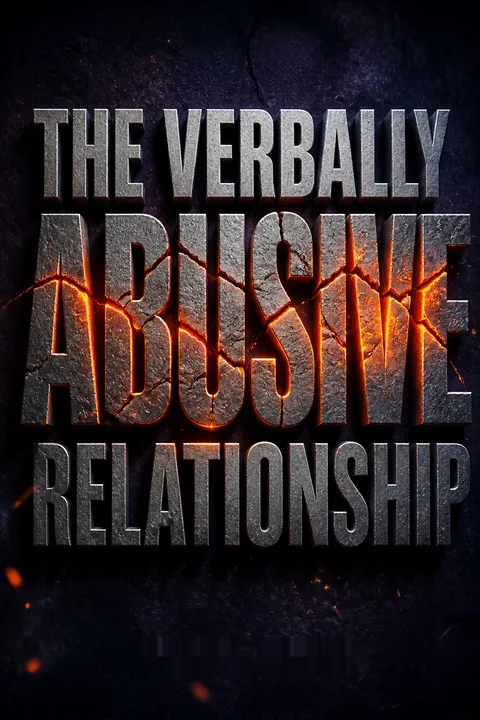


Key Takeaways
Treat repeated verbal harm as a control pattern, not a communication glitch
Look beyond the words. Evans defines verbal abuse as language or behavior that injures, distorts a person’s understanding, or falsely describes them. The harm is not limited to insults. Repeated sarcasm, silence, criticism, or hostile outbursts can also control a partner, especially when the speaker denies what happened. Much of it occurs in private, where the target has little outside confirmation and may appear to others to be in a normal relationship.
A pattern, not a bad moment. Evans based the book on interviews with 40 women whose relationships averaged just over 16 years. Their accounts describe a recurring experience: trying harder to explain, understand, and repair things, while the same painful interactions continue. The book’s central question is not whether a couple sometimes argues, but whether one person repeatedly diminishes the other and rejects their account of it.
The distinction between conflict and abuse is useful because it redirects attention from a single sentence to a pattern of power, repair, and consequence. A painful disagreement can still include listening, responsibility, and a path back to trust. Repeated humiliation paired with denial is different. The book’s interview sample offers rich descriptions, not a representative survey, so its patterns are best used as prompts for careful assessment rather than a diagnostic checklist. That qualification does not reduce the value of naming conduct that is often minimized precisely because it leaves no visible injury.
Use distress as evidence to investigate, not as something to dismiss
Notice your own signals. Evans argues that hurt, fear, confusion, and bodily tension can alert someone that a relationship feels unsafe or degrading. They are not proof of another person’s motive, but they deserve attention rather than automatic self-correction. A partner may feel a sudden knot of anxiety after a seemingly ordinary exchange, then spend hours searching for the phrase that supposedly caused the other person’s anger.
Olivia’s turning point. After her husband erupted over a casual comment about buying pastries, Olivia tried to reconstruct what she might have done wrong. The explanation never made sense, and he later denied being angry. Her shift came when she stopped treating his reaction as a puzzle she had to solve and recognized that an ordinary comment did not justify an attack. That recognition helped her trust her experience again.
This is a strong case for emotional literacy: noticing an emotion creates information that can be examined before it is either obeyed blindly or dismissed. In behavioral science, bodily arousal can register threat before a person has a clear verbal account of it, but it can also reflect past experiences or other stressors. The practical move is therefore neither “my feeling proves the other person is abusive” nor “my feeling must be wrong.” It is to record what happened, look for repetition, and seek a trustworthy outside perspective.
Recognize tactics that make your own reality harder to trust
Name the recurring moves. Evans organizes verbal abuse into recognizable forms. These include withholding, or refusing meaningful engagement; countering, or reflexively negating a partner’s view; discounting, or treating their feelings as unreasonable; and blocking, blaming, trivializing, threatening, ordering, name-calling, and denial. The forms can overlap. A partner who objects to a cutting remark may be told it was harmless, then accused of provoking an argument.
Notice the effect. A person may begin doubting their memory, intentions, competence, or right to speak. For example, after repeated dismissals of her work, one interviewee came to question abilities that had in fact been demonstrated over years. These categories are not labels to apply after one clumsy exchange. They help identify a pattern in which communication repeatedly leaves one person confused, diminished, or unable to raise concerns.
A vocabulary for subtle conduct can restore descriptive precision. Without names for recurring tactics, a person may experience each incident as a separate misunderstanding and keep searching for the perfect explanation. The categories also help observers ask what the interaction does, rather than debate whether the speaker meant harm. Still, a taxonomy can become too rigid if ordinary defensiveness or poor communication is automatically classified as abuse. Repetition, asymmetry, refusal to repair, and the pattern’s effects provide more useful context than any isolated phrase.
Judge relationships by mutuality, not by declarations of love
Two models of power. Evans contrasts Power Over, where one person seeks control or superiority, with Personal Power, grounded in self-knowledge, choice, and cooperation. She calls the control-based outlook Reality I and the mutual outlook Reality II. These are the book’s interpretive terms, not clinical diagnoses. In a mutually supportive relationship, both people can express different views, make plans together, and acknowledge mistakes without turning disagreement into a contest.
One person cannot build mutuality alone. In Evans’s example, Ann hears that she is uncooperative because she did not help with a task she had not been told about. She tries to explain, assuming the exchange is about understanding. Her partner treats it as a chance to gain the upper hand. The practical lesson is that effort and affection cannot create a reciprocal relationship if the other person rejects equality and goodwill.
The contrast gives readers a memorable test: is disagreement an invitation to understand, or an opportunity to establish rank? That question can clarify everyday interactions without requiring a theory about anyone’s hidden psychology. Mutuality also does not mean constant agreement or perfectly balanced contributions in every moment. Caregiving, illness, and practical constraints can make relationships temporarily unequal in workload while remaining respectful. The relevant distinction is whether each person’s perspective and autonomy still count, not whether the relationship looks symmetrical from the outside.
Set limits on harmful behavior instead of endlessly explaining yourself
State what you will accept. Evans distinguishes a limit from a threat: a limit describes what the person setting it will not accept and what they may do to protect themselves. Instead of arguing about whether an insult was intended as a joke, someone might say that they will end the conversation if the insults continue. The book recommends responding promptly, briefly, and without trying to prove one’s good intentions, since explanations may invite further diversion.
Make safety the condition. Evans suggests clear responses and disengagement, but also warns that fear, threats, or physical aggression change the situation. A person who may face retaliation should not be expected to confront the other person alone. Support from a trusted professional, domestic-abuse service, or reliable friend can help with safety planning. Limits clarify a person’s choices; they cannot compel another person to change.
The strength of this approach is its shift from persuasion to agency. Repeatedly litigating one’s motives can keep the harmed person trapped in the very conversation that denies their experience. A boundary instead specifies an action within that person’s control. Yet direct confrontation is not universally safe, especially where intimidation or violence is present. The book’s own caution matters: the purpose is protection, not winning an exchange or testing how much abuse someone can withstand. A private plan and informed support may be wiser than a forceful response in the moment.
Intermittent kindness can keep you hoping while the harm escalates
The contrast clouds judgment. Evans describes relationships in which painful episodes alternate with ordinary routines, affectionate words, gifts, or periods of apparent warmth. Those better moments can make the partner forget the last incident and invest hope in the next one. Meanwhile, unpredictable anger may leave the partner constantly monitoring tone, timing, and mood, as if perfect caution could prevent the next outburst.
A reinforcing cycle. Evans calls a recurring pattern of tension, angry release, and renewed tension the cycle of anger addiction. She argues that an outburst can bring the angry person relief and a renewed sense of control, while leaving the partner hurt and watchful. This is her explanatory model, not a diagnosis that can be made from one episode. What readers can observe is whether anger repeats, whether responsibility is avoided, and whether the person harmed is expected to adapt.
Unpredictable rewards are powerful in many settings: when warmth appears inconsistently, people can become more preoccupied with securing it. That helps explain why a relationship may feel hopeful and damaging at once, without implying that the harmed partner is foolish or weak. The book’s addiction language captures the repetitive quality of some angry behavior, but it risks making a complex pattern sound like a settled clinical mechanism. It is safer to treat it as a lens for observing repetition and impact, not as proof of what causes another person’s anger.
Abuse can train you to manage another person’s anger as your job
Gradual adaptation hides change. Evans uses a story about an animal adapting to slowly warming water to illustrate how people may accommodate small changes until a harmful environment feels normal. Partners can learn to avoid certain topics, apologize for another person’s anger, or reduce their own plans to prevent conflict. Familiar advice such as “keep trying” or “be more understanding” can reinforce the idea that the target is responsible for making the relationship work.
Isolation narrows the view. In the book’s accounts, some partners had little access to the couple’s finances, were discouraged from maintaining friendships, or feared the costs of leaving. One woman described staying because she could not afford to support herself; another sought help from family before a crisis worsened. These barriers matter. Not leaving immediately is not evidence that the harm is acceptable or that the person has freely chosen it.
This insight connects private behavior to material conditions. Financial dependence, caregiving, housing, disability, and fear can sharply constrain someone’s options, so advice that treats departure as a simple act of will misunderstands the problem. Naming those constraints can turn shame into practical planning. The book’s adaptation metaphor is effective, though it should not suggest that every person exposed to gradual harm responds the same way. Outside relationships, confidential support, and access to resources can restore perspective and expand choices.
Protect children by naming abuse instead of teaching them to ignore it
Validate what the child experienced. Evans advises parents not to excuse hurtful conduct by saying the speaker was joking or having a bad day. A child needs to hear that the behavior was not acceptable and that their feelings make sense. Adults can model limits directly, while making clear that children are not responsible for managing the adult’s behavior.
Offer safety, not a burden. Children who witness abuse or experience it themselves may need a trusted adult, counselor, or other support. Evans also describes the strain of separation and shared custody, including children being used to collect information about a former partner. Her suggested principle is to keep the child’s relationship with each parent distinct and avoid turning the child into a messenger or investigator. Where there is danger, adults should seek qualified guidance rather than rely on a child to solve the situation.
The emphasis on validation is developmentally important: children learn not only from what adults say, but from whether adults take their distress seriously. Naming a boundary can counter the lesson that affection requires tolerating humiliation. At the same time, children should not be recruited into identifying, documenting, or confronting an abusive adult. Their safety and emotional support belong with responsible adults and qualified services. Family arrangements can be legally and practically complicated, so a general principle of protection must be paired with context-specific advice.
Require accountability, not promises, before rebuilding trust
Change belongs to the person causing harm. Evans says a partner cannot make another person stop by explaining more skillfully, giving more, or becoming less sensitive. Change requires the abusive person to recognize the behavior, take responsibility, and work to stop it. A promise or declaration of love is not the same as changed conduct. The partner can ask for change and set limits, but cannot guarantee the response.
Recovery restores choice. The book describes recovery as regaining trust in one’s perceptions, seeking supportive counseling or community, rebuilding daily routines, and grieving the relationship one hoped to have. It may also involve financial and practical planning. Evans urges care in choosing a therapist: when abuse or retaliation may be present, the target’s safety and account should not be flattened into a claim that both people share equal responsibility for the abuse.
Separating explanation from accountability is essential. Childhood history, stress, or cultural beliefs may help explain how a pattern developed, but explanation does not transfer responsibility to the person harmed. Trust is rebuilt through observable conduct and sustained respect, not through a persuasive account of good intentions. The book’s critique of neutral couples counseling is especially relevant when one person uses coercion or fear; joint discussion can obscure an imbalance or create risk. A careful professional assessment can distinguish ordinary relational conflict from a pattern that requires individual support and safety planning.
Analysis
Evans’s most durable contribution is not a complete theory of why abusers behave as they do. It is a vocabulary for experiences that are often private, cumulative, and difficult to narrate. The examples show how a partner can be pushed into treating an irrational outburst as a communication puzzle: perhaps the wording was wrong, perhaps the timing was poor, perhaps one more explanation will restore the earlier relationship. Naming recurring tactics interrupts that loop and returns attention to observable conduct, its effects, and whether repair is possible.
The book also joins interpersonal analysis to a structural account of power. Its discussion of financial dependence, gender expectations, isolation, and children makes clear that safety and choice are shaped by more than self-esteem. A person may understand the pattern and still face practical barriers to leaving. That insight guards against turning empowerment into another demand placed on the harmed partner.
The framework of Power Over and Personal Power is memorable, but its divisions can sound more absolute than real relationships are. People may behave defensively or cruelly in particular contexts without fitting a fixed category, and the book’s psychodynamic accounts of childhood, projection, and anger are interpretations rather than demonstrated explanations for every case. Its interview base, 40 women, offers depth but not population-level proof. Likewise, the book’s claim that verbal abuse precedes physical abuse should be treated as a warning presented by the author, not a guarantee that every verbally abusive relationship will become physically violent.
The strongest practical synthesis is therefore both compassionate and discriminating: take repeated distress seriously, test interpretations against patterns, seek outside validation, and prioritize safety. The target need not diagnose the other person or prove intent before deciding that a pattern is harmful. Responsibility for stopping abusive behavior belongs to the person doing it, while support and resources can help the person experiencing it recover agency and make informed choices.
Review Summary
The Verbally Abusive Relationship is highly praised for its insightful exploration of verbal abuse dynamics. Readers found it eye-opening, empowering, and life-changing, helping them recognize and address abusive patterns in various relationships. Many appreciated the detailed examples and practical advice, though some criticized its gender bias and repetitiveness. The book is widely recommended for its potential to validate experiences, boost self-esteem, and promote healthier interactions. However, a few readers felt it oversimplified abuser motivations and lacked nuance in addressing complex relationship issues.
People Also Read








Glossary
Power Over
Control through dominanceEvans’s term for a model of power based on controlling, dominating, or ranking another person. In a relationship, it appears when one partner seeks superiority rather than mutual understanding, and treats the other’s independence or differing view as a threat. The term frames verbal abuse as a means of control, not merely as poor communication.
Personal Power
Self-directed agencyEvans’s term for the ability to know, choose, and create from awareness of one’s own feelings and values. It is strengthened by participation, cooperation, and mutual support rather than by dominating someone else. In her framework, a person with Personal Power can maintain a separate identity while building a shared relationship.
Reality I
Control-based worldviewEvans’s label for the worldview she associates with Power Over. In Reality I, people seek security or status through dominance, competition, and control, and may treat a partner as an adversary rather than an equal. The term is an interpretive framework for understanding contrasting approaches to relationships, not a formal psychological diagnosis.
Reality II
Mutuality-based worldviewEvans’s label for a worldview grounded in Personal Power, cooperation, and shared creation. A Reality II relationship allows both people to have distinct experiences, express disagreement, make plans together, and repair mistakes with goodwill. Evans contrasts it with a control-based relationship, while emphasizing that mutuality requires participation from both people.
Crazymaking
Confusion through covert controlA term Evans uses for interaction that leaves someone confused, disoriented, or doubting their grasp of events. It can involve denial, contradictory messages, concealed hostility, or refusal to clarify what happened. The partner may struggle to identify a specific offense because the behavior undermines the very ability to describe and discuss the experience.
Cycle of anger addiction
Repeated tension and outburstsEvans’s name for a recurring pattern in which tension builds, an angry outburst occurs, and tension then begins to build again. She proposes that the outburst may relieve the angry person and reinforce a sense of control, while leaving the partner hurt and vigilant. This is the author’s explanatory model, not a diagnosis established by observing one incident.
Verbal abuse
Language used to injure or controlEvans describes verbal abuse as words or communication that attack, injure, distort another person’s understanding, or falsely define them. It may be overt, such as name-calling or shouting, or covert, such as withholding, trivializing, and denying a partner’s experience. The book emphasizes patterns of control and the harm caused, particularly when the behavior is denied.
FAQ
What's The Verbally Abusive Relationship about?
- Focus on verbal abuse: The book explores the dynamics of verbally abusive relationships, emphasizing that verbal abuse can be as damaging as physical abuse.
- Two kinds of power: Patricia Evans contrasts "Power Over," which involves control and dominance, with "Personal Power," characterized by mutuality and co-creation.
- Real-life experiences: The author uses interviews with women who have experienced verbal abuse to provide a comprehensive understanding of its emotional and psychological impacts.
Why should I read The Verbally Abusive Relationship?
- Awareness and recognition: It helps readers identify subtle signs of verbal abuse, crucial for those suspecting they might be in such a relationship.
- Empowerment through knowledge: By understanding verbal abuse dynamics, readers can gain confidence to set boundaries and seek help.
- Support for victims: The book serves as a resource for those who have experienced verbal abuse, offering validation and guidance.
What are the key takeaways of The Verbally Abusive Relationship?
- Understanding verbal abuse: The book defines verbal abuse and its forms, such as name-calling and manipulation, essential for recognizing abusive relationships.
- Power dynamics: Evans highlights the difference between "Power Over" and "Personal Power," helping victims understand their situation.
- Steps for recovery: The author outlines steps for victims, including seeking professional help and setting limits, empowering readers towards healing.
What are the best quotes from The Verbally Abusive Relationship and what do they mean?
- "Sticks and stones...": This quote emphasizes the profound emotional impact of verbal abuse, highlighting its psychological harm.
- "Verbal abuse is an issue of control": It encapsulates the book's central theme, indicating that verbal abuse often involves exerting power over another.
- "If you have been verbally abused...": This reflects the confusion and self-doubt victims experience, reinforcing the need for validation and support.
How can I recognize verbal abuse in my relationship according to Patricia Evans?
- Self-evaluation questionnaire: The book provides a checklist to help identify signs of verbal abuse, encouraging reflection on personal experiences.
- Common indicators: Look for patterns like frequent confusion or hurt after interactions, or if your partner dismisses your feelings.
- Understanding power dynamics: Recognize the difference between mutual communication and interactions involving control or manipulation.
What are the categories of verbal abuse outlined in The Verbally Abusive Relationship?
- Withholding: Involves keeping thoughts and feelings to oneself, creating emotional distance and isolation.
- Countering: Occurs when the abuser argues against the partner's thoughts, denying her reality and preventing meaningful communication.
- Discounting: Involves invalidating the partner's feelings, leading her to doubt her perceptions, exemplified by statements like "You're too sensitive."
What specific methods does Patricia Evans suggest for responding to verbal abuse?
- Set clear boundaries: Establish firm boundaries regarding unacceptable behaviors and communicate these limits clearly.
- Use impactful responses: Employ direct and assertive responses to interrupt the cycle of abuse and assert your right to respect.
- Seek support: Emphasize the importance of seeking support from friends, family, or professionals for validation and encouragement.
How does verbal abuse affect the partner's self-esteem according to Patricia Evans?
- Gradual erosion of self-worth: Verbal abuse can significantly decline the partner's self-esteem over time, leading to self-doubt.
- Confusion and self-doubt: Victims often struggle to understand their feelings, feeling responsible for the abuser's anger.
- Need for validation: Recognizing the abuse is crucial for rebuilding self-esteem, encouraging partners to seek validation from trusted sources.
What role does denial play in verbally abusive relationships as discussed in The Verbally Abusive Relationship?
- Defense mechanism: Denial serves as a defense mechanism for both the abuser and the victim, complicating recognition of the abuse.
- Crazymaking behavior: Denial creates confusion and instability, leading victims to question their perceptions and feelings.
- Breaking the cycle: Recognizing denial is crucial for breaking the cycle of abuse, requiring victims to confront reality and seek support.
How can I support someone who is in a verbally abusive relationship?
- Listen and validate: Offer a non-judgmental space for sharing experiences, validating their feelings and experiences.
- Encourage professional help: Suggest seeking counseling or support groups specializing in verbal abuse for guidance and tools for healing.
- Be patient and understanding: Recognize the complexity of leaving an abusive relationship, offering ongoing support and understanding.
What should I do if I realize I am in a verbally abusive relationship?
- Acknowledge the abuse: Recognize the signs and understand the dynamics of the relationship as a crucial step for healing.
- Set boundaries: Establish clear boundaries regarding unacceptable behaviors and communicate these limits to your partner.
- Seek support: Reach out to trusted friends, family, or professionals to build a support network for validation and encouragement.
What obstacles to recognizing verbal abuse does Patricia Evans discuss?
- Cultural conditioning: Many partners believe their mate is rational, preventing recognition of the abuse.
- Isolation and secrecy: Verbal abuse often occurs in private, leading to feelings of isolation and difficulty in seeking help.
- Denial and confusion: The abuser's denial can create a cycle of confusion, hindering recognition of the abusive behavior.
About the Author


Download PDF
Download EPUB
.epub digital book format is ideal for reading ebooks on phones, tablets, and e-readers.








