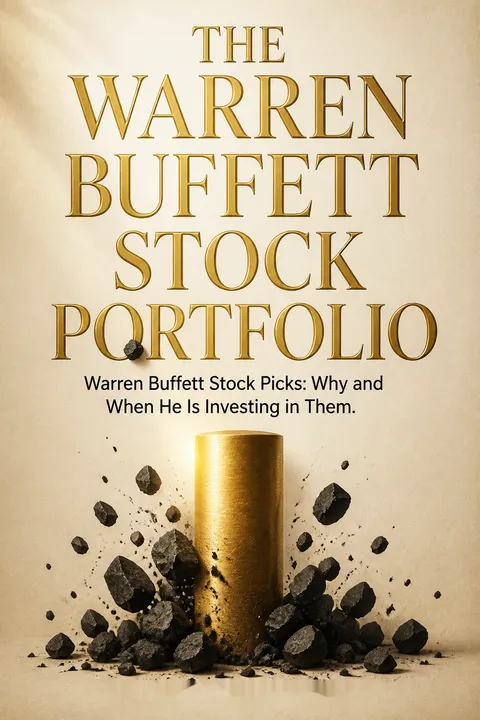


Key Takeaways
Keep cash ready so market panic becomes a buying opportunity
Prepare before prices fall. Buffett's method is to accumulate cash when good companies are expensive, then buy selectively when fear pushes their prices down. He is not simply betting that the whole market will rebound. He is looking for businesses whose underlying economics remain strong even as investors rush to sell them.
The crashes tell the story. Buffett closed his investment partnership in 1969, held cash while prices rose, and returned to buying after the 1973-1974 downturn. He bought Washington Post shares for $6.36 each. In the 1990 real estate panic, Wells Fargo's price fell almost in half, letting him add shares. The book's core discipline is to judge a business and its price, not mirror the market's mood.
What's striking is that cash functions here as more than a reserve. It gives an investor the ability to act when uncertainty makes others unwilling or unable to do so. That requires preparation before a crisis, when holding cash can look foolish beside rising stocks. The approach also demands discrimination: falling prices can reflect either temporary fear or permanent damage. Cash alone creates no advantage unless the investor can tell those situations apart and tolerate looking wrong for a while.
Buy businesses whose economics remain legible a decade from now
Durability means lasting economics. The book uses "durable competitive advantage" for a business condition that lets a company sustain strong economics over time, rather than compete only by cutting prices or constantly reinventing its product. Buffett favors businesses he believes he can understand and assess well into the future.
Familiar products can help. Coca-Cola had sold its signature drink since 1886; Procter & Gamble's Ivory soap dates to the 1880s. Their established products contrast with computer chips, which require heavy, recurring research spending to keep up with technological change. The authors treat age as a clue, not a guarantee: a long-lived product and a recognizable brand may support repeat demand, but the company's financial record still has to confirm that its advantage produces results.
This is a useful way to turn the vague idea of a "good company" into a question about how quickly its economic world can change. Product longevity can make future demand easier to imagine, while frequent redesign and capital spending add uncertainty. Yet age can also breed complacency, and a familiar brand does not automatically protect profits. The strongest reading of the principle is not that old is always better, but that predictability deserves evidence from both the product and the company's performance.
Use ten-year earnings histories to separate resilience from a good story
Track the pattern, not the pitch. The authors use earnings per share, or EPS, to see how much profit is associated with each share of stock over time. A durable business, in their framework, tends to show a strong, relatively consistent upward trend across roughly ten years. Coca-Cola's EPS rose from $1.60 in 2001 to $3.85 in 2011. Johnson & Johnson's rose from $1.91 to $4.85 over the same period.
Compare with the rougher histories. United Continental, Ford, and chipmaker AMD showed erratic results and repeated losses in the book's 2001-2011 examples. The contrast gives investors a quick screening question: does the business repeatedly earn more, or does its record depend on favorable cycles? A smooth history is evidence to investigate, not proof of future growth.
A long earnings record is valuable because it tests a business across more than one year's conditions. It also prevents a persuasive story about a company's future from replacing the less glamorous work of checking its past. Still, the measure is per share, so changes in the number of shares can affect the pattern independently of total profits. One-off charges, acquisitions, and industry cycles can also distort the record. The useful habit is to ask what caused the pattern, not merely whether the line slopes upward.
Judge a stock by the earnings your purchase price buys
Think of shares as an earnings claim. The book's "equity bond" is its analogy for a predictable company's stock: the investor buys a claim on earnings that may grow, unlike a conventional bond's fixed interest payment. The starting earnings yield is current per-share earnings divided by the share price. At $65, Coca-Cola's 2011 earnings of $3.85 represented an initial yield of about 5.9 percent.
Price changes the starting point. The company could remain unchanged while a lower stock price makes each dollar invested buy a larger share of its earnings. Buffett bought Coca-Cola at an average of $5.22 per share in 1988, when it earned $0.36 per share, an initial yield of about 6.8 percent. The analogy helps connect business performance to price, but stock earnings are not fixed interest and are never guaranteed.
The equity-bond analogy is memorable because it makes valuation feel less abstract: the investor is paying a price for a stream of business earnings. Its most important implication is that a wonderful company can still be a poor purchase if its price leaves too little room for a satisfactory return. The analogy also has limits. Earnings can be volatile, accounting figures are not identical to cash received by shareholders, and stock prices do not mature at a known date like bonds.
Project returns with restrained growth and a conservative valuation multiple
Make the estimate explicit. The book's projection method starts with a company's historical EPS growth rate, uses it to estimate future earnings, then multiplies those earnings by a historically low price-to-earnings ratio, or P/E. The result is a possible future share price, which can be compared with today's price to estimate an annual return. Dividends can be added as another assumed source of return.
Coca-Cola illustrates the arithmetic. Using 2011 figures, the authors project that $3.85 in EPS grows to $9.27 after ten years. Applying a P/E of 16 gives a projected share price of $148.32, compared with the 2011 price of $65. They estimate a 8.6 percent annual return before dividends. This is a scenario, not a promise: it assumes past growth continues and the chosen low multiple remains relevant.
The method's strength is transparency. Each forecast depends on visible assumptions, so an investor can change the growth rate or valuation multiple and see how the conclusion shifts. That is more informative than a single price target presented as certainty. But historical lows are not guaranteed floors, and a decade of strong earnings growth may not repeat. The projection is best treated as a stress test: if an investment looks attractive only under optimistic assumptions, its apparent bargain may be fragile.
Use book-value growth as a clue, never as intrinsic value
Book value is an accounting measure. Per-share book value is the company's recorded assets minus its liabilities, divided by its shares. The authors use its long-term trend as a rough clue about whether a business's underlying value may be growing, while warning that book value and intrinsic value are not the same. Intrinsic value depends on the future income a business can produce.
The comparison is suggestive, not decisive. Coca-Cola's per-share book value rose 579 percent from 1995 to 2011, while Ford's declined over that period. Yet a spin-off can reduce book value without weakening the business, and an expensive acquisition can increase it without creating equivalent value. Moody's, which generated substantial profits with few physical assets, even had negative book value. The trend helps screen companies; it cannot settle the investment case.
This distinction keeps a familiar accounting number from becoming a false measure of what a business is worth. Book value is useful precisely because it can reveal a long-term pattern, but the same pattern can be shaped by transactions and accounting choices. Businesses that rely on brands, expertise, or other hard-to-record advantages may look unimpressive on a balance sheet. Conversely, a larger balance sheet does not prove better economics. The indicator earns its place as a prompt for investigation, not as a verdict.
Identify the specific advantage that lets each company keep earning
Different businesses defend profits differently. American Express handles several parts of a card transaction itself, allowing it to retain more of the merchant fee than a network that connects separate banks. Costco and Walmart use enormous purchasing volumes to negotiate lower costs, then attract customers with low prices. Union Pacific's rail network can move a ton of freight 865 miles on a gallon of diesel, an efficiency advantage over trucking described in the book.
Look beneath the familiar name. Moody's held about 40 percent of the credit-rating market in the book's 2011 account, while pharmaceutical firms such as GlaxoSmithKline benefited from patents, vaccine capacity, and established government relationships. These are not interchangeable advantages. An investor needs to understand what protects a company's profits, how long that protection might last, and what could weaken it.
The case studies make "competitive advantage" concrete by showing that it can arise from different sources: network structure, scale, infrastructure, or regulated and contractual relationships. That variety matters because a checklist built around consumer brands alone would miss businesses such as ratings agencies and railroads. Each advantage also has a different failure mode. Scale can become costly, patents expire, and infrastructure can face changing demand or regulation. Naming the mechanism makes it easier to ask how durable it really is.
Separate a temporary setback from a business whose economics have broken
A crisis can hide a healthy franchise. In 1963, a salad-oil fraud caused American Express to lose heavily and drove down its stock. Buffett judged that the company's traveler's checks and charge-card businesses could keep earning despite the loss. In the early 1990s, American Express's struggling Shearson brokerage unit weighed on the company; after it sold the unit, the core businesses could stand on their own more clearly.
The same logic shaped the Wells Fargo investment. In the 1990 real estate panic, Buffett focused on the bank's managers, earnings, and capacity to absorb loan losses while the share price plunged. The lesson is not to buy every distressed stock. It is to distinguish a solvable problem or temporary shock from damage to the source of a company's long-term profits.
This approach makes crisis analysis less about forecasting the headlines and more about tracing how trouble reaches the business. A one-time loss may leave a valuable franchise intact, while a seemingly manageable shock can expose weak underwriting or a failing product. The distinction requires specific knowledge of where earnings come from and what losses the company can bear. Without that work, "buy when others are fearful" is only a slogan, and distress itself becomes a dangerously poor substitute for analysis.
Check whether share buybacks, not business growth, lifted earnings per share
Fewer shares can raise EPS. When a company buys back its own stock, its profits are divided among fewer shares, which can lift earnings per share even if total profits grow more slowly. Torchmark reduced its outstanding shares by 44 percent from 2000 to 2011. Its EPS rose 188 percent while total net earnings grew 38 percent. The Washington Post Company also repurchased shares, helping its EPS rise even as net profit fell from its 2005 level.
Ask what the repurchases cost. Buybacks can benefit remaining shareholders when the company has surplus cash and buys shares at sensible prices. But EPS growth alone can exaggerate the improvement in the underlying business. Compare changes in total earnings, shares outstanding, and per-share earnings before treating a rising EPS history as proof of stronger operations.
The share-count example exposes an important measurement issue: per-share growth can be created partly by changing the denominator. That does not make buybacks inherently bad. It means the shareholder's outcome depends on whether management uses surplus cash intelligently and what price it pays. The most revealing view places total profit beside per-share profit. This simple comparison helps separate genuine improvement in the business from a financial maneuver that makes each remaining share look more productive.
Borrow Buffett's questions, not his 2011 stock list
This is a historical portfolio snapshot. The book valued 17 Berkshire-associated holdings using data and share prices from 2011. Its projected returns for Coca-Cola, Wells Fargo, and other companies depend on conditions and assumptions from that period; they should not be read as current valuations or present-day recommendations.
Even Berkshire's investors differed. Charlie Munger pushed for BYD, a battery and vehicle maker whose earnings fell sharply in 2011. Todd Combs invested in MasterCard and Dollar General, while Ted Weschler was described as a new manager with a separate investing record. The contrast underlines that Buffett's approach was not simply a fixed list of approved stocks. The transferable lesson is to examine business economics, price, and uncertainty for each investment rather than copy an old portfolio.
The book's most reusable contribution is its way of asking questions, not its historical answer to them. A dated portfolio can teach readers how to connect a company's economics with its stock price, while its numerical conclusions lose relevance as prices, earnings, and business conditions change. The different Berkshire managers also show that sound investing need not mean identical portfolios. The framework still needs judgment: what counts as understandable, durable, or attractively priced can vary with the investor's knowledge and the risks of the business.
Analysis
The book's central move is to join two questions that investors often separate: Is this a strong business, and is its stock price attractive? Its narrative follows Buffett from buying statistically cheap, mediocre companies under Benjamin Graham's influence toward favoring businesses with durable economics. The 1973-1974 crash and the Washington Post purchase give that transition human stakes: patience can look like error until prices reset and cash becomes useful.
The method is strongest as a disciplined screening and reasoning process. A decade of earnings, a book-value trend, an identifiable source of competitive advantage, and a conservative valuation scenario force the investor to explain what the business earns and what the purchase price assumes. The equity-bond metaphor makes the link between earnings and price intuitive, while the case studies show that advantages can come from brands, scale, networks, or infrastructure.
Its numerical precision is also its main danger. Historical EPS growth is not a forecast, and a historically low P/E is not a guaranteed floor. A ten-year projection can look exact while depending on uncertain growth, future valuation, dividend policy, and business continuity. The book's own examples show that per-share earnings can rise through buybacks even as total profit grows less, so forecasts need to separate operating progress from share-count effects. Book value, meanwhile, is a rough accounting signal, not a direct estimate of future cash generation.
The material is explicitly anchored in 2011. Its stock prices, company descriptions, regulatory conditions, and projected returns are historical, not current investment guidance. Read it as a practical template for asking better questions, then update the evidence and challenge every assumption. The lasting lesson is not that any named company is safe, but that business quality and purchase price must be assessed together, with uncertainty kept visible rather than hidden behind a calculator.
Review Summary
The Warren Buffett Stock Portfolio receives mixed reviews. Readers appreciate insights into Buffett's investment strategies and company analyses. However, many find the book repetitive, with identical calculations and wording across chapters. Some praise the simple valuation process, while others criticize its oversimplification. The book is recommended for beginners in stock analysis but may be too basic for experienced investors. Reviewers note that the projected stock values for 2021 varied in accuracy, with some significantly under or overperforming expectations.
People Also Read







Glossary
durable competitive advantage
lasting business protectionA business condition that allows a company to sustain favorable economics over time, often through brand loyalty, scale, a strong network, or another barrier to competition. The book treats consistent earnings and long-lived products as clues that such an advantage may exist, not as proof. Its durability must be assessed against the company's actual business and industry.
equity bond
stock viewed through earningsThe book's analogy for shares in a business with predictable earnings. The investor's initial return is represented by current per-share earnings divided by the share price, and that earnings stream may grow as the business grows. Unlike a conventional bond, however, stock earnings are variable, are not guaranteed, and do not promise repayment of principal on a set date.
expanding equity bond
growing earnings yieldThe book's description of an equity bond whose underlying earnings increase over time. An investor buys shares at a particular price and, if the company's earnings grow, each share may generate more earnings relative to that original purchase price. The concept depends on continued business growth and should not be mistaken for a guaranteed or fixed return.
per share book value
accounting equity per shareA company's recorded assets minus its liabilities, divided by the number of shares outstanding. The book uses its long-term trend as a rough indicator of changes in a business's underlying value. It distinguishes this accounting figure from intrinsic value, which depends on future income, and notes that transactions, intangible assets, and business structure can distort the comparison.
Purchase Price Economics
earnings yield at costThe relationship between what an investor pays for a share and the earnings associated with that share. In the book's examples, dividing current per-share earnings by the purchase price gives an initial earnings yield. A lower purchase price raises that yield, while a higher price lowers it, even when the underlying company is unchanged.
float
temporarily usable customer fundsMoney received before the company has to pay it out. The book describes American Express receiving payment for traveler's checks before customers spent them, giving the company temporary use of those funds. Such money can support investment income, but the amount and usefulness of a float depend on the timing and obligations attached to it.
economic monopoly
cost-based market dominanceThe book's term for a market position in which competitors exist, but one company has a substantial cost or operating advantage that can weaken rivals. Its railroad example is a regional carrier able to move freight more efficiently than competing transport options. The term describes economic power, not the absence of competitors or a legal monopoly.
FAQ
What's "The Warren Buffett Stock Portfolio" about?
- Overview: The book, authored by Mary Buffett and David Clark, explores Warren Buffett's investment strategies by examining seventeen companies in his portfolio.
- Investment Philosophy: It delves into Buffett's belief in buying stocks when they are undervalued and not in demand, focusing on companies with a durable competitive advantage.
- Valuation Techniques: The authors explain how to value companies and estimate future returns based on current market prices.
- Case Studies: It includes detailed case studies of companies like Coca-Cola, American Express, and Johnson & Johnson, illustrating Buffett's investment approach.
Why should I read "The Warren Buffett Stock Portfolio"?
- Learn from the Best: Gain insights into the investment strategies of Warren Buffett, one of the most successful investors in history.
- Practical Advice: The book provides practical methods for valuing companies and identifying long-term investment opportunities.
- Comprehensive Analysis: It offers a detailed analysis of Buffett's stock picks, helping readers understand why these companies are considered durable investments.
- Investment Education: Ideal for both novice and experienced investors looking to enhance their understanding of value investing.
What are the key takeaways of "The Warren Buffett Stock Portfolio"?
- Value Investing: The importance of buying undervalued stocks with a durable competitive advantage.
- Market Timing: Buffett's strategy of buying when others are selling and holding cash during market highs.
- Long-term Focus: Emphasis on long-term growth and the power of compounding returns over time.
- Company Analysis: How to analyze a company's earnings history and book value to assess its investment potential.
What are the best quotes from "The Warren Buffett Stock Portfolio" and what do they mean?
- "Predictable products equal predictable profits": This highlights Buffett's preference for companies with stable, long-term products.
- "The time to buy stocks is when nobody else wants them": Emphasizes the contrarian approach to investing, buying during market pessimism.
- "A company with a durable competitive advantage has earnings that are so predictable that its common stock 'equity' is really a kind of 'bond' with a variable coupon": Illustrates the concept of equity bonds, where predictable earnings make stocks akin to bonds.
- "Investors who expect to be ongoing buyers of investments throughout their lifetimes should adopt a similar attitude toward market fluctuations": Encourages a long-term perspective and resilience in the face of market volatility.
How does Warren Buffett's investment strategy differ from others?
- Contrarian Approach: Buffett buys when others are selling, focusing on undervalued stocks with strong fundamentals.
- Long-term Perspective: He holds investments for decades, allowing compounding to work in his favor.
- Focus on Quality: Prefers companies with a durable competitive advantage and predictable earnings.
- Cash Reserves: Maintains cash reserves to capitalize on market downturns and buy stocks at lower prices.
What is a "durable competitive advantage" according to Warren Buffett?
- Definition: A durable competitive advantage is a unique edge that allows a company to maintain profitability over the long term.
- Indicators: Consistent earnings growth, strong brand recognition, and a dominant market position.
- Examples: Companies like Coca-Cola and American Express, which have maintained their market leadership for decades.
- Investment Significance: Identifying such companies is key to Buffett's strategy, as they offer reliable long-term returns.
How does "The Warren Buffett Stock Portfolio" explain valuing companies?
- Earnings Analysis: The book emphasizes analyzing a company's per share earnings history to assess growth potential.
- Book Value Growth: It discusses using the growth of a company's book value as an indicator of its intrinsic value.
- Equity Bonds Concept: Introduces the idea of treating stocks as equity bonds with variable returns based on predictable earnings.
- Future Projections: Provides methods for projecting future returns based on historical growth rates and market conditions.
What role does market timing play in Warren Buffett's strategy?
- Buying in Downturns: Buffett capitalizes on market downturns to buy undervalued stocks at attractive prices.
- Holding Cash: He holds cash during market highs to be ready for future buying opportunities.
- Long-term Holding: Once invested, he holds stocks for the long term, allowing market fluctuations to even out.
- Avoiding Speculation: Buffett avoids trying to time short-term market movements, focusing instead on long-term value.
How does "The Warren Buffett Stock Portfolio" address risk management?
- Diversification: Buffett's portfolio includes a diverse range of companies across different industries.
- Focus on Quality: By investing in companies with a durable competitive advantage, he minimizes the risk of significant losses.
- Cash Reserves: Maintaining cash reserves allows him to take advantage of market opportunities without overextending.
- Long-term View: A long-term investment horizon reduces the impact of short-term market volatility.
What are some case studies featured in "The Warren Buffett Stock Portfolio"?
- Coca-Cola: Examines its consistent earnings growth and global brand strength.
- American Express: Highlights its competitive advantage in the financial services industry.
- Johnson & Johnson: Focuses on its diverse product portfolio and international tax advantages.
- Wells Fargo: Discusses its strong management and resilience during financial crises.
How does "The Warren Buffett Stock Portfolio" suggest projecting future returns?
- Historical Growth Rates: Use historical earnings growth rates to estimate future performance.
- P/E Ratios: Consider historical price-to-earnings ratios to project future stock prices.
- Equity Bonds: Treat stocks as equity bonds with expanding returns based on predictable earnings growth.
- Conservative Estimates: Use conservative assumptions to avoid overestimating future returns.
What is the significance of "equity bonds" in Warren Buffett's strategy?
- Concept: Equity bonds treat stocks as bonds with variable returns based on predictable earnings.
- Predictable Earnings: Companies with a durable competitive advantage have earnings that resemble bond interest.
- Valuation: This approach helps in valuing companies and assessing their long-term investment potential.
- Example: Coca-Cola's consistent earnings growth makes it an ideal candidate for this concept.
About the Author
Other books by Mary Buffett



Download PDF
Download EPUB
.epub digital book format is ideal for reading ebooks on phones, tablets, and e-readers.








