

Plot Summary
Wimbledon Wraiths Multiply
On Wimbledon Common, Lucy Carlyle, Lockwood, and George Cubbins search for the grave of John Mallory, an executed criminal whose haunting is troubling the neighborhood. Lucy hears a voice near a moss-covered stone, so the team seals the clearing and George digs. No body appears, and a second Wraith rises while the first presses against the iron boundary.
Lucy drives one away with a flare, but more dead men emerge among the trees, surrounding the agents. Their escape route is narrowing, and the team has only a few weapons. The mistake is not simply a bad guess about one grave: something at the site is releasing a whole cluster of hostile ghosts.
The opening turns research error into physical danger. George's records and Lucy's Listening both offer plausible evidence, but neither is enough to establish what the site actually is. The team's confidence in method collides with the ghosts' multiplying presence, making their profession a practice of uncertainty rather than mastery. Lucy's irritation also signals her growing field competence: she reacts to danger with judgment, not the helplessness she once felt. Yet the scene leaves the team dependent on incomplete knowledge, a weakness that larger agencies can exploit.
Fittes Claims the Gallows
A Fittes team led by Quill Kipps arrives and clears the Wraiths with superior equipment. Kipps's researcher, Bobby Vernon, explains that the clearing was the gallows site, not Mallory's grave. Mallory's remains were moved long ago, while the stone the Lockwood team disturbed marks the old gallows post and anchors the ghosts of many executed people.
Fittes agents take the stone and the commission fee, leaving Lockwood, Lucy, and George empty-handed. George's anger at being pushed aside prompts Lockwood to challenge Kipps to a future contest, with public admission of defeat as the penalty. At home, the rivalry becomes personal, while Lucy's curiosity returns to the silent talking skull in its glass jar.
The gallows stone changes the meaning of the first failure: the team did not merely miss a body, they misread the relationship between a place and its ghosts. Fittes wins through scale, research, and institutional authority, while Lockwood answers humiliation by making the rivalry measurable. His wager gives the trio a way to resist being defined as a shabby, inferior agency. The skull and Lucy's curiosity about Lockwood's closed room introduce a quieter conflict: intimacy within the team remains uneven, and the desire to know can be as powerful as the desire to win.
Bickerstaff's Iron Coffin
Municipal excavator Paul Saunders hires the team to supervise the removal of an unrecorded burial in Kensal Green Cemetery. His archivist, Albert Joplin, connects the grave to Dr Edmund Bickerstaff, a Victorian doctor associated with occult experiments and a gruesome death.
Near the grave, Lucy senses a vibration; beneath the earth the agents uncover an iron coffin, buried too shallowly and in obvious haste. Inside lies a preserved corpse holding a cloth-wrapped object of black glass.
George looks at it and feels an almost irresistible pull, so Lucy covers it with a silver net. When the net is later disturbed, a towering hooded apparition appears beside George and Joplin. Lucy throws her rapier through it, stopping its attack before it vanishes.
The coffin joins the book's central mysteries in one physical object: a suspicious burial, a preserved body, and glass that affects the living before its purpose is understood. George's fascination makes him vulnerable precisely because his strongest virtue, intellectual curiosity, is also a source of risk. Lucy's quick throw saves him, but the rescue is instinctive rather than controlled. The scene also complicates the team's usual assumption that sealing a Source solves a case. The apparition can emerge despite layers of iron and silver, so the group has encountered a threat that exceeds familiar procedure.
The Mirror Vanishes
After the team leaves the cemetery, someone attacks eleven-year-old night-watch guard Terry Morgan, throws aside the protections, and removes the black glass from Bickerstaff's coffin.
Inspector Barnes summons Lockwood, Lucy, and George to Scotland Yard, where he orders them to find the stolen relic alongside Kipps's Fittes team. The two agencies turn their earlier wager into a live contest. At Kensal Green, Lockwood studies the theft scene, while Lucy and George help question the night-watch children.
The investigators discover that the relic is called a mirror, though George's brief look at it left him shaken. Barnes warns that dangerous psychic objects have caused mass deaths before, making recovery urgent rather than merely competitive.
The theft converts a contained supernatural problem into a race through the human world. Terry's injury makes clear that the mirror's danger attracts ordinary violence as well as ghosts, while Barnes's demand for a quick recovery exposes how little control DEPRAC actually has over illicit objects. The contest between agencies gives the search a comic edge, but its stakes are real: both teams are being asked to work beside rivals they distrust. George's reaction to the mirror is a warning that knowledge is not neutral here. Looking can bind a person to an object before anyone understands why.
Neddles Dies of Terror
Lockwood persuades the surly night-watch boy at the cemetery gate to share what he knows, and the boy identifies two relic thieves, Duane Neddles and Jack Carver. Following a trail through the grounds, the team finds a discarded cloth that had wrapped the mirror, then Neddles's body wedged between gravestones.
His face is fixed in terror, though he shows no sign of ghost-touch. Lockwood concludes that the mirror itself may have frightened him to death. With Carver still missing, Lockwood takes Lucy to meet Flo Bones, a young relic collector who works the Thames mudflats. Flo refuses to inform on another relic thief until Lucy challenges her to prove she is not afraid of danger.
Neddles's death gives the mirror a chilling power without explaining its mechanism. The investigators cannot classify what happened through the ordinary signs of ghost attack, and their uncertainty makes the next lead more precarious. The unnamed night-watch boy, initially dismissed by both agencies, becomes useful because Lockwood treats his knowledge as worth paying for. Flo poses a different challenge: she is neither an institutional ally nor a simple criminal stereotype. Lucy's blunt provocation works because it recognizes Flo's pride, but it also pushes the team into a bargain with someone whose ethics and loyalties are not theirs.
Flo's River Bargain
Flo leads Lucy and Lockwood across the Southwark mudflats to retrieve small remains beneath an old wharf. At low tide, two Cold Maidens manifest above the posts, a woman and child whose sorrow turns violent when Flo digs. Lucy and Lockwood hold them back with their rapiers while Flo gathers the fragments and seals them in a sack packed with lavender.
The apparitions disappear, and Flo admits she had tried the task before. In return for the agents' help, she explains that Carver sells stolen Sources to Julius Winkman, a Bloomsbury antiques dealer who arranges private auctions. She warns that Winkman is dangerous, but the lead gives Lockwood a destination and a way to pursue the mirror.
The river episode makes Flo's work legible without making it respectable or safe. She understands the mudflat's dangers because she has repeatedly risked herself there, while Lucy's initial contempt for her methods gives way to reluctant cooperation. The lavender sack is a practical answer to a specific haunting, not a cure for grief; the Cold Maidens vanish when their remains are gathered, but their sorrow remains the reason they return. Flo's information also shows how the Problem has produced a market in death. Sources can be treated as commodities even when handling them puts everyone nearby at risk.
Winkman's Shop Rejects Them
Disguised as tourists, Lucy and Lockwood enter Winkman's antique shop to look for the mirror. Adelaide Winkman spots that they are agents by the calluses on their hands. While Lucy distracts her, Lockwood searches the private room, triggers an electric defense, and returns with an injured hand. Julius Winkman and his son Leopold then seize the pair and throw them into the street.
The failed visit confirms that Winkman will not surrender the relic through polite inquiry. Meanwhile, George researches Bickerstaff and finds evidence of hidden rooms, stolen bones, and two associates who disappeared after the doctor's final gathering: Mary Dulac and Simon Wilberforce. Their past may explain both the mirror and the grave.
The shop scene strips away the team's usual advantage of being agents. Their disguises fail because Winkman reads their bodies, and the violence that follows is immediate, intimate, and human. The encounter also exposes Lockwood's impulsiveness: he takes a risk without securing a way out, leaving Lucy to improvise a distraction. George's parallel research offers a different kind of access, linking the present theft to a buried Victorian history. Together, the failed break-in and the archival discoveries show that the mystery cannot be solved by force alone; the team needs to understand what the object means and who has been drawn to it.
Carver Reaches Portland Row
Late that night, Jack Carver bursts into Lockwood's home with a dagger in his back. Before he dies, Lockwood hears him identify Julius Winkman and warn that the object is bone glass, while Lucy catches a different fragment of his message. Carver's pockets contain a large payment, suggesting he sold the relic before someone killed him.
Afterward, the skull in George's jar speaks again to Lucy and claims it knew Bickerstaff. Its taunts deepen Lucy's doubts about Lockwood's secrecy, but its most useful information points toward hidden papers in Bickerstaff's old house on Hampstead Heath. George's research confirms that the house still stands, so the team decides to search it.
Carver arrives as both a criminal suspect and a dying witness, and his fragmented warning refuses to become a clean explanation. The mismatched messages Lucy and Lockwood hear reveal how perception itself is unstable in this world. The skull intensifies that instability: it offers useful clues through manipulation, mixing possible truth with personal insults. Lucy's gift makes her the only channel to it, but that privilege isolates her from her friends and unsettles her trust in them. The decision to follow the skull's lead is therefore not simple obedience. It is a calculated gamble made by a team that has no safer source of answers.
The House Above the Heath
Lockwood, Lucy, and George enter Bickerstaff's derelict house at night, carrying the skull in secret in case it can guide them. Lucy finds a concealed passage and a sealed workroom with a dissection table. Touching its wall, she hears Bickerstaff's associates discussing an experiment and a voice urging them to use Wilberforce.
The group later discovers papers hidden beneath a floorboard in the study, but Fittes agents arrive and argue with them in the haunted room. Their anger stirs the haunting: Bickerstaff's apparition rises, breaking into spectral rats that drive everyone from the house. Lucy recognizes that Wilberforce, not Bickerstaff, died there after facing the mirror.
Lucy’s Talent turns the house into evidence, but the evidence arrives as sensory fragments that demand interpretation. Her discovery corrects the public story of Bickerstaff's death and exposes Wilberforce as the experiment's victim. At the same time, the haunting punishes the agents' rivalry: their anger feeds a dangerous atmosphere, and the apparition's rat form literalizes the history that had been reduced to a lurid newspaper account. Lucy's insistence on leaving shows a growing capacity to trust her perception over Lockwood's confidence. The papers reward the risk, but the house makes clear that information has a cost.
The Black Library Heist
At the Fittes anniversary party, Lockwood, Lucy, and George meet Penelope Fittes, who shows them relics sealed inside silver-glass columns. Lockwood turns the social visit into a break-in: the trio slips into the Black Library to find Mary Dulac's missing account. While Lucy hides from Penelope and her assistant, she sees Penelope hand the man a small box marked with a symbol she recognizes from a pair of stolen goggles.
George locates the book, and Lockwood retrieves it before they return to the crowded party. The document gives them a chance to understand Bickerstaff's experiments, while the marked box raises a separate question about what the powerful head of Fittes is secretly arranging.
The party places the agency's precarious independence inside the institution it competes against. Penelope's kindness toward Lockwood's team coexists with access to secrets and objects ordinary agents cannot approach. The library break-in is comic in its awkward concealment, yet it reveals that official knowledge is guarded as carefully as dangerous relics. Lucy's attention to the marked box expands the story beyond the immediate mirror hunt, suggesting that Fittes has its own hidden networks. The scene also shows how the trio works: Lockwood acts on possibility, George finds the information, and Lucy notices what neither of them can see.
The Rostock Auction Raid
Flo guides the team to Winkman's midnight auction at the Rostock Fisheries warehouse. George and Flo wait outside in Flo's battered rowing boat, while Lockwood and Lucy climb a drainpipe and enter from above. They watch Winkman present the bone glass to wealthy buyers, including a young nobleman who wants it badly. At the agreed moment, George launches magnesium flares through the warehouse windows.
The blast scatters the guests and shatters the mirror's case. Lockwood seals the bone glass in a lavender-lined bag, but Winkman draws a gun and his guards close in. Lucy breaks a second case, releasing a contained Phantasm that distracts the criminals. The agents escape upward, throw the mirror to George, and leap into the Thames.
The raid turns the agents' learned ghost-fighting skills against a human market that has learned to profit from supernatural danger. George's role outside is essential, even though he has resented being kept from the action; his flares make the theft possible. Lucy and Lockwood succeed through improvisation, but the escape is not triumphant in any easy sense. Winkman's gun, the freed Phantasm, and the jump into the river make survival contingent on timing and trust. The wealthy buyer's appetite for the mirror echoes Bickerstaff's obsession with forbidden knowledge, connecting the Victorian experiment to a present-day elite willing to purchase its risks.
The Catacombs Claim Their Due
After reaching home, Lucy and Lockwood discover George has taken the bone glass to Joplin, whose obsession with it has grown under Bickerstaff's influence. The skull reveals that the two men went to Kensal Green's catacombs. Lockwood and Lucy return with the jar, find Kipps missing, and discover Winkman's hired thugs arriving outside.
Lucy descends through the chapel's catafalque while Lockwood and the Fittes agents hold off the attackers. Underground, she finds George and Kipps bound, Joplin preparing the mirror, and Bickerstaff's ghost watching. George looks into the glass, then appears lifeless. He suddenly rises and knocks Joplin down. The struggle breaks the iron barrier, freeing Bickerstaff's phantom.
The climax begins with a betrayal that is psychologically credible: George's longstanding curiosity has been amplified by exposure to the mirror and Bickerstaff's ghost. Joplin exploits that vulnerability while describing his experiment as scholarship, showing how intellectual ambition can disguise coercion. Lucy's descent makes her responsibility concrete: she must reach her friends without the protection of the larger team. George's apparent death gives the scene its emotional rupture, then his sudden movement overturns the assumption that looking has doomed him. But the broken chains release the very threat that brought them underground, shifting the crisis from rescue to immediate survival.
Seven Spirits Set Free
Lucy shields Kipps from Bickerstaff with an iron chain, then turns on the phantom and drives it back. George reveals that he survived the mirror because his glasses had lost their lenses during his struggle with Joplin; he could not see the glass clearly.
Lucy retrieves the bone mirror and smashes it with a mallet, freeing the seven spirits whose bones were used to make it. Bickerstaff's ghost catches Joplin, who dies in the catacombs, while Lockwood reaches the group and seals the doctor's remains.
DEPRAC takes the broken mirror and arrests Winkman's associates. Lockwood gives Kipps a share of the commission and waives the humiliating public forfeit. Back at Portland Row, he finally opens the forbidden room: it holds the remains and memorials of his sister.
Lucy resolves the immediate danger by refusing the mirror's promise and acting on what the trapped spirits need: release. The tool that fascinated researchers becomes disposable once its human cost is understood. George's survival depends not on superior will but on a mundane accident, undercutting the fantasy that intellectual courage can make lethal knowledge safe. Lockwood's choice to share the reward and drop the wager shows that rivalry can yield to recognition after a common danger. His final disclosure changes the emotional meaning of the closed room: secrecy was not simply arrogance, but grief he had carried alone. The team's future intimacy begins with that invitation.
Analysis
The novel treats the dead as a problem of evidence as much as a source of danger. A grave, a stone, a corpse, or a haunted object can preserve an event, but never in a form that speaks plainly. Lucy hears fragments; George finds records that may be incomplete; official accounts distort Bickerstaff's history; and the skull offers truth mixed with manipulation. Solving the case requires the team to compare these partial witnesses rather than trust a single authority.
The bone glass gives this epistemic problem a lethal shape. Its promise of access to what lies beyond death appeals to the same curiosity that animates George's research and Joplin's scholarship. Their interest is not treated as foolish in itself. The danger comes when curiosity becomes entitlement, when the desire to know overrides the obligations owed to living companions and the dead whose remains are being used. Lucy's decision to destroy the mirror rejects the idea that every mystery must be opened simply because it can be.
The agencies mirror that tension socially. Fittes has resources and status, but size does not guarantee better judgment. Lockwood's small team is effective because its members contribute different kinds of attention: Lucy senses, George investigates, and Lockwood acts. Their rivalry with Kipps initially makes recognition seem like a public contest, yet the final cooperation and waived wager suggest a more mature measure of worth. The case also changes the emotional terms of the Portland Row household. Lucy has been frustrated by Lockwood's secrecy, but his disclosure of his sister's room reveals that trust cannot be demanded on schedule. It has to be offered. The ending's small act of opening a door answers the book's larger warning: some things should be approached with care, but keeping every grief sealed away can be its own form of danger.
Review Summary
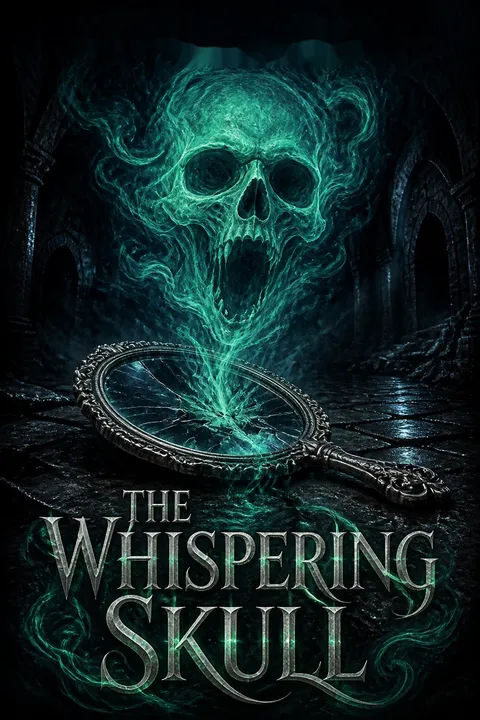
The Whispering Skull receives mostly positive reviews, with readers praising its engaging plot, humor, and character development. Many find it an improvement over the first book, appreciating the expanded world-building and character interactions. The trio of Lockwood, Lucy, and George continue to charm readers with their banter and ghost-hunting adventures. Some reviewers note pacing issues in the middle, but overall find it a thrilling and enjoyable sequel. The book's ending leaves readers eager for the next installment.
Characters
Lucy Carlyle
The team's sharp ListenerLucy is Lockwood's junior field operative and the story's first-person observer. Her strongest Talent is Listening, though her Touch is also growing, and she often detects danger before her colleagues understand what is happening. Impatient, direct, and still learning to temper instinct with technique, she brings both practical courage and emotional honesty to the agency. She is drawn to mysteries, especially the secrets Lockwood keeps, but she is also wary of being used or dismissed. Her growing confidence comes from making consequential choices in the field, not from becoming fearless. Lucy's unusual connection to the skull places her between the living team and a voice that may inform, manipulate, or unsettle her.
Anthony Lockwood
The dazzling agency leaderLockwood leads the small independent agency that bears his name. He is quick with a plan, an accomplished swordsman, and gifted at using charm to calm clients or unsettle rivals. His polished ease conceals a strong drive to keep moving, win cases, and protect the team. He treats Lucy and George as capable partners, but his reticence about his past creates distance in the house they share. Lockwood's confidence can become recklessness, especially when a promising lead appears, yet he is also able to recognize when others have contributed more than he has acknowledged. His attachment to the agency is evident in how personally he takes both its failures and its victories.
George Cubbins
The relentless researcherGeorge is Lockwood's researcher, field agent, and resident investigator of ghostly theory. Scruffy, sarcastic, and cautious in physical danger, he is at his most energetic among archives, relics, and unanswered questions. His curiosity is genuine scholarship, but it can also narrow his judgment when an object promises knowledge. George resents the prestige and resources of large agencies, yet he is proud of the small team's independence. His friction with Lockwood often comes from competing definitions of useful work: George wants to understand the dead, while Lockwood wants to contain them. Beneath the barbs, George is loyal to Lucy and Lockwood and wants his work to matter to the people beside him.
The skull's ghost
The imprisoned voiceThis unknown spirit is bound to a human skull sealed in a silver-glass jar. It sometimes forms a grotesque face and can communicate mentally with Lucy, though it remains silent to the others. Its wit is barbed, its motives difficult to read, and its knowledge appears to come from years of observing the agency. George is fascinated by its possible significance, while Lucy is more alert to the emotional pressure it exerts. The ghost's mixture of information, mockery, and evasiveness makes it impossible to treat as either a trustworthy witness or a simple captive.
Quill Kipps
Fittes' competitive supervisorKipps leads a Fittes team and regards Lockwood as both a rival and a personal irritant. He is ambitious, image-conscious, and accustomed to the resources of a powerful agency. His polished manner often hides insecurity about status and talent, especially as he ages beyond the years when young agents are most effective. He enjoys provoking Lockwood's team, but his competitiveness does not erase his capacity to act under pressure. The contest between the agencies forces him to work alongside people he would rather defeat.
Flo Bones
The river's relic hunterFlo is a teenage relic collector who searches the Thames mud for objects with psychic significance. She lives outside the agencies and distrusts rules that leave young workers underpaid or exposed to danger. Her filthy clothes, blunt speech, and fierce independence make her hard to approach, but she has an exact knowledge of London's informal networks. Flo's pride is easily provoked, yet it also makes her dependable once she has chosen to help. Her relationship with Lockwood predates Lucy's arrival, giving Lucy a glimpse of a history her leader rarely discusses.
Albert Joplin
The cemetery archivistJoplin is an archivist and specialist in burial history, employed by Saunders's excavation company. Mild-mannered and physically unassuming, he lights up when discussing old records, unusual burials, or theories about the soul. George recognizes a fellow researcher in him, and Joplin enjoys the recognition. His scholarly interests give him access to information that ordinary agents may overlook. He is more determined than his apologetic manner first suggests, and his passion for historical evidence can make him a complicated presence in the investigation.
Quill Kipps's team
Fittes field operativesKipps's team includes the Listener Kat Godwin, the researcher Bobby Vernon, and the powerful operative Ned Shaw. They have the polished equipment and coordinated training associated with Fittes, but their different temperaments often surface beneath that uniform discipline. Kat is cool and ambitious, Vernon is meticulous and eager to prove his research, and Shaw relies on physical intimidation. Their presence makes the agency rivalry concrete and shows how large organizations distribute specialized work.
Inspector Montagu Barnes
DEPRAC's stern regulatorBarnes is the operational director at DEPRAC, the government department responsible for overseeing agencies and dangerous psychic materials. He is exacting, suspicious of Lockwood's methods, and impatient with disorder. His authority rests on rules, investigations, and control of evidence, but he often needs independent agents to handle the very dangers his department cannot contain quickly. Barnes's gruffness is softened by a genuine concern for public safety, though he rarely expresses it warmly.
Paul Saunders
The cemetery contractorSaunders runs Sweet Dreams Excavation and Clearance, a contractor tasked with identifying dangerous graves. He is a hard-driving businessman who values speed and practical results over scholarly caution. His confidence can turn into bluster, particularly when frightened workers challenge his decisions. Saunders depends on Joplin's historical research and outside agencies' supernatural expertise, even as he tends to dismiss both when they complicate his schedule.
Edmund Bickerstaff
The Victorian occult doctorBickerstaff was a Victorian doctor whose experiments and private gatherings drew rumors of forbidden practices. He was associated with a sanatorium and collected materials connected to the dead. The records surrounding him are incomplete, and his reputation is shaped by sensational reports as much as by evidence. His pursuit of knowledge about death links him to the story's most dangerous relic and makes him a haunting presence in both archival research and fieldwork.
Mary Dulac
The missing aristocratic witnessMary Dulac is a young aristocrat connected to Bickerstaff's final circle of associates. Historical accounts describe her disappearance and later reappearance in a distressed condition, while a record of her personal account becomes an important research target. Her story offers a perspective distinct from official reports, though her years of isolation make the reliability and completeness of her testimony difficult to judge.
Simon Wilberforce
Bickerstaff's eager associateWilberforce is a wealthy young associate of Bickerstaff, drawn to the doctor's promises of extraordinary knowledge. He becomes central to understanding what happened during the group's experiments, though records about his role are sparse.
Penelope Fittes
The agency's powerful chairPenelope Fittes heads the prestigious agency founded by her grandmother, Marissa Fittes. She is younger and more personally approachable than Lucy expects, but she moves through the anniversary gathering with the practiced authority of someone accustomed to being obeyed. Her interest in agency history and rare relics reflects the institution's appetite for knowledge, while her private dealings suggest that not every Fittes matter is visible to its junior agents.
Julius Winkman
The black-market dealerWinkman owns a respectable-looking antiques shop that also serves as a center for trading stolen psychic objects. He is physically imposing, calculating, and confident that threats and hidden defenses will keep agents away. He understands that danger increases an artefact's price, and he treats clients as buyers rather than fellow seekers. His family works alongside him, giving the business a domestic surface that makes its criminal purpose more unsettling.
Adelaide Winkman
The shop's watchful proprietorAdelaide helps run the Winkman antiques shop and watches customers with practiced suspicion. Her size and calm competence make her an effective guard, and she quickly recognizes Lucy and Lockwood as agents despite their tourist disguises.
Leopold Winkman
The dealer's calculating sonLeopold assists his parents in the family business, applying psychic observation to relics and their risks. He is eager to prove himself and shares the hard-edged confidence of the shop's adult operators.
Jack Carver
The hunted relic thiefCarver is a professional relic thief known through the accounts of other collectors and the trail he leaves behind. He is linked to dangerous cemetery thefts and operates in a world where stolen Sources can command enormous sums. His reputation makes him sound formidable, but his appearance in the investigation reveals the vulnerability behind that criminal identity.
Duane Neddles
Carver's doomed accompliceNeddles is the younger, less formidable of the two thieves who raid Bickerstaff's grave. His connection to Carver gives the investigators their first human lead, while his fate warns them that the mirror is dangerous even before anyone understands what it shows.
Terry Morgan
The injured night watchmanTerry is an eleven-year-old night-watch guard assigned to the cemetery chapel. His injury makes clear that the mirror theft has endangered children as well as trained agents.
Plot Devices
The ghost jar
A captive source of secretsThe silver-glass jar contains a skull tied to a ghost, allowing the agency to keep a dangerous spirit confined. Most of the time the spirit is silent, but Lucy can hear it when the jar's stopper is opened. George's experiments and Lucy's unusual connection make the jar both a research object and a source of private information. The spirit's remarks are useful but manipulative, so each clue forces the team to decide whether its help is worth the risk of listening.
Bickerstaff's bone glass
A window built from haunted remainsThe black glass is framed with bones taken from graves and connected to seven spirits. Bickerstaff's group believes it can reveal knowledge beyond death, but looking into it creates a powerful attraction and can kill the viewer. The relic drives the mystery from the cemetery theft through Winkman's auction and Joplin's underground experiment. Its promise is also a psychological trap: George and Joplin are drawn by curiosity, while Lucy ultimately rejects the glass and breaks it.
Psychic Sources
Anchors that sustain hauntingsA ghost is tied to an object or place connected to its death, called a Source. Agents try to locate and seal Sources with iron, silver, or other protections. The story uses several kinds: the gallows stone that anchors the Wimbledon ghosts, Bickerstaff's remains, and the bones incorporated into the mirror. Sources make the past materially present, but their effects are not always contained by ordinary seals, forcing the agents to revise their assumptions as cases unfold.
The agency wager
Rivalry made publicAfter Fittes takes the Wimbledon commission, Lockwood challenges Kipps to a contest on their next shared case. The winning agency will be recognized as superior, while the loser must publicly concede defeat. The wager turns the missing mirror investigation into a test of the small agency's worth, intensifying clashes between the teams. Near the end, Lockwood's decision to waive the forfeit after Kipps's help shows that the contest has become less important than what the agents endured together.
Lucy’s psychic Talents
The past made perceptibleLucy can hear ghostly voices and receive impressions by touching places or objects charged with past events. These abilities uncover the workroom's experiments, correct the story of Bickerstaff's death, and let her communicate with the skull. The Talent does not give her complete or orderly knowledge. Impressions come in fragments, and the skull can exploit the intimacy of hearing it. Lucy's skill is therefore both investigative and relational: she must interpret what she senses while deciding which voices deserve trust.
Lockwood & Co. Series
About the Author
Other books by Jonathan Stroud
Download PDF
Download EPUB
.epub digital book format is ideal for reading ebooks on phones, tablets, and e-readers.








