

Plot Summary
Lavender Lodge Trap
Whitechapel police ask Lockwood & Co. to investigate Lavender Lodge, where several missing men had stayed before vanishing. Agency leader Anthony Lockwood, psychic Listener Lucy Carlyle, and researcher George Cubbins question the elderly proprietors, the Evanses, then use a warrant to inspect the rooms.
Mr. Evans shuts a heavy fire door behind them and leaves them trapped above the protected ground floor, promising that the ghosts will finish them. Lucy hears the dead men whispering, while Lockwood and George find apparitions in several bedrooms.
In the room assigned to one missing lodger, a crowd of murdered guests surges onto the landing. With their weapons running low, the three agents climb toward an attic hatch instead of retreating into the spirits below.
The case begins with a mismatch between adult authority and children's perception. Police can record disappearances, but only the young agents can read the psychic residue that exposes the crime. The Evanses exploit that gap, treating ghosts as a source of profit and the investigators as disposable. Lockwood's confident leadership keeps the team moving, but their escape depends on shared improvisation rather than his composure alone. The boardinghouse's division between a protected lower floor and haunted upper rooms makes its corruption literal: the owners have arranged safety for themselves by exporting danger to strangers.
The Attic's Hidden Dead
The attic holds no visible ghost at first, only years of cobwebs and a pressure that makes the agents struggle to breathe. When George climbs to inspect a suspicious beam, white ectoplasmic tendrils erupt and lash across the rafters.
A flare misfires, setting Lockwood's coat alight, while Lucy's thrown bottle knocks him through a broken window. The silver necklace Lockwood gave Lucy burns the tendrils back long enough for her to reach a skeletal body hidden in the webbing.
She covers the bones with a silver chain net, and the Changer's coils vanish. After the agents escape through a window and descend a drainpipe, the Evanses attack them in the kitchen; the team knocks the couple down, and police uncover victims' remains buried in the garden.
The attic fight converts slapstick into a test of trust. George's mistake and Lucy's misthrow nearly kill the team, yet each agent responds to the other's danger instead of withdrawing into blame. The necklace matters because it is both an ordinary personal gift and an effective weapon, a reminder that affection can become practical without becoming sentimental. Sealing the bones ends the haunting, but the bodies in the garden expose the human arrangement beneath it: the Evanses did not create the violence, yet chose to profit from it and conceal its cost.
A Room Left Closed
Back at Portland Row, the agents learn that the Chelsea haunting outbreak is worsening while their own workload leaves them exhausted and careless. Lockwood proposes hiring help; Lucy resists changing the close, improvised household she has come to regard as home.
The strain is sharpened by her unspoken feelings for Lockwood and by the secrets he keeps. During a quiet afternoon, he finally opens a forbidden room and reveals that it belonged to his older sister, Jessica.
Its death-glow still hangs over the bed, and the damaged mattress preserves the mark of the event. Lockwood explains that he was a child when she was lost, then closes the room again. Lucy understands that the sealed door is not mere eccentricity, but a boundary built around grief.
The new staffing question is also a question about belonging. Lucy's objection is less about workload than about the intimacy of a three-person household that has become her chosen family. Jessica's room reveals the emotional logic behind Lockwood's secrecy: he can disclose a fact while keeping the experience itself at a distance. His careful, almost procedural handling of the room shows how grief can be preserved through ritual without being metabolized. For Lucy, the disclosure feels like trust, but it also raises the stakes of whatever she believes she is owed from him.
The Veiled Window
Lucy joins Lockwood on a Whitechapel case after her own assignment is canceled. At the home of Mrs. Peters, a dark figure appears embedded in an upstairs window. Lockwood sees a threatening woman in the room, but Lucy hears the apparition repeat that something has been kept safe.
She stops Lockwood from destroying the window and searches an old wardrobe instead, uncovering a concealed letter stained with dark marks. The document belongs to Arabella Crowley, whose confession links her to her husband's murder decades earlier.
Finding it gives the restless apparition a purpose beyond attack. Lockwood still arranges for the glass to be destroyed and warns Lucy against unprotected contact, but she leaves convinced that listening can reveal what force alone would erase.
Lucy and Lockwood read the same haunting through different senses, and the distinction changes the outcome. His Sight identifies an immediate threat; her Listening detects intention. The letter turns a spectral encounter into a question of testimony, since the ghost can expose a crime only if the living resist their reflex to silence it. Lockwood's caution is grounded in real danger, not simple authoritarianism, but Lucy experiences it as distrust of her rare ability. Their disagreement establishes the novel's central tension: empathy can produce knowledge, yet the method that finds it may leave the investigator undefended.
Money Beneath the Chair
Before taking a long-delayed trip to see her mother and sisters, Lucy visits a Whitechapel family whose grandfather returns to sit silently in his old chair. She ignores standard precautions and waits near him, trying to learn what he wants. The apparition's presence leads her to a loose patch on the chair, where she finds banknotes hidden for his heirs.
The discovery convinces her that some ghosts can be approached rather than immediately contained. Her home visit only deepens her sense of separation from her family, so she returns to London early, eager to share her new theory. Instead, she finds Lockwood and George laughing with Holly Munro, a polished former Rotwell employee newly hired to manage the agency's work and household.
Lucy treats the grandfather's ghost as a person with an unfinished task, and her restraint reveals a capacity the agency's manuals cannot measure. The money gives her a successful proof of concept, but one success also tempts her to generalize beyond the evidence. Her uncomfortable homecoming clarifies why Portland Row matters so much: the agency is not simply employment but the family she has chosen. Holly's arrival therefore threatens Lucy's place before Holly has done anything unkind. The scene makes jealousy legible as fear of replacement, even as Lucy insists that her objection is professional.
Footprints on the Stair
Holly quickly improves the agency's routines, rejecting trivial cases and arranging equipment, but Lucy resents her competence and the attention Lockwood gives her. Then wealthy client Fiona Wintergarden reports bloody footprints climbing the staircase of her Hanover Square home.
Her night-watch children followed the phenomenon; one fell to his death, and another was left unable to speak. The agents discover an old history of terror in the house, and George's research identifies an 1883 killing involving a servant, Thomas Webber, and Robert Cooke, the owner's son.
Lockwood orders an observation-only vigil, with the agents protected in separate iron circles. Lucy sees two figures racing upward, a smaller one pursued by a larger one, while the footprints linger on the boards.
Wintergarden's case puts the cost of adult negligence beside the familiar danger of ghosts. She hired children to observe a growing haunting because she wanted to avoid official scrutiny, then blamed them when the danger became real. Lucy's sympathy for the apparent victim is ethically important but also complicates the investigation: she wants to interpret before the team knows what it has seen. Lockwood's strict vigil protects the agents, yet his refusal of sympathy is personal as well as tactical. His guardedness about Jessica shapes how he reads every returning spirit, while Lucy increasingly treats emotional connection as evidence.
The Wrong Boy
On the second vigil, Lucy sees the chase end at the upper landing, where a body falls through the house. As she cleans the bloody marks, she senses the boy's presence and breaks her circle, laying aside her iron rapier so she can hear him.
The ghost appears gentle and promises to explain, then lunges with bloody hands. George arrives with the correction: Little Tom was the large servant, while young Robert Cooke had stabbed him and was the smaller figure fleeing.
Lockwood leaps across the stairwell to strike the attacker, but hits his head in the rescue. George follows the weakened apparition to a hidden passage and finds its Source, a tin box containing a woman's shawl. Sealing it ends the chase, though Lucy's experiment has endangered the team.
The revelation reverses the agents' assumptions about size, victimhood, and guilt. Lucy's empathic approach is not intrinsically foolish; it correctly detects a ghost that wants contact. But the ghost's apparent vulnerability conceals a predatory intention, showing that emotion is data, not a guarantee of safety. George's archival work corrects what direct perception alone could not. Lockwood's reckless rescue exposes the cost of his protective instinct, while Lucy's guilt increases the distance between them. The shawl gives the haunting a material anchor, yet its discovery depends on methodical research as much as courage.
Chelsea's Missing Pattern
While Lockwood recovers, the Chelsea outbreak claims another Fittes agent, Ned Shaw, and spreads beyond the capacity of the large agencies. George studies the case reports Quill Kipps gives him, while Lucy and George question Flo Bones, a Thames-side relic hunter who has watched activity intensify near the outbreak's western edge.
Comparing reports across several weeks, George sees that the hauntings form a wave rather than a conventional cluster centered on Sydney Street. The Thames, ironworks, and Brompton lavender works shape its boundaries, pointing toward Aickmere Brothers department store.
Its site overlays the notorious medieval King's Prison and a plague burial ground. DEPRAC rejects the theory, but Kipps, grieving Ned and frustrated with the official response, offers his team to help investigate.
George's breakthrough comes from changing the scale of the question. Officials search for a single geographic center, but his maps show that the outbreak has a direction and a history. The pattern emerges only when he combines bureaucratic records with Flo's marginal knowledge of the river, an alliance between formal expertise and experience the authorities disregard. Kipps's offer also alters the social map: a rival acts from responsibility after losing an agent, not from sudden friendship. The plot challenges institutional confidence by showing that more personnel and more equipment cannot compensate for a mistaken model.
Ghost-Bombs at the Carnival
At the agencies' London carnival, Lucy encounters Leopold Winkman, the black marketeer's son, who strikes her with his cane and threatens future trouble. During the procession, attackers shatter glass containers holding ghosts, unleashing Visitors among the crowd and VIP float.
Lockwood identifies gunmen above the street and moves to protect agency leaders Penelope Fittes and Steve Rotwell. George subdues one ghost; Rotwell kills an attacker, while the surviving gunman fights Lucy and escapes across the floats.
He cuts free a helium lion balloon and is carried over the Thames, where he falls into the river. Sir Rupert Gale, a wealthy sword-fighter with a prior history with Lockwood's team, challenges Lockwood after the chase but withdraws when other agents arrive. The disaster wins Lockwood & Co. public notice and ends the protests.
The carnival tries to turn fear into entertainment, but the ghost-bombs reveal how easily spectacle becomes a delivery system for violence. Adults who cannot see the Visitors are suddenly dependent on the children they usually treat as staff. The attack also brings private rivalries into public view: Leopold's threat is personal, while the gunmen target powerful agency figures for reasons no one can yet identify. Lockwood and Lucy briefly function in seamless partnership during the chase, a sharp contrast to their recent estrangement. Yet public recognition rewards the visible hero most, even though the survival effort was collective.
The Store Below
With George's evidence in hand, Lockwood assembles Lucy, George, Holly, Kipps, his Fittes colleagues Kate Godwin and Bobby Vernon, and Flo Bones to inspect Aickmere Brothers. Store chairman Samuel Aickmere resists until Kipps threatens enforcement, then allows a discreet search.
Staff describe oppressive air, a crawling figure, and voices calling workers back after closing. Lucy senses an unusual psychic disturbance throughout the building, similar to the sensation she felt near the bone glass. After the staff leave, the agents divide into pairs and search the dark departments.
Lucy and Holly take the upper floors, where faint apparitions gather among mannequins and clothes racks. Their partnership remains strained, but they continue taking readings as the presence grows stronger and the store's ordinary layout begins to feel deceptive.
Aickmere's polished commercial surface conceals both an institutional refusal to acknowledge danger and a much older violence beneath its foundations. The chairman's insistence on order is not just comic vanity; it is a strategy for protecting business from facts that might interrupt it. The paired search makes the team structure meaningful: Lucy and Holly must rely on each other despite personal resentment. Lucy's recognition of the bone glass sensation links the new case to a wider mystery, while the store's mannequins blur the boundary between displayed bodies and watching dead.
A Poltergeist Wakes
A Fetch makes Lucy see a crawling figure, while Kate hears Ned Shaw and Flo senses someone dear to her; Bobby Vernon follows an apparent vision into a dead elevator shaft and is injured. Lucy and Holly pry open the elevator and pull him out, but their argument soon turns bitter.
Their anger feeds a powerful Poltergeist, which begins hurling merchandise through the store. They carry Vernon through Kitchenware and Ladies' Fashions as knives, racks, and display cases fly around them.
In the foyer, the others shelter behind iron chains while the floor tears open over the buried prison. Lockwood reaches Lucy as the wind lifts her away, but her pack catches briefly on broken boards. The straps snap, and the Poltergeist throws her down into the opening.
The haunting converts interpersonal friction into physical force. Lucy and Holly's argument is not merely a subplot interruption; the Poltergeist makes their unspoken judgments materially dangerous. Their quarrel also exposes real injuries: Lucy has dismissed Holly's past trauma, while Holly has mistaken Lucy's defensiveness for simple arrogance. Even so, they cooperate to rescue Bobby, and Holly's practical skill repeatedly matters. The store's destruction opens a literal route to the hidden history below, but the discovery comes at the cost of Lucy's separation from her team and control of the situation.
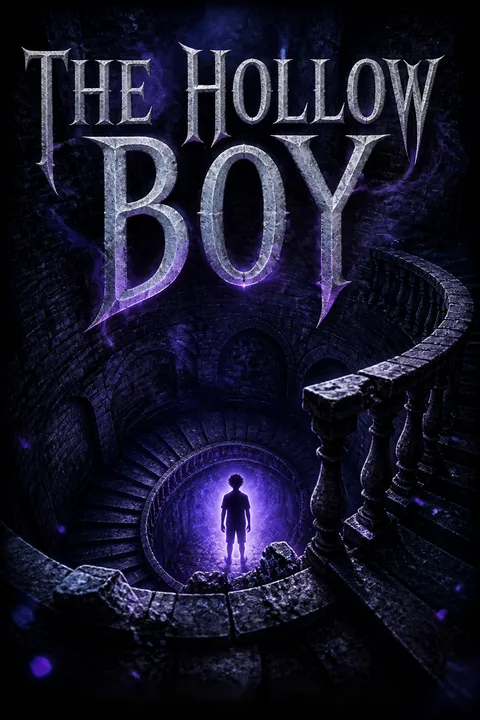
The Hollow Boy
Lucy wakes beneath Aickmere's in the buried King's Prison, surrounded by bones and the spirits of prisoners sealed underground centuries earlier. In a central chamber, she finds signs of recent human activity: a cleared floor, candle wax, metal scrapes, and a cigarette butt.
The crawling Fetch appears again and drains her strength. It takes Lockwood's likeness, showing her a bloody, hollow version of him and claiming to reveal her future. Lucy nearly accepts the vision, but recognizes the creature's woven, empty structure.
The real Lockwood arrives and cuts through the Fetch with his rapier. He had survived the fall into the store, then climbed down through the breach to find her. Together they inspect the chamber, realizing someone recently performed a deliberate ritual there, while the prison ghosts remain an immediate danger.
The Fetch weaponizes intimacy rather than brute force. Its borrowed image is persuasive because it draws on Lucy's fear, guilt, and attachment to Lockwood, making emotional truth difficult to distinguish from supernatural manipulation. Lucy's recognition of the hollow structure matters more than the apparition's reassuring manner: she learns to distrust both terror and comfort when they arrive from an unknown source. The chamber's recent traces complicate the apparent solution. Beneath the ancient mass grave lies evidence of present-day intervention, suggesting that the Chelsea crisis was not simply an old haunting waking on its own.
Leaving Portland Row
Lockwood guides Lucy through a waterlogged tunnel to the Thames and admits that Jessica died after he was too late to stop a released ghost; he has been afraid of losing another person he loves. Lucy confesses that she entered Jessica's room and touched the bed, where she heard the past.
Later, the agents' evidence leads to the prison bones being removed, and Chelsea's hauntings become markedly weaker. At a celebratory meal, George shows that someone arranged the bones and candles around a fresh supernatural disturbance, but the people responsible remain unknown.
Lucy cannot forget the Fetch's claim to show a possible future. Believing her growing Talent may endanger her friends, she tells Lockwood, George, and Holly that she is leaving the agency. The team is newly celebrated, but Lucy chooses distance over risking them again.
The resolution is deliberately double-edged. The immediate crisis recedes, and Lockwood finally shares the childhood guilt that shaped his protectiveness, yet the ritual traces establish a new human mystery rather than closing every question. Lucy's resignation is both an act of care and an attempt to control uncertainty by removing herself from the relationships she values. The story does not confirm that the Fetch can predict the future; its threat remains psychologically powerful because Lucy cannot disprove it. Her departure turns the agency's success into a private loss, leaving belonging unresolved.
Analysis
The novel links three kinds of danger that are often treated as separate: restless dead, institutional failure, and emotional injury. Ghosts become lethal through unresolved violence, but the living repeatedly worsen that danger by concealing evidence, prioritizing reputation, or treating young operatives as expendable. The Evanses exploit a haunting; Wintergarden refuses to acknowledge its escalation; Aickmere protects his store's image while staff describe its oppressive atmosphere. DEPRAC's scale does not make it perceptive. George's maps succeed because they combine official reports with Flo's local knowledge, showing that understanding depends on whose observations count.
Lucy offers a counter-model to containment. Her Listening allows her to recognize intention and recover information that weapons would destroy, as in the veiled woman's concealed confession and the miser's hidden money. Yet her success encourages a dangerous inference: that emotional openness can make a ghost safe. The Cooke haunting and the Fetch expose the gap between recognizing suffering and knowing what a spirit will do. The book neither dismisses empathy nor treats it as a magical solution. It presents empathy as a form of evidence that requires boundaries, verification, and other people's expertise.
The team's internal tensions mirror its investigative problem. Lockwood protects others through control and silence, shaped by his childhood inability to save Jessica. Lucy reads his distance as rejection, while Holly's competence threatens Lucy's sense of belonging. Their arguments at Aickmere give a Poltergeist the emotional force to wreck the store, making resentment materially consequential. Cooperation, not perfect affection, is what saves the team: Lucy and Holly rescue Bobby, George interprets the outbreak, and Lockwood reaches Lucy underground.
The ending resists a clean victory. The prison's bones are removed and Chelsea's activity declines, but the ritual marks and the Fetch's claim remain unresolved. Lucy's resignation is an attempt to protect the people she loves, yet it also repeats the novel's pattern of treating separation as safety. The story closes not with the agency restored to its old shape, but with a hard question about whether care means keeping others at a distance or trusting them with the risks of staying.
Review Summary
People Also Read



Characters
Lucy Carlyle
The listening agentLucy is Lockwood & Co.'s gifted Listener, able to hear the dead and sense emotional traces most agents miss. She is brave, funny, and fiercely loyal, but her confidence in empathy can outrun her caution. Having left her northern family for London, she treats the agency as a home she has earned through danger and trust. Her growing ability to reach ghosts gives her a new professional purpose, while her feelings for Lockwood and fear of being displaced sharpen her reactions to Holly. Lucy's central struggle is learning that sensitivity can reveal a ghost's purpose without making the ghost safe, and that responsibility to others sometimes means accepting limits.
Anthony Lockwood
The daring team leaderLockwood owns and leads the small agency, taking the same risks as the young operatives he directs. His excellent swordsmanship and composure inspire confidence, though his apparent ease often conceals ambition, grief, and a habit of withholding personal truths. He values independence and wants Lockwood & Co. recognized among London's leading agencies. His protective instincts can become controlling, particularly when Lucy's unusual Talent brings her close to danger. He expresses care through action more readily than disclosure, making his silences both a shield and a source of conflict for the people closest to him.
George Cubbins
The tireless researcherGeorge is the agency's researcher and an uneven but useful psychic operative. His curiosity is expansive, his humor dry, and his domestic habits famously chaotic. He studies the Problem because he wants to understand its mechanisms, not merely survive its latest manifestation. Archive work, maps, and obscure records let him see patterns that more powerful agencies overlook. George can sound insensitive when he pursues an interesting detail, yet his loyalty is dependable and his practical choices repeatedly protect his friends. He is the team's intellectual counterweight to Lockwood's daring and Lucy's intuition.
Holly Munro
The precise new assistantHolly joins Lockwood & Co. with experience in a large agency, strong organizational skill, and a polished manner that can read as condescension. She manages schedules, equipment, clients, and the neglected Portland Row household with impressive efficiency. Though hired for administrative work, she has some field training and understands the risks of the job. Holly's orderliness gives the exhausted team room to function, but her competence unsettles Lucy, who fears losing her place. Beneath her immaculate presentation is a person with painful experience of operational loss and a strong wish to prove she remains capable.
The Skull
The trapped ghostly adviserThe Skull is a rare, articulate Type Three Visitor trapped in a silver-glass jar. Lucy alone can hear its sustained commentary. It offers occasional useful supernatural insight, but wraps advice in mockery, selfishness, and gleeful predictions of disaster. Its confinement makes it safer than an ordinary ghost, though its influence on Lucy is not entirely benign. The Skull resents being treated as equipment and regards Holly's tidiness as a threat to its place in the house.
Quill Kipps
The rival who cooperatesKipps leads a Fittes team and has a long-running rivalry with Lockwood & Co. His vanity, sharp tongue, and polished uniform make him easy to dislike, but he is also an experienced agent who understands the stakes of fieldwork. The death of a colleague unsettles his certainty about the official response to Chelsea. When he offers his team to Lockwood, practical responsibility begins to outrank the pleasure of competition.
Flo Bones
The riverbank informantFlo is a relic hunter who searches the Thames foreshore for supernatural artifacts and sells what she finds. Blunt, fearless, and deliberately abrasive, she operates outside the respectable agencies but has knowledge they lack. Her observations along the river help George understand the shape of the Chelsea outbreak. Flo respects resourcefulness more than status and enjoys testing the patience of Lucy and Kipps.
Inspector Montagu Barnes
The weary DEPRAC inspectorBarnes is a DEPRAC inspector tasked with coordinating agents and managing public danger. He is shrewd and experienced, but strained by bureaucracy, political pressure, and an outbreak larger than his resources. His skepticism toward Lockwood & Co. reflects institutional habits as much as personal irritation. He wants workable results, though he can be too committed to the assumptions guiding his operation.
Jessica Lockwood
Lockwood's absent sisterJessica is Lockwood's older sister, present in the novel through the room and possessions he has kept untouched. Lucy learns that she was strong-willed and kind, and that she helped shape the boy Lockwood's sense of responsibility. Her memory is not a simple family anecdote for him; it is a private history he has difficulty sharing.
Fiona Wintergarden
The demanding clientWintergarden is a wealthy homeowner who prizes reputation, order, and social standing. She initially describes the haunting as a nuisance and treats the children she hired to observe it as expendable workers. Her defensiveness reveals how strongly she relies on status to keep fear at a distance. The agents must work with her account while looking beyond what she considers relevant.
Kate Godwin
Kipps's sharp ListenerKate is a capable Listener on Kipps's Fittes team. Her cool, hard-edged manner conceals deep loyalty to her colleagues and a vulnerability to the grief surrounding them. At Aickmere Brothers, her psychic sensitivity becomes a liability when the haunting finds a way to exploit personal attachment.
Bobby Vernon
Kipps's smallest operativeBobby is a slight, quick-moving member of Kipps's team. He can be nervous and physically vulnerable, but he remains an operative in a profession where size offers little protection from ghosts. His reliance on his teammates becomes especially important when the haunting at Aickmere exploits the dead and the living alike.
Penelope Fittes
The powerful agency headPenelope leads one of London's largest psychic investigation agencies and carries the authority of a public institution. She is composed, politically astute, and interested in research into the Problem. Her presence at the carnival shows how agency leadership blends public reassurance with practical command.
Steve Rotwell
The forceful agency chairmanRotwell heads a major agency and favors decisive action, public spectacle, and visible displays of strength. He is more capable in a crisis than his distant manner first suggests. His choices at the carnival reveal the hard-edged pragmatism beneath his polished public position.
Sir Rupert Gale
The sporting sword-fighterGale is a wealthy collector of forbidden artifacts and a skilled swordsman connected to powerful agency circles. He treats danger as a test of nerve and fairness, but his courteous manner does not make him trustworthy. He measures other people by their ability to meet him on equal terms.
Leopold Winkman
The black-market heirLeopold is the young son of imprisoned black marketeer Julius Winkman. He dresses and moves with the self-importance of an adult criminal, and uses intimidation to make the agency's past actions feel unresolved. His presence hints that danger can come from the living as readily as from ghosts.
Mr. and Mrs. Evans
The boardinghouse proprietorsThe Evanses run Lavender Lodge, presenting themselves as harmless elderly hosts. Their careful defenses and evasive answers conceal a willingness to exploit the supernatural danger surrounding their guests. Together, they represent the ordinary face that calculated greed can wear.
Robert Cooke
The troubled historical heirRobert Cooke is the son of the nineteenth-century owner of the Hanover Square house. His name appears in the historical record surrounding the bloody staircase haunting. The agents must reconstruct his actions from conflicting impressions, physical evidence, and archival accounts.
Thomas Webber
The servant in the chaseThomas Webber, known as Little Tom, was a servant in the Cooke household. His experience forms part of the old violence replayed through the Wintergarden staircase. The agents initially misunderstand his place in the event, making historical research essential.
Samuel Aickmere
The protective store chairmanAickmere runs the department store that stands above the Chelsea disturbance. He is protective of the business's reputation and its carefully arranged displays, and initially treats the agents as a threat to both. His insistence on normality leaves little room for acknowledging what staff experience.
Plot Devices
Psychic Talents
Different senses, different evidenceAgents detect ghosts through Sight, Listening, and Touch. Lockwood's sharp Sight helps him locate apparitions, while Lucy's Listening and sensitivity to emotional traces can disclose what a ghost is trying to communicate. George uses a broader, less exceptional range of abilities alongside research. These Talents make the team's work collaborative, but they do not guarantee accurate interpretation: Lucy can sense a ghost's distress and still misread its intentions. Her increasing capacity to connect with the dead drives both her investigative success and her growing concern that she cannot always control the connection.
Sources and Silver Seals
Anchor the ghost, end the hauntingA ghost remains tied to a Source, often an object or place connected to its death. Agents can cover a Source with silver or iron to cut off its supernatural force. This method resolves the Lavender Lodge haunting, the Hanover Square case, and eventually the prison disturbance. The process makes physical investigation as important as combat: a team can repel an apparition temporarily, but must find what binds it to the living world. Different Sources also carry different human histories, from concealed remains to personal keepsakes.
The Skull in the Jar
A dangerous source of counselThe Skull is a rare Visitor contained in a silver-glass jar, able to converse with Lucy while remaining physically restrained. It mocks the team, urges reckless choices, and occasionally detects supernatural presences the agents have missed. Its advice is useful but never neutral, since it wants freedom and companionship. The jar creates a controlled channel between Lucy and a ghost, foreshadowing her experiments with less safely contained spirits. It also gives Lucy a confidant who is both perceptive and wholly incapable of offering uncomplicated comfort.
Fetches
Turn attachment into a trapA Fetch can take a form drawn from the mind of the person who sees it, making it difficult to distinguish supernatural deception from an emotionally convincing apparition. At Aickmere Brothers, different agents experience versions linked to people they know or fear losing. Lucy's encounter is especially destabilizing because the Fetch imitates Lockwood and claims to reveal a future in which he is dead. The episode makes the team's grief and private attachments active parts of the haunting, while leaving uncertain whether the Fetch can truly know anything beyond its victim's thoughts.
Ghost-Bombs
Turn contained spirits into weaponsGhost-bombs are silver-glass containers holding Visitors. When the glass breaks, the trapped ghost erupts into a crowd, spreading fear and potentially fatal ghost-touch. Attackers use them during the public carnival, turning a celebration intended to reassure London into an assault on agency leaders and spectators. The device changes the scale of the danger: ghosts are no longer only a local consequence of old crimes but can be deliberately deployed by people. The attackers' skill in preparing the bombs also points toward a larger, still-unidentified human operation.
Lockwood & Co. Series
About the Author
Other books by Jonathan Stroud
Download PDF
Download EPUB
.epub digital book format is ideal for reading ebooks on phones, tablets, and e-readers.








