

Plot Summary
The Final Chapter North
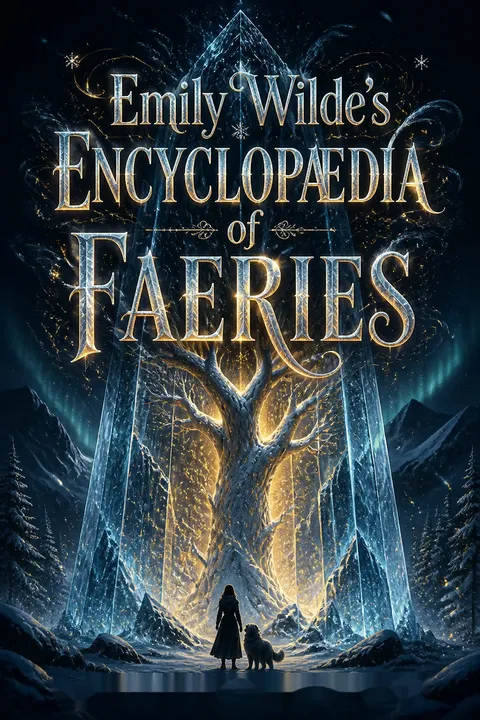
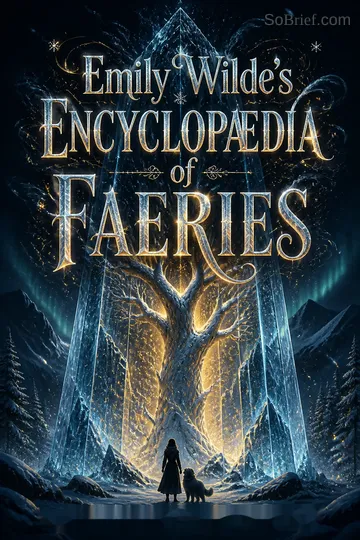
In October 1909, Cambridge dryadologist Emily Wilde1 reaches Hrafnsvik, an isolated village in Ljosland, to study its little-known Hidden Ones and finish the final chapter of her encyclopaedia of faeries. Her only companion is Shadow,3 an enormous, aging dog. Emily1 arrives with books, equipment, and little practical sense of how to keep a cottage warm.
Farmer8 Krystjan Egilson8 warns her against provoking the powerful faeries, but his caution only sharpens her curiosity. The harsh weather and her host's8 chilly manner are immediate obstacles. Still, Emily1 has spent years pursuing knowledge of the Folk, and she intends to document this last region before returning to Cambridge in spring.
Emily's research is not merely professional ambition. It gives structure to a life in which books and field notes have often felt safer than human company. Her choice to enter a remote, dangerous landscape shows both courage and a familiar limitation: she prepares meticulously for faeries but poorly for the ordinary demands of shelter and social exchange. The opening establishes the central tension between observing a world from outside and becoming involved in it. Her encyclopaedia promises mastery through classification, while Ljosland immediately presents conditions that cannot be controlled by scholarship alone.
Bread for a Brownie
Emily's1 first meetings with Hrafnsvik's people go badly. At the tavern, she meets Aud,4 the village's ceremonial leader, and sees Aud's niece17 Auður,17 returned from the Hidden Ones hollow and dependent on instructions for basic actions.
Thora,5 an elderly villager, recognizes Emily's1 published work and hints that the village's fear is grounded in real losses. In the forest, Emily1 leaves sweets and a jewel beside a hot spring. A wary little faerie6 later bargains with her for a beaver skin, offering fresh bread in return and asking her to clear snow from his tree.
Emily1 accepts, though she worries that relying on her research subject for food may compromise her objectivity. A pointless spell for retrieving lost buttons remains among her collected lore.
The bargain with the brownie, whom Emily privately calls Poe, converts research from extraction into exchange. Emily still thinks in terms of evidence and professional neutrality, yet she accepts help when her own competence fails. The village's response reveals a related conflict: hospitality is not simply politeness but a social bond, and Emily's insistence on paying her own way reads as refusal of that bond. Auður's condition makes the cost of faerie encounters visible before Emily understands its cause. Thora, meanwhile, punctures the protagonist's confidence without dismissing her, establishing a local authority who can interpret the community's fears.
Bambleby Arrives in Sheep
A flock of sheep storms Emily's1 cottage, trampling her books and groceries, and Wendell Bambleby2 arrives just as she struggles to drive them out. He is her Cambridge colleague, a celebrated dryadologist whose charm wins over villagers that Emily1 has alienated.
His students, Henry and Lizzie, help restore the cottage, while Wendell2 proposes a joint paper for a prestigious Paris conference. Emily1 agrees because the opportunity could help secure the faculty position she wants, but she insists that her name come first.
Their methods clash: she has mapped the forest and planned systematic observation; he prefers improvisation and lets his assistants do much of the fieldwork. His arrival brings warmth and companionship, along with the fear that he will take credit for her discoveries.
Wendell makes visible what Emily has tried to exclude from scholarship: knowledge travels through relationships, reputation, and access as well as observation. His social ease repairs practical problems and opens doors, but it also threatens Emily's autonomy because he has greater institutional power. Their disagreement over authorship is not a simple contest between good and bad motives. Emily needs recognition, while Wendell appears to treat collaboration as natural, perhaps because he has rarely had to fight for credit. The comedy of the sheep and the polished scholar also sets their contrast in concrete terms: she can identify a faerie trace, but he knows how to make people welcome her.
The Child in the Attic
Emily1 visits the blue house across from the village shop after glimpsing a pale figure with a bloody hand at its window. Its owner, Mord Samson,11 explains that his infant son13 Ari13 was taken five years earlier. In the attic, Emily1 finds a beautiful, intelligent faerie child occupying Ari's13 place.
The changeling fills the stairs with wolf-shaped illusions and torments Mord11 and his wife12 Aslaug12 with visions of winter. Emily1 protects herself with an inside-out coat, then uses salt, iron, and the child's own clothing to force a brief interview.
The changeling reveals little about its origins, but Emily1 recognizes that its suffering and the parents' anguish are bound together. She teaches Mord11 and Aslaug12 how to blunt the illusions, though she cannot yet reunite them with Ari.13
The attic encounter complicates the categories Emily relies on. The changeling is dangerous, but it is also a displaced child longing for its own home; its violence is not erased by that longing, and its distress does not make the parents' torment less real. Emily's method is both empirically bold and ethically uneasy: she treats the child as a source of data and uses pain to gain answers. The scene exposes the limits of detached observation, because the family cannot be reduced to a case study without emotional consequence. It also introduces the central ambiguity of faerie stories: an apparent monster may be victim and aggressor at once.
Willow Tea and Blood
When deep snow traps the village and Emily1 mishandles an axe, she badly wounds Wendell's2 arm. He bleeds far more than a human should, and his form begins to lose substance. Emily1 runs for help; Aud4 and other villagers stitch the wound, while Emily1 brews tea from a willow associated with Wendell's2 homeland.
Her care restores him, and Aud's4 willingness to help softens the rift Emily1 created by rejecting village hospitality. Soon Poe6 tells Emily1 that Wendell2 is a prince and has been asking about faerie doors. Wendell2 later admits that he was exiled from an Irish faerie kingdom after his stepmother seized power, and that he hopes conference funding will help him find a way home. Emily1 offers to help search.
The crisis reverses the relationship between scholar and specimen. Emily's knowledge of folklore becomes practical care, while Wendell's usual charm and status cannot protect him from injury. Aud's response also revises Emily's understanding of hospitality: accepting help is not a lapse in independence but a way to enter reciprocal community. Wendell's confession adds vulnerability to the performance of effortless privilege. His longing for home and Emily's wish to solve an impossible problem give them a shared purpose, though neither can yet speak plainly about affection. Their alliance begins to depend on trust, not merely on the usefulness of their separate expertise.
The Tree That Reached
Emily1 and Wendell2 follow Thora's5 directions to a white tree that appears in Ljosland's oldest stories. Its strange leaves and fruit seem to hold every season at once. Wendell2 warns Emily1 away, but she reads his resistance as another attempt to control her research and circles the tree to measure and photograph it.
When a leaf brushes her hand, a cold enchantment settles over her, leaving a shadowed ring on her finger and making thoughts of the tree difficult to hold. The roots then seize Wendell2 and drag him toward the trunk. He escapes by stepping through the landscape and crossing a river the roots cannot reach. The tree contains a captive king,14 and Emily1 has unknowingly become vulnerable to his influence.
The tree turns Emily's intellectual confidence into physical exposure. She has learned to resist enchantment through attention and a coin of metal, but the encounter shows that expertise can be undermined when curiosity becomes compulsion. Wendell's warning is compromised by his inability to explain the danger, while Emily's distrust keeps her from treating silence as evidence. The tree is simultaneously archive, prison, and active antagonist: its layered seasons preserve a political history in living form. By touching it, Emily crosses from describing faerie stories to being caught inside one, a boundary her professional habits have never prepared her to navigate.
Two Lovers Vanish
As Emily1 and Wendell2 continue their research, villagers tell them that Ljosland's courtly faeries lure young people into winter dances and return them hollow. The pattern has grown more frequent around Hrafnsvik.
When woodcutter9 Lilja9 and her beloved,10 Margret,10 disappear on their way home, the village organizes a search. Wendell2 proposes that he and Emily1 pretend to have gone after them, then return with a fabricated account that would win conference acclaim and funding.
Emily1 refuses to trade the women's lives for a successful paper, even though she admits that scholarship remains part of her motive. Wendell2 agrees to help. The villagers supply horses, a sleigh, food, warm clothing, and directions, turning Emily's1 once-isolated field study into a collective rescue effort.
Emily's choice is important precisely because it is not purified into selflessness. She still wants the knowledge an encounter could provide, but she refuses to make suffering a convenient research opportunity or an invented result. Wendell's offer of fraud echoes his earlier reputation for dubious scholarship, yet his decision to accompany her marks a shift toward responsibility. The villagers' practical generosity makes belonging tangible: they provide equipment and expertise rather than demanding that Emily perform gratitude correctly. Their actions answer a question Emily has avoided about whether she values people beyond their evidentiary use.
The Fair Under Aurora
Emily1 follows the abductors' tracks into the winter realm with Shadow,3 whose hidden nature protects her from the fair's music. The aurora leads her to a market on a frozen lake, where Ljosland's faeries dance and trade food that melts on mortal tongues. Emily1 finds Lilja9 and Margret10 moving like puppets among them. A powerful faerie lord notices Emily's1 enchanted cloak and demands it in exchange for a fur garment.
She bargains for the cloak and a path home, but he grants only the garment. Emily1 draws Lilja9 and Margret10 off the ice, and Shadow's3 presence helps Lilja9 recover her senses. Margret10 remains entranced. Emily1 uses a Word of Power to slip away with them, but the trail disappears, leaving the three women lost in Faerie.
The fair makes enchantment attractive before it makes it dangerous. Its stalls, dances, and beautiful inhabitants invite participation, while every mortal object and sensation fails to behave as expected. Emily survives not by mastering the realm but by managing attention: she follows Shadow's breathing, pretends to belong, and accepts an imperfect bargain. That bargain exposes the asymmetry of dealings with the powerful Folk. The lord does not give Emily what she asks for, only what he judges necessary. Her rescue succeeds partially, which prevents competence from becoming invulnerability and leaves the emotional stakes unresolved.
A Sword Made of Tears
Wendell2 tears open a way into the winter realm and finds Emily,1 Lilja,9 and the still-entranced Margret.10 He dissolves the ice crown that has damaged Margret's10 face, leaving a scar but restoring her awareness. As they leave the cave, a faerie archer shoots Wendell2 with an ice arrow. He reverses a few seconds of time to catch it, then faces an ancient enemy whose enchanted sword absorbs his magic.
Emily1 remembers a story in which a king's ally forged a blade from the tears of the dying. She wounds her own arm, freezes her tears into a sword, and passes it to Wendell,2 who kills the attacker. Back in safety, he reveals that Shadow3 is a Grim, a supernatural hound Emily1 rescued years earlier. He also asks her to marry him; she does not answer.
The rescue makes collaboration literal. Emily's scholarship supplies the story-pattern that creates a weapon, Lilja's quick action carries it to Wendell, and his fighting skill completes what neither could do alone. Their dependence unsettles Emily's preferred identity as observer and reminds her that stories are not only evidence but tools that can change events. Wendell's violence is frightening, yet so is his tenderness and his willingness to reveal his history. His proposal arrives after shared danger, but Emily's silence preserves her need to understand what commitment would mean rather than accepting romance as an automatic reward.
Ari's Changeling Finds Home
Back in Hrafnsvik, Emily1 and Wendell2 learn that the changeling's presence may draw the Hidden Ones toward the village, like a lantern drawing moths. Emily1 finds a token from the child's faerie home in an enchanted cloak and uses it to make him reveal his true name, Aðlinduri. She and Wendell2 take him to a hidden grove, where his mother receives him and explains that the faerie court's current ruler has cursed her people.
She sent her son away to protect him, though his absence has tormented Mord11 and Aslaug.12 Emily1 and Wendell2 return the real Ari13 to his parents.11 The reunion restores the family, while the mother's account connects the changeling to the ancient tree and the court's history. Emily1 has not yet answered Wendell's2 proposal.
The return of Ari is a genuine resolution for one family, but it also exposes the political machinery behind apparently private misfortune. The changeling's token works because it speaks to homesickness rather than merely threatening pain, though Emily does exploit that attachment to obtain his name. Her insight that the child attracts the court transforms scattered abductions into a pattern with a cause. The homecoming also makes clear that no single explanation absolves anyone: the faerie mother acted to protect her child, while the mortal parents endured years of terror. Restoring kinship requires acknowledging both histories.
Bride of the Winter King
The spell from the white tree finally drives Emily1 into the mountains toward its captive king.14 To break its hold, she uses Lilja's9 woodcutting lesson to sever the finger bearing the enchanted ring.
She then reaches the tree and speaks the obscure Word that retrieves lost buttons, freeing nine fastenings from the king's14 season-woven prison. The ancient Hidden king14 emerges and, taking an old prophecy for fact, assumes Emily1 is destined to marry him. He heals her hand, builds an ice palace, and deepens winter across Ljosland.
Emily1 becomes trapped in his realm as his intended bride, while snow threatens villages and farms. She remains outwardly compliant, but records her captivity and searches for a way to escape the enchantments controlling her.
Emily's escape from the ring requires a terrible form of agency: she injures herself because the spell has commandeered ordinary choices. The act is not triumphant in a simple sense; it shows how knowledge can create a narrow opening without removing the cost of coercion. Freeing the king then produces consequences Emily did not foresee. His prophecy converts her action into a role he believes she must accept, while his generosity disguises imprisonment as courtship. The contrast between his self-image as a benevolent ruler and the mortal cost of his endless winter complicates the usual division between protective and predatory faeries.
A Village Plans a Rescue
Wendell2 finds Emily's1 note and brings the crisis to Hrafnsvik. The villagers respond by burning old brambleberries, seeking local stories, and attempting other traditional ways to reach the king.14
Wendell2 searches for the former queen15 and learns that she survived, while Aud4 coordinates a plan to use the king's14 gift ceremony as cover for an escape. Wendell2 disguises himself as an ugly faerie tailor, and Shadow3 takes the shape of his apparent assistant.
Inside the palace, Wendell2 explains that the villagers intend to poison the king14 and help Emily1 flee, but Emily1 is uneasy with replacing one violent ruler with another. Her captivity has shown her the cost of the king's14 power, yet the proposed ending feels wrong to her, as if it breaks the story's deeper pattern.
The rescue plan reverses Emily's longstanding assumption that she must either save herself or perish. Hrafnsvik's residents do not share her expertise, but they contribute memory, local customs, and collective labor. Wendell's disguise and search for the former queen show that his apparent laziness has never meant incapacity. Emily, meanwhile, faces an ethical problem more difficult than escape: the plan may remove one danger by restoring another. Her unease is not indecision for its own sake. It reflects her growing sense that stories encode consequences, and that a politically convenient ending can reproduce the violence that created the crisis.
The Gift Ceremony Breaks
At the king's14 ceremony, Emily1 is dressed in a green gown Wendell2 has secretly prepared. Aud4 offers wine intended to carry poison, but Emily1 cannot bring herself to pass the glass to the king.14 Aud4 reads the hesitation as danger and knocks the drink away, claiming the vessel was poisoned by the king's14 enemies.
The king14 accepts the explanation, while the former queen15 is exposed among the guests and the court erupts into violence. Wendell2 pulls Emily,1 Aud,4 Finn,7 and Aslaug12 through the palace's shifting doors. Emily's1 enchantment keeps drawing her back into her chambers, so Aslaug12 turns her cloak inside out and Wendell2 searches for a narrow escape route. His gift of enchanted boots carries Emily1 and the group down the mountain.
The climax turns on a refusal that Emily cannot fully explain. She does not trust the proposed murder as a proper ending, but her hesitation threatens the rescue of everyone involved. Aud's quick invention preserves the group's chance to flee without requiring Emily to suppress her judgment. The scene also recasts trust as action under uncertainty: Aud does not understand Emily's reasoning, yet she responds to her friend's distress rather than demanding a complete explanation. Wendell's boots, prepared in advance, answer a practical need while expressing attention to Emily's vulnerabilities. The escape is achieved through several people's distinct forms of knowledge.
Spring Returns to Hrafnsvik
After Wendell2 helps Emily1 escape the palace's lingering enchantments, Aud4 returns to ask the Hidden king14 to end the winter. He grants an early spring, and Hrafnsvik gathers to see Emily1 and Wendell2 off toward Loabær. Mord11 and Aslaug12 are reunited with Ari,13 Lilja9 and Margret10 are together, and the villagers help pack the cottage.
Emily1 leaves with Poe's6 strange bone key and more affection for the people she once treated as sources. Her answer to Wendell's2 proposal remains unfinished, but she admits she wants time to consider it, and they share a kiss before departing. In Paris, they miss the conference's main plenary but prepare to present their joint research, carrying faerie artifacts and Emily's1 revised encyclopaedia.
The resolution does not erase the consequences of Emily's choices or settle every future question. The king remains alive, the larger faerie politics remain dangerous, and Emily has not converted affection into a final commitment. What changes is her sense of what counts as home and obligation. Hrafnsvik's people cared for her without requiring a polished explanation, and Emily leaves grieving the relationships she once would have treated as incidental. Her encyclopaedia also shifts from solitary monument to shared work, as Wendell reads and revises it. The final conference setting returns her to scholarship, now altered by experiences she cannot keep safely outside the page.
Analysis
The novel's central question is whether knowledge can remain innocent when the knower enters the lives she studies. Emily1 begins with a powerful professional ethic: record the Folk accurately, resist local bias, and keep emotional distance. Yet her first encounters expose the weakness in that ideal. She depends on Poe's6 bread, needs Aud's4 help, and witnesses the human cost of faerie customs in Auður,17 Mord,11 and Aslaug.12 The book does not dismiss scholarship; Emily's1 command of stories repeatedly saves lives. Instead, it asks her to recognize that knowledge is produced through relationships and carries obligations.
The contrast between Emily1 and Wendell2 sharpens this argument. Emily1 is disciplined but socially guarded, while Wendell2 is charming, privileged, and apparently idle. Their partnership becomes productive only when each person's limits are visible: Emily1 needs Wendell's2 magic and social fluency, while Wendell2 needs her interpretive skill and willingness to risk herself. Their romance grows through acts of care and collaboration, but it is not presented as a cure for Emily's1 independence. She retains the right to think before answering his proposal.
The faerie courts embody power that can call itself benevolent while ignoring the consequences of its choices. The Hidden King14 sees himself as generous, yet his winter threatens mortal lives; a prophecy becomes, in his hands, a justification for controlling Emily.1 Against that immense authority, the village offers a different model of power: shared labor, local memory, and trust that does not require perfect motives. Emily's1 rescue of Lilja9 and Margret10 begins partly in curiosity, but her neighbors rescue her without demanding that she become selfless first. By the end, the encyclopaedia remains important, but it no longer stands for solitary mastery. It becomes a record shaped by friendship, responsibility, and the unsettling discovery that the observer may become part of the story.
Review Summary
Emily Wilde's Encyclopaedia of Faeries received mixed reviews, with many praising its cozy atmosphere, unique characters, and enchanting fairy lore. Readers enjoyed the academic fantasy elements and the slow-burn romance between Emily and Wendell. Some found the pacing slow and the plot occasionally lacking, while others were captivated by the world-building and humor. The book's diary format and writing style divided opinions, with some finding it charming and others overwritten. Overall, it appealed to fans of light fantasy and those seeking a whimsical, character-driven story.
People Also Read
Characters
Emily Wilde
The relentless faerie scholarEmily is a Cambridge dryadologist whose encyclopaedia represents years of disciplined work and a deep desire to understand a world that has always felt easier to her than ordinary social life. She is observant, brave, and capable of applying folklore under pressure, but she often mistakes emotional distance for objectivity. Practical tasks and unspoken conventions can defeat her more readily than supernatural danger. Her bond with Shadow3 is steady and intimate; her partnership with Wendell2 challenges her assumption that independence requires refusing help. Emily's central drive is discovery, yet she gradually becomes more willing to let other people matter for reasons that cannot be footnoted.
Wendell Bambleby
The dazzling Cambridge colleagueWendell is an acclaimed dryadologist, an elegant dresser, and a magnetic conversationalist who can make a wary villager feel like an old friend. He is accustomed to comfort and often delegates unpleasant work, which irritates Emily1 and fuels her suspicion that his scholarship is more show than substance. Yet he is more perceptive and capable than his languor suggests, and he reads Emily's1 habits with unusual accuracy. His humor can conceal genuine loneliness, while his ease with charm complicates his relationships with mortals. Emily's1 refusal to be dazzled by him gives their friendship a frankness he rarely encounters, and their shared work gradually asks more of him than performance.
Shadow
Emily's watchful companionShadow is Emily's1 elderly, one-eyed boarhound, large enough to alarm strangers but gentle with sheep and devoted to his mistress1. He follows her through fieldwork, waits patiently while she studies, and offers a wordless steadiness that Emily1 rarely finds in human company. His apparent simplicity conceals a supernatural nature that becomes crucial in the winter realm. Shadow's loyalty is not merely protective; his presence helps Emily1 hold onto herself when faerie music and enchantment blur perception. He functions as companion, safeguard, and a reminder that Emily's1 longest-standing bond is one she has never needed to explain.
Aud Hallasdottir
Hrafnsvik's steady leaderAud is Hrafnsvik's ceremonial goði and a practical leader who carries responsibility for the village's safety. Protective of her niece17 Auður17, she initially distrusts Emily's1 questions and resents the scholar's1 refusal to accept hospitality. She is not sentimental, but she recognizes need quickly and acts decisively when people are in danger. Her relationship with Emily1 changes as both women learn to read the other's intentions. Aud's leadership rests on local knowledge and collective trust, qualities that prove as important as Emily's1 scholarship when the village confronts the Hidden Ones.
Thora Gudridsdottir
The village's sharp memoryThora is an elderly knitter who speaks bluntly, wagers on Emily's1 ability to endure village life, and knows more about the Hidden Ones than she initially shares. Her dry humor makes her difficult to impress, but she recognizes Emily's1 competence and offers access to stories on her own terms. Thora's memory connects present dangers to older patterns, and her advice helps Emily1 see that local accounts are not decorative folklore but practical knowledge. Beneath her teasing manner is a watchful, protective intelligence.
Poe
The spring's wary browniePoe is a small, needle-fingered brownie who first approaches Emily1 at a hot spring to bargain for a valuable skin. He is proud of his cooking, fond of sweets, and anxious around powerful courtly faeries. His exchanges with Emily1 begin as wary transactions but develop into a dependable connection rooted in fair dealing. Poe reveals how much common faeries remember through stories, even when they speak in eccentric fragments. His attachment to his tree and his fear of the tall ones give the forest's dangers a personal scale.
Finn Krystjanson
The generous farmer's sonFinn is Krystjan's8 son, an eager and kind young man who helps Emily1 settle into her cottage and explains local customs without condescension. He is attentive to village tensions and often tries to smooth over misunderstandings between Emily1 and the people she interviews. His warmth makes him an early bridge between the scholar1 and Hrafnsvik, while his own interest in stories and the wider world gives him a point of connection with Wendell2.
Krystjan Egilson
The wary local hostKrystjan owns the farm and cottage where Emily1 stays. A large, blunt man, he warns her that provoking Ljosland's more powerful faeries is dangerous and initially treats her research with skepticism. His hostility is tempered by a practical sense of responsibility; he provides lodging and later helps the visitors navigate village life. His relationship with Finn7 carries an old-fashioned reserve that Emily1 notices but does not fully understand.
Lilja Johannasdottir
The fearless woodcutterLilja is Hrafnsvik's strong, capable woodcutter, respected for her skill with an axe and her ease in the wilderness. She is direct and warm without demanding that others match her temperament. Her love for Margret10 is central to her life, and her courage becomes invaluable when the two are caught in faerie danger. Lilja's patient instruction gives Emily1 a practical skill she has lacked, while their growing friendship shows Emily1 how kindness can be offered without ceremony.
Margret
Lilja's beloved musicianMargret is a milliner's daughter who loves books and the piano more than chopping wood. She is quick-witted, teasing, and comfortable enough with Lilja9 to challenge her affectionately. Her gentler temperament contrasts with Lilja's9 physical confidence, but she is not merely a companion to be protected. Margret's sensitivity and humor help Emily1 relax in company, and her relationship with Lilja9 offers a model of intimacy built through familiarity rather than performance.
Mord Samson
A father living with lossMord is a reserved farmer whose infant son13 was taken and replaced by a faerie child. He and his wife12 endure years of cold, frightening illusions, yet Mord maintains a quiet tenderness and asks Emily1 for help without pretending she owes him a solution. His stoicism can look like resignation, but it is better understood as the endurance of someone who has lived too long with an unfixable fear.
Aslaug
A mother under strainAslaug is Mord's11 wife and the mother of the missing Ari13. Years of supernatural torment leave her thin, exhausted, and vulnerable to despair. Her condition makes the cost of a changeling's presence visible in daily life, from the cold house to the constant danger posed by its illusions. Aslaug's restrained strength emerges in the way she continues to endure and care, even when her own sense of self has been worn down.
Ari
The stolen village childAri is the mortal child taken from Mord11 and Aslaug12 as a baby and raised for a time in Faerie. His absence shapes his parents' lives and draws Emily1 into a problem that cannot be solved by observation alone. As a child, he is shy and vulnerable, and his return represents the possibility of ordinary family life after years dominated by supernatural fear.
The Hidden King
The imprisoned winter sovereignThe Hidden King is an ancient ruler at the heart of Ljosland's stories about winter, courtly power, and mortal abductions. His imprisonment has shaped the behavior of his people and the dangers faced by nearby villages. He presents himself as generous and principled, but his understanding of mortals is filtered through immense power and assumptions they cannot share. His presence forces Emily1 to consider whether a ruler's stated ideals matter when his actions endanger ordinary lives.
The Former Queen
A ruler with old claimsThe former queen belongs to the tangled politics of Ljosland's court and has a history with the Hidden King14. She is formidable, strategic, and difficult to separate from the struggle over who has the right to rule. Her choices help explain why the court's relations with mortals have changed, though her aims and alliances remain hard for outsiders to read.
Ulfar
Aud's reserved husbandUlfar is Aud's4 husband and the tavern's quiet, brooding presence. He cooks for the village and contributes to its practical response to danger. He speaks little, but his loyalty to Aud4 and the community is evident in what he does.
Auður
A survivor of the Hidden OnesAuður is Aud's4 niece, returned from an encounter with the courtly fae profoundly changed. She follows instructions and struggles to care for herself, making her condition a warning about what the Hidden Ones can take from mortals. Her experience shapes the village's fear and Emily's1 determination to understand their winter court.
Plot Devices
Emily's Field Journal
A record under pressureEmily's dated journal frames the novel as a scholar's effort to preserve observations before memory, danger, or enchantment can distort them. It records practical failures alongside discoveries, so the reader sees how her confidence shifts as she learns the local customs. The journal also becomes a contested object: Wendell2 writes in it, Emily's1 thoughts sometimes blur under faerie influence, and she uses the act of recording to resist losing her sense of reality. Its form makes scholarship part of the plot rather than background, while revealing the emotional details Emily1 would otherwise prefer to leave unwritten.
Bargains and Mortal Gifts
Exchange creates obligationsAcross Ljosland, offerings of food, clothing, jewels, and favors shape how mortals and faeries deal with one another. Emily1 uses sweets to approach Poe6 and makes a bargain that secures bread and builds trust. The changeling's home token becomes leverage because it touches his longing for his own people. Gifts can strengthen the Folk, while clothes can bind them more closely to the mortal world. These exchanges are never simple transactions at equal value; a gift may create obligation, reveal what someone desires, or give a mortal limited influence over a far more powerful being.
Coins, Iron, and Reversed Clothes
Small defenses against glamourEmily1 relies on practical protections gathered through years of fieldwork. A metal coin helps her focus when enchantments cloud her judgment, while iron can injure faeries or disrupt their assumed forms. Turning clothing inside out helps her see through illusions and later offers a modest defense against a powerful faerie's influence. None of these safeguards makes Emily1 invulnerable. They create brief openings in which she can observe, resist, or act, and their limits keep her success grounded in attention and preparation rather than immunity.
Doors Between Realms
Thresholds fold worlds togetherFaerie doors appear in trees, stones, groves, and other features that seem slightly out of place in the landscape. Their locations and rules are difficult to predict, and crossing them can distort distance and time. Emily1 studies them as evidence of how faerie territories connect, while Wendell2 searches for a hidden route back to his own home. The winter fair, the changeling's willow grove, and the king's14 shifting palace all show that a threshold may be a physical opening, an alteration in perception, or a narrow gap between enchantments.
Stories, Names, and the Word
Folklore supplies leverageIn this novel, stories are not merely unreliable reports about the Folk. They preserve patterns of behavior and can point toward ways to act. Emily1 uses her knowledge of folktales to interpret the Hidden Ones, recognize how to make a weapon against a faerie attacker, and remember a Word of Power whose apparent triviality becomes unexpectedly useful. True names also matter: learning a faerie's name can create leverage, while a token from home can expose a changeling's attachment. This device turns Emily's1 scholarship into a form of agency, but the results depend on her reading the story correctly and accepting its risks.
FAQ
Synopsis & Basic Details
What is Emily Wilde's Encyclopaedia of Faeries about?
- Scholarly quest for knowledge: The story follows Emily Wilde, a dryadologist, as she travels to a remote village in Ljosland to study the elusive "Hidden Ones" faeries, aiming to complete her encyclopaedia of faerie species.
- Encountering the unknown: Emily's research leads her to unexpected encounters with both common and courtly fae, challenging her understanding of the faerie world and forcing her to confront its dangers.
- Complex relationships: The narrative explores the evolving dynamics between Emily and her fellow scholar, Wendell Bambleby, as well as her interactions with the villagers and the fae, highlighting the blurred lines between the human and faerie realms.
Why should I read Emily Wilde's Encyclopaedia of Faeries?
- Unique blend of genres: The book combines elements of fantasy, romance, and academic mystery, offering a fresh and engaging reading experience that appeals to a wide audience.
- Intricate world-building: Heather Fawcett creates a richly detailed world with its own unique folklore, customs, and faerie species, immersing readers in a captivating and atmospheric setting.
- Compelling characters: The story features complex and well-developed characters, particularly Emily and Wendell, whose evolving relationship and personal struggles add depth and emotional resonance to the narrative.
What is the background of Emily Wilde's Encyclopaedia of Faeries?
- Fictional setting: The story is set in the fictional country of Ljosland, a remote island nation off the coast of Norway, characterized by its harsh climate, snowbound mountains, and unique faerie lore.
- Early 20th century: The narrative takes place in 1909, a time of scientific exploration and growing interest in folklore, which provides a historical context for Emily's academic pursuits.
- Faerie folklore: The book draws heavily on traditional faerie folklore, incorporating elements of Irish, Scottish, and Scandinavian mythology, while also creating its own unique faerie species and customs.
What are the most memorable quotes in Emily Wilde's Encyclopaedia of Faeries?
- "Stories are of great use. Indeed, they are the foundation of dryadology. We would be lost without them, as astronomers cut off from the sky.": This quote highlights the importance of folklore and storytelling in understanding the faerie world, a central theme in the book.
- "You're more the indoors type, are you? I'm afraid such folk are rather thin on the ground around here.": This quote, spoken by Krystjan Egilson, encapsulates the initial clash between Emily's academic nature and the practical, outdoor-oriented culture of Ljosland.
- "What gift is greater than their friendship? What blade cuts deeper than their enmity?": This quote, part of a song Emily sings to the fae, emphasizes the duality of the faerie world, where both friendship and enmity can have profound consequences.
What writing style, narrative choices, and literary techniques does Heather Fawcett use?
- First-person perspective: The story is told from Emily's point of view, allowing readers to experience her thoughts, feelings, and observations directly, creating a sense of intimacy and immediacy.
- Journal format: The narrative is presented as a series of journal entries, which adds a layer of authenticity and allows for a more personal and reflective tone, while also creating a sense of suspense and anticipation.
- Dry wit and academic tone: Fawcett employs a dry, witty, and often academic tone in Emily's narration, which contrasts humorously with the fantastical elements of the story, creating a unique and engaging voice.
Hidden Details & Subtle Connections
What are some minor details that add significant meaning?
- The faerie stones: Emily's collection of faerie stones, particularly the cracked one she uses as a paperweight, symbolizes her connection to the faerie world and the loss of magic in the mortal realm.
- The recurring mention of the color green: The color green, often associated with the fae, is used to highlight the contrast between the mortal and faerie worlds, and to foreshadow Wendell's true nature.
- The descriptions of the weather: The changing weather patterns, from the initial snowstorms to the eventual thaw, mirror Emily's emotional journey and the shifting dynamics of the faerie world.
What are some subtle foreshadowing and callbacks?
- Bambleby's avoidance of metal: His initial discomfort around metal objects foreshadows his faerie nature, a detail that Emily notes but initially dismisses as a quirk.
- The mention of the Schwarzwald expedition: The reference to Bambleby's previous research in the Schwarzwald foreshadows his tendency to fabricate or exaggerate his findings, adding a layer of suspicion to his character.
- The recurring motif of doors: The repeated mention of doors, both literal and metaphorical, foreshadows the existence of faerie portals and the possibility of travel between worlds.
What are some unexpected character connections?
- Thora's knowledge of Emily's work: The revelation that Thora has read Emily's papers through her grandniece in London connects the remote village to the wider world of academia, highlighting the reach of Emily's scholarship.
- Poe's recognition of Bambleby as a prince: The brownie's identification of Bambleby as a prince reveals the overlapping nature of the faerie realms and the hidden hierarchies within them.
- Aud's understanding of faerie magic: Aud's knowledge of faerie enchantments and her ability to recognize their effects on Emily and others suggests a deeper connection to the faerie world than initially apparent.
Who are the most significant supporting characters?
- Thora Gudridsdottir: As the village elder, Thora provides Emily with valuable insights into the local folklore and the nature of the Hidden Ones, acting as a guide and confidante.
- Finn Krystjanson: Krystjan's son, Finn, serves as a bridge between Emily and the villagers, offering her assistance and friendship, while also revealing the complexities of life in Hrafnsvik.
- Aud Hallasdottir: As the village goði, Aud represents the community's traditions and beliefs, and her interactions with Emily highlight the tension between the mortal and faerie worlds.
Psychological, Emotional, & Relational Analysis
What are some unspoken motivations of the characters?
- Emily's fear of vulnerability: Emily's dedication to her research and her tendency to keep others at a distance stem from a deep-seated fear of vulnerability and emotional intimacy.
- Wendell's desire for validation: Despite his charm and confidence, Wendell's actions are often driven by a need for external validation and a desire to prove his worth, both as a scholar and as a faerie prince.
- Aud's protectiveness of her niece: Aud's initial hostility towards Emily is rooted in her desire to protect her niece, Auður, from further harm and exploitation, highlighting the villagers' fear of the fae.
What psychological complexities do the characters exhibit?
- Emily's internal conflict: Emily struggles with her desire for scholarly objectivity and her growing emotional attachments to the people and creatures she encounters, revealing a conflict between her head and her heart.
- Wendell's dual nature: Wendell's complex personality reflects his dual nature as both a faerie king and a mortal scholar, torn between his desire for power and his longing for connection.
- The villagers' fear and curiosity: The villagers of Hrafnsvik exhibit a mixture of fear and curiosity towards the fae, reflecting their complex relationship with the supernatural and their desire to protect their community.
What are the major emotional turning points?
- Emily's encounter with the changeling: This encounter forces Emily to confront the darker aspects of the faerie world and the suffering it can inflict on mortals, challenging her detached scholarly perspective.
- Wendell's injury: Wendell's injury and subsequent vulnerability reveal his true nature to Emily, prompting her to question her assumptions about him and their relationship.
- Emily's decision to free the king: Emily's decision to free the king, despite the risks, marks a turning point in her character development, as she chooses to prioritize her own moral compass over her scholarly goals.
How do relationship dynamics evolve?
- Emily and Wendell's partnership: Their relationship evolves from a professional rivalry to a complex partnership marked by mutual respect, affection, and a shared understanding of the faerie world.
- Emily and the villagers: Emily's relationship with the villagers shifts from one of wary distance to one of mutual respect and even affection, as she becomes more integrated into their community.
- Emily and Shadow's bond: Emily's bond with Shadow deepens throughout the story, as he becomes not only her loyal companion but also a source of comfort and guidance in the face of danger.
Interpretation & Debate
Which parts of the story remain ambiguous or open-ended?
- The nature of the faerie realms: The exact nature of the faerie realms and their relationship to the mortal world remains ambiguous, leaving room for further exploration and interpretation.
- The motivations of the courtly fae: The motivations of the courtly fae, particularly their reasons for abducting mortals and their complex social hierarchies, are not fully explained, leaving readers to speculate about their true nature.
- The future of Emily and Wendell's relationship: The ending leaves the future of Emily and Wendell's relationship open-ended, with the possibility of further adventures and challenges in their shared journey.
What are some debatable, controversial scenes or moments in Emily Wilde's Encyclopaedia of Faeries?
- Emily's self-mutilation: Emily's decision to sever her finger to break the enchantment is a controversial moment, raising questions about the lengths to which she is willing to go for her research and her own autonomy.
- Wendell's violence: Wendell's brutal dispatch of the bogles raises questions about his true nature and the extent of his power, prompting debate about the morality of his actions.
- Emily's initial disinterest in the villagers: Emily's initial disinterest in the villagers and her focus on her research can be seen as a controversial aspect of her character, raising questions about her empathy and her priorities.
Emily Wilde's Encyclopaedia of Faeries Ending Explained: How It Ends & What It Means
- Emily's choice: Emily chooses to prioritize her own moral compass and her desire for knowledge over the easy path of a forced marriage, demonstrating her growth and independence.
- The power of stories: The ending underscores the power of stories to shape reality and the importance of understanding the narratives that guide both the mortal and faerie worlds.
- A new beginning: The ending leaves the door open for further adventures and discoveries, suggesting that Emily's journey is far from over and that the faerie world will continue to challenge and inspire her.
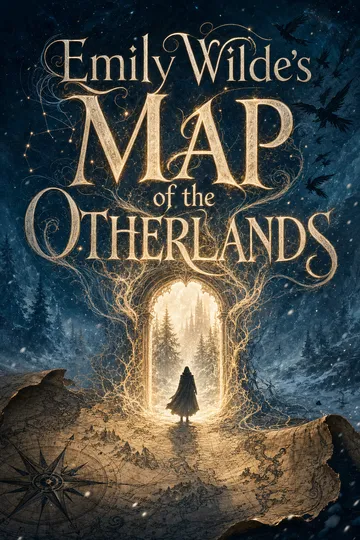
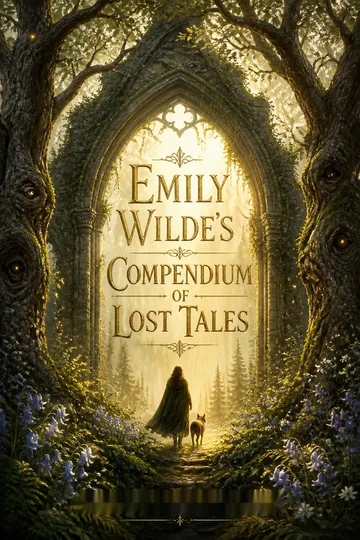
Emily Wilde Series
About the Author


Download PDF
Download EPUB
.epub digital book format is ideal for reading ebooks on phones, tablets, and e-readers.








