

Key Takeaways
Borrow psychopathic strengths without copying the damage.

The useful paradox. Kevin Dutton’s father could sell diaries missing a month by turning the flaw into a selling point. His charm, nerve, and quick reframing illustrate the book’s central claim: traits associated with psychopathy can sometimes help people perform, even though extreme versions can cause serious harm.
Dose and driver matter. Dutton compares these traits to a powerful car: its value depends on who is driving, where, and how fast. Fearlessness can help someone act in a crisis; ruthlessness can help make a difficult decision. Without restraint, the same qualities can injure other people and their possessor. The aim is not to imitate a psychopath’s disregard for others, but to recognize when a little less anxiety or hesitation could help.
The book’s strongest move is to separate a trait from its moral use. Confidence, emotional steadiness, and decisiveness are not inherently virtuous or vicious; their effects depend on goals, constraints, and who bears the cost. This resembles a distinction in engineering between a tool’s capability and the safety system governing it. Yet the car metaphor can make control sound easier than it is. Fear and empathy are not simply settings to adjust at will, and reducing them can weaken judgment as well as hesitation.
Treat psychopathy as a profile of dials, not a criminal yes-or-no label.

A mixed profile. Dutton presents psychopathy as a cluster of traits that can vary in strength, rather than a single switch separating ordinary people from criminals. A person may be unusually cool under pressure or self-confident without also being violent, impulsive, or exploitative. The combination matters.
Behavior is not the whole diagnosis. The Psychopathy Checklist-Revised, or PCL-R, is a clinician-rated, 20-item assessment with a maximum score of 40. The book contrasts it with Antisocial Personality Disorder, a diagnosis focused more heavily on persistent rule-breaking and harmful behavior. It reports that ASPD is common in prisons, while a smaller share of prisoners meet psychopathy criteria. Jimmy, who showed guilt after a fatal fight, differs from Ian, whose charm and callousness form a broader psychopathic pattern.
A dimensional model makes room for a fact everyday language obscures: one person can be unusually bold and still conscientious, while another can be charming and dangerously exploitative. That is more useful than treating a dramatic label as a complete explanation. It also calls for restraint. A checklist is not a casual personality quiz, and a person’s professional success or composure cannot establish a diagnosis. Measurement choices matter too: tools built around criminal behavior may miss people whose harmful conduct is less visible.
Separate understanding another’s mind from sharing their feelings.

Two kinds of empathy. The book distinguishes cognitive empathy, the ability to infer what another person thinks or feels, from emotional empathy, actually sharing some of that feeling. Dutton calls these cold and hot empathy. Psychopaths may be weak in emotional resonance while remaining skilled at reading people.
The distinction has consequences. In one study described by Dutton, participants rated how vulnerable people appeared from short videos of their walks. High-scoring participants were better at identifying those previously victimized. In another experiment, more than 70 percent of high-scoring participants identified the person hiding a handkerchief, compared with 30 percent of low scorers. Such perception can help a detective notice deception, or help a predator select a target. Understanding someone is not the same as caring about them.
This distinction helps explain why emotional insight does not automatically produce compassion. A person can accurately model another’s fears and still use that knowledge selfishly. In clinical work, negotiation, and caregiving, cognitive empathy can improve communication, while emotional empathy can motivate concern. Neither guarantees ethical conduct on its own. The vulnerability studies are intriguing, but they do not establish a universal psychopathic talent for reading people. The practical lesson is to pair accurate perspective-taking with explicit norms about consent, fairness, and harm.
Point your focus at the task, but keep risk in view.
Attention can narrow. Psychologist Joseph Newman’s experiments, as described here, suggest that some psychopaths do not simply lack fear. When focused on an immediate task or reward, they can screen out distracting information, including signs of danger. When the threat becomes the focus, their responses can change. The difference is partly about what gets noticed.
Useful, but not automatically wise. A bomb-disposal study found that decorated operatives’ heart rates could fall when they entered a dangerous situation. Their confidence and concentration helped them work carefully. That does not make them psychopaths, nor does low arousal guarantee good judgment. The book’s broader point is that steady attention can help under pressure, while reward-driven tunnel vision can make a person miss consequences that deserve attention.
This is a valuable corrective to the idea that calm always signals competence. Attention is selective: concentrating hard can improve performance on the chosen task while making peripheral risks easier to miss. In high-stakes work, checklists, cross-checks, and a second decision-maker can compensate for that limitation without demanding panic. The book’s examples also caution against confusing a bodily response with a personality diagnosis. A falling heart rate may reflect training, confidence, or context, not psychopathy.
Defect once for advantage, but build trust for repeated encounters.
A short game rewards nerve. In a game of chicken, the driver who refuses to swerve may win if the other driver backs down. That logic helps explain why risk-taking or selfishness can pay in a one-off encounter. But life is usually repeated interaction, not a single showdown.
Reputation changes the payoff. Robert Axelrod’s computer tournament tested strategies in the Prisoner’s Dilemma, a game where two players gain or lose depending on whether they cooperate or betray one another. The winning strategy, TIT FOR TAT, began cooperatively, matched the other player’s previous move, and returned to cooperation after retaliation. It combined openness with a boundary. The broader lesson is not that everyone is trustworthy, but that lasting relationships reward cooperation that can defend itself.
Repeated interaction changes what counts as rational. A move that wins cash or status today can destroy access to future cooperation, which is why reputation functions like social capital. TIT FOR TAT captures an appealing balance: begin generously, respond to behavior, and avoid endless revenge. Its simplicity is also a limitation. Real relationships involve misunderstanding, unequal power, and imperfect information, so mechanical retaliation can escalate conflict. Durable cooperation often needs communication and repair, not just matching the other person’s last move.
Practice seven psychopathic skills as temporary tools, not a permanent identity.
A practical toolkit. Dutton gathers seven traits under the name Seven Deadly Wins: ruthlessness, charm, focus, mental toughness, fearlessness, mindfulness, and action. The idea is to use the trait that fits the situation, then lower its intensity when the situation changes. A lawyer in the book describes being forceful in court yet uncomfortable making a routine return for his wife. The contrast shows how a demanding role can call for a different mode than ordinary life.
Context is the safeguard. A little ruthlessness may help someone set a boundary; too much can become cruelty. Focus can prevent distraction, but fixation can block new evidence. Dutton’s advice is less about becoming hard-edged than learning to shift gears deliberately, rather than letting one personality setting govern every relationship.
The framework is memorable because it turns a sensational subject into concrete capacities that can be examined separately. It also resembles role-based performance: surgeons, advocates, and emergency workers may need to behave differently at work than at home. The hard question is how to switch back. A person’s impact matters more than their claimed intention, so colleagues and loved ones need ways to signal when decisiveness has become intimidation. Self-regulation is not just internal control; it also requires feedback and accountability.
Use present-moment attention to quiet fear without surrendering judgment.
Stay with the next move. Dutton links psychopathic composure with mindfulness and flow, a state of absorbed concentration in which attention stays on the immediate task. At the 2010 British Open, golfer Louis Oosthuizen used a small red mark on his glove as a cue to concentrate on the shot in front of him rather than the consequences of winning or losing. He won by seven strokes.
The overlap has limits. Buddhist meditation and mindfulness-based therapy train attention and a less reactive relationship to thoughts. They share a present-focused quality with the composure Dutton describes, but not the same motivation or moral outlook. The book calls an especially clear, detached state of high-pressure concentration supersanity. The practical takeaway is to notice fear without letting imagined disasters run the decision.
Present-focused attention has a useful middle path: neither obey every anxious thought nor suppress all feeling. A golfer’s cue can redirect attention toward a controllable action, while mindfulness practice can help a person notice thoughts as thoughts. That differs from the book’s more provocative comparison between spiritual discipline and psychopathic detachment. Calm alone does not equal wisdom. The ethical value comes from what attention serves, and from whether awareness of other people remains available.
Turn fearlessness toward protection, and pair it with restraint.
The same traits can serve others. Dutton describes studies in which people with psychopathic traits were not uniformly unhelpful. In one experiment, they offered less help when asked for directions, matched other participants when someone dropped papers, and offered more help when a researcher appeared injured and struggled with simple tasks. The result complicates the assumption that low emotional warmth always means refusing aid.
Heroes are not simply criminals in uniform. A study of people in front-line roles found more fearlessness and stress immunity than in the general population, but fewer traits tied to impulsivity and antisocial conduct. Dutton’s argument is that courage, composure, and action can be useful when directed toward protection. The crucial difference is not nerve alone. It is whether restraint, responsibility, and concern for others remain in the picture.
This ending preserves the book’s central tension without turning dangerous behavior into a virtue. Prosocial action can arise from duty, habit, empathy, reputation, or immediate situational cues; a single helpful act cannot reveal which motive is operating. Still, the findings challenge a simplistic equation between emotional warmth and moral behavior. Institutions can make the distinction practical by selecting for composure while also rewarding accountability, teamwork, and respect for those with less power.
Analysis
The book’s most durable contribution is not the claim that psychopaths make ideal leaders, rescuers, or traders. It is the more careful idea that traits commonly bundled under psychopathy can have different effects depending on their intensity, combination, and setting. Fearlessness can support a rescue or enable needless risk. Social insight can aid a clinician or a con artist. Detachment can protect judgment under pressure or erase concern for people affected by a decision.
That argument is strongest when Dutton distinguishes a particular capacity from the whole person: cognitive empathy from emotional resonance, low anxiety from good judgment, and criminal behavior from personality traits. His stories make the distinctions vivid, while studies on attention, moral dilemmas, and helping behavior offer ways to test them. The Seven Deadly Wins then translates the exploration into a usable, if deliberately provocative, set of skills.
The evidence requires more caution than the storytelling sometimes does. Several results come from small experiments, selected samples, or self-report measures. A laboratory choice about a trolley problem is not equivalent to an actual emergency, and a correlation between personality traits and occupational success does not show that those traits caused success. Nor does a low fear response establish sound risk assessment. The book’s evolutionary explanations are plausible hypotheses, not direct demonstrations of why a trait evolved.
Its practical advice is therefore best read as selective borrowing, not self-diagnosis or personality makeover. Readers can practice decisiveness, attentional control, and emotional steadiness while preserving empathy and external accountability. The key question is not whether a behavior looks bold or psychopathic. It is whether it solves the real problem, respects the people affected, and remains open to correction. In that sense, the book’s most important lesson is also its ethical boundary: useful traits become dangerous when the person using them no longer has to answer for their effects.
Review Summary
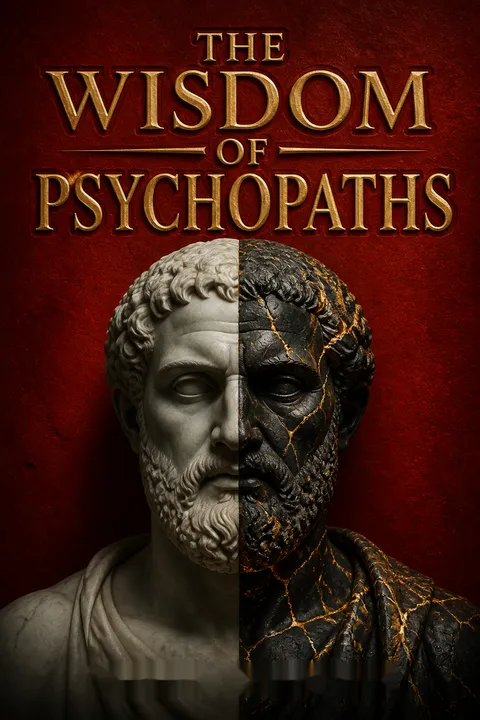
The Wisdom of Psychopaths receives mixed reviews. Some readers find it insightful, exploring how psychopathic traits can be beneficial in certain professions. Others criticize its structure and lack of practical advice. The book discusses psychopathy's potential advantages, comparing psychopaths to successful professionals like CEOs and surgeons. While some appreciate the scientific information and entertaining anecdotes, others feel the author glorifies psychopathy. Criticisms include repetitive language, lack of female representation, and questionable conclusions. Overall, readers find it thought-provoking but advise approaching it as entertainment rather than self-help.
People Also Read
Glossary
Psychopathy Checklist-Revised (PCL-R)
Clinician-rated psychopathy measureA 20-item instrument developed by Robert Hare to assess psychopathic traits, particularly in clinical and forensic settings. Each item receives a score from zero to two, for a maximum score of 40. It is based on interviews and file review, and is not intended as a casual self-test or a stand-alone explanation of a person’s behavior.
Psychopathic Personality Inventory (PPI)
Self-report trait measureA questionnaire developed to assess psychopathic personality traits in noncriminal populations. The version discussed in the book contains 187 questions and measures several dimensions, which group into Self-Centered Impulsivity, Fearless Dominance, and Coldheartedness. It helps researchers study psychopathic traits beyond prison samples, but a score is not itself a clinical diagnosis.
Hot and cold empathy
Feeling versus understanding othersThe book’s distinction between emotional empathy and cognitive empathy. Hot empathy refers to sharing or resonating with another person’s feelings. Cold empathy refers to understanding what another person may think or feel without necessarily sharing the emotion. The distinction helps explain how someone can read another person accurately yet remain unconcerned about their welfare.
Dark Triad
Three exploitative personality traitsA personality grouping comprising narcissism, Machiavellianism, and psychopathy. In the book, the combination is linked to confidence, manipulation, risk-taking, and short-term mating behavior. The traits overlap but are not interchangeable, and their presence does not by itself determine whether a person will behave harmfully.
Functional psychopathy
Context-useful psychopathic traitsThe book’s label for psychopathic characteristics that may support performance in particular settings, such as remaining calm during a high-stakes operation or making a difficult decision. The phrase does not mean that clinical psychopathy is harmless or broadly beneficial. Usefulness depends on context, degree, self-control, and the consequences for other people.
Prisoner's Dilemma
Cooperation versus betrayal gameA strategic game in which two people independently choose whether to cooperate or defect. Each person’s outcome depends on both choices. Defection can be individually tempting in a single round, even though mutual cooperation may produce a better shared result. Repeated rounds show how trust, retaliation, and reputation affect the best strategy.
TIT FOR TAT
Cooperate, then mirror behaviorA strategy tested in Robert Axelrod’s computer tournaments of the Prisoner’s Dilemma. It begins by cooperating, then copies the other player’s most recent action. This allows it to reward cooperation, respond to betrayal, and resume cooperation when the other player does. The book presents it as a model of reciprocity with both generosity and boundaries.
Seven Deadly Wins
Seven selectively used traitsDutton’s practical framework of seven traits associated with psychopathy: ruthlessness, charm, focus, mental toughness, fearlessness, mindfulness, and action. The proposed lesson is to apply a trait selectively when circumstances call for it, then reduce its intensity when the situation changes. The framework is not an endorsement of cruelty or a recommendation to become a psychopath.
Supersanity
Detached, precise high-pressure focusA term used in the book for an unusually clear and detached state of concentration under pressure. It describes a mode in which attention feels sharpened rather than dulled, allowing a person to focus on a demanding task without being overwhelmed by anxiety. Dutton connects it with composure in surgery and other high-stakes work.
Groupthink
Consensus that suppresses dissentA group decision-making failure in which the desire for agreement overrides careful evaluation of alternatives. Members may dismiss warnings, discourage disagreement, and mistake apparent unanimity for evidence that a plan is sound. The book uses the Challenger launch decision to illustrate how organizational pressure and conformity can contribute to catastrophic choices.
Flow
Absorbed task-focused attentionA state of deep concentration in which a person becomes absorbed in an activity and distracting concerns recede. The book connects flow with present-focused attention in sport and with reduced interference from nonessential information. Flow is not a synonym for psychopathy; it is a focused state that can be cultivated without adopting callousness or disregard for others.
FAQ
What's The Wisdom of Psychopaths about?
- Exploration of Psychopathy: The book examines the nature of psychopathy, highlighting how traits often associated with psychopaths can be advantageous in fields like business, medicine, and law enforcement.
- Dual Nature: It presents psychopathy as not solely a disorder but as a spectrum where certain traits can be beneficial, suggesting that these traits can be harnessed for success.
- Personal and Societal Insights: Author Kevin Dutton uses personal anecdotes and societal examples to illustrate the complexities of psychopathy in everyday life and its implications for success.
Why should I read The Wisdom of Psychopaths?
- Unique Perspective: The book challenges conventional views by highlighting the potential advantages of psychopathic traits, offering a fresh perspective on human behavior.
- Scientific and Practical Insights: It combines scientific research with practical advice, making complex psychological concepts accessible and applicable to personal and professional life.
- Engaging Narratives: Dutton's storytelling makes the exploration of psychopathy engaging, providing readers with both entertainment and education.
What are the key takeaways of The Wisdom of Psychopaths?
- Spectrum of Traits: Psychopathy exists on a spectrum, with traits that can be either beneficial or harmful depending on the context.
- Functional Psychopathy: Certain psychopathic traits can lead to success in high-pressure environments, such as corporate settings or emergency situations.
- Emotional Detachment: Psychopaths can recognize emotions in others but may lack emotional responses, allowing for decision-making without guilt or fear.
How does The Wisdom of Psychopaths define psychopathy?
- Personality Disorder: Psychopathy is characterized by traits such as superficial charm, lack of empathy, and manipulativeness.
- Emotional Processing Deficits: Psychopaths often have deficits in emotional processing, particularly in areas of the brain like the amygdala, affecting their ability to feel fear and guilt.
- Adaptive Traits: Some psychopathic traits can be adaptive, allowing individuals to thrive in high-stress situations where others might falter.
What is the concept of "functional psychopathy" in The Wisdom of Psychopaths?
- Adaptive Advantage: Functional psychopathy refers to the idea that certain psychopathic traits can be beneficial in specific contexts, such as business or emergency response.
- Risk-Taking Behavior: Individuals with functional psychopathy are often more willing to take risks, which can lead to greater rewards in competitive environments.
- Emotional Detachment: This detachment allows them to make decisions without the emotional weight that might hinder others, enabling clearer, more rational thinking in high-pressure situations.
How does The Wisdom of Psychopaths relate psychopathy to success in business?
- Corporate Psychopaths: Dutton discusses how traits like charm and ruthlessness can lead to success in corporate environments, where competition is fierce.
- Study Findings: Research shows that CEOs often exhibit higher levels of psychopathic traits compared to the general population, suggesting a correlation with leadership effectiveness.
- Risk and Reward: The ability to take calculated risks without fear of failure can give psychopathic individuals an edge in business negotiations and decision-making.
What is the "Seven Deadly Wins" framework in The Wisdom of Psychopaths?
- Core Principles for Success: The framework includes traits like ruthlessness, charm, focus, mental toughness, fearlessness, mindfulness, and action, which can be beneficial when applied in moderation.
- Strategic Application: It encourages readers to assess which traits to amplify or diminish based on their goals, leading to improved decision-making and outcomes.
- Balance is Key: Dutton emphasizes the importance of dialing these traits up or down as needed, avoiding the pitfalls of becoming overly psychopathic or losing one's moral compass.
What role does emotional recognition play in psychopathy according to The Wisdom of Psychopaths?
- Enhanced Recognition: Psychopaths may be better at recognizing emotions in others than non-psychopaths, despite their lack of emotional response.
- Cognitive vs. Affective Empathy: Dutton differentiates between cognitive empathy (understanding emotions) and affective empathy (feeling emotions), noting that psychopaths excel in the former but lack the latter.
- Manipulation Skills: This ability to read emotions can enhance their manipulation skills, allowing them to exploit social situations to their advantage.
How does Dutton connect psychopathy to historical figures and cultural narratives?
- Historical Examples: Dutton references figures like Saint Paul to illustrate how psychopathic traits can lead to significant achievements and societal impact.
- Cultural Narratives: The book discusses how society's perception of psychopathy has evolved, with some traits once viewed negatively now being celebrated in certain contexts.
- Literary Parallels: Dutton draws parallels between psychopathic characters in literature and real-life figures, reflecting deeper truths about human nature and societal values.
What research methods does Dutton use in The Wisdom of Psychopaths?
- Interviews and Case Studies: Dutton incorporates interviews with experts in psychology, law enforcement, and business to provide real-world insights.
- Psychological Assessments: The book references assessments like the Hare Psychopathy Checklist to evaluate psychopathic traits in various contexts.
- Empirical Studies: Dutton discusses findings from empirical research on the relationship between psychopathy, decision-making, and emotional responses.
How does The Wisdom of Psychopaths address the ethical implications of psychopathy?
- Moral Ambiguity: Dutton navigates the complex ethical landscape, suggesting that while certain traits can be beneficial, they can also lead to harmful behavior if unchecked.
- Contextual Ethics: The author emphasizes the importance of context in evaluating the morality of actions taken by individuals with psychopathic traits.
- Call for Balance: Dutton encourages incorporating beneficial traits while maintaining ethical standards, promoting a balanced approach to development.
What are the best quotes from The Wisdom of Psychopaths and what do they mean?
- Perception Shapes Reality: “The mind is its own place, and in itself can make a heav’n of hell, a hell of heav’n.” This underscores how our perceptions shape our reality, central to understanding psychopathy.
- Emotional Detachment: “Just because I don’t care doesn’t mean I don’t understand.” This highlights psychopaths' ability to comprehend emotions without feeling them.
- Strategic Advantage: “To subdue the enemy without fighting is the highest skill.” This reflects the strategic advantage of psychopathic traits in competitive environments.
About the Author
Download PDF
Download EPUB
.epub digital book format is ideal for reading ebooks on phones, tablets, and e-readers.








