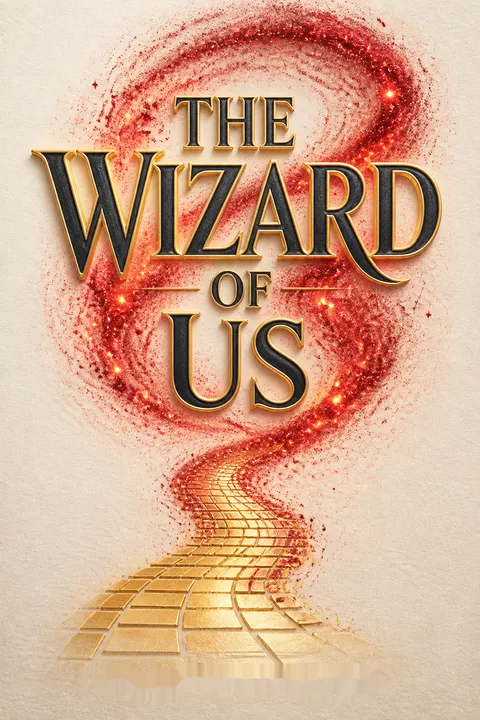


Key Takeaways
Treat your life as a mythic journey, not a string of accidents
Stories shape the map. Houston argues that myths are more than entertaining old tales: they are shared patterns people use to interpret change, difficulty, and possibility. A story can help someone see a familiar life from a new angle, rather than accept its current limits as permanent. The book makes this case through Oz, a film so widely known that its characters and images can become common ground across generations and cultures.
A storm opens a door. Houston recounts telling the Oz story to a Taiwanese village during a typhoon. Her listeners compared its characters with figures from their own traditions. Afterward, the storm passed, and the group opened the door onto a vivid, rain-bright landscape. For Houston, the story had helped them experience the ordinary world as newly meaningful.
The useful claim is not that every life follows a predetermined script, but that stories can organize experience into a form people can act on. Narrative psychology similarly treats identity as partly shaped by the accounts people build about their past and future. That makes myth a tool for interpretation, not proof of a cosmic design. The distinction matters: a hopeful narrative can restore agency, while insisting that every hardship serves a higher purpose can minimize grief or injustice. The strongest use of Oz leaves room for both meaning and uncertainty.
Leave the gray Kansas that has made your old identity too small
Change begins with disturbance. Houston reads Dorothy's story through Joseph Campbell's Hero's Journey, a recurring narrative pattern in which a person is called beyond familiar life, faces trials, and returns changed. Dorothy's Kansas feels dull and unresponsive; Miss Gulch threatens to take Toto, and Dorothy's longing for a different life becomes urgent. The tornado then carries her into Oz, a place where the old rules no longer apply.
The return is part of the quest. Dorothy does not seek conquest or fame. She wants to get home to the people she loves, but the journey changes what she can do and what she believes about herself. Glinda, the companions, the witch, and the road each mark a different challenge. The pattern offers a way to locate a life transition: What is ending, what is being tested, and what might be brought back?
Campbell's framework is memorable because it turns a vague transition into a sequence that can be recognized: disruption, uncertainty, tests, and return. It can help people treat a career change or loss as a process rather than a single decision. Still, the pattern is a lens, not a law. Real lives rarely resolve neatly, and some hardships are imposed rather than chosen. Dorothy's story is most useful when it encourages reflection and action, not when it implies that people must find a heroic lesson in every painful event.
Treat the qualities you lack as skills to practice, not fixed identities
The companions learn by acting. The Scarecrow wants intelligence, the Tin Man wants a heart, and the Lion wants courage. Yet each displays the quality he thinks is missing: the Scarecrow solves problems, the Tin Man responds with feeling, and the Lion repeatedly acts despite fear. The Wizard gives them visible tokens of these traits, but their journey has already supplied the evidence.
Practice changes capacity. Houston connects the Scarecrow's story to neuroplasticity, the brain's ability to change through experience and learning. She points to research on focused practice and brain maps, and recommends activities that combine attention, movement, imagination, and new learning. The practical lesson is not that positive thinking magically rewires every limitation. It is that abilities can grow through sustained engagement, while self-doubt can keep people from testing what they can do.
The distinction between lacking a trait and lacking confidence in a trait is psychologically important. Self-efficacy, the belief that one's actions can affect outcomes, often grows through concrete experiences of mastery. Dorothy's companions gain those experiences before they receive their certificates and medal. The neuroscience connection is strongest when kept modest: learning and practice can alter brain function, but that fact does not validate every claim about spiritual energy or limitless potential. The story's durable insight is behavioral: evidence of capability is more persuasive than reassurance alone.
Give your wisest self a character you can consult
Make inner guidance visible. Houston calls a person's most fully realized potential the entelechy. In Oz, Glinda represents this wise, caring dimension of Dorothy, appearing as an ally who guides without removing the need for Dorothy to face her own trials. Houston also uses the term Quantum Partners for inner or archetypal helpers that people imagine as sources of guidance and undeveloped capacities.
Use imagination deliberately. Her exercises invite readers to picture a helpful figure, notice its qualities, and imagine receiving guidance through words, images, or sensations. The aim is to make strengths easier to access in daily life. A reader need not decide that Glinda-like figures exist independently in a spiritual realm. The practice can also be understood as a structured conversation with one's values, experience, and less-heeded possibilities.
Turning an abstract quality into a character can create useful psychological distance. Instead of asking, "What should I do?" a person can ask what a trusted, courageous, or compassionate figure would notice. That resembles techniques such as perspective-taking and chairwork, which help people examine a problem from another position. The metaphysical interpretation is more speculative than the imaginative method itself. Keeping that distinction clear lets readers use the exercise without treating vivid inner imagery as external evidence or unquestionable authority.
Let compassion, not conquest, decide what your courage is for
Dorothy's strength is relational. She frees the Scarecrow from his post, oils the Tin Man, protects Toto, and throws water to save the Scarecrow from the witch's fire. She does not set out to dominate anyone; her courage appears when someone vulnerable needs help. Houston contrasts this with heroic stories built around defeating enemies and claiming rewards.
Care becomes public action. Houston calls a person who applies creativity and human skills to social problems a Social Artist. She describes Trevelen Rabanal, who used boxing and practical training to support young people in gang-affected neighborhoods, and Ariane Kirtley, who organized support for wells in Niger after aid organizations declined to help. In both cases, a personal response became a collaborative effort with tangible benefits.
This account broadens courage beyond dramatic acts of individual bravery. Community work depends on noticing needs, building trust, and sharing responsibility, often over long periods. The examples also show that compassion is more effective when paired with practical competence: a well requires funding, engineering, and local relationships, not good intentions alone. A useful caution is that stories of individual initiative can obscure institutional duties. Social action can inspire, but it should not make essential services depend on exceptional volunteers.
Build a crew that wakes you before the poppies numb your purpose
Progress attracts distractions. In Oz, the Wicked Witch sends Dorothy and her companions into a field of poppies that makes them sleep just before they reach the Emerald City. Houston treats the flowers as a symbol of whatever numbs momentum: exhaustion, avoidance, compulsive entertainment, or the comfort of familiar habits. She argues that people pursuing change need support from others who can help them stay engaged.
Wakefulness can be practiced. The book recommends creating a community of people who encourage one another, and it connects this idea to the influence people have on one another's behavior. Houston also suggests concrete resets when someone feels stuck, including movement, creative activity, volunteering, and recalling joyful experiences. These are not substitutes for professional help when distress is severe, but they can interrupt passive routines and restore a sense of participation.
The poppy field captures an ordinary problem with unusual clarity: the closer a demanding project gets to completion, the easier it can be to drift into distraction or fatigue. Social support helps because motivation is not purely private; other people provide accountability, models, and practical assistance. The book's appeal to mirror neurons should not be treated as a complete explanation of social influence. Shared habits, norms, and emotional support also matter. The actionable point stands without that biological shorthand: choose companions who make purposeful action easier.
Notice when money buys status but sells your attention and time
Desire can be manufactured. Drawing on economist John Kenneth Galbraith, Houston argues that modern markets do not only satisfy wants; they continually create new ones. The result can be a cycle of working longer to afford products that promise fulfillment but consume time and attention. She calls this time poverty: being so busy earning and maintaining a desired lifestyle that there is little room to enjoy it or pursue what matters.
Money is a tool, not a whole life. Houston does not say money is inherently bad. She asks readers to notice when financial pressures shape choices that conflict with their values, and to protect space for inner life, relationships, and creative work. Her contrast between money's measurable value and life's less measurable qualities encourages a more deliberate account of what counts as wealth.
This critique connects to consumer research and behavioral economics: people often adapt to new possessions, while advertising and social comparison keep renewing the sense of insufficiency. Yet money also buys security, healthcare, and time, especially for people with limited resources. The challenge is not to romanticize poverty or dismiss financial constraints, but to examine which desires are genuinely chosen and which are being continually refreshed from outside. The idea of time poverty is especially useful because it makes the cost of consumption visible in hours, not just dollars.
Design your Emerald City around ecological limits, diversity, and shared flourishing
Imagine systems that work with nature. Houston treats the Emerald City as a model of a society that is creative, welcoming, and materially sustainable. She introduces biomimicry, the practice of learning from natural systems to solve human problems. One example is Harare's Eastgate Centre, designed around termite mounds' passive cooling and reported to use far less energy than comparable conventional buildings. Green roofs offer another way to manage heat and rainwater.
Measure more than output. Houston imagines a society that values health, education, cultural life, and environmental care alongside economic activity. She points to Bhutan's Gross National Happiness approach, which evaluates well-being across several dimensions. The Emerald City is not just a place of abundance; it represents the work of designing institutions and communities around interdependence rather than endless consumption.
The Emerald City works best as a design question, not a claim that a flawless society is waiting in another realm. Biomimicry shows how close observation of nature can inspire efficient engineering, while well-being measures challenge the assumption that economic output captures social success. Both approaches require trade-offs and careful measurement: ecological solutions can have costs, and national happiness indicators cannot settle every political disagreement. Still, the book's shift in focus is productive. It asks whether a system is healthy for the whole community, not merely profitable for one part.
Make a private vision real by pairing ritual with a first public step
Give intention a structure. Houston's Manifestation Plan turns an aspiration into a repeated practice. Its thirteen steps, arranged from A to M, include creating a dedicated space, expressing gratitude, stating an intention, finding mentors, imagining the work in detail, recruiting friends, planning practical steps, continuing to learn, and preserving joy. The point is not to wait for a vision to materialize, but to keep attention and effort aligned with it.
Connect the inner and outer work. Houston argues that reflection becomes meaningful when it leads to service and shared projects. Her examples include schoolchildren raising money for wells and young people organizing environmental action at school. A manageable beginning might be to name one local problem, identify one useful contribution, ask who else should be involved, and take the first step while remaining open to revising the plan.
The plan combines ritual, visualization, learning, social support, and execution, which can help an abstract ambition survive ordinary distraction. Its most grounded components resemble established goal-setting practices: clarify the aim, identify obstacles, recruit support, and break work into steps. The spiritual language may motivate some readers, but it does not guarantee that circumstances will align or that a project will succeed. A strong interpretation treats intention as a source of direction, then tests it against evidence, resources, and the needs of the people affected.
Analysis
The book's central move is to turn The Wizard of Oz from a familiar film into a working metaphor for personal development and civic responsibility. Its story supplies emotional continuity for a wide-ranging argument: Dorothy's companions represent capacities people underestimate, the Emerald City offers a picture of a more humane society, and the return to Kansas makes transformation answerable to ordinary life. This narrative architecture gives the book more coherence than a collection of exercises alone would have.
Its strongest contribution is the refusal to separate inner change from public action. Imagination, compassion, and courage matter here not as private comforts but as resources for community work. The stories of youth programs and water access give the argument tangible stakes, while the ecological vision asks readers to judge progress by more than consumption. The book also offers practical prompts, from sensory visualization to gathering allies and translating a goal into steps.
The main tension is its movement between metaphor and factual claim. Reading Glinda as an image of inner wisdom is psychologically accessible; describing archetypal guides as cosmic agents or treating perception as a force that shapes physical reality makes a stronger claim than the presented evidence establishes. The neuroscience passages likewise mix sound general ideas about learning and brain change with speculative conclusions about spiritual energy. Readers can preserve the useful exercises without accepting every explanation attached to them.
A second tension is the book's insistence that adversity can serve transformation. This framing can help people recover agency, but it should not imply that suffering was necessary, deserved, or secretly arranged for their benefit. The most responsible reading keeps both truths in view: people can make meaning from hardship, and some hardship demands protection, resources, or structural change. Oz is most valuable as a flexible map for asking better questions, not as a universal plot that every life must follow.
Review Summary
The Wizard of Us receives mixed reviews, with an average rating of 3.91/5. Positive reviews praise Houston's use of The Wizard of Oz as a metaphor for personal growth and self-discovery, finding it inspiring and thought-provoking. Critics argue the book contains too much fluff, unrelated tangents, and repetitive content. Some readers appreciate the exercises and find the book motivational, while others feel it lacks depth or originality. Overall, readers who connect with the Oz metaphor and Houston's writing style tend to rate the book more favorably.
People Also Read







Glossary
Hero's Journey
A transformation story patternA narrative pattern associated in the book with Joseph Campbell's study of myths. A person is drawn beyond familiar life, faces unfamiliar challenges with help from allies, changes through the experience, and returns to ordinary life with new understanding or capacity. Houston uses Dorothy's journey as a guide for interpreting personal transitions, while treating the pattern as a lens for reflection.
Entelechy
Fully realized potentialHouston uses this Greek-derived term for the fullest realized essence or potential of a person or thing. In her reading of Oz, Glinda represents Dorothy's entelechy: a wise, caring dimension that supports growth without removing the need to face challenges. The book's exercises invite readers to imagine and consult this aspect of themselves.
Quantum Partners
Imagined archetypal helpersHouston's term for relationships with an entelechy or archetypal figures imagined as guides, sources of wisdom, or expressions of undeveloped human capacities. Readers may cultivate such a relationship through sensory imagery, meditation, or dialogue. Houston also gives the idea a spiritual interpretation, presenting these figures as connected to larger realities and purposes.
Social Artistry
Creative work on social changeHouston's approach to applying the attention, imagination, and craft of an artist to social problems. A Social Artist develops human capacities while responding to complex community needs, combining inner reflection with practical work. The book associates this work with goals such as social justice, environmental care, human dignity, and sustainable development.
Manifestation Plan
A structured intention practiceA thirteen-part process Houston developed with Peggy Rubin to help people move an intention toward action. The steps include creating a dedicated space, expressing gratitude, stating a goal, seeking mentors and friends, imagining the work, planning tasks, continuing to learn, and sustaining joy. The practice combines spiritual ritual with practical preparation.
sacred psychology
Inner growth toward fuller lifeHouston's term for an approach to psychological development that links personal change with spiritual meaning and a wider sense of human possibility. It encourages people to move beyond habitual or diminished self-understandings through reflection, imagery, and practices of transformation. The book presents this as a spiritual framework, not as a clinical treatment model.
Download PDF
Download EPUB
.epub digital book format is ideal for reading ebooks on phones, tablets, and e-readers.








