Key Takeaways
1. "Gone with the Wind" as America's Grand Illusion
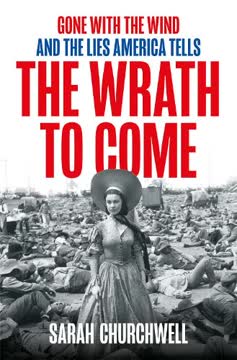
Gone with the Wind provides a kind of skeleton key, unlocking America’s illusions about itself.
A cultural phenomenon. Margaret Mitchell's "Gone with the Wind" (GWTW), both novel and film, became an unparalleled cultural touchstone, shaping global perceptions of American history and racial dynamics. Its immense popularity, selling over 30 million copies and becoming the highest-grossing film adjusted for inflation, cemented a romanticized, yet deeply flawed, vision of the Old South. This narrative, however, served as a powerful mechanism for collective self-deception, allowing audiences to believe in a version of history that was "better than objective history" because it offered a comforting "reality that history can never achieve."
Selling a myth. The story's success lay in its ability to offer a "glorious vision of white America rising from the ashes," providing a national alibi for assertions of white supremacy. It presented a "plausible deniability for assertions of white supremacy, letting us pretend we’re talking about something else – nostalgia, pastoral legends, old movies from a vaguely better time, or a more graceful world." This deliberate misdirection allowed white Americans to avoid confronting the brutal truths of slavery and its aftermath, instead embracing a narrative that flattered their self-image and perpetuated harmful stereotypes.
Propaganda as romance. GWTW is characterized as "romantic propaganda," peddling a worldview that "turned wish fulfilment into popular stories" and helped create conditions for future political turmoil. It offered a "self-deluding account of American history, a story told in deeply bad faith," where the "cultural script must be judged against the historical reality, in all its (often malign) complexity, to be adequately understood." The book argues that GWTW's enduring relevance stems not despite its flaws, but precisely because it captures the "lies America tells" about itself.
2. The "Lost Cause" Narrative: A Deliberate Historical Lie
A mythical version of Southern history, the Lost Cause claims that the Confederacy fought the Civil War (1861–65) as a principled defence of a noble civilization (the Old South) and its democratic rights, rather than as an unprincipled defence of the white supremacist system of chattel slavery.
Rewriting history. The Lost Cause was a post-Civil War propaganda effort, a "self-justifying counterfactual history circulated by Confederate leaders and their legal and spiritual heirs." It fundamentally denied the true cause of the Civil War—slavery—and instead asserted that the South fought for states' rights, a noble civilization, and against Northern aggression. This narrative was crucial for the white South to "avoiding the humiliation of defeat" and evade the consequences of losing absolute white power.
Foundational denials. The myth was built on two "staggeringly shameless denials": that the Civil War was caused by slavery, and that there was anything wrong with slavery itself. Confederate leaders like Alexander H. Stephens, who initially declared the Confederacy's "cornerstone rests, upon the great truth that the negro is not equal to the white man," later shamelessly claimed the war "was not a contest between the advocates or opponents of that Peculiar Institution." This "pure false equivalence" equated fighting for human enslavement with fighting for political equality.
National acceptance. By 1900, the Lost Cause had become "an article of faith for most Southerners, and was accepted by the white North in the interests of reconciliation." This reconciliation was achieved by a "shared national popular culture" that overlooked the racial hierarchies of slavery, transposing them into Jim Crow segregation. The book argues that this historical revisionism created "a vast alternative historical reality, one in which millions of Americans still believe," and that the "Lost Cause became a highly accurate name for a conflict whose true cause was almost lost to history."
3. Scarlett's Denial: A Metaphor for America's Avoidance
Scarlett just keeps blindly moving forward, rushing past defeat and failure, trusting that tomorrow the storm will have passed.
The charm of deferred reckoning. Scarlett O'Hara's iconic motto, "I won't think of that now – I’ll think of it tomorrow," serves as a central metaphor for America's collective denial of uncomfortable truths. This "magic charm of deferred reckonings" allows her, and by extension the nation, to avoid confronting moral and historical consequences, perpetually pushing them into an indefinite future. This strategy, while enabling survival, ultimately leads to a "moral vacuum" where "your morality is what is gone with the wind."
Wilful blindness. Scarlett's "wilful blindness" and "pathological self-centredness" are consistently highlighted. She is "a fantasist, so blinded by her dreams of love that she constantly misreads the world, putting her in flight from reality." This inability to see beyond her immediate desires mirrors America's tendency to disregard the systemic roots of its problems, particularly racial injustice, by focusing on individual narratives of resilience and self-interest.
Narcissism as politics. The book argues that Scarlett's "politics of narcissism" – her refusal to shift her ground, nursing grudges, and building spite into politics – reflects a broader American trait. Her "incantatory denial" is a strategy adopted by "America’s most representative figures from fiction and history alike, from the ‘redemption’ of the Lost Cause to the calls for unity from Republican leaders after the 2021 insurrection, urging the country to ‘just move on’." This constant deferral of accountability ensures that "by the time you can no longer avoid thinking about your history, it has become so complex and confusing that you can no longer think about it clearly."
4. Racial Capitalism: The Unseen Engine of Southern Wealth
The South was also interested in wealth, of course: chattel slavery was above all a racial economy.
Wealth from human property. The book asserts that the antebellum South's economy was fundamentally a "racial economy," where "enslaved Black people were worth more to white people than the banks, railroads, and manufacturing industries combined." This system of chattel slavery was not merely agrarian but increasingly industrialized, with the value of enslaved people leveraged into mortgages, securities, and bonds, funding vast empires of trade and industry. This "racial capitalism" meant that "few if any of the most powerful figures in American history before 1865 can be understood apart from it."
Post-war exploitation. After the Civil War, the abolition of slavery did not end racial capitalism but forced it to mutate. Scarlett's post-war business ventures, particularly her lumber mills, exemplify this. She finds a solution to the "problem of paying freed people" by leasing convicts, a system "far worse than slavery had ever been" for Black Americans. This "convict-leasing" became a "greatest generator of personal wealth for many white Southerners after the war," effectively re-enslaving Black people through mass incarceration and debt peonage.
The "difference" of race. The narrative consistently exposes the "deadening flat lie" that slavery was "different" from convict-leasing, or that white people's suffering was comparable to that of the enslaved. This "difference" is explicitly racial, allowing white characters to justify their exploitation and maintain their moral high ground. Scarlett's realization that she needs "black hands and not white" to pick cotton to feel like a lady again underscores that "racial power is purely zero-sum: the image of Black hands picking cotton renders an entire political economy that demands white dominance be underwritten by Black labour, because without slaves, no one is a master."
5. Reconstruction: Overthrown, Not Failed
The scourge of war had been followed by the worse scourge of Reconstruction.
A biased historical account. GWTW perpetuates the "Lost Cause" myth that Reconstruction was a "scourge," a "political debacle, a national tragedy – for white people." This narrative, heavily influenced by the Dunning School of historiography, claimed the period was marked by "misrule and corruption" due to "lazy and ignorant newly freed slaves, venal opportunists from the North (‘carpetbaggers’), and equally venal collaborators in the South (‘scalawags’)." This "frankly biased, and deeply racist, interpretation of American history was the nation’s authoritative account for the next century."
The truth of multiracial democracy. In reality, Reconstruction was a "radical political experiment" where the United States attempted to transition from race-based slavery to multiracial democracy. Black Americans, eager to exercise their newly granted rights, registered to vote in large numbers and were elected to office. However, this progress was met with "retaliatory white supremacist violence," including the emergence of the first Ku Klux Klan, which worked to "restore white governance in the South after the war."
Overthrow, not failure. Historians today largely agree that Reconstruction "did not fail so much as it was overthrown." White supremacists, unwilling to accept multiracial democracy, used intimidation, voter suppression, and widespread violence to regain power. The "Redemption" period that followed saw the systematic stripping of Black Americans' voting rights and the establishment of Jim Crow segregation. The book highlights that GWTW's portrayal of Reconstruction as a "tragic failure" for white people is a "piece of disinformation" that became "the foundation of America’s modern myth of white victimhood."
6. The Klan: Glorified "Social Club," Real Terror
It was the large number of outrages on women and the ever-present fear for the safety of their wives and daughters that drove Southern men to cold and trembling fury and caused the Ku Klux Klan to spring up overnight.
A "tragic necessity." GWTW explicitly endorses the "Lost Cause" justification for the Ku Klux Klan, portraying it as a "tragic necessity" created to protect white women from "outrages" by Black men and to restore order against "negro rule." The novel claims the Klan merely "scared them and warned them to leave Atlanta," only "sometimes they kill them," and that Klansmen were "Southern gentlemen" who left "calling cards." This narrative is a "barefaced lie," as the book points out, designed to sanitize the Klan's brutal reality.
White terrorism. In truth, the first Klan (1866-1871) was a "reign of terror" against Republican leaders and Black citizens, using "sadistic, unrestrained savagery" including whipping, beating, rape, castration, and murder. Its purpose was "to keep the colored people down, to keep them in subordination," not to protect white women. The book notes that "Klansmen were more likely to commit rape than to protect women from it." The Klan's violence was "extralegal," often advertised in advance, and rarely prosecuted, with public officials frequently participating or condoning it.
Enduring myth. The myth of the Klan's nobility, distinct from its later iterations, was so pervasive that even the film version of GWTW euphemized it as a "social club" to avoid controversy, despite the Jewish producer David O. Selznick's concerns about "intolerant societies in these fascist-ridden times." This historical whitewashing allowed the Klan's "bestial spirit" to be normalized, contributing to a culture where "white terrorism has been rewritten as self-defence," and its "summary executions of lynching as ‘extralegal justice’."
7. White Women's Active Role in White Supremacy
Scarlett O’Hara, frightened and helpless, was not all that mattered. There were thousands of women like her, all over the South, who were frightened and helpless.
The facade of fragility. GWTW, while critiquing conventional femininity, ultimately reinforces the "cult of Southern white womanhood," presenting white women as fragile, helpless figures needing protection from Black men. This narrative, however, is a "cover story" for their active role in upholding white supremacy. Women like Rebecca Latimer Felton, a prominent suffragist and advocate for lynching, publicly demanded that white women be protected from "negro fiends," inciting mobs to murder Black men.
Power through property. White women of the planter class were not passive beneficiaries of patriarchy; they were direct slave owners, exercising "more control over human property than any other form." Emancipation meant the loss of their "only source of economic independence," fueling their bitter resentment and determination to maintain racial hierarchies. This "personal exceptionalism" extended to the 2020s, where white women often supported patriarchal figures who promised to protect their rights, even as those figures worked to strip them away.
Inciting violence. From the United Daughters of the Confederacy (UDC) to the "Klavannas," white women consistently "threw their power behind nativist, white supremacist movements." They actively participated in:
- Sewing Klan costumes and providing alibis.
- Inciting lynch mobs and celebrating racial violence.
- Enforcing eugenicist biological racism in education.
- Campaigning for racist politicians and boycotting "un-American" businesses.
This historical reality contradicts the myth of their innocence, revealing that "the gentle flower of white womanhood lit the match" of racial terror.
8. Homegrown Fascism: The American Connection
Has it occurred to you that our American Fascisti are the gentlemen of the Ku Klux Klan?
Early parallels. The book argues that "the Fascist implications of 'Gone with the Wind' and its nostalgia for the old, old South are fairly palpable." Contemporaries, including Black journalists and even some white critics, recognized strong similarities between American white supremacist movements like the Klan and European fascism as early as the 1920s. They noted shared characteristics such as "paramilitary violence, legal apartheids, eugenicist ideologies, and paranoid cultures."
"100% Americanism." American fascist groups, despite their "black and brown shirts," often cloaked themselves in "100% Americanism" and "America First" rhetoric, making them seem distinct from their European counterparts. However, figures like Lawrence Dennis, "America’s number one fascist intellectual" who was an African American passing as white, explicitly saw the Klan as demonstrating "the possibilities" for fascism in America, arguing that "Fascism is America’s only solution."
Hitler's American model. The mutual influence was not one-sided. Hitler explicitly admired and used American race laws, including segregation and immigration quotas, as a "precedent for the Nuremberg laws." Black critics like Joel Augustus Rogers insisted, "Not only is there Fascism in America now but Mussolini and Hitler copied it from us," highlighting the "striking analogy between the legal manifestations of race prejudice against the Negro in America and the Jew in Germany." This historical connection was largely "obscured beneath romantic mythmaking" after WWII, leading to the false belief that fascism was a uniquely European pathology.
9. Property and Land: The True American Romance
Land is the only thing in the world worth working for. Worth fighting for, worth dying for. Because it’s the only thing that lasts.
The enduring allure of Tara. Scarlett's "deepest romance is with power," which she finds in Tara, the plantation she constantly fights to save. This "devotion to the 'red earth of Tara'" is presented as a triumph of individual will, but it also symbolizes a deeper, racialized attachment to property. The land, acquired by her father Gerald in a rigged "land lottery" (stolen from indigenous peoples), represents her "heritable, natural right" to wealth and status, underwritten by Black labor.
Racialized ownership. The book highlights that Scarlett's desire to be a "lady" is inextricably linked to "black hands and not white" taking cotton from Tara. This reveals a "racialized economics" where white dominance is sustained by Black subjugation. The promise of "forty acres and a mule" for freed slaves, a crucial aspect of Reconstruction, was largely betrayed, condemning Black Southerners to sharecropping and ensuring that white landowners retained their property and power.
Capitalism's moral vacuum. Scarlett's "amoral embrace of radical free market capitalism" and her "predatory nature" are celebrated as resilience, even as she engages in price gouging, underselling competitors, and exploiting convict labor. This "triumphalism of the immigrant success story" obscures the "question of complicity," as her success comes "at the expense, in more senses than one, of an entire other, racially marked, underclass." The story ultimately "mythologizes white people’s ownership of the land," while denying the central role of slavery and anti-American sentiment in that history.
10. The "Wrath to Come": America's Unresolved Reckoning
It is terrible to watch people cling to their captivity and insist on their own destruction. I think black people have always felt this about America, and Americans, and have always seen, spinning above the thoughtless American head, the shape of the wrath to come.
A deferred judgment. James Baldwin's chilling prophecy of "the wrath to come" serves as the book's epigraph and central thesis, suggesting that America's unaddressed historical lies and injustices are leading to an inevitable, violent reckoning. The January 6th insurrection is presented as a modern manifestation of this deferred judgment, where "the Lost Cause came roaring back into America’s political story."
Lying as a way of life. The book argues that the "lies about the Lost Cause" did more than deceive; they "negate[d] reality," making "that 'true' which until then could only be stated as a lie." This "systematic dishonesty" has "destroyed the collective space of historical-factual reality," allowing America to "pretend to be a liberal democracy while systematically disfranchising large swathes of its population." This "culture of pervasive lying" has normalized unreason and moral complacency.
The cost of denial. The "fatal parallel" between the Civil War and the rise of fascism, often ignored or denied, underscores the dangers of this historical amnesia. The book concludes that if America continues to "disregard" its past, its "defeat will stop being but apparent, and we won’t be able to disregard it." The "wrath to come" is the mounting cost of these delayed reckonings, where "judgement has been markedly absent from the stories we tell about ourselves," and the nation risks a "Götterdämmerung for the American demigods."
Last updated:
Similar Books