

Key Takeaways
Treat North Korea's hacking as a revenue operation, not merely espionage
Cash became a weapon. The book traces a shift from North Korean cyber-attacks that disrupted websites to operations designed to obtain money for the regime. Investigators link the Lazarus Group to bank raids, ATM cash-outs, and cryptocurrency theft. Earlier allegations of counterfeit US dollars show that overseas crime was already part of the regime's financial toolkit: the so-called superdollars were exceptionally convincing fake banknotes, although direct proof that North Korea produced them remains disputed.
Pressure shaped the strategy. Sanctions, the collapse of Soviet support, and severe economic mismanagement left North Korea short of legitimate income. The book argues that cybercrime offered an unusually scalable source of foreign currency. It also distinguishes this motive from the intelligence-gathering focus attributed to many other national cyber units, while emphasizing that investigators' claims about individual attacks are not all equally conclusive.
The distinctive claim is not simply that a state uses hackers, but that theft becomes a substitute for economic access. This resembles sanctions evasion through shipping or shell companies, except digital intrusion can reach a bank without crossing a physical border. The strategy also shows how a state's priorities can blur categories that are usually kept separate: military operations, criminal conduct, and revenue generation. Still, the book's central attribution rests heavily on governments and security researchers. That evidence deserves attention, but public accusations are not the same as a courtroom-tested account, especially when the accused operators cannot be questioned.
When self-reliance blocks reform, national pride can become a trap
Isolation compounded failure. North Korea's founding leader, Kim Il Sung, promoted Juche, an ideology commonly translated as self-reliance. It promised independence from foreign powers, but the country's difficult terrain and reliance on Soviet and Chinese support made economic independence hard to achieve. The regime increasingly hid outside information as the gap between North Korea and the rest of the world widened.
The costs became human. In the 1990s, the collapse of Soviet support and disastrous farming decisions helped produce famine. Jihyun Park recalls children eating dragonfly heads because they were hungry. Her family's place in songbun, the regime's inherited social classification system, also narrowed her siblings' prospects. The book connects economic collapse, political rigidity, and isolation to the desperate search for foreign currency that made criminal activity attractive to the state.
This history is useful because it treats the hacking story as an institutional outcome rather than a sudden technological aberration. Political systems can become trapped by past commitments: admitting that a policy has failed may threaten the authority built around it. That dynamic is familiar in organizations as well as states, where leaders preserve a failing strategy because reversal carries reputational costs. Yet a crisis does not mechanically cause cybercrime. The regime's choices mattered, and the book's account is strongest when it shows both the structural pressure and the deliberate decisions that converted hardship into a rationale for predation.
A cyber-heist needs people on the ground as much as code
Digital theft needs physical hands. In the 2018 Cosmos Bank attack, hackers allegedly manipulated ATM approval systems, then relied on cloned cards and recruited cash couriers to withdraw money. More than $11 million was taken through around 12,000 transactions across 29 countries. The Indian money mules were one visible part of a much larger operation, not the people who had broken into the bank's systems.
The network is the crime. Bank officials, card makers, couriers, casino operators, and money changers can each handle only one segment. Some may know they are helping a crime; others may be given a plausible cover story or see only a suspicious payment. This division of labor makes the operation scalable and makes investigators' work harder: catching the person at an ATM rarely identifies the people who planned the intrusion.
The case resembles a supply chain assembled for illicit purposes. Specialization lets participants perform narrow tasks without understanding the whole operation, a feature that can protect both legitimate commerce and criminal enterprises. It also complicates the popular image of a lone hacker controlling everything from a keyboard. The digital breach is only one stage; converting access into usable money requires local knowledge, trust, and human cooperation. At the same time, a sprawling network creates points of failure. Every intermediary can make a mistake, attract attention, or decide to cooperate with investigators.
The best digital defenses fail when one trusted employee opens the door
Intrusions often begin ordinarily. At Sony Pictures, a virus arrived through a deceptive link. At Bangladesh Bank, a job applicant's email carried a malicious download. Once inside, the attackers did not instantly control everything. They searched for credentials, moved between connected computers, and tried to remain unnoticed while approaching the systems that handled money.
Small changes had huge consequences. In Bangladesh Bank, the intruders allegedly reached the SWIFT payment system, altered its software to bypass a security check, and suppressed printed transaction records by interfering with the printer. SWIFT is a secure messaging network banks use to send payment instructions, not a vault that independently verifies every employee. The attackers' access made fraudulent instructions appear to come from within the bank. A printer that seemed merely broken was part of the concealment.
This is a vivid example of security as a chain, where a strong central system can be undermined by a weak entry point or poorly separated internal networks. The lesson is not to blame the employee who clicks. Deceptive messages exploit ordinary work habits, and institutions have a responsibility to limit what one compromised account can reach. Layered defenses matter: careful email handling helps, but so do restricted privileges, network monitoring, reliable backups, and checks on unusual transfers. Human vigilance is valuable, but it cannot substitute for sound system design.
Plan for the human clock: weekends and holidays can become attack tools
Timing created the getaway. The Bangladesh Bank attackers began moving funds when their target's office was closing for its weekend, while New York was still working. The hackers sent payment requests from Dhaka to the Federal Reserve Bank of New York, where the account was held. Bangladesh staff then had limited time to see questions from the Fed, and the bank's printer was not producing the messages.
Holidays widened the gap. Funds routed to the Philippines arrived just before a major Lunar New Year holiday, when fewer staff were available to respond. The plan was not flawless: a missing intermediary-bank detail and a transfer reference containing the word Jupiter triggered scrutiny and stopped most of the attempted payments. Still, time-zone differences and institutional calendars bought the attackers crucial hours when communication between banks mattered most.
Cybersecurity is often imagined as a contest between software and software. This episode shows that operating schedules, staffing, escalation paths, and geography are also part of the attack surface. In risk management, a process is only as resilient as its slowest decision point. Banks cannot eliminate weekends or holidays, but they can define emergency contacts, flag unusual transfers outside normal patterns, and rehearse cross-border response. The Jupiter coincidence also offers a useful counterpoint: automation can help detect anomalies, but a warning only works when people notice it and act quickly.
Follow stolen money through respectable institutions, not just criminal hideouts
Laundering borrows legitimacy. After the Bangladesh Bank theft, money passed through ordinary bank accounts, a money-changing firm, and Manila casinos. In private gambling rooms called junkets, accomplices placed opposing bets to limit losses, then exchanged gambling winnings for cash. The casino activity helped make stolen funds look like gambling proceeds. At the time, Philippine casinos were not covered by the same money-laundering rules as banks.
Cover stories recruit helpers. A separate $20 million transfer to a Sri Lankan charity was disguised as a Japanese aid donation. A spelling error in the charity's name alerted the bank, and the funds were returned. In the Philippines, millions moved through accounts with fabricated identities, while some participants denied knowing the source. These cases show how fraud can exploit routine institutions and people who accept implausible explanations without checking them.
The book's laundering episodes resemble the study of institutional trust: criminal proceeds become harder to distinguish when they pass through organizations designed to process legitimate activity at scale. A casino, charity, or bank is not inherently suspicious, which is precisely what makes ordinary compliance controls important. The stories also show why blaming only the most visible intermediary can distort accountability. Some participants may be complicit, some negligent, and some deceived. Investigations need evidence that separates those roles rather than treating every person in the chain as equally informed.
New financial technology gives old criminal networks faster escape routes
The laundering method changed. The WannaCry ransomware outbreak encrypted files on roughly 230,000 computers in 150 countries, including NHS systems. A researcher stopped its spread by registering a web address embedded in the virus, but the incident also revealed how stolen funds could move through Bitcoin wallets and exchanges. The money from WannaCry was moved rapidly through a maze of digital wallets and into a cryptocurrency exchange.
Crypto scaled the theft. The Lazarus Group was subsequently linked by investigators to attacks on cryptocurrency firms, including NiceHash, from which about $75 million in Bitcoin was stolen. Across multiple alleged cryptocurrency heists, the book cites an estimated $1.3 billion in value at the time of theft. That total is uncertain because prices fluctuate, some money is recovered, and attribution varies. The important shift is speed: digital assets can be moved without the lengthy chain of cash handlers used in Manila.
Financial innovation often creates new efficiencies before institutions develop mature safeguards. That is true of digital assets as well as earlier payment technologies: speed and reach benefit users, but they also compress the time available to detect fraud. Public transaction records do not automatically make cryptocurrency transparent, since wallet addresses need not identify real people and intermediaries can obscure ownership. Nor is crypto uniquely criminal; it also supports lawful activity. The practical lesson is narrower: novel payment systems change the risks, and familiar assumptions about tracing or reversing a bank transfer may no longer apply.
Count cyber damage in cancelled care and exposed lives, not just dollars
The victims were not abstractions. The Sony attack erased data from thousands of computers and exposed employee records, including Social Security numbers and salary information. Amy Heller, a former executive, says a leaked internal report about a missing computer mouse damaged her job search. Other employees faced identity-theft risks long after the headlines faded.
Hospitals faced immediate harm. WannaCry disrupted NHS systems, preventing staff from accessing patient records and scans. Patrick Ward's planned heart operation was cancelled because clinicians needed computer-based test results. Across England, thousands of appointments were cancelled, including urgent cancer cases. Hospitals had to divert some patients and rebuild systems while care continued. These consequences reveal why cyberattacks on connected services can become safety problems, even when the attackers began with financial or political aims.
Cyber harm has a temporal dimension: a company may restore its network in days, while exposed personal data remains usable for fraud for years. Healthcare adds another form of risk, because information systems are woven into clinical decisions rather than simply administrative convenience. This makes resilience as important as prevention. Offline contingencies and clear procedures can preserve care during outages. The book's cases also resist a simple distinction between spectacular targets and ordinary people. A corporate breach becomes personal through records, reputations, and interrupted treatment.
Publicly naming hackers can disrupt operations even when arrests are impossible
Attribution is not the same as arrest. US investigators identified Park Jin Hyok and later named other alleged North Korean operatives, linking them to Sony, Bangladesh Bank, WannaCry, and financial attacks. The accused were believed to be in North Korea, beyond the reach of US courts. Some accomplices who handled money were prosecuted, but the alleged operators were not brought to trial.
Exposure can still matter. The Department of Justice published detailed allegations, accounts, malware, and cryptocurrency-wallet information. If the claims are accurate, public disclosure makes parts of the group's infrastructure less useful and helps other organizations recognize its methods. Such action can also support diplomatic pressure. But the case against alleged operators remains an official account, not a verdict reached after a trial in which they could respond.
This is a modern form of law enforcement built around disruption rather than custody. In transnational cybercrime, prosecutors may be unable to reach a suspect, yet can still help disable accounts, warn potential victims, and raise the cost of repeating an attack. Public attribution is also a strategic act, so it should be judged by both its protective value and its evidentiary transparency. The book usefully shows that not all accountability is imprisonment, while preserving a crucial distinction: a government can make a detailed case without that case having been tested in court.
Make every inbox user part of the defense, not the final weak link
The first opening is often familiar. Across the cases in the book, a message dressed up as a job application, social-media alert, or business document helped attackers gain access. The recipient did not need advanced technical knowledge to become the point of entry. Once inside, the hackers could use stolen credentials and internal connections to move toward more valuable systems.
Knowledge can interrupt the chain. The book argues that protection need not always require expensive equipment or specialist skills. Recognizing an unexpected attachment or suspicious link, checking a request through a separate channel, and deleting a message that looks wrong can prevent many routine attacks. These habits work best when organizations make them easy to follow and support employees who report mistakes quickly. A timely report may limit the damage even after someone has clicked.
Security awareness is most effective when treated as a shared practice, not a demand that every employee become a threat analyst. People are more likely to pause when procedures are clear, reporting is low-friction, and mistakes do not trigger blame. Behavioral design matters: a verification step built into a payment process can outperform a yearly warning about phishing. The book's emphasis on individual knowledge is valuable, but it should not shift responsibility away from institutions. Users are the last line of defense only when earlier technical and organizational layers are also in place.
Analysis
The book's strongest insight is that the Lazarus story is not simply a chronicle of increasingly clever code. It is a study of how digital access becomes material power. A phishing email opens a network; compromised credentials expose payment systems; software changes redirect money; and intermediaries convert digital theft into cash, casino chips, consumer goods, or cryptocurrency. Each transition depends on institutions whose ordinary purpose is to trust messages and move value efficiently. The heist therefore unfolds across both technical architecture and human behavior.
Its historical account of North Korea gives this crime narrative a political frame. The regime's isolation, economic crises, sanctions, and commitment to military priorities help explain why investigators see revenue theft as strategic rather than opportunistic. This does not make the state's alleged operations inevitable, nor does economic hardship excuse them. The book is most persuasive when it connects incentives to documented mechanics, and more cautious readers should distinguish technical traces and court filings from untested claims about state direction or specific individuals.
The narrative also exposes an asymmetry in modern security. A relatively small team can exploit global systems built for speed, while victims and investigators must coordinate across time zones, laws, companies, and borders. That imbalance is not exclusively North Korean. It is a general consequence of networked infrastructure, but the Lazarus cases make it unusually visible because one alleged organization moved from destructive attacks to bank theft, ransomware, and cryptocurrency operations.
Finally, the book refuses the clean ending of a conventional crime story. Some intermediaries are punished, some disappear, and much of the money remains unrecovered. Its practical conclusion is therefore less about a perfect technical shield than layered resilience: secure systems, rapid reporting, coordinated institutions, and informed users. The lasting warning is not that every email hides a state-sponsored attack. It is that ordinary digital trust can be weaponized at global scale, and defenses must account for people, money, and technology together.
Review Summary
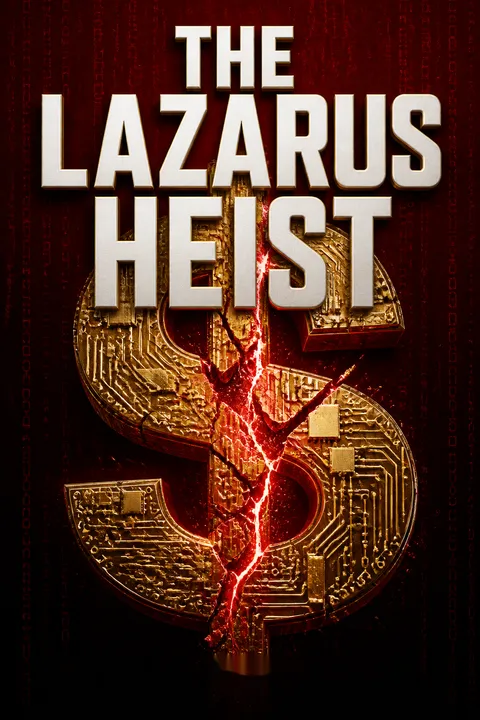
The Lazarus Heist is praised for its gripping narrative and in-depth exploration of North Korean cybercrime. Readers appreciate White's ability to explain complex technical concepts accessibly. The book is described as a page-turner, offering insights into the secretive world of state-sponsored hacking. While some found the latter parts less engaging, most reviewers were impressed by the author's research and storytelling. The book is recommended for those interested in cybersecurity, geopolitics, and true crime.
People Also Read





Glossary
Lazarus Group
Alleged North Korean hacking unitA name used by security researchers for a set of cyber operations attributed to North Korean government hackers. The book follows attacks linked to the group, including the Sony Pictures breach, the attempted Bangladesh Bank theft, WannaCry, and cryptocurrency heists. Different agencies and researchers have used other names for related activity, and attribution claims vary in certainty.
Juche
North Korean self-reliance ideologyAn ideology promoted by North Korea's founding leader, Kim Il Sung, and commonly translated as self-reliance. It shaped policies intended to make the state independent of foreign powers and influence. In the book's account, the ideal became a political constraint when North Korea remained economically dependent on outside aid and the leadership resisted reforms that might challenge its claims of autonomy.
songbun
Inherited social classification systemNorth Korea's state-administered system for classifying citizens according to family background and perceived political loyalty. The book describes three broad social groupings, with a person's classification affecting access to education, work, housing, food, and treatment by officials. Because family history shapes the category, individuals may face lasting restrictions for circumstances beyond their control.
SWIFT
Interbank financial messaging networkThe Society for Worldwide Interbank Financial Telecommunication provides a system through which financial institutions send standardized messages, including payment instructions. It does not itself hold or transfer the money. Banks trust messages because they are expected to come from authorized institutions, which means compromised bank computers or stolen credentials can make fraudulent instructions appear legitimate.
jackpotting
Fraudulent ATM cash-outA method of stealing cash by manipulating the systems that authorize ATM withdrawals. In the Cosmos Bank attack described in the book, hackers allegedly altered bank software so selected accounts appeared to have money available and withdrawals could proceed without normal PIN checks. Cloned cards and cash couriers then turned the digital compromise into physical banknotes.
FASTCash
Cross-border ATM cash-out campaignA campaign name used by US cybersecurity officials for attacks that targeted banks' retail payment systems and enabled fraudulent ATM withdrawals across national borders. The alerts linked the activity to North Korean hackers known as Hidden Cobra. The Cosmos Bank heist was discussed as an incident fitting this pattern, though the label describes a campaign rather than a single malware program.
superdollar
Exceptionally convincing fake US dollarA term for high-quality counterfeit US banknotes that investigators regarded as unusually difficult to distinguish from genuine bills. The book recounts evidence and allegations linking their circulation to North Korean officials and trading networks. It also stresses that direct proof North Korea manufactured them is contested, despite repeated seizures involving people connected to the regime.
Business Email Compromise
Fraud using trusted business correspondenceA fraud in which criminals exploit or imitate an organization's email communications to redirect a legitimate payment. In the book's example, criminals intercepted a law firm's correspondence, impersonated a bank, and supplied false account details. The firm verified those details using contact information provided by the criminals, so its checks unknowingly confirmed the fraud.
peel chain
Repeated small cryptocurrency transfersA laundering method in which criminals split a large cryptocurrency balance into many smaller portions. Each portion is sent toward an exchange or another wallet, while the remaining funds continue through fresh addresses. Automating the transfers creates a complicated transaction trail and can make it harder for investigators or compliance systems to identify and freeze the full stolen amount.
junket
Private casino gambling operationA private gambling arrangement within or alongside a casino, often organized for wealthy visitors by an operator with its own clients and staff. In the book's account of the Manila laundering scheme, junket rooms gave accomplices a controlled setting to gamble stolen money and exchange winnings for cash. The arrangements could also obscure who supplied the funds.
Download PDF
Download EPUB
.epub digital book format is ideal for reading ebooks on phones, tablets, and e-readers.








