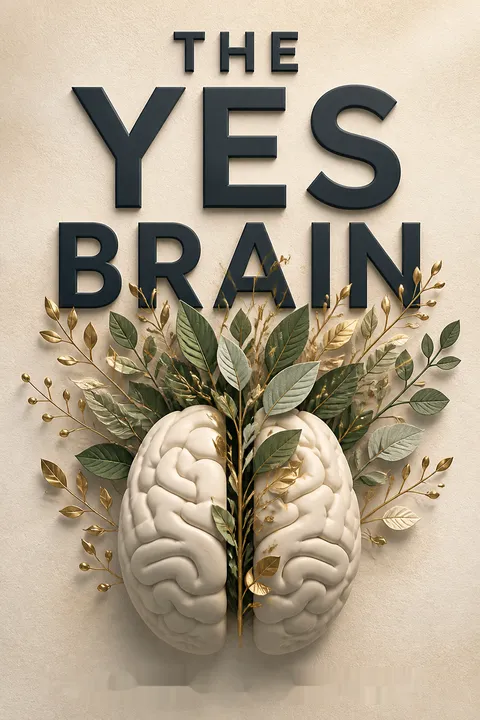


Key Takeaways
Build a child’s openness to life, not a child who says yes to you.
A state, not a label. The book’s Yes Brain is a receptive state: a child can stay curious, connect with others, and consider choices instead of reacting from fear or defensiveness. Its opposite, the No Brain, is a reactive state in which threat responses can take over, from lashing out to shutting down. Children, and adults, move between these states; neither is a permanent personality type.
The aim is capability. The authors organize the skills that support a Yes Brain as balance, resilience, insight, and empathy. This is not a call for permissive parenting or constant cheerfulness. A child can hear no, feel disappointed, and still learn to recover, understand what is happening inside, and remain open to other people.
The useful distinction is between a child’s behavior in a moment and the child’s enduring character. Stress research likewise treats defensive reactions as shifts in state, not evidence of a fixed flaw. That framing can reduce blame and help an adult choose a response the child can actually use. It also prevents a possible misreading: openness does not mean compliance. A child who can disagree, set a boundary, or object to unfairness may be showing flexibility and self-respect, not a deficient Yes Brain.
Treat meltdowns as distress signals before treating them as disobedience.
Find the child’s state. The book uses three zones to make dysregulation easier to recognize. In the green zone, a child can think and respond flexibly. In the red zone, intense arousal may bring yelling, aggression, or panic. In the blue zone, distress may look like withdrawal, rigidity, or shutting down. The window of tolerance is the range of emotional intensity in which a person can still function well.
Connection comes first. Eight-year-old Teddy repeatedly lost control during soccer when he missed a shot or his team fell behind. His father learned to comfort and settle him before discussing behavior. When children are overwhelmed, they may not yet be able to listen, reflect, or make a better choice. Their behavior can point to a missing skill, or to factors such as fatigue, sensory difficulty, or stress that deserve attention.
This approach aligns with co-regulation: a calmer adult helps a child settle before expecting the child to reason independently. It also creates a better opening for accountability, since repair and limits are more useful when the child can take them in. The zones are practical shorthand, not a diagnostic test; the same outward behavior can have different causes. Persistent, severe, or unusual distress may need assessment rather than a parenting technique alone.
Stay connected while letting children solve problems they can manage.
Comfort without taking over. A child who is upset about losing screen time can hear that the disappointment is real while the limit remains in place. The adult stays emotionally linked, responding to the child’s experience, but remains differentiated: the adult does not have to feel the same emotion or remove the problem. This combination gives the child support without making distress disappear on demand.
Make room for agency. The authors call this balance the Yes Brain sweet spot. Too little connection can leave a child alone with feelings they cannot yet manage. Too much involvement can become rescuing: doing a child’s homework, settling every friendship conflict, or preventing every small frustration. When a child has the capacity to try, letting them speak up or work through a manageable problem gives practice in problem-solving and self-trust.
This balance resembles scaffolding in education: offer enough help for a learner to attempt a task, then reduce support as competence grows. The adult’s steadiness matters because it signals that distress can be tolerated without surrendering a boundary. Yet “manageable” depends on the child, the moment, and the stakes. Independence should not become an excuse to withhold protection when a child faces bullying, danger, or a task beyond their developmental capacity.
Challenge children in small doses, with a secure base behind them.
Calibrate the challenge. The authors call the choice between encouragement and support “pushin’ and cushion.” Pushin’ means inviting a child to attempt something uncomfortable but within reach. Cushion means offering more support when the challenge exceeds the child’s present capacity. A boy with intense separation anxiety, for example, practiced brief separations in familiar places, then gradually managed longer ones with help from his mother and teacher.
Let relationship support risk. Secure attachment is described through four experiences: feeling safe, seen, soothed, and secure. That dependable connection can give a child confidence to explore, while the adult watches for signs that the task is becoming overwhelming. Temperament, the real source of a fear, and the child’s response all matter. The goal is neither forced exposure nor automatic rescue, but a step the child can attempt and learn from.
The gradual practice described here shares a principle with exposure-based approaches: a feared situation can become more tolerable when approached in steps that remain manageable. The relational support distinguishes this from simply demanding that a child endure distress. The method still requires judgment. Too little challenge can preserve avoidance, while too much can reinforce alarm. Observing the child’s signals, rather than relying on an adult’s idea of what should be easy, is central.
Protect sleep, play, and unclaimed time as developmental necessities.
A child needs more than achievement. The Healthy Mind Platter names seven kinds of experience that support mental well-being: focus, play, connection, physical activity, inward reflection, downtime, and sleep. The book argues that a life filled with lessons, homework, and scheduled activities can crowd out the very experiences that help children regulate emotion and discover interests. Adequate sleep matters because tired children often have less room to handle frustration.
Play is practice. Free play gives children chances to negotiate rules, recover from disappointment, experiment, and imagine. The authors recount physicist Richard Feynman’s childhood tinkering with discarded machines as an illustration of how boredom and exploration can invite problem-solving. They also describe NASA and Jet Propulsion Laboratory recruiters valuing applicants’ histories of building and hands-on play. These stories support the case for leaving room, not a promise that play produces a particular career.
The strongest argument for free time is developmental, not sentimental: self-directed play lets children practice negotiation and adapt to surprises without an adult supplying every step. A balanced schedule is also a family systems issue. Sleep, unstructured time, and shared routines can be constrained by work hours, school demands, money, and access to safe places to play. The platter is best used as a prompt to notice what is missing, not as another checklist parents must execute perfectly.
Teach a pause that lets feelings inform action without dictating it.
Notice before reacting. Insight means observing one’s inner experience and using that awareness to choose a response. The authors explain this with a player and spectator: the player is caught up in the moment, while the spectator notices what is happening without immediately judging it. A child who learns to spot a racing heart, tense muscles, or mounting worry may be able to pause before reaching an emotional breaking point, which the book illustrates as a Red Volcano.
Practice the pause. Alanah, a highly anxious nine-year-old, feared a chain of disasters after forgetting her lunch. She practiced calming her body with slow breathing and learned to question her worries rather than treating them as facts. The authors also use SIFT, attention to sensations, images, feelings, and thoughts, as a way to notice what is happening inside. These tools help turn awareness into choice.
The player and spectator image makes a subtle psychological skill concrete: people can experience an emotion while also noticing it. That resembles decentering, a concept used in mindfulness approaches, where thoughts are seen as mental events rather than commands. A pause does not guarantee calm, and some children need adult help to use one. For severe anxiety or panic, these practices can complement, but should not replace, appropriate professional support.
Make empathy a practiced habit of attention, language, and helping.
Empathy has several parts. The authors’ Empathy Diamond includes seeing another person’s perspective, resonating with their feelings, understanding their experience, wanting to ease suffering, and sharing in their happiness. Understanding alone is not enough; empathy also involves caring and, when appropriate, acting. Parents can build the skill by asking children what someone else might be feeling, helping them find words for concern, and involving them in practical acts of help.
Practice can change the pattern. Devin seemed self-centered as a young child, but his parents repeatedly invited him to consider other people’s feelings while reading stories and watching films. As a teenager, he became more considerate. The book also cites a teacher-training study in which students whose teachers completed empathy-focused exercises were about half as likely to be suspended as students in a comparison group.
This section usefully separates perspective-taking from compassion. Understanding another person can be used to manipulate them; caring action supplies an ethical direction. The distinction also protects against teaching children to please everyone or neglect their own needs. The reported school result suggests that adults’ interpretations of behavior can shape consequences, though a single intervention cannot establish that empathy training will have the same effect in every classroom.
Measure success by a child’s inner compass, not only by visible achievement.
Achievement is not identity. The authors contrast externally measured success, such as grades, awards, and prestigious placements, with a child’s developing understanding of what matters to them. They call a life shaped by meaning, connection, and emotional equilibrium eudaimonia. This does not reject academic or artistic accomplishment; it asks whether those pursuits fit the child and leave room for curiosity, relationships, and well-being.
Follow the child’s signal. Eric had excelled at school, sports, and work, yet felt unsure what he wanted from life. His story illustrates the risk of treating impressive results as proof that a young person has found direction. Parents can help by noticing what engages a child, allowing exploration, and asking whether the family’s schedule serves the child’s interests or adult anxieties. The aim is to support a distinctive person, not manufacture a résumé.
The distinction between external markers and internal direction is valuable because measurable outcomes can crowd out questions of fit, motivation, and well-being. At the same time, achievement is not inherently shallow: credentials and skills can expand a young person’s options. The practical question is whether performance is one meaningful part of a life or the sole measure of worth. Families also cannot individually repair educational systems that reward narrow metrics, so personal choices have real limits.
Make sense of your childhood so old patterns do not parent for you.
Reflection can change inheritance. A coherent narrative is a clear account of childhood that recognizes what happened, how it affected the person, and how those experiences shape present relationships. The book argues that parents are not doomed to repeat the way they were raised. Understanding one’s history can make it easier to notice old reactions and choose how to respond to a child instead.
Security can be built. Earned secure attachment describes an adult who did not receive consistently secure care as a child but develops greater security by reflecting on and making sense of those experiences. This work is not about blaming parents or excavating every memory. It is about becoming more present and predictable with children, including repairing after conflict and seeking support when needed. A parent’s own regulation and self-compassion help make that kind of care more possible.
The emphasis on a coherent account offers a useful middle ground between denying childhood wounds and treating them as destiny. Narrative reflection can help people identify patterns, but insight alone does not erase trauma or guarantee a different response under stress. Relationships, practical support, and therapy may also matter. The central implication is modest but powerful: a parent can acknowledge inherited patterns without passing them on unchanged.
Analysis
The book’s central move is to shift parenting from behavior control toward capacity building. A tantrum, avoidance, or selfish act is not treated as a verdict on character; it is information about what the child can manage now and what skills may need practice. This outlook links emotional regulation, resilience, self-understanding, and concern for others in a developmental sequence, while insisting that ordinary moments of family life are where those capacities are rehearsed.
Its most practical contribution is a balancing act. Adults are asked to connect before correcting, but not to erase limits; to let children struggle, but not beyond their capacity; to value achievement, but not at the expense of a child’s agency and curiosity. The repeated tension between linkage and differentiation keeps the approach from collapsing into either cold discipline or overprotection. It also places the parent’s own state in view: a regulated adult can lend calm and judgment that a young child has not yet developed.
The neuroscience language makes these ideas memorable, especially the zones and the developing upstairs brain. It should be understood as an accessible map, not a literal switchboard. Children’s behavior is shaped by temperament, learning, health, relationships, and material conditions, and no single brain metaphor explains all of it. Likewise, the book’s claim that experience shapes development is more useful as an invitation to provide varied, supportive experiences than as a reason for parents to feel responsible for every outcome.
The result is a humane definition of success: not a child who is always calm, agreeable, or accomplished, but someone increasingly able to feel difficult emotions, recover, understand personal motives, and act with care. That standard gives parents something more durable than perfect compliance, while leaving room for boundaries, ambition, and individuality.
Review Summary
The Yes Brain receives mostly positive reviews for its insights on fostering courage, resilience, and empathy in children. Readers appreciate the practical strategies and clear explanations of brain development. Many find it helpful for understanding children's emotions and behavior. Some criticize it as repetitive or lacking new information compared to the authors' previous works. Overall, parents and educators consider it a valuable resource for nurturing children's emotional intelligence and well-being, though a few feel it could be more concise.
People Also Read






Glossary
Yes Brain
receptive, flexible stateA state in which a person can remain open to experience, connect with others, and respond flexibly rather than reacting from defensiveness or threat. The book links this state with emotional balance, resilience, self-understanding, and empathy. It is not a permanent personality type, a demand to agree, or a promise of constant happiness.
No Brain
reactive, defensive stateA state in which threat and self-protection dominate, making it harder to listen, consider options, or connect with others. It can appear as fight, flight, freezing, or collapse, including outward anger or inward withdrawal. The term describes a temporary mode of functioning, not a child’s character or a clinical diagnosis.
FACES
features of integrationAn acronym for flexible, adaptive, coherent, energized, and stable. In the book, these are qualities associated with an integrated brain, where distinct brain systems coordinate rather than operate in isolation. The authors use the acronym to describe how integration can support a person’s ability to respond to changing situations and return to balance.
window of tolerance
range for functioning wellThe span of emotional and physiological activation within which a person can still think, relate, and respond effectively. Above the span, a person may become highly agitated or chaotic; below it, they may become rigid, withdrawn, or shut down. The book uses the concept to explain why manageable challenges can differ from overwhelming ones.
Healthy Mind Platter
seven kinds of mental nourishmentA model of seven daily activities presented as useful for mental well-being: focused work, play, social connection, physical activity, inward reflection, downtime, and sleep. It is intended to help families notice which kinds of experience may be missing from a schedule. The book does not prescribe a fixed amount of time for each activity.
Mindsight
understanding minds, self and othersThe ability to perceive and make sense of one’s own mental life and the mental life of other people. In the book, it includes insight into oneself, empathy toward others, and integration, or connecting distinct parts while preserving their differences. Mindsight helps a person notice inner experience and make more deliberate choices.
Four S’s
secure attachment needsFour experiences associated with secure attachment: feeling safe, seen, soothed, and secure. Safe means protected, seen means understood and valued, soothed means helped through distress, and secure means having a dependable sense of care. The book presents these as qualities of a consistent relationship, not a demand for flawless parenting.
Empathy Diamond
five facets of empathyA model describing five dimensions of empathy: perspective-taking, emotional resonance, cognitive understanding, compassionate concern, and empathic joy. Together, these cover seeing another person’s point of view, feeling with them, understanding their circumstances, wanting to ease suffering, and sharing their happiness. The framework distinguishes caring empathy from perspective-taking alone.
Red Volcano
map of rising emotional arousalA child-friendly image for how upset can build toward a loss of control. As arousal rises, body signals such as a fast heartbeat, tense muscles, or quick breathing can warn that a child is nearing an emotional eruption. Noticing these signals may create an opportunity to pause and use a calming strategy before overwhelm.
SIFT
inner experience checkAn acronym for sensations, images, feelings, and thoughts. It offers a way to notice different parts of inner experience rather than responding automatically to a single emotion or impulse. The book uses SIFT to help children and adults build self-awareness, understand what may be influencing them, and choose a response more intentionally.
eudaimonia
meaningful, connected well-beingA Greek concept the book uses for a form of well-being grounded in meaning, connection, and equanimity, rather than pleasure or achievement alone. The authors apply it to a life in which a person can remain connected to an inner sense of what matters while engaging with others and navigating difficulty.
coherent narrative
integrated account of the pastA clear, reflective account of one’s childhood experiences that acknowledges both positive and painful events and considers how they shaped present behavior and relationships. The book argues that making sense of personal history can help adults respond more intentionally as parents, rather than reenacting old patterns without awareness.
earned secure attachment
security developed through reflectionA pattern of greater security in adulthood developed by reflecting on and making sense of early relationships that did not provide consistently secure care. The concept does not imply that reflection changes the past. It describes how a person may develop more secure ways of relating and offer more dependable care to children.
FAQ
What's "The Yes Brain" about?
- Focus on Child Development: "The Yes Brain" by Daniel J. Siegel and Tina Payne Bryson is about cultivating a mindset in children that encourages openness, curiosity, and resilience.
- Four Key Characteristics: The book introduces the concept of the "Yes Brain," which is characterized by balance, resilience, insight, and empathy.
- Practical Parenting Guide: It provides parents with strategies to help their children develop these traits, enabling them to handle challenges and thrive.
- Science-Inspired Approach: The authors use scientific research to back their methods, focusing on brain development and interpersonal neurobiology.
Why should I read "The Yes Brain"?
- Enhance Parenting Skills: The book offers practical advice for parents to help their children develop essential life skills.
- Understand Child Psychology: It provides insights into how children's brains work and how parents can support their development.
- Promote Emotional Well-being: By fostering a "Yes Brain," parents can help their children become more emotionally balanced and resilient.
- Build Stronger Relationships: The book emphasizes the importance of empathy and insight, which can improve family dynamics and relationships.
What are the key takeaways of "The Yes Brain"?
- Yes Brain vs. No Brain: The "Yes Brain" is open and receptive, while the "No Brain" is reactive and fearful. Encouraging a "Yes Brain" leads to better decision-making and emotional regulation.
- Four Fundamentals: The book focuses on balance, resilience, insight, and empathy as the core traits of a "Yes Brain."
- Integration and Neuroplasticity: It highlights the importance of integrating different parts of the brain and using neuroplasticity to foster growth and development.
- Practical Strategies: The authors provide actionable strategies for parents to help their children develop these traits through everyday interactions.
How does "The Yes Brain" define success?
- Internal Compass: Success is defined by developing an internal compass that guides children to live meaningful and connected lives.
- Eudaimonia Concept: The book draws on the Greek concept of eudaimonia, which emphasizes a life full of meaning, connection, and equanimity.
- Beyond External Achievements: It encourages parents to look beyond external achievements and focus on nurturing their child's inner spark and authentic self.
- Balance and Resilience: True success involves helping children develop balance and resilience, allowing them to face challenges with strength and clarity.
What are the best quotes from "The Yes Brain" and what do they mean?
- "I’m not afraid of storms, for I’m learning how to sail my ship." This quote emphasizes the importance of resilience and learning to navigate life's challenges.
- "Where attention goes, neurons fire." It highlights the concept of neuroplasticity, where focused attention can shape and strengthen the brain's connections.
- "Integration made visible is kindness and compassion." This quote underscores the idea that a well-integrated brain leads to empathy and caring behavior.
- "The Yes Brain leads not to some sort of perfection or paradise, but to the ability to find joy and meaning even in the midst of life’s challenges." It reflects the book's focus on finding fulfillment and happiness through resilience and insight.
What is the "Yes Brain" concept in "The Yes Brain"?
- Open and Receptive Mindset: The "Yes Brain" is characterized by openness, curiosity, and a willingness to explore and learn.
- Four Key Traits: It includes balance, resilience, insight, and empathy, which help children handle challenges and thrive.
- Neural Circuits Activation: The "Yes Brain" emerges from activating specific neural circuits that promote receptivity and social engagement.
- Contrast with "No Brain": Unlike the reactive "No Brain," the "Yes Brain" allows for flexible and adaptive responses to life's challenges.
How can parents cultivate a "Yes Brain" in their children?
- Model Empathy and Insight: Parents should demonstrate empathy and insight in their interactions, setting an example for their children.
- Encourage Exploration: Allow children to explore and take risks, fostering curiosity and resilience.
- Provide a Balanced Schedule: Ensure children have time for play, rest, and reflection, promoting emotional regulation and balance.
- Use Everyday Interactions: Utilize daily activities and conversations to teach and reinforce the four fundamentals of the "Yes Brain."
What are the four fundamentals of the "Yes Brain"?
- Balance: The ability to manage emotions and behavior, helping children stay calm and in control.
- Resilience: The capacity to bounce back from setbacks and face challenges with strength and clarity.
- Insight: Understanding oneself and using that knowledge to make informed decisions and regulate emotions.
- Empathy: The ability to understand and care for others, fostering meaningful relationships and ethical behavior.
How does "The Yes Brain" address the concept of neuroplasticity?
- Brain's Ability to Change: Neuroplasticity refers to the brain's capacity to reorganize and form new connections based on experiences.
- Attention Shapes the Brain: The book emphasizes that where attention goes, neurons fire and wire together, shaping the brain's structure.
- Promoting Integration: By encouraging a "Yes Brain," parents can help integrate different brain regions, leading to better emotional regulation and decision-making.
- Practical Application: The authors provide strategies to harness neuroplasticity, helping children develop the traits of a "Yes Brain."
What role does empathy play in "The Yes Brain"?
- Understanding Others: Empathy involves seeing the world through others' eyes and understanding their feelings and experiences.
- Facets of Empathy: The book describes five facets of empathy, including perspective-taking, emotional resonance, and compassionate empathy.
- Building a Caring Brain: Empathy is a skill that can be developed through everyday interactions and experiences, leading to a more caring and ethical individual.
- Integration and Connection: Empathy fosters integration by linking individuals to others, creating meaningful relationships and a sense of belonging.
How does "The Yes Brain" suggest handling children's emotions?
- Recognize and Validate: Acknowledge children's emotions and help them understand and express their feelings.
- Teach Emotional Regulation: Provide tools and strategies for children to manage their emotions and return to a balanced state.
- Model Calmness and Empathy: Demonstrate calm and empathetic responses to emotions, setting an example for children to follow.
- Encourage Insight and Reflection: Help children develop insight into their emotions, allowing them to make informed decisions and regulate their behavior.
What practical strategies does "The Yes Brain" offer for parents?
- Maximize Sleep: Ensure children get enough rest to support emotional regulation and balance.
- Serve a Healthy Mind Platter: Provide a balanced schedule that includes time for play, rest, and reflection.
- Teach Mindsight Skills: Help children develop insight and empathy through everyday interactions and conversations.
- Encourage Exploration and Risk-Taking: Allow children to explore and take risks, fostering curiosity and resilience.
About the Author
Other books by Daniel J. Siegel







Download PDF
Download EPUB
.epub digital book format is ideal for reading ebooks on phones, tablets, and e-readers.








