

Key Takeaways
Acknowledge the genocide without letting inherited grievance dictate who you become
History became personal. In 2005, Toumani arrived in Istanbul expecting to hate the place. Its beauty unsettled her: she had spent years fighting for a homeland she had never seen, and the certainty that organized her Armenian identity began to loosen. Yet questioning the role of inherited grievance did not mean questioning the genocide. She describes the 1915 to 1923 destruction of Ottoman Armenians as genocide, estimating that 800,000 to one million were killed outright or driven to death. Another million or so survived deportation or escaped. Of roughly 2.5 million Armenians in the empire, about 200,000 remained in Ottoman lands.
Memory needs room. Toumani also notes that Armenian resistance groups killed about 30,000 Turks and Kurds. That fact complicates the history without making the violence against Armenians equivalent or excusing it. Her deeper question is how to remember accurately without making hatred a condition of belonging.
The book’s hardest distinction is between honoring historical truth and inheriting a prescribed emotional response. These are often fused: challenge the community’s political strategy, and others hear denial of the suffering itself. Toumani pries them apart without treating the genocide as an open question. That separation matters because collective memory can preserve evidence and give people a sense of continuity, while also narrowing the identities available to descendants. The useful test is not whether remembrance produces anger or pride, but whether it still permits honest inquiry, individual choice, and recognition of other people’s humanity.
A community can preserve memory and still punish members who question its script
Belonging came with a lesson plan. At Camp Haiastan, Toumani found Armenian friends, songs, history, and a place where her awkwardness mattered less. The camp also taught a political program called Hai Tahd: seek recognition of the genocide, reclaim formerly Armenian-inhabited lands in eastern Turkey, and reunify other historic Armenian territories. Its flags, lessons, and debates made national identity feel like a shared duty.
The duty had sharp edges. At thirteen, Toumani watched campers argue whether violence was justified after five Armenian militants died in a 1983 bombing in Lisbon that killed a Turkish diplomat’s wife and a Portuguese policeman. Some called the bombers heroes; dissent was rare. A counselor’s refusal to join the chorus revealed that group membership could demand more than remembering past violence. It could ask children to approve new violence in its name.
The camp works as a small model of how communities transmit identity: not only through explicit lessons, but through songs, jokes, rituals, and the approval that comes with speaking the expected way. Such practices can sustain a minority culture, especially when its members feel isolated. They can also turn belonging into a test of loyalty. The Lisbon debate makes the distinction unusually clear: teaching children about violence is not the same as teaching them what moral conclusions they must draw from it. A healthy community needs ways to keep memory alive while making dissent possible.
Check the face behind your enemy before calling certainty knowledge
Assumptions can harden unnoticed. At Berkeley, Toumani witnessed a professor argue with Armenian students at a genocide commemoration. She and her peers assumed he was Turkish because he challenged their display. Years later, she discovered that Hamid Algar was English, had converted to Islam, and had taken the name Hamid. Her memory had supplied him with a Turkish appearance and identity that were not there.
Seeing Turkey changed the frame. Toumani’s first arrival in Istanbul forced her to encounter an actual place, not just the symbol of a historic enemy. Later, meeting Turks who questioned their country’s official account showed her that neither ethnicity nor nationality reliably predicted a person’s beliefs. But her mistakes did not make every account equally trustworthy. They showed that conviction can distort observation, and that personal contact is a reason to examine assumptions, not a substitute for historical evidence.
This episode offers a precise lesson in epistemic humility: a person can witness an event accurately in some respects and still misread who is involved or what it means. The danger is not simply bias, but memory’s ability to quietly revise details until they support a settled story. Toumani’s correction does not invalidate her account of the professor’s hostility, nor does it make the denial of genocide more credible. It models a stronger form of judgment: revise claims when evidence requires it, while keeping separate the questions of what happened, who did it, and what the event means.
Read denial as a state system, not merely a private opinion
The official story was organized. Toumani describes Turkish textbooks that portrayed Armenians as traitors, restrictions on minority education, and public institutions that omitted or recast Armenian history. The state’s anxiety about losing territory was sometimes called Sèvres syndrome, after the 1920 treaty that proposed dividing Ottoman lands but was never implemented. The unfulfilled treaty became a lasting symbol of threatened national dismemberment.
Words carried consequences. Article 301 made insulting Turkishness a crime. Hrant Dink, an Armenian journalist who argued for honest discussion, received a suspended prison sentence under the law in 2005. He was murdered in 2007 after years of threats and a hostile public campaign. His killer said he was defending the nation. The point is not that every Turk shared the same beliefs, but that education, law, media, and nationalism could make denial seem like ordinary patriotism.
The institutional lens helps explain why correcting an individual’s misconception may accomplish little. When a nation’s schools, laws, and public rituals reinforce a single account, denial becomes part of civic common sense rather than merely a private opinion. The murder of Dink shows how language can move from official boundary-setting to social permission for violence. Still, a system is not a single mind: Toumani encounters dissenting scholars, journalists, and ordinary citizens inside Turkey. Understanding the machinery of denial should sharpen responsibility, not turn every member of a population into a representative of the state.
Study how violence happened without bargaining away what happened
Better questions deepen the record. The Workshop for Armenian-Turkish Scholarship, or WATS, brought Armenian and Turkish scholars together to move beyond the endless contest over whether the genocide occurred. Its participants examined how violence developed, why Ottoman leaders acted, how local officials responded, and how wartime conditions and earlier massacres mattered. They aimed to hold complexity and responsibility together, not to split the difference between competing national stories.
A debate is not always research. Toumani describes Yusuf Halaçoğlu, head of Turkey’s state-funded Turkish Historical Society, inviting scholars to exchange fixed sets of documents as if evidence could settle history like a contest. Serious researchers instead proposed specific, independently assessed investigations, including examination of a mass grave and comparison of archival records. These projects stalled. Toumani’s account insists that scholarship must be open to uncertainty about causes and details without pretending that the destruction of Armenian life is therefore unknowable.
The distinction between complexity and relativism is central. A rigorous history can ask how state policy, war, local variation, and Armenian resistance interacted without converting those factors into a defense of mass destruction. Conversely, a simple story can be emotionally satisfying while leaving causal questions unanswered and making collective blame seem natural. WATS represents a method as much as a meeting: specify the question, examine the evidence, and expose the political conditions shaping research. Its limits are also visible: collaboration cannot proceed when one party uses the appearance of inquiry to delay or discredit investigation.
Build reconciliation on equal standing, not flattering claims of sameness
Similarity can be evasive. Turks sometimes tried to connect with Toumani by praising Armenian cooking or insisting that the two peoples were alike. One woman pointed to their supposedly shared smile. The gestures could be kind, but they sidestepped the question of what Armenians had suffered and the unequal position of Armenians still living in Turkey.
Equality is more than warmth. Toumani’s Turkish friend Derya asked what it was like for her to be in Turkey, acknowledging the difficulty rather than smoothing it over. Derya argued that the Armenian issue, like the Kurdish issue, involved a power imbalance sustained by the state. Toumani came to see why friendship could feel false when one person’s account was denied and their circumstances discounted. She also resisted the idea that government power alone could settle truth: official recognition matters, but state authority can be used to distort history as readily as to acknowledge it.
The book distinguishes interpersonal kindness from political equality. Warm hospitality may make contact possible, but it cannot by itself alter the rules governing whose history counts or whose identity is safe to name. Claims of sameness can even silence difference by making the harmed person responsible for reassuring the more powerful party. Derya’s emphasis on power gives reconciliation needed realism. Yet Toumani’s caution is equally important: a government’s recognition may carry consequences, but it should not become the sole judge of historical truth. Repair requires both public accountability and relationships in which unequal realities can be spoken plainly.
Treat the homeland as a living place, not a sacred backdrop
Armenia was more than a symbol. Toumani’s family identified as Armenian but came from Iran, Georgia, and other parts of the Caucasus. Her trips to Yerevan brought reunions with relatives and a renewed connection to Armenian language, while also revealing poverty, corruption, emigration, and the hardship of years of blockade. For people in Armenia, opening the border with Turkey could mean access to the outside world, not a betrayal of memory.
Diaspora unity had limits. The Pan-Armenian Games gathered athletes from communities across the world, but the Istanbul Armenian team was treated as suspect by some diaspora Armenians because its members lived in Turkey and spoke Turkish. A basketball dispute became an argument about whether they were truly Armenian. Meanwhile, Armenian traders used charter flights to bring Turkish goods into a country whose borders were largely closed. The homeland and diaspora were connected, but their needs and experiences were not interchangeable.
A homeland can anchor identity without being a simple answer to displacement. Toumani’s family history shows that Armenian belonging does not depend on having lived in the Republic of Armenia, while her reporting shows that symbolic attachment can obscure what residents actually need. The suitcase trade makes the political contradiction concrete: public hostility and private economic interdependence coexist. The Games add another complication, since a community can celebrate global unity while policing which members count as authentic. Treating Armenia as a living society rather than a shrine makes room for both cultural attachment and practical political choices.
Welcome gestures matter, but a ceremony is not political repair
The restored church carried two messages. In 2007, Turkey reopened the renovated tenth-century Armenian cathedral on Akdamar Island as a museum. The event drew extensive publicity, but official materials and speeches avoided saying that the church was Armenian. The Turkish flag and national anthem framed the ceremony, while the Armenian community’s religious needs remained unsettled. The restoration preserved a building, yet its presentation also showed how easily recognition could be replaced by euphemism.
Soccer opened a door, not a settlement. In 2008, Turkey’s president attended a World Cup qualifying match in Armenia. The countries began negotiations, and their foreign ministers signed normalization protocols in 2009. The agreements were never ratified, amid disputes over historical review and Armenia’s conflict with Azerbaijan. These episodes were not meaningless: they made contact possible and exposed what remained unresolved. But public optimism often turned a tentative gesture into a claim that reconciliation had already been achieved.
Symbolic acts matter because they make previously forbidden subjects visible. A restored church, a presidential visit, or a public meeting can change what people imagine is possible. Their meaning, however, depends on what accompanies them: naming, access, worship, institutional follow-through, and a willingness to accept criticism. The Akdamar ceremony’s omissions are not erased by the restoration, just as the failed protocols do not make diplomacy pointless. The useful standard is neither cynicism nor applause. It is to ask what changed for people on the ground, and whether the gesture creates obligations beyond its photograph.
Keep language precise without letting one word dictate your whole identity
Names can clarify and constrain. In 2008, thousands of Turkish signatories joined an apology petition that called the 1915 events the Great Catastrophe rather than genocide. Some Armenians welcomed the expression of conscience; others saw its avoidance of the word genocide as a way to evade responsibility. Barack Obama later used the Armenian phrase Meds Yeghern, meaning Great Catastrophe, to avoid the term while still marking the anniversary.
A label cannot carry every life. Toumani usually used the word genocide, but in one article about the Armenian musician Gomidas, she described his suffering without using it. She wanted to write about a person and his music, not make the word function as a political password. This was not a rejection of the term or of recognition. It was an attempt to preserve her freedom to describe history in more than one register, and to be Armenian without surrendering individual judgment.
The dispute over terminology shows that words operate on several levels at once: they classify an event, signal political allegiance, and communicate whether a community’s experience is being taken seriously. Avoiding a term can be evasive, but enforcing a single word in every setting can turn language into a loyalty test. Toumani’s distinction is useful because it does not pretend the stakes are equal: genocide remains the term she generally uses for the historical crime. Her narrower claim is about agency. Legal and political naming matters, while art and personal memory also need language capable of attending to particular lives.
Analysis
This memoir is difficult to reduce to a verdict about diplomacy because its central movement is inward: Toumani begins with certainty inherited from diaspora life, tests it against encounters in Turkey and Armenia, and discovers that neither certainty nor openness is innocent. The narrative’s strongest method is self-implication. The narrator misreads a professor’s identity, feels tempted to fit into both communities, and recognizes how her desire for acceptance can distort her judgment. These episodes make the book’s argument credible without turning personal experience into proof of every historical claim.
Its political insight is that historical denial is not merely an error of memory. It is connected to state institutions, national identity, and the unequal capacity to define whose account is legitimate. Yet the memoir refuses a clean division between a uniformly hateful Turkey and a uniformly virtuous Armenian community. Diaspora activism can preserve memory and build belonging, but it can also demand conformity, romanticize violence, and treat Istanbul Armenians as compromised. Turkish hospitality can be genuine and still coexist with exclusion. These tensions are not contradictions to solve; they are the conditions under which people live.
The book’s most productive distinction is between complexity and equivalence. Asking how the genocide happened does not weaken the conclusion that Armenians were subjected to genocide. It can instead challenge inherited racial explanations and expose the political choices that made mass violence possible. Likewise, contact across a divide can create knowledge, but it cannot by itself repair unequal power or replace public accountability.
The ending rejects both compulsory unity and easy reconciliation. Toumani cannot make a single word, government resolution, homeland, or friendship hold every Armenian together. That is a sobering conclusion, but also the source of the book’s freedom: people can retain historical memory while deciding what else they are, and how they will relate to those who inherit a different account.
Review Summary
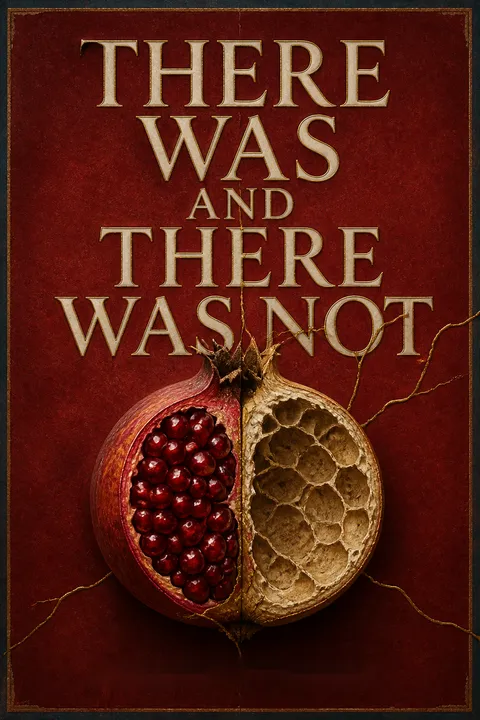
There Was and There Was Not explores the complex relationship between Armenians and Turks, focusing on the 1915 Armenian genocide. Toumani, an Armenian-American, challenges her community's obsession with genocide recognition by immersing herself in Turkish culture. The book offers a nuanced perspective on identity, collective trauma, and reconciliation. Readers praised Toumani's honesty, insightful observations, and beautiful writing. While some found the book thought-provoking and illuminating, others criticized her approach or perceived biases. Overall, it's considered a valuable contribution to understanding Turkish-Armenian relations and the lasting impact of historical events.
People Also Read








Glossary
Hai Tahd
Armenian political causeThe political program associated with the Armenian Revolutionary Federation and its youth organizations. As described in the book, it seeks recognition of the Armenian genocide, the reclamation of formerly Armenian-inhabited provinces in eastern Turkey, and the reunification of other historic Armenian territories now within Georgia and Azerbaijan. It shaped the camp lessons and political debates of Toumani’s childhood.
Sèvres syndrome
Fear of national partitionA name used for Turkish anxiety that the country may be divided or stripped of territory by outside powers. It refers to the 1920 Treaty of Sèvres, which proposed distributing parts of the former Ottoman Empire among other powers and granting territory to Armenia and Greece. The treaty was never implemented, but its memory remained influential in Turkish national narratives.
Workshop for Armenian-Turkish Scholarship (WATS)
Cross-community historical researchA scholarly initiative bringing Armenian and Turkish researchers together to study the late Ottoman destruction of Armenian life. Rather than staging a contest between fixed national positions, the group examined questions about causes, regional differences, government decisions, wartime pressures, and the evidence. Its approach sought historical complexity without treating all interpretations as equally valid or minimizing genocide.
White Turk
Westernized Kemalist eliteA Turkish social and political type defined not by skin color but by association with the secular, nationalist Kemalist establishment. White Turks may display Western education, tastes, and style while supporting a state vision of modernization that suppresses minority identities and stigmatizes religious conservatism. The label describes a position within Turkey’s power structure, not simply a personal lifestyle.
Meds Yeghern
Armenian phrase for catastropheAn Armenian expression meaning Great Catastrophe. The book discusses its use by US President Barack Obama in annual statements about the 1915 destruction of Ottoman Armenians, as a way to acknowledge the events while avoiding the word genocide. Because many readers do not know the Armenian phrase, its use could communicate less than the direct historical term it replaced.
Narcissism of small similarities
Sameness used to avoid differenceToumani’s reworking of the familiar idea that groups may magnify minor differences between themselves. She uses the phrase for the opposite maneuver: insisting that Armenians and Turks are essentially alike as a way to avoid confronting unequal power, discrimination, or historical pain. Similarity can foster connection, but it becomes evasive when it requires the harmed person’s experience to disappear.
Download PDF
Download EPUB
.epub digital book format is ideal for reading ebooks on phones, tablets, and e-readers.








