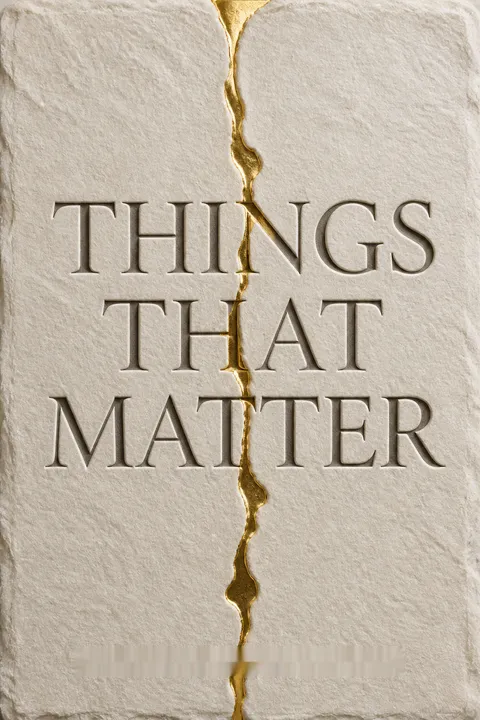


Key Takeaways
Use mortality as a compass, then give today one clear priority.
Start at the end. At a workshop, author Joshua Becker was asked what unfinished work he would most regret if he died that day. His answer became the book itself. The exercise turns vague concern about wasting life into a concrete choice: name the work or relationship that matters most, then act on it. In Becker’s survey of 400 US adults, 70 percent said they had identified a purpose; 30 percent had not or were unsure.
Make intention daily. Becker’s grandfather Harold planned his own funeral at age 90, lived to 99, and kept working until nine days before he died. A simple morning prompt, committing to one priority for that day, makes a large purpose usable without requiring a dramatic life overhaul.
Mortality can clarify priorities because it forces trade-offs into view: a finite life cannot accommodate every appealing ambition. The practical strength here is the move from existential reflection to a daily commitment, a scale small enough to repeat. Research on implementation intentions similarly suggests that goals become more actionable when translated into specific decisions. Still, mortality is not equally motivating for everyone. For some, it can intensify anxiety or narrow attention to achievement. A useful version of the exercise includes relationships, care, and ordinary responsibilities, not only projects that leave a public mark.
Treat distraction as a life pattern, not merely a noisy phone.
Notice the drift. Becker defines the central problem broadly: distraction is anything that repeatedly takes time, energy, or attention from what a person considers important. It predates smartphones. His historical examples range from Demosthenes creating a secluded place to practice speaking to people in earlier eras becoming absorbed in entertainment. Modern devices amplify distraction, but mixed-up priorities and avoidance are older obstacles.
Watch the escalation. In Becker’s survey, 76 percent said distractions sometimes or more often displaced important pursuits, and 52 percent said the problem was growing. A diversion can become a lifestyle as it takes more time, gets rationalized, and begins displacing relationships or responsibilities. Executive Ed Townley responded to a changed family life by setting a firm 5 p.m. departure from work. He later became CEO, and the company accommodated the boundary.
This broader definition avoids a common mistake: treating attention as a software problem when it is also a values problem. A phone limit cannot resolve a career that quietly consumes every evening, just as deleting an app cannot determine what deserves those recovered hours. The Townley example makes a useful point about social norms: boundaries can prompt other people to adapt. Yet not every worker has the same leverage over a schedule. Personal intention matters, but workplace power, caregiving demands, and economic constraints shape which changes are feasible.
Name the fear, then take a prudent step before certainty arrives.
Fear protects and restricts. Fear can warn of genuine danger, but fear of failure can also disguise avoidance as sensible delay. Becker describes a friend, David, who wanted to write a novel but postponed it while worrying that it might fail. He finally began when the prospect of never trying felt worse than a disappointing result. Becker also names fears of rejection, change, discomfort, and success as possible barriers.
Make the risk workable. Becker’s own career change took three and a half years. Before leaving pastoral work for his minimalism project, he and his wife set a monthly budget, saved about $18,000, and gave the new work a nine-month test. The point is not to leap blindly. Identify the feared outcome, build a reasonable safety net, and take a real step. Repeated, gradual exposure can make a feared action more manageable.
The chapter’s strongest distinction is between prudence and procrastination. A safety net does not cancel courage; it can make action responsible, particularly when other people depend on the decision-maker. Behavioral approaches to anxiety often use graded exposure, letting someone approach a feared situation in manageable increments rather than waiting to feel fearless. The caution is that fear sometimes reflects accurate information about risk, not merely a limiting belief. The useful question is not whether fear should be ignored, but whether the risk can be reduced enough to permit a meaningful experiment.
Let past harm inform your service without pretending healing is simple.
The past can constrain the future. Becker distinguishes mistakes a person commits from harm suffered at someone else’s hands. Both can distort self-worth and make future choices feel impossible. Deanna Hutchison’s childhood insecurity preceded addiction and debt; recovery began when she faced those patterns and sought help. Jada Reid endured foster care and abuse, later served prison time, and eventually built a life helping troubled teenagers. Their stories show possibility, not a guaranteed route from suffering to success.
Choose a turning point. Becker’s survey found that 61 percent felt their own past mistakes held them back at least somewhat, while 55 percent felt similarly about wrongs done to them. His advice includes naming the harm, taking responsibility where appropriate, apologizing or making amends when possible, and seeking professional help when trauma or distress persists. Forgiving an offender, he stresses, does not excuse the harm.
The distinction between guilt for actions and pain from victimization is ethically essential. Accountability may involve repair; trauma recovery should not be framed as a test of willpower or a duty to forgive on someone else’s timetable. The stories also suggest a form of post-traumatic growth: experience can deepen a person’s understanding of others facing similar difficulty. That possibility should not romanticize suffering. Pain does not need to become a mission to justify a survivor’s life, and professional support may be more appropriate than self-directed exercises when trauma remains overwhelming.
Pursue purpose through service, not the endless private chase for happiness.
Happiness follows engagement. Becker argues that self-focused pursuits can provide pleasure without reliably producing lasting fulfillment. He cites studies in which wealthier players in a rigged Monopoly game behaved less generously, and college graduates pursuing intrinsic aims such as relationships and personal growth reported better well-being than those focused on wealth and fame. His conclusion is not to reject self-care, but to stop treating personal gratification as the whole definition of happiness.
Practice concern for others. Service can begin with ordinary acts: listening to a troubled friend, tutoring, helping a neighbor, or preparing food for someone in need. Becker recalls taking teenagers to meet families living in a garbage dump in Ecuador. Direct contact changed the students’ understanding in a way that distant information had not. The book’s practical claim is that helping is not only something a generous person does; it can also cultivate generosity.
This argument aligns with the distinction between hedonic well-being, the pursuit of pleasure, and eudaimonic well-being, a sense of meaning through worthwhile activity. Service can connect personal agency to needs beyond the self, which helps explain why it may feel more durable than consumption. But altruism is not a cure-all, and self-care is not selfish by definition. Nor can individual generosity solve structural poverty on its own. The most defensible version of the claim is that service can enrich a life while contributing to others, not that suffering people exist to make helpers happier.
Define enough before money turns into a moving target.
More can become an endless condition. In Becker’s survey, 79 percent thought more money would make them happier, and nearly 70 percent said the desire for more money influenced daily decisions. He notes that 87 percent of surveyed millionaires did not consider themselves wealthy, and a study group with average net worth of $78 million thought it needed 25 percent more to feel content. These examples illustrate how a financial target can keep shifting after it is reached.
Use money as a means. Becker does not dismiss wages, saving, or emergency funds. He asks whether the pursuit of additional wealth is crowding out valued work and generosity. One suggested experiment is to give away a modest amount, then notice whether basic needs remain covered. The purpose is not a universal donation rule; it is to test assumptions about what is necessary and to make room for giving where the household can afford it.
The distinction between security and status-seeking is important. Money can reduce real hardship, expand choice, and protect against emergencies; the problem is treating an ever-higher balance as a reliable source of emotional safety. Behavioral economics helps explain the trap: people adapt to gains, so yesterday’s luxury can become today’s baseline. At the same time, generosity advice must account for debt, dependents, and unstable income. Giving should be a considered choice, not a substitute for financial stability or a moral judgment against people with limited means.
Own fewer things to recover money, time, and attention for purpose.
Minimalism redirects resources. In Becker’s usage, minimalism means deliberately reducing possessions that obstruct the activities and relationships a person values. It is not a demand to own nothing. Excess belongings can absorb money through purchases, time through cleaning and maintenance, and mental attention through the ongoing urge to shop or organize. Becker cites an estimate of 300,000 items in the average American home and reports that household activities take adults roughly two hours a day.
Ask what possessions enable. Rather than deciding only whether an object feels pleasant, Becker proposes asking whether it supports a meaningful purpose. Bonnie Balgeman, a busy mother on a ranch, began decluttering after realizing that managing the household’s inventory was squeezing out time with her children. Removing unused items helped her see how much money and effort had gone into purchases that did not improve family life.
The distinctive contribution is to treat decluttering as a reallocation strategy, not an aesthetic project. An emptied closet matters only if it makes room for something valued, such as rest, care, creative work, or community. The approach also counters choice overload: fewer possessions can reduce small recurring decisions. Its limits deserve attention. Minimalism is easier when a person has secure housing, money, and control over what enters the home. The practical aim is not sparse interiors or moral superiority, but a better fit between material resources and actual priorities.
Choose contribution over applause, and make other people more visible.
Approval can hijack ambition. After his book and online following grew, Becker noticed jealousy when other minimalism writers received attention. He realized that public recognition had become entangled with his sense of worth. Oluebube Princess Egbuna describes a similar drift: she became known in technology circles as an advocate for inclusion, while her original ambition to become a skilled software engineer receded.
Redirect the spotlight. Becker recommends accepting deserved praise without making it the goal, then crediting collaborators and promoting worthy work by others. His friend Jacob King shifted energy from building a high-profile property career toward mentoring at-risk teenagers and supporting families affected by abuse. The point is not to avoid influence or recognition altogether. It is to judge success by the contribution made, rather than by how much attention gathers around the contributor.
Recognition is not inherently corrupt. It can make good work visible, attract collaborators, and signal competence. The danger arises when measurable attention becomes a substitute for the underlying craft or cause. This resembles a familiar problem in organizations: once a metric becomes a target, people can optimize the metric while neglecting the purpose it was meant to represent. Sharing credit is therefore more than modesty; it distributes status and strengthens cooperation. Still, visibility can be necessary for advocacy, so the better test is whether attention serves the work or quietly replaces it.
Treat work as contribution, and leisure as recovery rather than destination.
Work can serve others. Becker challenges the idea that work is merely the unpleasant price of future leisure. In his survey, only 34 percent found a fulfilling job more attractive than early retirement and leisure. He reframes work broadly to include paid employment, parenting, and volunteer service, arguing that useful work contributes to other people’s lives. A landscaper, for instance, can improve a neighborhood’s shared environment and support the work of others.
Retool instead of disappearing. Becker’s grandfather continued working until shortly before his death at 99. Other examples include retired tradespeople rebuilding a home for formerly incarcerated men and a retired accountant preparing tax returns for low-income women. The claim is not that everyone should work indefinitely. Rest matters, and retirement can be right. The more useful question is what meaningful activity, if any, a person is retiring to, not only what job they are leaving.
Seeing work as contribution can restore dignity to jobs that are often evaluated only by pay or prestige. It also offers a practical source of meaning when a person cannot change occupations: the same task can be understood through the people it helps. But a service-centered ethic should not normalize exploitative conditions or make exhaustion a virtue. Paid work, caregiving, and volunteering have different demands, and not everyone has the health or opportunity to remain productive. Leisure is not merely fuel for labor; play and rest can be valuable parts of a good life in their own right.
Make technology earn its place in your life, one deliberate limit at a time.
Attention has a cost. Becker reports that US adults in 2020 spent an average of 12 hours and 21 minutes consuming media daily, with smartphones and television each accounting for nearly four hours. He also cites research estimating that workers take about 23 minutes to return to a task after an interruption. These figures are tied to particular surveys and contexts, but they illustrate how repeated checks can consume both time and concentration.
Reset, then choose. Becker recommends a 29-day digital detox to reveal how strongly devices pull at attention, followed by deliberate reintroduction. He also suggests favoring useful contribution over passive consumption, treating devices more as tools than toys, and setting boundaries such as turning off notifications or creating phone-free spaces. The aim is not to reject technology, which can connect people and advance meaningful work, but to decide when and why it is used.
The chapter’s strongest insight is that distraction is partly designed: notifications, endless feeds, and variable rewards compete for attention in ways that can make stopping difficult. That shifts the issue from personal weakness alone to the design of digital environments. Still, a detox is best treated as an experiment, not proof that technology is intrinsically harmful. Devices are essential for work, accessibility, safety, and relationships for many people. Sustainable limits should protect chosen priorities while preserving useful connection, rather than turning screen time into a simple measure of virtue.
Find your purpose where what moves you meets what you can do and others need.
Use three overlapping clues. Becker’s closing exercise asks readers to identify passions, abilities, and needs that draw their attention. A purpose is most promising where all three meet: passion makes it sustainable, ability makes it feasible, and a real need makes it useful. The exercise asks about energizing work, formative experiences, skills, personal qualities, and problems that evoke empathy. It helps distinguish a personally enjoyable goal, such as hiking, from a purpose that uses that interest to serve someone else.
Expect the route to change. Becker compares a meaningful life to a mountain hike with false summits: progress can reveal a more important next step. His work on minimalism led to writing, teaching, and founding an organization focused on family-based care for orphans. He also emphasizes keeping close relationships involved in major changes and looking for tangible benefits to others as evidence that a chosen pursuit matters.
The three-part model is useful because it joins motivation, competence, and social value instead of reducing purpose to either passion or duty alone. It also permits several meaningful roles, which is more realistic than searching for one final, permanent calling. Its weakness is that the three circles can be difficult to reconcile: urgent community needs may not match an individual’s talents, and passions can change. The model works best as a revisable compass, not a verdict. A modest first step can generate information about fit that introspection alone cannot provide.
Analysis
Things That Matter treats attention as a moral resource: what receives a person’s time and energy gradually determines what that life becomes. Becker’s central move is to shift the discussion from productivity hacks to competing claims on a finite life. Fear, shame, money, possessions, status, leisure, and digital media are not presented as universally bad. They become distractions when their pull repeatedly displaces commitments the person considers more consequential. That conditional definition gives the book breadth and makes its framework usable beyond any single habit.
The narrative method is persuasive because Becker pairs advice with lives in motion. His grandfather’s funeral planning gives mortality an intimate human face; Ed Townley’s five o’clock boundary turns a principle into a workplace decision; Jada Reid’s path from harm and incarceration toward service shows that the past need not dictate identity. These stories make purpose concrete without requiring celebrity-scale achievement. The book’s most productive tension is between personal agency and circumstance. Readers are encouraged to take risks, give more, own less, and keep contributing, yet those choices depend on health, income, caregiving obligations, social power, and access to support. The best reading preserves both truths: individual choices matter, and the conditions around those choices are not evenly distributed.
The book is strongest when it proposes experiments rather than universal commandments. A spending pause, a technology break, a daily intention, or a question about whether possessions serve a purpose can expose hidden habits and generate evidence about what improves a life. Its argument about service also benefits from nuance. Helping others can create connection and meaning, but it does not replace self-care, fair institutions, or material security. Likewise, meaningful work is not a mandate for endless labor, and retirement or leisure can be valuable in themselves. The durable lesson is not to maximize effort or altruism. It is to make recurring choices that align attention with relationships, capabilities, and needs that genuinely matter, then revise those choices as life changes.
Review Summary
Things That Matter received mixed reviews. Some praised its insights on minimizing distractions and living intentionally, finding it thought-provoking and motivating. Others criticized the author's perspective on money and work as privileged and out-of-touch. Many appreciated Becker's straightforward writing style and practical advice, while some found the content repetitive or obvious. The book's religious undertones were noted by several reviewers. Overall, readers who resonated with Becker's minimalist philosophy found value in his latest work, while others felt it lacked depth or relevance to average people's circumstances.
People Also Read




Glossary
Minimalism
Purpose-led reduction of possessionsIn Becker’s usage, minimalism is the intentional reduction of possessions that distract from a person’s most valued priorities. It is not about owning nothing or achieving a particular aesthetic. By reducing excess belongings, a person can free money, time, energy, and attention for relationships, work, service, and other meaningful pursuits.
atychiphobia
Fear of failureA term Becker uses for an intense fear of failing that can prevent people from starting, continuing, or fully pursuing important goals. It may lead to procrastination, lowered expectations, avoidance of evaluation, or self-sabotage. The book distinguishes this limiting fear from reasonable caution and recommends naming it, planning prudently, and taking manageable steps.
immortality symbols
Signs meant to outlast deathA concept Becker draws from anthropologist Ernest Becker. Immortality symbols are possessions or achievements people use, consciously or not, to feel that they will persist beyond their lives. The book describes wealth and property as common modern examples, while arguing that character, relationships, service, and the influence one has on others can form a more meaningful legacy.
oniomania
Compulsive buyingA clinical term for compulsive buying disorder that Becker uses when discussing possessions. It describes repeated, difficult-to-control shopping that can function as a response to negative emotions or low self-esteem and can lead to debt, clutter, and misplaced priorities. Becker cautions that excessive buying may be more common than people recognize, even when it does not meet a clinical threshold.
Digital detox
Temporary break from technologyA planned period of abstaining from some or most digital media to reveal how strongly devices and online services shape attention and habits. Becker recommends a 29-day break as one possible reset, with essential communication exceptions where needed. Afterward, technology is reintroduced deliberately, according to its usefulness for relationships, work, learning, or contribution.
Things That Matter Survey
Survey of priorities and distractionsA nationally representative online survey of 400 US adults, commissioned by Becker’s organization and conducted in February 2021. It asked about life purpose, distraction, money, work, and technology. The book uses its results to illustrate how respondents view their priorities, while the findings remain a snapshot of one sample and point in time.
Discover Your Purposes
Purpose-finding reflection exerciseBecker’s guided exercise for clarifying meaningful pursuits by considering three overlapping areas: personal passions, abilities, and needs in the world. It prompts reflection on energizing work, formative experiences, skills, character traits, and problems that evoke empathy. The exercise is intended to identify possible directions, not to establish one permanent calling or oblige anyone to address every social need.
FAQ
What's "Things That Matter" about?
- Focus on Meaningful Life: "Things That Matter" by Joshua Becker is about overcoming distractions to pursue a more meaningful life. It emphasizes the importance of focusing on what truly matters.
- Identifying Distractions: The book identifies common distractions such as money, possessions, past mistakes, and the pursuit of applause that prevent us from living intentionally.
- Practical Guidance: Becker provides practical advice and exercises to help readers identify their life purposes and align their daily actions with these goals.
- Personal Stories and Insights: The book includes personal stories and insights from Becker and others to illustrate how living intentionally can lead to a more fulfilling life.
Why should I read "Things That Matter"?
- Gain Clarity: The book helps readers gain clarity on what truly matters in their lives by identifying and overcoming distractions.
- Practical Tools: It offers practical tools and exercises to help readers live more intentionally and align their actions with their values.
- Inspiration and Motivation: Through personal stories and insights, the book inspires and motivates readers to pursue a life of purpose and meaning.
- Universal Relevance: The themes of the book are universally relevant, addressing common challenges faced by people in modern society.
What are the key takeaways of "Things That Matter"?
- Identify Distractions: Recognize and overcome distractions such as fear, past mistakes, and the pursuit of material possessions.
- Live Intentionally: Focus on living a life aligned with your values and passions to achieve true happiness and fulfillment.
- Serve Others: Embrace servanthood and look beyond self-centered pursuits to find lasting happiness through helping others.
- Continuous Growth: Understand that life is a journey with false summits, and be open to new opportunities and purposes as they arise.
How does Joshua Becker define minimalism in "Things That Matter"?
- Intentional Promotion: Becker defines minimalism as the intentional promotion of the things we most value by removing anything that distracts us from them.
- Means to an End: Minimalism is not an end in itself but a means to create freedom and focus on more meaningful pursuits.
- Practical Application: The book provides practical advice on how to declutter and simplify life to make room for what truly matters.
- Personal Experience: Becker shares his personal journey with minimalism, illustrating its benefits and how it has helped him live a more intentional life.
What are the main distractions discussed in "Things That Matter"?
- Fear and Past Mistakes: Fear of failure and dwelling on past mistakes can prevent us from pursuing meaningful goals.
- Material Possessions: Accumulating possessions can distract us from our true purposes and consume our time and energy.
- Pursuit of Applause: Seeking approval and recognition from others can lead us away from our authentic goals.
- Technology and Leisure: Overuse of technology and prioritizing leisure over meaningful work can hinder our progress toward a purposeful life.
How does "Things That Matter" suggest overcoming the distraction of fear?
- Identify Fears: Recognize and name the fears that hold you back from pursuing your goals and dreams.
- Visualize Regret: Consider the regret you might feel at the end of life if you never pursued your true potential.
- Take Small Steps: Begin with small, manageable steps toward your goals to build confidence and reduce fear.
- Prioritize Meaning: Focus on the fear of living a life without significance to motivate action toward meaningful pursuits.
What advice does "Things That Matter" offer for dealing with past mistakes?
- Acknowledge and Forgive: Acknowledge past mistakes and forgive yourself or others to release their hold on you.
- Learn and Grow: Use past experiences as learning opportunities to grow and improve your future actions.
- Create a Turning Point: Establish a clear turning point where you decide to move beyond past mistakes and focus on the future.
- Redeem the Past: Consider how past experiences can be redeemed and used to help others or achieve meaningful goals.
How does "Things That Matter" address the pursuit of happiness?
- Beyond Self-Centered Pursuits: The book argues that true happiness is not found in self-centered pursuits but in serving others.
- Happiness as a By-Product: Happiness ensues as a by-product of living a life dedicated to a cause greater than oneself.
- Service to Others: Embrace servanthood and focus on helping others to find lasting fulfillment and joy.
- Challenge Cultural Norms: Challenge the cultural norm that equates happiness with wealth, success, and material possessions.
What role does technology play in "Things That Matter"?
- Major Distraction: Technology is identified as a major distraction that can consume time and attention, diverting focus from meaningful pursuits.
- Digital Detox: The book suggests taking a digital detox to reset your relationship with technology and regain control over its influence.
- Tool vs. Toy: Use technology as a tool for productivity and contribution rather than a toy for mindless consumption.
- Intentional Use: Be intentional about how and when you use technology to ensure it aligns with your life goals and values.
What are some practical exercises in "Things That Matter"?
- Discover Your Purposes: The book includes a bonus exercise to help readers identify their life purposes by finding the intersection of their passions, abilities, and others' needs.
- Daily Intention Setting: Practice setting a daily intention with the sentence, "Today, I commit myself to __________," to align actions with values.
- Decluttering: Engage in decluttering exercises to remove physical possessions that do not promote your purpose.
- Digital Detox: Conduct a digital detox to evaluate and reset your relationship with technology.
What are the best quotes from "Things That Matter" and what do they mean?
- "Life is long if you know how to use it." This quote by Seneca emphasizes the importance of using time wisely and focusing on meaningful pursuits.
- "The best, most direct pathway to lasting happiness and fulfillment is to look not only at your own interests but also at the interests of others." This quote highlights the value of serving others to achieve true happiness.
- "You don’t have to live like everyone else. In fact, you’ll probably be happier if you don’t." This quote encourages readers to embrace a countercultural lifestyle focused on personal values and purpose.
- "The goal of work isn’t more rest. The goal of rest is better work." This quote challenges the notion of leisure as an end goal and emphasizes the importance of meaningful work.
How can "Things That Matter" help me live a more meaningful life?
- Identify Distractions: The book helps you identify and overcome distractions that prevent you from living intentionally.
- Clarify Purpose: It provides tools and exercises to clarify your life purpose and align your actions with your values.
- Inspire Action: Through personal stories and insights, the book inspires you to take action toward a life of purpose and meaning.
- Encourage Service: It encourages you to look beyond self-centered pursuits and find fulfillment in serving others.
About the Author


Download PDF
Download EPUB
.epub digital book format is ideal for reading ebooks on phones, tablets, and e-readers.








