

Key Takeaways
Read every drug through its molecule, its user, and its social setting
A drug needs context. Pollan argues that a psychoactive substance is not just a chemical object. Its effects arise through an encounter between a molecule, a human mind, and the circumstances of use. He borrows the Greek term pharmakon, meaning a substance that can be medicine, poison, or scapegoat. Dose, intention, and setting help determine which role it plays.
Rules reveal priorities. Coffee and tea are accepted partly because they support familiar social routines, while psychedelics have often been treated as threats. Peyote occupies a revealing exception: Native American Church members may use it in religious practice, while most others cannot. Such differences show that a society's drug laws express fears and values as well as pharmacology.
This framing usefully separates a substance's biological effects from the meanings and rules layered onto it. Sociology of medicine makes a similar distinction: diagnoses and treatments are shaped by institutions, not only by bodies. Yet social context does not erase pharmacological risk. A supportive ritual cannot make every dose safe, and a legal prescription is not proof of harmlessness. The strongest use of Pollan's model is therefore not to dismiss categories, but to ask what evidence, values, and power relations shaped them.
Measure drug policy by its casualties, not by legal respectability
The garden became a crime scene. In the 1990s, Pollan planted ornamental poppies, then learned that knowingly growing the species that produces opium could bring severe federal penalties. Journalist Jim Hogshire faced arrest after writing about poppies, while the legal boundary remained confusing to ordinary gardeners. Pollan's account shows how a prohibition could turn a commonplace plant and an act of cultivation into grounds for fear.
Legal supply caused immense harm. At almost the same moment, Purdue Pharma was promoting OxyContin as a safer painkiller. Pollan reports that the marketing helped fuel widespread addiction and more than 230,000 overdose deaths. He contrasts this with a drug war that targeted small-scale illicit activity while largely missing the corporate conduct behind a far greater public-health crisis.
The comparison challenges a common shortcut: assuming illegal means dangerous and legal means safe. Public-health analysis instead asks who is exposed, what harms follow, and which institutions profit or bear the costs. The book's contrast is powerful, though it does not establish that every legal and illicit substance presents equal risks. Its sharper lesson is about policy accountability: enforcement statistics alone cannot measure success if addiction, death, and unequal punishment remain high.
Plants and people have reshaped each other's evolutionary fortunes
Plant chemistry changes behavior. Many psychoactive plant compounds began as defenses against animals that might eat the plant. Caffeine, for example, can disorient insects. At low concentrations, however, caffeine in flower nectar helps honeybees remember a rewarding scent. Research discussed by Pollan found that bees returned more persistently to caffeinated flowers, even after the nectar was depleted.
Human appetite spreads plants. Once people valued caffeine, morphine, or mescaline, they cultivated and transported the plants that produced them. Coffee now grows far beyond its original range in East Africa and Arabia, while tea has spread across vast areas of Asia. A chemical defense became a human attraction, and human cultivation expanded the plants' reach. The relationship is neither simple use nor simple control.
The bee example makes coevolution vivid: a plant's chemistry can alter an animal's decisions, while the animal's behavior changes the plant's prospects. Evolutionary biology describes such outcomes without implying that plants plan or intend them. The same caution matters in the human story. Coffee's global success reflects not just a molecule, but agriculture, trade, labor, and cultural preference. Neurochemistry helps explain attraction, but it cannot by itself explain the institutions built around it.
Quit caffeine briefly to see what your normal actually contains
Dependence can feel ordinary. Pollan estimates that about 90 percent of people regularly consume caffeine. Because its effects are so familiar, a caffeinated state often feels like plain consciousness. Researchers urged him to stop using caffeine so he could notice its influence. His withdrawal brought fatigue, irritability, difficulty concentrating, and a striking loss of confidence in his ability to write.
The morning cup resets the cycle. Caffeine blocks some of the signals associated with sleepiness, while withdrawal symptoms can begin overnight. The next day's drink may feel like a boost partly because it relieves the discomfort created by the previous day's use. After months without caffeine, Pollan found that his first coffee brought unusually strong pleasure and energy, making his accustomed baseline visible by contrast.
A short abstention can function like a personal experiment, revealing effects that routine makes hard to detect. This resembles a basic method in behavioral science: change one condition and observe what shifts. But one person's experience cannot establish what caffeine does for everyone. Sleep, dose, health, and expectations differ. Withdrawal symptoms also deserve compassion rather than moral judgment. The useful question is not whether caffeine dependence is a character flaw, but whether the trade-off suits the person using it.
Caffeine rents alertness from sleep, then sends the bill at night
Wakefulness is partly a signal. Adenosine builds up during the day and contributes to sleep pressure. Caffeine fits into some of the same brain receptors, blocking adenosine's message without removing the underlying need for rest. The result can feel like new energy, even though fatigue has been postponed rather than erased. Pollan cites a typical caffeine quarter-life of about twelve hours, meaning some can remain in the body well into the night.
Timing matters. Sleep researcher Matthew Walker warns that evening caffeine can reduce deep, slow-wave sleep, which supports memory organization and other restorative processes. The book also notes that research associates moderate coffee and tea consumption with various health benefits, so the picture is not simply good versus bad. Caffeine can help with alertness, but late use may undermine the sleep that makes alertness possible.
The loan metaphor captures an important distinction between feeling awake and being rested. It also points toward a practical intervention: consider timing and sleep quality, not only total cups. Still, caffeine's effects vary, and the book itself notes that coffee and tea are associated with health benefits. A useful decision weighs the immediate gain against personal sleep disruption instead of treating every dose as either a productivity tool or a health threat.
Coffeehouses helped build modern thought, but plantations paid the hidden cost
Caffeine reorganized public life. Coffeehouses spread through Europe in the seventeenth century, giving people places to exchange news, conduct business, and argue politics. Some developed into institutions: Lloyd's Coffee House became associated with insurance, and another gathering place helped seed the London Stock Exchange. In England, King Charles II tried to close coffeehouses in 1675, then reversed course after eleven days as the custom proved too established to suppress.
Progress carried an imperial price. Coffee and tea helped support more alert work and new schedules. Tea, sweetened with sugar, became a staple for English workers during industrialization. Producing both commodities depended on colonial extraction and coerced labor. Britain's effort to finance its tea trade with China also helped drive opium exports into China and the Opium Wars. The history of a daily beverage includes both lively public culture and brutal supply chains.
The history links changes in attention to changes in institutions: a stimulant can help people work, but public spaces also shape what they think and do. This is a useful corrective to histories that credit ideas to individual genius alone. The causal claim should remain measured, however. Coffee did not single-handedly create the Enlightenment or capitalism. Its importance lies in how it fit into, and helped accelerate, transformations already involving commerce, technology, empire, and labor.
Mescaline can make ordinary reality vivid, not replace it with fantasy
Attention turns outward. Reading Aldous Huxley's account of mescaline, Pollan expected a journey beyond familiar reality. Instead, his own experience intensified the visible world: water, sunlight, colors, and ordinary objects demanded sustained attention. He describes a sense that what was already present could be enough. At the peak, however, the flood of sensory detail and emotion became overwhelming, then gave way to a more manageable, absorbed state.
The mind filters experience. Huxley called ordinary consciousness a reducing valve, a metaphor for the brain's tendency to admit only information useful for everyday action. Pollan connects this idea to predictive coding, a theory in which the brain uses expectations to organize incoming signals. Mescaline seemed to loosen those filters for him. That experience made perception feel newly rich, but it did not prove that altered perception reveals reality without interpretation.
The account offers a compelling alternative to the idea that psychedelics matter chiefly because they produce visions or escape. A shift in attention can make familiar surroundings feel radically new. Cognitive science also supports the broader point that perception is constructed through expectations and sensory input. The necessary caution is epistemic: vividness is not the same as accuracy. An altered state can expose neglected features of experience, but it can also overwhelm judgment and amplify emotion.
Ritual can turn a psychedelic into community care rather than escape
A sacrament has a social role. The Native American Church formed in the early twentieth century, as Indigenous communities faced forced displacement and efforts to suppress their religions. Its peyote meetings developed into structured gatherings for prayer, healing, family concerns, and community support. The practice was not simply an individual pursuit of unusual sensations. Members described it as a way to reinforce shared responsibilities, sobriety, and connection.
Ritual shapes the experience. Meetings include leaders, songs, prayers, and a common focus. These elements give the experience direction and place individual distress within a community. Pollan contrasts this with the Western stereotype of drugs as tools for hedonism or withdrawal from society. The history also matters: after a Supreme Court decision threatened religious use, Congress passed protections in 1994 for Native American Church members using peyote in traditional ceremonies.
The account shows that a psychoactive experience can be organized around obligations to others, not only private pleasure. Anthropology and group psychology help explain how shared attention, repeated practices, and public recognition can strengthen a person's sense of belonging. That interpretation should not replace Indigenous explanations of peyote as a living spiritual presence. A respectful account can describe social mechanisms while recognizing that a community's own understanding is not reducible to clinical vocabulary.
Protect peyote by listening to Native communities and respecting scarcity
Access depends on a vulnerable plant. Peyote grows wild in a limited region near the Texas-Mexico border, and the cactus can take roughly fifteen years to mature. Demand from Native American Church members, careless harvesting, poaching, and habitat pressures contribute to concern about shortages. The Indigenous Peyote Conservation Initiative acquired 605 acres to protect peyote lands and help reconnect Native people with the place where their sacrament grows.
Good intentions can still extract. Some non-Native advocates call peyote a gift for everyone, while Church members worry that wider access could intensify harvesting and repeat a history of taking Indigenous resources. The dispute complicates a simple argument for universal decriminalization. Legal status, cultural ownership, religious freedom, and conservation collide when a plant is finite and already under pressure.
This case forces an important distinction between sharing knowledge and consuming a scarce resource. In environmental ethics, access is not automatically equitable if the costs fall on communities with less power and the resource cannot regenerate quickly. Yet restricting access by identity also raises difficult questions about fairness and religious liberty. The book's strongest contribution is to make conservation and Indigenous authority central to the policy debate, rather than treating them as afterthoughts.
Altered states need intention, skilled company, and a path back
The setting holds the experience. During the pandemic, Pollan's planned reporting trips and a guided Wachuma gathering were disrupted by COVID-19 and wildfires. When a small, socially distanced ceremony became possible, he joined a group led by Taloma, who had spent years learning from teachers. Music, shared ritual, and the group's attention shaped the night as much as the substance did. The experience was gentle for Pollan, while his wife Judith worked through a painful family burden with the group's support.
Meaning is not a cure claim. Pollan describes leaving with gratitude and a stronger feeling of connection, not proof that a ceremony resolves trauma permanently. His account presents altered consciousness as one part of a wider relationship involving intention, guidance, ritual, and community. It also keeps the tension visible: adapting Indigenous practices can offer meaning to outsiders while raising serious questions about cultural appropriation.
The ceremony illustrates how a social container can make an intense experience more legible and less solitary. In psychotherapy, a comparable principle is that preparation, trust, and integration influence how people interpret difficult material. That resemblance does not establish equivalence or guarantee benefit. A guide's authority, participant consent, and cultural accountability matter. The episode is most persuasive as a portrait of how attention and belonging can shift, not as evidence that ceremonial practice reliably treats trauma.
Analysis
This book is built as three investigations rather than one continuous argument: opium, caffeine, and mescaline each reveal a different way plants and people change one another. The structure matters. Opium exposes the gap between legal categories and actual harm; caffeine makes socially approved dependence visible; mescaline tests whether altered perception can deepen attention to the ordinary world. Across all three, Pollan treats mind-changing plants as relationships among chemistry, biology, culture, and power, not as a single class of good or bad substances.
The strongest narrative method is self-experimentation paired with reporting. The gardener's anxiety about poppies, the caffeine withdrawal, and the interrupted pandemic journey give abstract arguments bodily stakes. Yet the personal voice also creates limits. One person's drug experience can illuminate possibilities, but it cannot establish typical effects, therapeutic efficacy, or general safety. Pollan is most convincing when he keeps personal experience alongside history and research, and least definitive when a striking analogy risks becoming a causal claim, as with caffeine and the rise of rational modernity.
The book's ethical center is not a call to use every plant or erase all restrictions. It is a demand for more careful distinctions. That demand becomes especially important in the peyote chapters, where universal access arguments meet scarcity, Indigenous sovereignty, and a history of colonial extraction. The tension cannot be solved by celebrating either prohibition or unrestricted access. It requires asking who decides, who benefits, who bears ecological costs, and whose knowledge is treated as authoritative.
The result is an account of consciousness as both biological capacity and political territory. A plant can relieve pain, sharpen attention, or intensify perception, while institutions decide which changes are acceptable. The lasting lesson is not that nature offers simple remedies, but that humans inherit powerful relationships with plants and remain responsible for how those relationships are governed.
Review Summary
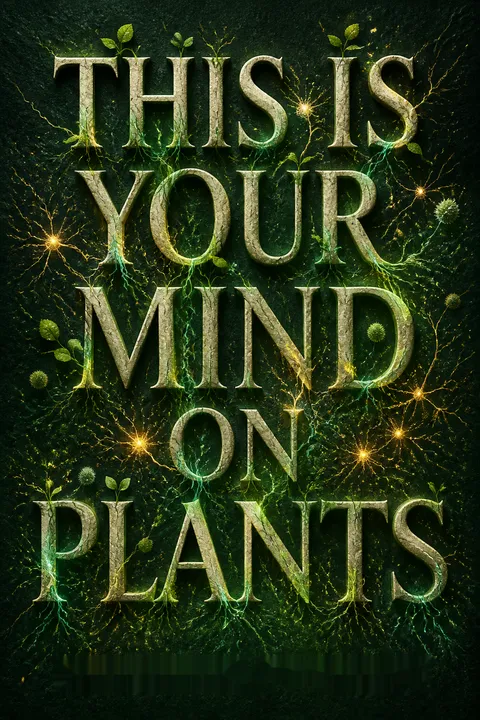
This Is Your Mind on Plants explores three psychoactive substances: opium, caffeine, and mescaline. Readers found it more memoir-like than scientific, with Pollan recounting personal experiences and historical context. Many appreciated his engaging writing style and curiosity, though some wanted more scientific depth. The opium and caffeine sections were generally well-received, while the mescaline chapter drew mixed reactions. Some readers felt Pollan's approach to addiction was glib, and others questioned his perspective on Native American practices. Overall, opinions varied, with some finding it fascinating and others disappointed.
People Also Read





Glossary
pharmakon
medicine, poison, or scapegoatA Greek term Pollan uses for the double-edged nature of psychoactive substances. A pharmakon can be healing or harmful depending on factors such as dose, use, intention, and setting. The term also carries a social meaning: a substance can be made into a scapegoat for wider problems.
set and setting
mindset and surroundingsThe combination of a person's expectations, emotional state, and intentions with the physical and social environment in which a psychoactive experience occurs. Pollan uses the idea to explain why the same substance can produce different experiences across people and cultures.
entheogen
spiritually used psychedelicA term coined by religious scholars as an alternative to psychedelic, emphasizing the spiritual or ceremonial use of consciousness-altering plants and fungi. It comes from Greek roots meaning to generate or manifest the divine within. Pollan also notes that terminology can reframe public understanding and political debate.
reducing valve
filter on conscious awarenessA metaphor Aldous Huxley uses for ordinary consciousness. The brain filters the vast amount of information available from the senses and admits a limited selection useful for functioning. Huxley and Pollan use the image to describe how mescaline can loosen this filtering and make perception feel unusually expansive.
spotlight consciousness
narrow, focused attentionA mode of attention that concentrates on a particular task or object. Pollan associates caffeine with this focused style, which can support alertness, linear reasoning, and efficient work. He contrasts it with a broader, less directed form of attention that can support wandering thought and novel associations.
lantern consciousness
broad, diffuse attentionA mode of attention that illuminates a wider field rather than concentrating on one focal point. Pollan connects it with mind-wandering, free association, and making new connections. He contrasts it with the more tightly focused attention associated with caffeine and task performance.
predictive coding
perception guided by predictionsA theory of brain function in which the brain uses expectations and prior beliefs to interpret incoming sensory information, updating those expectations when signals do not fit. Pollan invokes it to explain how ordinary perception is shaped by mental models, and how psychedelic experiences may alter the balance between expectation and sensation.
Native American Church
pan-tribal peyote religionA religious organization formally incorporated in 1918 that brought together Indigenous communities practicing peyote ceremonies. The Church's meetings combine the peyote sacrament with prayer, songs, and communal purposes such as healing and support. Federal law protects members' traditional ceremonial use of peyote.
roadman
peyote meeting leaderA leader of a Native American Church peyote meeting. The roadman guides the ceremony and its prayers, helping maintain its shared purpose. Pollan presents the role as part of the structure that distinguishes communal religious practice from casual individual drug use.
FAQ
What's This Is Your Mind on Plants about?
- Exploration of psychoactive plants: Michael Pollan investigates opium poppy, caffeine, and mescaline, focusing on their effects on human consciousness and culture.
- Cultural and historical context: The book provides a historical overview of how these plants have influenced societies, economies, and individual behaviors.
- Personal experimentation: Pollan shares his own experiences with these substances, offering insights into their psychological and physiological effects.
Why should I read This Is Your Mind on Plants?
- Insightful and engaging writing: Pollan's narrative style makes complex topics accessible, blending personal anecdotes with thorough research.
- Relevance to contemporary issues: The book addresses current discussions around drug use, addiction, and mental health, encouraging readers to reconsider their relationship with psychoactive substances.
- Broader understanding of consciousness: By exploring how plants affect our minds, the book invites readers to reflect on their own experiences and the nature of consciousness itself.
What are the key takeaways of This Is Your Mind on Plants?
- Complex relationship with plants: Humans have a long-standing relationship with psychoactive plants that can both heal and harm.
- Cultural constructs of legality: Societal norms shape the legality and acceptance of certain substances, reflecting deeper cultural values and anxieties.
- Personal responsibility and awareness: Pollan advocates for a nuanced understanding of drug use, emphasizing the importance of intention and context.
What are the best quotes from This Is Your Mind on Plants and what do they mean?
- “The same opiates that killed some fifty thousand Americans by overdose in 2019 also make surgery endurable.”: Highlights the paradox of opiates as both lifesaving and dangerous.
- “In a society’s choice of psychoactive substances we can read a great deal about both its fears and its desires.”: Suggests that societal choices reveal deeper cultural values and anxieties.
- “The energy that cup of coffee or tea has given you has been borrowed.”: Reflects the idea that caffeine provides a temporary boost at the cost of future energy.
How does Michael Pollan approach the topic of opium in This Is Your Mind on Plants?
- Historical context: Pollan discusses opium's long history, from ancient medicine to modern addiction issues.
- Personal narrative: He shares his experiences growing opium poppies, illustrating the tension between curiosity and legality.
- Cultural implications: The book examines how opium's legal status reflects societal fears and the complexities of addiction.
How does Michael Pollan's personal experience with caffeine affect his views in This Is Your Mind on Plants?
- Caffeine deprivation experiment: Pollan abstains from caffeine for three months, noting improvements in sleep and well-being.
- Reevaluation of caffeine's role: His experience leads him to question societal norms surrounding caffeine consumption.
- Insights into addiction: Pollan's journey reveals the complexities of addiction and the psychological mechanisms at play.
What insights does This Is Your Mind on Plants provide about mescaline?
- Cultural and spiritual use: Pollan examines mescaline's use among Indigenous peoples, highlighting its role in spiritual ceremonies.
- Personal exploration: He shares his experiences with mescaline, emphasizing the importance of context and intention.
- Potential for therapeutic use: The book discusses mescaline's potential in mental health treatment, advocating for respectful and informed use.
How does Michael Pollan define a "drug" in This Is Your Mind on Plants?
- Broad definition: Pollan challenges conventional definitions, suggesting many substances could be classified as drugs.
- Cultural context: Societal acceptance plays a significant role in defining what is considered a drug.
- Legal implications: Legal definitions are often arbitrary and influenced by cultural norms, crucial for addressing drug use issues.
What role does self-experimentation play in This Is Your Mind on Plants?
- Personal insight: Pollan emphasizes self-experimentation to understand psychoactive substances' effects.
- Scientific approach: He combines personal narratives with scientific research, enriching the reader's understanding.
- Encouragement for readers: Pollan advocates for readers to engage in self-experimentation for greater awareness and understanding.
How does This Is Your Mind on Plants address the concept of addiction?
- Complex nature of addiction: Pollan explores substances' dual nature, emphasizing addiction's complexity.
- Cultural perceptions: Societal views on addiction shape legal status and stigma surrounding substances.
- Personal responsibility: Pollan advocates for a nuanced understanding, emphasizing intention and context in substance use.
How does Michael Pollan address the ethical implications of caffeine consumption in This Is Your Mind on Plants?
- Historical exploitation: Pollan links coffee and tea production to colonialism and slavery.
- Modern economic disparities: He highlights ongoing exploitation of coffee farmers, who receive minimal profits.
- Call for awareness: Pollan encourages readers to consider the ethical dimensions of their caffeine consumption.
What insights does This Is Your Mind on Plants offer about the relationship between humans and psychoactive plants?
- Symbiotic relationship: Pollan emphasizes the interconnectedness of humans and psychoactive plants.
- Cultural significance: The book explores how these plants have influenced human culture and civilization.
- Potential for healing: Pollan highlights the therapeutic potential of psychedelics for personal transformation and healing.
About the Author
Other books by Michael Pollan

Download PDF
Download EPUB
.epub digital book format is ideal for reading ebooks on phones, tablets, and e-readers.








