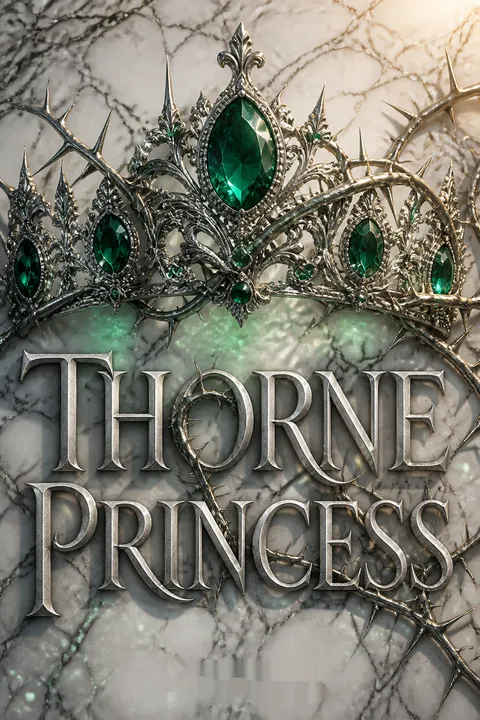


Plot Summary
A Nipple Makes Headlines
Hallie Thorne, twenty-one and the former president’s rebellious daughter, has made a life of parties, sponsored posts, and outrunning her family’s expectations. At a Los Angeles fundraiser, her dress tears, exposing her breast. Reality-show trainer Wes Morgan offers her a ride, then leads her into a waiting pack of photographers.
The humiliating pictures reach the tabloids, and her father responds by cutting off her easy access to money and hiring private protection. Ransom Lockwood, a former counterintelligence officer who runs a security firm with Tom Whitfield, accepts the six-month assignment for the fee and the political connections it might bring. He expects an unruly client. Hallie expects another man taking control of her life.
The public incident is less a moral failure than a collision between Hallie’s private vulnerability and a media system that turns her body into family property. She has used spectacle as a kind of armor, choosing the scandal before anyone else can define her, but the staged photographs reveal how little control she actually has. Her father’s response treats safety and discipline as the same problem, setting up a conflict in which protection can become another form of confinement. Ransom enters for professional and strategic reasons, not affection, and that transactional beginning matters: both characters initially mistake control for competence.
The Robot Breaks In
Ransom arrives at Hallie’s mansion without her being told he is coming. Finding her sunbathing naked, he waits for her attention, but she wakes, panics, and tries to stab him with a broken bottle. When she screams and begs him not to rape her, Ransom realizes she believes he is an intruder. He explains that her father hired him, yet Hallie calls the police and insists he leave.
The officers recognize Ransom, confirming his identity but not winning her trust. He then confiscates her car keys, credit cards, and phone, and lays out restrictions on drinking, social media, and unsupervised outings. Hallie learns that her home has become a workplace where Ransom sets the rules.
The mistaken-identity scene makes the novel’s central contradiction immediate: Ransom is charged with keeping Hallie safe, yet his unannounced entrance and physical dominance make him look like the danger she fears. Her panic is not simply comic defiance. It exposes how little information or choice she has been given, and how quickly authority can resemble threat. Ransom’s practical methods may reduce risk, but they also reproduce the paternal control that has left Hallie isolated. Their first bond is therefore not trust but a contest over who gets to define what safety means.
A House Under Lockdown
Hallie tries to escape the arrangement by refusing the contract, sabotaging Ransom’s coffee, and sneaking rotten meat into his closet. Ransom counters by canceling her professional appearances and limiting her daily spending.
At a bakery outing, he ends the visit when Hallie’s companions turn the meeting into empty gossip and their photographer has already captured enough material. His young colleague Max arrives as backup and treats Hallie with more warmth, giving her a brief glimpse of ordinary company.
She also turns his room into a battlefield of pranks, but Ransom catches her snooping and warns her away. Each attempt to recover freedom instead gives Ransom another reason to tighten supervision, while Hallie’s loneliness becomes harder to disguise.
The household conflict is built from small acts of control, which makes it psychologically sharper than a single dramatic confrontation. Ransom removes the conveniences that have insulated Hallie from consequences, but he also removes the tools she uses to reach other people. Her pranks are childish in form and serious in function: they test whether she can affect someone who seems immune to her. Max’s gentleness reveals that Hallie is not inherently impossible to know; she responds to ordinary respect. Ransom, meanwhile, mistakes compliance for progress, overlooking how coercion can produce silence without producing self-direction.
The Alleyway's False Alarm
After Ransom leaves the mansion, Hallie follows an address she finds in his room, hoping to learn what he hides from her. In a downtown alley, she sees him restraining a crying woman and believes she has interrupted an assault. She raises her taser, but the woman explains that the scene is consensual role-play, with boundaries agreed in advance.
Ransom confirms that he and the woman are acting out a fantasy, not committing a crime, and explains why explicit limits and trust matter to him. Hallie is shaken by her own unexpected response as well as by the revelation. The encounter changes their hostility: she now knows one of Ransom’s secrets, and he must speak to her as an adult rather than a nuisance.
The alley scene forces Hallie to distinguish the appearance of violence from violence itself, without pretending that the distinction is effortless. Her alarm is reasonable, and Ransom’s explanation does not erase the fear she experienced. What changes is her understanding of his private world: negotiated power can depend on trust, explicit limits, and the ability to stop. That idea resonates with Hallie’s own history of having choices withheld or misrepresented, though she has not yet named that history. The scene also complicates Ransom’s authority. He is not merely a hard man who controls others; he has a framework for consent that he has failed to apply carefully to his own client relationship.
Texas Keeps Its Distance
Hallie uses her sister Hera’s credit card to book a trip to Dallas for wedding preparations, and Ransom insists on accompanying her with a full security detail. On the drive, he reveals that he was abandoned as an infant and raised by Jack Moruzzi, a criminal who trained him and two other boys to steal and work for him.
Hallie’s sympathy unsettles Ransom, who has built his identity around surviving without family. At her parents’ mansion, Hallie and Ransom wait for hours while her mother plays with the family dogs. Her father eventually speaks to Ransom about the job before properly addressing Hallie. The visit confirms her fear that she is an afterthought, and Ransom decides she will remain in Texas for protection.
The parallel between Hallie and Ransom begins to emerge through their radically different forms of abandonment. Hallie has been materially provided for but emotionally sidelined; Ransom was left without even the knowledge of his origins, then made useful to an abusive household. Neither experience cancels the other. The visit to the Thorne mansion turns family privilege into a physical landscape of exclusion: Hallie can enter the house, yet the photographs, delays, and parental priorities tell her she does not belong. Ransom’s disclosure creates a first point of mutual recognition, but his choice to keep her in Texas still overrides her agency.
Words Refuse to Sit Still
While trying to memorize a speech for Hera’s wedding, Hallie struggles to read the prepared pages. Ransom recognizes the pattern and learns that her parents ignored a teacher’s warning about dyslexia, even arranging for the teacher to be dismissed.
He takes Hallie to a clinic, where testing identifies a learning disability alongside strong reasoning and emotional intelligence. Ransom insists that she stop treating the difficulty as proof she is stupid.
In Texas, he also takes her to a craft store and buys drawing guides after noticing her tattoo sketches. Hallie discovers that instruction presented visually makes sense to her, and she begins practicing for hours. For the first time, self-improvement feels like a choice rather than another family demand.
The diagnosis reassigns the source of Hallie’s shame. She has interpreted a specific difficulty with written language as evidence of global incapacity, while her family’s concealment has made that false conclusion feel authoritative. Ransom’s intervention does not magically remove the disability; it gives Hallie a more accurate account of herself and access to methods that fit how she learns. The drawing books matter because they turn recognition into practice. Instead of being praised abstractly, Hallie receives tools and a chance to improve. Her emerging confidence is grounded in effort, which gives it more substance than the attention she has received from the tabloids.
Craig Crosses the Line
At Hera’s postponed rehearsal dinner, Craig corners Hallie in a guest room and again touches her without permission. Ransom hears her struggle, pulls Craig away, smashes him against a mirror, and punishes him before forcing him to promise he will never approach her again. Hallie then tells Ransom that Craig began molesting her when she was fourteen, repeatedly exploiting her trust while Hera was absent.
She had kept silent because Craig threatened to portray her as willing and because she feared her family would believe him. Ransom does not blame her; later, when she asks him to hold her, he stays beside her. Their comfort turns into their first consensual sexual encounter, chosen by Hallie rather than imposed on her.
Craig’s assault reveals that Hallie’s public recklessness has been mistaken for sexual confidence while her actual history has been shaped by coercion and silence. The distinction is crucial: her past does not make her incapable of choosing intimacy, but it makes the conditions of choice especially important. Ransom’s intervention provides immediate protection, yet his violent retaliation is not the same as justice, and Hallie’s disclosure still has to be her own. Their sexual encounter follows her request for comfort and desire, marking a movement from fear toward agency. The scene’s emotional force depends on keeping those experiences distinct rather than treating trauma as a shortcut to romance.
A Speech Without Permission
The next day, Hera lashes out during wedding photographs, and Hallie answers with a sharp remark instead of shrinking away. At the reception she stays sober, abandons the speech written for her, and delivers an improvised toast that politely exposes how little Hera and Craig have changed.
Afterward, Hallie asks Ransom to return with her to Los Angeles. On the flight, she proposes continuing their sexual relationship, explaining that being with him has helped her feel safe and capable of desire.
Ransom refuses, saying their professional arrangement and her unresolved history make the request dangerous. Hallie hears the refusal as rejection, but she has nevertheless spoken plainly about what she wants, a contrast to the family members who have made decisions for her.
Hallie’s improvised toast is not a clean break from her family’s expectations, but it is a public act of self-authorship. She uses the speech form assigned to her while refusing to repeat its intended sentiment. Her sobriety matters too: she remains present through a painful family event instead of numbing herself. Ransom’s refusal of her proposal is ethically motivated, though his bluntness leaves Hallie feeling discarded. The moment exposes a tension in his character: he understands consent as a principle in private play, yet struggles to express care without controlling or withdrawing. Hallie’s growing agency does not depend on receiving the answer she wants.
A Dangerous Homecoming
Back in Los Angeles, Ransom refuses Hallie’s offer, then returns one night after drinking and begins a private, recurring affair with her. He gives her back access to her phone and stays close, even as their relationship remains undefined. Keller visits and spots a man photographing Hallie from a vehicle nearby. Ransom rushes after the car, but it escapes through the neighborhood gates.
He gives Hallie little explanation, leaving her aware that the danger is real but unable to judge its source. For a time, sex and routine make the mansion feel almost domestic. Then Hallie sees a glossy family profile praising Hera and Craig while falsely claiming she is close to them. The article drives her to confront her family.
The affair offers Hallie pleasure and closeness, but its secrecy mirrors the instability of the larger relationship. Ransom’s protection intensifies after the watcher appears, yet he withholds the information Hallie needs to understand her own risk. His silence may be intended to shield her, but it repeats the pattern in which powerful people decide what she can bear to know. The tabloid profile then reveals how family image-making works: Hallie is omitted from the photographs but included in a public fiction that claims she is loved and connected. Her decision to return to Texas is an attempt to replace that fiction with direct confrontation.
The Family Portrait Cracks
Hallie travels back to Dallas and challenges her parents over hiding her dyslexia and treating her as a family embarrassment. She then tells them Craig has sexually abused her for years. Her father breaks down, and her mother is stunned; Hallie refuses to soften the accusation for their comfort. She gives a statement to police, then visits Hera, who admits Craig had encouraged her to believe Hallie was jealous and had seduced him.
Hallie recounts the abuse, and Hera recognizes how readily she accepted his story without asking her sister. Craig is taken into custody on attempted-rape allegations. The confrontation does not instantly repair the family, but it replaces years of insinuation with an account Hallie has chosen to tell herself.
Hallie’s disclosure breaks the system that had made her silence seem safer than speech. She is not simply asking her parents to believe her; she is naming how their neglect, their image-conscious choices, and Craig’s manipulation combined to leave her alone. Hera’s realization is painful because it reveals complicity without making the sisters’ histories identical. Hallie can acknowledge her sister’s failure while still refusing to make herself responsible for it. The police report turns private knowledge into a public process, though it cannot undo the years in which Hallie was forced to carry the truth by herself.
The Child Behind the Gun
On the flight back to Los Angeles, Ransom tells Hallie that he once shot at Russian crime boss Vasily Kozlov during a raid and killed Kozlov’s young son, Yefim, whom he had not seen in the smoke. The memory has driven Ransom’s guilt and made Kozlov a threat. After they land, tabloid reporter Anna Brooks appears at Hallie’s home and implies she and Ransom have recently been together, though their actual sexual history dates to college.
Hallie, hurt by the implication and furious at the danger Ransom concealed, orders him to leave. While he is gone, Kozlov’s men enter the mansion, bind Hallie, and take her to use as bait. Her decision to end the relationship has left her alone at the exact moment Ransom’s past reaches her door.
Ransom’s confession makes his protectiveness legible as a response to guilt, not merely a professional instinct. Yet explanation is not absolution: he has concealed the danger from Hallie, limiting her ability to make informed choices. Anna’s insinuation exploits an existing vulnerability, but the deeper rupture is not sexual jealousy alone. Hallie has repeatedly been asked to trust men who control the facts around her. Her decision to send Ransom away is understandable, and the kidnapping makes the consequences devastating without suggesting that she caused the crime. Kozlov’s revenge turns Ransom’s private remorse into an immediate threat to Hallie.
The Robot Comes Back
Kozlov’s men interrogate Hallie about Ransom and whip her when she cannot provide the answers they want. Ransom tracks her phone, enters the hideout with a gun trained on one of the captors, and forces Kozlov to surrender as a SWAT team closes in. He admits his responsibility for Yefim’s death but refuses to accept Kozlov’s right to keep harming others.
Once Hallie is safe, Ransom explains that Anna had drugged him and that he never slept with her during their recent encounter. Hallie tells him the larger failure was hiding the threat and putting her in danger. She fires him, insisting she no longer needs a protector who will not respect her boundaries. Ransom leaves rather than override her choice again.
The rescue resolves the external danger but not the relational breach. Ransom acts decisively and secures Kozlov’s arrest, yet Hallie judges him by more than the outcome: he had withheld the threat and tracked her without consent. Her decision to fire him is a hard-won assertion of authority, especially because she still loves him. Ransom’s choice to leave is the first time his respect for her wishes outweighs his impulse to control the situation. The chapter refuses the easy romance logic that a rescue cancels prior harm. Safety becomes meaningful only when Hallie can decide who is allowed to provide it.
A Life Built by Hand
After Ransom leaves, Hallie moves in with Keller and refuses new money from her parents. She struggles to find work, eventually cleaning the juicery and a neighboring shop while continuing therapy and dyslexia support.
Rather than retreat from her drawing, she applies for an apprenticeship at a tattoo studio. Owner Grady examines her portfolio and accepts her despite the unpaid work and long training ahead. Her parents and Hera later visit her small apartment and apologize for their neglect, their choices around her disability, and their treatment of her.
Hallie does not declare everything repaired; she agrees to take gradual steps toward a relationship. These months make independence tangible through rent, labor, practice, and the willingness to risk rejection.
Hallie’s recovery is rendered as material work rather than a sudden transformation. She has to manage money, accept imperfect jobs, attend therapy, and practice a craft in which she can fail. The tattoo apprenticeship is especially resonant because it converts a former coping mechanism into a disciplined skill: she once used ink to make pain visible, and now learns to create images for other people. Her family’s apology matters, but Hallie does not return to dependence or declare the damage erased. Reconciliation becomes a negotiated process, one in which affection no longer requires her to abandon her own account of what happened.
Rain Cannot Keep Him
Seven months after Hallie dismissed him, Ransom flies to Los Angeles and waits outside her tattoo studio in a cold downpour. Hallie initially tells him to go, reminding him that he put his priorities ahead of her safety. When he turns away, she runs after him and asks whether he truly wants her. Ransom admits that he does, and Hallie tells him she loves him.
He collapses from the cold before he can answer; at the hospital, he finally says he loves her too. Hallie chooses to remain in Los Angeles for now, and they begin again without pretending their past mistakes vanished. A year later, they travel together to Texas, while Ransom prepares to propose and Hallie considers bringing her art career to Chicago.
The reunion works because Hallie is no longer waiting to be chosen as proof of her worth. She has built a life and can still decide to include Ransom in it. His return is a risk, not a rescue, and her initial refusal demonstrates that love does not erase the boundary she established. The rain and his collapse add romantic melodrama, but the decisive action is Hallie turning back after hearing what he has finally said plainly. Their future remains a negotiation between her independent vocation and his Chicago-based work, replacing the earlier arrangement in which one person’s needs automatically governed the other.
Epilogue
One year later, Hallie and Ransom travel to Texas for Hera’s second wedding, this time to a kind medical technician. Hallie is thriving as a tattoo apprentice, and she and Ransom continue their long-distance life between Los Angeles and Chicago.
She is considering moving her artistic work to Chicago, while Ransom plans to propose the next day. In the meantime, Craig is serving a prison sentence, and Hera has left him behind. A tabloid that once framed Hallie as a reckless spectacle now announces her engagement, unable to reduce the story to scandal alone.
The epilogue does not present a perfect family or a frictionless romance. Hallie still has to decide where to live, Hera is rebuilding her life after a failed marriage, and Ransom’s work keeps the couple moving between cities. What has changed is the basis on which they make those decisions: Hallie has a vocation and a voice, while Ransom can imagine a future that includes commitment rather than mere protection. The tabloid remains present, but it no longer controls Hallie’s meaning. Its engagement story is only an outside label for a life she has already begun shaping herself.
Analysis
Thorne Princess builds its romance around a difficult distinction: protection can be care, but it can also become another person’s control over your life. Ransom enters Hallie’s home with professional authority and quickly removes the tools that let her move freely. His actions reduce some genuine risks, yet they reproduce the family’s habit of making decisions for Hallie while calling the decisions love. The later conflict over Kozlov sharpens that distinction. Ransom’s secrecy is meant to protect her, but it deprives her of the information needed to judge danger for herself. Hallie’s eventual refusal is therefore not a rejection of care. It is a demand that care include her consent.
The novel also examines how reputations can imprison people in roles. Hallie is treated as a foolish, promiscuous heiress, while Hera is treated as the exemplary daughter. Neither public image makes room for the actual pressures beneath it. Hallie’s dyslexia has been hidden to protect her parents’ standing, and Craig’s abuse survives in part because his polished relationship with Hera fits the family’s preferred story. Telling the truth does not immediately heal these structures, but it gives Hallie a basis for making decisions beyond them.
Drawing and tattooing provide the story’s clearest model of recovery. Hallie does not become independent through a single declaration or through Ransom’s approval. She practices, accepts low-status work, seeks support, and risks being judged by a mentor. The process converts a private interest into a vocation and gives her a future that is not dependent on a family allowance or a romantic rescue. Ransom’s development runs in parallel: he must learn that guilt cannot be repaired by controlling every danger, and that respecting Hallie may require losing access to her. Their relationship becomes viable only after she has the freedom to refuse it and chooses, later, to return.
Review Summary
Thorne Princess received mixed reviews, with ratings ranging from 1 to 5 stars. Readers praised the witty banter, character development, and emotional depth, while others criticized the explicit content and problematic relationship dynamics. Many enjoyed the enemies-to-lovers and bodyguard romance tropes, as well as the complex characters of Hallie and Ransom. However, some readers found the book offensive and disappointing, particularly regarding the hero's behavior and treatment of the heroine. Overall, the book sparked diverse reactions, with some calling it addictive and others finding it problematic.
People Also Read








Characters
Hallie Thorne
The tabloid princessHallie is the youngest daughter of former president Anthony Thorne, a conspicuous socialite who has learned to turn bad press into a shield against being judged on more vulnerable terms. She is funny, provocative, environmentally minded, and far more observant than her family assumes. Her difficulty with reading has been mistaken for lack of intelligence, while her isolation has left her with few dependable relationships. Hallie wants to be loved without being managed, but she initially distrusts the responsibilities that might give her independence. Drawing, work, and therapy offer ways to build an identity beyond scandal, family status, or romantic attention.
Ransom Lockwood
The unreadable protectorRansom is a former counterintelligence officer and co-owner of a private security company. Efficient, guarded, and physically formidable, he prefers contracts and rules to emotional dependence. His orphanhood and criminal childhood taught him to survive by anticipating danger and suppressing need; his professional competence can therefore become controlling when he believes he knows best. Ransom also approaches intimacy through negotiated power and carefully defined boundaries. He understands those principles in private but struggles to extend them consistently to Hallie, whose resistance challenges his assumption that emotional distance is the safest way to live.
Tom Whitfield
Ransom's business partnerTom is Ransom’s business partner and childhood companion, sharing a history shaped by the same criminal foster household. More socially connected and openly attached to family life, he tries to persuade Ransom to accept assignments that could expand their company. His warmth can coexist with strategic ambition, and he sometimes pushes Ransom into situations without understanding the private damage they may reopen.
Keller
Hallie's steadfast friendKeller, Hallie’s closest friend, is the son of a famous rock musician and the owner of an upscale juice business. He is affectionate, witty, and skilled at helping Hallie improvise her way through a crisis. His support is real, though his willingness to trust her with responsibility has limits. Their friendship shows how intimacy can be sincere while still resting on old assumptions about who the other person is.
Hera Thorne
The accomplished sisterHera is Hallie’s older sister, a disciplined medical professional whose polished life appears to satisfy their parents’ ideals. She values achievement, order, and social approval, and often treats Hallie’s differences as embarrassment or deliberate defiance. Beneath her certainty is a person under pressure to embody the family’s success. Her relationship with Hallie is competitive and distant, complicated by the fact that each sister has learned to interpret the other through a narrow family role.
Anthony Thorne
The absent fatherAnthony is Hallie and Hera’s father and a former president of the United States. He can be affectionate and thoughtful, but his public responsibilities and instinct to manage risk have often displaced the ordinary work of parenting. He uses money and security as practical expressions of care, sometimes failing to notice that his daughters need attention, honesty, and room to make their own choices.
Julianne Thorne
The image-conscious motherJulianne is Hallie and Hera’s mother, a poised woman invested in family reputation and conventional success. She is more openly critical of Hallie than Anthony, and often treats the younger daughter’s appearance and behavior as liabilities to be corrected. Her control is partly rooted in fear of public humiliation, but that motive does not spare Hallie from its effects.
Craig
Hera's polished fiancéCraig is Hera’s longtime partner, a socially polished man whose relationship with her fits the family’s preferred story of youthful devotion and steady success. He cares about how others see him and has learned to use his proximity to the Thornes as a source of status. His public charm makes him difficult for Hallie to challenge within a family that prizes appearances.
Max
The gentler bodyguardMax is a former Navy SEAL and junior member of Ransom’s security team. Young-looking, earnest, and considerate, he offers Hallie a less intimidating presence than his boss. He wants to do his job well and admires Ransom, which sometimes makes it hard for him to question the company’s choices. His decency is genuine, even when he is inexperienced with the boundaries of protecting a client.
Lawrence
Ransom's foster brotherLawrence grew up with Ransom and Tom in Jack Moruzzi’s household, where the boys were exploited and pushed into criminal work. He eventually built an independent career as a sports agent and created a family life unlike the one they endured as children. His stability offers Ransom evidence that a past built around violence does not have to dictate every future choice.
Vasily Kozlov
The vengeful crime bossKozlov is a Russian organized-crime leader whose history intersects with Ransom’s former counterintelligence work. He is patient, ruthless, and motivated by personal vengeance as well as criminal power. His presence turns Ransom’s private guilt into a threat that reaches beyond the original conflict and places Hallie inside a danger she did not choose.
Anna Brooks
The hungry tabloid reporterAnna writes for Yellow Vault, a tabloid that turns celebrity vulnerability into saleable scandal. Ambitious and manipulative, she seeks access to Hallie’s private life and is willing to use her history with Ransom to provoke a reaction. She represents the media’s ability to turn selective facts into a story that feels more convincing than the truth.
Dennis
Hallie's longtime driverDennis has driven Hallie since childhood and often provides the steadiness and practical care her parents do not. He knows her habits without reducing her to her mistakes, and his relationship with her has the quiet intimacy of chosen family. His own desire for retirement reminds Hallie that the people who support her have needs and limits of their own.
Ethel
A second-home grandmotherEthel is Dennis’s wife and one of the few adults who has consistently offered Hallie warmth without requiring her to perform for the public. Her home, tea, and family photographs represent a kind of everyday belonging that Hallie has rarely experienced.
Ian Holmes
Ransom's former mentorIan is an older counterintelligence officer who once supervised Ransom and Tom. His professional experience and personal connection to Tom make him an important figure in their shared past. His disappearance brings the old danger surrounding Ransom back into the present.
Dr. Ilona Queen
Hallie's therapistIlona is a clinical psychologist Hallie chooses after deciding to seek help for trauma, learning difficulties, and relationships. She offers a framework in which Hallie can examine her habits without being reduced to them. Her role is not to rescue Hallie, but to support the work Hallie chooses to do.
Grady
The tattoo mentorGrady owns Misfits and Shadows, the tattoo studio Hallie admires. Experienced and demanding, he makes clear that an apprenticeship means years of low-paid, unglamorous work before she can tattoo clients independently. His willingness to assess her portfolio gives Hallie a serious opportunity to pursue the art she has practiced privately.
Wes Morgan
The publicity opportunistWes is a celebrity fitness-show host who sees Hallie as a useful publicity partner. He arranges the photographers who capture her wardrobe malfunction, turning an already humiliating night into the event that prompts her father to hire Ransom.
Plot Devices
The close-protection contract
Forced proximity with authorityHallie’s father hires Ransom for a six-month security assignment after the paparazzi expose her wardrobe malfunction. The contract places Ransom in her home and gives him control over her movements, finances, and social schedule. It creates both the romance’s forced proximity and its central ethical problem: Ransom must protect Hallie without treating her as property. The arrangement also gives him a professional incentive to manage her public behavior, which initially blurs the difference between reducing genuine security risks and enforcing her parents’ preferences.
Tabloid and social media exposure
Private life becomes public currencyHallie’s influencer work, public parties, and constant paparazzi attention make her whereabouts easy to track and her mistakes easy to monetize. Gossip outlets shape public ideas about her family, sexual history, and relationships, often replacing the truth with a more profitable story. This device drives the hiring of Ransom, intensifies the family’s concern about appearances, and later makes a public scandal possible. It also gives Hallie a complicated relationship with visibility: she dislikes being misrepresented but has often used attention as the only form of control she can claim.
Dyslexia and visual art
A new account of abilityHallie’s unrecognized dyslexia has been interpreted by her family and by Hallie herself as evidence that she lacks intelligence. Clinical assessment separates the learning difficulty from her reasoning ability, while visual drawing guides let her engage with instruction in a more accessible form. Her sketches begin as private tattoo designs and gradually become the foundation for a possible profession. The device links family secrecy to self-esteem, then turns recognition into practical agency through practice, tutoring, and an apprenticeship.
Negotiated power and consent
Fantasy separated from harmRansom’s consensual role-play introduces a distinction between performed danger and actual assault. Participants set limits and expectations, allowing power to be staged within an agreed framework. Hallie’s response complicates her assumptions about sexuality, while her history with Craig makes the difference between consent and coercion essential to the story. The device is not presented as a cure for trauma; it becomes a way for Hallie to recognize desire on her own terms, while also forcing Ransom to confront whether he respects boundaries outside the fantasy.
The Bratva's revenge
Past guilt becomes present dangerRansom’s former counterintelligence work against Kozlov’s criminal organization creates a threat that follows him back to Los Angeles. Kozlov’s revenge is tied to the death of his son during a raid, a tragedy Ransom carries as personal guilt. The danger escalates from surveillance to Hallie’s abduction, turning the romance’s secrecy into a matter of physical safety. Ransom’s tracking of Hallie’s phone helps him locate her, but his failure to disclose the threat also raises the question of whether protection without informed consent can truly be protective.
About the Author









Download PDF
Download EPUB
.epub digital book format is ideal for reading ebooks on phones, tablets, and e-readers.








