


Plot Summary
Prologue
At nine, Knight Cole tries to quiet his anger by splitting his knuckles against an oak tree. His neighbor Luna Rexroth retrieves the bike his friend Vaughn stole, then joins Knight in their treehouse instead of demanding thanks.
There she teaches him that the sun will return after a hard day, and pricks their fingers so they can seal a promise to protect one another. Knight, who has learned to hurt himself rather than risk hurting anyone else, lets Luna hold him. Neither child can name what binds them, but both leave the treehouse carrying a shared vow.
The childhood pledge gives the romance its emotional grammar before either child understands desire. Knight turns physical pain into a crude form of control, while Luna answers distress with attention rather than diagnosis. Their blood pact is not merely sentimental foreshadowing: it establishes a reciprocal obligation that will later become both refuge and burden. The children imagine loyalty as an uncomplicated promise, but adulthood will expose its limits. Love cannot keep either of them from making choices that wound the other, and devotion becomes meaningful only when they learn that protection must include honesty, boundaries, and the freedom to leave.
The Rainy Road Rescue
Years after her mother Val abandoned her, twelve-year-old Luna hears a song associated with that loss while riding in the car with her stepmother, Edie. Panic drives Luna out into a storm and down the road on her bicycle. Knight, her younger neighbor and constant protector, races after her. A speeding car shatters Luna’s bike, but Knight yanks her out of its path and takes the impact himself.
He believes she meant to die and demands an explanation; Luna cannot make herself speak, even though she wants to reassure him. She signs that he saved her, and he repeats their childhood promise. The near collision makes Luna recognize that her feelings for Knight are no longer merely those of a friend.
The rescue turns an old attachment into a bodily fact: Knight’s instinct is to put himself between Luna and danger, while Luna’s silence leaves him to interpret her actions without knowing their cause. The scene also links two forms of abandonment. Val’s departure taught Luna that speech could not make someone stay, while Rosie’s recurring illness has taught Knight to fear disappearance. His rescue is loving, but his demand that Luna speak shows the cost of being treated as someone who must be deciphered. The accident makes desire visible to Luna, yet it does not give either child the language or maturity to act on it safely.
Three Kisses, No Answer
As they grow up, Knight slips into Luna’s bedroom at night to check that she is safe, even as his popularity at All Saints High brings constant attention from other girls. He kisses Luna at twelve, then again at fourteen, and she turns him down both times, insisting through signs and notes that she loves him only as a friend.
At seventeen, after a carefully planned birthday together, Luna finally accepts his kiss. Knight’s casual girlfriend Noei arrives before they can discuss what it means. Luna sees the interruption as proof that she cannot trust him with her heart and ends their romantic possibility, though neither can sever their daily bond. Knight continues hiding his devotion behind dates and rumors.
The repeated kisses create a pattern in which physical consent and emotional trust move at different speeds. Luna wants Knight, but his public reputation makes intimacy feel like a gamble she cannot afford. Knight, meanwhile, mistakes persistence for patience: he keeps returning to her without making his intentions legible. Their friendship protects them from separation while also allowing each to avoid a direct reckoning. Noei’s arrival does not create the distrust so much as reveal it. The episode shows how a relationship can be emotionally exclusive in private and still feel unsafe when its public evidence points elsewhere.
Boon Becomes Possible
At eighteen, Knight performs the role of All Saints High’s charming football star at a party, drinking and smoking after learning that his mother, Rosie, is no longer eligible for a lung transplant. Luna arrives to challenge his casual parade of girls, but Knight answers her concern with cruelty and jokes. She tells him she is considering college away from California.
Knight dismisses the possibility and pushes her toward online study, assuming she will remain close. Vaughn, Knight’s coldly perceptive cousin, privately urges Luna to choose Boon College in North Carolina, where she can build a life beyond Knight and her family. Hurt by Knight’s indifference and frightened by her own dependence, Luna accepts the place and leaves.
The college decision is an act of separation disguised as a test. Luna wants Knight to ask her to stay, but she also recognizes that waiting for his permission has kept her emotionally sheltered. Knight’s response exposes the possessive side of his caretaking: he treats her proximity as a given because her dependence reassures him. Rosie’s illness intensifies his need to control what remains in his life, even as he masks fear with intoxication and sexual bravado. Vaughn’s intervention is severe, but it identifies a real developmental problem. Luna cannot choose Knight freely until she learns that she can choose a life without him.
A Stranger at Starbucks
At Boon, Luna struggles with anxiety and isolation, while her roommate April nudges her toward ordinary routines, including meals and time outside the dorm. Luna meets Josh, a student who cannot speak after a childhood accident but communicates confidently through sign language.
Their shared experience makes conversation easier, and his interest helps Luna form a friendship outside the families she has always known. Then April shows Luna a popular photograph of Knight kissing Poppy Astalis after a football game.
Believing Knight has moved on, Luna accepts Josh’s invitation to meet at the stables. They drink, ride a horse together, and sleep together in his room. Luna feels newly independent, but Knight’s unanswered messages and the image of him with Poppy remain lodged in her mind.
Josh offers Luna a relationship that seems legible: he shares her communication method, meets her without childhood obligations, and treats her as a person rather than a responsibility. Yet the timing of their intimacy matters. Luna acts partly from genuine curiosity and partly from the pain of believing Knight has chosen someone else. Her sexual decision is still hers, but it is not free of the emotional story she has constructed around that photograph. Boon gives her room to experiment, not instant certainty. The contrast between Josh’s clear attention and Knight’s ambiguous devotion exposes how easily silence can become a screen onto which each person projects fear.
The Thanksgiving Confession
When Luna returns for Thanksgiving, Knight finds Josh’s messages on her phone and learns that she has lost her virginity. He withdraws rather than ask her directly what happened. At dinner with both families, he retaliates by revealing her private sexual history to the table. Luna follows him upstairs, where their argument finally breaks through her mutism: she tells him how his rumored conquests and public flirtations hurt her.
Knight answers that the stories were false and that he has remained a virgin, waiting for her. He explains that the photograph with Poppy was staged for a cystic fibrosis fundraiser, not a romance. Luna refuses to hand him her phone as proof of anything, and Knight leaves, convinced their trust is beyond repair.
The confession rearranges the evidence without undoing its consequences. Knight’s sexual reputation was partly performance, but Luna had to live with what she could see, not with the private intention he never clearly communicated. His public disclosure of her intimacy is a breach, even if jealousy explains it. Luna’s first words to him arrive in conflict, not reconciliation, showing that speech is not a magical cure but a capacity she can use to assert pain and limits. Her refusal to surrender her phone matters: trust cannot be rebuilt through surveillance. The scene makes both characters responsible for the stories they allowed silence and performance to tell.
A Christmas Fight
During the Christmas break, Luna returns to Todos Santos and sees Knight treating Poppy as his girlfriend. At a party, Vaughn kisses Luna to provoke Knight and force her to stop shrinking from conflict. Knight punches Vaughn, while Luna tries to intervene and discovers she cannot always speak on command. Later, she meets Knight in their treehouse.
He admits Rosie will not receive a transplant, and Luna tells him she is searching for Val. Knight’s birth mother, Dixie, appears soon after, but Knight rejects her harshly. Meanwhile, Rosie asks Luna to help create a written and photographic keepsake for Knight and his younger brother, Lev, and to encourage Knight and his father, Dean, to keep living through grief. Luna agrees to help.
The holiday gathering converts private jealousy into public spectacle. Vaughn’s kiss is both manipulation and a challenge to Luna’s passivity; Knight’s violence confirms that he is not simply a gentle guardian when he feels displaced. Luna’s uneven access to speech makes the scene psychologically precise: she can speak under pressure at some moments, but cannot yet treat speech as a reliably available tool. The treehouse returns them to a shared refuge, though now it holds news neither can repair. Rosie’s request redirects Luna’s caregiving instinct toward a deliberate task, while Knight’s rejection of Dixie shows how fear of another abandonment can harden into punishment.
The Voice Comes Back
Luna asks Edie to hire an investigator to find Val, despite knowing the request may hurt her father, Trent. The search reveals that Val died in Brazil eighteen months earlier. Luna does not feel a simple release; she has lost the possibility of asking her mother why she left. She tells Edie first, then chooses to tell Trent directly.
In his office, Luna speaks to him for the first time and explains what she learned. Trent responds with joy at hearing her voice and pain that she carried the search alone. Around the same period, Luna attends a New Year’s party and kisses Daria, her bold neighbor and friend, to redirect Knight’s attention. The kiss helps Luna speak publicly, though it does not settle what she wants from Knight.
Val’s death closes the possibility of a reciprocal explanation, but it does not neatly close Luna’s grief. The voice that returns is not a reward for finding answers; it emerges as Luna accepts that some answers cannot be obtained from the person who caused the wound. Telling Trent herself repairs a separate silence between parent and child, one shaped by his efforts to protect her from painful information. The kiss with Daria is less a revelation of identity than an experiment in agency and public visibility. Luna is beginning to act in front of others without making Knight the sole audience for every choice.
The Treehouse Betrayal
After Knight develops a fever, Luna lets him into her room and cares for him. Their physical closeness turns intimate, but she asks him to stop drinking and taking pills. Knight brushes off her concern, then later discovers a letter Luna has written to Josh and reads enough to believe she still loves him.
He does not confront her. Instead, he invites Poppy to their treehouse and lets Luna find them naked together. Knight cannot bring himself to have sex with Poppy, but Luna does not know that; she leaves for Boon believing he has chosen someone else.
Knight follows her to North Carolina. At a water tower, he challenges her to a lemon-eating contest, loses neither nerve nor desire, and they finally sleep together. Luna asks him to be her boyfriend.
This sequence turns misreading into deliberate injury. Knight mistakes an unfinished letter for a settled choice, then stages a scene designed to make Luna feel what he has felt. His failure to sleep with Poppy does not erase the harm, because Luna sees the image he chose to create. Yet their reunion at Boon is also a genuine shift: Knight does not let her win their childhood contest, treating her as an equal rather than someone to protect from consequence. Their first sex is a mutual choice, but it does not solve the addiction or the distrust that will soon press against the new relationship.
Dixie Finds Him
Back in California, Knight’s fear for Rosie and anger over Luna’s past with Josh feed a growing dependence on alcohol and pills. He also learns more about Dixie: she was drugged and raped at a college party as a teenager, discovered her pregnancy months later, and gave Knight up believing Rosie and Dean could raise him safely.
Knight responds with cruelty, then continues to spiral. After Rosie enters a medically induced coma, Knight overdoses on alcohol, cocaine, and Xanax. Dixie finds him unconscious at home and follows the ambulance to the hospital.
Luna, who has been called by Dixie, arrives and learns how close Knight came to dying. She ends their romantic relationship, telling him she will stay to help him but will not enable the addiction that is consuming him.
Knight’s addiction is not a single dramatic lapse but a strategy for keeping grief outside consciousness. His mother’s decline, Luna’s apparent betrayal, and his own history of abandonment converge until intoxication becomes the only state in which he can avoid choosing what to feel. Dixie’s history complicates the origin story he has assigned her: she did not simply reject him, though her absence still wounded him. Luna’s breakup is an act of care with a boundary inside it. She refuses the false choice between abandoning Knight and accepting his self-destruction, but she also recognizes that love alone cannot make him sober.
Rosie Says Goodbye
After Knight begins detoxing, Rosie is brought out of her coma so she can say goodbye to her family at home. She speaks privately with Lev and Knight, asks Knight to remain sober, and urges him to release grudges rather than let them govern his life. Rosie dies in Dean’s arms several days later.
At her funeral, Luna presents the project she and Rosie prepared: photographs and stories that preserve the life Rosie wants her family to remember, not only the illness that ended it. Her speech surprises the community and helps Knight see Luna’s loyalty in action. Dean and Knight begin repairing their strained relationship, while Luna stays beside Knight without yet returning to him as his girlfriend.
Rosie’s farewell is a transfer of responsibility, not a tidy lesson in acceptance. She gives each family member a specific charge, while Luna’s memorial work protects the family from letting illness become the only story they can tell about Rosie. Speaking publicly at the funeral demonstrates Luna’s agency, but it also makes her a witness to other people’s grief rather than the center of her own. Knight’s sobriety begins amid loss, not after it has been resolved. The funeral therefore binds the romantic plot to a larger family structure: recovery will require Knight to remain in relationship with people beyond Luna.
A Mother’s Last Request
After the funeral, Knight apologizes to Poppy for using her in his attempt to provoke Luna, and he ends their relationship without blaming her. He then meets Dixie again and reads a letter Rosie wrote before her death. Rosie had invited Dixie to Todos Santos, hoping she might know Knight and support the family after Rosie was gone.
Knight accepts that Dixie’s continued presence is an act of care, not a claim to replace Rosie. He asks her to help him win Luna back. Luna, meanwhile, continues to hold the boundary she set at the hospital: Knight must remain sober if he wants a future with her. His recovery now has witnesses, including Dixie, Dean, and his friends, rather than resting on Luna’s vigilance alone.
Rosie’s letter changes the meaning of Dixie’s presence without erasing Knight’s history with her. The invitation is an act of generosity from a dying woman, but Knight still has to decide whether he can accept care from someone he has made into a villain. His apology to Poppy matters for the same reason: recovery includes responsibility for people he treated as instruments. Luna’s boundary prevents the romance from becoming the sole treatment plan for addiction. Knight can pursue reconciliation only by changing the conditions that made love feel dangerous, not by asking Luna to absorb more harm.
The Sign at the Boutique
Knight makes a public proposal outside the boutique where Luna is shopping with their mothers and Daria. Their friends and family hold signs that spell out his question, while Knight kneels with Rosie’s engagement ring, its stones marking Dean’s years of sobriety. He tells Luna he loves her and promises not to return to alcohol or pills.
Luna accepts, but sets the direction of their future: she will leave Boon and build a life near home, where Knight and their families are. The two enroll at UCLA. Knight stays sober, works with a counselor, and learns to be present for Lev and Dean. Their reconciliation rests not on the old promise alone, but on changed behavior.
The proposal succeeds because its symbols carry history and obligation. Rosie’s ring links Knight’s future to a family member whose struggle with addiction made sobriety visible as daily work, not romantic purity. The signs enlist the community, contrasting the earlier public performances that misrepresented Knight and Luna. Luna’s answer is not passive surrender: she chooses home after experiencing independence, and her choice is meaningful precisely because she has learned she can leave. The couple’s resolution depends on a changed arrangement of care. Knight must build a life that does not make Luna responsible for keeping him alive.
Epilogue
One year later, Luna is pregnant, studying at UCLA, and preparing to speak publicly about her memoir on the years she spent unable to talk. Knight stands beside her, sober and planning a family. April, Josh, and Ryan attend the event, showing that Luna has repaired the friendships she strained while hiding her story.
Dixie and Dean sit together, their hands nearly touching, while Luna quietly honors Rosie’s wish that Dean not spend the rest of his life alone. The book closes with Luna ready to tell her story in her own voice, beginning with the childhood that joined her to Knight.
The epilogue measures change through ordinary continuities rather than a declaration that every wound has vanished. Luna’s public book gives form to experiences once trapped in silence, while her former Boon friends remain present as witnesses to the life she built there. Knight’s sobriety is shown as a sustained practice, not a magical consequence of engagement or impending fatherhood. The tentative closeness between Dean and Dixie honors Rosie’s request without treating a new relationship as a replacement for the old one. The family expands, but the dead remain part of its emotional structure. Luna’s final movement from silence to authorship is therefore both personal recovery and an act of remembrance.
Analysis
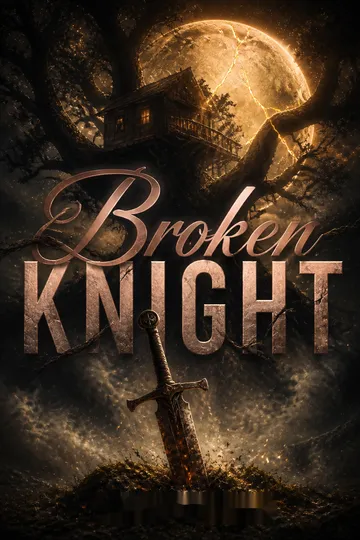
Broken Knight treats childhood intimacy as a powerful bond, but refuses to pretend that familiarity automatically produces understanding. Luna and Knight grow up in one another’s rooms, families, and private rituals. That closeness gives them unusually deep knowledge of each other, yet it also encourages them to assume rather than ask. Knight believes Luna should recognize the truth beneath his reputation; Luna believes the visible evidence of his behavior. Both are responding to what they can see, and both cause harm by treating inference as certainty.
The novel’s treatment of selective mutism makes communication more complex than speaking aloud. Luna’s silence is not an absence of thought or desire. It is a consequence of trauma that shapes what feels possible in a given moment. When her voice emerges, it does not instantly repair her relationships or free her from anxiety. Instead, she uses it unevenly, first in confrontation and later in deliberate acts of connection. Her development depends less on becoming conventionally normal than on claiming the right to decide when and how she communicates.
Knight’s addiction is similarly presented as more than a bad habit. His fear of losing Rosie, his unresolved history with Dixie, and his terror that Luna will leave all gather into a destructive attempt to mute distress. Romance cannot cure that pattern. Luna’s decision to end their relationship while remaining present is the story’s sharpest ethical distinction: care does not require surrendering one’s boundaries, and loyalty is not the same as enabling.
Rosie’s illness gives the book its harshest measure of time. Her requests turn love into concrete work: preserve memories, care for the surviving family, and permit the living to continue. The ending does not erase grief or promise that devotion prevents loss. It offers a more demanding hope: people can inherit care without repeating every injury that shaped it. Knight and Luna’s future becomes credible only when their childhood vow is joined by adult honesty, sobriety, and choice.
Review Summary
People Also Read







Characters
Luna Rexroth
The guarded observerLuna is a gifted, intensely observant young woman with selective mutism and a history shaped by her biological mother’s abandonment. She communicates through expression, writing, and sign language, and often notices details others miss. Her instinct is to care for people, animals, and the emotional needs of her family, but that generosity can blur into self-erasure. Knight has been her closest companion since childhood, which makes their bond comforting and difficult to question. Luna’s private creativity and sharp intelligence coexist with social anxiety and a persistent fear that she is less worthy than people who can speak easily. She is not simply quiet or saintly: beneath her restraint are desire, anger, humor, and a strong need to choose her own life.
Knight Cole
The wounded protectorKnight is a charismatic football player whose confidence conceals a volatile relationship with pain. He is fiercely loyal to Luna and deeply attached to his family, especially his mother, Rosie. His instinct to protect can become possessive when he fears losing someone, and he often hides vulnerability behind jokes, sexual bravado, or anger. Knight’s fear of abandonment began before he could understand it, and it shapes how he handles conflict: he tries to control the terms of closeness rather than risk asking plainly for reassurance. Beneath the swagger is a tender, attentive person who remembers small things about the people he loves. His central struggle is learning that devotion means accountability as well as sacrifice.
Rosie Cole
The family’s warm centerRosie is Knight and Lev’s mother, Dean’s wife, and a steady presence in Luna’s extended family. Living with cystic fibrosis, she meets vulnerability with humor, appetite, and a practical affection that makes people feel chosen. Rosie understands that love is not made safer by avoiding risk; her own history with Dean taught her how regret can grow when desire is left unspoken. She offers care without pretending that pain can be fixed by optimism. Her attention to Luna’s writing and to the emotional lives of her sons reflects a perceptive, future-minded kind of motherhood. Rosie’s warmth gives the family a center, but she also encourages its members to develop lives that can continue beyond her protection.
Dixie Jones
A complicated maternal shadowDixie is a woman connected to Knight’s earliest history, carrying a private past and a complicated relationship with motherhood. She is timid in social settings and often uncertain how much room she is entitled to occupy in Knight’s life. Beneath that hesitancy is persistence: she continues to offer care even when he responds with suspicion and hostility. Dixie’s story complicates easy judgments about absence, responsibility, and what a person can survive without becoming defined by it. She is not positioned as a substitute for the parent who raised Knight, nor does she demand immediate intimacy. Her willingness to remain present gives Knight a chance to consider whether forgiveness can begin before trust is complete.
Trent Rexroth
Luna’s steadfast fatherTrent is Luna’s father, a protective and loving parent who has raised her amid the lasting consequences of Val’s departure. He is powerful and blunt, but his protectiveness is rooted in concern rather than a wish to control Luna’s inner life. He has spent years trying to help her communicate, while also learning not to treat speech as the only measure of connection. Trent’s bond with Edie gives Luna a model of chosen family, and his close friendship with Dean ties the two households together. His affection can make him overprotective, especially when Luna is in pain, but he remains willing to meet her as she grows into a more independent person.
Edie Rexroth
Luna’s chosen motherEdie is Luna’s stepmother and one of the most reliable adults in her life. She combines warmth with a directness that keeps care from becoming indulgence. Edie understands that Luna needs encouragement to take risks, but she also respects the limits of what Luna can manage at any given moment. Her love is particularly meaningful because it is freely chosen, not based on biology or obligation. She acts as a bridge between Luna and Trent, and she can move from practical adult guidance to intimate friendship without making either role feel false. Edie’s steady support helps Luna imagine that family can be built through repeated acts of attention.
Dean Cole
The grieving family patriarchDean is Knight and Lev’s father and Rosie’s devoted husband. He is a formidable businessman and a close friend of Trent, but his deepest identity is bound to his family. Dean’s love for Rosie is passionate and steadfast, and his fear of losing her can narrow his attention until he struggles to see what his sons need. He shares Knight’s stubbornness and uses humor to deflect distress, yet his emotional restraint is not indifference. Dean’s relationship with Knight is affectionate but complicated by their similar tempers and different ways of coping. His loyalty, like Knight’s, is both a strength and a vulnerability: he must learn that grief cannot be managed by refusing to acknowledge it.
Vaughn Spencer
The ruthless truth-tellerVaughn is Knight’s cousin and closest male friend, an artist whose cold manner often makes his insight feel like an attack. He speaks plainly, reads other people’s motives with unnerving precision, and rarely offers comfort in conventional forms. His loyalty to Knight shapes his advice to Luna, though he is willing to provoke both of them when he believes they are trapped in a damaging pattern. Vaughn distrusts sentimentality and uses sarcasm as a way to control emotional distance. His relationship with Luna is defined by wary respect rather than easy intimacy. He can be manipulative, but his interventions are driven by a belief that people must become capable of choosing one another as equals.
Josh Cooper
The openhearted classmateJosh is a Boon student who cannot speak after a childhood accident and communicates through sign language. His confidence makes him an important contrast to Luna’s self-consciousness about mutism. He is attentive, kind, and interested in her without treating communication as an obstacle. Josh offers Luna friendship and a chance to explore intimacy beyond her childhood connection to Knight. His own hopes make him vulnerable when Luna is emotionally divided, but he responds with compassion rather than cruelty.
April
The fearless roommateApril is Luna’s multicolored-haired roommate at Boon and an energetic presence who insists that Luna take part in life beyond her dorm. Fluent in sign language through her family, she communicates with Luna without making their differences a spectacle. April jokes, pushes, and sometimes oversteps because she believes that social risk is better than retreat. Her friendship challenges Luna to form bonds outside the interconnected families of Todos Santos. She has her own romantic life and loyalties, which eventually force Luna to recognize that friendship requires honesty in both directions.
Poppy Astalis
The gracious English studentPoppy is a kind, academically accomplished student from England who plays the accordion and cares about the people around her. Her polished manners can make her seem like an obvious match for a popular boy, but she is more sincere than the rumors surrounding Knight’s social life suggest. Poppy is drawn to Knight while remaining aware that his attention is divided. She wants to believe he can choose her fully, and that hope exposes her to hurt. Her good nature does not make her passive; she has her own pride and a clear sense of the kind of affection she deserves.
Daria Followhill
The bold neighborhood queenDaria is Luna’s neighbor, a confident and socially commanding young woman who is rarely afraid to make a scene. She can be blunt, theatrical, and intensely loyal to the people she considers hers. Her directness unsettles Luna, but it also offers a model of taking up space without apology. Daria’s relationship with Penn gives her a romantic life of her own, while her friendship with Luna grows through acts of protection and playful provocation. She understands performance as a tool and knows how to use public attention to shift a private power balance.
Lev Cole
Knight’s younger brotherLev is Knight and Rosie’s younger son. He is emotionally perceptive and close to Bailey, though his youthful hopes sometimes make him seem less prepared for family conflict than he is. Lev adores his mother and relies on his brother, even when the two boys express distress in very different ways. His presence gives Knight someone to protect and someone from whom he can learn tenderness. Lev is not merely a younger sibling in need of guidance; he has his own sensitivity, humor, and capacity to understand what adults leave unsaid.
Racer Rexroth
Luna’s lively little brotherRacer is Luna and Edie’s young son, exuberant and affectionate, with the easy curiosity of a child who feels secure in his family. He admires Luna and delights in the small gifts she brings home. His presence reminds Luna that her responsibilities extend beyond Knight, while also giving the two neighboring families another bond. Racer’s humor and energy lighten family gatherings without erasing the adults’ more difficult concerns.
Hunter Fitzpatrick
The irreverent teammateHunter is Knight’s wealthy friend and football associate, a theatrical flirt whose jokes often disguise his loyalty. He enjoys provoking Knight and Vaughn, but he also notices when their behavior has crossed from bravado into danger. Hunter is less emotionally guarded than Vaughn and less romantically focused than Knight, which lets him serve as both comic relief and a practical friend. His irreverence is not the same as carelessness; when Knight needs people around him, Hunter shows up.
Lenora Astalis
The sharp-edged artistLenora, often called Lenny, is Poppy’s younger sister and a talented artist with a dark, uncompromising style. She meets Vaughn’s sarcasm with her own and refuses to be charmed by status or performance. Her rivalry with Vaughn is sharpened by their shared artistic ambitions, making their hostility more personal than either readily admits. Lenora’s bluntness provides a counterweight to Poppy’s courtesy, while her loyalty to her sister remains clear.
Emilia Spencer
Rosie’s loyal sisterEmilia is Rosie’s sister and Vaughn’s mother. She is warm, practical, and willing to step into a crisis without asking for recognition. Her long history with Rosie gives her a perspective on Dean and the Cole family that younger characters lack. Emilia can be nurturing while still setting firm limits, especially when Knight’s behavior threatens his health. She helps hold the extended family together through care that is direct, unshowy, and persistent.
Penn Scully
Daria’s devoted partnerPenn is Daria’s fiancé and a steady presence among their intertwined families. He is physically confident but generally measured, often intervening when Daria’s enthusiasm risks turning a gathering into a confrontation. His relationship with Daria is marked by familiarity and private humor, giving them a sense of partnership that does not depend on constant performance. Penn also helps maintain calm when Knight’s anger becomes physical.
Bailey Followhill
Lev’s trusted friendBailey is Daria’s younger sister and Lev’s close friend. She gives Lev companionship and a place to turn outside his immediate family. Her presence connects the younger generation of the neighboring families and offers a glimpse of the ordinary school-age hopes that continue alongside adult crises.
Theo
Edie’s autistic brotherTheo is Edie’s autistic brother, who divides his time between a developmental center and the Rexroth home. Luna is patient and comfortable with him, and he responds to her affection. Their bond reflects Luna’s instinct to meet people on their own terms rather than demand conventional communication.
Valenciana Vasquez
Luna’s absent birth motherVal is Luna’s biological mother, whose departure during Luna’s earliest childhood leaves a deep mark on the family. She remains an unanswered question in Luna’s inner life, associated with lost trust and the fear that a child’s needs may not be enough to make a parent stay. Her absence shapes Luna without defining all of who Luna becomes.
Ryan
Josh’s loyal roommateRyan is Josh’s roommate and April’s boyfriend. He often helps bridge communication for Josh, but he has his own opinions and can be blunt when he feels someone has treated his friends unfairly. His loyalty makes him a meaningful part of Luna’s Boon circle, even when conflict strains that friendship.
Plot Devices
The blood pact
A promise under pressureAs children, Knight and Luna prick their fingers and make a private pledge to protect one another. The pact gives their relationship a repeated image and a shared vocabulary that survives changing ages and shifting boundaries. It first comforts Knight when his mother is ill, then becomes a measure against which both characters judge their choices. Its usefulness is also limited: a childhood promise can keep two people emotionally connected, but it cannot replace consent, communication, or accountability. The story uses the pact to show how loyalty can be both a source of resilience and a reason someone stays too long in a damaging pattern.
Luna’s selective mutism
Silence as lived constraintLuna can physically speak, but severe anxiety and early trauma prevent her from doing so in most situations. She communicates through signs, writing, facial expression, and careful observation. Her mutism shapes her friendships and family life, but the book does not treat it as a simple puzzle for a romantic partner to solve. When Luna begins speaking in moments of intense emotion, those moments are uneven and costly rather than a sudden cure. The device makes communication a question of safety and agency: Luna must find ways to express herself without having her silence interpreted as consent, weakness, or lack of feeling.
The three kisses
A record of changing trustKnight’s attempts to kiss Luna at different ages form a recurring measure of their relationship. The early kisses meet fear and refusal; a later one briefly becomes mutual before an interruption revives Luna’s distrust. These moments are not interchangeable romantic milestones. Each one reveals what Luna believes about Knight’s reliability and what Knight assumes she already understands about his devotion. Their repetition lets the reader track the distance between attraction and trust. The pattern also challenges the idea that persistence alone earns intimacy: Knight’s feelings are real, but Luna needs clearer evidence and the freedom to decide at her own pace.
Misleading public images
Appearance distorts intimacyPhotographs, rumors, and staged flirtations repeatedly tell Luna and Knight false stories about each other. A public image of Knight with Poppy appears to confirm his reputation, while his deliberate use of Poppy later makes Luna believe he has chosen someone else. Knight, in turn, misreads Luna’s letter to Josh and treats a partial glimpse as proof of her feelings. The device is not simply a misunderstanding engineered by bad luck: both characters rely on incomplete evidence because neither asks the question that could clarify it. Public performance becomes a substitute for private honesty, and the cost is real emotional injury.
Rosie’s memory project
Grief given a family recordRosie asks Luna to help prepare photographs and written memories for Knight, Lev, and Dean. The project is introduced as a practical task, but it becomes a way for Rosie to shape how her family remembers her life. Luna gathers the material and later presents it at the funeral, using stories and images to counter the narrowing effect of illness and loss. The device also gives Luna a role beyond being Knight’s romantic focus: she becomes a keeper of family history and a voice capable of carrying another person’s wishes. Its emotional power comes from specific memories, not from a claim that grief can be resolved.
All Saints High Series

About the Author






Download PDF
Download EPUB
.epub digital book format is ideal for reading ebooks on phones, tablets, and e-readers.








