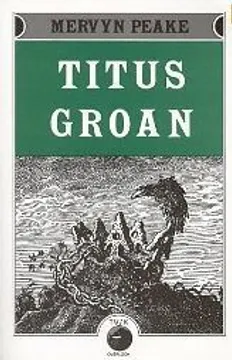


Plot Summary
An Heir Under Stone
The birth of Titus,1 the first male heir1 in years, sends Gormenghast into noisy celebration, though his parents meet him differently. Lord Sepulchrave4 studies his strange violet eyes with troubled fascination; Countess Gertrude5 barely looks at him and asks that he be raised elsewhere until he is older.
Nannie Slagg8 takes charge, and Keda,7 a young woman from the Outer Dwellings, becomes his wet nurse.7 Fuchsia,3 fifteen and accustomed to being the only child, learns of her brother1 and breaks into tears.
At Titus’s1 christening, Sourdust11 wraps him inside the sacred book, but the infant slips onto the floor and tears a page. Gertrude5 crowns him herself. Fuchsia3 sees his fear and joins Nannie8 in comforting him, her jealousy giving way to the first tenderness between siblings.
The birth makes a child into an institutional event before he can become a person. Titus inherits a name, a crown, and a prescribed future, while the people around him reveal how little those roles can secure intimacy: Gertrude withdraws, Sepulchrave worries, and Nannie performs the daily work of care. The christening’s small accident matters because Titus’s first recorded gesture disrupts the very text meant to contain him. Fuchsia’s change is equally important. Her grief is not dismissed as childish pettiness; it is the pain of losing an imagined monopoly on love. The accidental fall gives her a route from resentment toward kinship.
The Roofs of Gormenghast
Steerpike,2 a seventeen-year-old kitchen apprentice,2 flees the Great Kitchen after its grotesque chef, Abiatha Swelter,10 humiliates him during the celebration. Flay,6 Sepulchrave’s4 severe personal servant,6 finds him lost in the Stone Lanes and locks him in a room.
Rather than test the door, Steerpike2 studies the drop outside, climbs a wall and roof, and discovers a hidden field of stone high above the castle. Exhausted, he scans the rooftops for a way inside.
A narrow window and a climb through dense ivy lead him into Fuchsia’s3 secret attic, where he collapses beside her abandoned food. His escape turns the castle’s forgotten architecture into a map of opportunity. He has reached an unknown part of the household, but only by falling into the private world of its lonely daughter.3
Steerpike’s first advantage is not strength but attention. While other characters accept Gormenghast as a fixed maze, he studies its surfaces for routes and uses the building’s neglect against it. The hidden stone field offers him a private vantage point, a literal distance from the hierarchy he hopes to enter. Yet his arrival is not a clean triumph: hunger and exhaustion leave him unconscious in Fuchsia’s sanctuary. That landing is consequential because it brings calculation into contact with imagination. The castle’s architecture does more than confine its residents. It creates unplanned passages through which new ambitions can move.
A Clown Wins Shelter
Fuchsia3 finds the unconscious boy and tries to revive him with water from a vase. Its stagnant contents coat Steerpike2 in foul green slime, but the shock wakes him. He recognizes Fuchsia3 from the spy-hole where he once watched her, then invents a story of rooftop wonders and performs a solemn, ridiculous clown routine to catch her attention.
Fuchsia3 lets him wash and leads him out of the attic. At Doctor Prunesquallor’s9 house, Steerpike2 boldly offers his intelligence in exchange for work.
The Doctor9 is intrigued, and his sister Irma15 is flattered by the youth’s polished manners. Steerpike2 joins their household, learns the dispensary, and begins collecting knowledge. The Doctor9 gives Fuchsia3 a ruby to comfort her over Titus,1 a gift she keeps for herself rather than displaying for the castle.
Steerpike’s performance reveals the difference between understanding an emotion and sharing it. He can identify what delights Fuchsia, then imitate it without surrendering his own calculating distance. Fuchsia’s attic, once her private world, becomes the place where she first permits an outsider to enter her life. Her welcome is neither foolishness alone nor an uncomplicated bond: she has been starved of attention and responds to the boy’s apparent wonder. Prunesquallor provides a contrasting kind of intelligence, playful and socially perceptive, but he underestimates the risks of employing someone who treats knowledge as a ladder. The ruby becomes a rare object Fuchsia chooses to define for herself.
Keda’s Two Rivals
Keda’s7 life in the castle offers temporary refuge from a conflict among her people. A celebrated old carver was forced by custom to marry her; after he died, their newborn child also died. Rantel20 and Braigon,21 two younger men who love Keda,7 turned their devotion into bitter rivalry.
When Keda7 returns to the Dwellings, Rantel20 finds her first and spends the night with her. Braigon21 arrives the next morning, and Keda7 admits that she loves him too, though she cannot separate love for either man from her newly fierce attachment to life.
Rantel20 and Braigon21 agree to fight for her. At the moonlit meeting, each wounds the other. Braigon21 kills Rantel,20 then Rantel’s20 dying throw kills Braigon.21 Keda7 leaves with a carving from each man, unable to stay among the customs and graves that have shaped her life.
Keda’s subplot makes desire inseparable from the social structures that claim to regulate it. The Dwellers’ marriage custom assigned her to an older artist, while the two younger men turn their own feelings into a contest that removes her choice. Her sudden joy on returning home does not resolve that bind. Instead, it makes her more conscious of how much life she wants and how little authority she has over its terms. The carvings she carries preserve each man’s creative work, but they also become the physical burden of a love story whose violence she could neither prevent nor settle.
Steerpike Sets the Trap
Steerpike2 studies the castle’s neglected spaces and learns that Cora13 and Clarice,14 Sepulchrave’s4 politically sidelined sisters, resent Gertrude5 and long for power. He flatters their importance, promises servants and golden thrones, and persuades them that their brother’s library is the source of his authority.
The twins13 agree to burn it. Steerpike2 secretly prepares oil-soaked cloth inside the building, bores a concealed passage through the main door, and hides books he wants to keep.
He also sets up a rescue route with felled pine trunks, making sure the twins13 will ignite the fire while he appears to arrive by chance. He tells them the coming family meeting will exclude them, although Sepulchrave4 has called it to discuss Titus.1 Their grievance becomes the instrument of Steerpike’s2 design.
Steerpike does not invent the twins’ resentment; he gives it a target and a script. Their desire for recognition is genuine, but their limited understanding makes them especially vulnerable to a manipulator who can translate a diffuse injury into a seemingly concrete remedy. The library is chosen not just as property but as Sepulchrave’s refuge, so its destruction will weaken the Earl and make Steerpike’s staged rescue valuable. His plan depends on dividing knowledge: the twins act without grasping the full consequences, while he alone understands the fire’s timing and the route out. His rise begins by making other people’s motives serve as camouflage.
The Library Turns Red
During the family gathering in Sepulchrave’s4 library, smoke begins to seep through the shelves. The door has been locked from outside, and the fire spreads before anyone can find its source. Fuchsia3 climbs the bookcases to reach a window, but Steerpike2 appears beyond the glass.
He lowers a prepared pine trunk, then carries Titus,1 Nannie Slagg,8 Irma,15 Fuchsia,3 Gertrude,5 Prunesquallor,9 Flay,6 and finally Sepulchrave4 to safety. Sourdust,11 the old master of ritual, is left behind and dies in the flames.
Steerpike’s2 carefully arranged rescue makes him appear the family’s savior, though he engineered the danger. Sepulchrave4 returns to a castle without his books, the private refuge that had sustained him through years of melancholy. The library is reduced to charred shelves and ruined pages.
The fire converts Steerpike’s private planning into public legitimacy. His courage is real in the immediate physical danger, but the rescue cannot be separated from his authorship of the crisis. This ambiguity is the mechanism by which he gains influence: the family experiences a genuine debt while lacking the information needed to judge its origin. Sepulchrave’s loss is more than bibliographic. Books gave him a space for thought beyond ritual, and their destruction strips away his strongest defense against the castle’s demands. Sourdust’s death also creates a vacancy in the machinery of tradition, one that Steerpike expects to occupy.
A Calf Takes Sourdust’s Place
While Flay6 carries Sourdust’s11 charred bones toward burial, an unseen assailant strikes him and steals the skull. The search for it fails, so Barquentine,12 Sourdust’s11 elderly son, orders a calf’s skull to be boiled, cleaned, and tied to the skeleton with blue ribbon. The funeral proceeds with the substitute head and a jumble of ceremonial bows.
Barquentine12 inherits the post of Master of Ritual, closing the opening Steerpike2 hoped to exploit. At the grave, Fuchsia3 watches her father4 smile strangely and feels the old world of Gormenghast pressing in. Steerpike2 accompanies her afterward. His irreverence about age and authority appeals to her, though his talk of harming Barquentine12 frightens her enough that she runs away from him.
The calf’s skull makes the castle’s approach to death visible: what matters to Barquentine is not bodily truth but the completion of an accepted form. Yet the ceremony cannot make Sourdust whole, just as the library’s destruction cannot be repaired by Steerpike’s apparent heroism. Fuchsia’s reaction at the graveside exposes her need for a young ally in a society dominated by inherited authority. Steerpike supplies the language of resistance she longs to hear, but his casual cruelty unsettles her. Her attraction to his energy and her instinctive recoil from his violence begin to coexist.
The Earl Becomes an Owl
Barquentine12 forces Sepulchrave4 through increasingly exacting ceremonies, but the Earl’s4 concentration cannot restore the life he had in his library. He begins to lose sleep and to see the Tower of Flints as a presence calling him. On Titus’s1 first birthday, he climbs onto a mantelpiece and behaves like an owl, asking Swelter10 for trapped mice and Flay6 for twigs.
Fuchsia3 finds him and tries to calm him. Prunesquallor9 arrives, restrains Sepulchrave,4 and injects a drug that quiets the delusion long enough for him to dress for the birthday observances. The disturbance reaches the household just as another feud comes to a head: Steerpike2 taunts Flay,6 who hurls a white cat at him and cuts his cheek. Gertrude5 banishes Flay6 for injuring her cat.
Sepulchrave’s breakdown develops from a specific rupture: the loss of the books that allowed him to think outside his ceremonial role. The owl image fuses his personal grief with the Tower’s birds, turning an architectural landmark into an imagined destination. Fuchsia’s effort to reach him signals a new intimacy, but she cannot yet distinguish illness from the castle’s wider hold over her family. The simultaneous conflict between Flay and Steerpike matters because their private hatred is now exposed in front of Gertrude. Her decision to protect the cat over her servant shows how quickly personal loyalty can be outweighed by the household’s arbitrary hierarchy.
The Birthday Table Breaks
The first-birthday breakfast proceeds in a cold refectory under Barquentine’s12 supervision. Steerpike2 hides beneath the table in a hammock, listening as the family endures the ceremony. Fuchsia3 faints, Titus1 cries and kicks apart the lavender wrapping and flowers, and Barquentine12 continues the ritual over the noise.
Sepulchrave4 is present only because Prunesquallor’s9 drug has temporarily steadied him; his thoughts remain drawn toward the Tower. The meal ends in confusion, with the guests departing and the weather still pressing against the castle.
Steerpike2 uses his hidden position to watch each person without being seen. The birthday does not bring the household together. Instead, the ceremony exposes the strain beneath its practiced order and leaves Flay,6 already banished, to face Swelter’s10 threats alone.
The breakfast stages Gormenghast’s central contradiction: its rituals claim to secure continuity, yet they cannot accommodate the needs of the people performing them. Titus’s crying and refusal of stillness are not rebellion in any conscious sense, but they interrupt the ceremony’s effort to make him a passive emblem. Fuchsia’s faint shows how little protection her social rank gives her against emotional overload. Beneath the table, Steerpike turns the same event into surveillance, treating a family rite as useful information. The scene’s crowded formality therefore produces no solidarity. It leaves each character isolated with a private crisis.
Flay’s Blade in the Flood
After Gertrude5 expels him, Flay6 secretly returns to Gormenghast, expecting Swelter10 to attack him. During a violent storm, Swelter10 creeps toward Sepulchrave’s4 room with a sharpened cleaver, but Flay6 has left a decoy in the usual sleeping place.
The two servants meet in the ruined Hall of Spiders and fight among fallen beams and webs. Swelter’s10 spinning attack ends when he crashes into a wall; he then falls into floodwater, where Flay6 stabs him. Sepulchrave4 appears, asks about the dead chef, and treats the corpse as an offering to the owls.
He drags Swelter10 toward the Tower of Flints and disappears inside. Flay6 hears a human cry rise from the tower and collapses. The Earl4 is never seen again, and Flay’s6 return to the castle has become impossible.
Flay’s confrontation with Swelter is an act of loyalty that has become inseparable from violence. He returns not to restore his position but to keep the chef away from Sepulchrave. The ruined Hall of Spiders, full of hazards neither man controls, strips away Swelter’s imagined mastery and lets Flay survive through patience and placement. Sepulchrave’s response to the corpse is more devastating than a simple disappearance: he has ceased to recognize ordinary human bonds and now understands death through the owl-filled Tower. His departure removes the castle’s ruler without resolving whether he is dead or transformed, leaving the family to continue under a child’s name.
Keda Carries Two Carvings
After the duel, Keda7 leaves the Dwellings carrying carvings made by Rantel20 and Braigon.21 She wanders from job to job until exhaustion and pregnancy force her toward the home of a reclusive brown-skinned man.19 He gives her a reed-roofed cabin, food, and quiet care through a fever.
When she recovers, she returns toward the Dwellings on his mare and gives birth to a daughter. The journey back does not restore her place: the elders have taken her former home, and her child is born outside the rules that governed her first marriage.
Keda7 arrives near Gormenghast on Titus’s1 birthday, holding the infant apart from the crowd. Later, she climbs to a mountain crag with the carvings at her breast and steps over its edge, choosing to end the life that has brought her only grief.
Keda’s movement from the Dwellings to the castle and back is a search for shelter that never becomes uncomplicated belonging. The brown father offers care without demanding that she explain or perform herself, a stark contrast to the customs that assigned her a husband and judged her after his death. Her carvings preserve the men she loved, but they also keep her bound to the duel and its losses. The birth of her daughter gives Keda a final responsibility even as she decides her own life is exhausted. Her return and death make the next generation present at the same moment that the old generation disappears.
Steerpike Takes the Levers
With Sepulchrave4 missing, Barquentine12 ends the search and appoints Steerpike2 to learn ritual and help manage the castle. Steerpike2 gains access to authority he had wanted since entering Gormenghast. The twins,13 meanwhile, demand the thrones he promised after the library fire.
To keep them from revealing their part in it, he constructs a fake ghost from a sheet, phosphorus, Sourdust’s stolen skull, and his sword-stick. He terrifies them with a warning that speaking of the fire or his name will bring death. They believe him and fall silent.
At Gormenghast Lake, Steerpike2 later stages a swim toward the family and uses the moment to order the twins13 back to their rooms, reminding them that their golden thrones depend on obedience. Fuchsia3 watches his daring with admiration and growing mistrust.
Steerpike’s advancement depends on controlling not only information but the emotional conditions under which it can be spoken. His ghost is a crude stage effect, yet it succeeds because the twins already fear the consequences of their own actions and cannot test his story against evidence. The promotion by Barquentine gives this manipulation institutional reach. At the lake, Steerpike turns a public display of spontaneity into a private command, showing that performance and coercion are not separate tools for him. Fuchsia’s response remains divided: his nerve attracts her, while his calculated influence over others confirms the Doctor’s warning.
Titus Refuses the Raft
At the Earling, Gormenghast’s inhabitants wear ceremonial sacking and gather around the rain-swollen lake. Keda7 stands among the Outer Dwellers with her infant daughter. Barquentine12 conducts the rite as Titus1 is placed on a raft with a stone, an ivy branch, and a shell necklace, objects meant to bind him to his inheritance. Titus1 will not hold them.
At the ceremony’s close, he takes the stone and branch, then throws them into the water and flings away the necklace. He turns toward the Dwellers, and his cry is answered by the cry of Keda’s7 baby. The rain stops, a patch of blue opens overhead, and a rainbow forms above the lake. The rite names Titus1 Earl,1 but his actions and the infant’s answer disturb its claim to define him.
The Earling attempts to turn succession into a physical contract: stone, branch, shells, and the watching crowd make inheritance visible and repeatable. Titus’s refusal is striking precisely because he is too young to offer a political argument. His body simply rejects the objects the adults press upon him. The baby’s answering cry connects the castle’s heir to a child from beyond its walls, briefly making the Outer Dwellers more than a distant audience. The rainbow does not settle the conflict between bloodline and freedom; it marks a moment when the prescribed ceremony cannot absorb what has happened. Titus has been named, but not fully claimed.
The Castle Breathes Again
While Gormenghast’s people attend the Earling, Rottcodd16 wakes alone in the Hall of the Bright Carvings and discovers that no meal has arrived. His repeated bell pulls bring no answer.
Looking from his window, he sees the procession returning from the lake: Titus1 in a cradle, Gertrude,5 Fuchsia,3 the twins,13 Barquentine,12 the Prunesquallors,9 and Steerpike2 among them. Rottcodd16 realizes that the Earl4 has vanished and that the castle has changed without anyone telling him. Gertrude5 whistles, and her white cats pour down the walls to meet the procession.
Their movement breaks the oppressive stillness inside the building. Rottcodd16 returns to his hammock, unsettled but relieved by the sensation that Gormenghast has begun to breathe again. The castle’s next chapter remains uncertain, but Titus1 has entered it.
Rottcodd’s delayed discovery gives the ending an outsider’s angle from within the castle. He has chosen isolation, yet the absence of news makes his preferred solitude feel less like freedom than exclusion. The procession below confirms that ritual continues despite Sepulchrave’s disappearance, but the cats’ descent introduces a movement no rulebook appears to control. The castle’s renewed breath is not a resolution of its power struggles. It is a return of motion, appetite, and unsettled life. By ending with Titus inside the walls and Rottcodd newly alert, the novel closes its first cycle while leaving the consequences of the heir’s refusal open.
Analysis
Titus Groan1 is a novel about a society that mistakes continuity for consent. Gormenghast’s laws are not merely rules; they are a complete environment of routes, clothes, timings, meals, and gestures. Because nearly every act has an inherited script, the castle can make obedience feel like the natural shape of life. Yet the book repeatedly shows the script failing at intimate thresholds. Sepulchrave4 cannot recover his inner life through ritual after his library burns. Fuchsia3 cannot be assigned affection on schedule. Titus,1 still too young to understand the ceremony, refuses its objects through simple bodily action.
Steerpike2 thrives in the gaps between prescribed roles. He does not challenge the system openly. Instead, he studies the people it neglects and turns their needs into instruments. The twins’13 hunger for recognition, Fuchsia’s3 loneliness, and the household’s gratitude for a rescue all become resources. His rise is therefore not simply a story of individual ambition. Gormenghast helps produce him by offering few legitimate routes to agency, then rewarding the most convincing performance of service.
The parallel world of the Outer Dwellers widens the novel’s moral field. Their carving culture prizes artistic skill, but their customs also govern marriage and social status. Keda’s7 story makes clear that neither the castle nor the Dwellings offers uncomplicated freedom. Her longing for love collides with communal rules, jealousy, bereavement, and motherhood. The Brown Father’s19 quiet care briefly suggests another form of relation, one based on attention rather than ownership.
The ending does not overthrow Gormenghast. Titus1 is named its heir,1 and the castle carries on. But his rejection of the Earling’s objects, answered by the cry of Keda’s7 child, unsettles the assumption that inheritance must be accepted in the form offered. The final return to Rottcodd16 preserves that uncertainty: the castle breathes again, but no one can say what its next life will demand.
Review Summary
Reviews of Titus Groan are deeply polarized. Admirers celebrate Peake's extraordinary painterly prose, richly atmospheric Gothic setting, and grotesque yet memorable characters, comparing his unique voice to Milton, Conrad, and Dickens. Many consider it an unparalleled fantasy masterpiece that transcends conventional genre boundaries. Critics, however, find the glacially slow pacing, minimal plot, and overwhelming descriptive passages exhausting and impenetrable. Nearly all readers agree the writing is distinctive and highly visual, but whether that proves enchanting or soporific depends entirely on individual taste.
People Also Read





Characters
Titus Groan
The unformed heirTitus is the infant son of Sepulchrave4 and Gertrude5, and the seventy-seventh Earl of Gormenghast by birth. His violet eyes and unusual features draw anxious attention, but his own perspective is still that of a very young child. The castle surrounds him with inherited duties before he can understand them, while Nannie Slagg8 and Keda7 provide much of his direct care. Titus’s presence rearranges the emotional balance of the household: Fuchsia3 must learn to share the place she once held alone, and Sepulchrave4 sees him as the continuation of a line that terrifies him to imagine ending.
Steerpike
The patient opportunistSteerpike is a seventeen-year-old kitchen apprentice with a slight, oddly formed body, close-set eyes, and a mind trained to study advantage. He resents the humiliations of his station and treats knowledge, charm, and performance as tools for advancement. He can imitate enthusiasm or tenderness when doing so helps him, while remaining emotionally detached from the people he studies. Fuchsia’s3 imagination gives him a way into the family, and the Prunesquallors’9 household gives him access to education and influence. His talent lies in seeing how other people’s needs can be turned into routes through Gormenghast.
Fuchsia Groan
The inward-looking daughterFuchsia is Sepulchrave4 and Gertrude’s5 fifteen-year-old daughter. Awkward, intense, and quick to anger, she retreats into an attic filled with discarded objects and imagined scenes because the castle’s formal life offers her little warmth. She loves Nannie Slagg8 fiercely and longs for someone who can enter her private world without trying to correct it. Titus’s1 birth first feels like a theft of her singular place, then begins to awaken tenderness. Fuchsia is drawn to Steerpike’s2 energy and daring, but her instincts register the cruelty beneath his polished performances. Her emotional life is vivid even when she struggles to express it clearly.
Lord Sepulchrave
The book-haunted EarlSepulchrave is the seventy-sixth Earl of Groan and the father of Fuchsia3 and Titus1. Melancholy, intellectually gifted, and deeply reserved, he finds his strongest private refuge in books, while daily ceremonies offer a narrow structure against his despair. He and Gertrude5 have little emotional sympathy, though their marriage sustains the family line. The arrival of a son1 gives Sepulchrave a new sense of continuity, but he approaches fatherhood through the symbolic importance of an heir1 rather than easy affection. His inner life is more expansive than his public role allows, and the castle’s demands keep pressing on the fragile boundary between them.
Countess Gertrude
The bird-keeping CountessGertrude is Sepulchrave’s4 wife and the mother of Fuchsia3 and Titus1. Her imposing size, dark red hair, and flat, forceful manner make her difficult to approach. She gives much of her attention to white cats and wild birds, whose presence offers a private world apart from the castle’s ceremonies. Her affection is selective rather than absent: she can be tender with her animals while remaining distant from her children and husband4. Gertrude understands power as something bound to family blood and inherited duty, and she can act decisively when a threat reaches what she considers hers.
Mr. Flay
The rigid first servantFlay is Sepulchrave’s4 personal servant, a tall, bony man whose cracking joints and clipped speech make him seem almost part of the stone corridors. His loyalty to the Earl4 and to Gormenghast’s inherited order is absolute, although his devotion is expressed through vigilance rather than warmth. He distrusts Swelter10 and quickly recognizes that Steerpike2 is difficult to read. Flay’s code leaves little room for flexibility, but it gives him a fierce capacity to endure hardship for those he serves. Beneath his severity is a lonely man whose identity has been built around a place and a master4.
Keda
The exiled wet nurseKeda comes from the Outer Dwellings, where woodcarving, social rank, and inherited custom shape daily life. She becomes Titus’s1 wet nurse after losing her own infant, and her calm, practical care contrasts with Nannie Slagg’s8 nervous devotion. Keda is quiet but not passive: she has a strong inner life and a deep need to choose whom she loves and where she belongs. Her connections to the carvers and their art place her between the castle and the world beyond its walls, while the culture’s rules make private desire costly.
Nannie Slagg
The anxious caretakerNannie Slagg is the elderly nurse who raises Fuchsia3 and takes responsibility for Titus1. Tiny, easily frightened, and often confused, she nevertheless offers the children steady affection and practical care. She wants to be needed and recognized, but her anxieties can turn her tenderness into fussing and self-pity. Her attachment to the Groan children is more personal than the family’s own formal attention, and she often stands between them and the cold machinery of the castle’s expectations.
Doctor Prunesquallor
The comic-minded physicianDoctor Prunesquallor is Gormenghast’s physician, an elegant, narrow-chested man with magnifying spectacles and a laugh that often arrives regardless of the joke. His elaborate speech can disguise a sharp and humane intelligence. He treats Fuchsia3 with sympathy, notices the emotional meanings others overlook, and offers Steerpike2 a chance to work. Prunesquallor is attached to the castle but capable of questioning its assumptions, which makes him both a useful observer and an uneasy presence within its rigid order.
Abiatha Swelter
The tyrant chefSwelter is Gormenghast’s enormous chief chef, master of the overheated kitchen and tormentor of its apprentices. He takes pleasure in domination and in turning food, drink, and cooking into theatrical displays of appetite. His long-standing hatred of Flay6 is personal, not merely professional, and the two men recognize each other as rivals. Swelter’s bulk and authority make him difficult to challenge, while his vanity and appetite leave him vulnerable to misjudging those around him.
Sourdust
The keeper of ritesSourdust is Gormenghast’s aged librarian, ritual authority, and adviser to Sepulchrave4. He possesses an immense knowledge of the castle’s prescribed ceremonies and treats their correct performance as a sacred responsibility. His devotion is not simply bureaucratic: the rites give shape and purpose to the life he has spent preserving. Sourdust’s formal authority makes him a central guardian of the old order, even as his age and the castle’s neglect expose how fragile that order has become.
Barquentine
The iron ritualistBarquentine is Sourdust’s11 elderly son, a one-legged, sharp-tempered man who has spent decades studying the laws of Gormenghast. He lives in a cramped room and shows little concern for anyone else’s comfort. To him, the castle’s traditions are more important than the people who must enact them. His formidable memory and uncompromising manner make him an effective guardian of ritual, but his narrow definition of duty leaves him poorly equipped to understand individual suffering.
Lady Cora Groan
One of the overlooked twinsCora is one of Sepulchrave’s4 sisters and Clarice’s14 twin. She and her sister14 have limited authority, a grievance they nurture into a consuming desire for power. Cora’s thinking is slow and repetitive, and she relies on Clarice’s14 presence as much as Clarice14 relies on hers. Their shared history and physical resemblance make them feel like a single unit, though each is capable of jealousy and competition with the other.
Lady Clarice Groan
The other overlooked twinClarice is Cora’s13 identical twin and another of Sepulchrave’s4 sisters. Both women live with the effects of childhood seizures and feel that Gertrude5 has taken the power and attention they believe belong to them. Clarice can be distractible and literal, yet she shares Cora’s13 fixation on rank and recognition. Their closeness gives each a companion, but it also intensifies their rivalry and makes them easy for a persuasive outsider to steer.
Irma Prunesquallor
The aspiring ladyIrma is Doctor Prunesquallor’s9 sister. She is sharply dressed, self-conscious about her appearance, and eager to be treated as a desirable woman and a true lady. Her brother’s9 teasing often makes her the target of his wit, though her pride and vanity are her own. She is flattered by Steerpike’s2 attentions and initially sees his manners as evidence of respect. Irma wants social recognition but has little practice judging the motives behind it.
Rottcodd
The secluded curatorRottcodd curates the Hall of the Bright Carvings and spends much of his life alone among its sculptures. He values quiet and routine, dusting the carvings with care despite claiming little interest in them. His isolation means he receives news late, sometimes long after events have altered the castle around him.
Pentecost
The devoted gardenerPentecost is the head gardener, an Outer Dweller whose knowledge of flowers and fruit comes from close attention to growth. He arranges the christening flowers with an artist’s instinct for color and tends the castle’s gardens with patience. His work quietly connects the cultivated grounds inside the walls to the creative traditions of the Dwellers.
The Poet
Sepulchrave’s rare companionThe Poet is a reclusive, wedge-headed man whose appearance conceals a lyrical inner life. Sepulchrave4 sometimes visits him because their conversations reach beyond ordinary courtly exchange, though the Poet’s enthusiasm can irritate the Earl4. His presence offers a glimpse of imaginative life persisting in a castle dominated by routine.
The Brown Father
Keda’s quiet refugeThe brown father is a solitary man living in a cabin beyond the familiar territories of Gormenghast. He gives Keda7 shelter, food, and patient care without insisting that she explain herself. His quiet presence provides a rare model of protection that does not depend on rank, ritual, or possession.
Rantel
Keda’s passionate suitorRantel is a young Dweller and a carver whose love for Keda7 is intense and possessive. He is quick to act and slow to master jealousy. His artistic energy and physical force are intertwined, making him both compelling and dangerous in a community where personal desire is constrained by custom.
Braigon
Keda’s watchful suitorBraigon is a young carver who loves Keda7 with a quieter, more observant intensity than Rantel20. He watches and waits rather than pressing his claims openly. His artistic devotion and his restraint distinguish him from his rival20, though neither can escape the violence produced by their competition.
Plot Devices
Gormenghast’s Ritual Books
Law made into choreographyThe castle’s ceremonies are recorded in elaborate books specifying times, clothing, gestures, routes, and even variations based on the Earl’s4 physical traits. Sourdust11 and later Barquentine12 interpret these instructions, while the household performs them as the structure of daily life. The books let Gormenghast present inherited custom as a complete system, but their dependence on exact procedure also makes the system brittle. A damaged route requires a substitute; a missing authority creates anxiety. The rites can order bodies, but they cannot guarantee affection, prevent grief, or make every person comply.
The Castle’s Hidden Routes
Stone becomes opportunityGormenghast’s roofs, corridors, secret rooms, windows, and forgotten structures give its inhabitants radically different views of the same place. Fuchsia’s3 attic shelters her private imagination, while Steerpike2 uses rooftops, ivy, and concealed passages to move beyond his station. Flay6 knows the servants’ lanes and approaches the castle through familiar shadows. These routes make the building more than a setting: architecture controls who can see, reach, escape, or overhear whom. The same maze that confines its residents also gives an observant outsider the means to penetrate its hierarchy.
Steerpike’s Performances
Desire turned into leverageSteerpike2 studies what each person wants to hear or believe, then shapes himself accordingly. He entertains Fuchsia3 with apparent wonder, offers Prunesquallor9 an ambitious mind, flatters the twins13 with promises of power, and later uses a staged ghost to keep them afraid of exposure. His performances do not rely on a single disguise; they shift according to the audience. The device reveals how easily social trust can be manufactured when people are lonely, neglected, or eager for recognition. Steerpike’s2 success comes from making each person feel that he has understood them.
Wooden Carvings
Art preserves a peopleThe Outer Dwellers devote themselves to carving, and their annual display brings a rare contact between their world and the castle. The sculptures embody skill, rivalry, and communal memory; selected works enter the Hall of the Bright Carvings, while the rest are burned. Keda’s7 lovers also leave carvings that she carries during her wandering, making the objects personal keepsakes as well as evidence of the Dwellers’ artistic life. Carving connects creativity to survival and identity, especially for a community whose youth and beauty are brief and whose social traditions sharply limit individual choice.
Titus’s Earling Objects
Inheritance made tangibleAt the Earling, the heir1 is given a stone, an ivy branch, and a necklace of snail shells, each object carrying the castle’s claim over his future. The rite turns an abstract inheritance into something a child must hold, wear, and display before witnesses. Its objects echo Gormenghast’s larger insistence that belonging can be secured through material signs and repeated acts. The ceremony also exposes a limit: symbols can be placed in Titus’s1 hands, but they cannot determine what he does with them.
Download PDF
Download EPUB
.epub digital book format is ideal for reading ebooks on phones, tablets, and e-readers.








