

Key Takeaways
Revise your life map when repeated behavior contradicts your preferred story
Reality outranks expectation. As a young Army lieutenant, Livingston was studying a map that showed a hill he could not see. His sergeant told him to trust the ground, not the paper. The lesson became a guide to relationships and self-understanding: beliefs about how people should behave are not evidence that they do. Kindness, commitment, and empathy tend to show up as stable patterns, just as selfishness or volatility can. When experience repeatedly brings surprise, anger, or betrayal, treat those feelings as signals to check the map.
Look for patterns. A person’s past behavior offers better clues than promises about what they may do next. The map still needs revision, because one incident can mislead; the book’s emphasis is on recurring conduct, not snap judgments.
The map metaphor captures a core practice of good judgment: let observations update expectations. It also resembles scientific model-building, where a useful theory must answer to evidence rather than explain away every contradiction. In relationships, however, evidence should be interpreted across time and context. A single lapse may reflect stress; a repeated pattern of contempt is more informative. This approach is strongest when it combines openness to change with clear standards. Otherwise, the demand to be realistic can turn into suspicion, while optimism can become an excuse to ignore what is plainly happening.
Act toward meaning before waiting for your mood to improve
Behavior can lead. Livingston distinguishes relief from depression from the fuller experience of happiness. Treatment may ease painful symptoms, but a satisfying life also needs meaningful activity, close relationships, and something to anticipate. He calls useful activity work, whether paid employment or an avocation that gives a person a sense of significance.
Do the next thing. People often know that movement, friendship, or a once-loved interest might help, yet wait to feel motivated before beginning. Livingston reverses that sequence: actions can help change feelings. He asks patients who feel unable to act to notice that they got dressed and came to the appointment. That does not make further effort easy, but it can make the next step imaginable. Medication may be essential; it is not a substitute for building a life with sources of pleasure and purpose.
This insight anticipates the logic of behavioral activation, a treatment approach that helps people schedule meaningful activities rather than wait passively for motivation. Action can create opportunities for reward, connection, and a sense of competence. The approach is not a moral test, though. Severe depression, disability, poverty, and unsafe circumstances can sharply limit what someone can do. The useful question is not whether a person is trying hard enough, but what appropriately scaled action and support are available. The book’s emphasis on agency is most humane when paired with that recognition.
Treat recurring failures as patterns to investigate, not fate
Repetition carries information. People often repeat behaviors that produce the same painful result, even when they understand the logic of doing something different. Livingston argues that habit, emotion, and motives outside conscious awareness can drive these cycles. Reason alone may not reach the force behind them.
Ask better questions. A couple may agree that criticizing a tired partner causes conflict, then keep doing it. Instead of stopping at the verdict that the criticism is irrational, investigate what feeling or unmet need may be driving it. Livingston’s questions include why a pattern keeps returning and what someone expects to happen when they repeat it. Therapy, in his account, is a shared inquiry into how past experience and present behavior connect. The aim is not an elegant explanation, but a different response that changes the familiar outcome.
The focus on repeated patterns is a practical bridge between insight and behavior. It echoes cognitive-behavioral approaches that track situations, interpretations, emotions, and responses to uncover where a cycle can be interrupted. The book is also right to caution that people do not always act from reasons they can readily state. Yet unconscious explanations should remain hypotheses, not diagnoses imposed from outside. A pattern can have several causes, including habit, stress, incentives, or a partner’s behavior. Asking what the pattern accomplishes is often more productive than claiming certainty about its hidden origin.
Choose partners by dependable kindness, not chemistry or eloquent promises
Love has observable evidence. Livingston urges readers to judge attachment by conduct: whether someone makes room for another person’s needs, offers care, and behaves consistently. Attraction may feel mysterious, but it cannot establish that a person is trustworthy or suited to a lasting commitment. Kindness matters because it supports empathy, tolerance, and care in ordinary moments, not only declarations of devotion.
Beware imagined alternatives. The book calls the fantasy of a flawless, rescuing partner the myth of the perfect stranger. It can make an existing relationship seem intolerable while turning a barely known person into an ideal. Unreturned love can similarly keep someone attached to a hope rather than a mutual relationship. Livingston’s blunt point is that relationships become unbalanced when one person cares far less, but that imbalance is a warning to assess the relationship, not a reason to play power games.
The emphasis on dependable care shifts romantic judgment away from intensity and toward evidence accumulated over time. That is compatible with attachment research, which treats security as something built through reliable responsiveness, not just strong feeling. The ideal of a partner who will provide unconditional approval, however, can set an impossible standard for adults. Mutual love includes limits and negotiation. The book’s useful distinction is between imperfect care and persistent disregard. A relationship should not be condemned for failing to satisfy every need, but affectionate words cannot erase a sustained pattern of harmful behavior.
Accept imperfect progress; safety and perfection can imprison you
Change takes time. Livingston contrasts slow construction with the sudden arrival of bad news. Habits, relationships, and self-understanding usually change through repeated effort, not a single insight or dramatic promise. His term lottery mentality describes dreaming about a transformed life without taking concrete steps toward one. Perfectionism can create a related trap: standards that help someone excel at work may make intimacy feel like a performance review.
Take a meaningful risk. Livingston describes serving in Vietnam, then losing faith in the war. At a military ceremony, he distributed a satirical prayer that mocked the destructive logic of the conflict. He was investigated, sent home as an embarrassment to the command, and later left the Army to oppose the war. The episode gives the book’s call to courage a lived cost: action may bring consequences, but avoiding all risk also shapes a life.
This section connects personal change with moral courage: both require acting under uncertainty without a guarantee of success. The distinction between aspiration and a lottery mentality is especially useful in an age of quick-fix promises. Still, risk-taking is not automatically wise, and perfection can be necessary in work where errors endanger others. The key is context. Precision may be essential in surgery, while a demand for perfect performance can damage a friendship. Courage is not recklessness; it is choosing a proportionate risk in service of a value that matters.
Let childhood explain your starting point, not dictate your destination
History matters, but it moves. Livingston argues that childhood experiences help shape adult expectations and habits. Serious abuse or neglect deserves recognition; acknowledging it is not the same as letting it define every possibility. Therapy can explore the meanings attached to past events, then turn toward the question of what can be done now.
Truth can restore choice. At thirty-four, Livingston learned from his analyst that he had been adopted, after his parents had kept the fact from him. He searched, found the foster family who had cared for him as a baby, and met his birth mother. The discovery changed his understanding of his past, but did not supply a complete script for his future. The story illustrates why avoiding painful knowledge can be costly, and why learning one’s history need not mean surrendering to it.
The distinction between understanding a past and being ruled by it is valuable, especially because personal narratives influence how people interpret present choices. Contemporary trauma-informed practice adds an important qualification: moving toward action should not mean rushing someone past grief, anger, or the effects of abuse. Safety and trust may be prerequisites for change. The adoption story also shows that truth can be emotionally complicated rather than neatly liberating. Its force lies in making room for several responses at once, including hurt, curiosity, gratitude, and uncertainty.
Use treatment to restore agency, not to erase responsibility
Care and action belong together. Livingston warns that a diagnosis can sometimes become an identity or a reason to expect nothing of oneself. He worries that medication alone may ease symptoms without addressing the routines, relationships, and choices that shape a person’s life. He uses secondary gain to mean an indirect benefit of a problem, such as temporary relief from demands when illness reduces expectations. This is a possibility to explore, not proof that suffering is chosen.
Keep the distinction clear. The book recognizes that serious disorders can have biological causes and that medication may be crucial. Its argument is that treatment can also support behavioral change: confronting avoidances, rebuilding activities, or seeking support. Agency does not mean complete control over symptoms. It means identifying the choices a person can exercise while receiving appropriate medical and social help.
The strongest version of Livingston’s point resists the false choice between illness and responsibility. Treatment can reduce barriers to action, while practical steps can help people regain valued roles. But the chapter sometimes generalizes too broadly from diagnostic labels and risks making illness sound like an excuse. Symptoms can impair judgment, energy, and access to opportunity, and structural constraints matter too. Secondary gain should therefore be explored with curiosity, not used to doubt a patient’s suffering. A compassionate account of agency asks what support makes choice possible, rather than treating choice as proof of wellness.
Trade household control for clear limits and lived example
Instructions often invite resistance. Livingston observes that family life can become a stream of corrections, lectures, and directions. He calls catastrophic predictions about easing control awfulizing: imagining that one relaxed standard will lead to total disorder or failure. Repeated criticism can turn everyday chores into a power struggle, while children may resist indirectly when they cannot oppose parents openly.
Model what matters. The author argues that parents have limited power to determine who their children become. They can provide love, safety, and reasonable limits, but children remain people with their own decisions. In the book’s 2004 figures, fewer than 200 children a year were abducted by strangers, while thousands died in vehicle crashes or from firearms. Livingston uses the contrast to show how parental fear can focus on dramatic but less common dangers. Children learn hope and conduct most powerfully by watching adults live them.
This account aligns with self-determination theory, which emphasizes that autonomy, competence, and connection support motivation. Clear limits can coexist with respect; constant commands often undermine the cooperation they seek. The book’s warning against anxious overcontrol is useful, especially where household conflict becomes habitual. Its statistics are historical, not current risk estimates, and should not guide present-day safety decisions. More broadly, parenting is neither omnipotent nor powerless. Warmth, consistency, and material conditions all shape development, while no parenting style can guarantee a particular outcome.
Spend fear on real risks, not remote threats or imagined failure
Fear can distort priorities. Livingston describes how public attention after the 2001 terrorist attacks and the 2002 Washington-area sniper shootings altered ordinary behavior. He contrasts alarm over vivid, unusual threats with less dramatic hazards such as unsafe driving, smoking, or firearms in the home. In personal life, fear can also make people avoid dating, travel, or other activities that might bring rejection or change.
Choose a response. Anxiety often grows when avoidance shrinks a person’s world. The book’s proposed alternative is to distinguish a genuine danger from discomfort, then take manageable steps toward what matters. This is not a promise of safety or success. It is a refusal to let the possibility of pain make every decision. Livingston also argues that fear should not displace attention from preventable harms or from the relationships and activities that give life meaning.
The contrast between vivid threats and common risks fits the availability heuristic: people often estimate danger by how easily examples come to mind. That tendency can be amplified by news coverage and political messaging. Exposure-based approaches to anxiety likewise show why avoidance can preserve fear, while gradual confrontation can restore functioning. The nuance is that not every caution is irrational; risk depends on context, and some threats deserve collective action rather than individual bravery. The practical task is calibration: gather credible information, separate danger from uncertainty, and choose a response proportionate to both.
Meet aging in the present instead of embalming a better past
Memory edits the past. Livingston argues that nostalgia often turns earlier life into a paradise of better manners, stronger families, or happier relationships. Memories are not exact recordings; they are stories shaped by present concerns. The past may contain genuine pleasures, but idealizing it can make today's life seem worse by comparison. The same distortion can make a former partner or childhood home seem perfect because daily reality no longer tests the memory.
Stay engaged as you age. The book criticizes a society that treats older people as irrelevant and urges them to preserve curiosity, humor, and interest in others. Livingston also condemns endless self-pity, but this must be read beside his account of ageism and loss. Health declines, bereavement, and exclusion are real. His central challenge is to seek connection and dignity without asking younger generations to pretend that aging is painless.
Research on autobiographical memory supports the broad idea that recollection is reconstructive, not a faithful replay. Nostalgia can offer continuity and comfort, but it can also idealize what has been lost and devalue the present. The section’s call for curiosity across generations is an important corrective to age segregation. Its sharper judgments about older people’s complaints deserve caution: pain, disability, and social invisibility can make participation harder. Dignity should not require silence about suffering. A more generous standard is to make room for both honest complaint and reciprocal attention.
Carry grief forward through love, memory, and chosen forgiveness
Loss does not close on schedule. Livingston writes as a father who lost one son to suicide and another to leukemia within thirteen months. He rejects the idea that healing requires no longer missing them. Memories change, he says, from the worst moments of illness and death toward a fuller sense of the lives his sons lived. Their love remains part of the lives of those who survive them.
Forgiveness releases a claim. In the book, forgiveness means relinquishing resentment or revenge; it does not mean forgetting harm or reconciling with the person who caused it. Livingston describes needing to forgive doctors and himself after his younger son died following a bone marrow transplant he had donated. That act did not make the loss fair or erase grief. It helped him face the present without making blame the whole story.
The account offers a powerful alternative to the idea that successful grieving means detachment. Contemporary grief frameworks often recognize continuing bonds, the ways memory and love remain active after death. The distinction between forgiveness and reconciliation is equally important because it preserves boundaries. Still, forgiveness should never be prescribed as a requirement for healing, especially after abuse or unresolved injustice. Some people find meaning through it; others need distance, anger, or time. The book’s most durable insight is not that loss can be solved, but that love can persist without making grief disappear.
Analysis
Livingston’s book is a collection of brief clinical and personal essays rather than a single step-by-step program. Its recurring argument is that a meaningful life depends less on what people say they intend than on what their repeated actions reveal. He asks readers to test their assumptions against lived evidence, notice patterns, accept the slow pace of change, and take risks for connection and purpose. The book’s authority comes partly from its refusal to promise that life is fair. Its author writes about war, adoption, clinical work, aging, and the deaths of two sons, so its counsel about agency is offered alongside vivid knowledge of what no amount of agency can prevent.
The central tension is also the book’s most important limitation. Emphasizing responsibility can help someone recover choices, but it can sound like blame when illness, trauma, poverty, or coercion sharply reduce those choices. Livingston sometimes speaks too broadly about diagnoses, marriage, gender, and the elderly, reflecting the assumptions and clinical debates of the book’s 2004 publication. Those claims benefit from scrutiny rather than wholesale rejection. His more enduring distinction is between what cannot be controlled and the response that remains possible, while recognizing that the available response may be small and may require help.
The essays are most useful as prompts for honest examination, not as universal rules. Observe behavior over time. Ask what a repeated pattern is doing. Take a next step before waiting for perfect confidence. Treat medication, therapy, relationships, and social support as possible partners in that effort. And when loss cannot be repaired, do not demand that meaning or forgiveness cancel it. The book offers no formula for happiness. It offers a demanding orientation: face the ground as it is, remain open to correction, and keep investing in the people and activities that make life worth inhabiting.
Review Summary
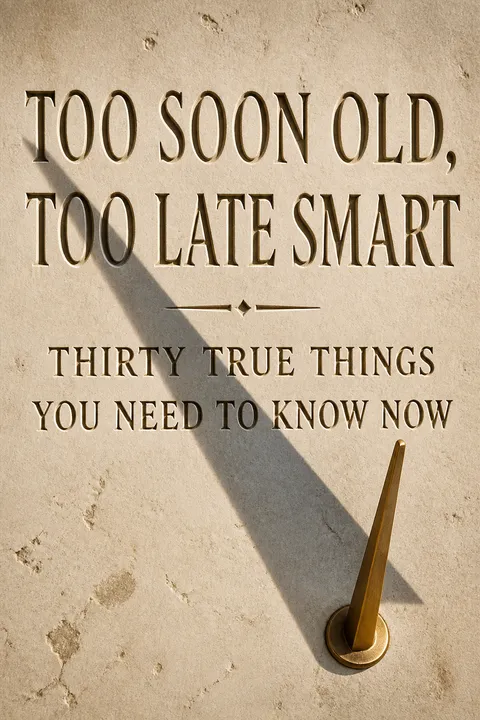
Too Soon Old, Too Late Smart offers insights from a psychiatrist's experiences and observations. Readers found the book's 30 short chapters thought-provoking, with some praising its wisdom and others finding it dated or oversimplified. Many appreciated Livingston's candid reflections on loss, relationships, and personal growth. While some felt the advice was common sense, others found profound lessons. The book's brevity and accessible writing style were frequently mentioned as positives. Overall, readers found it a quick, reflective read that prompted self-examination and new perspectives on life.
People Also Read



Glossary
lottery mentality
Wishful change without actionLivingston’s term for imagining a dramatically better life while taking no concrete steps toward it. The fantasy can feel hopeful and temporarily relieve dissatisfaction, but it is not the same as a realistic plan. The phrase contrasts passive dreaming with the incremental effort required to change habits, work, or relationships.
awfulizing
Imagining catastrophe from small changeA pattern of treating a modest relaxation of control or standards as the first step toward disaster. In Livingston’s parenting examples, a parent may fear that reducing criticism will lead to disorder, school failure, or worse. The term describes how catastrophic predictions can sustain conflict and prevent experimentation with calmer ways of relating.
secondary gain
An indirect benefit of illnessA possible reinforcement that accompanies a health problem, beyond its direct symptoms. Livingston gives relief from work or other demands as an example: being ill may lower expectations for a person already overwhelmed by responsibility. The concept is a hypothesis for understanding why a pattern might persist, not evidence that someone is inventing symptoms or choosing to suffer.
the myth of the perfect stranger
Fantasy of a rescuing partnerThe belief that an ideal, unknown romantic partner exists who will provide the approval, excitement, or reassurance missing from a current relationship. Livingston connects this fantasy to infidelity and dissatisfaction, arguing that a new person can seem perfect partly because daily life has not tested the imagined relationship. The myth encourages comparison with an ideal rather than evaluation of real behavior.
FAQ
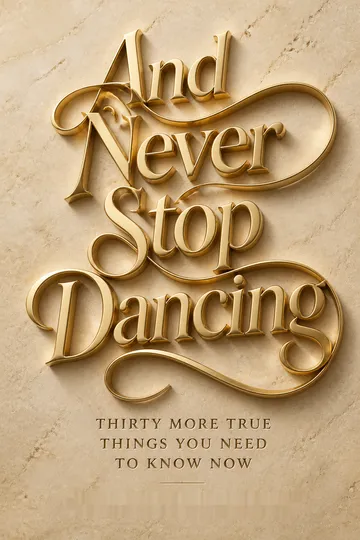
What's "Too Soon Old, Too Late Smart" about?
- Life Lessons: The book is a collection of 30 essays that offer insights into human behavior and the challenges of life, based on the author's experiences as a psychiatrist.
- Practical Wisdom: Each chapter presents a "true thing" or lesson that the author believes is essential for living a fulfilling life.
- Personal Growth: The book encourages readers to reflect on their own lives and consider changes that could lead to greater happiness and understanding.
- Author's Perspective: Gordon Livingston shares his personal and professional experiences, providing a unique blend of empathy and realism.
Why should I read "Too Soon Old, Too Late Smart"?
- Insightful Advice: The book offers practical advice on dealing with common life challenges, making it a valuable resource for personal development.
- Emotional Resonance: Livingston's writing is both compassionate and candid, resonating with readers who have faced similar struggles.
- Broad Appeal: The lessons are applicable to a wide audience, regardless of age or background, making it a universally relevant read.
- Reflective Nature: It encourages introspection and self-awareness, prompting readers to evaluate their own beliefs and behaviors.
What are the key takeaways of "Too Soon Old, Too Late Smart"?
- Behavior Defines Us: One of the central themes is that we are defined by our actions, not our intentions or feelings.
- Change is Possible: The book emphasizes that change is a gradual process that requires patience and determination.
- Importance of Relationships: It highlights the significance of nurturing healthy relationships and the impact they have on our well-being.
- Acceptance and Letting Go: Livingston discusses the importance of accepting life's imperfections and letting go of past grievances to move forward.
What are the best quotes from "Too Soon Old, Too Late Smart" and what do they mean?
- "We are what we do." This quote underscores the idea that actions speak louder than words and that our behavior ultimately defines us.
- "The perfect is the enemy of the good." It suggests that striving for perfection can hinder progress and satisfaction, advocating for a more balanced approach.
- "Only bad things happen quickly." This highlights the notion that positive change and growth take time, while negative events often occur suddenly.
- "Forgiveness is a form of letting go, but they are not the same thing." This emphasizes the distinction between forgiving others and moving on, suggesting that both are necessary for healing.
How does Gordon Livingston's background influence "Too Soon Old, Too Late Smart"?
- Professional Experience: As a psychiatrist, Livingston draws on decades of experience listening to patients' stories, providing him with deep insights into human behavior.
- Personal Loss: His personal experiences with loss and grief add a layer of authenticity and empathy to his writing.
- Military Service: His time in the military, including his service in Vietnam, informs his understanding of courage and resilience.
- Writing Style: His background allows him to write with authority and compassion, making complex psychological concepts accessible to readers.
What is the significance of the chapter titles in "Too Soon Old, Too Late Smart"?
- Provocative Statements: Each chapter title is a thought-provoking statement that encapsulates the lesson or theme of the essay.
- Guiding Principles: The titles serve as guiding principles for readers to reflect upon and apply to their own lives.
- Memorable Phrases: They are designed to be memorable and impactful, encouraging readers to ponder their meanings.
- Invitation to Explore: The titles invite readers to explore the deeper insights and stories that Livingston shares in each chapter.
How does "Too Soon Old, Too Late Smart" address the concept of happiness?
- Happiness as a Risk: Livingston describes happiness as the ultimate risk, suggesting that it requires vulnerability and courage.
- Components of Happiness: He identifies key components of happiness, such as meaningful work, loving relationships, and having something to look forward to.
- Barriers to Happiness: The book explores common barriers to happiness, including fear, perfectionism, and unresolved past traumas.
- Practical Advice: Livingston offers practical advice on how to cultivate happiness by focusing on actions and attitudes that promote well-being.
What role does forgiveness play in "Too Soon Old, Too Late Smart"?
- Letting Go: Forgiveness is presented as a crucial step in letting go of past grievances and moving forward in life.
- Self-Healing: It is described as a gift to oneself, allowing for personal healing and liberation from resentment.
- Misconceptions: Livingston clarifies that forgiveness is not the same as forgetting or reconciling, but rather a conscious choice to release negative emotions.
- Empowerment: By forgiving, individuals can reclaim their power and focus on creating a more positive future.
How does "Too Soon Old, Too Late Smart" approach the topic of relationships?
- Control Dynamics: The book discusses how control dynamics can affect relationships, emphasizing the importance of mutual respect and understanding.
- Emotional Investment: It highlights the idea that the person who cares the least often controls the relationship, urging readers to invest emotionally.
- Communication: Livingston stresses the importance of open and honest communication to resolve conflicts and strengthen bonds.
- Choosing Partners: The book offers insights into choosing suitable partners and recognizing unhealthy patterns in relationships.
What does "Too Soon Old, Too Late Smart" say about personal growth and change?
- Gradual Process: Personal growth is depicted as a gradual process that requires patience, effort, and self-reflection.
- Behavioral Focus: The book emphasizes changing behavior as a key component of personal development, rather than relying solely on thoughts or intentions.
- Overcoming Fear: Livingston encourages readers to confront their fears and take risks to facilitate growth and change.
- Learning from Mistakes: It advocates for learning from past mistakes and using them as opportunities for growth and self-improvement.
How does "Too Soon Old, Too Late Smart" address the theme of mortality?
- Acceptance of Mortality: The book encourages acceptance of mortality as a natural part of life, urging readers to live fully in the present.
- Legacy of Love: Livingston discusses the enduring legacy of love and how it transcends death, offering comfort to those who grieve.
- Embracing Impermanence: It highlights the importance of embracing life's impermanence and finding meaning in the time we have.
- Courage in Facing Death: The book suggests that courage in facing death can lead to a more fulfilling and meaningful life.
What is the overall message of "Too Soon Old, Too Late Smart"?
- Life's Complexity: The book acknowledges the complexity of life and the challenges we face, offering insights to navigate them with wisdom and grace.
- Empowerment Through Choice: It emphasizes the power of choice in shaping our lives and the importance of taking responsibility for our actions.
- Hope and Resilience: Livingston conveys a message of hope and resilience, encouraging readers to persevere through adversity.
- Practical Wisdom: The overall message is one of practical wisdom, urging readers to apply the lessons learned to lead more fulfilling and meaningful lives.
About the Author
Other books by Gordon Livingston MD
Download PDF
Download EPUB
.epub digital book format is ideal for reading ebooks on phones, tablets, and e-readers.








