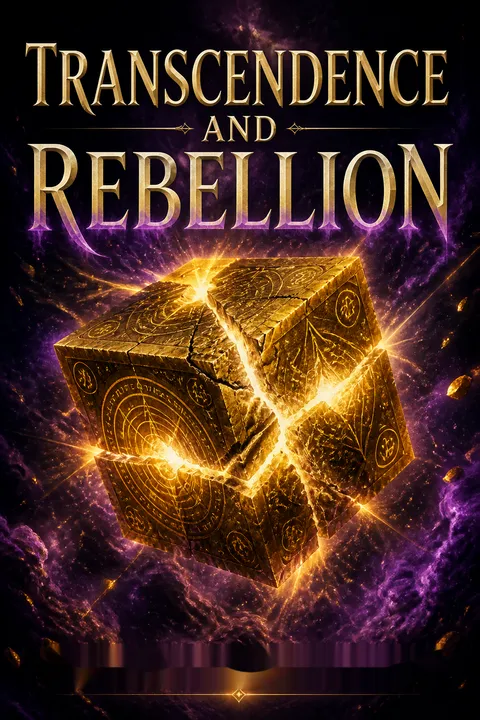


Plot Summary
Tyrion Names the Enemy
Tyrion Illeniel,3 a battle-scarred ancient mage serving Queen Ariadne,12 visits her privately, then clashes with her champion,9 Conall Cameron.9 Conall9 suspects his father1 was falsely convicted of murdering Ariadne's12 husband, but Tyrion3 cares more about killing the fugitive than proving his guilt. He warns Conall9 that loyalty to the Queen12 may soon demand a choice between crown and family.
Tyrion's3 own history makes that choice seem simple: his children once turned against him, and he believes their violence was necessary. He also insists he returned to destroy ANSIS, a machine enemy he considers an existential threat, not to gain power. As his borrowed body begins failing, he leaves for the Wester Isle to seek a replacement.
Tyrion's certainty is built from old wounds. He treats violence as a practical language because hesitation once cost him family, and he projects that lesson onto Conall before the young man has faced the same choice. The scene also places political intimacy beside public crisis: Ariadne's private relationship with Tyrion may offer comfort, but his contempt for due process threatens the fragile legitimacy she needs to rule. His claim that he wants to save the world is not a noble pose so much as a conviction that only ruthless people can be trusted with survival.
Lancaster Under Siege
While Tyrion3 is away, Moira Illeniel4 secretly takes control of the Krytek guards at her family home. She replaces their minds with spell-twins, sacrificing the originals, but keeps human guards largely intact. Her oldest spell-twin,5 Myra,5 leaves to learn what has happened to Matthew2 and Irene8 at Castle Lancaster.
There, Matthew's2 family and their allies face ANSIS machines: flyers, clawed crawlers, then armored tortuses capable of breaking the castle wall. Matthew2 predicts the enemy's feints and directs exhausted defenders into position.
He teleports himself to meet the final force, using the Fool's Tesseract and dimensional blades to destroy most of the machines. One railgun blast reaches the castle, however, and concentrated gunfire overwhelms his shield. Matthew2 collapses, gravely wounded.
Moira's covert work and Matthew's battlefield command reveal two different responses to danger. She protects her family by taking control of other minds, accepting that survival may require the destruction of individual selves. Matthew instead makes himself the hinge of a collective defense, but his predictions encourage others to obey even when his choices look merciless. The siege turns foresight into a moral burden: he can see which losses prevent greater ones, yet those spared cannot know whether his judgment was wisdom or indifference.
The Father Becomes Fire
Far from Lancaster, Mordecai Illeniel1 undergoes a transformation into a being of immense aythar entwined with the void. His emotions grow distant, and he destroys an ANSIS factory by spreading himself over it, heating it until its structures melt, then draining away its energy and order. A vision shows Matthew2 near death.
Mordecai1 races across the world, but his presence is so powerful that direct healing could kill his son.2 He slows the entropy in Matthew's2 body instead, buying time, and resists the temptation to make Matthew2 a god like himself. Irene8 reaches her brother,2 repairs his injuries, and discovers his heartbeat moving at a crawl. The defenders awaken to a field turned to gray ash and Matthew2 alive beneath his father's1 shield.
Mordecai's transformation magnifies a longstanding conflict between power and care. He can erase a factory with casual certainty, but the person he most wants to save becomes dangerously fragile beside him. His restraint is therefore more significant than destruction: he refuses to solve Matthew's mortality by imposing his own altered existence on him. The ash plain makes the scale of his new power visible, while Irene's painstaking repair restores the story to human measure, one heartbeat and one damaged vessel at a time.
A Warning from Kion
Lady Rose Thornbear6 wakes inside Kion,23 an ancient She'Har gatekeeper who explains that Mordecai1 has absorbed corrupted void power. Kion23 believes every use of that power will hasten a collapse that could consume the universe. He gives Rose6 no rescue plan, only the grim choice to flee this reality with an Illeniel child.
Rose6 chooses instead to return to her own world and find her family. At the same time, Tyrion3 reaches the Wester Isle, where Lyralliantha has prepared a new body for him. He leaves his failing Krytek form behind and takes human-like She'Har flesh, along with calmuth fruit to keep it stable. His renewed body returns him to the political struggle he claims he would rather escape.
Kion gives Rose knowledge without agency, a familiar cruelty in prophecy: she is told what may happen but not how to prevent it. Her refusal to abandon her family is not denial of the danger; it is a choice about which responsibilities still matter when survival alone offers no moral direction. Tyrion's new body offers a parallel renewal, but his depends on a finite supply of fruit. Even his apparent return to strength carries a timer, making his certainty about the future more precarious than he admits.
The Crown's Fraying Circle
At the council in Albamarl, Lord Gaelyn warns Ariadne12 that rumors naming Tyrion3 the kingdom's first king may provoke unrest. The Queen12 rejects calls to suppress the people by force. Conall9 reports that Castle Cameron remains sealed and its dragon eggs have vanished, raising fears over who controls their enormous power.
Meanwhile, Moira4 lives under watch at her mountain home, where Gareth Gaelyn13 and Conall9 question her about the castle and her spell-twin, Myra.5 Moira4 hides her operation but reveals enough to make Gareth13 threaten her.
Conall9 steps between them, defending both his sisters despite his divided loyalties. Myra5 later reaches Lancaster and reports that Tyrion3 threatens Rose6 and Mordecai,1 while Moira4 is preparing to unite the kingdom by force if necessary.
Political stability here depends less on formal institutions than on people choosing not to exploit their advantages. Ariadne refuses repression, Conall refuses to abandon his family, and Moira refuses to trust the Queen's intentions. Each choice is defensible in isolation, yet together they create a court where suspicion becomes a governing force. The missing dragon eggs sharpen the stakes by making power both tangible and portable. Moira's plan grows from a genuine fear of another catastrophe, but her willingness to tamper with others makes protection difficult to distinguish from domination.
Rose Finds the Roach
Sent back to Gododdin with no money or allies, Rose6 walks toward Iverly, where her daughter20 Carissa20 is hiding. A farmer gives her food and a ride, but once in the city she must conceal her identity from Lothion's agents. A pimp named Roger25 mistakes her for vulnerable prey; Rose6 turns him into an escort by bluffing her way into Red Tom's gambling den.
She wins enough attention to meet the Roach, a feared criminal who recognizes her and threatens to exploit the bounty on her head. When a sudden blast wrecks the parlor and throws him across the room, Rose6 uses the opening to put him to work finding two hidden women. She wants Carissa20 and her companion found safely, not exposed.
Rose's resourcefulness is sharpened by the loss of status. She cannot command guards or invoke her title, so she reads hands, clothing, and incentives instead. Her gamble with Roger converts a predatory encounter into a useful alliance, while her card play demonstrates that patience can be a form of force. The Roach recognizes her vulnerability accurately, but mistakes vulnerability for helplessness. Rose's need to find Carissa is emotional, yet she refuses to let urgency expose her daughter to a criminal network that may value leverage more than loyalty.
A Command in Ink
At Lancaster, Matthew2 studies Myra's5 report and reaches into the Illeniel gift, a connection to possible futures. He sees that Mordecai's1 growing power is unraveling reality and that Rose6 is needed, but Lothion's political disorder must change first.
Because his altered sense of time makes writing painfully slow, he sends Myra5 back with a brief instruction for Moira4 to unify the kingdom without waiting for his full explanation. Moira4 takes Karen7 and enters Albamarl.
She admits she will control Ariadne12 and, if required, rebellious nobles, overriding Karen's7 objections rather than debating them. Moira's4 Krytek copies help her seize the palace's military advantage, but her decision crosses a moral boundary she knows her family may never accept.
Matthew's gift does not give him a clean script; it reveals probabilities that force him to act under uncertainty. His compressed message transfers the burden of interpretation to Moira, whose strengths and dangers are inseparable. She understands that hesitation may cost the world, but she also treats consent as an obstacle that can be removed. The section dramatizes how a leader's confidence can become contagious: Matthew's authority is not merely his foresight, but the trust others place in his judgment, even when they are asked to follow a plan they cannot inspect.
Conall Holds the Garden
Moira's4 Krytek approach Ariadne12 in the palace garden under the pretense of carrying Tyrion's3 message. Conall9 senses an ambush and shields the Queen,12 then attacks when the guards begin gathering power.
He kills several with bursts of magic and his sword, but one Krytek pierces his abdomen before Carwyn, Ariadne's12 dragon, arrives. Moira4 appears nearby, and Tyrion3 rushes toward the garden after finding the palace staff unconscious. He tears through the Krytek guarding Ariadne,12 only to discover Conall9 struggling against an unseen pressure and Moira4 beside the dragon.
Tyrion3 attacks the apparent Moira.4 Carwyn bites through his shield, and the Queen's12 defenders take him into custody. Conall9 survives, but his stomach wound leaves him feverish and near death.
Conall's decisive act is not a product of certainty but of fear overcome in the moment. He lowers his own shield and risks himself because protecting Ariadne matters more than preserving his position or his life. His wound gives that loyalty a bodily cost. Tyrion's arrival complicates any simple account of heroism: he saves the Queen, but his violence is so habitual that it looks like another threat. Ariadne's later judgment of him will depend on what she believes his actions mean, not only on whom he attacked.
Myra Inherits the Silence
Tyrion3 reaches Moira4 and drives his armblades through her, but the body is a Krytek made to resemble her. The real Moira's4 mind had entered that vessel, and the strike kills her. Before her influence fully fades, she invades Tyrion's3 thoughts and leaves him wounded and exhausted.
Ariadne12 orders him arrested, convinced he betrayed her. In a hidden alley, Myra5 grieves inside Moira's4 body and nearly lets it die rather than claim her sister's4 life-force. Mordecai's1 terrifying presence stops her, and she accepts the aystrylin that will keep her alive.
Meanwhile, Elise Thornbear treats Conall's9 infected abdominal wound with a dangerous operation the royal physician refuses to attempt. Her work gives the young lord a chance to recover while Myra5 takes responsibility for Moira's4 abandoned network.
Moira's death turns a strategy built on copies into an intimate crisis of identity. Myra is not simply a substitute; she has memories, attachments, and a distinct will, yet survival requires her to inhabit the life Moira left behind. Her first response is to withdraw from existence, which shows how easily a person can confuse grief with a duty to disappear. Elise's practical care offers a counterweight: where magic has made bodies and minds manipulable, surgical attention insists that a damaged body still deserves patient, material repair.
Harold Falls at the Portal
Gareth13 secretly releases Tyrion3 from the palace dungeon, hoping he will eliminate Moira,4 whom Gareth13 considers an unchecked danger. Tyrion3 disguises himself and tries to escape, but the Queen's12 dragon blocks the courtyard. He returns to Ariadne's12 chambers, where Sir Harold attacks him. Tyrion3 uses a feint and the knight's own misericord to kill him, then forces Ariadne12 to open the portal to Mordecai's1 home.
She believes Tyrion3 has betrayed her and refuses to help until he threatens the palace. He leaves through the portal and props its far door open, preventing immediate pursuit. The Queen's12 accusation and Harold's death leave Tyrion3 isolated, while his escape places him back in reach of the family he intends to punish.
Tyrion's escape is a chain of choices made under exhaustion, but it is not morally neutral. Gareth treats Tyrion as a weapon whose lifespan limits future harm, while Tyrion treats Harold's death as necessary self-preservation. Ariadne sees only the betrayal and the body left behind. The portal becomes a literal threshold between intimacy and estrangement: Tyrion can cross it, but he cannot carry the Queen's trust with him. His loneliness is not imposed only by enemies; it is also the consequence of the methods he relies on.
The Roach's Last Game
Chad Grayson11 follows a clue from a dressmaker to Carissa's20 rented home, where Rose's6 maid Angela mistakes him for an intruder and knocks him down. The Roach arrives to seize Carissa20 as leverage against Rose.6 Chad11 distracts him with his cherished whiskey, then helps Angela and Carissa20 escape as the room catches fire; Rose6 arrives with Roger25 and kills two guards waiting outside.
The group flees Iverly, but mounted guards catch them before dawn. At Rose's6 request, Chad11 kills the gate guards so the women can pass, then turns to face ten pursuers and kills them with his warbow. He refuses comfort afterward, furious that Rose's6 plan made him an instrument of more deaths. He walks away from the group, carrying his shame toward Washbrook.
Chad's humor and drinking have long served as armor, but violence strips both away. He acts competently to protect Rose's family, yet each necessary killing deepens the conviction that he is only useful as a weapon. Rose's pragmatism saves them, but it asks him to bear a cost she cannot share. His departure is therefore not simple selfishness: it is an attempt to escape the identity others repeatedly call upon, even as he remains unable to escape his own memory of what he has done.
The Cost of Moira's Plan
Matthew2 returns to Albamarl with Irene8 and Gram,15 where Ariadne12 privately pardons the Illeniel family and explains that Tyrion3 killed Harold. Matthew2 learns that Moira4 is dead from Myra,5 then tells his family he knowingly sent her into a dangerous mission. Irene8 condemns him for treating their lives as pieces on a board, while Myra5 explains that Moira4 chose to enter the fight herself.
Matthew2 refuses to pretend the loss was unavoidable or to stop making choices. Rose6 then tells him Kion's23 warning: Mordecai's1 power will destroy the world, and Rose6 may be needed to stop him. Matthew's2 foresight finds only a narrow future beyond that crisis. Myra5 reveals that the Tyrion3 they know is a copied being, not the original on the Wester Isle.
Matthew's moral crisis is not merely that he made a bad prediction; it is that he knew risk was possible and delegated the danger to someone he loved. Irene's anger makes visible the relational cost of strategic leadership: people cannot be reduced to probabilities without eventually resisting the person who calculates them. Rose's disclosure then enlarges the stakes without absolving him. He must take responsibility for Moira and still act, a tension that makes his leadership less heroic and more ethically serious.
Two Tyrions, One Revenge
Myra5 explains that the Tyrion3 in Lothion is a second-generation copy with the original's memories but not his archmage power. Errors and violent memories may have made him unstable. He recruits the returned Brigid,22 his dead daughter,22 and forces Baron George Prathion18 to help enchant arrows that can pierce mage shields and explode inside their targets.
Tyrion3 takes the bow to the Wester Isle and shoots the original Tyrion's3 Father-tree, then kills Lyralliantha, destroying the source of calmuth that sustains him.
The ancient grove falls, though Tyrion3 survives with limited supplies. A being calling itself Ceylendor appears and offers assistance against Matthew's2 plan, while Tyrion3 demands the return of more dead allies. He now has a personal revenge campaign and a cosmic patron willing to help him pursue it.
The copied Tyrion's instability is not a simple defect but a problem of inherited memory without inherited context. He receives the original's violence and history, then discovers that the person he was meant to imitate no longer shares his goals. Destroying the trees is an attempt to author himself through decisive action, but it also removes the resource that keeps his own body stable. Ceylendor's bargain echoes Tyrion's earlier claim that saviors need not be virtuous: both men recruit others into a catastrophe by making their own objective sound inevitable.
The Golden Cage Opens
Matthew2 builds a vast dimensional lattice from Irene's8 size-changing enchantment, with Myra's5 spellbeasts multiplying its fine structure. The family plans to trap Mordecai1 long enough to remove the power consuming him.
Tyrion3 arrives with resurrected allies, including Brigid22 and Layla, while the dreamer restores Dorian19 briefly to test the defenders. Dorian19 fights Gram,15 then recognizes his grown son15 and reconciles with Rose's6 family. When Mordecai1 appears between Rose6 and Cyhan's14 crossbow, the golden cage seals him away.
Tyrion's3 attack kills Elaine17 and Cyhan;14 Chad's11 hidden shots bring down Tyrion,3 Layla, and Ryan. Brigid22 nearly overwhelms the survivors with a storm, but Irene8 pins her underground and Conall9 kills her. The family wins the field, though its victory is paid for in blood.
The climax makes the abstract threat of cosmic collapse painfully social. Matthew's lattice can contain a god, but it cannot protect every person who helps build it. The resurrected Dorian briefly turns memory into presence, offering Gram and Rose a reunion that the larger conflict immediately threatens to take away. Chad's concealed marksmanship and Irene's partnership with Conall succeed where solitary strength fails. Yet the victory does not erase the costs, and the cage forces Mordecai to confront whether saving the world requires consenting to his own erasure.
A Second Chance Home
Inside the golden prison, Mordecai1 argues with the dreamer, the conscious presence behind reality, and chooses a way forward that lets him live without the unchecked power that threatened everyone. The cube vanishes, and he wakes in Castle Cameron, where his family still believes him dead. Irene8 and Conall9 run to meet him; Myra5 tests his memories before allowing him inside.
He learns that Elaine17 and Cyhan14 are dead, and that Dorian's19 return was temporary. Rose6 visits him in private, admits Penny24 had spoken to her from beyond their world, and gives Mordecai1 time to grieve before they begin a relationship. The family mourns its losses, while Myra5 chooses to live as Moira's4 successor rather than disappear with her.
Mordecai's survival is not a restoration of the man who entered the crisis. He returns with less power and more knowledge of what his power can do to others. The family does not greet him with uncomplicated relief: grief, suspicion, and guilt arrive with him. Myra's examination makes recognition an ethical act, not a reflex, while Rose's account of Penny shows that love can persist without granting anyone control over death. The resolution values continued relationship over purity or victory.
Epilogue
Mordecai1 and Rose6 build a life together, while their children marry, raise families, and help restore magic and the damaged borders between worlds. Lynaralla10 takes root as a new gatekeeper, and the family holds memorials for Moira,4 Elaine,17 and Cyhan.14 Rose6 dies in old age, but tells Mordecai1 that Penny24 has visited her for years.
He withdraws into a long stasis, waking only when summoned, until the universe itself has burned out. With matter fading, Mordecai1 joins aythar and void again and becomes a new dreamer. Penny24 meets him in the valley where he was born, and together they enter a new world beginning from the remnants of the old.
The epilogue refuses to treat survival as a permanent victory. The family gains decades of marriages, children, political change, and renewed magic, but these lives remain bounded by grief and time. Mordecai's choice to wait through history is an ethical compromise: he postpones the end rather than claiming the right to remake the world for his own comfort. His final reunion with Penny is deliberately uncertain, part cosmic renewal and part private dream. The story closes by making creation inseparable from loss, while allowing love to persist as the impulse that begins another world.
Analysis
Transcendence and Rebellion tests what happens when protection becomes indistinguishable from control. Moira4 alters minds to defend her family; Matthew2 distributes risk through plans his loved ones cannot fully understand; Tyrion3 treats violence as the only reliable answer to danger. Each acts from recognizable fear, but intention does not erase the harm done to those who are acted upon. The story's most consequential relationships are therefore also its ethical tests: whether family loyalty permits coercion, whether a leader can make decisions for others, and whether a copy can claim a life as its own.
The opposing forces of aythar and void resist a conventional moral reading. Mordecai's1 immense power is not corrupt because it is evil in origin, but because scale makes ordinary intimacy dangerous. He can save a loved one only by learning restraint, and the family can save the world only by coordinating without reducing one another to instruments. Matthew's2 predictive gift sharpens this tension. Knowing more does not free him from responsibility; it makes the costs of his choices harder to evade.
The novel also treats grief as an active force rather than a pause between battles. Chad11 drinks to dull guilt, Myra5 nearly surrenders her new life, Rose6 carries her losses into practical action, and Mordecai1 repeatedly chooses isolation when he cannot bear further attachment. Their recovery comes through imperfect companionship, not a clean undoing of loss. The final movement into another universe does not cancel the old world's suffering. It reframes creation as a renewed willingness to love, knowing that every world is finite and every act of care remains vulnerable.
Review Summary
Transcendence and Rebellion receives overwhelmingly positive reviews, with readers praising the emotional journey, character development, and satisfying conclusion to the series. Many express bittersweet feelings about the ending, appreciating the author's storytelling skills while mourning the departure of beloved characters. Some criticize plot devices and pacing, but most agree it's a fitting end to an epic saga. Readers commend Manning's writing improvement throughout the series and the complex, relatable characters. The epilogue garners mixed reactions, with some finding it unnecessary and others viewing it as a perfect finale.
People Also Read
Characters
Mordecai Illeniel
The burdened world-saverMordecai is an archmage, father of the Illeniel children, and a former power behind Lothion's throne. He believes in law and personal responsibility, even when those principles leave him politically exposed. His protective instinct is generous but sometimes controlling, especially when he decides others should be spared danger without their consent. His transformation magnifies both his capacity to protect and the risk that his power will erase the people he loves. Underneath his authority is a man who carries old guilt, relies on humor to deflect pain, and struggles to imagine a life that does not require him to rescue everyone.
Matthew Illeniel
The reluctant strategistMatthew is Mordecai's1 oldest son, a gifted mage and the most calculating member of his family. His developing ability to perceive likely futures makes him invaluable in battle, but it also encourages him to treat people as variables in plans they cannot see. He is reserved, intellectually exacting, and uncomfortable with emotional dependence, yet his care for his family runs deeper than his manner suggests. Matthew's central struggle is not whether he can make hard decisions, but whether he can carry their consequences without confusing responsibility with ownership of everyone else's choices.
Tyrion Illeniel
The ruthless old warriorTyrion is a formidable She'Har ally of Queen Ariadne12, shaped by ancient wars and a lifetime of violent choices. He distrusts hesitation and regards force as a necessary instrument, not a moral failure in itself. His history with Mordecai1 and the Illeniel family feeds a desire for vengeance, while his unexpected attachment to Ariadne12 unsettles the simpler identity he has built around hatred. Tyrion is observant, proud, and more emotionally vulnerable than he wants others to know. His deepest difficulty is distinguishing his own desires from the inherited purpose and memories that have long directed him.
Moira Illeniel
The dangerous protectorMoira is Mordecai's1 daughter and a powerful Centyr mage whose ability to alter minds makes her both a potent defender and a source of fear. She is intelligent, guarded, and acutely aware of how readily necessity can become an excuse for cruelty. Family loyalty drives her, but her methods often place her beyond the trust she wants to preserve. Moira carries grief over her mother24 and isolation from her siblings, and she tries to impose limits on herself because she knows how easily she could violate another person's will. Her protective impulses and dangerous talent are never fully separable.
Myra
Moira's spell-twinMyra is Moira's4 oldest spell-twin, a being formed from aythar who shares memories and emotional bonds with her creator4 while possessing a distinct perspective. She depends on Moira's4 power to survive, a dependence that makes loyalty intimate but also ethically complicated. Myra is witty, curious, and more openly affectionate than Moira4, yet she understands the danger of the abilities they share. Her longing to be treated as a sister rather than a copy gives her a strong sense of personhood, even when others struggle to recognize the difference.
Rose Thornbear
The incisive survivorRose is a noblewoman, military organizer, mother, and Mordecai's1 trusted companion. She reads social situations with unusual precision, seeing the motives beneath a courteous gesture or a threat. Her intelligence is practical rather than showy: she adapts when money, status, and protection disappear, and she refuses to let fear make decisions for her daughter20. Rose's affection is matched by a formidable sense of duty, though she can ask others to bear costs she herself has judged necessary. She is one of the few people who can challenge Mordecai1 without either idealizing him or abandoning him.
Karen
The otherworldly anchorKaren comes from a world without magic and approaches Lothion's powers with curiosity, skeptical intelligence, and a scientist's appetite for explanation. Her relationship with Matthew2 gives her a personal stake in the Illeniel family's dangers, but she resists being treated as someone who must simply be protected. She is emotionally perceptive and willing to confront Matthew2 when his logic becomes a shield against grief. Her ability to teleport makes her an essential messenger and rescuer, while her ordinary human limits keep the consequences of magic visible.
Irene Illeniel
The family's stubborn healerIrene is Mordecai's1 youngest daughter, a capable mage whose instinct is to repair what others abandon. She is compassionate without being meek, and her anger is often the clearest signal that family members have crossed a moral line. Irene values shared responsibility and resists being sheltered from decisions that affect her. Her healing skill, practical inventiveness, and strong will make her more than the family's youngest member. She is especially sensitive to the tension between protecting someone and respecting that person's agency.
Conall Cameron
The divided championConall is Mordecai's1 son, Ariadne's12 cousin, and the Queen's12 champion. He is earnest, idealistic, and less comfortable with political ambiguity than the older figures around him. Conall's loyalties pull in opposing directions: he honors his father1 but also believes his oath to Ariadne12 matters. His courage tends to arrive through action rather than reflection, and he often discovers what he believes only when someone is in immediate danger. He wants to be worthy of both his family and his title without pretending that either obligation is simple.
Lynaralla
The young She'Har scholarLynaralla is a young She'Har woman adopted into Mordecai's1 family. She is precise, intellectually curious, and often interprets human behavior more literally than her companions expect. Her unfamiliarity with ordinary social conventions creates comic misunderstandings, but it also gives her a clear-eyed way of questioning assumptions others take for granted. Lynaralla is eager to understand the world and the magic that shaped her people. Beneath her calm manner is a developing emotional life, especially in her attachment to her new siblings.
Chad Grayson
The self-medicating rangerChad is a hunter, archer, and longtime friend of Mordecai's1 family. His blunt humor, quick temper, and devotion to strong drink make him seem careless, but he is observant and fiercely capable when people are threatened. Chad's past as a killer has left him with a corrosive sense of guilt; he often believes that the only thing he can offer is violence. His loyalty is real, though he dislikes the obligations and emotional exposure that come with it. He is most vulnerable when someone asks him to protect others and then leaves him alone with the consequences.
Ariadne
The iron-willed QueenAriadne rules Lothion after the murder of her husband and the kingdom's political fracture. She understands that authority depends on restraint as much as force, and she resists advisers who would answer public unrest with oppression. Her private loneliness makes her receptive to Tyrion's3 attention, while her public role demands that she contain the personal consequences of every decision. Ariadne is neither a flawless ruler nor a passive one. She is a practical leader whose conscience remains active even when fear and political necessity push her toward choices she dislikes.
Gareth Gaelyn
The calculating archmageGareth is a powerful archmage and Ariadne's12 loyal adviser. He values order and is willing to consider severe measures when he believes a dangerous mage cannot be controlled. His judgment is shaped by fear of what mind-altering power could do to an entire society. Gareth is politically observant, personally guarded, and capable of acting against the Queen's12 assumptions when he believes the greater danger demands it.
Cyhan
The veteran swordmasterCyhan is a seasoned warrior, mentor to Gram15, and father to Alyssa16. He trusts disciplined action more than political debate and has spent much of his life preparing for violence. Beneath his austere manner is a deep sense of loyalty to the people he has trained and protected. His advice is often blunt because he has little patience for illusions about what battle costs.
Gram Thornbear
The young armored knightGram is Rose's6 son, a knight trained by Cyhan14, and one of the family's strongest warriors. He combines disciplined swordsmanship with a protective instinct that can become reckless when loved ones are threatened. Gram is serious about honor but not blind to the difference between a formal oath and a just action. He is especially devoted to Alyssa16 and is still discovering what kind of man he wants to be beyond the example set by his teachers.
Alyssa
The spear-bearing warriorAlyssa is Cyhan's14 daughter, a skilled fighter who favors an enchanted spear. She is decisive in danger and deeply loyal to Gram15, but she does not treat love as a reason to become passive. Her courage often takes the form of moving toward a threat before anyone else has decided what to do. Alyssa brings both martial skill and an independent moral presence to the family.
Elaine
The sharp-tongued sisterElaine is Mordecai's1 daughter and a capable mage with a dry wit and little patience for evasive explanations. She is protective of her family, skeptical of Matthew's2 authority, and quick to voice objections others may be keeping to themselves. Her sharpness can sound abrasive, but it often comes from a desire to keep people honest about the risks they are taking.
George Prathion
The discreet young baronGeorge is Elaine's17 younger brother and a mage of the Prathion line, skilled at concealment and observation. He has spent much of his life in his sister's17 shadow, but his title and responsibilities give him a stronger sense of purpose. George is thoughtful, inventive, and more courageous than his self-doubt suggests. He prefers to prepare carefully, yet can act decisively when others are in immediate danger.
Dorian Thornbear
The remembered warriorDorian is Rose's6 husband and the father of Gram15 and Carissa20, a renowned warrior remembered for his directness and honor. His life shaped the standards by which Rose6 and Gram15 judge themselves. He represents a kind of courage grounded in personal loyalty rather than political calculation, though his absence leaves his family to build lives around memory.
Carissa
Rose's sheltered daughterCarissa is Rose's6 daughter, raised away from the center of Lothion's political dangers. She is perceptive and more resilient than her sheltered circumstances might suggest. Her relationship with Rose6 is affectionate but complicated by years of separation and secrets. She wants to understand her family rather than remain a protected child in its story.
Gary
The machine-minded adviserGary is an android from Karen's7 world and her nominal father. His calm, analytical perspective helps Matthew2 examine problems that seem impossible to solve by magic alone. Gary is curious about human choices, though his attempts to interpret romance and social customs can be comically literal. He offers a useful outside framework without pretending to share human emotional experience.
Brigid
Tyrion's feral daughterBrigid is one of Tyrion's3 formidable daughters, a fighter whose appetite for combat is tangled with a hunger to test herself against stronger opponents. She is physically fearless and emotionally volatile, with a history that makes intimacy difficult to separate from violence. Her presence in Tyrion's3 memories reveals the damage his old life left inside his family.
Kion
The weary gatekeeperKion is an ancient She'Har elder charged with guarding the dimensional boundaries. He has spent ages preparing for a future he believes has now failed. His perspective is vast but not neutral: bitterness over Mordecai's1 choices colors his predictions, making his warnings important without making them infallible.
Penny Illeniel
The absent family heartPenny is Mordecai's1 wife and the mother of his children. Her memory continues to shape the family's sense of home, compassion, and responsibility. She was once both a source of comfort and a necessary check on Mordecai's1 worst impulses. Even in absence, she remains central to how he understands love and loss.
Roger
The reluctant underworld guideRoger is a pimp in Iverly who first approaches Rose6 believing she is vulnerable. Her quick judgment turns him into an escort and later a useful source of local knowledge. He is self-interested, but not without the capacity to help when the arrangement suits him.
Plot Devices
The Illeniel Gift
Maps possible futuresThe Illeniel gift links its bearers to a living potential that underlies reality. In a limited form it warns of danger; Matthew's2 version develops into a way of reading nearby probabilities and selecting among possible outcomes. It helps him anticipate ANSIS attacks and recognize the approaching collapse tied to Mordecai1. The gift is not simple prophecy. Small changes can alter what it reveals, and people who share it can disrupt one another's predictions. Its power gives Matthew2 information, not certainty, making every decision a wager with other lives.
Aythar and the Void
Power against entropyAythar is the ordered energy associated with life and magic; the void draws on entropy, decay, and disorder. Mordecai's1 transformation binds both forces into one being, giving him nearly unimaginable power while making every use of it increase the threat he poses to the universe. The distinction also explains why his body can be slowed by extracting entropy and why ordinary healing becomes dangerous near him. This opposition is not a simple contest of good and evil. Both forces are part of existence, and neither can ultimately eliminate the other.
Spell-twins and Spellbeasts
Copies with a costCentyr mages can create beings from aythar, including spellbeasts and spell-twins modeled on a living person. The copies can perform independent tasks, carry messages, or take a physical host, but creating them may destroy the host's original mind and soul. Each generation risks accumulating errors, making identity and stability uncertain. Moira's4 copies extend her reach across the kingdom, while Myra's5 independent consciousness challenges the assumption that a duplicate is only a tool. The device makes a practical military advantage inseparable from questions of consent, personhood, and grief.
The Dimensional Boundary
Separates worlds and placesAn ancient She'Har structure divides realities and keeps Castle Lancaster within an isolated portion of the world. It can prevent travel and protect a place from outside interference, but its vast scale makes it dangerous to alter. Matthew2 eventually learns that the boundary's deeper structure can be manipulated through a shared Illeniel connection and immense power supplied by dragons. The same idea of dimensional separation becomes the basis of the golden lattice used against Mordecai1. A tool that once divided worlds becomes a means of containment.
The Golden Lattice
Contains a living catastropheMatthew's2 golden lattice is a huge, finely repeated enchantment built from a size-changing principle Irene8 discovers while making a staff. Myra's5 spellbeasts help multiply the structure, while dragons supply the power needed to complete it. The lattice is designed to enclose and separate a being too powerful for ordinary shields or weapons. Its creation requires several Illeniel minds to act as living supports, so the device depends on cooperation rather than Matthew's2 skill alone. It can hold Mordecai1 long enough to confront the crisis, but it cannot prevent the battles fought around it or spare everyone who helps activate it.
Download PDF
Download EPUB
.epub digital book format is ideal for reading ebooks on phones, tablets, and e-readers.








