

Plot Summary
A Keep Raised From Grief
Four months after Penny’s death, Mordecai is so consumed by grief that his family has scattered into separate lives. He tries to build something stronger than the ruined Castle Cameron by drawing metal and stone from deep underground, with his inexperienced daughter Irene serving as his magical watcher. The work lasts through the night.
Mordecai’s mind sinks so far into the earth that Irene fears she has lost him, and she collapses beside the new black keep. In a dream, Penny comforts her and urges her to bring Rose back to the family. When Mordecai wakes, he cannot remember how they reached safety, but the castle stands, and Irene’s dream has given her a purpose.
The castle is both a practical answer to devastation and Mordecai’s attempt to turn guilt into construction. His power can reshape the land, but it cannot make grief orderly, and Irene’s vigil shows the cost of letting a child become her parent’s safeguard. Penny’s appearance in a dream gives the family an emotional directive rather than a supernatural solution: Irene must ask for help. The scene establishes that creation is not automatically benevolent. Mordecai can build a fortress while nearly abandoning the human bonds that make it worth building.
The Queen's Uneasy Shield
Queen Ariadne summons Mordecai to explain his recent attack on ANSIS, the enemy that has struck at the kingdom. He admits that he acted quickly and underestimated the retaliation, while refusing to reveal how many dragons he has created.
Ariadne needs a defense the lords can trust, so she publicly takes responsibility for approving his actions. At the council, Tyrion, Mordecai’s ancient ancestor and a newly arrived duke, presents small artificial creatures called krytek as ANSIS detectors, with human-shaped companions to coordinate with guards.
Rose Thornbear, Irene’s hoped-for ally, studies the room and recognizes that Tyrion is cultivating political allies. His proposal may protect the capital, but his growing influence leaves Rose wary of what he intends to gain.
The kingdom’s security problem immediately becomes a problem of public legitimacy. Ariadne must defend Mordecai without appearing to be ruled by family loyalty, while Tyrion offers protection through creatures whose obedience and short lifespan do not erase the political question of who controls them. Rose’s skill is not magical detection but disciplined interpretation of faces, alliances, and omissions. The section places two forms of defense beside each other: Mordecai’s personal force and Tyrion’s organized surveillance. Both can preserve the realm, and both can threaten the people they claim to protect.
The House Nearly Melts
Alone with the unfinished armor he had made for Penny, Mordecai drinks until his control over magic collapses. The house seems to melt around him, and he believes Irene’s face is deforming as she watches.
He wakes cleaned, shaven, and safely in bed, with Penny’s handwriting warning him not to endanger their children again. The impossible care steadies him enough to spend the day teaching Irene enchanting instead of retreating into his workshop.
Her questions about rune channels lead them toward a new design, while Matthew, Karen, Lynaralla, and Moira begin working together again. Matthew reports that the world is threaded with matching hexagonal dimensional boundaries, suggesting that parts of it have been rearranged rather than placed in a separate universe.
Mordecai’s collapse makes his grief materially dangerous: private despair can deform the home and frighten the child who is already afraid of losing him. The note and the unexplained grooming offer care without resolving its source, allowing him to accept responsibility before he understands what happened. Teaching Irene also changes the family’s pattern of inheritance. Instead of handing down only power, Mordecai gives her a craft she can question and improve. Her insight and Matthew’s research reveal that curiosity, especially when shared, can reconnect a household more effectively than forced reconciliation.
Rose Returns to Cameron
Irene’s appeal brings Rose back to the mountain home, where Mordecai apologizes for accusing her of exploiting Penny’s absence. Rose accepts only after making him face the cruelty of what he implied: that her years of friendship with his family were a scheme to claim him.
Once they repair their bond, she warns that Tyrion is gaining influence through the Prince-Consort, Leomund, and several nobles. She suspects Leomund’s hunting trips conceal serious abuses and fears Tyrion may be manipulating people’s emotions.
Mordecai agrees to make Conall, newly named the Queen’s Champion, Ariadne’s close guard. Rose’s return gives the family an experienced strategist, but it also points Mordecai toward a political danger he cannot resist investigating.
Rose’s return is not a sentimental reunion but a negotiation over the meaning of loyalty. Mordecai has mistaken his own guilt and desire for evidence of her motives, and Rose refuses to let grief excuse the insult. Their restored friendship gives him a trusted political adviser, yet trust does not make either of them emotionally uncomplicated. Her warning about Leomund and Tyrion becomes an invitation to act, exposing Mordecai’s familiar weakness: he hears danger as a personal task even when someone more politically skilled has told him to wait.
A Door Between Worlds
Mordecai visits Conall in the palace training yard and finds him learning combat magic from Tyrion. Instead of ordering him home, Mordecai praises his service, gives him Cameron surcoats, and asks him to guard Ariadne against magical interference. Meanwhile, Matthew leads Mordecai to the boundary around vanished Lancaster.
Matthew opens a view into the forest beyond, where a gigantic creature thrusts its arm through; Matthew closes the opening and severs it. A second opening reveals the road to Lancaster, confirming that the missing territory lies across a traversable border. Mordecai refuses to rush through without a larger party. He plans a cautious expedition, hoping to find the missing Duke Roland and the people trapped with him.
This turn gives both sons a more adult relationship with their father. Conall needs recognition, not another reprimand, and Mordecai’s gift of the family colors makes his belonging visible. Matthew’s discovery then converts an abstract theory into a dangerous passage with a living threat on the other side. Mordecai’s decision to delay is a small but meaningful correction to his impulsiveness. Yet the wish to rescue Roland also shows that responsibility remains his preferred answer to uncertainty, even when he lacks reliable knowledge of what waits beyond the boundary.
Millie at the Lodge
Before the planned expedition, Mordecai visits Prince-Consort Leomund’s hunting lodge to investigate Rose’s warning. He sees Leomund strike a young servant and then prepare to whip her in front of the household. The girl, Millie, is about twelve and has endured years of sexual and physical abuse after being sold to the Prince as a child.
Mordecai breaks into the room, knocks Leomund unconscious, orders the servants away, and tends Millie’s wounds. When she begs him not to kill the Prince because she has nowhere else to go, Mordecai spares him, puts her to sleep, and carries her to his home. His rescue protects Millie, but his assault on the Queen’s husband gives the court a reason to pursue him.
Mordecai’s intervention is morally urgent but politically reckless. Millie’s plea complicates the familiar rescue fantasy: she does not experience violence as a clean passage from captivity to freedom, because the abusive household is also the only life she knows. Mordecai listens and refuses to kill Leomund, choosing to avoid adding another act of violence to her crisis. Yet he leaves the scene without securing witnesses or informing Ariadne. His private justice helps Millie immediately while creating a public vulnerability that will later be used against him.
Roland Comes Home
The next morning, Mordecai, Matthew, Karen, Gram, and Alyssa cross the boundary into Lancaster’s altered region, leaving Irene and Lynaralla to watch from the other side.
Giant spiders have replaced familiar dangers: Gram and Alyssa kill one near Mordecai’s childhood home, while dragonfire destroys the house when its egg sac bursts with smaller spiders. At the castle, the guards initially refuse entry, but Duke Roland recognizes Mordecai and opens the gates.
He explains that beasts drove his people behind the walls and severed all contact with the kingdom. Mordecai tells him that Lancaster has been displaced and that Ariadne has been searching for him. He promises to return Roland to his sister, while Matthew and Gram remain to protect the besieged castle.
The rescue makes the dimensional theory bodily and domestic. The altered land does not merely contain unfamiliar geography; it has invaded Mordecai’s childhood home, turning memory into a place that must be defended and then lost. Roland’s survival gives the expedition its emotional reward, but his account makes clear that one safe castle cannot protect the surrounding population. The group’s decision to leave Matthew and Gram behind balances rescue with stewardship. Mordecai’s family is now divided between worlds, each side responsible for people who cannot simply be carried to safety.
The Count in Chains
Mordecai learns how to open the dimensional boundary himself and brings Roland through to Albamarl, where the Duke and Ariadne reunite. But the Queen’s guards are waiting. They accuse Mordecai of murdering Leomund, whose body was found with a dagger in his chest after Mordecai left the lodge.
Mordecai insists he only knocked the Prince unconscious, but Ariadne orders his arrest to prevent the nobles from seeing her spare a cousin accused of regicide.
Conall, the son Mordecai had assigned to protect her, places enchanted manacles on his father’s wrists. Gareth Gaelyn confines Mordecai in a sealed magical cell and warns him that an archmage cannot safely fight another archmage. The legal case now threatens Mordecai and the family that depends on him.
The arrest turns family loyalty into an institutional test. Ariadne may love Mordecai, but as monarch she cannot act only as his cousin without risking the stability she is sworn to preserve. Conall’s role is particularly painful because he follows the charge Mordecai gave him, protecting the Queen even when the accused is his father. The manacles and cell remove Mordecai’s customary ability to turn danger into action. For the first time, survival depends less on his strength than on other people’s judgment, patience, and willingness to challenge the official story.
Rose Builds a Defense
Rose secures the right to represent Mordecai and begins questioning the witnesses from Leomund’s lodge. Judge Watson expects the case to end in a conviction, while Rose treats every servant’s family tie as a possible motive.
She also learns that Leomund had been arranging to buy another young girl from Lord Airedale. Elise Thornbear, Rose’s mother-in-law, joins the effort and urges practical methods; Rose insists on seeking the truth rather than framing a convenient suspect.
She hires the information broker Manfred, pressures the dungeon warden to let her bring Mordecai food and blankets, and arranges for Millie to be questioned. Meanwhile, Moira uses her magic to alter Millie’s memory in hopes of helping her father, a decision Rose believes will strengthen the defense.
Rose’s defense operates on two levels: legal argument and social power. The court has already made guilt feel inevitable, so she must recover information from the people whose vulnerability makes them least able to speak freely. Her refusal to frame someone is an ethical line, but Elise’s presence reveals how thin that line can become when the state threatens a loved one. Moira’s intervention further complicates truth: an act intended as protection risks contaminating the very testimony Rose needs. In this world, evidence is not merely discovered. It is shaped by dependence, fear, and magical influence.
Irene Tears the Border
While Mordecai remains imprisoned, Irene and Lynaralla attempt to open the boundary so the expedition can return. Irene pours so much power into the effort that she tears open an enormous gap, then collapses with her heart stopped. Lynaralla forces power into her until her heartbeat resumes, but ten ogres surround them. She drags Irene through the forest while the creatures pursue.
Karen arrives with Gram and Alyssa; Karen shields them from the ogres’ clubs, then Matthew uses his spinning dimensional weapons to cut down the attackers. Lynaralla later carries Rose’s news to Matthew: Mordecai has been arrested and Karen must go to Albamarl. Matthew sends Karen to help Rose, while he stays behind to protect Lancaster and keep a route open.
Irene’s near-death attempt is the cost of treating magical capacity as proof of maturity. She can force the boundary open, but she cannot yet regulate the force she commands. Lynaralla’s rescue is an act of care that requires her to improvise beyond her training, and Karen’s arrival makes the family’s survival collective rather than solitary. Matthew’s choice to remain at Lancaster is strategic, not detached: someone must preserve the route and protect the displaced people. The sequence keeps the rescue plot alive while showing that every intervention creates new obligations.
Rose Pays in Blood
Rose works to improve Mordecai’s conditions and gathers a network that includes Elise, Carissa, Elaine, Chad, and Cyhan. Tyrion offers help, and Rose bargains for his krytek to ignore an escape attempt; he pretends to demand her sexual surrender, but admits he intended to help Mordecai regardless. A hired attacker later stabs Rose in her apartments, and Tyrion kills him before treating her wounds.
Manfred then tries to sell Rose’s secrets to her enemies. She stabs him, and, after a desperate struggle, kills him herself. In the dungeon, Mordecai and Rose grow close as she feeds and warms him. He falsely tells her he killed Leomund to stop her risking everything for him, but Rose rejects the confession.
Rose’s competence does not make her invulnerable; it makes her responsible for choices whose costs she cannot delegate. She bargains with a dangerous man, survives an attack, and commits a killing when her information broker becomes a threat. Each act protects Mordecai while eroding the social standing that has long protected Rose. Her intimacy with Mordecai is not a simple romance emerging from crisis. It is also a response to isolation and helplessness, restrained by grief for Penny and Dorian. Their mutual care is real, but neither can yet separate it from guilt.
Vander's Hidden Motive
At trial, Airedale admits that he knew Leomund was abusing servants and that he had supplied the Prince with Millie. Rose establishes that Airedale had also arranged to sell a ten-year-old girl named Lucy Brimmon. She then questions Vander, Leomund’s chief servant, and reveals that Lucy is Vander’s daughter. Vander had overheard the plan and knew what Leomund would do to her.
Rose argues that he had both motive and opportunity to kill the Prince after Mordecai left. Vander breaks down but does not confess. The testimony damages Airedale’s credibility and makes Vander the likeliest killer, though the court has not established that conclusion as fact. Rose’s case now turns on Millie.
Rose’s cross-examination reframes the murder as the consequence of a system that treats people as property. Vander’s silence is not proof, but his daughter’s danger gives the court a motive more credible than the prosecutor’s portrait of Mordecai as a hotheaded killer. Rose exposes Airedale’s complicity, yet the law’s narrow focus keeps redirecting attention from the abuse to the assault on a prince. The scene leaves moral and legal judgment misaligned: the person who may have acted to protect a child could face death, while the men who enabled the abuse retain the language of rank and order.
Millie Reverses the Case
Rose calls Millie as a final witness and asks about the Prince’s years of abuse. The girl describes Leomund’s violence and confirms that Vander cared for her, but then insists that Mordecai stabbed the unconscious Prince before taking her away. Rose had expected Moira’s alteration of Millie’s memory to make her say Mordecai left while Leomund was alive; instead, Millie’s testimony destroys the defense.
Mordecai is also forced to answer the prosecutor’s insinuations about his relationship with Rose and his family’s absence. Judge Watson finds him guilty of murder and orders him hanged immediately, refusing even time for a family visit. Rose’s legal strategy has failed, and the execution will happen before she can appeal.
Millie’s testimony is devastating because it converts the person Mordecai rescued into the state’s most persuasive witness. Her account may be sincere, altered, or shaped by fear; the trial offers no space to investigate that uncertainty. The court rewards a coherent story over a complicated one, and the prosecutor uses Rose’s closeness to Mordecai to make care look like sexual opportunism. The verdict therefore punishes more than an alleged crime. It punishes the relationships and forms of testimony that cannot be made respectable within the court’s assumptions.
Arrows at the Courthouse
As guards escort Mordecai toward execution, Chad and Cyhan fire enchanted arrows from the palace wall, striking Tyrion and Gareth. Elaine fills the street with mist, and Karen reaches Mordecai, but his manacles drain the power she needs to teleport him.
He explains how to unlock them, and she succeeds just as Tyrion heals enough to attack. Gareth transforms into a monstrous predator and pursues Chad’s group, while Elaine cloaks them and leads them away. Mordecai, nearly powerless after days in the cell, fights Tyrion with Rose beside him.
When Tyrion impales him and turns to pursue Rose, Mordecai overloads the charged manacles. The blast destroys Tyrion and nearly annihilates Mordecai, who rebuilds his body through earth-magic and escapes with Rose across a dimensional boundary.
The rescue depends on preparation, but every prepared tool changes the danger rather than removing it. Chad’s arrows breach the archmages’ ordinary shields; the manacles become both prison and weapon because they have stored Mordecai’s power. Karen’s failed teleport shows that friendship cannot bypass the mechanics of coercion, so Mordecai must explain the lock while under attack. His survival requires the same earth-magic that once threatened his humanity, and his willingness to use it is now tied to Rose’s immediate danger. Escape is a victory, but it leaves the family scattered and the world’s political order shattered.
The Family Goes Underground
Karen wakes in captivity, escapes, and finds Matthew waiting at the boundary, unable to learn whether Mordecai survived. A week later, Chad, Cyhan, and Elaine reach Lancaster after evading Gareth through the forest. Meanwhile, Queen Ariadne questions Moira but refuses Tyrion’s demand to use her as bait.
Moira secretly separates her alter ego, Myra, who seals Castle Cameron, destroys its teleport circles, and hides the dragon eggs inside the dangerous Ironheart Chamber. The castle becomes almost impossible to enter, protecting its contents from the Queen and Tyrion.
Ariadne strips Mordecai and Rose of their titles, while Matthew, Irene, and Moira risk being declared accomplices. The family survives by dividing itself across worlds and keeping its most dangerous secrets apart.
The immediate aftermath replaces a single household with a network of separated refuges. Matthew waits rather than act blindly; Moira turns that same caution into concealment, using her divided self to protect the castle and eggs without exposing the secret to interrogation. Ariadne’s restraint prevents a hostage strategy from becoming a wider conflict, but the legal consequences still spread to the family. This is not a settled retreat. It is a precarious distribution of risk, with each character holding only part of the knowledge needed to reunite or defend the others.
Penny Returns Through Mordecai
On the unfamiliar shore, Mordecai and Rose build shelter and try to endure the wilderness. After Mordecai uses earth-magic to shape a refuge, he collapses, and Penny takes control of his body long enough to speak with Rose. She explains that when Mordecai tried to save her, she wrapped the last remnant of her life-force around his, helping contain the corruption left by his time as a shiggreth.
The corruption remains dangerous, and using its power could damage them both. Penny also tells Rose that she loves Mordecai and wants her to care for him and the children, though she sets boundaries around any future relationship. When Penny withdraws, Mordecai wakes to find Rose weeping, without knowing what she has learned.
Penny’s return changes grief from a closed absence into an unstable, shared presence. Her bond with Mordecai is simultaneously an act of love, a restraint on his corruption, and a source of danger. She does not offer Rose simple permission to replace her; she acknowledges jealousy and pain while still choosing the family’s future over possession. Rose’s care is thus given a difficult legitimacy, but Mordecai remains unaware of the bargain that affects him. The revelation makes emotional intimacy inseparable from the story’s metaphysics: love can preserve a person, but it cannot make preservation painless.
The Gate Tree Awakens
Mordecai and Rose fly inland across the severed world and discover an enormous Illeniel elder tree. It identifies Mordecai as carrying a combination of Tyrion’s power, the Illeniel gift, and the corruption left by Thillmarius. The tree, Kion, drives roots into his body and says his death is necessary to save the world.
Mordecai realizes Kion may control the dimensional divisions, so destroying it could collapse the world. He instead lets the void emerge and feeds on the elder’s life until it weakens and releases Rose. Now filled with dangerous power, Mordecai orders Kion to keep her safe, then launches into the sky to find the approaching machines and burn them.
The elder’s claim that sacrifice will save the world converts cosmic necessity into a demand for Mordecai’s body. His response is neither simple heroism nor controlled mastery: he uses the corruption that Penny warned him against, but directs it toward the tree that has violated him. The act saves Rose and may avert Kion’s immediate plan, yet leaves Mordecai more powerful and less securely human. The ending offers no proof that he can govern this strength or that Kion’s warning about the machines is false. Survival has become a new and potentially catastrophic beginning.
Epilogue
At the boundary between Lancaster and the wider world, Matthew feels reality shudder and fears the dimensional divisions may be failing. Elsewhere, Elise enters Airedale’s home disguised as a laundress, drugs him, and forces him to sign a document before leaving him to die by suicide.
She acts because Airedale’s rumors have damaged Rose, but the epilogue makes clear that her protection is neither lawful nor bloodless. The world’s borders are unstable, Mordecai is missing, and the people closest to him are already preparing for dangers they cannot yet see.
The two scenes widen the ending in opposite directions. Matthew’s disturbance suggests a structural threat that no personal victory has resolved: the world’s artificial divisions may be breaking down. Elise’s private execution of Airedale shows how political repair can become revenge disguised as protection. Her intervention answers Rose’s vulnerability, but it also confirms that the family’s justice increasingly operates beyond public law. Together, the scenes make the sequel-shaped future morally unsettled. The boundaries separating worlds are failing, while the boundaries separating justice from vengeance have already begun to blur.
Analysis
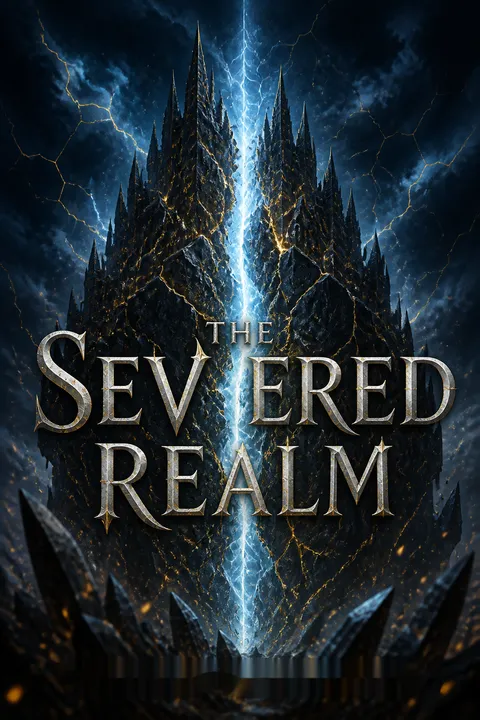
The Severed Realm places two kinds of fracture side by side. The world has been physically divided into linked dimensional cells, while Mordecai’s family has been broken apart by grief, politics, and competing duties. The plot repeatedly tests whether a boundary can be crossed without destroying what lies on either side: Matthew opens passages, Rose crosses the rules of court and reputation, and Mordecai risks crossing the boundary between human restraint and the void.
Mordecai’s central flaw is not a lack of love but a tendency to act as if love authorizes unilateral action. He attacks ANSIS without enough information, enters Leomund’s lodge without a plan, and later tries to sacrifice his own future to protect Rose from scandal. His instincts are often morally sound, but good intentions do not prevent collateral damage. The novel’s most persuasive counterforce is not stronger magic. It is other people insisting that he listen, wait, or accept help.
Rose’s parallel arc examines the cost of care under unequal power. She uses intelligence, information networks, and social leverage because she cannot command a battlefield. Yet these methods expose her to sexual coercion, public humiliation, and physical attack. Her composure is a skill that protects her, not evidence that she is untouched. Her choices also reveal a tension between truth and survival: she refuses to frame an easy suspect, while Elise is willing to use methods Rose finds unacceptable.
The trial dramatizes how institutions can convert social hierarchy into apparent evidence. Millie’s vulnerability, Vander’s silence, and Airedale’s status matter less to the court than the story that can be made coherent under its rules. The verdict does not settle what happened; it shows how a legal system can punish the wrong person while preserving the conditions that made the original abuse possible.
The ending refuses a clean triumph. Mordecai survives, but his power is more dangerous; Penny’s love is both protection and a fragile constraint; and the dimensional structure may be failing. The book’s deepest question is whether protection can remain humane when every available tool, from magic to law to family loyalty, carries the capacity to control or consume the people it claims to save.
Review Summary
The Severed Realm receives overwhelmingly positive reviews, with readers praising Manning's storytelling, character development, and ability to evoke strong emotions. Many describe it as a page-turner with intense drama and unexpected plot twists. Fans appreciate the complex world-building and the continuation of the Illeniel family saga. Some readers note the darker tone compared to previous books. While most reviews are glowing, a few criticize plot holes and excessive swearing. Overall, readers eagerly anticipate the next installment in the series.
People Also Read




Characters
Mordecai Illeniel
Grieving archmage and fatherMordecai is a powerful wizard, a father, and a man whose instinct is to solve danger by placing himself directly in its path. His strength makes him a protector, but also tempts him to mistake action for judgment. He is funny, inventive, and capable of tenderness, yet grief can narrow his attention until he risks the people he means to protect. His relationship with his children is uneven: he wants them safe, but must learn to recognize their need for respect and responsibility as well as shelter. Friendship and family matter deeply to him, even when shame makes him withdraw from those who could help.
Rose Thornbear
Strategist with a steel spineRose is a widowed noblewoman, political observer, and longtime friend to Mordecai’s family. She reads a room through details other people dismiss: who is silent, who is watching, and which alliances have already been made. Her composure is discipline rather than emotional distance; beneath it lies fierce loyalty and a persistent fear of being powerless when someone she loves is in danger. Rose values truth and self-command, but she is practical enough to use leverage when institutions fail. Her care for Mordecai and his children grows from years of shared history, not merely from attraction, and she expects loyalty to be answered with honesty.
Penny Illeniel
The family's emotional anchorPenny is Mordecai’s wife and the person whose warmth and decisiveness have helped hold their large family together. She is remembered as loving, outspoken, and unwilling to let the people around her hide behind self-pity or foolish pride. Her influence appears in the habits and moral expectations she leaves with her husband and children. Penny’s relationship with Rose is especially close, built on years of friendship and mutual support through loss. She is not an idealized emblem of gentleness: her affection has force, humor, and a clear sense of when someone needs to be challenged.
Tyrion Illeniel
Ancient power brokerTyrion is Mordecai’s ancient ancestor, a She’Har leader, and a duke newly involved in Lothion’s politics. He carries the habits of a brutal age into a world that expects diplomacy, often presenting himself as a blunt warrior rather than a subtle strategist. His ambition is mixed with a genuine concern for civilization’s survival, which makes him difficult to classify as either ally or enemy. Tyrion values strength, candor, and control, but he also understands that people can be moved through status, desire, and fear. His complicated relationship with Mordecai combines kinship, rivalry, and a recognition that Mordecai possesses a kind of fatherly commitment he never mastered.
Irene Illeniel
Young mage and family sparkIrene is Mordecai’s youngest daughter, newly trained in magic and deeply attached to the family bonds that grief has loosened. She is outspoken, observant, and more perceptive about her siblings than they expect. Her wish to help can outrun her experience, but she brings an original curiosity to enchanting and a strong instinct for how people need to be approached. Irene misses her mother and her closest friend, Carissa, while also worrying about her father. Her courage is real, though she must learn that courage without limits can become another burden placed on the people who love her.
Matthew Illeniel
Enchanter of hidden bordersMatthew is Mordecai’s son, a gifted enchanter and the first in the family to detect the strange dimensional interfaces. He prefers concentrated work to social life and often expresses emotion through analysis rather than display. His bond with Karen gives him a source of intimacy he did not expect, while his strained relationship with Mordecai reflects old grievances and a desire to be treated as an adult. Matthew is methodical where his father is impulsive, though he can still take dangerous risks when a mystery catches his attention. His intelligence is practical, particularly when it must protect people who cannot defend themselves.
Moira Illeniel
A dangerous mind mageMoira is Mordecai’s oldest daughter, a formidable Centyr mage whose abilities reach into thought and memory. She can be compassionate and politically capable, but power has sharpened her capacity to impose her will on others. After withdrawing from her family, she returns with a more complicated understanding of what she can do and what it costs. Moira’s choices are driven by fierce attachment, especially to her family, and by a belief that she can control dangerous outcomes if she acts decisively. Her kindness does not remove the need for restraint; she must decide whether protecting people justifies taking control away from them.
Karen
A fearless crossing mageKaren is Matthew’s close companion and a Mordan mage who can teleport across distances. Her quick judgment repeatedly keeps Matthew from taking risks without preparation, and she is willing to enter danger herself when someone needs help. Karen is warm, direct, and comfortable puncturing the family’s solemnity with humor. She does not share the Illeniels’ inherited knowledge, so she often asks for explanations the others take for granted. That outsider’s perspective is useful: she notices practical needs, from food and shelter to the limits of magical plans. Her loyalty is active rather than deferential, and she expects Matthew to meet her as an equal.
Conall Illeniel
The Queen's young championConall is Mordecai’s younger son and a young knight whose courage earns him the title of Queen’s Champion. He wants recognition and independence, yet still longs for his father’s approval. His service to Ariadne gives him a role beyond the family, requiring him to judge loyalty through duty rather than affection alone. Conall can be earnest and somewhat gullible, but he is not weak; he trains hard and takes responsibility seriously once someone trusts him with it. The tension between being a son and a royal servant defines his place in the family’s political crisis.
Lynaralla
Literal She’Har daughterLynaralla is a young She’Har woman adopted into Mordecai’s family. Highly intelligent and attentive, she often interprets human customs literally, which gives her both comic awkwardness and unusual clarity. She learns carefully, remembers instructions, and approaches problems through method rather than instinct. Her relationship with Irene grows into a genuine sisterhood, even though their temperaments differ sharply. Lynaralla is physically capable and magically gifted, but she lacks confidence as a fighter and must discover what she can do under pressure. Her struggle to understand human social life is also a struggle to choose a place within a family rather than merely observe it.
Queen Ariadne
Monarch balancing kinship and lawAriadne is Queen of Lothion and Mordecai’s cousin. She is politically astute enough to understand that a ruler’s private loyalties can become public vulnerabilities. Her relationship with Mordecai is affectionate but tested by the competing claims of family and sovereign duty. Ariadne has inherited a monarchy whose nobles do not all accept her authority easily, so she must make decisions with an eye to the stability of the realm. She is neither indifferent nor free to act on feeling alone. Her challenge is to preserve a legal order that can also fail the people it is meant to protect.
Elise Thornbear
Retired master of intrigueElise is Rose’s mother-in-law, Carissa’s grandmother, and a woman with deep experience in espionage, political manipulation, and survival. Age has not dulled her tactical instincts, though she would prefer not to return to the dangerous work of her youth. She feels a lasting debt to Mordecai’s family and protects the people she loves with methods that are often more ruthless than Rose’s. Elise is affectionate, shrewd, and capable of making others underestimate her. Her history gives her an intimate understanding of how vulnerable people can be used by those with power, but it has also taught her to treat leverage as a tool of care.
Chad Grayson
The blunt master hunterChad is a veteran hunter and archer whose practical knowledge complements the family’s magic. He speaks coarsely, complains freely, and has a talent for seeing the physical details others overlook, from a clear firing line to the direction of a scent trail. His humor helps him manage fear, but it does not make him careless about danger. Chad’s friendship with Mordecai is loyal enough to bring him into an extremely risky rescue, even when the odds are poor. He distrusts elaborate plans and prefers tools, preparation, and a clean shot.
Cyhan
The quiet veteran fighterCyhan is a seasoned knight and former assassin whose calm manner conceals formidable violence. He trains Chad to adapt to the strength of a dragon bond and evaluates plans according to their real chances of survival. Unlike Chad, he rarely fills silence, but his dry humor emerges among people he trusts. Cyhan is disciplined about force, often choosing a controlled response even when a more lethal one would be easier. His relationship with the others rests on shared danger and long familiarity, not sentimentality. He understands that survival sometimes requires ruthlessness, but does not confuse ruthlessness with wisdom.
Elaine Prathion
Master of disguise and illusionElaine is a Prathion mage whose talent for illusion and concealment makes her valuable in covert operations. She is clever, self-confident, and more at home with magical theory than with the rough practical habits of Chad and Cyhan. Her romantic notions of danger sometimes collide with their professional suspicion, but she adapts quickly when the situation becomes real. Elaine’s skill is not limited to making people invisible; she can conceal magical traces and alter what observers believe they see. She is loyal to Rose and willing to accept personal risk, even when she resents being treated as inexperienced.
Gram Thornbear
Alyssa's warrior fiancéGram is Rose’s son, a knight and dragon-bonded warrior who is engaged to Alyssa. He is capable in battle and respectful of authority, sometimes to the point of overcaution. His years of connection to Mordecai’s household make him part of both families, and he often serves as a steady presence among more impulsive mages. Gram is protective of Alyssa and proud of his duties, though he can be embarrassed when others notice the tenderness in their relationship. His loyalty is expressed through service and action rather than elaborate declarations.
Alyssa
Armed and disciplined maidAlyssa works in Mordecai’s household and is Gram’s fiancée. She is disciplined, respectful, and a capable fighter who takes training seriously. Her dragon bond gives her new strength that she must learn to control, while her practical nature makes her attentive to equipment and preparation. Alyssa’s relationship with Rose is familial as well as formal, and she is trusted to act under pressure without losing her judgment. She is not given to boastfulness, but she is far more dangerous than her quiet manners suggest.
Gareth Gaelyn
The prison's archmage guardGareth is an experienced archmage and a former dragon who serves as one of Mordecai’s jailers. He is blunt, disciplined, and willing to explain risks even when doing so may help a prisoner understand his situation. Gareth’s judgments are shaped by long experience with magical power and the catastrophic consequences of losing control. He respects responsibility more than charm, and his relationship with Mordecai is marked by distrust mixed with a degree of professional respect. He also has a family life of his own, which informs his understanding of what is at stake when powerful people fight.
Roland Lancaster
A duke cut off from homeRoland is Ariadne’s brother and the Duke of Lancaster. He is a practical ruler who protects his people when communication fails and danger closes around his castle. His courage is tempered by caution, especially when confronted with unfamiliar threats or heights. Roland’s relationship with Mordecai is built on family history and mutual affection, even when he distrusts Mordecai’s inventions. He cares deeply for his wife, son, and subjects, and judges plans by whether they can bring those people through the next crisis.
Millie
A child servant in dangerMillie is a young servant whose life has been controlled by the adults who claim ownership over her. Years of abuse have taught her to obey quickly and to measure safety by the narrow options available to her. She can show loyalty toward people who have treated her with kindness, even when she remains afraid of them. Millie’s perspective exposes the distance between legal status and human dignity. She is not simply a symbol of innocence; she is a child adapting to a brutal environment with limited power to define what happens next.
David Airedale
A court noble with ambitionsAiredale is a wealthy count whose standing depends on his ties to more powerful figures. He is polished in public but self-interested in private, and he understands how quickly political advantage can shift. His dealings with Leomund reveal the casual exploitation embedded in aristocratic privilege. Airedale is less formidable as a warrior than as a man who can use reputation, money, and legal structures to protect himself.
Vander Brimmon
A servant protecting his familyVander is Leomund’s chief servant and the father of Lucy, a girl threatened by the Prince’s household. His position forces him to serve a man whose actions he despises, while his family remains dependent on the same social order. Vander is careful and restrained, but fear for his children presses against that restraint. He represents the impossible choices imposed on servants who know that speaking openly may endanger the people they are trying to protect.
Plot Devices
The dimensional honeycomb
A world split into passagesMatthew discovers that the world is divided by a vast network of hexagonal boundaries. Some sections have been shifted into pocket dimensions and stitched together with others, making the divided pieces seem like one continuous world. The borders explain why Lancaster vanished, why its landscape and creatures differ from Lothion’s, and why ordinary teleportation cannot cross between the sections. Matthew learns to open a passage, and Mordecai later learns the same technique. The network is both a route for rescue and a structural danger: if its boundaries collapse, the arrangement of the world itself may fail.
Tyrion's krytek network
Living detectors for ANSISTyrion creates short-lived artificial creatures through a father-tree. Small insect-like krytek detect ANSIS, while human-shaped ones receive information and coordinate with the royal guards. Their limited lifespan is intended to reduce the danger of introducing a permanent new species, but their placement throughout the capital gives Tyrion considerable influence over the kingdom’s security. The creatures help identify enemy agents and can act as guards, yet they also create public fear when people disappear without explanation. Their network becomes a surveillance system whose political consequences exceed its stated defensive purpose.
The charged manacles
A prison that stores its weaponGareth’s enchanted manacles drain away any aythar Mordecai tries to use, weakening him while keeping his magic contained. Their stored power has a limited capacity, a fact Mordecai recognizes but does not exploit while escape would risk a confrontation with another archmage. During the execution rescue, Karen learns how to release them by channeling power through specific points. The energy accumulated inside them then becomes decisive when Mordecai uses the chain against Tyrion. The same mechanism that makes the manacles effective restraints turns them into a catastrophic weapon.
The void and the earth
Power that threatens the selfMordecai can join his consciousness to the earth, reshaping stone and metal on a vast scale. He also carries a remnant of the corruption associated with his past as a shiggreth, a force that can sustain him while eroding his humanity. Penny’s life-force has been wrapped around his own, helping contain that corruption, but it does not remove the danger. When Mordecai nears death, he can draw on the void to rebuild his body or consume another being’s life. Each use solves an immediate crisis while making the boundary between protector and predator less secure.
Penny's life-force bond
A remnant holding back corruptionWhen Penny was dying, Mordecai tried to save her by becoming part of her. She used what remained of her life-force to wrap around his, leaving a remnant near his heart after her body died. The bond helps restrain the corruption inside him, but it is not a cure; if Mordecai draws too deeply on the void, the remnant may be damaged along with him. It also allows Penny to surface briefly through his body, giving her a way to see and speak with Rose. The bond makes love a literal act of preservation, with limits neither woman can safely ignore.

Download PDF
Download EPUB
.epub digital book format is ideal for reading ebooks on phones, tablets, and e-readers.








