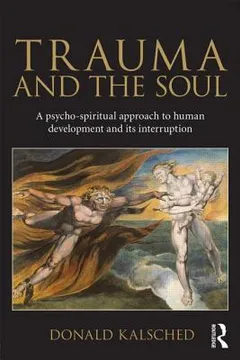


Key Takeaways
Understand trauma as a rupture between lived reality and the inner world that kept you alive
Two realms, one life. Kalsched argues that a full account of trauma must consider both the interpersonal world, where neglect or abuse occurs, and the inner world of images, dreams, and spiritual experience. He calls this a binocular view: neither the material history nor the inner reality should be dismissed as the whole story. Early trauma can interrupt a child’s developing sense of being a coherent, embodied person. Dissociation then divides experience, keeping unbearable pain outside awareness while preserving some capacity to survive.
A costly refuge. The book’s cases show people who felt cut off from themselves, yet found shelter in nature, art, animals, religious imagery, or dreams. These experiences are treated as psychologically real, not as proof that supernatural beings exist. The central question is what the inner refuge protects, and what it costs when the person cannot return from it.
This dual lens is useful because it resists two common reductions: treating trauma as only an event in the past, or treating symbolic experience as mere fantasy. Narrative psychology similarly finds that people make sense of life by linking bodily experience, memory, and identity into a story. The spiritual language here can give dignity to experiences that clinical vocabulary may flatten. Its limit is evidential: a meaningful dream or visitation may matter profoundly without establishing an external supernatural cause. Keeping that distinction protects both the patient’s experience and intellectual honesty.
Recognize the protector that can turn into your inner persecutor
A survival arrangement. Kalsched calls the defensive organization formed around trauma the “self-care system.” It divides the personality into a vulnerable, often childlike part and a more controlling part that manages life and keeps painful feelings away. The arrangement can preserve a person’s capacity to function when no safe caregiver is available. But protection can become persecution: inner voices shame, threaten, or attack the very vulnerability they were meant to guard.
A defense gone wrong. In one case, a patient dreamed of a sinister authority controlling a camp where people were judged by their bodies. In another, an inner figure appeared as a captor threatening a vulnerable child. Such images made invisible self-attack easier to notice. The system is not simply an enemy to eliminate. Treatment aims to understand its protective purpose while reducing its control over the person’s life.
The model’s strength is that it explains why a person can both long for change and sabotage it. In contemporary terms, a response that once reduced danger can become overgeneralized, treating vulnerability itself as a threat. This parallels learned threat responses in trauma research, though Kalsched’s personified inner figures are a clinical interpretation, not a separately established brain mechanism. Calling a defense protective can also reduce shame, but it should not excuse harmful behavior toward others. Compassion for the system and accountability for its effects must remain compatible.
Reconnect bodily feeling, memory, and relationship at a pace the nervous system can bear
The body carries history. Kalsched describes how early trauma may persist as sensations, tension, numbness, or sudden fear even when a person cannot recall a clear event. Deborah, who grew up amid frightening parental violence, described holding her breath and contracting her body. Her dreams gave images to experiences that had not yet become a coherent personal story. In therapy, attention to sensation and emotion helped connect these states with memory and relationship.
Repair through contact. The book emphasizes the therapist’s role in noticing moments of withdrawal, rupture, or renewed connection, then working through them with the patient. A therapist’s honest acknowledgment of difficulty can offer a different outcome from the earlier pattern of abandonment. Body-based work, including movement and breath practices, appears as a complement to analysis, not a substitute for safety or clinical judgment.
This approach fits an important principle of affect regulation: people often need help staying within a tolerable range of arousal before reflection is possible. Words alone may not reach experience that is primarily felt as bodily alarm. At the same time, the claim that a particular hemisphere or sensation contains a specific memory should not be treated as a precise diagnostic code. Somatic signals can guide inquiry, but they do not independently verify what happened. A careful pace and collaborative meaning-making matter more than confident interpretation.
Use dreams as symbolic maps, not as literal evidence or ready-made diagnoses
Images make experience thinkable. Kalsched treats dreams as a route into feelings and memories that may not yet be available in ordinary speech. Richard, a man who felt emotionally numb, dreamed of a buried boy and then of dolphins filling the sea. The dream followed a session in which he had finally cried about early neglect. The images helped him and his therapist explore a lost, lively part of himself and the possibility of renewed connection.
Meaning emerges in context. The book also draws on myths and fairy tales, including stories of threatened children, to show how personal pain can take on familiar symbolic forms. These parallels can enlarge a patient’s sense of meaning, but they are not proof that every dream has one fixed interpretation. Kalsched’s strongest examples combine the dreamer’s own associations with the therapist’s curiosity, rather than imposing a universal meaning from outside.
Dreams can serve as compressed simulations of conflict, emotion, and possibility. Their images invite associations that linear conversation may miss, much as metaphor lets people approach an experience indirectly before naming it plainly. The risk is interpretive overreach: symbolic richness can tempt a therapist to privilege an elegant myth over the dreamer’s own account. The most defensible use is exploratory. A dream is a prompt for inquiry, not a recovered recording of the past, and its meaning should remain open to revision.
Trade repetitive self-punishment for grief that can move and change
Two kinds of pain. Kalsched distinguishes chronic, repetitive suffering from the more direct pain of facing what happened and mourning what was lost. The first can keep a person trapped in shame, numbness, or self-attack. The second may hurt intensely, but it can bring previously disconnected feelings into awareness and relationship. Dante’s journey through Hell serves as a literary image of descending toward the pain that had been avoided, with a guide present as witness.
A clinical shift. Deborah’s dreams of being dismembered expressed terror and despair she had never been able to voice. When she and her therapist stayed with these feelings gradually, she could cry, recognize her own injury, and become less dominated by self-blame. The book does not suggest that suffering is automatically healing. The difference is whether pain can be experienced, held, and understood rather than endlessly repeated in isolation.
The distinction resembles the difference between rumination and emotional processing. Repeating a distressing thought can intensify a mood without integrating new information, while supported grief can help a person acknowledge both attachment and loss. Still, the language of “choosing” suffering needs care. Trauma survivors did not choose the original injury, and not everyone can safely approach intense memories without preparation. The value lies in compassionate pacing and support, not in glorifying pain or treating distress as evidence of progress.
Keep personal history and symbolic meaning in view at the same time
Neither layer cancels the other. Kalsched argues that trauma therapy should attend to concrete relationships and to the mythic or spiritual images through which a person experiences them. Jennifer, sexually abused as a child, remembered a luminous presence during a near-death medical crisis. In therapy, the memory became part of a wider story about her survival and her later artistic life. The book does not require the reader to decide whether the presence was supernatural, a psychic defense, or both in some other sense.
A broader biography. The point is that symbolic meaning can help a person hold pain before its personal history is fully speakable. Yet the symbolic story must eventually connect back to embodied life and human relationships. A spiritual interpretation that bypasses abuse, grief, or responsibility would repeat the very split the book is trying to heal.
This is a productive form of interpretive pluralism: a person can describe an experience in religious language while a clinician also considers memory, attachment, and altered states. Meaning need not be reduced to mechanism, and mechanism need not be rejected to preserve meaning. The boundary matters especially in therapy, where a practitioner’s beliefs can shape a vulnerable patient’s account. Respectful curiosity supports autonomy better than either declaring a visitation objectively real or dismissing it as meaningless.
Let innocence enter experience instead of preserving it in permanent exile
The child as a symbol. The “soul-child” is Kalsched’s name for the vulnerable, lively, pre-traumatic core that appears in dreams as a child or sometimes an animal. The image does not mean that a literal child is hidden inside every patient. It represents qualities such as spontaneity, trust, and creative energy that may have been cut off from ordinary life. In St. Exupéry’s The Little Prince, a child from a distant planet teaches a stranded pilot to care again, while learning that love includes grief and separation.
Protection is not enough. Kalsched’s fairy tales and clinical cases suggest that innocence can be preserved by retreating from painful reality, but it remains unable to grow there. Healing means allowing this vulnerable part to risk relationship and experience, with support. The aim is not to restore childhood unchanged. It is to carry its vitality into an adult life that can tolerate imperfection, loss, and dependence.
The image of a protected inner child can help people approach needs they have learned to despise. Developmental psychology also distinguishes early dependence from mature agency: growth requires both safety and gradual exposure to challenge. The book’s emphasis on innocence is humane, though innocence should not become a claim that every wounded person is morally untouched or that painful experience automatically ennobles them. The more grounded insight is that vulnerability deserves protection without being frozen into an identity.
Build wholeness by reconnecting sensation, emotion, memory, and language
More than insight. Kalsched draws on work about brain development and attachment to argue that early emotional relationships shape the child’s capacity to regulate affect and integrate experience. When overwhelming stress disrupts that process, a person may know facts about the past without feeling them as part of a coherent history. Dreams, body awareness, and a reliable therapeutic relationship can help link sensation and emotion with words and autobiographical memory.
A useful but limited analogy. The book uses the distinction between right- and left-hemisphere functions to illuminate differences between embodied, contextual experience and more explicit, verbal analysis. It does not mean that one side is “the emotional brain” and the other is “the rational brain” in a simple, exclusive way. Kalsched’s larger point is that reflection becomes more whole when it remains connected to feeling, body, and context.
The integration claim is stronger than any rigid left-brain versus right-brain story. Emotion regulation, memory, and language depend on distributed networks, and the brain does not divide neatly into a poetic half and a logical half. The metaphor remains useful if taken as a reminder that explanation without felt contact can be thin, while feeling without reflection can overwhelm. In practice, the task is reciprocal movement between experience and language, not choosing one mode over the other.
Treat inner refuge as a beginning, not the destination of a life
Jung’s divided life. Jung described himself as having an outward-facing personality and a private, inward one drawn to nature, dreams, and religious questions. As a boy, he secretly carved and hid a small figure, later understanding it as a symbol of something precious in himself. After his break with Freud, he turned again to dreams and imagination, recording the inner figures and conflicts that became central to his work. His inward world helped him endure isolation, but it also had to be brought into conversation with ordinary relationships and human limits.
A return to the world. Kalsched uses Jung’s life to illustrate both the lifesaving value and the cost of retreat. He also challenges Winnicott’s claim that Jung’s inner life was simply a symptom of childhood illness, arguing that this dismisses the meaning Jung found in it. The lesson is not that inwardness cures trauma by itself, but that a refuge can preserve possibilities that later need embodiment and connection.
Jung’s story makes the book’s argument vivid: imagination can protect a person from psychological collapse and also become a place to hide from ordinary dependence. That tension helps prevent a simplistic celebration of retreat. The historical record cannot settle every question about Jung’s childhood or the status of his visions, and Kalsched’s disagreement with Winnicott is itself interpretive. What remains compelling is the developmental question: does an inner resource support fuller participation in life, or replace it?
Analysis
Kalsched’s central contribution is a clinical story about trauma that refuses to reduce survival to either brain mechanism or spiritual metaphor. Early relational overwhelm can divide experience, preserving a vulnerable core while leaving other parts to manage the outer world. The resulting defenses may appear in dreams as protectors, persecutors, children, animals, or mythic figures. Therapy then becomes a process of reconnecting what was split: body with feeling, memory with narrative, and the private world with human relationship. The book’s cases give this model emotional force. Jennifer’s remembered luminous presence, Richard’s buried child, Mike’s changing dream figures, and Deborah’s bodily work make abstract claims legible as lived processes.
The framework is strongest when it treats symbolic material as psychologically consequential without insisting that it be literal. Dreams and myths can offer a language for experience that has not yet become autobiographical memory. The author’s emphasis on a witnessing relationship, affect tolerance, grief, and repair also sits comfortably beside contemporary attachment-informed clinical practice. His account of innocence is valuable when it means a capacity for spontaneity and trust that deserves protection, not a claim of permanent moral purity.
The same richness creates limits. Most evidence presented is clinical narrative, which can illustrate a hypothesis but cannot establish archetypes as universal psychic structures, paranormal perception, or a supernatural realm. The brain hemisphere discussion also risks being oversimplified if its metaphors are taken as a literal map of discrete emotional and rational functions. And spiritual language, if imposed by a therapist, could redirect attention from abuse and accountability. Kalsched is most persuasive when he models epistemic restraint: inner experiences can be real in their effects without settling their ultimate ontology.
This is not a step-by-step treatment manual, and its Jungian vocabulary may not fit every reader. Its lasting practical value is a question clinicians and survivors can use: what does this defense protect, what does it now prevent, and what conditions would make reconnection safe? That question honors survival without mistaking survival for wholeness.
Review Summary
People Also Read









Glossary
self-care system
trauma-linked protective organizationKalsched’s term for a defensive organization that forms around overwhelming early experience. It protects a vulnerable part of the personality by dividing or withdrawing it from ordinary awareness, while another part adapts to daily life. The system can later become persecutory, attacking vulnerability and resisting the relationships or feelings that might support integration.
soul-child
image of vulnerable alivenessA child or animal image in dreams that represents qualities such as innocence, spontaneity, and creative vitality that have been cut off from ordinary life after trauma. Kalsched treats it as a symbolic carrier of the person’s potential aliveness, not as a literal hidden child or a clinical diagnosis.
transitional space
space between inner and outerWinnicott’s term for an intermediate area where inner imagination and external reality can be experienced together. In the book, this space supports the child’s developing relationship to self, other, body, and world. Trauma can foreclose it, while a safe therapeutic relationship may help reopen it.
indwelling
psyche inhabiting the bodyWinnicott’s term for the developmental process through which the psyche becomes integrated with the body. Kalsched uses it to describe a growing sense of embodied aliveness and personal reality. Severe trauma may interrupt this process, leaving a person feeling detached from bodily experience or unable to live from a coherent sense of self.
Dis
image of dissociative divisionKalsched’s name for the destructive, dividing power at the center of Dante’s Inferno. He interprets Dis as a mythic image of dissociative defenses that split experience and keep painful material isolated. The image is a metaphor for a psychological process, not a separate entity that must be assumed to exist literally.
two worlds
material and imaginal realitiesKalsched’s shorthand for holding outer, interpersonal events alongside inner experiences such as dreams, images, and spiritual meanings. He argues that trauma and healing are poorly understood if either side is dismissed. The phrase describes a psychological perspective and does not require a claim that a supernatural realm has been objectively proven.
mytho-poetic psyche
symbol-making inner lifeKalsched’s description of the psyche’s capacity to express experience through images, stories, dreams, and figures drawn from mythic patterns. This symbolic activity can give form to feelings that are not yet available as ordinary memories or words. Its images may illuminate personal experience without providing literal evidence about the past.
ineffable subject of the unconscious
unconscious dream-making perspectiveJames Grotstein’s term, used by Kalsched, for the apparently organizing source that shapes dream material and communicates through images, narrative, and drama. It contrasts with the conscious person who experiences and interprets the dream. The term names a theoretical way of describing dream creativity, not a measurable independent agent.
Download PDF
Download EPUB
.epub digital book format is ideal for reading ebooks on phones, tablets, and e-readers.








