

Key Takeaways
Use astrology and tarot as instruments of choice, not verdicts about fate.
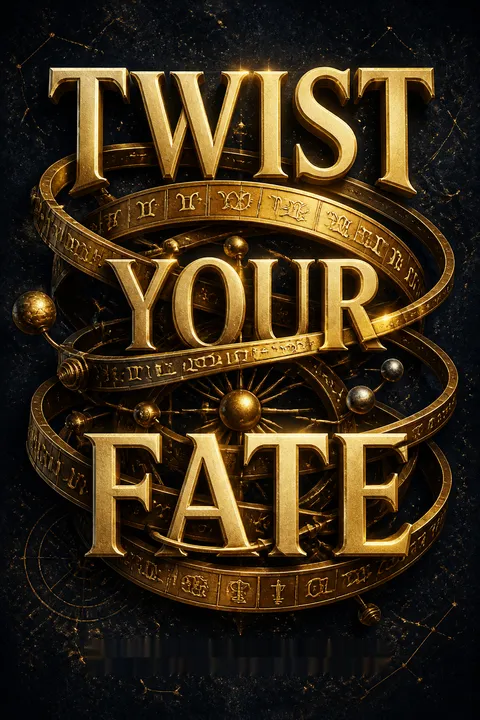
A map, not a sentence. Theresa Reed opens with a prediction from a stranger on a Florida beach: she would succeed in business. At the time, she was broke, directionless, and skeptical. Years later, she built a career as a tarot reader, but credits more than prophecy: she worked hard, developed business instincts, and made better decisions with astrology and tarot as guides. Her central idea is that a birth chart describes possibilities, not an unavoidable script.
Circumstances still matter. Two people can share a birth chart and live radically different lives because money, opportunity, discrimination, health, and support are not evenly distributed. Divination can help someone reflect and choose, but cannot erase structural barriers or guarantee an outcome. Sometimes the most useful next move is asking another person for help.
The book is strongest when it treats fate as a question of agency within constraints, rather than a contest between total control and total predestination. Symbolic systems can make a person’s assumptions visible and help generate options. That is different from proving that planets predict events. Reed’s own success story is motivating, but it cannot establish that astrology caused the result. Her more durable lesson is ethical as well as practical: never use spiritual language to blame people for hardship they did not choose.
Match work to your emotional needs, not just your apparent talents.
Three angles on fit. In astrology, the Sun describes purpose and self-expression, the Ascendant, or Rising Sign, suggests how someone meets the world, and the Moon represents emotional needs and instinctive responses. Reed calls these three points the Big Three. Her advice is to consider all of them when imagining satisfying work. A person may have a talent for leadership, for example, yet need quiet, security, or variety to feel well in a job.
A useful contradiction. Reed is naturally private, which she connects to her Scorpio Moon, but her Leo Midheaven points toward visibility. Stage experience and public speaking helped her business grow. The point is not to suppress one side of the self, but to find a way to work that accommodates personal needs while stretching toward underused strengths.
This framework resembles a practical job-fit assessment: ability, preferred work style, and emotional conditions are related but not identical. It can prompt questions that a job title alone misses, such as whether a role offers autonomy, human contact, or a stable routine. The chart’s value here is as a vocabulary for reflection, not a hiring test. Assigning employees roles by birth chart risks stereotyping them; asking people directly what conditions help them thrive is fairer and more informative.
Treat your Midheaven as a direction for contribution, not a fixed career label.
Public potential. The Midheaven sits at the top of the birth chart and, in Reed’s approach, points to how someone might share their abilities with the wider world. The 10th house nearby is associated with career and reputation. Planets there can add themes to explore, but an empty 10th house does not mean a person lacks a career. Reed also looks to the 4th house, opposite the Midheaven, for the home and personal foundation that can support public ambition.
More than one route. The Lunar Nodes, two calculated points in the chart, are read as a contrast between familiar strengths and less comfortable growth. Reed stresses that career lists attached to signs are suggestions, not prescriptions. Her own path included several jobs before tarot reading and writing became central. A calling can change, and it may involve care, family, or community rather than paid work.
The Midheaven is most useful when interpreted as a developmental question: what kind of contribution feels worth becoming more capable of making? That framing leaves room for economic necessity, caregiving, and changing interests. It also prevents the common trap of treating a symbolic description as a verdict about the one job a person is meant to do. A productive reading should widen the set of imaginable paths, then let lived experience and practical constraints help choose among them.
Use planetary timing to organize effort, but keep evidence in charge.
Expansion and structure. A transit is the current position of a planet compared with someone’s birth chart. Reed uses Jupiter as a cue to look for growth and opportunity, and Saturn as a prompt to build discipline, boundaries, and durable systems. She also considers faster-moving planets for shorter-term themes. Planetary returns mark recurring cycles: Jupiter returns about every twelve years, while Saturn returns roughly every twenty-nine. Reed treats these periods as chances to review priorities, not as identical experiences for everyone.
Preparation beats panic. Her practical advice around retrogrades is often sensible even without astrology: back up technology, double-check travel plans, read agreements carefully, and avoid rushing major decisions. She sees Mercury retrograde as a time to review and finish work rather than launch something unfamiliar. When schedules cannot be changed, she recommends care rather than fear.
The framework can turn an abstract forecast into a planning prompt: What deserves investment, and what needs firmer structure? That is useful if the person checks the prompt against budgets, deadlines, contracts, and actual feedback. The caution is that a calendar based on planetary motion should not outrank reliable information or create avoidable delay. The most transferable advice is not to fear a difficult window, but to build routines that reduce preventable mistakes whatever the sky is doing.
Let tarot widen the question before it narrows the decision.
Pictures as prompts. Reed presents tarot as a way to think, not a substitute for choosing. The 78-card deck has Major Arcana cards for broad themes and Minor Arcana cards for everyday events, people, and actions. A card’s image can help a reader notice feelings or possibilities that a purely verbal question hides. Reed advises asking open questions such as what to understand about an option, what is not yet visible, or how to move toward a goal, rather than asking the cards to decide what someone should do.
From reading to strategy. One three-card spread examines the situation, what the person may be missing, and advice. In Reed’s example, a prospective healing-center owner drew cards suggesting both meaningful work and possible opposition. The reading did not settle the question; it prompted him to consider location, community education, and timing.
A well-framed card reading resembles structured brainstorming: it externalizes competing interpretations, then asks the decision-maker to respond. That can be especially helpful when a problem feels tangled or emotionally charged. Its strength is not that a card guarantees a forecast, but that an image can surface a concern worth investigating. The safeguard is to translate each interpretation into a checkable question. If a spread suggests opposition, look for concrete evidence before treating suspicion as fact.
Record intuitive hunches so experience can teach you which signals deserve trust.
Intuition has different forms. Reed defines intuition as knowing without consciously reasoning through the evidence. She describes three common channels: clairvoyance, or mental images; clairaudience, or words and sounds that arise inwardly; and clairsentience, or bodily feelings. She also notes that a hunch may reflect earlier experience. A familiar unease around a new colleague, for instance, might come from recognizing patterns associated with past sabotage.
Keep a record. Reed recommends writing down hunches, dreams, and impressions, then checking what happened. Her own career began when customers at a bar paid for tarot readings and she felt compelled to pursue the work full time. She also declined a publishing offer that felt wrong, later learning it came from a vanity publisher. The practice is to notice, record, and review, not to assume every feeling is a reliable warning.
A written record adds an important discipline to intuition: calibration. People naturally remember striking hits more vividly than ordinary misses, so dated notes can help distinguish a recurring useful signal from hindsight or anxiety. The book’s distinction between learned pattern recognition and seemingly inexplicable knowing is also valuable. A bodily alarm deserves attention, but not automatic obedience. It can be treated as a reason to pause, gather information, and test the impression before acting.
Turn mystical insight into practical steps, and seek help when the stakes demand it.
Symbols need follow-through. Reed repeatedly connects readings to ordinary action: learn a skill, check the finances, clarify a contract, set a boundary, or ask for support. She warns against using a chart to excuse harmful behavior or treating an appealing interpretation as proof that a plan will work. Her own guidance includes consulting a mentor, career counselor, financial adviser, attorney, or other relevant professional when appropriate.
Some problems need direct intervention. A tarot spread or astrological forecast is not a substitute for leaving a dangerous situation, reporting misconduct, or getting qualified help. Reed acknowledges that divination cannot anticipate every problem and that people may misread signs. When a decision affects safety, legal rights, money, or health, practical expertise belongs in the process.
This is an important boundary for any reflective tool: insight can support action, but it should not displace the people and systems equipped to address a concrete problem. The book’s no-excuses stance also protects against turning personality descriptions into permission slips. A useful reading should increase responsibility and options, not reduce either. The test is straightforward: after interpreting a symbol, can the person name a sensible next step and the evidence that would show whether it helped?
Use the Moon’s cycle to give goals a rhythm of starting, tending, and reviewing.
A monthly cadence. Reed treats the New Moon as a moment to set intentions, the growing Moon as a period to act, the Full Moon as a time to assess progress and celebrate, and the waning Moon as a chance to finish or release what is not helping. She suggests writing ten wishes around the New Moon, then checking whether they are taking shape. She also looks at the Moon’s sign for a daily theme, such as communication, organization, or rest.
Flexible, not fussy. The purpose is to become more deliberate about choices, not to micromanage every day. Reed acknowledges that work and life do not always allow someone to match tasks to lunar phases. If a deadline lands on a day associated with rest, the practical response is to work mindfully and find a pause where possible.
The lunar sequence offers a memorable cadence for goal management: define an aim, take action, inspect results, and remove friction. That cycle can be useful regardless of whether lunar phases exert the influence Reed assigns them. Its clearest benefit is regular reflection, which many plans lack after the initial burst of enthusiasm. The limits matter too: a ritual should support a schedule, not make people feel they have missed a uniquely favorable window or failed because timing was imperfect.
Combine chart, cards, and lived experience into a plan you are willing to revise.
Three kinds of information. Reed’s closing exercise brings together a birth chart, a tarot reading, and intuition. The chart is used to consider temperament and possible directions; the cards help surface the situation, challenge, advice, and likely outcome; intuition adds a personal response. In the example, Gabby is weighing a management job while pursuing acting. Her reading points to competition, uncertainty, careful fact-finding, and the possibility of financial security. She decides to investigate the employer and consider the job without treating it as a permanent identity.
Return to the record. The exercise also encourages journaling and revisiting previous readings. This lets a person compare interpretations with what actually happened, notice mistaken assumptions, and adjust their next decision. The aim is not to make a perfect forecast. It is to become more deliberate, better informed, and less likely to confuse fear, habit, or another person’s expectations with one’s own direction.
The integrated method is strongest when each tool has a distinct role: astrology supplies a vocabulary for self-reflection, tarot generates alternative perspectives, and lived evidence tests the resulting plan. Together they can slow an impulsive choice without freezing it. A useful addition is to state in advance what would change the decision, such as a salary threshold, a credible concern about workplace culture, or a time limit for reassessment. That makes openness to intuition compatible with accountability.
Analysis
Twist Your Fate is best understood as a practical guide to vocational self-reflection wrapped in an astrological and tarot vocabulary. Its narrative begins with Reed’s unlikely movement from drift and financial insecurity to a long-running tarot business. The story gives emotional force to the book’s central claim: a person’s starting conditions and apparent chart do not exhaust the futures available to them. Its strongest contribution is not a novel predictive system, but a repeated conversion of symbolic material into questions about work style, emotional needs, timing, risk, and choice.
The book’s architecture moves from chart interpretation to tarot, then intuition, and finally an exercise that combines them. That progression asks readers to move from describing themselves, to examining a decision, to noticing their own response. The method is most defensible when understood as reflective scaffolding. A chart can prompt someone to ask whether a role permits visibility or solitude; a spread can make competing concerns legible; a journal can preserve impressions for later review. These activities may improve deliberation without establishing that celestial configurations cause career outcomes or that cards reliably forecast them.
That distinction matters because the book sometimes speaks confidently about timing, planetary influence, and success. Anecdotes can make a practice vivid, but they cannot separate astrological effects from ordinary causes such as preparation, networking, market conditions, or selective memory. The text partly protects readers from overreach by calling the methods theories, acknowledging unequal social conditions, rejecting chart-based excuses, and recommending professional help. Those safeguards are central, not incidental.
The most valuable reading therefore keeps the symbolic tools while loosening their authority. Treat an interpretation as a hypothesis, ask what evidence could support or disconfirm it, and preserve the right to revise the plan. In that form, the book’s message is neither that the stars control a career nor that sheer willpower conquers every obstacle. It is that self-understanding can improve choices, and that choices matter within circumstances no individual fully controls.
Review Summary
Twist Your Fate receives overwhelmingly positive reviews, praised for its accessible approach to astrology and tarot for career success. Readers appreciate Theresa Reed's clear explanations, engaging writing style, and practical exercises. Many find the book empowering and transformative, noting its value for both beginners and experienced practitioners. Reviewers highlight the book's interactive nature, encouraging personal reflection and application. While some desire more depth on certain topics, most consider it a valuable resource for manifesting success and navigating life's challenges using astrological and tarot insights.
People Also Read

Glossary
Big Three
core personality triadThe Sun, Moon, and Ascendant in a natal chart. In Reed’s approach, the Sun suggests purpose and self-expression, the Moon points to emotional needs and instinctive responses, and the Ascendant describes how a person presents themselves and approaches life. Considering all three offers a broader picture than relying on a Sun sign alone.
Midheaven
public direction pointA major point at the top of an astrological chart, associated with the 10th house. Reed reads it as a clue to a person’s public contribution, career direction, and potential for recognition. She treats it as a direction to explore rather than a fixed job description, and considers the opposing 4th house for the personal foundation that supports it.
transit
current planetary movementIn astrology, a transit is the current position or movement of a planet compared with the positions in a person’s birth chart. Reed interprets transits as periods that may highlight themes, opportunities, or pressures in particular life areas. Her career guidance often uses Jupiter as a symbol of expansion and Saturn as a prompt for structure and sustained effort.
Lunar Nodes
paired growth indicatorsThe North Node and South Node are calculated points where the Moon’s orbit intersects the ecliptic. They are not planets. In Reed’s interpretation, the South Node represents familiar abilities and patterns that can become a comfort zone, while the North Node suggests less familiar growth. She uses the pair as a reflective account of habits to build on and tendencies to move beyond.
Solar Return chart
annual birthday chartAn astrological chart calculated for the moment the transiting Sun returns to the same zodiac position it occupied at birth. Reed uses it to consider themes for the coming year, including the chart’s Sun, Ascendant, Moon, Jupiter, and Saturn. The chart changes according to the location used for the return, which is why she compares possible birthday locations.
Lunar Return
monthly emotional themesA chart calculated for the moment the transiting Moon returns to its natal position. Reed uses the Lunar Return to reflect on emotional conditions and themes for the coming month. She examines the Moon’s house and aspects, along with the chart’s Ascendant, as prompts for anticipating where attention, sensitivity, or tension may gather.
Annual Cards
yearly tarot themeA numerology-based tarot method, attributed in the book to Angeles Arrien and Mary K. Greer, for identifying a Major Arcana card associated with a personal year. The reader adds their birth month and day to the digits of the current year, then reduces the sum to a number linked with a card. Reed interprets that card as a theme for reflection, not a fixed prediction.
clairsentience
intuition through bodily feelingOne of the three intuitive channels Reed describes. Clairsentience means receiving an impression through physical or emotional sensations, such as unease, warmth, or a strong bodily response. Reed encourages readers to notice and record these feelings, then compare them with what happens, rather than assuming every sensation is accurate or treating it as unquestionable instruction.
Download PDF
Download EPUB
.epub digital book format is ideal for reading ebooks on phones, tablets, and e-readers.








