

Key Takeaways
Call a UFO unidentified, not extraterrestrial, until evidence earns the leap
The label describes uncertainty. A UFO is simply an object in the sky whose identity is unknown. It does not, by itself, mean an alien craft. The book follows two related hunts: the military’s effort to identify strange objects near Earth, and scientists’ search for life beyond it. Both orbit one deeper question: are humans alone?
A category became a story. After Kenneth Arnold’s 1947 sighting, newspapers popularized the phrase flying saucer. Over time, the label became shorthand for extraterrestrial visitors, blurring observation and explanation. Governments later used UAP, for unidentified aerial or anomalous phenomena, partly to avoid assuming that every report involved a vehicle.
The distinction resembles the difference between a symptom and a diagnosis. A clinician can accurately record a fever without knowing its cause; likewise, a pilot can report an unidentified object without proving what it is. That disciplined separation protects curiosity from premature certainty. It also explains why public arguments often go nowhere: one side hears unidentified and argues that aliens are real, while another hears aliens and argues that nothing was seen. The book’s vocabulary makes room for a more careful question: what was observed, and what evidence identifies it?
Expect governments to conceal uncertainty, not necessarily alien evidence
Secrecy has ordinary causes. The government did investigate UFOs, while often denying or minimizing that interest. But many records concern routine military intelligence, secret aircraft, or officials unable to explain what witnesses reported. The author’s central distinction is between hiding a known secret and avoiding an admission of ignorance.
Roswell illustrates the difference. The 1947 debris was first announced as a flying saucer, then identified as a weather balloon. Decades later, the Air Force traced it to Project Mogul, a classified balloon program designed to detect Soviet nuclear tests. That was a real cover-up of a military project, but not evidence of recovered aliens. In the 1980s, a separate search by well-connected officials found no hidden government office with authoritative answers.
A secrecy system can generate suspicion even without a master plan. Compartmentalized agencies may each hold fragments, while the public sees only denials and missing records. That structure can make ignorance look deliberately coordinated. The book’s account is persuasive because it distinguishes genuine classification from the much larger claim of an alien-recovery conspiracy. Still, the reasoning has limits: failure to find a program is not proof that no undiscovered program exists. The stronger conclusion is narrower: available evidence supports secret projects and institutional confusion, not a proven alien cover-up.
Interpret each UFO wave through its era’s fears, technology, and stories
The sky carries its moment. In 1938, Orson Welles’s radio adaptation of The War of the Worlds used breaking-news style to stage a Martian invasion. Reports of nationwide panic were later judged exaggerated, but the broadcast showed how format and fear can make fiction feel immediate. In 1947, flying saucer reports spread amid atomic anxiety, a new Cold War, and rapid advances in aviation.
Alien stories changed, too. In the 1950s, contactees described benevolent visitors warning humanity about nuclear war. Later accounts shifted toward abductions, Men in Black, cattle mutilations, and secret government bargains. Watergate and revelations of real government abuses made conspiracy claims easier to believe. Each wave mixed sightings with the era’s available fears and narratives.
This is a history of perception as much as a history of aircraft. People interpret ambiguous events using the stories and threats already at hand. That does not mean every report is invented: the same social conditions can amplify genuine observations and distort their meaning. The distinction matters because ridicule can silence useful witnesses, while uncritical repetition can turn rumor into apparent corroboration. A careful account tracks both the reported event and the conditions that shaped its telling.
Build investigations that can discover surprises, not just dismiss them
Official inquiry was uneven. Project Sign, founded in 1948, gathered reports and consulted technical experts. Its supposed top-secret Estimate of the Situation concluded that some cases suggested interplanetary craft, but the document has never surfaced, and historians dispute whether it existed as described. Project Grudge replaced Sign with a more dismissive approach, often treating unresolved cases as failures of witness or data.
The pattern recurred. The 1953 Robertson Panel concluded UFO reports posed no direct security threat, but warned that public attention could disrupt air defenses and recommended a campaign to reduce the mystery. The later Condon Committee also faced criticism for a rushed process and apparent predisposition. A credible investigation needs open hypotheses, preserved evidence, and enough time to test competing explanations.
The institutional lesson is methodological, not merely political. When a study begins with a preferred verdict, ambiguous evidence tends to be sorted toward it, whether the verdict is aliens or mass misidentification. Independent review and transparent criteria make that drift easier to detect. The book also shows why national security is a poor substitute for scientific inquiry: secrecy may protect capabilities, but it restricts replication. Investigators can protect sensitive details while still publishing methods, uncertainty, and the reasons a case remains unresolved.
Respect credible witnesses while testing what their senses can establish
Sincerity is not identification. J. Allen Hynek organized reports by what witnesses saw and how close they were. Close Encounters of the First Kind involved a nearby visual sighting; the Second Kind added physical effects, such as interference or ground traces; the Third Kind included reported occupants. The system classified reports, not proof of extraterrestrial visitors.
Two cases show the tension. In 1948, pilot Thomas Mantell died while pursuing what was probably a secret Skyhook research balloon. In 1964, Socorro officer Lonnie Zamora reported a low-flying object, figures, and marks in the ground. Investigators considered him reliable, yet could not identify what he saw. A trustworthy witness can report a real experience while misjudging its cause.
This distinction is central to good testimony analysis. Reliability concerns whether someone is candid and careful; accuracy concerns whether perception and memory capture the event correctly; identification asks what caused it. Those are separate questions, not a single credibility score. Hynek’s categories help preserve detail without forcing an explanation. Their limit is equally important: proximity and multiple witnesses strengthen a report, but they do not independently establish an object’s origin or capabilities.
Let a null result sharpen the search rather than end it
Listening is a real experiment. Project Ozma was astronomer Frank Drake’s 1960 search for radio signals from two nearby stars, using the hydrogen line, a frequency considered a plausible interstellar channel. It detected no alien message. An early burst proved to be interference from a high-altitude aircraft. The project nevertheless showed that existing radio telescopes could conduct a systematic search.
One signal remains unresolved. In 1977, Ohio’s Big Ear telescope recorded the Wow Signal, a strong, seventy-two-second radio event near the hydrogen line. It was never detected again, so its source remains unknown. Humans have also sent messages, including a 1,679-bit Arecibo transmission toward a distant star cluster. SETI’s Rio scale offers a way to rate the credibility and potential significance of a claimed detection.
A null result only constrains the search that was actually performed: particular frequencies, targets, instruments, and observation windows. It cannot establish that no signal exists elsewhere or at another time. Conversely, a striking one-off signal does not establish contact without repeatability and checks for interference. This asymmetry is familiar across experimental science. The book’s strongest point is that listening can be worthwhile before success is guaranteed, provided uncertainty is reported rather than converted into either triumph or dismissal.
Use cosmic abundance to ask better questions, not declare cosmic company
Possibility has many filters. The Drake equation estimates how many detectable civilizations might exist by combining factors such as star formation, planets, life, intelligence, communication, and how long a civilization remains detectable. At a 1961 meeting, researchers found that the last factor, longevity, could radically change the estimate. The Fermi Paradox frames the counterquestion: if intelligent life is common, why is there no clear evidence of it?
Habitability is not intelligence. The Kardashev scale groups civilizations by energy use, from planetary to stellar and galactic levels. Meanwhile, discoveries of exoplanets and evidence that life arose early on Earth make simple life elsewhere plausible. But Earth’s path through extinctions and contingent evolution offers no guarantee that microbes become technological observers. A promising planet is not a confirmed civilization, much less a visitor.
These frameworks turn a vague debate into a map of assumptions. The Drake equation is not a prediction machine when several inputs are unknown; it exposes which uncertainties dominate. Likewise, the Fermi Paradox is not proof that life is absent. Distance, timing, communication choices, and civilizations’ lifespans could all explain silence. The most useful conclusion is calibrated: many possible worlds make life conceivable, while the leap from life to intelligence, detectable signals, and visits remains several distinct inferential steps.
Treat UAP transparency as a safety and data problem first
Recent reports deserve measurement. In the 2004 Nimitz encounter, Navy pilots and radar operators described an object they could not identify, and a short infrared video later became public. The incident is compelling as an unresolved report, not proof of alien technology. Sensor error, unfamiliar aircraft, and incomplete records remain possible explanations.
More reporting means more sorting. A 2021 intelligence assessment listed 144 reports since 2004, including cases observed on multiple sensors. The next annual report counted 510, as older and new cases were added. The 2023 balloon episode then showed how radar adjustments could surface ordinary objects, including hobby balloons. Better reporting can help aviation safety and identify foreign drones, even if no case proves extraterrestrial activity.
The practical case for investigation does not depend on aliens. Unknown objects near military exercises or airports can matter as hazards, surveillance, or sensor artifacts. A reporting system should capture location, timing, instrument records, and witness observations promptly, then make conclusions proportionate to the evidence. Security creates a real transparency dilemma because revealing sensor capabilities can aid adversaries. The answer is not total secrecy or indiscriminate disclosure, but public methods and calibrated findings alongside protected operational details.
Analysis
The book’s most useful move is to refuse the false choice between believing in visitors and dismissing every witness. It places two different inquiries beside one another: military investigations of unexplained things in Earth’s skies, and scientific searches for signals or life beyond Earth. Their evidence differs sharply. A radar return or a pilot’s account may establish an event without identifying its cause; a radio signal can be measured and retested, yet a single anomalous transmission still falls short of contact. The distinction makes the book less a verdict on aliens than a history of how institutions manage uncertainty.
That history also explains why secrecy is so combustible. Governments classify real aircraft, sensors, and intelligence work, while simultaneously struggling to gather complete data. When the public sees the secrecy but not the confusion, a missing explanation can look like proof of a hidden one. The Roswell story captures the mechanism: a genuine secret balloon project helped generate suspicion, while later retellings attached alien bodies and a vast conspiracy to a thin historical record. Neither blanket trust nor blanket distrust is adequate.
The parallel SETI narrative supplies a useful counterweight. Drake’s equation reveals that the possibility of detectable civilizations depends on multiple uncertain variables, especially how long a technological society persists. Vast numbers of stars make extraterrestrial life plausible, but do not establish that intelligence is common, that civilizations overlap in time, or that they travel here. The Fermi Paradox expresses the tension rather than resolving it.
The book’s optimism about continued inquiry is persuasive, but requires a disciplined standard. Unexplained does not mean extraordinary, and a credible witness is not an instrument calibration. Better collection, independent analysis, and carefully stated uncertainty serve both science and national security. The deepest conclusion is methodological: keep the question open, but make every claim answerable to the kind of evidence it requires.
Review Summary
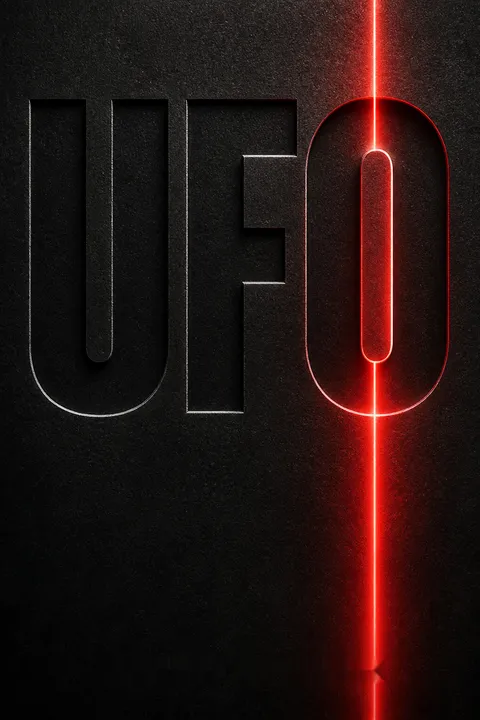
UFO by Garrett M. Graff presents a comprehensive history of the U.S. government's investigation into UFOs and extraterrestrial life. While some readers found it fascinating and well-researched, others felt it lacked new revelations. The book covers famous sightings, government programs, and scientific efforts like SETI. Graff approaches the subject objectively, debunking myths while acknowledging the possibility of unknown phenomena. Many reviewers appreciated the balanced tone and historical context, though some found certain sections dry or overly detailed. Overall, it offers a nuanced look at America's cultural obsession with UFOs.
People Also Read




Glossary
UFO
unidentified sky objectAn unidentified flying object is an aerial sighting whose source has not been identified. The term describes the observer’s uncertainty, not the object’s origin. In popular speech, UFO often means alien spacecraft, but the book keeps those meanings separate: a UFO may eventually prove to be a balloon, aircraft, natural phenomenon, or something still unexplained.
UAP
unidentified anomalous phenomenaUAP is the newer official label for unidentified aerial phenomena, later broadened to unidentified anomalous phenomena. The terminology avoids assuming that every report is a flying vehicle and can include events in other domains. Like UFO, it marks a lack of identification, not evidence of extraterrestrial origin.
SETI
search for extraterrestrial intelligenceSETI is the scientific search for evidence of intelligent life beyond Earth, especially through radio or other signals that a technological civilization might produce. It differs from investigating UFO sightings on Earth: SETI looks for distant evidence in space and does not assume that any civilization has visited our planet.
Project Ozma
early radio signal searchProject Ozma was Frank Drake’s 1960 experiment at the Green Bank observatory. Using a radio telescope, Drake searched two nearby stars for narrow-band signals that might indicate intelligent communication. The project found no confirmed extraterrestrial signal, but demonstrated that a systematic search could be conducted with existing astronomical equipment.
Fermi Paradox
the silence of a populated cosmosThe Fermi Paradox names the tension between the apparent possibility of many civilizations in the universe and the absence of clear evidence that any have contacted Earth or filled the galaxy with detectable activity. It is a question, not a proof that extraterrestrial intelligence exists or does not exist.
Drake equation
estimate of detectable civilizationsThe Drake equation organizes estimates of how many civilizations in the Milky Way might be detectable. It combines the rate of star formation with estimates of how often stars have planets, how many planets support life, how often intelligence and communication emerge, and how long detectable civilizations last. Its value depends on several unknown factors.
Kardashev scale
civilization energy-use scaleThe Kardashev scale sorts hypothetical civilizations by the amount of energy they can use. A Type I civilization harnesses energy available to its planet, Type II energy from its star, and Type III energy across its galaxy. It is a framework for imagining technological capability, not a method for confirming that such civilizations exist.
Close Encounters of the Third Kind
reported sighting of occupantsIn J. Allen Hynek’s classification of close UFO reports, a Close Encounter of the Third Kind is a close sighting in which a witness reports seeing occupants or animated beings associated with the object. The First Kind involves a nearby visual sighting, while the Second Kind adds reported physical effects. The categories classify accounts, not their truth or cause.
Rio scale
rating for possible contactThe Rio scale is a framework for communicating the potential significance and credibility of a claimed SETI detection. Its rating considers the possible consequences of the signal and the probability that the event is real, while allowing the assessment to change as evidence is checked. It is intended to help scientists and the public discuss a possible detection clearly.
FAQ
1. What is UFO: The Inside Story of the U.S. Government's Search for Alien Life Here―and Out There by Garrett M. Graff about?
- Comprehensive UFO and government history: The book traces the U.S. government’s investigations into UFOs and the scientific search for extraterrestrial intelligence (SETI) from the 1940s to the present.
- Interdisciplinary narrative: It weaves together military, intelligence, scientific, and cultural perspectives, highlighting key events, figures, and the evolution of public perception.
- Focus on secrecy and belief: Graff explores the tension between government secrecy, scientific inquiry, and the enduring mystery and fascination surrounding UFOs.
- Global and political context: The narrative extends beyond the U.S., touching on international incidents and the influence of Cold War politics on UFO research.
2. Why should I read UFO: The Inside Story by Garrett M. Graff?
- Balanced, well-researched account: Graff draws on declassified documents, interviews, and decades of journalism experience to provide a nuanced, authoritative perspective.
- Bridges science and folklore: The book connects rigorous scientific inquiry with the cultural and mythological aspects of UFOs, offering insight into why the topic captivates society.
- Reveals government complexity: Readers gain an understanding of how government responses to UFOs have been shaped by uncertainty, secrecy, and evolving attitudes.
- Current relevance: With recent government disclosures and renewed scientific interest, the book captures a pivotal moment in the public and institutional approach to UAPs.
3. What are the key takeaways from UFO: The Inside Story by Garrett M. Graff?
- UAPs are real but unexplained: The U.S. government acknowledges numerous UAP sightings, some with advanced characteristics, but definitive explanations remain elusive.
- Scientific and cultural complexity: The phenomenon involves science, secrecy, psychology, and myth, defying simple answers and requiring interdisciplinary study.
- Shift toward openness: Recent years have seen a breakdown of stigma, increased transparency, and more serious engagement from government and scientists.
- Ongoing mystery: Despite decades of investigation, many UFO sightings remain unexplained, leaving open questions about extraterrestrial life and the limits of human knowledge.
4. What are the most significant government UFO programs and investigations described in UFO: The Inside Story?
- Project Sign, Grudge, and Blue Book: Early Air Force programs from the late 1940s to 1969 investigated thousands of UFO reports, with Blue Book concluding no evidence of extraterrestrial craft.
- Condon Committee: A University of Colorado-led scientific review in the 1960s that recommended ending official investigations, leading to Blue Book’s closure.
- AAWSAP and AATIP: Secret Pentagon programs in the 2000s focused on advanced aerospace threats and UAPs, marking renewed official interest and leading to recent disclosures.
- NIDS and Bigelow Aerospace: Privately funded research organizations that investigated paranormal phenomena and collaborated with government programs.
5. How did the U.S. government’s approach to UFOs and UAPs evolve according to UFO: The Inside Story?
- Early secrecy and denial: For decades, agencies like the Air Force and CIA dismissed or downplayed UFO reports, often citing misidentifications or hoaxes.
- Gradual declassification: Starting in the 1990s, agencies began releasing files and acknowledging limited official interest in UAPs, though often without confirming extraterrestrial origins.
- Modern transparency: Recent Pentagon programs and congressional hearings have led to public acknowledgment of UAPs and the release of pilot videos.
- Ongoing challenges: The government continues to struggle with data collection, analysis, and balancing national security with transparency.
6. Who was J. Allen Hynek and what was his role in UFO research as described by Garrett M. Graff?
- Scientific consultant turned advocate: Initially hired by the Air Force to debunk UFO reports, Hynek became convinced that some cases warranted serious scientific study.
- Close Encounters classification: He developed the system categorizing UFO sightings by proximity and interaction, including the famous "Close Encounters of the Third Kind."
- Founder of CUFOS: After Blue Book ended, Hynek established the Center for UFO Studies to promote rigorous, interdisciplinary research.
- Critic of debunking efforts: Hynek challenged government dismissal of UFOs, arguing that ridicule hindered genuine understanding.
7. What are the most significant UFO sightings and incidents covered in UFO: The Inside Story?
- Roswell Incident (1947): Initially reported as a flying saucer crash, later explained as a secret military balloon, but became the centerpiece of UFO conspiracy theories.
- The Wow Signal (1977): A strong, unexplained radio signal detected by SETI researchers, never repeated but considered a potential sign of extraterrestrial intelligence.
- The Phoenix Lights (1997): A massive V-shaped formation of lights seen by thousands, officially attributed to military flares but widely disputed by witnesses.
- The Tic Tac Incident (2004): Navy pilots encountered a fast-moving, shape-shifting object, tracked by advanced sensors, with no known explanation.
8. How does UFO: The Inside Story explain the scientific search for extraterrestrial intelligence (SETI) and its evolution?
- Early SETI experiments: Projects like Project Ozma in 1960 pioneered the use of radio telescopes to search for alien signals.
- The Drake Equation: Developed in 1961, it provided a probabilistic framework for estimating the number of detectable civilizations.
- Technological advances: SETI evolved from single-frequency searches to multi-channel, computer-assisted programs like SETI@home and the Allen Telescope Array.
- Breakthrough Listen and Starshot: Recent initiatives, funded by Yuri Milner, have dramatically expanded the search for alien signals and aim to send probes to nearby stars.
9. What is the Fermi Paradox and how is it addressed in UFO: The Inside Story by Garrett M. Graff?
- Paradox explained: The Fermi Paradox asks why, given the vastness of the universe and the likelihood of life, we have no clear evidence or contact with extraterrestrials.
- Scientific implications: It challenges assumptions about interstellar travel, the prevalence of life, and the longevity of civilizations.
- Influence on SETI: The paradox shaped scientific approaches to searching for life, prompting debates about Earth’s uniqueness or isolation.
- Context in the book: Graff links the paradox to the rise of radio astronomy and the ongoing search for alien signals.
10. How does UFO: The Inside Story address the role of conspiracy theories, whistleblowers, and government secrecy in UFO culture?
- MJ-12 documents and whistleblowers: The book covers controversial documents and figures who claimed secret government knowledge of aliens, fueling conspiracy theories.
- Impact on public trust: These narratives contributed to widespread distrust of government and inspired media like The X-Files.
- Official skepticism: Despite sensational claims, official investigations often found no evidence of alien technology or cover-ups.
- Cultural influence: Conspiracy theories became embedded in mainstream culture, complicating public understanding of UFO phenomena.
11. What are Close Encounters of the First, Second, and Third Kind according to J. Allen Hynek’s system in UFO: The Inside Story?
- First Kind: Visual sightings of a UFO less than 500 feet away, allowing detailed observation without physical effects.
- Second Kind: Encounters accompanied by physical evidence such as ground traces, electromagnetic interference, or effects on animals and vehicles.
- Third Kind: Encounters involving the presence of occupants or beings associated with the UFO, including humanoid figures or "UFOnauts."
- Scientific significance: This classification system helped standardize UFO reports and guide scientific investigation.
12. How does UFO: The Inside Story by Garrett M. Graff explore the origins and rarity of life on Earth and its implications for extraterrestrial life?
- Water’s origin theory: The book discusses research suggesting Earth’s water came from water-rich rocks, implying many planets could have oceans.
- Early emergence of life: Life appeared quickly after Earth’s formation, suggesting life may be common in the universe.
- Intelligent life is rare: Evolutionary history shows intelligence is not guaranteed; many species thrived without developing it.
- Resilience and adaptability: Life’s ability to survive extreme conditions supports the possibility of life existing elsewhere or traveling between planets.
Download PDF
Download EPUB
.epub digital book format is ideal for reading ebooks on phones, tablets, and e-readers.








