

Key Takeaways
Treat every option as a timed contract, not a cheap stock substitute
Rights and obligations. A call gives its buyer the right to buy an asset at a preset price; a put gives the right to sell. Neither buyer has to exercise. The buyer pays a premium for that choice, while the seller receives the premium and accepts a contractual obligation. The preset price is the strike price, and the right ends on the expiration date. Most standard stock-option contracts cover 100 shares, though contract sizes can differ, so check before trading.
A real-world analogy. The book describes a Chicago hardware-store owner paying to reserve snow shovels before winter. If a storm made them valuable, the owner could buy at the agreed price; if winter stayed mild, the owner could let the contract expire, losing the fee but avoiding unwanted inventory. Options can similarly hedge, generate income, or speculate, but the contract’s terms determine who bears which risk.
The contract structure is the book’s most useful mental model: every strategy rearranges a right, an obligation, a price, and a deadline. That makes options less mysterious without making them harmless. The snow-shovel example also shows why options are not merely bets on price. A business can value the ability to secure supply before demand is known. The essential question is not simply whether the buyer or seller seems advantaged, but whether the contract’s risks fit the participant’s actual purpose.
Collect call premiums only on shares you are genuinely willing to sell
Income has a price. A covered call means owning at least the shares required by the contract while selling someone else the right to buy them at a chosen strike price. The seller keeps the premium, and may also gain from a rising share price up to the strike. Above that price, further gains belong to the call buyer if the shares are called away. If the stock falls sharply, the premium cushions the loss only slightly; the shares remain exposed to the decline.
Choose the stock first. Sincere favors relatively steady shares in a flat or gently rising market, rather than chasing the richest premium on a volatile or weakening stock. For example, on a $40 stock, a $42 call may offer some premium and room for appreciation. The strategy works best when selling the shares at $42 would be an acceptable outcome, not a surprise.
The covered call is best understood as a trade in which an investor sells some upside in exchange for cash. That framing cuts through the seductive language of regular income. It also makes the strategy’s suitability test concrete: would the investor still want the stock if its price dropped, and be content if it were sold at the strike? A large premium can signal substantial uncertainty, not a bargain. The strategy changes the shape of returns; it does not turn a risky stock into a safe one.
A correct market direction can still lose when timing and volatility go wrong
Three hurdles for buyers. A call buyer generally needs the stock to rise; a put buyer generally needs it to fall. But being right about direction is not enough. The move must occur before expiration, exceed the cost of the option, and justify the premium paid. An option’s premium combines intrinsic value, the value it would have if exercised now, and time value, the amount paid for the remaining opportunity and uncertainty.
The market prices anticipation. Implied volatility is the market’s estimate of how much the underlying stock may move, reflected in option prices. A stock trading at $60 with a $65 call might look like a cheap bullish bet, but at expiration the stock must exceed $65 plus the premium paid to produce a profit. When anticipated news passes, option prices can fall as volatility contracts, even if the stock moves somewhat in the predicted direction.
This is the book’s sharpest correction to the idea that options simply magnify a stock forecast. They magnify a conditional forecast: direction, magnitude, timing, and entry price all matter. The same logic appears in insurance pricing, where a buyer pays not just for a possible loss but for how likely and uncertain that loss seems to be. Implied volatility is useful as a warning about the market’s expectations, not as a prediction of what will happen. A costly option can still be worth buying, but only if the expected move can overcome its price.
Buy puts for a defined floor, and accept the insurance premium
Protection has a cost. A protective put is a put bought against shares already owned. It gives the investor the right to sell at the put’s strike price, limiting losses below that level during the contract’s life. It does not erase losses between the stock’s current price and the strike, and the put premium reduces the portfolio’s return if protection is unused.
The collar trade-off. A collar combines owned shares, a sold call, and a bought put. The put establishes a floor; the call brings in premium but caps some upside. In the book’s example, shares bought at $52 are paired with a $55 call and a $50 put. The investor accepts limited gains in exchange for protection against a deeper drop. Puts on broad-market ETFs can also hedge a portfolio, though the hedge may not match its holdings perfectly.
Insurance is valuable because it changes what happens in the bad state, not because it makes every outcome profitable. That distinction helps investors judge whether protection is worth its price. A collar makes the trade especially visible: the investor sells some upside to help fund downside protection. The hedge can still disappoint if its underlying asset, expiration, or size poorly matches the portfolio. Protection should therefore be assessed against the specific loss it is meant to absorb, rather than treated as a general feeling of safety.
Write your exit plan before a winning trade turns into a gamble
Decide before emotions rise. Sincere recommends setting a profit target, a maximum acceptable loss, and a response to likely changes in the stock before entering a trade. A trading diary can record the stock, strike, expiration, premium, and the reasoning behind each decision. Practicing first and starting with one contract can make mistakes less costly while building experience. Limit orders are preferable to market orders when option prices move quickly, though a limit order may not be filled.
A painful windfall. A trader in the book bought calls on a drug company ahead of a government announcement. His options showed a paper gain of about $130,000, but he held on, expecting better news. The announcement disappointed, the stock fell, and the gains vanished. He later bought the options again and lost when the shares failed to recover. The lesson is to monitor the position and make decisions from current evidence, not attachment to a past gain.
The trader’s story illustrates a behavioral trap: a paper gain can feel like money already owned, making the prospect of giving it back feel more painful than taking a clear profit. A prewritten plan gives the trader a reference point before excitement or fear distorts judgment. Yet rules are not guarantees. Prices can gap, markets can become illiquid, and planned orders may not execute as intended. The discipline is not blind obedience to a formula; it is making the risk visible and deciding in advance what evidence would justify changing course.
Use spreads to cap risk, but manage every leg as one position
Two options, one trade. A vertical spread pairs a bought option with a sold option of the same type and expiration but a different strike. In a credit spread, the trader receives a net premium and hopes the options lose value. In a debit spread, the trader pays a net amount and hopes the position gains value. Both structures limit potential profit as well as loss, and the maximum outcome can generally be calculated before entry.
Know the assignment trap. In the book’s example, selling a $42 put and buying a $40 put brings in $90. The two-point spread represents $200 of exposure, so the maximum loss is $110 before commissions. The protection depends on keeping both legs together. If one leg is left open near expiration, exercise or assignment can create an unwanted stock position. The book advises closing both legs before expiration rather than chasing the last few dollars.
Spreads are a practical form of risk engineering: one option offsets part of the exposure created by another. Their defined maximum loss can make a position easier to evaluate, but defined risk is not the same as low risk. Traders still need to understand the stock obligation that can result from assignment, and the cost of entering and exiting both legs. Thinking of a spread as one position discourages a common error: managing the attractive leg while forgetting that the other leg carries the obligation.
Sell puts only on stocks you can afford to own
A paid limit order to buy. A cash-secured put is a put sold while enough cash is reserved to buy the shares if assignment occurs. The seller receives a premium and may acquire the stock at the strike price. If assigned, the premium reduces the effective purchase cost. In the book’s example, a trader willing to buy a $48 stock at $45 sells a $45 put for $3. If assigned, the effective cost is $42 per share before other expenses.
The risk is the stock. If the shares plunge, the seller is still obligated to buy at the strike, so the premium is small comfort against a severe decline. A naked put uses margin instead of fully reserved cash, which can tempt traders to sell more contracts than they can support. Sincere recounts a trader whose strategy seemed to produce easy income until a market crash and margin obligations helped drive him into bankruptcy.
The cash-secured put is not a free yield trick. It is a conditional stock-purchase plan that pays the investor for accepting a downside obligation. That makes the key test unusually simple: would the seller willingly own the shares at the strike price, even after a market shock? The naked version preserves the same basic exposure while adding financing pressure. Margin can make a strategy appear more capital-efficient, but it also narrows the room for error precisely when prices and required collateral may move against the trader.
Buy a straddle only when the expected move can outrun its price
Direction-free, not risk-free. A long straddle buys a call and a put with the same strike and expiration. It can profit from a sufficiently large rise or fall, but loses when the stock stays near the strike because both options lose time value. A long strangle uses different, usually out-of-the-money strikes; it costs less in the example given, but needs an even larger move to reach profitability.
News can be expensive. Earnings, drug decisions, or central-bank announcements may make a large move seem likely. That expectation can raise implied volatility and the cost of both options before the event. Once the event passes, that volatility may fall. The book also introduces iron condors, which seek a bounded price range, calendars, which trade differences in time decay, and butterflies, which benefit when the stock ends near a chosen strike. Each structure expresses a specific view, not a shortcut to certain returns.
Straddles and strangles expose a subtle distinction between predicting a dramatic event and predicting a profitable option. The market may already charge heavily for the possibility of the event, so the buyer needs a move larger than the one embedded in the price. More elaborate structures make it possible to express narrower views, such as a quiet market or a price near a target. Their sophistication can clarify a hypothesis, but it can also obscure it. The payoff diagram should be understandable before the trade is placed.
Let the Greeks quantify exposure, not replace a trading thesis
Useful gauges. The Greeks estimate how an option may respond to changing conditions. Delta estimates the price change for a one-point move in the underlying stock; a call with a delta near 0.50 may gain about $0.50 per share if the stock rises $1, all else equal. Gamma tracks changes in delta, theta estimates daily time decay, and vega measures sensitivity to implied volatility. Rho estimates sensitivity to interest rates. These are estimates, not promises, because several forces act at once.
Learn in small size. Options professional Sheldon Natenberg emphasizes that traders must consider both market direction and the speed of a move, while preparing for favorable and unfavorable outcomes. Sincere’s practical advice is to study, practice, and trade only one or two contracts at first. The book also warns against expensive courses promising secret systems: software can test scenarios, but it cannot remove uncertainty or make judgment unnecessary.
The Greeks turn vague exposure into quantities that can be compared, which is especially useful when a position contains several options. Their value lies in disciplined approximation, not precision theater. A displayed delta does not account for every shift in volatility, time, or liquidity, and the estimate itself changes as the market moves. Natenberg’s emphasis on both speed and direction is important because options price uncertainty as well as price movement. Tools can help a trader ask better what-if questions; they cannot supply a durable edge without sound decisions and controlled position size.
Analysis
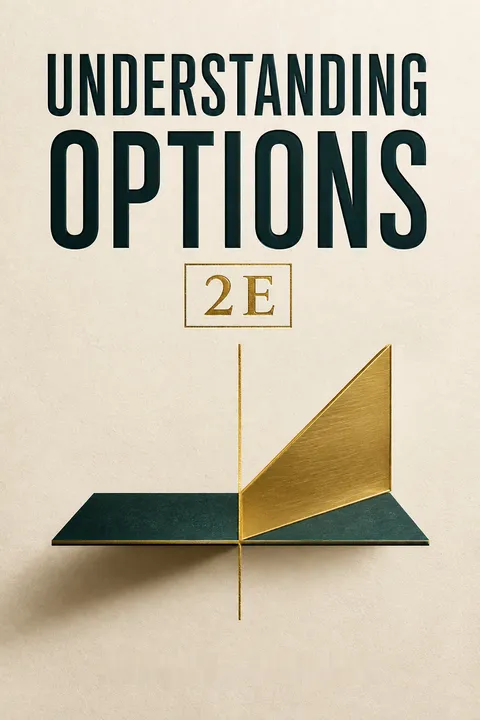
Understanding Options is an introductory finance book organized as a progression from contract basics to covered calls, long calls and puts, hedges, spreads, volatility strategies, and advanced combinations. Its audience includes both cautious investors who fear options and speculators attracted by leverage. The central teaching problem is that options are simultaneously simple in definition and complex in consequence. Each contract grants a right or creates an obligation, but its value also depends on the underlying asset, strike, expiration, time decay, volatility, and market price.
The book’s strongest contribution is its insistence that a strategy must be understood as a payoff, not as a catchy name. Covered calls exchange upside for premium while leaving substantial downside exposure. Long options cap the buyer’s loss at the premium, but can expire worthless. Spreads can define risk, yet assignment and poor position management still create operational hazards. The recurring practical advice, calculate exposure, plan exits, use small size, and monitor positions, gives the exposition a coherent spine across otherwise numerous strategies.
The narrative examples make abstract mechanics memorable, especially the trader who watched a large options gain evaporate after disappointing news. That story supports the book’s warning about greed, but also reveals a broader point: a successful trade is not complete until the position is closed or expires according to plan. The emphasis on decision process is more durable than any specific market forecast. The text is educational rather than a current trading manual. It was published in a period whose contract listings, brokerage interfaces, fees, and product availability may differ from present conditions. Expiration mechanics and account permissions should be checked with a brokerage and authoritative current materials. Its claims that options can reduce risk require careful qualification: buying options limits the buyer’s loss on that position, while selling options or holding the underlying stock can retain large exposure. The most defensible reading is not that options make markets safe, but that they let investors shape particular risks, at a cost, if they understand the obligation they have taken on.
Review Summary
Understanding Options receives mostly positive reviews, praised for its clear explanations of complex topics for beginners. Readers appreciate the author's approachable style and humor. Some criticize it for being too basic or repetitive, while others find it comprehensive. The book is recommended as an excellent introduction to options trading, though more experienced traders may find it elementary. Many readers feel more confident in options trading after reading, but some caution against oversimplification of complex strategies.
People Also Read





Glossary
Premium
Price of an optionThe premium is the market price paid by an option buyer and received by its seller. It is quoted per share, while a standard stock-option contract typically covers 100 shares, so the cash amount is usually the quote multiplied by 100. Premium reflects factors including the stock price, strike, time remaining, and volatility.
Strike price
Contract purchase or sale priceThe strike price is the fixed price at which the option holder may buy the underlying asset with a call or sell it with a put. It determines whether an option is in, at, or out of the money relative to the asset’s current price. It does not, by itself, determine whether a trade is profitable.
Assignment
Seller fulfills the contractAssignment occurs when an option seller is selected to fulfill the obligation created by a contract after its holder exercises. A call assignment generally requires the seller to deliver shares at the strike price; a put assignment generally requires the seller to buy shares at that price. Assignment can occur before expiration, though timing and likelihood depend on the contract and circumstances.
Covered call
Call sold against owned sharesA covered call combines ownership of the underlying shares with the sale of a call option covering those shares. The seller receives a premium and agrees to sell the shares at the strike price if assigned. The premium offers limited cushioning against a decline, while the call limits gains above the strike price.
Implied volatility
Volatility reflected in option pricesImplied volatility is the market’s estimate of future price variability, inferred from an option’s current price using an options pricing model. It is not a direct forecast of whether the asset will rise or fall. Higher implied volatility generally increases option premiums, while a decline in implied volatility can reduce them even if the underlying asset moves.
Volatility crush
Premium falls as uncertainty fadesVolatility crush describes a sharp decline in option premiums when uncertainty surrounding an anticipated event subsides. For example, options may become expensive before a company announcement because traders expect a large move. After the announcement, implied volatility can fall, reducing option value and harming buyers even if the stock moves somewhat in their predicted direction.
Delta
Estimated price sensitivityDelta estimates how much an option’s price may change for a one-unit change in the underlying asset’s price, assuming other factors remain constant. A call has positive delta and a put negative delta. Delta changes as market conditions change, so it is a guide rather than a fixed conversion rate or guarantee of profit.
Theta
Estimated daily time decayTheta estimates how much an option’s value may decline as one day passes, all else equal. Time decay generally matters more as expiration approaches, particularly for options with substantial time value. Theta is a cost for option buyers and can benefit sellers, but other market changes may outweigh its estimated effect.
Protective put
Put hedging owned sharesA protective put pairs ownership of shares with a bought put on those shares. The put gives the holder the right to sell at its strike price, limiting losses below that level during the contract’s life. The strategy costs the premium, and it does not protect against losses between the share price and the put strike.
Collar
Shares hedged by a call and putA collar combines owned shares, a sold call, and a bought put, usually with both options out of the money. The put establishes a downside floor below its strike, while the sold call caps some upside above its strike. The premium from the call may offset some or all of the put’s cost, but the position still has risk.
Credit spread
Spread opened for net premiumA credit spread combines a sold option with a bought option of the same type and expiration but a different strike. The trader receives a net credit at entry and generally benefits if the options lose value. The bought option limits the exposure created by the sold option, so both potential profit and potential loss are defined by the strikes and credit.
Debit spread
Spread opened for net costA debit spread combines a bought option with a sold option of the same type and expiration but a different strike. The trader pays a net debit to open the position and hopes the spread gains value. The sold option reduces the cost of the bought option, but also limits the maximum possible profit.
Cash-secured put
Put sale backed by cashA cash-secured put is a short put position backed by enough reserved cash to purchase the underlying shares if assignment occurs. The seller receives a premium and may be required to buy shares at the strike price. If assigned, the premium reduces the effective purchase cost, but a falling stock can still produce a substantial loss.
Straddle
Call and put at one strikeA long straddle consists of buying a call and a put with the same strike price and expiration date. It can profit from a sufficiently large move in either direction. If the underlying asset remains near the strike, both options can lose value through time decay. The combined premiums set the distance the move must overcome.
Long-term equity anticipation securities (LEAPS)
Long-dated listed optionsLEAPS are long-term listed option contracts, with expirations that the book describes as ranging from several months to as long as three years. They otherwise operate like standard options, but their longer duration generally makes them more expensive. They can give an investor extended exposure without buying shares, while retaining the risk that the options lose value or expire worthless.
FAQ
What is "Understanding Options 2E" by Michael Sincere about?
- Comprehensive options introduction: The book offers a step-by-step guide to options trading, starting from the basics and progressing to advanced strategies, making it accessible for beginners and intermediate traders.
- Practical and approachable: Michael Sincere uses clear language, real-world examples, and a conversational tone to demystify options, focusing on practical knowledge and actionable advice.
- Wide strategy coverage: It covers everything from opening an options account to executing strategies like covered calls, spreads, iron condors, and more.
- Educational resources: The book includes interviews with professionals and provides additional resources for further learning.
Why should I read "Understanding Options 2E" by Michael Sincere?
- Clear and engaging style: The book is written in an easy-to-understand, entertaining manner, avoiding technical jargon and making complex concepts accessible.
- Covers essential concepts: It explains key options concepts such as strike price, expiration, intrinsic and time value, and the Greeks, which are crucial for understanding and trading options.
- Practical trading skills: Readers learn how to execute trades, manage risk, and develop trading plans, with a focus on discipline and avoiding common mistakes.
- Free expert support: Michael Sincere offers a toll-free number and online chat for readers to get answers to their options questions.
What are the key takeaways from "Understanding Options 2E" by Michael Sincere?
- Options are flexible tools: Options can be used for income, protection, hedging, and speculation in any market condition, with known risk and potential for profit in rising, falling, or sideways markets.
- Risk management is crucial: The book emphasizes the importance of understanding risk, using conservative strategies, and having a trading plan.
- Volatility matters: Understanding volatility and its impact on option pricing is essential for successful trading.
- Continuous learning: Sincere encourages starting small, practicing strategies, and using free educational resources rather than relying on expensive seminars.
How do I open an options account as described in "Understanding Options 2E" by Michael Sincere?
- Start with a brokerage account: Open a brokerage account with a minimum deposit, typically around $2,500, before applying for options trading.
- Complete the options agreement: The brokerage will assess your knowledge, experience, and financial resources to determine your approval level for different options strategies.
- Understand margin and disclosures: Advanced strategies may require a margin account, and you must read the "Characteristics and Risks of Standardized Options" brochure before trading.
- Approval levels: Approval ranges from basic covered calls to advanced naked options, depending on your experience and financial situation.
What is a covered call and why does Michael Sincere emphasize it in "Understanding Options 2E"?
- Definition and purpose: A covered call involves selling call options on stocks you already own, generating income by collecting premiums from option buyers.
- Conservative strategy: It is considered a conservative, income-generating strategy suitable for flat or slightly bullish markets.
- Risk and reward: You keep the premium and may gain dividends and capital appreciation up to the strike price, but your stock can be called away if the option is exercised.
- Key considerations: Choosing the right strike price and expiration date is crucial to balance income and potential stock appreciation.
How does Michael Sincere recommend choosing and selling covered calls in "Understanding Options 2E"?
- Market environment matters: Covered calls work best in stable or slowly rising markets with less volatile stocks.
- Strike price and premium: Select a strike price that offers a reasonable premium while allowing for some stock appreciation; out-of-the-money calls are often preferred.
- Expiration and stock selection: Longer expirations provide higher premiums but tie up capital; choose steady, reliable stocks and avoid highly volatile ones.
- Execution and management: Use limit orders to sell calls, monitor positions, and be prepared to buy back or roll options if market conditions change.
What is assignment in options trading and how should it be handled according to "Understanding Options 2E"?
- Definition of assignment: Assignment occurs when the option buyer exercises their right, obligating the seller to deliver the underlying stock at the strike price.
- Timing of assignment: It usually happens at expiration if the option is in the money, but can occur early, especially before dividends.
- Seller's perspective: Assignment is generally positive for covered call sellers, as it means the stock was sold at an acceptable price.
- Preparation: Sellers should always be prepared for assignment and have a plan for handling it.
How does "Understanding Options 2E" by Michael Sincere explain buying call options and their risks?
- Leverage and low cost: Buying calls allows you to control stock for a fraction of the price, offering the potential for large percentage gains if the stock rises.
- High risk and timing: The main risk is losing 100% of the premium if the stock does not move above the strike price before expiration; timing and price paid are critical.
- Bid-ask spread impact: Wide spreads can cause immediate losses; using limit orders and monitoring spreads is essential to avoid overpaying.
- Importance of volatility: High implied volatility can inflate premiums, increasing the risk of losses if volatility drops after purchase.
What are the key strategies for buying puts in "Understanding Options 2E" by Michael Sincere?
- Speculation and hedging: Buying puts is used to profit from declining stock prices or to hedge long stock positions as "disaster insurance."
- Selecting the right put: Choose puts based on market environment, stock technicals, and strike price, balancing cost and probability of profit.
- Managing positions: Monitor the underlying stock and decide when to sell, hold, or exercise puts; selling profitable puts before expiration helps avoid time decay.
- Risk awareness: Holding losing puts can lead to total loss of premium, so risk management is essential.
How does volatility affect options pricing according to "Understanding Options 2E" by Michael Sincere?
- Premium components: Option price consists of intrinsic value and time value, with time value heavily influenced by volatility and time until expiration.
- Historical vs. implied volatility: Historical volatility measures past price movement, while implied volatility reflects market expectations and directly affects option premiums.
- Volatility crush risk: Buying options with high implied volatility (e.g., before earnings) can lead to losses if volatility drops after the event.
- Strategy implications: Understanding volatility helps traders avoid overpaying and choose appropriate strategies.
What are credit and debit spreads, and how are they used in "Understanding Options 2E" by Michael Sincere?
- Definition of spreads: Spreads involve buying and selling options of the same type with different strike prices but the same expiration, reducing risk and cost.
- Credit spreads: These bring in premium upfront and include strategies like bull put and bear call spreads, which limit both risk and reward.
- Debit spreads: These require a net cost and include bull call and bear put spreads, offering directional exposure with limited risk.
- Managing spreads: The book explains strike selection, calculating breakeven, and managing trades for both types of spreads.
How does "Understanding Options 2E" by Michael Sincere explain the Greeks and their importance?
- Overview of the Greeks: Delta, gamma, theta, vega, and rho measure how option prices respond to changes in stock price, time, volatility, and interest rates.
- Delta's significance: Delta estimates how much an option price changes with a $1 move in the stock and approximates the probability of finishing in the money.
- Other Greeks' roles: Gamma measures the rate of change of delta, theta represents time decay, vega measures sensitivity to volatility, and rho relates to interest rates.
- Risk management: Understanding the Greeks helps traders manage risk and make informed decisions.
What advanced options strategies does Michael Sincere cover in "Understanding Options 2E" (iron condors, calendar spreads, butterflies)?
- Iron condors: A market-neutral strategy combining a put credit spread and a call credit spread, profiting if the stock stays within a range, with limited risk and reward.
- Calendar spreads: Involve buying and selling options with the same strike price but different expirations to exploit time decay differences; can be directional or neutral.
- Butterfly spreads: Combine bull and bear spreads to create a position with limited risk and profit, ideal for low volatility environments.
- Strategy selection: The book explains setup, strike selection, and the importance of understanding time premium and volatility for these advanced strategies.
About the Author


Download PDF
Download EPUB
.epub digital book format is ideal for reading ebooks on phones, tablets, and e-readers.








