

Plot Summary
Prologue
Warner, the commander of Sector 45, lies wounded after Juliette shoots him. While soldiers crowd around and wait for instructions, he forces himself to assess the damage and orders Lieutenant Delalieu to arrange medical care.
His first concern is not the injury but the fugitives: he orders his men to find Juliette and keep Adam Kent alive, reserving Adam for himself. The command exposes the contradiction governing Warner. He presents himself as a man who controls every consequence, yet the people who have just escaped have already made his feelings impossible to contain.
The opening makes physical vulnerability collide with authoritarian habit. Warner treats his wound as a logistical problem, issuing precise orders even as his body fails him. But his insistence that Adam remain alive is not merely strategic: it is personal, sharpened by jealousy and humiliation. The scene establishes a leader who has learned to translate every feeling into command. That conversion gives him power, but it also makes his attachment to Juliette dangerous. He cannot admit that he has lost control, so he turns loss into a hunt.
The Escape He Cannot Command
After surgery, Warner learns that Adam has escaped with Juliette and Kenji, another soldier. A stolen car leaves a trail toward a barren stretch of land, then disappears from the tracking system. Warner tries to rise from bed before his shoulder can bear it, rejecting the medics' advice and demanding useful leads.
Delalieu explains that soldiers searched the area without finding the fugitives. Warner understands that they may have found a concealed refuge, but he has no proof. His injury leaves him dependent on others at the very moment his authority is being tested, and the escape turns his private fixation into a military crisis.
Warner's body imposes a limit his rank cannot overrule. The escape matters not only because Juliette is gone, but because it demonstrates that his systems of surveillance and command have blind spots. His response is revealing: rather than acknowledge uncertainty, he tries to accelerate his recovery and intensify the hunt. Control is his defense against helplessness, and the fugitives' disappearance makes that defense feel suddenly fragile.
The Door Torn Open
Following the vehicle's tracks, Warner reaches a hidden building where a reinforced steel door has been ripped apart. The opening is large enough for the fugitives to pass through, and its ragged edges suggest a force no ordinary person could have used. Warner recognizes Juliette's power in the damage.
He remembers that he brought her to the base under the pretext of studying her as a weapon, while privately wanting to understand her. Delalieu has already alerted neighboring sectors, fearing the group might cross a boundary. Warner rebukes him: the fugitives are wounded, short on resources, and unlikely to have crossed into another sector. The premature alert may expose the crisis to the entire regime.
The broken door turns Juliette's ability into evidence rather than rumor. Warner sees both the danger and the freedom in it: she has used a power he hoped to direct, and it has helped her escape his reach. His anger at Delalieu's alert also shows that his concern is not simply about finding her. He fears the political consequences of a public failure, because rebellion becomes imaginable when the regime's supposedly secure borders look penetrable.
His Father's Lesson
Warner takes too many pain pills, develops a fever, and loses consciousness. When he wakes, his father, Supreme Commander Anderson, is beside his bed. Anderson condemns Warner for failing to contain Juliette and for sparing the family of Seamus Fletcher, a soldier Warner had executed for abusing his wife and children.
Anderson reveals that he has since had Fletcher's wife and three children killed. He uses the deaths to punish Warner for acting on compassion, then presses him about Adam and Juliette. Under the assault, Warner says he intends to kill Adam. His father accepts the threat as proof that Warner is ready to resume work, though the declaration does not settle Warner's feelings.
Anderson's cruelty is systematic: he converts Warner's attempt to protect a family into an occasion to demonstrate that mercy has no place in their regime. Warner's silence and mental retreat are survival strategies learned under a parent who treats emotional exposure as weakness. His promise to kill Adam is therefore both a submission and a performance. The scene complicates Warner's authority by showing its source: he has power over subordinates, but remains psychologically constrained by the person who taught him how power works.
The Notebook in Her Room
Searching Juliette's abandoned room, Warner finds a small notebook hidden among the debris. Its early pages describe her years in an asylum: enforced isolation, physical abuse, and the exhausting practice of counting breaths and objects to endure each day. She writes of parents who feared and mistreated her, including a childhood incident in which her mother put her hand in a fire to test it.
Warner, who had studied Juliette through official records and surveillance, discovers that those accounts never conveyed the private cost of her confinement. The notebook gives him no location or route to follow, but it changes what he understands about her. He carries it away and reads on, increasingly unable to treat her as an experiment.
The notebook shifts the source of knowledge from institutional observation to Juliette's own testimony. Warner's cameras could record movement, and her files could classify behavior, but neither could explain what isolation felt like from inside. Reading does not make him innocent of his own manipulation of her; it makes his ignorance harder to defend. The book becomes an intimate object that resists the regime's habit of turning people into records, assets, and threats.
The Commander Visits the Camps
Warner addresses his soldiers, announcing that Adam and Kenji are traitors and that Anderson has arrived to stabilize the sector. He then visits the civilian compounds, housing made from stacked shipping containers that he designed as emergency shelter.
The shelters have become permanent, closely monitored quarters. There he remembers how he investigated Fletcher's abuse and killed the soldier, while allowing the family to live. Anderson's retaliation has now erased them.
Warner returns to the simulation chamber and recreates the moment Juliette shot him, using the controlled violence to manage feelings he cannot name. His private resistance to his father has protected some people, but it has not been strong enough to stop the system he serves.
The compounds embody Warner's moral ambiguity: he created shelter that improved immediate survival, yet the regime converted it into a monitored prison. Likewise, his intervention against Fletcher was real but limited; it could stop one man's violence without challenging the political structure that enabled further violence. The simulation lets Warner rehearse pain on his own terms, a stark contrast to the helplessness he experiences with Anderson. Neither act breaks the system, but together they expose his divided loyalties.
More Than One Juliette
At dinner, Anderson tests Warner's account of the search and reveals that Juliette is not the only person with extraordinary abilities. A group of gifted people has been living undercover near the barren field where the stolen car vanished, and Anderson believes they have taken Juliette with them. He orders Warner to lead nighttime searches, find their underground refuge, and prepare it for destruction.
Warner hides Juliette's notebook from his father and follows the order, hoping the search will bring him to her before Anderson does. Anderson also probes Warner's attachment to Juliette, threatening to treat her as expendable. Warner disguises his concern as investment in a useful project, keeping his feelings and the notebook concealed.
The revelation widens the conflict from a fugitive search to a struggle over who gets to define human difference. Anderson sees the gifted group as a threat to public order and plans to eliminate them before their existence can inspire resistance. Warner's concealed notebook becomes a small act of disobedience, but it is also evidence of his unresolved possessiveness. His wish to reach Juliette first may protect her from his father, yet it does not mean he has learned to respect her freedom.
A Dog and a Glimpse
Warner leads patrols through the cold landscape for several nights, finding no entrance to the rebels' refuge. Exhaustion and the notebook's account of Juliette's suffering leave him increasingly preoccupied with what may happen to her. During a daytime visit to the compounds, he secretly feeds a starving dog with a pastry and laughs as it buries itself in his coat.
A civilian sees him, then bolts. Warner follows her movement and recognizes Juliette. For one brief moment she stands before him, frightened and alive. Before he can approach or speak, she vanishes from view. Warner is left with the dog and the empty place where she stood, unsure whether she escaped or whether his mind has begun to fail him.
The dog briefly draws Warner into an unguarded act of care, one that has no military use and earns no public credit. Juliette's sudden appearance interrupts that fragile softness with the reality of their estrangement. He experiences her presence as both relief and renewed loss, but the encounter gives him no right to pursue her. His uncertainty at the end is important: longing has become so consuming that he can no longer trust his own perception.
Adam Leaves for Battle
In the resistance's refuge, Adam wakes to reports that Warner has escaped. He is preparing to join the fight against Anderson's forces, while his ten-year-old brother James pleads to come with him. Adam refuses, insisting that James stay behind, and promises that protecting him matters more than any other attachment.
Juliette joins Adam at breakfast, withdrawn and shaken after nearly injuring Kenji, who is still recovering. Their strained conversation reveals Adam's fear of Juliette's power and his wish to build a future with her despite that fear. Kenji returns to the group, refuses to remain behind, and prepares to fight. The team departs with Adam anxious about both Juliette and James.
Adam's defining conflict is not a lack of courage but a hierarchy of responsibility. He loves Juliette, yet James is the person whose safety he has organized his life around. His protectiveness offers the child genuine care, while also restricting James's agency. Juliette's fear after hurting Kenji deepens the distance between her and Adam: he wants closeness but still sees her power as a danger to manage. The approaching battle will test whether protection can coexist with trust.
Juliette Taken in the Rain
As Adam, Kenji, and Juliette cross the compounds in a driving storm, they see soldiers rounding up civilians for execution. Kenji's invisibility helps the group approach, and Adam and Juliette join him in killing the guards and guiding the captives to shelter. They press on toward the larger battle, where bombs and gunfire have already devastated the area.
Adam fights beside Kenji until Kenji spots Juliette being dragged into a tank. Adam and Kenji reach the road too late to stop it. Kenji cannot maintain his invisibility because his strength is failing, so the two men abandon the direct pursuit and take a back route toward the base. Adam's determination to save Juliette now collides with the need to survive long enough to reach her.
The rescue of the civilians gives Adam and Juliette a concrete purpose beyond personal survival, but the battle makes every act of protection costly. Juliette's capture is especially painful because Adam's earlier doubts about her readiness do not prevent the danger; nor does his love enable him to control it. Kenji's exhausted power turns escape into a tactical decision rather than a simple pursuit. The scene strips away fantasies of heroic mastery: they can save some people, lose others, and still have to keep moving.
Omega Point Falls
On the back route, Adam meets Castle, Ian, Alia, and Lily, who have freed the wounded rebels Brendan and Winston. They warn that Anderson's forces are bombing Omega Point, where James and other vulnerable people were left behind.
Adam insists on reaching his brother, even as Kenji urges him not to rush into a death trap. The group drives toward the explosions, and Adam believes James has been killed before they arrive. Then James appears, having left the refuge when the planes came. Adam pulls him into his arms.
After the group hides through the night, they take shelter at Adam's old home, where the survivors regroup and decide they must eventually return for Juliette. Adam's relief at finding James is inseparable from the knowledge that Omega Point has been destroyed.
The bombing turns Adam's protective promise into a crisis he cannot solve through vigilance alone. He reaches James only after imagining the worst, and the reunion exposes how much of his identity depends on keeping his brother alive. Yet survival does not restore the former refuge or its leadership. The old house offers shelter, not certainty. The group must carry grief and practical needs together, while Adam confronts a new conflict between caring for James and returning for Juliette.
A Death Report, Not a Body
After the survivors settle into Adam's old home, Kenji leaves to gather information and perhaps warn Juliette. He returns shaken, reporting that Anderson's forces announced Juliette was captured and killed after Omega Point fell. The news crushes the group. Kenji blames himself for not pursuing her sooner, while Adam retreats into the certainty that his own choices caused her death.
No one has seen a body, but the announcement is all they have. The collection ends with Adam fixed on guilt and the others trying to keep one another functioning. Their refuge is temporary, Juliette is absent, and the account of her fate comes from the commander who has every reason to control what people believe.
The ending offers an official statement rather than direct confirmation, leaving the characters with grief shaped by uncertainty. Adam's self-blame gives him a sense of causal order: if he caused the loss, perhaps the world is still intelligible. Kenji reaches for the same explanation. But both responses risk turning an authoritarian announcement into unquestioned truth. Their emotional collapse is real even as the facts remain unverified, preserving the tension between what the regime declares and what the survivors can know.
Letters Through the Walls
The appended journal returns to Juliette's time in confinement, long before the events Adam and Warner have just lived through. Its entries describe a child blamed and isolated by her parents, then locked away while doctors and guards treated her as a danger rather than a person. She counts, watches small details, and writes to preserve a sense of being alive.
The pages show her fear that she may hurt others, her longing for a friend, and the way she imagines worlds beyond the cell. They also record memories suggesting that her strange ability first emerged at home, though she cannot fully explain what happened. Writing becomes her most reliable witness when no one else will listen.
The journal reframes Juliette's power through the experience of being feared before she can understand herself. Counting and writing are not ornamental quirks; they are strategies for maintaining continuity under conditions designed to erase it. Her imagined worlds offer mental escape, while her wish for friendship reveals that isolation has not extinguished her desire for connection. The collection ends by placing that private testimony beside two men's competing accounts of her: Warner's fascination and Adam's fear. Juliette's own words resist both forms of possession.
Analysis
Unite Me places two men beside Juliette, but neither initially knows how to see her without turning her into a problem to solve. Warner calls her a weapon while privately longing to understand her; Adam loves her while fearing what her power may do. Their different forms of attachment expose a central distinction between care and possession. Wanting to protect someone does not automatically mean recognizing that person's autonomy.
The book's institutions repeatedly convert uncertainty into classification. Juliette becomes an inmate, a medical case, or an asset. Gifted people become threats to be removed. Civilians become numbered residents whose labor and movements are tracked. The notebook resists that machinery by preserving particulars the official record omits: a child counting to survive, a girl longing for a friend, a person trying to understand what she has done. Its importance lies not in solving the mystery of Juliette but in restoring the interior life that the regime's labels erase.
Warner and Adam also inherit different versions of protection. Warner's father teaches him that power means controlling others through fear. Adam treats protection as personal responsibility, especially toward James, but that devotion can narrow into deciding what the child is allowed to do. Neither model is sufficient. The novel's most humane moments occur when care becomes concrete and responsive, as when characters shelter civilians or feed a starving dog, rather than when they claim authority over another person's future.
The ending deliberately withholds certainty. Anderson's report that Juliette is dead reaches the survivors without a body or independent confirmation, and grief arrives before knowledge. This is not merely a cliffhanger mechanism; it shows how authoritarian power governs through control of information. The characters must respond emotionally to a claim they cannot verify. Across the collection, survival depends on learning to distinguish what a powerful person declares from what the evidence actually allows them to know.
Review Summary
Unite Me received mixed reviews, with most readers praising Warner's novella "Destroy Me" for providing insight into his character. Many felt it made them like Warner more and Adam less. "Fracture Me," Adam's novella, was less well-received, with readers criticizing his portrayal of Juliette. Juliette's journal entries were praised for their emotional impact. Overall, readers found the novellas added depth to the characters and enhanced their understanding of the Shatter Me series.
People Also Read








Characters
Warner
Caged sector commanderWarner commands Sector 45 for the authoritarian Reestablishment, presenting himself as exacting, disciplined, and difficult to challenge. His fixation on order has roots in a childhood shaped by his father's cruelty, and he uses routines, simulations, and emotional compartmentalization to keep himself functioning. Juliette disrupts those defenses because she meets him with an honesty no subordinate dares offer. His attraction to her is mixed with possessiveness and a desire to understand her, making his impulse to protect her difficult to separate from his wish to control her. He is neither simply a rebel nor a faithful servant: he can act against particular cruelties while remaining embedded in the machinery that produces them.
Juliette Ferrars
Touch that can killJuliette is a young woman whose touch makes other people fear physical contact with her. Years of rejection, abuse, and confinement have taught her to monitor every movement and to treat her own body as a possible threat. Her journal reveals a mind that is observant, imaginative, and stubbornly alive beneath the silence others mistake for madness. She longs for friendship but is wary of the harm she might cause, so closeness can feel both necessary and dangerous. Her power is central to how others categorize her, yet her private writing insists on a fuller identity: a person who remembers, hopes, questions, and wants to be understood.
Adam Kent
Brother before soldierAdam is a soldier who defects from Warner's command and joins the resistance, carrying a fierce sense of responsibility for his younger brother, James. He has built his choices around keeping James safe, a devotion that gives him purpose but can make him controlling when danger rises. His relationship with Juliette is shaped by tenderness and by fear of her ability, especially when he cannot predict what it will do. Adam wants a stable life with her, but the world he inhabits keeps forcing him to choose between intimate loyalties and immediate survival. His practical instincts make him an effective fighter, though emotional stakes can overwhelm his judgment.
Kenji Kishimoto
Invisible field scoutKenji is a resistance fighter whose ability to become invisible makes him valuable in dangerous operations. He uses humor and bluntness to keep fear from taking over, but his concern for others is evident in how he tries to protect both Juliette and Adam. He is willing to fight while injured and often pushes past the limits of his own strength. His friendship with Adam includes teasing and argument, while his relationship with Juliette requires care after her power causes a frightening incident. Kenji's confidence is partly performance: beneath it is a perceptive man who understands that morale, timing, and the safety of civilians matter as much as winning a fight.
James Kent
A child seeking agencyJames is Adam's ten-year-old brother, sociable, curious, and eager to be treated as more capable than his age permits. He looks to Adam for safety but also resents being excluded from decisions that affect him. His bond with Adam is affectionate, though Adam's protective rules can make James feel underestimated. He is warm toward Juliette and readily seeks connection with people around him. In a world that has forced children to grow up quickly, James's wish to help is understandable, even when it frightens the adults responsible for him.
Anderson
Regime's iron architectAnderson is the Supreme Commander of the Reestablishment and Warner's father. He rules through secrecy, surveillance, and exemplary violence, treating fear as the most reliable tool of political order. His relationship with Warner is not affectionate mentorship but a sustained contest in which approval is withheld and vulnerability is punished. Anderson's certainty that human beings can be sorted into useful or dangerous categories shapes the regime's treatment of civilians and gifted people alike. He is frightening not because he loses control, but because cruelty appears to him to be a rational instrument.
Delalieu
Loyal, uneasy lieutenantDelalieu is Warner's older lieutenant, a careful administrator who remains close to him despite the fear Warner inspires in most soldiers. He is loyal to his post and tries to anticipate what Warner needs, sometimes acting too quickly and worsening a situation. His hesitant manner contrasts with Warner's sharp authority, but he is not merely a functionary: he offers the commander a rare source of conversation and ordinary human warmth. Their relationship reveals how an institution can make even basic trust feel precarious.
Castle
Rebel leader under strainCastle leads the resistance community at Omega Point and tries to balance strategic necessity with care for the people gathered there. He has authorized difficult choices, including holding Warner, and his leadership is tested by the consequences of the war. Those around him look to him for direction, though his authority cannot shield them from loss. Castle's presence represents the resistance's attempt to build something more humane than the regime, even when its members are forced to use violence to survive.
Ian
Blunt resistance fighterIan is a practical fighter in the resistance, quick to speak plainly when plans or loyalties are in question. He challenges Adam and Kenji when their personal judgments threaten to distract from the group's immediate needs. His bluntness can sound harsh, but it is tied to the urgency of a world where hesitation has consequences. He is one of the allies who helps the group navigate the collapse of Omega Point.
Alia
Quiet resistance fighterAlia is a member of the resistance whose calm presence becomes valuable amid panic and confusion. She helps support the group's movement and shows particular gentleness toward James. Though she speaks little, her actions suggest a person attentive to others' needs rather than to displays of authority. Her quietness is not passivity; it allows her to respond with steadiness when people around her are overwhelmed.
Lily
Practical rebel allyLily is part of Castle's resistance circle and helps the group make sense of military developments. She contributes information and practical support during the retreat from the battlefield. Her manner is observant and direct, a useful counterweight to the panic and grief that cloud the group's decisions.
Brendan
Wounded gifted rebelBrendan is a member of the resistance with an extraordinary ability and a close bond with Winston. When he appears, he has been injured and depends on the group for shelter and care. His condition underscores the physical cost of the conflict.
Winston
Wounded gifted rebelWinston is a resistance fighter with an unusual ability and a close connection to Brendan. He is recovered from enemy custody in poor condition, adding urgency to the group's search for medical help and safe shelter.
Seamus Fletcher
Abusive soldierFletcher is a soldier whose violence against his wife and children comes to Warner's attention through surveillance of the civilian compounds. His treatment of his family becomes the test case for Warner's limited personal code and for Anderson's contempt for mercy.
Sonya and Sara
Resistance healersSonya and Sara are members of the resistance whose healing abilities make them essential when fighters return wounded. Kenji worries about their exhaustion and the strain of treating others while the conflict escalates. Their work offers a direct counterpoint to the regime's use of injury and punishment.
Plot Devices
Juliette's notebook
Private testimony survivesThe notebook is Juliette's record of life in confinement, written when she had no safe listener. Warner discovers it while searching her abandoned room and learns about experiences that surveillance footage and official reports could not convey. The entries make the collection's two male perspectives less complete: Warner's fascination and Adam's fear cannot substitute for Juliette's own account. The journal also gives the final section a distinct function, reaching back into her past after the present-day narrative has become dominated by rumors about her fate. Its physical survival links memory, identity, and the effort to remain a person under institutional erasure.
Gifted abilities
Power breaks the regime's rulesJuliette's dangerous touch and Kenji's invisibility make the characters' bodies part of the tactical landscape. Their abilities can open routes, save civilians, and defeat armed soldiers, but neither power is effortless or fully understood. Juliette's ability has made ordinary contact frightening and helped others treat her as a weapon or a threat. Kenji's invisibility depends on stamina, which fails him during the battle. Anderson's revelation that other gifted people are living in secret enlarges the conflict from individual survival to political persecution. The powers are not simple advantages: they alter intimacy, trust, and the cost of every decision.
The simulation chamber
Pain becomes rehearsableWarner's training technology can construct controlled sensory experiences for soldiers, including manipulated surroundings and emotions. He uses it privately to replay the moment Juliette shot him, placing himself inside a version of the encounter he can start and stop. The simulation offers an illusion of control over an experience that has left him physically and emotionally shaken. It also echoes the regime's broader impulse to manage bodies and perception through technology. Warner's use of the chamber does not resolve his attachment; it lets him approach the wound without admitting what Juliette's departure means to him.
The civilian compounds
Shelter becomes surveillanceThe compounds are built from repurposed shipping containers that Warner designed as a rapid, practical answer to widespread displacement. The Reestablishment keeps residents in these units permanently, numbers their homes, tracks their work, and monitors their movements. The setting condenses Warner's contradictions: he can design something that makes life safer in the short term, while serving a regime that converts the same shelter into a means of control. The compounds also bring him into contact with civilians whose lives cannot be reduced to the files he oversees, including the family harmed by Fletcher's violence and Anderson's retaliation.
Shatter Me Series



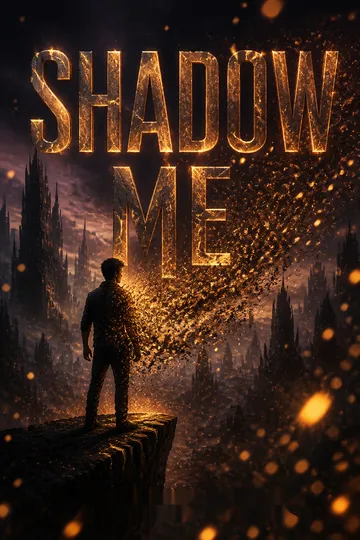




About the Author
Other books by Tahereh Mafi










Download PDF
Download EPUB
.epub digital book format is ideal for reading ebooks on phones, tablets, and e-readers.








