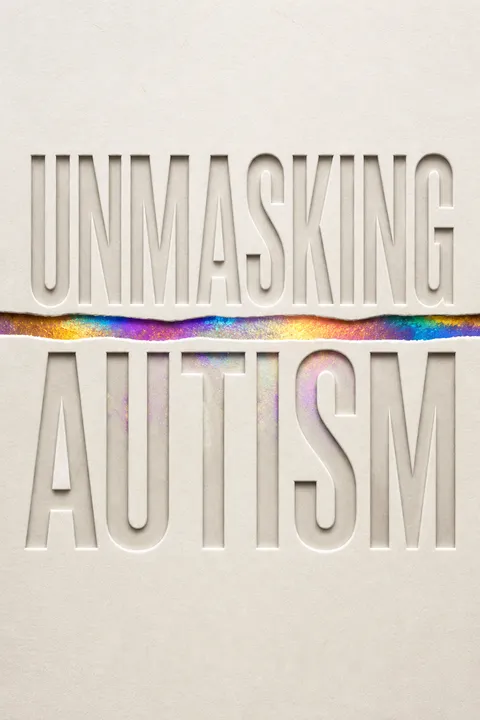


Key Takeaways
Treat the mask as an adaptation to exclusion, not proof you're fine
A hidden adaptation. Price opens with years of isolation, overwork, and distress that he could not explain. He sees himself differently after a cousin describes autistic experiences that echo his own. Connecting with autistic people then gives him a new way to understand traits he had spent years hiding, from sensory overwhelm to intense interests and difficulty speaking under stress.
What the term means. Masked Autism describes autistic experiences that do not match the familiar diagnostic or media stereotype, as well as people whose needs go unrecognized because of gender, race, class, age, or limited access to care. Masking is often learned under pressure, not chosen as a deceptive performance. It can help someone get through an unsafe or rejecting environment, while obscuring how much support they need.
What's striking is the shift from asking what is wrong with a person to asking what their environment has demanded of them. That distinction resembles the difference between blaming an individual for struggling and examining the conditions that make ordinary participation costly. The framing also avoids treating every hidden difficulty as evidence of autism: recognition can prompt useful questions, but it is not a substitute for careful assessment. Most importantly, unmasking is not a moral test. A person may need concealment for safety, income, or housing, and that constraint deserves respect rather than advice to simply be more authentic.
The old autism template favors boys, leaving women and people of color unseen
A narrow prototype. The book argues that autism was long described and assessed through the experiences of white, relatively affluent boys. Girls were often expected to be agreeable, while Black and brown children could have similar behavior interpreted as defiance or threat. In the data Price cites, diagnosed boys outnumbered girls by about four to one. Crystal showed recognizable autistic traits as a child, yet adults praised her quietness instead of investigating her distress. Bobbi's gender nonconformity also helped adults dismiss their difficulties as mere oddness.
Recognition has limits. The label of female Autism can call attention to overlooked people, but it risks turning social bias into a supposed biological subtype. Formal adult assessments can be costly, use tools designed for children, and miss people who have learned to camouflage. A diagnosis may help secure accommodations, but self-understanding and community need not wait for paperwork.
Diagnostic systems do not merely detect categories; they help define which lives become legible to institutions. When assessment relies on a narrow prototype, quiet distress can disappear while behavior that inconveniences adults receives attention. The corrective is not a new checklist for women or people of color, which can reproduce the same sorting error. It is broader assessment that takes a person's history, context, and support needs seriously. Diagnostic humility matters, too: similar outward traits can have different causes, and a useful label should clarify needs rather than become a gate that decides who deserves help.
Name what your mask hides before deciding whether to remove it
Two survival strategies. Price distinguishes camouflaging, which conceals autistic traits, from compensation, which uses workarounds to manage challenges while appearing capable. Someone may suppress a stim to avoid mockery, then study a friend's interests before meeting to make conversation easier. These strategies can shape much more than social behavior: they influence clothing, work, routines, and the parts of life a person abandons to conserve energy.
Masks often overcorrect. A child criticized as cold may become an intense people-pleaser; someone shamed for seeming childish may perform toughness and independence. Crystal acted uninterested in school subjects she found confusing rather than risk asking questions that others treated as obvious. Reflecting on the mask means asking what it protects against, what it costs, and whether another route to safety or support exists.
This distinction makes the concept practical: concealment and workaround are not identical, even when they appear together. A useful inventory can identify which behaviors are protective, which are exhausting, and which are simply effective tools a person wants to keep. That last point matters. Not every script or coping method needs to be discarded in the name of authenticity. The relevant question is whether it serves the person's own goals or mainly reassures an audience that expects effortless conformity.
A polished life can conceal burnout, addiction, and unmet support needs
Performance has a price. Thomas used alcohol to reduce sensory distress and feel more at ease in social settings. He could sustain a demanding job for a time, yet his life was unraveling behind the appearance of competence. After recognizing his needs, he changed his work environment, used noise-reducing headphones, and built in breaks. The book also connects long-term masking with anxiety, depression, eating-disordered behavior, isolation, and autistic burnout, a state of deep exhaustion that can reduce skills and tolerance for stress.
Look beneath the coping. A behavior that causes harm may also be meeting a real need. Alcohol can blunt sensory overload; rigid routines can make an unpredictable day manageable; pleasing others can reduce immediate conflict. Price cites a survey in which 46 percent of autistic adults who had received ABA as children reported PTSD. The point is not that every coping strategy has one cause, but that support should address the pressures beneath it.
A behavior can be harmful and functional at the same time. That is a more useful starting point for care than treating coping as a character flaw or demanding its removal without replacement. The account of Thomas makes environmental change part of recovery, not a reward after recovery. At the same time, associations between autism, trauma, and addiction do not establish one universal pathway. Individual histories differ, and medical or mental-health support may be essential. Respectful care should investigate both the immediate relief a behavior provides and its longer-term damage.
Reclaim the traits shame taught you to hide
Change the point of view. Price invites readers to reconsider labels such as stubborn, childish, or overly sensitive. The same qualities can look like persistence, curiosity, joy, or close attention, depending on whose comfort is being prioritized. Bobbi describes sensitivity as a capacity to notice emotional danger that other people may prefer to ignore. Trevor, who had hidden his hand-flapping for years, eventually shared his autism with friends and found they accepted a behavior he had treated as embarrassing.
No forced silver lining. Some autistic experiences, including painful sensory overload and physical illness, remain genuinely difficult. Reframing is not a demand to call every hardship a gift. It is a way to separate a trait's value from the irritation it may cause others, and to challenge self-stigma, the internal adoption of society's negative beliefs about a marginalized group.
Reframing can loosen shame because it reveals that social judgments are not neutral descriptions. A behavior called disruptive may be a useful form of regulation; a refusal may protect a boundary. This is a powerful correction to deficit-only thinking. It also needs a boundary of its own: a strengths-based account should not romanticize disability or imply that pain becomes acceptable once renamed a superpower. Respect includes recognizing a person's abilities and pleasures while taking limitations, assistance, and access needs just as seriously.
Let joy and vivid memories expose the values your mask buried
Use aliveness as evidence. The Values-Based Integration Process begins by recalling five moments when life felt especially vivid or fulfilling. The person identifies words that explain why those moments mattered, then looks for recurring themes that may express core values. Those values can be compared with the demands shaping everyday choices. The exercise is not about finding a grand purpose; it is a way to notice what repeatedly draws a person toward connection, creativity, courage, or another personally meaningful quality.
Passion can restore energy. Clara hid her deep interest in singer Pete Burns when she went to college, hoping to seem more ordinary. She became depressed and isolated. Returning to the records, posters, and online friendships she loved helped her feel engaged again. Price argues that autistic interests can provide pleasure, identity, and routes into friendship, even when they produce no conventional achievement or income.
The exercise treats autobiographical memory as a source of evidence about preference, which can be useful when a person has spent years prioritizing others' expectations. Its strength is its specificity: values emerge from meaningful episodes rather than from abstract virtues chosen to sound admirable. Still, memory is selective, and a powerful moment does not automatically dictate a sustainable life plan. Recurring themes are best used as hypotheses to test against present needs, resources, and responsibilities, not as a new set of rules to perform.
Design daily life around actual capacity, not neurotypical ideals
Build for the life lived. Divergent design means arranging environments around how a person actually functions, rather than an idealized picture of how an adult should behave. Marta Rose suggests putting hooks beside the bed if that makes clothes easier to manage, instead of repeatedly failing to use a distant hamper. Rory makes chores more manageable with a task-specific apron, headphones, and mirrors that help them stay on track. These are accommodations, not evidence of laziness.
Time can have cycles. Price describes spiral time as a way to understand effort through recurring periods of focus and recovery rather than a fixed, factory-style schedule. Sue works flexibly, completing tasks in concentrated bursts and resting or exercising at other times. The aim is not to imitate either person, but to treat actual energy, sensory needs, and task difficulty as useful information when shaping a home or workday.
This approach connects naturally to design principles that reduce friction at the point where a task happens. A nearby hook can outperform a more elegant system because it fits the user's real sequence of actions. Flexible schedules make a similar point at a larger scale: equal hours do not guarantee equal output or wellbeing. Yet personal redesign cannot substitute for resources that someone cannot afford, such as a quieter home or flexible employment. Good adaptation pairs individual tools with institutional willingness to accommodate difference.
Build relationships where directness and accommodations count as care
Choose safer connection. Price describes Samuel Dylan Finch's idea of strawberry people: friends whose warmth and reliability make it safer to show an unmasked self. Finch marked these people in his contacts and made a deliberate effort to prioritize them rather than repeatedly investing in unstable relationships. Supportive people can also help with self-advocacy, sensory needs, and the aftermath of misunderstandings.
Disclose with a purpose. When activist James Finn said he was autistic and asked a colleague to explain plans more clearly, the request initially met suspicion. Other people in the meeting vouched for his intent, and the tension eased. Workplace disclosure is not reliably beneficial: a study cited by Price found that 45 percent of respondents reported no benefit, while 40.4 percent described a positive result. Consider what response or accommodation is wanted, and whether the person or setting is safe enough to ask.
The emphasis on reliable friends counters the idea that social competence means pleasing everyone equally. Relationships become more authentic when needs and boundaries are spoken plainly, and when the other person can respond with curiosity rather than punishment. Disclosure, however, involves unequal risks. Race, gender, job security, and prior knowledge of autism can shape the response, so privacy can be a sensible choice, not a failure of pride. Reciprocity matters as well: accessible communication asks autistic people to be clear, while asking others to make room for different communication styles.
Make workplaces and public spaces adapt instead of demanding endless camouflage
Disability is shaped by design. The social model of disability locates much disability in the barriers built into society, not solely in an individual's body or mind. A noisy, brightly lit venue with unclear instructions can exclude autistic people; so can a workplace that requires constant social performance. Price argues for sensory-aware public spaces, clearer workplace expectations, flexible schedules, stronger legal protections, and better education for clinicians and teachers.
Safety is political. The ability to unmask is not evenly distributed. A person with secure work and social power may be able to stim openly, while a Black autistic person or a visibly gender-nonconforming person may face harassment or violence. The book also supports wider access to health care and material security, and alternatives to police responses in mental-health crises. Personal courage alone cannot remove these structural risks.
The strongest implication is that authenticity cannot be treated as a private self-improvement project when institutions reward concealment and punish visible difference. Accessibility changes the conditions under which people can participate, and often helps people beyond the group it was designed for. This structural argument also prevents a common mistake: praising individual resilience while leaving preventable barriers in place. There is no single policy that resolves every conflict of access or safety, but measurable accommodations and shared responsibility are more credible than simply asking marginalized people to be seen.
Analysis
The book's central move is to reinterpret apparent social failure as a relationship between neurotype and environment. Price's personal story supplies the emotional arc: isolation gives way to recognition, community, and a less fragmented sense of self. The interviews widen that arc, showing how autism can be hidden by gender expectations, racism, poverty, trauma, or the appearance of competence. The practical chapters then move from recognition to daily design, relationships, and institutional change.
Its most useful distinction is between the autistic person's experience and the outside observer's judgment of that experience. A person who seems capable may be spending enormous effort to appear so; a behavior called immature or disruptive may be regulating distress. That shift changes what counts as evidence of need. Rather than asking only whether someone can perform a task, it asks what the performance costs, what support makes it possible, and whose standards define success.
The argument is strongest when it links personal coping to material conditions. Noise, inflexible schedules, inaccessible assessment, and fear of discrimination are not solved by self-esteem alone. At the same time, the book's affirming account of autism should not be mistaken for a claim that every autistic trait is beneficial or that social barriers explain every difficulty. The source itself acknowledges pain, co-occurring conditions, and varied support needs. Its descriptions of brain processing are best read as broad interpretive models, not individualized explanations or diagnostic tests.
Unmasking is therefore less a demand to reveal everything than a process of increasing choice. A person can keep useful strategies, disclose selectively, and seek help without proving that difference is beautiful. The adaptation's lasting lesson is that self-knowledge becomes actionable when joined to safe relationships and environments that do not require constant performance. Personal acceptance matters, but justice determines how widely that acceptance can be lived.
Review Summary
Unmasking Autism receives mixed reviews, with some praising its insightful exploration of autism and masking, while others criticize its focus on gender identity and lack of scientific rigor. Readers appreciate the diverse perspectives and practical exercises but note the book's repetitiveness and narrow focus on specific subgroups. Some find it validating and informative, while others argue it oversimplifies autism and makes broad generalizations. The book's stance on self-diagnosis and its approach to unmasking are controversial topics among reviewers.
People Also Read




Glossary
Masked Autism
Autism obscured by expectationsPrice uses this term for autistic presentations that do not match the familiar clinical or cultural stereotype, and for people whose needs have been ignored because of factors such as gender, race, class, age, or limited access to assessment. Masking may be learned to avoid rejection or harm, and can hide substantial distress behind an apparently capable exterior.
Camouflaging
Hiding autistic traitsA masking strategy aimed at concealing autistic traits so a person is less likely to be recognized as disabled or treated differently. Examples include suppressing stims, hiding sensory distress, or limiting discussion of an intense interest. Camouflaging may help someone navigate an unsafe or judgmental setting, but can demand substantial effort and obscure support needs.
Compensation
Workarounds for difficult tasksA masking strategy that uses specific tools or learned methods to manage challenges while maintaining the appearance of independent functioning. Examples include rehearsing conversations, researching a venue before visiting, or using subtle aids for sensory needs. Compensation can be genuinely useful, though pressure to conceal the effort behind it may add stress.
Bottom-up processing
Building meaning from detailsPrice's broad description of an autistic style of processing that attends closely to individual details rather than quickly relying on an overall impression. In the book, this helps explain why sensory information or social situations may require deliberate analysis and extra effort. It is presented as a useful model, not a fixed description of every autistic person.
Autistic burnout
Exhaustion with reduced capacityA state of chronic exhaustion associated with prolonged demands that exceed an autistic person's available resources. Price describes it as involving reduced tolerance for stress and a decline in skills or ability to manage daily tasks. It may follow sustained masking, sensory strain, or complex responsibilities, and can be mistaken by others for laziness or depression.
Neurodiversity
Variation in human mindsThe book uses neurodiversity to frame differences in thinking, feeling, and behavior as part of human variation rather than automatically as defects. The movement draws attention to how stigma and inaccessible systems can intensify disability. It includes autistic people and other groups whose traits or diagnoses have been treated as abnormal or unacceptable.
Divergent design
Spaces fitted to real needsAn approach associated with educator Marta Rose that shapes physical environments around a person's actual routines, sensory needs, and abilities. Rather than designing for an idealized lifestyle, it adapts the space to make daily activities more workable. Changes can include moving storage closer, reducing distracting clutter, or adding tools for sensory regulation.
Spiral time
Cyclical effort and recoveryA way of thinking about time that allows for recurring periods of intense focus, rest, changing interests, and renewed effort. It contrasts with a rigid schedule that treats productivity as a steady, linear march toward a fixed goal. The idea encourages a longer view of progress and treats pauses or abandoned projects as informative rather than automatically wasteful.
Radical visibility
Open, unapologetic self-presentationA disability and queer liberation approach associated with designer Sky Cubacub. It challenges pressure to hide visible differences, access tools, or marginalized identities in order to blend in. Applied to autism, it can mean expressing needs openly, using visible sensory aids, or presenting oneself in ways that reject compulsory conformity, when doing so is safe.
Values-Based Integration Process
Memories reveal guiding valuesA reflective process developed by Heather R. Morgan and presented in the book. A person recalls meaningful moments, identifies the qualities that made them feel alive, and looks for recurring themes that can be named as values. Those values can then be compared with everyday choices to help shape a life that better reflects personal priorities.
Fawning
Placating to avoid threatA stress response in which a person tries to reduce danger or rejection by pleasing, helping, or mirroring someone who feels threatening. Price applies the term to autistic people who reflexively hide their own needs and manage other people's reactions. Fawning may prevent immediate conflict, but it can make boundaries and mutual connection difficult.
Autistic inertia
Difficulty starting or shifting tasksA difficulty initiating an activity, stopping one task, or moving into another, even when the person wants to act. Price connects it with executive-function demands such as planning, sequencing, and shifting attention. To an observer it may look like indifference, but the person may be stuck rather than choosing not to participate.
Social model of disability
Barriers create disabilityA framework that understands disability as arising partly from social arrangements that exclude people, rather than solely from an individual's body or mind. For example, a public event without sensory accommodations can disable participation for some autistic people. The framework does not deny impairment; it asks how changing environments and expectations can reduce avoidable barriers.
Strawberry people
Reliable, affirming relationshipsSamuel Dylan Finch's name for people who consistently offer warmth, care, and emotional safety. Price describes marking these friends in a contact list as a reminder to prioritize them. The idea is especially useful for people who default to pursuing unstable approval or who find it difficult to distinguish dependable affection from conditional acceptance.
FAQ
What's Unmasking Autism about?
- Exploration of Autism Spectrum: Unmasking Autism by Devon Price explores the complexities of Autism, focusing on the experiences of masked Autistics who hide their true selves to fit into neurotypical society.
- Personal Journey: The author shares their own late-life Autism diagnosis, highlighting struggles and societal pressures that lead to masking.
- Advocacy for Acceptance: The book advocates for a broader understanding of neurodiversity, encouraging readers to embrace their unique traits and challenge societal norms.
Why should I read Unmasking Autism?
- Insightful Perspectives: It offers valuable insights into the experiences of Autistic individuals, especially those overlooked or misdiagnosed due to societal biases.
- Empowerment and Self-Acceptance: The book provides tools and strategies for self-acceptance and unmasking, emphasizing the importance of living authentically.
- Cultural Relevance: With growing awareness of neurodiversity, this book is timely and relevant for understanding Autism beyond stereotypes.
What are the key takeaways of Unmasking Autism?
- Understanding Masked Autism: Introduces the concept of "masked Autism," where individuals camouflage traits to avoid stigma.
- The Cost of Masking: Discusses the emotional toll of masking, including anxiety, depression, and burnout, as a survival strategy.
- Community and Connection: Highlights the importance of finding community among Autistic individuals for self-acceptance and belonging.
What is "masked Autism" as defined in Unmasking Autism?
- Definition of Masked Autism: Refers to Autistic individuals who hide their traits to conform to societal expectations.
- Social Exclusion Factors: Factors like gender, race, and socioeconomic status contribute to the masking phenomenon.
- Consequences of Masking: Leads to mental health challenges, including depression and anxiety, due to maintaining an inauthentic façade.
How does Unmasking Autism redefine common stereotypes about Autism?
- Challenging Stereotypes: Argues that stereotypes, like lacking empathy, are overly simplistic and don't reflect the diversity within the Autistic community.
- Highlighting Strengths: Reframes traits viewed negatively, such as sensitivity, as valuable qualities.
- Cultural Context: Emphasizes that societal expectations shape Autism perceptions, crucial for fostering acceptance.
What are some strategies for unmasking mentioned in Unmasking Autism?
- Self-Reflection Exercises: Includes exercises like the "Values-Based Integration Process" to help readers reconnect with their true selves.
- Celebrating Special Interests: Emphasizes embracing special interests as a source of joy and identity.
- Building Community: Advocates for seeking supportive communities, like Autistic self-advocacy groups, to share experiences.
What are the psychological effects of masking discussed in Unmasking Autism?
- Increased Anxiety and Depression: Masking leads to heightened anxiety and depression due to pressure to conform.
- Emotional Exhaustion: The effort to mask one's true self results in emotional burnout and disconnection from identity.
- Self-Stigma: Many masked Autistics internalize negative stereotypes, leading to feelings of shame and inadequacy.
How does Unmasking Autism address the topic of self-advocacy?
- Empowerment Through Self-Advocacy: Emphasizes the importance of self-advocacy for Autistic individuals to foster a sense of agency.
- Practical Strategies: Provides advice on advocating for oneself, including clear communication of needs and boundaries.
- Building Supportive Networks: Highlights the value of connecting with other Autistic individuals and allies to strengthen advocacy efforts.
What is the significance of "radical visibility" in Unmasking Autism?
- Definition of Radical Visibility: Embracing and openly expressing one's Autistic identity without shame.
- Empowerment Through Expression: Discusses how radical visibility empowers individuals to take pride in their identity.
- Creating Inclusive Spaces: Advocates for environments that celebrate neurodiversity and accommodate different needs.
How does Unmasking Autism suggest building an Autistic life?
- Identifying Strengths and Values: Encourages reflection on strengths and values to build a fulfilling life.
- Divergent Design: Introduces creating environments that cater to Autistic sensory needs.
- Flexibility and Adaptation: Emphasizes the importance of flexible routines and environments aligned with individual needs.
What are some personal stories shared in Unmasking Autism?
- Crystal's Journey: A masked Autistic woman diagnosed in her late twenties, illustrating challenges faced by undiagnosed individuals.
- Timotheus's Experience: Discusses masking sensitivity and interests, highlighting the intersection of race and disability.
- Dorian's Struggles: Shares their journey with eating disorders and societal pressures, showcasing Autism's complex relationship with mental health.
What are the best quotes from Unmasking Autism and what do they mean?
- "Masking is an exhausting performance...": Highlights the toll of masking, emphasizing the need for acceptance.
- "Refusing to perform neurotypicality...": Stresses authenticity and self-acceptance as resistance against marginalization.
- "Being Autistic is a source of uniqueness...": Celebrates Autism as a valuable aspect of identity, not something to hide.
About the Author
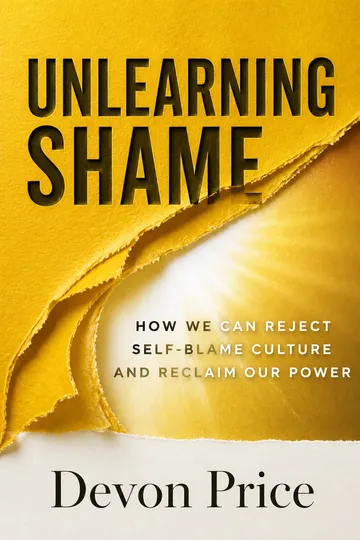
Other books by Devon Price

Download PDF
Download EPUB
.epub digital book format is ideal for reading ebooks on phones, tablets, and e-readers.








