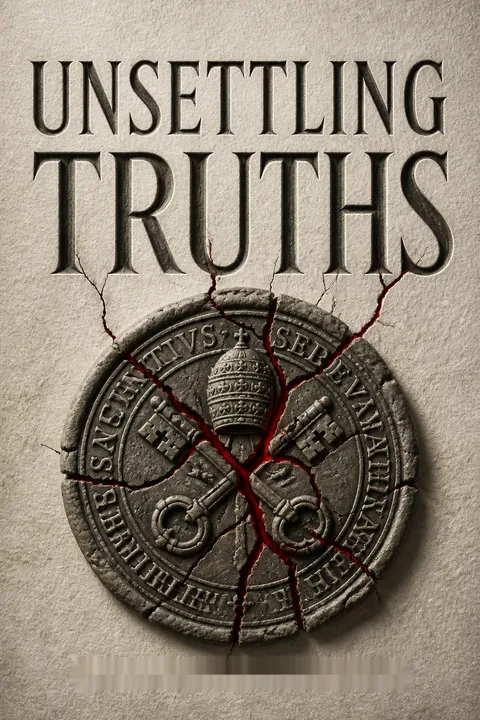


Key Takeaways
Name conquest accurately: inhabited homelands cannot be discovered by their invaders.
A word that erases people. Mark Charles recalls interrupting a Columbus Day ceremony in Washington, DC, to challenge the description of Columbus as America’s discoverer. Native people already lived on the land; calling arrival “discovery” turns invasion into a heroic beginning and renders its inhabitants nearly invisible. The authors trace this language to the Doctrine of Discovery, a set of legal and theological principles used by European powers to claim non-Christian lands and subjugate their residents.
Church authority backed empire. Papal decrees in 1452 and 1454 authorized Portuguese expansion and enslavement of non-Christians. In 1493, another decree supported Spain’s claims in the Americas. The authors argue these were not merely religious justifications added after conquest: they helped make domination appear lawful, benevolent, and even spiritually meritorious.
What's striking is how a seemingly descriptive word can settle a moral argument before it begins. Naming a place as “discovered” implies that its prior inhabitants do not count as political or historical actors. This resembles the way bureaucratic language can make dispossession sound administrative rather than violent. The framing is powerful, though “Doctrine of Discovery” covers a changing set of European policies and legal ideas, not one uniform rule applied identically everywhere. Keeping that complexity visible strengthens, rather than weakens, the central point: labels can conceal whose interests a legal order serves.
Trace present-day injustice to the stories that make unequal systems feel normal.
Stories become structures. Drawing on sociologists Peter Berger and Thomas Luckmann, the book describes a cycle: people create institutions through their actions, institutions take on a life beyond their founders, and later generations absorb their assumptions as common sense. Narratives help this happen by giving systems a story about who belongs, who deserves authority, and what counts as progress.
The mission field example. On a Navajo reservation, a church member told Charles that missionary work was for college graduates, not for people like her. The authors see this as an inherited hierarchy: missionaries lead, Native Christians receive. The original assumption may have been voiced by individuals, but its institutional repetition taught people to see it as natural. Changing individual attitudes matters, but it cannot alone undo an institution that keeps reproducing the same roles.
This account connects well with path dependence, the idea that early decisions constrain later choices even after their original rationale fades. An institution can preserve an old hierarchy without anyone consciously endorsing its history. That insight helps explain why good intentions are not a sufficient test of justice: procedures, leadership patterns, and whose knowledge is trusted also matter. At the same time, systems are not actors with a single mind. Naming institutional influence should clarify responsibility, not dissolve it among everyone and no one.
Measure Christian greatness by relationship and service, not control of territory.
A different model of power. The authors contrast Jesus’ kingdom with empire. In their reading of the Gospels, Jesus refuses political domination, rejects his followers’ attempts to punish outsiders, and defines greatness through welcoming vulnerable people. His ministry points toward restored relationships, not a Christian state secured by military power.
When church and empire fused. The book identifies Emperor Constantine’s rise in the fourth century as a turning point. Bishop Eusebius praised Constantine’s military victory in religious terms, helping present imperial power as God’s work. Later, Augustine and Aquinas developed theological arguments that could permit state violence to defend Christian order. The authors argue that this shift changed the church’s posture from a community prepared to suffer under empire into one that could bless empire’s coercion.
The distinction between influence and domination is useful well beyond theology. A group may pursue public good while still asking whether it seeks persuasion, mutual service, or control over others. The authors’ account also highlights a recurring institutional temptation: protection from persecution can come at the cost of dependence on the powerful. Yet the history of Christian political thought is broader than a single trajectory, and traditions of resistance and public service also exist. The critique is strongest when it identifies specific alliances and consequences rather than treating every public Christian action as imperial.
Question national exceptionalism when it turns dispossession into a providential success story.
A promised land narrative. In 1630, Puritan leader John Winthrop described the Massachusetts colony as a model community whose success would display divine favor. The authors show how settlers recast biblical language about Israel’s land as a claim to North America, despite Native communities already living there. A story of special destiny could make territorial expansion seem sacred rather than contested.
Founding ideals had boundaries. The Declaration of Independence calls men equal while also portraying Native people as savage enemies. The original Constitution excluded Native people from population counts and counted enslaved people as three-fifths for representation. The authors argue that universal language coexisted with a narrow definition of who was entitled to rights. National pride can preserve that contradiction by celebrating the ideals while ignoring the people excluded from them.
National stories do more than describe a country; they shape what citizens notice and what they dismiss. Political psychology suggests that people often defend a group identity by interpreting damaging evidence as an exception rather than revising the larger story. The book’s comparison between Puritan theology and national exceptionalism makes this mechanism tangible. Still, founding documents can contain principles later used to challenge their exclusions. A careful account should hold both facts together: the documents’ original limits and the later struggles that expanded their meaning.
Treat land rights as present law, not a closed chapter of colonial history.
A doctrine made enforceable. In 1823, the Supreme Court’s Johnson v. M’Intosh decision used the Doctrine of Discovery to hold that European powers, and then the United States, had superior authority over Native land claims. Native nations were left with a right of occupancy, while the state claimed the power to extinguish that interest. The case converted an imperial premise into a foundation of US property law.
The precedent persisted. The book traces the doctrine through later court decisions, including the 2005 City of Sherrill case involving the Oneida Indian Nation. The court recognized that generations of private development complicated restoring tribal governance over land. For the authors, this reveals how law can preserve the effects of dispossession long after the initial seizure, while treating the passage of time as a reason not to repair it.
The legal issue is a classic conflict between reliance on settled property arrangements and the claims of people excluded from the original settlement. Courts often prize predictability, but a rule can appear neutral while carrying forward an unequal starting point. This is why historical analysis matters to contemporary law: it exposes the assumptions beneath doctrines that otherwise look technical. The argument should not imply that every land claim has a simple remedy. It does show why “the past is past” is not an adequate legal or ethical response when current rights still rest on past exclusions.
Read national heroes alongside the people their victories displaced and killed.
The Lincoln story has another side. Charles and Rah challenge the familiar image of Abraham Lincoln as a straightforward savior of equality. They point to his public statements opposing racial equality and his pragmatic approach to emancipation, which prioritized preserving the Union. They also document policies enacted during his presidency: the execution of 38 Dakota men in 1862, the removal of Dakota and Winnebago people from Minnesota, and the forced Long Walk of Navajo people to Bosque Redondo, where more than 2,300 died.
Victory shapes memory. The authors argue that a nation that wins its wars can celebrate its own conduct while avoiding the judgment imposed on defeated powers. Their comparison between Robert McNamara’s wartime record and the prosecution of an Auschwitz functionary illustrates the uneven public accounting of violence. The comparison is deliberately provocative, and the book asks readers to examine who receives honor and who is condemned.
The strongest historical correction does not require replacing a flawless hero with a flawless villain. It requires separating a person’s achievements from the harms their policies enabled, then asking why public memory has emphasized one side. The book’s evidence about Native removal makes the usual portrait of Lincoln incomplete. Its analogy between US and Nazi actions, however, risks flattening different political contexts, intentions, and legal histories. Comparison can reveal selective moral standards, but it should not imply that distinct events are interchangeable.
Endure the work of changing systems, not only the names attached to them.
The story can outlive its machinery. The authors argue that the end of chattel slavery did not end white supremacy. They trace new expressions through Jim Crow, mass incarceration, and policies of forced assimilation. For Native people, the boarding-school system pursued cultural erasure by separating children from families and punishing Indigenous language and practice. The book presents these institutions as different forms through which an older hierarchy could continue.
Assimilation was framed as rescue. In 1892, Carlisle Indian School founder Richard Pratt defended educating Native children away from their communities as a way to make them fit white society. The authors show how the language of benevolence concealed coercion: the dominant culture defined what counted as civilization, then treated enforced conformity as help. Their warning is practical: abolishing one unjust institution does not automatically change the assumptions that can generate another.
This is a strong account of institutional substitution: when a system is challenged, a new arrangement can preserve some of its functions under a different name. Comparative policy research often finds that formal reform and lived outcomes diverge when incentives and decision-making power remain unchanged. The authors’ focus on assimilation also widens the definition of harm beyond physical violence to include language, kinship, and cultural continuity. Care is needed not to treat every later institution as identical to slavery or boarding schools. The useful question is what specific power relations persist, and for whom.
Recognize historical trauma without reducing whole communities to a diagnosis.
Trauma can outlast its first witnesses. The book distinguishes individual post-traumatic stress from historical trauma, a concept used to describe cumulative psychological and emotional harm affecting a community across generations. Charles recounts the death of his brother in a car accident and his delayed grief, then connects that experience to how unresolved trauma can remain difficult to name.
Communal history matters. The authors describe Native communities carrying the effects of forced removal, massacres, and boarding schools. They also raise the possibility that white Americans may experience trauma connected to participation in or inheritance of violent systems, drawing on the term perpetration-induced traumatic stress. This proposal is meant to broaden dialogue, not equate perpetrators’ experience with victims’ losses. The book argues that individual counseling alone cannot address harms embedded in communities and institutions.
The concept of intergenerational trauma helps explain why historical events remain socially present, especially when families and institutions transmit fear, silence, or disrupted attachment. The book is right to resist the idea that time by itself heals collective injury. Its proposed account of trauma among beneficiaries or perpetrators is more exploratory than established clinical consensus, and it should be treated as a question rather than a settled diagnosis. A careful use of trauma language can invite accountability and care; careless use can blur unequal responsibility or portray diverse communities as psychologically uniform.
Practice lament as public truth-telling, not as a substitute for repair.
Lament interrupts triumphalism. In the book, lament is a spiritual practice of naming harm honestly before God. It counters a national or religious story that treats success as proof of righteousness. Charles’s discipline of watching the sunrise offers a quieter image: seasons continue beyond human control, reminding people that they are participants in creation, not its owners.
Confession must change conduct. The authors describe a US apology to Native people buried in a 2009 defense appropriations bill. It named no specific tribe or treaty and included a disclaimer that limited legal consequences. In 2012, Charles and others read it publicly at the Capitol, then declined to treat the gesture as sufficient. The book argues that repentance requires changes in relationships and systems, not merely public expressions of regret.
Lament has a civic function as well as a religious one: it creates space to acknowledge loss without immediately converting it into a story of progress. Transitional-justice processes similarly rely on public testimony, records, and institutional responsibility to make denial harder. But lament is not a policy instrument by itself. Without specific commitments, affected communities can be asked to perform grief while institutions retain the benefits of the status quo. The authors’ distinction between sorrow and changed behavior is therefore essential, though the form of repair must be worked out with the communities concerned.
Build conciliation from shared memory, Indigenous agency, and concrete accountability.
Reconciliation can assume too much. The authors prefer “conciliation” because reconciliation may imply that a just relationship once existed and only needs restoration. Conciliation begins with the truth that relationships were broken and that unequal power remains. It requires listening to Native peoples as political communities, not merely as recipients of apologies or charitable action.
Change who is treated as host. Charles compares Indigenous people to a grandmother whose home has been occupied by guests who rarely acknowledge her presence. The metaphor asks settlers to recognize Native peoples as hosts and to begin with gratitude, not entitlement. The book’s closing argument is that truth-telling, shared memory, lament, and material accountability must accompany one another. Without Indigenous participation in decisions about land and repair, national dialogue risks repeating the old pattern of others deciding what justice should mean.
The shift from reconciliation to conciliation usefully questions whether harmony is the right first goal when the underlying terms of a relationship remain unequal. In restorative practice, repair is more credible when harmed parties help define the process and can refuse an inadequate settlement. The host metaphor also changes the imagined roles in a concrete way. Still, gratitude cannot stand in for land return, treaty enforcement, or other remedies. A shared national memory is a beginning, not proof that accountability has been achieved.
Analysis
Unsettling Truths is a historical and theological argument built around a specific claim: the Doctrine of Discovery did not vanish with European colonialism. It helped establish a story of Christian and European superiority, that story entered law and national identity, and its effects continue through institutions that shape land, belonging, and public memory. The book’s most useful move is to treat narrative as infrastructure. It asks readers not only what happened, but how a society learned to describe dispossession as discovery, coercion as civilization, and dominance as divine purpose.
The book’s form reinforces that argument. Charles’s Diné identity and family history provide the narrative center, while Rah’s theological and sociological analysis supplies broader interpretive frames. The sequence moves from papal decrees to US law, from national myths to specific violence, and then toward trauma, lament, and conciliation. Personal stories make abstractions legible: the Columbus ceremony exposes the violence inside a familiar label; the boarding-school account shows how hierarchy enters the self-understanding of a community; the buried apology illustrates how public regret can avoid public responsibility.
Its strongest contribution is connecting past legal logic with present institutional questions. Johnson v. M’Intosh is not treated as a museum artifact, but as an example of how law can preserve the advantage created by conquest. The book also insists that repair requires affected communities to have agency, not merely a place in someone else’s reconciliation ceremony.
The argument is intentionally confrontational, and some claims need careful handling. “Doctrine of Discovery” gathers diverse documents and practices into a continuous account, so the historical links should be tested case by case. The treatment of Lincoln and comparisons between US and Nazi violence are provocative but risk collapsing important differences if taken as equivalences. The proposed trauma framework for white Americans is explicitly exploratory and should not be mistaken for a uniform clinical diagnosis. These limits do not undo the book’s central challenge. They point toward a more rigorous response: confront the evidence, distinguish unlike events, and do not let complexity become an excuse for preserving an unjust inheritance.
Review Summary
Unsettling Truths receives mostly positive reviews for its critical examination of American history through a Native American lens. Readers appreciate the book's exploration of the Doctrine of Discovery and its impact on Indigenous peoples. Many find it thought-provoking and challenging, praising its unique perspective on white trauma. Some critics argue the book oversimplifies historical events and lacks nuance. Overall, reviewers consider it an important, albeit uncomfortable, read that encourages reflection on America's past and present racial issues.
People Also Read




Glossary
Doctrine of Discovery
Colonial claims over inhabited landsA set of theological, political, and legal principles used by European powers to claim authority over lands inhabited by non-Christian peoples. The book traces its development through fifteenth-century papal decrees and its later use in US law. It argues that the doctrine denied Indigenous peoples equal authority over their lands and helped justify conquest, enslavement, and dispossession.
Christendom
Church joined to empireThe fusion of Christian identity with the authority and interests of an earthly political empire. In the book’s account, Constantine’s rise helped shift the church from a vulnerable community under imperial rule toward a faith aligned with imperial power. The authors use Christendom to describe a political theology that can sanctify state dominance, conquest, and coercion.
social imagination
Shared sense of social realityThe shared assumptions through which a society understands what is real, who belongs, how the past unfolded, and what futures seem possible. The book argues that social imagination shapes institutions and individual expectations. It can make unequal arrangements appear natural, but it can also be challenged by stories and practices that reveal alternative ways of organizing society.
mediating narratives
Stories that sustain systemsStories that connect a society’s broad assumptions to the everyday operation and apparent legitimacy of its institutions. In the book, narratives such as white supremacy and American exceptionalism help systems preserve their authority. When one institution is dismantled, a mediating narrative may help produce a replacement that continues some of the same hierarchy or exclusion.
historical trauma response
Community effects across generationsA term used for cumulative psychological and emotional effects of severe collective harm that may extend across generations. The book applies it to communities affected by events such as forced removal and boarding schools. It distinguishes this communal framework from an individual PTSD diagnosis, while emphasizing that the concept does not mean every member of a community responds identically.
perpetration-induced traumatic stress
Trauma from causing harmA term discussed in the book for PTSD-like symptoms that can follow participation in causing or enabling a horrifying event, rather than experiencing it only as a victim or rescuer. The authors use it to explore whether people implicated in historical violence may also carry psychological harm. They present its broader, intergenerational application as a possibility, not a settled diagnosis.
racial conciliation
Truth-based relationship repairThe authors’ preferred term for building more just relationships across racial groups after acknowledging that the prior relationship was not genuinely harmonious. Unlike reconciliation, which can suggest a return to an earlier unity, conciliation begins with truth-telling about injustice and requires accountability, shared memory, and participation by those harmed.
Download PDF
Download EPUB
.epub digital book format is ideal for reading ebooks on phones, tablets, and e-readers.








