

Key Takeaways
Let failure strip away borrowed ambitions and reveal the work you actually want.
A life redirected. At 21, Rowling wanted to write novels, while her parents, who had known poverty, hoped she would choose a secure career. She studied Modern Languages, then quietly switched to Classics. Years later, after a failed marriage, unemployment, and raising a child alone, she faced the failure she had feared. She does not present that period as fun or secretly wonderful. Poverty brought real hardship, and she could not see a happy ending while living through it.
A clearer priority. Failure removed the pressure to pretend she wanted a different life. She focused her energy on finishing the work that mattered to her. The setback did not create her ambition; it made the cost of ignoring it harder to deny.
What's powerful here is not the familiar claim that hardship makes people stronger. It is the narrower observation that a crisis can expose which ambitions are genuinely one's own. That distinction matters because adversity is neither necessary nor reliably ennobling. People can pursue meaningful work without first losing everything, and poverty should not be treated as a creative tool. The useful question is not whether suffering has a hidden gift, but what it clarifies, and whether that clarity can be reached with less damage.
Do not mistake a polished résumé for the whole shape of a life.
Success has limits. Rowling recalls that, at university, passing exams had become her main measure of achievement. She had a talent for examinations but spent much of her time writing stories instead of attending lectures. Looking back, she warns graduates that qualifications and career records are only parts of a life, even when older people treat them as the whole thing.
Control is partial. Her parents' desire for financial security came from their own experience of poverty, which she refuses to romanticize. But concern about security cannot settle every question of what makes a life worthwhile. A person can make plans and work hard, yet still face events beyond personal control. Humility about that uncertainty can make setbacks less like verdicts on one's worth.
The distinction between credentials and a life resembles a central insight in well-being research: external achievement and felt satisfaction are related, but they are not interchangeable. A résumé records visible outcomes, while omitting care, friendship, curiosity, and private costs. Still, the speech does not need to make achievement trivial. Education and stable work can provide real security, especially to people who have experienced deprivation. The sharper lesson is to treat credentials as useful instruments, not as a complete accounting of human value.
Risk failure rather than organize your life around avoiding it.
Avoidance has a price. Rowling argues that failing at something is part of attempting a full life. A person who avoids every possible defeat may avoid meaningful risks as well. Her own experience taught her that surviving a feared collapse gave her confidence she had never gained from exam results. She discovered persistence, discipline, and the loyalty of friends when circumstances tested all three.
Not a promise of rescue. The speech is careful not to claim that every failure leads to success. Rowling had no assurance, during her hardest period, that her circumstances would improve. The point is that failure can reveal capacities and relationships that success leaves untested. That knowledge can be valuable even when the setback itself remains painful and costly.
This is a compelling account of learning through adversity, but it is best read as testimony rather than a universal law. Psychological research on post-traumatic growth describes people who report new strengths after hardship, while also showing that growth is not guaranteed and does not erase distress. The practical value lies in reducing the terror of failure, not seeking it out. Rowling's account is especially persuasive because she refuses to sell suffering as an enjoyable shortcut to achievement.
Use imagination to enter lives you have never personally lived.
More than invention. Rowling describes imagination as the human ability to picture what does not yet exist, which supports invention and innovation. She also gives it a moral role: imagining another person's experience can help people understand lives unlike their own. This does not require having endured the same hardship. It requires being willing to consider what another person may be experiencing.
A firsthand education. Before becoming a novelist, she worked at Amnesty International, where she read accounts of political imprisonment, torture, disappearances, and executions. Listening to people whose circumstances were far from her own made injustice immediate rather than abstract. Imagination, in this sense, is not escape from reality. It is a way of perceiving realities that personal experience alone cannot reveal.
This account connects imaginative capacity to perspective-taking, a subject studied in moral psychology and literature alike. Stories can make distant lives cognitively vivid, helping readers notice what statistics alone may not convey. Yet imagining another person's experience is not the same as knowing it. The most responsible empathy stays curious, listens to testimony, and allows the person affected to correct the outsider's assumptions. Imagination opens the door to understanding; it does not confer expertise.
Turn empathy into organized help, not just private feeling.
Compassion becomes effective together. At Amnesty, Rowling saw people who had never been imprisoned or tortured work on behalf of people facing those dangers. She describes a network of ordinary supporters whose combined efforts could help free prisoners and save lives. The work made empathy tangible: it moved beyond feeling sorrow toward acting on behalf of people the helpers might never meet.
The human cost. One young man who had survived torture spoke to a camera about what had happened to him. Rowling escorted him afterward. In another incident, she heard a researcher tell a visitor that his mother had been seized and killed in retaliation for his political opposition. These experiences made clear that human suffering is not distant in its consequences, even when it happens far away.
The movement from concern to coordinated action is a crucial political insight. Individual compassion can be intense yet fleeting; organizations preserve attention, divide labor, and give people practical ways to help. This resembles the logic of collective action: shared systems can turn many modest efforts into influence that isolated individuals lack. But empathy alone cannot determine which intervention works. Effective solidarity also requires accurate information, accountability, and attention to what affected people say they need.
Treat education and influence as obligations to people without a platform.
Advantage carries reach. Speaking to Harvard graduates, Rowling connects their education and social position to their ability to affect lives beyond their immediate circles. She points especially to the influence of people in the United States: voting, protest, daily choices, and pressure on government can have consequences beyond national borders.
Use the access you have. Her challenge is to identify not only with powerful people but also with those who lack a voice in public life. That means using status and influence to make their circumstances harder to ignore. The claim is not that every graduate controls events, or that one person's actions guarantee change. It is that privilege increases both capacity to act and responsibility to consider who bears the consequences.
The speech treats privilege less as a personal stain than as a distribution of leverage. That framing can make responsibility actionable: people can ask where their votes, professional choices, or public attention have effects, rather than settling for guilt. It also avoids pretending that influence is evenly shared. At the same time, well-intended advocacy can become paternalistic if it speaks over the people it claims to support. Responsible use of power pairs amplification with listening and accountability.
Imagination can invent or manipulate; choose what it serves.
A power without a moral compass. The ability to picture other people's experiences can produce sympathy, but it can also be used to control or exploit them. Imagination itself does not decide whether a person acts well. A person may understand another's fears in order to help, or understand them in order to manipulate.
Refusal is also a choice. Rowling argues that people can avoid looking at suffering that does not touch them personally. That withdrawal may feel protective, but indifference can allow cruelty to continue unchallenged. Her point is not that everyone can solve every injustice. It is that choosing not to notice has consequences too, especially when people have the ability to respond.
This is a useful corrective to the idea that empathy is automatically virtuous. Perspective-taking can support care, but it can also make persuasion more effective, which is why motive and conduct matter. Moral philosophers distinguish understanding another person's mental state from caring about their welfare; the first does not guarantee the second. The speech's stronger claim is about responsibility: once suffering becomes visible, neutrality may help preserve the conditions that permit it.
Judge a good life by its relationships and substance, not its length.
Friendship outlasts ceremony. Rowling closes by wishing graduates the kind of friendships she formed at university. Those friends became trusted support through difficult times and close figures in her children's lives. Her jokes about shared embarrassing photographs soften the speech, but the underlying point is serious: affection and loyalty can matter long after a degree or public achievement has lost its shine.
Quality over tally. She asks graduates to resist treating life as a checklist of things acquired or milestones achieved. The ancient Roman writer Seneca offers her a final lens: a life matters more for its quality than for how long it lasts. The closing wish is not for an impressive record, but for a life with real connection and substance.
The ending gives the speech a human scale after its reflections on failure and political responsibility. Close relationships are not merely comforting extras; they are part of what makes achievement worth having and hardship survivable. This also counters the tendency to evaluate life through measurable milestones, which are easier to compare than trust or affection. Still, friendship cannot be reduced to a productivity aid or a guarantee of happiness. Its value lies partly in being a relationship, not a tool.
Analysis
This short address works through a deliberate reversal. Before an audience gathered to celebrate achievement, Rowling asks graduates to reconsider failure. Before speaking to people with elite credentials, she warns that qualifications do not constitute a whole life. The speech then widens from private experience to public ethics: imagination is presented first as the source of invention, then as a means of recognizing distant suffering, and finally as a capacity that can be used well or badly.
Its narrative authority comes from the gap between the speaker's later fame and her earlier precarity. That contrast makes her account memorable, but it also creates a risk of survivorship bias: readers may assume hardship leads to creative success because a famous person tells the story. The speech resists that simplification. It does not promise that failure pays off, and it explicitly rejects romanticizing poverty. Its defensible claim is smaller and more useful: setbacks can reveal priorities, strengths, and relationships, even when they do not resolve into triumph.
The address also links empathy to institutions. A moving encounter with a survivor matters, but Rowling's account of Amnesty shows that attention becomes consequential when people organize, persist, and act together. This avoids treating compassion as a private virtue detached from political effects. At the same time, imagination is not a substitute for testimony or expertise. To picture another person's experience is a beginning, not permission to speak on their behalf.
The speech's final emphasis on friendship prevents its civic argument from becoming a call to achievement by another name. Influence matters, but so do loyalty, care, and the quality of ordinary life. Its lasting challenge is to hold both scales in view: build a life that feels honestly chosen, and remain attentive to the lives your choices can affect.
Review Summary
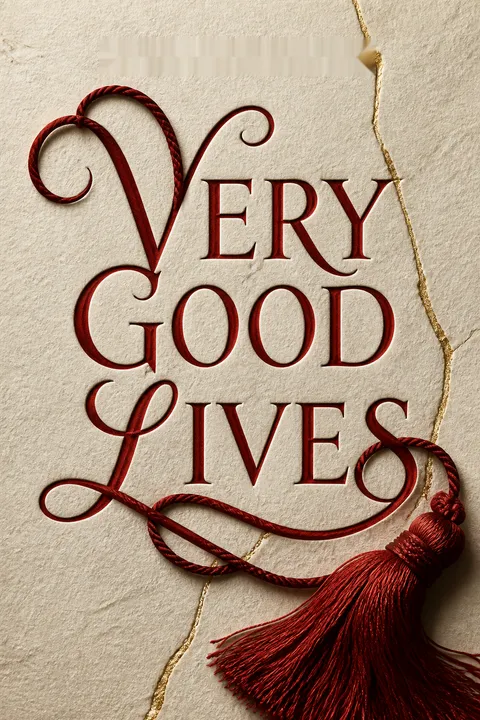
Readers highly praise Very Good Lives as an inspiring and thought-provoking commencement speech by J.K. Rowling. Many appreciate her insights on failure, imagination, and empathy. The book's brevity is noted, but most find it impactful and beautifully presented with illustrations. Fans admire Rowling's wisdom, humor, and ability to connect with readers. Some view it as an excellent gift for graduates or those facing challenges. While a few critics question the necessity of publishing the speech, most reviewers find it a worthwhile and uplifting read.
People Also Read



Glossary
imagination
Envisioning and empathizingRowling uses imagination in two connected senses: the capacity to envision things that do not yet exist, enabling invention and innovation, and the capacity to consider experiences beyond one's own. This second sense can support empathy and action, but imagination is morally neutral and can also be used to manipulate or control.
FAQ
What's "Very Good Lives" about?
- Commencement Speech: "Very Good Lives" is based on J.K. Rowling's 2008 Harvard commencement address. It explores themes of failure and imagination.
- Two Main Themes: The book focuses on the benefits of failure and the importance of imagination in achieving personal and professional success.
- Personal Experiences: Rowling shares her own life experiences, including her struggles and triumphs, to illustrate these themes.
- Inspirational Message: The book aims to inspire readers to embrace failure as a learning opportunity and to use their imagination to empathize and innovate.
Why should I read "Very Good Lives"?
- Inspiration and Motivation: The book offers motivational insights from one of the most successful authors of our time, encouraging readers to view failure positively.
- Practical Wisdom: Rowling provides practical advice on how to navigate life's challenges and the importance of imagination in personal growth.
- Relatable Stories: Through personal anecdotes, Rowling makes her advice relatable and applicable to various life situations.
- Empathy and Imagination: The book emphasizes the power of empathy and imagination in transforming lives and making a positive impact on the world.
What are the key takeaways of "Very Good Lives"?
- Embrace Failure: Failure is not the end but a stepping stone to success. It helps strip away the inessential and focus on what truly matters.
- Value of Imagination: Imagination is crucial for empathy and innovation. It allows us to envision possibilities and understand others' experiences.
- Inner Strength: Adversity reveals inner strength and the value of true friendships, which are more important than any qualification.
- Social Responsibility: With privilege comes responsibility. Use your influence to advocate for those without a voice and imagine a better world.
How does J.K. Rowling define failure in "Very Good Lives"?
- Personal Definition: Failure is subjective and personal. It is not defined by societal standards but by one's own criteria.
- Stripping Away the Inessential: Failure helps in identifying what is truly important by removing distractions and pretenses.
- Foundation for Success: It provides a solid foundation to rebuild one's life, as it did for Rowling when she focused on writing.
- Inevitable and Beneficial: Failure is an inevitable part of life and offers valuable lessons that success cannot teach.
What role does imagination play according to "Very Good Lives"?
- Empathy and Understanding: Imagination allows us to empathize with others and understand experiences we haven't personally encountered.
- Innovation and Creativity: It is the source of all invention and innovation, enabling us to envision what does not yet exist.
- Moral Neutrality: Imagination is morally neutral and can be used for both good and bad, depending on how it is applied.
- Social Change: Imagination can lead to collective action and social change, as demonstrated by Rowling's work with Amnesty International.
What personal experiences does J.K. Rowling share in "Very Good Lives"?
- Early Career Struggles: Rowling discusses her early career struggles, including poverty and a failed marriage, which shaped her perspective on failure.
- Amnesty International: Her work at Amnesty International exposed her to human rights abuses and the power of empathy and collective action.
- Educational Choices: She shares her educational journey, including the compromise with her parents over her choice of study, which led her to Classics.
- Rebuilding Life: Rowling describes how hitting rock bottom allowed her to focus on her passion for writing, leading to her eventual success.
How does J.K. Rowling view poverty in "Very Good Lives"?
- Not Romanticized: Poverty is not an ennobling experience but one filled with fear, stress, and humiliation.
- Personal Experience: Rowling has experienced poverty and agrees with her parents that it is something to be avoided.
- Climbing Out: Overcoming poverty through one's efforts is something to be proud of, but poverty itself is not desirable.
- Parental Concerns: Her parents' fear of poverty influenced their advice, but Rowling emphasizes personal responsibility once one is capable of making their own choices.
What are the best quotes from "Very Good Lives" and what do they mean?
- "Rock bottom became the solid foundation on which I rebuilt my life." This quote highlights how failure can provide a stable base for future success.
- "We do not need magic to transform our world; we carry all the power we need inside ourselves already: we have the power to imagine better." It emphasizes the innate human ability to create change through imagination and empathy.
- "What we achieve inwardly will change outer reality." This quote, attributed to Plutarch, underscores the impact of personal growth and inner achievements on the external world.
- "As is a tale, so is life: not how long it is, but how good it is, is what matters." This quote from Seneca reminds readers that the quality of life is more important than its duration.
How does J.K. Rowling address the concept of privilege in "Very Good Lives"?
- Unique Responsibilities: Privilege comes with the responsibility to use one's influence for the greater good.
- Impact Beyond Borders: The actions of privileged individuals, especially those from powerful nations, have global repercussions.
- Advocacy for the Voiceless: Rowling encourages using privilege to advocate for those who lack a voice and to imagine oneself in their position.
- Empathy and Action: Privilege should be used to foster empathy and drive collective action for social change.
What advice does J.K. Rowling give to graduates in "Very Good Lives"?
- Embrace Failure: Accept failure as a part of life and use it as a learning opportunity.
- Value Imagination: Cultivate imagination to empathize with others and innovate solutions.
- Build Strong Relationships: Cherish friendships and relationships that provide support and strength.
- Live Authentically: Pursue what truly matters to you, rather than conforming to societal expectations.
How does J.K. Rowling's work with Amnesty International influence "Very Good Lives"?
- Empathy and Awareness: Her work exposed her to human rights abuses, deepening her empathy and understanding of global issues.
- Power of Collective Action: She witnessed how collective empathy and action can lead to significant social change.
- Moral Responsibility: The experience reinforced her belief in the moral responsibility to use one's voice and privilege for the greater good.
- Inspiration for Writing: These experiences informed her writing, particularly in the themes of justice and empathy in the Harry Potter series.
What is J.K. Rowling's perspective on personal happiness in "Very Good Lives"?
- Beyond Achievements: Personal happiness is not a checklist of achievements or acquisitions.
- Inner Fulfillment: It lies in understanding oneself and living authentically, rather than conforming to external expectations.
- Humility and Acceptance: Accepting life's complexities and uncertainties with humility contributes to personal happiness.
- Value of Relationships: Strong, supportive relationships are crucial to personal happiness and resilience.
About the Author
Other books by J.K. Rowling








Download PDF
Download EPUB
.epub digital book format is ideal for reading ebooks on phones, tablets, and e-readers.








