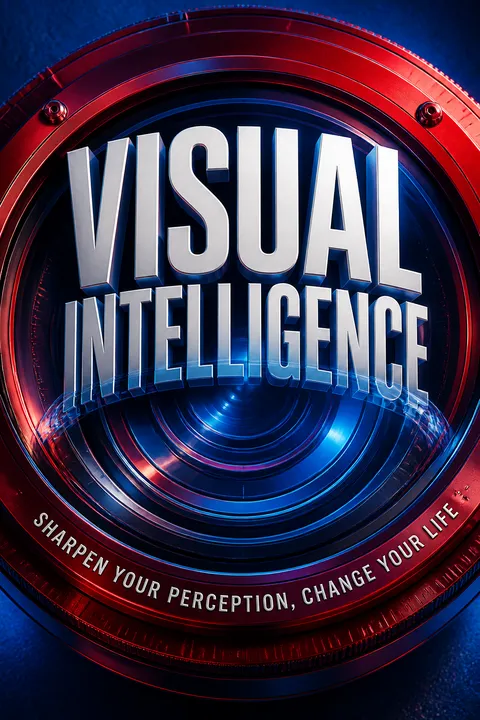


Key Takeaways
Train visual intelligence: ordinary details can expose overlooked opportunities
Notice the overlooked. Visual intelligence is the trained ability to observe what is present, interpret it, and use it. Derreck Kayongo, who grew up in Uganda, noticed that hotels discarded their used soap bars. He connected that waste to communities where soap was scarce and handwashing could prevent disease. His Global Soap Project recycled soap and distributed it in dozens of countries. The opportunity was hiding in an ordinary hotel bathroom.
Seeing takes effort. Amy Herman’s method uses art as a practice ground: paintings hold still, contain abundant detail, and let observers compare their descriptions with what is actually there. A Yale study cited in the book found medical students who studied art improved diagnostic skills by 56 percent compared with peers who did not take the course.
The example captures a useful distinction between noticing and inventing. Kayongo did not create the waste problem or the need for soap; his observation connected two existing systems that rarely met. This resembles opportunity recognition in entrepreneurship, where value often comes from recombining known resources rather than producing something from nothing. Art offers a low-stakes setting for practicing that kind of attention. Still, sharper perception alone does not guarantee a workable solution. Knowledge, relationships, and the ability to organize a response convert an observation into impact.
Slow down before attention turns a familiar scene into invisible background
Attention has limits. Seeing is not the same as observing. The brain filters enormous amounts of incoming information, allowing focus but also making it possible to miss something plainly visible. In a famous experiment, people counting basketball passes often failed to notice a person in a gorilla suit crossing the scene. In another study described in the book, 83 percent of radiologists reviewing lung scans did not mention a small gorilla inserted into the images.
Make room to notice. Autopilot, rushing, and constant phone interruptions narrow attention. Herman recommends putting distractions aside and spending longer with a scene than a quick glance allows. The useful practice is simple: pause, scan deliberately, and ask what has not yet registered. Observation is a skill that improves through repeated, conscious use.
These examples show why confidence is a poor measure of attention: people cannot report what their focus has filtered out. The practical response is not to demand heroic concentration, but to design conditions that protect it. In aviation and medicine, checklists and structured scans help compensate for predictable lapses rather than assuming professionals will remain vigilant every second. The book’s exercises point in the same direction. One caveat is that slowing down cannot reveal everything; attention remains selective. The aim is better detection, not perfect perception.
Record observable facts before naming motives, identities, or explanations
Separate seeing from concluding. Herman organizes basic fact gathering around four questions: who is present, what is happening, when it is happening, and where. An observation describes evidence; an inference explains it. In Edward Hopper’s painting Automat, a woman sits alone holding a cup. Calling her lonely or saying she is in a coffee shop adds interpretations that the image alone cannot prove.
Make descriptions testable. Numbers, positions, colors, and visible actions reduce ambiguity. Three visible chairs is clearer than several chairs; a round bruise approximately one inch wide is more useful than a nasty bruise. The distinction matters when information is passed to someone who was not there. A small assumption can become a false fact as it travels through a report or conversation.
The fact-inference distinction is a practical form of epistemic discipline: it lets observers preserve evidence without pretending they already know its meaning. Quantification helps because it makes claims easier to compare and verify. Yet purely factual description is not the whole job. A decision-maker eventually needs interpretations, and even labels such as color or identity can depend on shared conventions. The strongest practice is to separate layers clearly: what was directly observed, what is inferred, and how certain that inference is.
Treat your first interpretation as a hypothesis, not a reliable witness
Experience colors perception. A difficult photograph used in Herman’s classes looks like an abstract pattern until an outline reveals a cow. Once the viewer knows what it depicts, it is nearly impossible to return to the original uncertainty. Expectations, personal history, mood, and information supplied by others all influence what stands out and what seems meaningful.
Look before reading the label. Confirmation bias can steer attention toward evidence that supports an existing belief. Labels and prior reports can do the same. Herman’s practical sequence is to inspect a scene independently, consult outside information, then inspect it again. This does not remove bias, but it makes the effect of new information easier to see and helps prevent someone else’s description from replacing firsthand observation.
Treating an interpretation as a hypothesis is especially valuable in settings where early judgments shape later evidence, including hiring, policing, and diagnosis. The sequence of looking before consulting a label functions like a small safeguard against anchoring: the first impression is recorded before an authoritative description can dominate it. No observer is truly free of concepts or expectations, however. The goal is not a mythical neutral gaze, but greater transparency about what shaped a conclusion and a willingness to revise it.
Search the edges, then return for the detail your attention skipped
Look for the ordinary. In John Singleton Copley’s portrait of Mrs. John Winthrop, viewers often overlook the large mahogany table occupying much of the foreground. Studying its reflection reveals that her wedding ring appears on her hand but not in the reflected image. In a murder investigation discussed by Herman, investigators initially missed that a suspect’s pants were inside out, a detail that became important evidence.
Use COBRA deliberately. Herman’s observation aid stands for Camouflaged, One, Break, Realign, Ask. Look for details that blend into the background, focus on one task, take a short break, question expectations, and invite someone with a different viewpoint to inspect the scene. The point is not to stare harder indefinitely. It is to change the conditions and angles of attention.
The hidden detail is often powerful precisely because it does not announce itself as important. COBRA provides a memorable routine for interrupting the tendency to search only where an answer is expected. Its emphasis on another observer also reflects a basic principle of error detection: independent reviews can catch omissions that a single person’s repeated inspection will not. The routine should not become a ritual that delays urgent action. In high-stakes situations, teams need to balance a more complete search against the cost of waiting.
Change viewpoints to reveal facts your usual angle cannot show
Move beyond your position. Michelangelo’s David is often viewed from below and at a distance, where the figure can seem relaxed. A closer, higher view reveals a tense expression and muscles held tight. The sculpture has not changed; the angle has exposed information the familiar view concealed.
Borrow another person’s vantage point. Artist JR pasted enormous photographs of women’s eyes across buildings in Rio de Janeiro’s Morro da Providência, a favela often ignored by the surrounding city. The images drew attention to residents’ lives and helped them speak directly to the media. Herman also recommends using all the senses and asking what a situation looks, sounds, or feels like from another person’s position. Perspective-taking can uncover information, not merely encourage sympathy.
Perspective is both physical and social. Moving around an object changes available evidence, while imagining another person’s circumstances can reveal which evidence matters to them. This connects to user-centered design, where observing people in the environments they actually use often exposes problems missed by decision-makers at a distance. Imagination has limits, though. Assuming what another person feels can reproduce the very bias perspective-taking is meant to correct. The best use of empathy is to generate better questions, then check those questions with the person concerned.
Rank evidence by the decision it must support, not by its order
Priorities depend on purpose. Herman adapts a method from intelligence analysis into three questions: What do I know? What don’t I know? What do I need to know? The answers help sort evidence and direct follow-up. What matters in a murder investigation may differ from what matters to an interior designer studying the same room.
Notice what is absent. A pertinent negative is an expected sign or object that is missing, and whose absence helps distinguish explanations. In a boating death investigation, an account said the boat had rolled over. An investigator noticed that documents aboard were dry. If the story were accurate, water should have reached them. The absence helped prompt further investigation. Urgent information deserves attention, but urgency alone does not establish what is most important.
This framework turns a pile of observations into a decision process. Its strongest feature is that priorities are tied to a concrete question rather than treated as universal rankings. The pertinent negative adds an important corrective: evidence includes meaningful absences, not only visible objects. In fields such as medicine, an absent symptom can help narrow possibilities, although absence is informative only when the sign was genuinely expected and carefully checked. Recording uncertainty alongside evidence also makes the reasoning easier for colleagues to challenge or update.
Make communication precise enough that another person can reconstruct the scene
Choose exact words. A search for Chandra Levy in Washington’s Rock Creek Park was ordered along the park’s trails, but an instruction changed trails to roads. The error narrowed the search, and her body was later found near a trail. Specific language matters because listeners cannot see the scene or know which details were omitted.
Check what landed. Herman’s communication practices include objective wording, tailoring a message to its audience, rehearsing, and editing away unnecessary material. Her Three Rs offer repair tools: ask the listener to repeat the message in their own words, rename a dispute as a miscommunication when that is accurate, and reframe accusations as questions. These techniques replace assumed understanding with a chance to clarify meaning before errors spread.
The trails-versus-roads example demonstrates how a small verbal substitution can alter action downstream. High-reliability settings address this with closed-loop communication: the receiver repeats an instruction, and the sender confirms or corrects it. The Three Rs extend that logic into ordinary conflict by making clarification less threatening. Precision does not require maximal detail. Too much information can hide the essential instruction, so effective communication depends on both accuracy and disciplined selection.
Name difficult facts without letting discomfort rewrite what is visible
Do not confuse noticing with facing. Authorities and school staff repeatedly saw warning signs in four-year-old Daniel Pelka’s condition, including severe weight loss and bruises, but accepted explanations that did not account for the evidence. A review found that practitioners had not been willing to consider abuse. The failure was not simply an inability to see; it was a failure to connect what had been seen and act on it.
Keep the description grounded. Herman recommends separating facts from emotional reactions, especially in tense conversations. Describe what happened and ask for details before assigning motives or blame. This approach does not mean ignoring feelings or avoiding protective action. It means preventing fear, denial, or anger from turning an unverified interpretation into a factual claim.
This distinction matters because observational training can stop at data collection unless institutions also support escalation and response. People may notice a troubling pattern yet hesitate when the implication is painful or socially costly. A culture that welcomes questions and dissent makes it easier to test a concern before harm compounds. At the same time, restraint must not become an excuse for inaction. When evidence suggests immediate danger, uncertainty about motive should not prevent proportionate steps to protect someone.
Act on verified essentials even when the full story remains unknown
Do not wait for every answer. After cyanide-laced Tylenol capsules killed seven people in 1982, Johnson & Johnson did not know who had tampered with the product or how. It stopped production, recalled about 31 million bottles, assisted victims’ families, and developed tamper-resistant packaging before the case was solved. The company focused first on consumer safety and communicated with the public and authorities.
Adapt what is available. During crises, time, equipment, and information may all be scarce. Herman describes nurses at a mass-shooting hospital working through shortages, and artist El Anatsui turning discarded liquor-bottle caps and wire into large, flexible works. Constraints do not disappear, but they can be treated as conditions for action rather than reasons to freeze. Focus on what is known, identify the most urgent need, and make the best available response.
This is a model of bounded action under uncertainty: the decision-makers did not need to solve the mystery before reducing risk. Crisis management often depends on separating reversible protective steps from claims about blame, cause, or intent. The Tylenol response illustrates that distinction, while the found-material artwork shows how limits can prompt resourceful recombination. Acting early still carries costs, and not every response can be reversed. Clear priorities and honest communication help explain why action is justified despite incomplete knowledge.
Analysis
Visual Intelligence is a practical book about perception, but its deeper subject is disciplined judgment. Herman builds a four-part sequence: assess what is present, analyze it from multiple angles, articulate it so another person can use it, and adapt when circumstances change. Art is the teaching device because it makes observation concrete: viewers can inspect a stable image, compare interpretations, and discover how easily a confident description omits crucial evidence. The book’s most useful contribution is turning an abstract injunction to pay attention into habits: describe before interpreting, search for absences, rank facts by purpose, and verify that a message was understood.
Its storytelling is central to the method. Soap waste, a changed search instruction, a missed detail in a painting, and an emergency response each show how small perceptual errors can produce large consequences. Those cases make the stakes memorable, while the exercises give readers a way to practice without needing professional expertise. The recurring insistence on objective description is especially valuable in organizations where information passes through several people and assumptions can harden into institutional facts.
The argument also needs a measured reading. The book uses dramatic cases to make observation failures vivid, but many examples cannot establish how reliably museum training transfers to every real-world task. The reported medical improvements are promising, not proof that art study alone produces better decisions across professions. Nor can objective description eliminate interpretation: choosing what to count, what to report, and what deserves attention already involves judgment. The most defensible lesson is therefore not that anyone can see everything, but that people and teams can make their reasoning more inspectable. Visual intelligence becomes consequential when observation is paired with humility, collaboration, and systems that let inconvenient findings be heard.
Review Summary
Visual Intelligence receives mostly positive reviews, praised for teaching observational skills through art analysis. Readers find it insightful for improving perception in various fields. Some criticize its repetitiveness and length, suggesting it could be condensed. The author's tone is occasionally described as self-congratulatory. Many appreciate the practical exercises and real-world applications, while others find the image quality lacking. Overall, readers report enhanced awareness and improved ability to notice details in their surroundings after reading.
People Also Read



Glossary
Visual intelligence
Trained, purposeful seeingThe ability to notice visual information, interpret it carefully, and use it to guide decisions or communication. Herman presents it as a learnable skill rather than a special talent. Practice involves attending to details, distinguishing observation from inference, considering other viewpoints, and conveying findings clearly.
the four As
A four-step perception processHerman’s organizing framework for using visual intelligence: assess a situation and gather information, analyze what the evidence means, articulate findings so others can understand them, and adapt behavior in response. The stages link observation to action rather than treating seeing as an isolated skill.
COBRA
A search routine for overlooked detailsAn observation aid whose letters stand for Camouflaged, One, Break, Realign, Ask. It prompts observers to look for details that blend into the background, focus on one task at a time, take a break, reconsider expectations, and invite another person to inspect the scene.
perceptual filters
Influences shaping interpretationThe influences through which people interpret what they observe. Personal experience, expectations, mood, values, and information from others can affect what receives attention and what it seems to mean. Recognizing these filters helps distinguish direct observations from assumptions and makes conclusions easier to reconsider.
inattentional blindness
Missing what attention filters outThe failure to consciously notice a visible object or event because attention is occupied elsewhere. In the gorilla experiment, many people counting basketball passes did not see a person in a gorilla suit cross the scene. The phenomenon can affect experts as well as casual observers.
pertinent negative
An informative expected absenceA sign, symptom, or object that is not present even though it would normally be expected. Its absence can help distinguish among explanations. For example, dry documents on a boat may challenge an account that the vessel rolled over, because that event would likely have wet them.
Three Rs
Tools for confirming and repairing communicationHerman’s communication techniques are repeating, renaming, and reframing. Repeating means asking a listener to restate a message to confirm understanding. Renaming describes a conflict as a miscommunication when accurate, reducing blame. Reframing turns an accusation or fixed claim into a question that can be checked.
Zeigarnik effect
Unfinished tasks occupy attentionA tendency for incomplete tasks to remain mentally active. Herman describes how unfinished work can consume attention and create pressure for closure. Planning a next step can reduce that mental burden, even before the task itself is completed.
FAQ
What's Visual Intelligence about?
- Focus on Perception: Visual Intelligence by Amy E. Herman emphasizes enhancing observation skills to improve perception of the world. It combines art analysis with practical applications in fields like law enforcement and medicine.
- Four As Framework: The book introduces the "Four As"—Assess, Analyze, Articulate, and Adapt—to systematically improve visual intelligence and critical thinking.
- Real-World Applications: Herman shares stories and examples, such as training police officers and medical students, to show how improved observation leads to better decision-making.
Why should I read Visual Intelligence?
- Enhance Observation Skills: The book helps develop sharper observation skills applicable in everyday life, from professional settings to personal interactions.
- Practical Techniques: It provides practical techniques and exercises that can be easily integrated into daily routines, making it accessible for anyone looking to improve perception.
- Broader Perspective: Encourages seeing the world from different perspectives, fostering empathy and understanding in both personal and professional relationships.
What are the key takeaways of Visual Intelligence?
- Importance of Seeing: Seeing involves actively engaging with surroundings and noticing details others might overlook.
- Subjective vs. Objective: Highlights the difference between subjective observations and objective facts, urging focus on the latter for clearer communication.
- Practice Makes Perfect: Observation is a skill that can be developed through practice, with exercises provided to help improve.
What are the best quotes from Visual Intelligence and what do they mean?
- “We find only the world we look for.”: Our perceptions shape our reality; if we don’t seek out details, we may miss important aspects.
- “Most people see but do not observe.”: Encourages deeper engagement with what we encounter, beyond just glancing at things.
- “Seeing clearly and communicating effectively are not rocket science; they’re straightforward skills.”: Emphasizes that these skills are innate but require practice to develop fully.
What is the "Four As" method in Visual Intelligence?
- Assess: Gather information about a situation or object, focusing on objective details rather than subjective interpretations.
- Analyze: Prioritize the information collected, recognizing patterns and determining relevance to make informed decisions.
- Articulate: Effectively communicate observations and analyses to others, ensuring clarity and understanding.
- Adapt: Adjust behavior based on insights gained, fostering continuous improvement in observation and communication skills.
How does Visual Intelligence relate to art analysis?
- Art as a Tool: Uses art analysis to enhance observation skills, arguing that studying art improves critical thinking and visual perception.
- Engagement with Details: Analyzing art requires attention to detail, translating to better observation in real-life situations.
- Interactive Learning: Includes exercises that encourage active engagement with art, fostering a deeper understanding of observation and interpretation.
What is the significance of "pertinent negatives" in Visual Intelligence?
- Definition: A "pertinent negative" refers to the absence of a sign or symptom that helps identify a condition or situation.
- Application in Medicine: Identifying pertinent negatives can help rule out conditions, leading to more accurate diagnoses.
- Broader Implications: Noting what is absent can provide critical insights into a situation, enhancing overall understanding.
How can I improve my observation skills using techniques from Visual Intelligence?
- Practice Regularly: Engage in exercises that require observing details in your environment, such as art or everyday objects.
- Use the Four As: Apply the Four As framework to systematically improve observation and communication skills.
- Seek Different Perspectives: Challenge yourself to view situations from multiple angles to uncover details you might otherwise miss.
What role does perspective play in Visual Intelligence?
- Understanding Perspective: Perspective shapes how we interpret what we see; changing viewpoints can lead to new insights.
- Empathy and Insight: Considering others’ perspectives fosters empathy and improves interactions in personal and professional settings.
- Artistic Perspective: Uses art examples to illustrate how artists manipulate perspective, encouraging similar techniques in observations.
How does Visual Intelligence address the issue of distractions in observation?
- Impact of Distractions: Discusses how modern distractions impair observation, emphasizing the need to minimize them.
- Mono-tasking: Advocates for focusing on one task at a time to enhance observation skills.
- Taking Breaks: Recommends regular breaks to refresh focus and prevent cognitive overload, maintaining sharp observation skills.
What is the three-question method in Visual Intelligence?
- Identify What You Know: List what you already know about a situation to establish a baseline of information.
- Acknowledge What You Don’t Know: Identify gaps in your knowledge to focus efforts on gathering necessary information.
- Determine What You Need to Know: Prioritize the information needed for efficient decision-making and action planning.
How does Visual Intelligence address biases?
- Understanding Biases: Explains that biases are inherent and can affect perceptions and decisions.
- Overcoming Biases: Provides strategies for overcoming biases, such as seeking diverse perspectives and questioning assumptions.
- Using Biases Constructively: Suggests leveraging biases to guide inquiry and exploration, asking better questions and gathering relevant information.
Download PDF
Download EPUB
.epub digital book format is ideal for reading ebooks on phones, tablets, and e-readers.








