

Plot Summary
The Letter from Radom
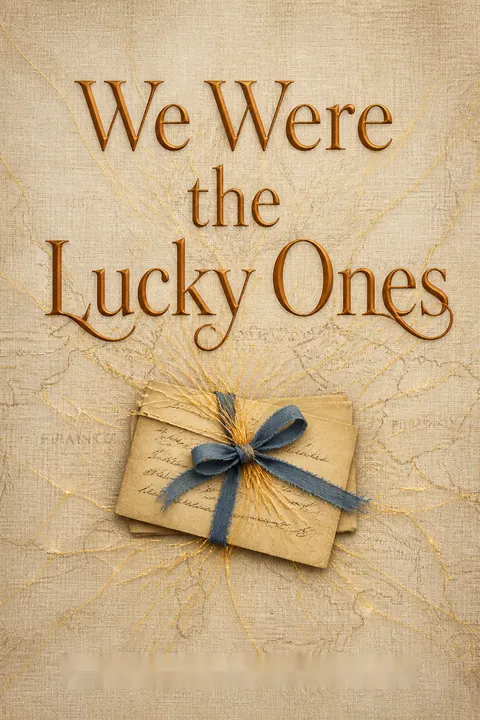
In Toulouse, Polish composer and engineer Addy Kurc reads his mother Nechuma’s warning that Jewish businesses are closing and travel home is becoming dangerous. He resolves to return to Radom, but the Polish consulate refuses him a visa because Nazi-controlled borders make the journey perilous.
Germany invades Poland before he can reach his family. Addy is conscripted into the Polish division of the French Army, where his engineering skill earns him responsibility for a small squad.
When France falls, he forges demobilization papers rather than wait to be arrested as a Jew. With Europe closing around him, he persuades Brazilian ambassador Souza Dantas to grant him a visa and boards the refugee ship Alsina, leaving without knowing whether his family is alive.
Addy’s opening mistake is not indifference but miscalibrated distance. From France, he can interpret anti-Jewish violence as warning signs that remain elsewhere, until his mother’s letter turns geography into a moral demand. His failed return sharpens the novel’s central tension: survival often depends on leaving loved ones, even when leaving feels like betrayal. Music and engineering represent two versions of Addy’s self, one chosen for security and one for imaginative freedom. As the crisis strips away his control, practical ingenuity becomes the means by which he preserves both.
Bella Crosses the Front
After Germany invades Poland, Jakob Kurc leaves Radom with his brothers and other men ordered east to join the Polish Army. His fiancée, Bella Tatar, remains behind, then sets out for Lvov when Jakob writes that he is waiting for her.
With an elderly driver named Tomek, she crosses checkpoints disguised as a pregnant woman, carrying Jakob’s camera inside a loaf of bread. When German soldiers block the road, Tomek shows her a route through a meadow and forest. Bella crawls through mud and gunfire, reaches a station, and takes a train the final distance.
She finds Jakob in Soviet-occupied Lvov, where he tells her Poland has fallen and one brother-in-law, Selim, is missing. They marry secretly in an abandoned house, choosing commitment while their families remain scattered.
Bella’s journey makes love an active, physical choice rather than a shelter from history. She risks the road because separation from Jakob is intolerable, but the journey also forces her to act without the protection of either family. Her ingenuity is not fearlessness: she is frightened, repeatedly considers turning back, and proceeds anyway. The secret wedding translates private attachment into a promise that can survive unstable borders and absent witnesses. Its improvised setting matters. The couple cannot reclaim the ceremony they imagined, so they make meaning from the limited materials still available to them.
Radom Becomes a Prison
German occupation turns the Kurcs’ comfortable Radom life into a sequence of humiliations. Sol and Nechuma are assigned forced labor, Jewish shops and schools are closed, and Mila, left without her medic husband Selim, struggles to care for infant Felicia.
When her trusted helper Dorota disappears, Mila moves with Felicia back to her parents’ apartment. The family is soon expelled from its spacious home and crowded into a two-bedroom flat in the Old Quarter, carrying only what they can salvage.
As restrictions tighten, Jewish residents are confined behind ghetto gates. Nechuma tries to preserve family rituals and keepsakes, while Halina and the others take whatever work the occupiers assign. Their former home, business, and freedom of movement are gone, but the family remains together for now.
Occupation attacks more than physical safety. It dismantles the routines through which the Kurcs understood themselves as professionals, parents, neighbors, and citizens. Nechuma’s careful packing and insistence on tableware are acts of continuity, not denial: she protects the forms that let the family recognize itself amid imposed degradation. Mila’s return to her parents marks an important shift from prideful self-sufficiency toward accepting help. The ghetto’s enclosure turns that fragile domestic refuge into a provisional one, making family closeness both a source of strength and a condition the authorities can exploit.
Across the Bug River
In Radom, Halina works in a beet field while longing for Adam Eichenwald, the architect renting a room in her parents’ home. When he joins the Underground in Lvov and urges her to come, she cannot leave her parents without a plan. She and her cousin Franka finally attempt the crossing at the Bug River, carrying their savings in a hidden pocket of a basket.
Franka slips into the freezing current, and Halina dives after the basket before the money can wash away. Soviet soldiers find the women, but Franka befriends one of them, Yulian, who helps them reach a train. In Lvov, Halina reunites with Adam and finds work at a hospital. The move brings temporary safety, though her family remains divided and Genek and Herta have vanished.
Halina’s decision is shaped by competing obligations: devotion to Adam, responsibility toward her parents, and the need to protect Franka during the crossing. Her rescue of the basket is a small, revealing act. Money is no longer a luxury but the material possibility of movement, food, and choice. She does not become courageous by losing fear; she learns to turn fear into action, first for her cousin and then for the family still in Radom. Her arrival in Lvov offers hope without resolution, establishing the recurring cost of choosing one endangered relationship over another.
The Siberian Cattle Car
In Soviet-occupied Lvov, NKVD officers raid Genek and Herta’s apartment because Genek refused to accept Soviet citizenship on a form. They seize money and belongings, interrogate the couple, and send them east in an overcrowded cattle car.
After weeks of hunger and deaths among their fellow prisoners, they reach a Siberian labor camp. Genek’s legal training and charm cannot protect him there; he and Herta cut trees for food and endure brutal seasonal extremes. Herta is pregnant, though they discover this only after their arrest.
With help from a camp doctor and another prisoner, she gives birth to their son, Józef, in the barracks. Genek’s earlier insistence on Polish identity, which he considered a matter of honor, now weighs on him as the choice that exposed his wife and unborn child to exile.
Genek’s arrest turns national identity from an abstract conviction into a bodily cost paid by his family. His remorse is psychologically credible because he measures the decision against Herta’s suffering, not simply his own. Yet the novel does not reduce his refusal to foolishness: the demand that he renounce Poland is itself coercive, and compliance would require self-erasure. Józef’s birth inside the camp creates a counterforce to the regime’s attempt to define the prisoners only as labor. The child does not cancel the danger, but gives Genek a concrete responsibility beyond repairing his pride.
A Visa Across Oceans
After France’s defeat, Addy reaches Vichy and wins a Brazilian visa from Souza Dantas, who quietly helps Jewish refugees despite the risk to his career. Addy boards the Alsina for Rio, where he meets Eliska Lowbeer through nightly music gatherings.
Their ship is detained in Dakar by British authorities, then taken to Casablanca and confined at Kasha Tadla. Addy escapes the camp by persuading a guard to let him buy supplies, then reunites with Eliska and her mother. The trio crosses the Strait of Gibraltar in a fisherman’s skiff and reaches Spain, where they board another ship for Brazil.
Their expired visas lead to detention on Ilha das Flores until Brazilian authorities finally extend permission to stay. Addy arrives in Rio alive, but without news from home or certainty that his family survived.
Addy’s escape is a chain of provisional permissions, each one vulnerable to a government’s changing policy. The journey makes refuge feel less like a destination than a series of doors that may close behind him. His music creates a temporary community aboard the Alsina, while his relationship with Eliska offers intimacy that is difficult to reconcile with his unspoken grief. Brazil gives him physical safety but not emotional arrival. The separation from family remains active inside him, showing that rescue from immediate danger does not automatically restore a coherent sense of home.
The City Turns on Lvov
In June 1941, Hitler breaks the pact with Stalin and German forces invade Soviet-occupied Poland. A pogrom erupts in Lvov after the NKVD murders prisoners and the Germans blame Jews. Jakob, Bella, Halina, and Franka hide in a basement, while Adam stays above to help the Underground.
Bella receives a note from her sister Anna saying she and her husband are being taken away; later evidence makes clear they were murdered. Adam is captured and sent to a work camp.
Halina learns where he is and approaches the guard, claiming that her husband is a German-descended Christian. She risks her grandmother’s silver as a bribe and persuades the guard to release him. The couple reunites, but Bella’s loss and the growing violence make it impossible to treat Lvov as a refuge.
The violence exposes the limits of the distinctions the family has relied upon: Soviet rule had seemed safer than German occupation, and false papers seemed capable of making Jewish identity invisible. Neither protection holds. Halina’s rescue of Adam depends on performance, nerve, and an object inherited from her family, so survival is both intimate and transactional. Bella’s note from Anna condenses the terror of being unable to intervene. The characters respond differently to helplessness: Halina acts, Bella collapses into grief, and Adam accepts risk through underground work. Their differences are survival strategies, not simple measures of strength.
The False American Train
In 1942, German authorities place Mila, young Felicia, and other professionals from Radom’s ghetto on a train supposedly bound for America. At a remote field, Ukrainian guards order the passengers to dig their own graves.
Mila knows she has brought her daughter into a trap, but when a blonde woman wins favor with the German officer, Mila tells Felicia to run to the stranger and pretend she is her child. The woman lifts Felicia into her arms. Mila then runs after them and offers her wedding ring to the officer, who accepts it and spares her.
A shooting follows, and most of the passengers are killed. Mila, Felicia, and a few others are returned to the ghetto. The failed promise of rescue hardens Mila’s resolve to find a way out without trusting the occupiers.
The train’s false destination weaponizes a survivor’s understandable desire to believe in escape. Mila’s choice at the killing field is morally wrenching because it requires her to make her child appear to belong to a stranger, then gamble that she can follow. Her wedding ring becomes a portable remnant of a marriage whose partner is absent, exchanged for the possibility of staying alive beside her daughter. The scene reveals the terrible narrowing of agency under mass violence: Mila cannot secure a just outcome, only seize brief openings within a system designed to deny her meaningful choice.
Mila Walks Out
Back in Radom’s ghetto, Mila refuses to leave Felicia exposed to raids. With Nechuma’s help, she sews a heavy coat from a blanket, hides money in its collar, and makes a plan to pass as a German woman.
At the evening gate closing, she conceals Felicia beneath the coat, then lets her emerge among German wives and children outside the walls. They reach Warsaw and eventually arrange separate hiding places. Mila places Felicia in a convent under a Polish identity, where nuns dye her red hair blonde and teach her Catholic customs.
Mila visits when she can, though separation wounds them both. After leaving the ghetto, Mila finds work in a Nazi household, where the wages and her Aryan papers offer a chance to survive beyond Radom’s immediate danger.
Mila’s escape transforms care into tactical invention. The coat is at once clothing, disguise, shelter, and a concealed route through a gate designed to keep Jews trapped. Her mother’s sewing skill, previously part of domestic life, becomes a survival technology. Yet escape does not reunite mother and daughter in safety; it produces a new separation, as Mila must entrust Felicia to strangers. The emotional cost complicates any simple celebration of resourcefulness. Mila acts decisively because remaining together in the ghetto is more dangerous, but her choices repeatedly require her to endure the very absence she is trying to prevent.
The Fence at AVL
Bella works at the AVL factory outside Radom while Jakob remains in the Wałowa ghetto with his parents. When a Polish policeman warns her that the Glinice ghetto is about to be liquidated, she begs her parents to leave, but they refuse, convinced the guards will kill them.
The ghetto is emptied and Bella’s parents disappear. At AVL, the factory is next to close, so Jakob slips away from his work assignment and joins Bella. He cuts through the perimeter fence, and the couple crawls into a field of wheat before moving toward Warsaw.
Bella is consumed by guilt over the family she could not save, while Jakob stays beside her without demanding that she recover on his timetable. Their flight preserves their lives but leaves them grieving and nearly alone.
Bella’s grief is intensified by the proximity of her parents’ deaths: she saw the danger, found a possible route, and could not make them take it. This creates survivor guilt, the painful belief that another outcome was available if only she had acted differently. Jakob’s response is important because he does not try to correct her emotions with reassurance. Instead, he offers presence and a path forward. The cut fence echoes Bella’s earlier trek to Lvov, but the meaning has changed: the first escape sought reunion; this one begins after the family she hoped to save is gone.
The Family Goes Underground
Halina and Adam build false identities in Warsaw, where Adam’s work for the Underground includes producing convincing papers. When a suspicious landlady confronts them, he uses a crude disguise to make her believe he is not Jewish, buying the couple time. Halina later bribes a guard with her grandmother’s amethyst necklace to remove Sol and Nechuma from the Pionki arms factory before it closes.
She hides her parents with the Górski family in a rural house, behind a bookcase concealing a crawl space. Mila, meanwhile, works for a German household while searching for a safe place for Felicia. The family’s movements now depend on forged papers, money, and the willingness of strangers to risk punishment for sheltering them.
The family’s survival becomes collaborative labor: Adam manufactures identities, Halina negotiates with guards, Nechuma and Sol accept concealment, and Polish hosts provide a hidden room. These acts do not erase the power imbalance; they let the Kurcs exploit brief gaps in it. Halina’s use of the amethyst is especially charged because a symbol of her mother’s earlier independence becomes currency for her parents’ safety. Adam’s improvised deception is desperate rather than heroic spectacle. The section shows how ordinary skills, from design to persuasion to sewing, acquire life-or-death value under persecution.
Addy Starts Again
In Rio, Addy struggles to earn a living while waiting for news from Poland. His engagement to Eliska collapses under the pressure of his unresolved grief and her wish to build a future without constant talk of war.
At a party, he meets Caroline Martin, an American who listens without asking him to set aside his fear for his missing family. Their growing relationship allows Addy to speak more honestly about Radom. Caroline helps him prepare letters to Red Cross offices in cities across the world, hoping one may reach his relatives.
Addy gains work as an electrical engineer in Brazil’s interior, but his weekly visits to the post office continue. The effort to rebuild a life and the effort to find his family proceed side by side, neither able to replace the other.
Addy’s relationship with Eliska falters not because affection was false, but because they need incompatible forms of attention. Eliska seeks relief through forward motion; Addy needs witness to the family he may have lost. Caroline offers a different intimacy by helping him act on that need rather than dismiss it. The Red Cross letters transform helpless waiting into a concrete task, though they cannot guarantee an answer. Addy’s work in Brazil establishes competence and independence, but the narrative refuses to equate professional success with emotional resolution. He remains divided between the life he can build and the people he cannot reach.
Warsaw Burns
When the Warsaw Uprising begins in August 1944, Bella runs across the city to reach Jakob’s basement shelter, narrowly avoiding German aircraft and crossing a bridge before it is destroyed. The couple survives the bombing with other civilians, but their family is scattered.
Mila cannot reach Felicia at the convent in Włocławek, while Halina, Adam, and others endure the siege in hiding. After the Home Army surrenders and the Germans withdraw, Mila drives to the convent and finds it reduced to rubble.
She and a Polish father, Tymoteusz, clear debris until they hear knocking from an underground shelter. Inside, Mila finds Felicia alive but feverish and badly injured. She carries her daughter out and rushes to find medical help, ending their long separation without ending the harm the siege has done.
The uprising briefly makes armed resistance imaginable, but its defeat turns the city itself into a threat. The family’s scattered hiding places reveal the double edge of survival: each person may be protected locally while remaining unreachable to the others. Mila’s reunion with Felicia is earned through physical labor, not a sudden rescue. She must keep clearing rubble after the convent’s destruction has already convinced her the child is dead. Felicia’s injuries make the reunion emotionally complex. The mother gets her daughter back, but cannot restore the years of fear or the bodily damage she carries.
Halina Leaves Montelupich
After the Warsaw Uprising, Halina travels to Kraków seeking help from her former employer, Herr Den, but the Gestapo arrest her at the station because they suspect her Polish identity papers are false. She spends months at Montelupich prison, where interrogators beat her and demand that she confess to being Jewish.
Halina protects her cover and refuses to break, though she fears for Adam, Mila, her parents, and the family she cannot contact. In January 1945, the prison releases her after Den finally confirms that she is the person she claimed to be. Halina returns to Warsaw and finds Adam, Mila, Felicia, Jakob, and Bella alive. She then drives to the Górskis’ home and discovers Sol and Nechuma still hidden behind the bookcase.
Halina’s imprisonment exposes the cruelty of bureaucratic truth delayed: a single verification could have prevented months of torture, but institutions act only after the damage is done. Her refusal to confess is an act of self-preservation, not a denial of her Jewish identity. Once released, she immediately turns toward family, first confirming who survived and then returning to the hidden parents whose safety depended on her. The book gives her reunion no easy triumph. She is battered, has lost months, and must continue caring for others. Still, her capacity to organize survives the prison that tried to reduce her to a false name.
Genek Finds a New Army
After Germany attacks the Soviet Union, Stalin grants amnesty to Polish prisoners, including Genek and Herta, who leave Siberia with infant Józef. Genek joins General Anders’s Polish Army, but recruiters reject Jews. He disguises his religion as Roman Catholic so he can enlist and take his family with him.
The exiles travel through Central Asia to Persia, where British aid gives them food, clothing, and medical care. In Palestine, Genek unexpectedly finds Selim, who had also been deported and now serves as a doctor.
The brothers-in-law begin tracing their missing relatives through the Red Cross. Later, Genek fights with Anders’s troops at Monte Cassino, where the Poles capture the monastery. His military service offers purpose, but every victory is shadowed by uncertainty about the Kurcs still in Europe.
Genek’s second encounter with a citizenship test differs from the first: he now accepts a false religious identity because survival requires access to the army and a route for Herta and Józef. The contradiction does not mean his attachment to Poland has vanished. Instead, identity becomes a resource he can strategically perform after an earlier refusal nearly destroyed his family. Meeting Selim restores a missing relationship and gives the search a practical channel through the Red Cross. Monte Cassino grants Genek a public role in history, but the unresolved question of his family keeps military achievement from feeling like personal closure.
The Family Finds Italy
After Germany’s defeat, Halina registers the family with relief agencies and continues searching for the relatives missing abroad. A telegram from Genek finally reports that he and Selim are in Italy with the Polish II Corps.
Halina’s news confirms that her parents and sisters have survived, and the family begins planning a meeting. She leads Sol, Nechuma, Mila, and Felicia out of Poland, across Austria’s Alps, and into Italy, using bribes and help from strangers to pass checkpoints.
In Bari, they reunite with Genek, Herta, Józef, and Selim. Mila introduces Felicia to the father she barely remembers, and Selim approaches the child gently. The meeting restores several family bonds, though Bella and Jakob are preparing for a separate journey to the United States.
The telegram reverses years of imagined loss with a few lines of information, but reunion is not a return to the old family. Mila must meet Selim as a changed woman, and Felicia must encounter a father who has existed mainly through stories. Halina’s Alpine crossing makes her the family’s practical leader, carrying both aging parents and a child toward the possibility of reunion. The scene’s emotional force comes from this mixture of joy and uncertainty. Survival has preserved relationships, but it has also changed the people who must now learn how to inhabit them again.
Addy Gets the Telegram
In Rio, Addy continues sending letters to Poland and Red Cross offices, while Caroline helps him imagine a future beyond waiting. Their daughter Kathleen is born prematurely in June 1946, just as a Polish consulate worker finds Addy with a telegram from Genek.
It says that Genek, their parents, and their sisters are alive in Italy. Addy races to the embassy, then replies by urging them to come to Brazil. He prepares modest apartments with handmade furniture for the relatives expected to arrive.
When their ship reaches Rio, he cannot bear to wait for the customs process and rows a borrowed dinghy toward it. Nechuma waves her handkerchief from the deck, and Addy sees his family again after seven and a half years. The reunion fulfills the hope that has carried him since leaving Europe.
The telegram does more than supply information; it changes Addy’s relationship to the future. Until this point, ordinary pleasures risked feeling like abandonment of the missing family. Now he can make plans that include them. His preparations are modest but deeply characteristic: he builds beds, desks, and shelves himself, turning engineering and craft into hospitality. The dinghy’s reckless approach echoes the urgency of his earlier escape, yet the direction is reversed. He is no longer trying to get away from danger; he is moving toward the people whose absence defined his exile.
A Table Set Again
Jakob and Bella, with their infant son Victor, leave postwar Poland for a displaced-persons camp in Stuttgart, where they rebuild daily life while waiting for visas sponsored by Bella’s uncle in Illinois. In May 1946, they board a ship for the United States.
Addy’s relatives reach Rio in stages, and the family begins rebuilding a life across Brazil and America. At Passover in 1947, the Kurcs gather in Addy and Caroline’s small apartment, with Selim, Mila, Felicia, Halina, Adam, Genek, Herta, children, and cousins around the table.
Jakob, Bella, and Victor are absent, but send a greeting from Illinois. Sol leads the Seder, Felicia asks the traditional questions, and the family shares food, music, and the recovered ritual of searching for the hidden matzah.
The ending resists the fantasy that survival restores what was lost. The family is scattered across continents, several relatives are dead, and the reunited household cannot reproduce the Radom home that once held them. Instead, ritual offers a portable structure for belonging. The Seder’s food, songs, and playful bargaining let children inherit more than a record of violence. Felicia’s participation is especially meaningful because her childhood was shaped by concealment and hunger; here she is heard, fed, and included. The final family picture is therefore not a return to innocence but a deliberate construction of life after catastrophe.
Analysis
The novel’s many viewpoints make survival a distributed achievement rather than a single hero’s triumph. Addy’s escape, Halina’s negotiations, Mila’s disguises, Bella’s journeys, and Genek’s military service are different responses to the same condition: ordinary protections have become unreliable, and every decision carries consequences for people elsewhere. Their stories also show how identity shifts under coercion. Genek refuses Soviet citizenship, then adopts a Catholic identity to enlist; Adam creates false documents; Mila and Felicia assume new names and appearances. These performances do not make the characters less themselves. They expose how the persecutors’ categories are political weapons, not adequate descriptions of human life.
Objects and rituals offer a counterweight to forced displacement. Nechuma’s fabric, the family piano, Addy’s handkerchief, and the Seder table hold memory in forms characters can carry or remake. Their uses are practical as well as symbolic: silver becomes a bribe, a coat becomes a hiding place, and music creates fellowship among strangers. The story’s insistence on practical detail matters. Survival is not presented as a vague triumph of hope, but as a series of difficult acts performed under uncertainty, often with help from people outside the family.
The emotional cost persists after physical danger recedes. Reunions do not restore the lost home or undo the deaths of relatives, and survivors must learn each other again after years of separation. Felicia’s childhood makes this especially clear: the family’s return to ritual offers her belonging, but cannot give back an untroubled past. The ending therefore resists simple closure. Its hope lies in a more modest achievement: the family can gather, remember, feed one another, make music, and raise children whose lives need not be organized entirely around escape.
Review Summary
We Were the Lucky Ones is a deeply moving historical fiction novel based on the true story of a Polish Jewish family during WWII. Readers praise Hunter's well-researched, emotional portrayal of the Kurc family's incredible survival across multiple continents. While some found the numerous characters and perspectives challenging to follow, most were captivated by the resilience and hope depicted. The book's impact is heightened by its basis in reality, with many readers expressing strong emotional responses. It's widely recommended for fans of WWII fiction and those seeking an inspiring tale of family perseverance.
People Also Read










Characters
Addy Kurc
The exiled composerThe Kurcs’ musical and mechanically gifted son, Addy is an engineer by profession and a composer by instinct. He leaves Poland for university and work in France, believing that distance offers freedom, then discovers that distance also makes him unable to protect or reach his family. His adaptability is practical: he learns languages, forges documents, negotiates with officials, and builds a new life wherever he lands. Beneath his sociability and humor, he carries persistent anxiety about those left behind. Music connects him to his family’s shared past, while his struggle to speak honestly about grief complicates his romances. Addy is driven by both ambition and an unusually deep attachment to home.
Nechuma Kurc
The family’s keeperNechuma is a fabric-shop owner, mother, and center of the Kurc household. She values education, fine workmanship, Jewish tradition, and a home where ideas and music are shared freely. Her practical intelligence appears in her buying, sewing, saving, and careful attention to what each child needs. She has endured earlier upheaval and initially believes this danger will also pass, partly because recognizing its full scale would be unbearable. Her instinct is to protect through nurture, but war forces her to accept that love cannot make every decision safe. She preserves family identity through rituals and keepsakes, even as circumstances strip away the home that gave those objects their place.
Sol Kurc
The steady patriarchSol is Nechuma’s husband and the family’s measured, affectionate patriarch. A successful businessman before the occupation, he brings negotiation, patience, and a quiet sense of humor to family life. He takes pride in Jewish tradition and in the home he and Nechuma built, yet his authority does not depend on force; he is tender with children and responsive to his wife’s judgment. Sol is inclined to assess danger practically, though no amount of foresight can make the family’s circumstances fair or predictable. His habits of bargaining, hosting, and keeping ritual alive reveal a man who understands care as something enacted through daily responsibilities.
Genek Kurc
The proud eldest sonGenek is the Kurcs’ eldest son, a trained lawyer whose charm once made him one of Radom’s most confident bachelors. He enjoys cards, cigarettes, and social attention, but his marriage to Herta gives his loyalty a new focus. Genek’s pride is tied to Polish identity and to his belief that education and ability should earn him a place in public life. When political forces deny those assumptions, he is forced to reassess what honor demands of him and what his decisions cost others. His humor remains a social tool, but beneath it lies a serious need to protect the people who depend on him.
Herta Kurc
Genek’s steadfast partnerHerta is Genek’s wife, originally from a German-speaking town in Poland, and a woman who notices beauty even when circumstances make it difficult to find. She loves poetry and the outdoors, and her candor offers a counterweight to Genek’s bluster. Herta is not merely his companion: she shares the consequences of his decisions and meets hardship with endurance, humor, and attention to their child. Her bond with Genek is affectionate but grounded in mutual dependence rather than romance alone. She values family deeply and holds onto memories of home without allowing nostalgia to erase the demands of the present.
Jakob Kurc
The observant photographerJakob, the Kurcs’ quiet son, is a photographer and Bella’s lifelong partner. He is reserved, thoughtful, and more comfortable observing than commanding, but his calm should not be mistaken for passivity. When danger demands movement, he takes risks and makes plans, while his camera offers a way to notice and preserve the world around him. Jakob’s devotion to Bella is patient and durable; he respects that grief cannot be hurried simply because he wants to help. His eye for images and his quiet attention to family gatherings reflect a wish to hold onto people and moments without pretending he can control what happens to them.
Bella Kurc
The determined brideBella is Jakob’s partner, a serious student and skilled seamstress from a family of modest means. She is practical, devoted, and willing to travel through danger when separation from Jakob becomes unbearable. Her bravery is not effortless; she feels fear sharply and acts despite it. Bella’s loyalty to her parents and sister complicates her choices, and her grief can make her withdraw from the people who love her. She is also capable of rebuilding: work, marriage, and creative skill give her ways to reenter life without denying what she has lost. Her strength is rooted less in certainty than in persistence.
Mila Kurc
Felicia’s resourceful motherMila is the Kurcs’ eldest daughter, a pianist and young mother whose husband, Selim, is absent for much of the family’s crisis. Before the war, she is surprised by how demanding motherhood feels; under danger, protecting Felicia becomes the center of every decision. Mila is loving but not idealized: she struggles with fear, exhaustion, and the pressure to make choices without knowing their consequences. Her practical intelligence emerges through concealment, disguise, and careful planning. She must learn to act without waiting for Selim to return or for certainty to arrive. Her bond with Felicia is tender, fiercely protective, and repeatedly tested by the need to separate for safety.
Selim Kajler
The absent physicianSelim is Mila’s husband, a trained medic and devoted father to Felicia. His work and his service with the Polish forces separate him from his family, leaving Mila to make dangerous decisions alone. Selim is practical, steady, and inclined to care through action, especially when someone is ill or frightened. Because Felicia is too young to remember him, his identity is carried into the family through Mila’s stories and the small details she preserves. His medical skill makes him useful to others, but his greatest emotional importance lies in the unfinished family life he hopes to resume.
Halina Kurc
The family’s fearless fixerHalina is the youngest Kurc sibling, sharp-witted, outspoken, and difficult to intimidate. Before the war, her confidence often serves mischief; under occupation, the same gift for persuasion becomes a survival skill. She loves Adam and remains deeply responsible for her parents and siblings, which places her repeatedly between personal attachment and family duty. Halina is not fearless so much as practiced at performing confidence when others need it. She learns to make plans, bargain, travel, and lead, even when the adults around her are exhausted. Her irreverence keeps despair from swallowing her, while her loyalty gives that boldness its purpose.
Adam Eichenwald
The meticulous forgerAdam is an architect, Halina’s partner, and a careful observer whose quiet manner conceals considerable nerve. He values precision and honesty in design, yet wartime survival requires him to fabricate identities and mislead officials. His skill with documents makes him useful to the Underground and to people seeking a way through changing borders. Adam is devoted to Halina, but his work exposes him to risks that can pull him away from her. He is patient, methodical, and less theatrical than Halina, which makes their partnership complementary. His personal losses remain difficult for him to process, especially when information is incomplete.
Felicia Kajler
The child who enduresFelicia is Mila and Selim’s daughter, a small child whose early memories are shaped by hiding, separation, hunger, and the adults’ urgent efforts to keep her safe. She is observant and sensitive, often understanding more from her mother’s expression than from the explanations she receives. Her attachment to Mila is profound, while her hope that her absent father will return gives her a private source of comfort. Felicia’s childhood requires her to learn disguises and obedience too early, but she also remains playful and curious. Her experience makes the family’s ideas of safety and normal life especially concrete.
Eliska Lowbeer
Addy’s first shipboard loveEliska is a young Czech refugee whom Addy meets aboard the Alsina. She is poised, lively, and oriented toward the future, finding ways to enjoy the beach and companionship even while their ship is detained. Her optimism helps Addy experience moments of relief, but she is less able to share his continuing need to speak about his missing family. Eliska’s mother is protective and socially exacting, adding pressure to the couple’s already uncertain circumstances. Eliska is neither shallow nor uncaring; she has her own losses and coping style, which differs from Addy’s.
Caroline Martin
Addy’s patient second chanceCaroline is an American from South Carolina who meets Addy in Rio. She is warm, direct, and comfortable listening without trying to dictate what he should feel. Unlike those who urge Addy to avoid painful subjects, Caroline helps him turn his longing into action by preparing letters to Red Cross offices. She has experienced bereavement herself and understands that a person can carry grief while still making a future. Caroline’s steadiness and modesty give Addy a relationship in which honesty feels possible, and her practical generosity helps connect his new life to the family he hopes to find.
Franka
Halina’s loyal cousinFranka is Halina’s cousin and companion on the dangerous journey from German-occupied Poland to Lvov. She is loving, loyal, and more vulnerable to fear than Halina, but proves capable of improvisation when the situation demands it. Her willingness to accompany Halina reflects a strong sense of mutual responsibility. Franka’s connection with a young Soviet soldier helps the women continue their journey, showing that her gentleness can create openings where force would fail. She remains part of the larger family network that sustains the Kurcs.
Anna Tatar
Bella’s beloved sisterAnna is Bella’s younger sister, married to Daniel and living in Lvov. She is affectionate, perceptive, and close to Bella despite the danger and distance separating them. Their bond carries the intimacy of shared childhood, including private dreams of their future families. Anna’s presence matters because Bella’s choices are shaped not only by her love for Jakob but also by her enduring connection to her birth family.
Tomek
Bella’s resourceful driverTomek is the older driver Sol hires to take Bella from Radom toward Lvov. He is experienced with the roads and horses, cautious about danger, and quietly committed to getting Bella as far as he can. When the German front blocks the wagon, he offers her a riskier route on foot rather than pretending the original plan can still work. His help is practical and selfless, though he and Bella are not close enough to make their parting easy.
Souza Dantas
The discreet visa-granterSouza Dantas is Brazil’s ambassador in Vichy, a public official who quietly risks his position to help Jewish refugees obtain visas. Addy approaches him after other countries refuse entry, and the ambassador’s intervention opens a route out of Europe. His assistance is restrained rather than theatrical: he gives Addy a chance to travel and expects no payment. He represents an individual use of institutional power that interrupts, however briefly, the machinery excluding refugees.
Otto Andreski
Genek’s fellow exileOtto is a Polish Catholic laborer who befriends Genek in Siberia. Blunt, physically imposing, and loyal, he shares the daily hardships of exile and becomes a trusted companion to Genek and Herta. When Genek is barred from Anders’s Army because he is Jewish, Otto helps him learn Catholic prayers and practices so he can enlist. His assistance is an act of friendship across religious difference, though it cannot undo the discrimination that makes the deception necessary.
Plot Devices
Forged identity papers
A portable borrowed identityAdam uses his architectural precision and knowledge of official stamps to produce convincing papers for Jews trying to move or work under false names. The documents help Halina and Adam pass as Polish Christians and support attempts to leave dangerous locations. They never guarantee safety: suspicious employers, police checks, and checkpoints can expose the people carrying them. The papers make identity both a survival tool and a burden, since each successful disguise requires characters to conceal parts of themselves.
Red Cross tracing
A signal through the wreckageLetters, lists, and telegrams sent through Red Cross offices give scattered survivors a way to search for relatives across borders. Addy’s letters, prepared with Caroline’s help, eventually connect with Genek’s efforts in Italy. The device turns correspondence into an action with uncertain timing: messages can be delayed, lost, or answered years later. Its emotional force comes from the gap between sending a name into the world and learning whether anyone remains to receive it.
Family keepsakes
Memory made portableThe Kurcs carry, trade, hide, and sometimes surrender objects from their former lives: Nechuma’s amethyst, family silver, photographs, music, and Addy’s embroidered handkerchief. These objects can secure food, buy a guard’s cooperation, or preserve a link to people who are absent. Their meaning changes with circumstance. The amethyst shifts from private luxury to bargaining power, while the handkerchief becomes a touchstone for Addy’s connection to his mother. Material memory helps the family maintain identity when home is inaccessible.
Disguises and concealment
A body hidden in plain sightCharacters hide in basements, crawl spaces, fabric sacks, fields, and false identities, while clothing and posture help them pass through Nazi-controlled spaces. Mila’s blanket coat conceals Felicia at a ghetto gate; Adam’s forged documents and improvised bodily disguise challenge suspicion; Sol and Nechuma depend on a hidden room behind a movable bookcase. Each concealment is specific and temporary. The device emphasizes that survival often depends on making the vulnerable body unreadable to those hunting it.
Music and Passover
Ritual that gathers the familyPiano music and the Passover Seder frame the Kurcs’ life before, during, and after the war. Music gives Addy a vocation and a way to create brief community among refugees; family meals preserve custom when the household is displaced. In the final gathering, the Seder lets children participate in practices interrupted by years of hiding and separation. These rituals do not erase loss. They make continuity possible by giving survivors shared actions, melodies, and stories to pass on.
FAQ
Synopsis & Basic Details
What is We Were the Lucky Ones about?
- Family's Fight for Survival: The novel chronicles the experiences of the Kurc family, Polish Jews, as they are scattered across the globe during World War II, each member facing unique challenges and fighting for survival.
- Separation and Reunion: The story follows the family's separation due to the war and their individual journeys through Nazi-occupied territories, Soviet labor camps, and refugee routes, highlighting their desperate attempts to reunite.
- Love and Resilience: Despite the horrors of the Holocaust, the novel emphasizes the enduring power of love, family bonds, and the human spirit's resilience in the face of unimaginable adversity.
Why should I read We Were the Lucky Ones?
- Compelling True Story: Based on the author's family history, the novel offers a deeply personal and moving account of the Holocaust, making it a powerful and emotional read.
- Character-Driven Narrative: The story focuses on the individual experiences of each family member, allowing readers to connect with their struggles, hopes, and fears on a profound level.
- Themes of Hope and Resilience: Despite the darkness of the historical context, the novel emphasizes the enduring power of love, family, and the human spirit's ability to persevere through unimaginable adversity.
What is the background of We Were the Lucky Ones?
- Historical Context: The novel is set against the backdrop of World War II and the Holocaust, depicting the systematic persecution and extermination of Jews by Nazi Germany and its allies.
- Geographical Scope: The story spans multiple locations, including Poland, France, Siberia, Brazil, and Italy, highlighting the global impact of the war and the diverse experiences of its victims.
- Cultural and Political Climate: The novel explores the cultural and political climate of the time, including the rise of anti-Semitism, the complexities of Polish-Jewish relations, and the impact of Nazi and Soviet ideologies on individuals and families.
What are the most memorable quotes in We Were the Lucky Ones?
- "Home is home—we'll be here.": This quote, from Nechuma's letter to Addy, encapsulates the family's initial belief in the safety of their home in Radom, a belief that is tragically shattered by the war.
- "You're it, beautiful.": Jakob's declaration to Bella highlights the depth of their love and commitment, a bond that endures despite the challenges of war and separation.
- "We were the lucky ones.": This recurring phrase, spoken by various characters, underscores the family's awareness of their relative fortune amidst the widespread suffering of the Holocaust, while also acknowledging the immense loss and trauma they endured.
What writing style, narrative choices, and literary techniques does Georgia Hunter use?
- Multiple Perspectives: Hunter employs a multi-perspective narrative, shifting between the viewpoints of different Kurc family members, which allows readers to experience the war from various angles and understand the diverse challenges each character faces.
- Detailed Historical Setting: The author meticulously recreates the historical settings, incorporating specific details about the cultural, political, and geographical contexts of each location, which enhances the novel's authenticity and immerses the reader in the story.
- Emotional and Evocative Language: Hunter uses emotionally charged and evocative language to convey the characters' inner thoughts and feelings, creating a powerful and moving reading experience that resonates with readers long after they finish the book.
Hidden Details & Subtle Connections
What are some minor details that add significant meaning?
- The Gold Brooch: Jakob's gift to Bella, a gold rose-shaped brooch with an ivory pearl, becomes a symbol of their enduring love and a reminder of their pre-war life, resurfacing at key moments throughout their separation.
- The Steinway Piano: The family's Steinway piano represents their shared love for music and culture, and its absence from their lives during the war underscores the loss of normalcy and the disruption of their family traditions.
- The Handkerchief: Nechuma's gift to Addy, a white linen handkerchief with his initials embroidered on it, becomes a tangible reminder of his family and their love, a source of comfort and strength during his separation from them.
What are some subtle foreshadowing and callbacks?
- The Closed Shops: The mention of shops closing in Radom foreshadows the increasing anti-Semitic measures and the eventual liquidation of the ghettos, hinting at the dangers to come.
- Addy's Job Insecurity: Addy's overheard conversation about being a "liability" at his engineering firm foreshadows the discrimination and persecution that Jews faced, and his eventual conscription into the army.
- The Broken Light Bulb: The rabbi's use of a broken light bulb during Jakob and Bella's wedding ceremony foreshadows the fragility of life and the destruction of their world, while also symbolizing the hope that can be found even in brokenness.
What are some unexpected character connections?
- Tomek's Compassion: Tomek, the wagon driver, initially appears as a minor character, but his decision to help Bella reach Lvov by guiding her through the woods reveals his unexpected compassion and willingness to risk his own safety.
- Souza Dantas's Humanity: The Brazilian ambassador, Souza Dantas, initially appears as a distant figure, but his decision to help Addy secure a visa highlights his humanity and his willingness to defy political pressures to save lives.
- Dorota's Betrayal: Dorota, the Kurc's maid, initially appears as a loyal and supportive figure, but her sudden departure reveals the fragility of relationships during wartime and the impact of fear and self-preservation.
Who are the most significant supporting characters?
- Tomek: The wagon driver who helps Bella on her journey to Lvov, demonstrating unexpected kindness and resourcefulness.
- Ambassador Souza Dantas: The Brazilian ambassador who helps Addy escape Europe, representing a beacon of hope and compassion amidst the horrors of war.
- Piotr: The Polish friend who helps Bella and Jakob in Lvov, risking his own safety to provide them with food and information.
Psychological, Emotional, & Relational Analysis
What are some unspoken motivations of the characters?
- Nechuma's Fear: Nechuma's initial reluctance to have Addy return home for Passover is driven by a deep-seated fear for his safety, a fear she rarely expresses openly but that motivates her actions.
- Jakob's Guilt: Jakob's eagerness to marry Bella and start a family is partly motivated by a sense of guilt for leaving her behind in Radom, and a desire to make up for the separation.
- Mila's Self-Blame: Mila's decision to send Felicia away is driven by a deep sense of self-blame for not being able to protect her daughter, and a desperate attempt to ensure her survival.
What psychological complexities do the characters exhibit?
- Addy's Internal Conflict: Addy struggles with an internal conflict between his passion for music and his responsibility to his family, a tension that is heightened by his separation from them and his inability to return home.
- Bella's Grief and Resilience: Bella's grief over the loss of her sister and parents is profound, but she also demonstrates remarkable resilience, finding strength in her love for Jakob and her determination to survive.
- Genek's Mask of Humor: Genek uses humor and charm as a coping mechanism to mask his fear and anxiety, but his underlying vulnerability is revealed through his deep love for Herta and his concern for his family's safety.
What are the major emotional turning points?
- Addy's Mother's Letter: The letter from Addy's mother, warning him not to return home for Passover, marks a turning point in his understanding of the danger his family faces and his own responsibility to protect them.
- Bella's Reunion with Jakob: Bella's reunion with Jakob in Lvov is a moment of intense emotional release, highlighting the power of love and connection in the face of separation and loss.
- Mila's Decision to Send Felicia Away: Mila's decision to send Felicia away to safety is a heart-wrenching moment, underscoring the lengths to which a mother will go to protect her child.
How do relationship dynamics evolve?
- Addy and Eliska's Relationship: Addy and Eliska's relationship evolves from a shared sense of displacement and a mutual love for music to a more complex understanding of their different priorities and needs, ultimately leading to their separation.
- Genek and Herta's Partnership: Genek and Herta's relationship deepens as they face the challenges of exile and parenthood, highlighting their mutual support and unwavering love for one another.
- The Kurc Siblings' Bond: The Kurc siblings' bond is tested by separation and loss, but their shared experiences and love for one another ultimately strengthen their connection, as they work to reunite and rebuild their lives.
Interpretation & Debate
Which parts of the story remain ambiguous or open-ended?
- Selim's Fate: The fate of Mila's husband, Selim, remains ambiguous, leaving readers to wonder whether he survived the war and if he will ever reunite with his family.
- The Fate of Minor Characters: The fates of several minor characters, such as Tomek, the wagon driver, and the various people who helped the Kurcs along their journeys, are left open-ended, highlighting the uncertainty and randomness of survival during wartime.
- The Long-Term Impact of Trauma: The novel leaves open the question of how the characters will cope with the long-term psychological and emotional impact of their experiences, suggesting that the trauma of war will continue to shape their lives even after the fighting ends.
What are some debatable, controversial scenes or moments in We Were the Lucky Ones?
- Mila's Decision to Send Felicia Away: Mila's decision to send Felicia away to safety is a controversial moment, raising questions about the ethics of separating a child from her mother and the lengths to which a parent should go to protect their child.
- Genek's Decision to Deny Soviet Citizenship: Genek's decision to deny Soviet citizenship, while rooted in his Polish identity, is a debatable moment, as it ultimately leads to his and Herta's deportation to Siberia and the hardships they endure.
- Halina's Use of False Identities: Halina's use of false identities and her willingness to deceive others to survive raises questions about the morality of deception during wartime and the lengths to which individuals should go to protect themselves and their families.
We Were the Lucky Ones Ending Explained: How It Ends & What It Means
- Partial Reunions: The novel concludes with the Kurc family partially reunited, but still scattered across the globe, highlighting the lasting impact of the war and the challenges of rebuilding their lives.
- Uncertain Futures: The ending leaves the characters' futures uncertain, suggesting that the trauma of war will continue to shape their lives even after the fighting ends, and that their journeys are far from over.
- Enduring Hope: Despite the losses and challenges they face, the novel's ending emphasizes the enduring power of hope, love, and family bonds, suggesting that even in the darkest of times, the human spirit can persevere.

Download PDF
Download EPUB
.epub digital book format is ideal for reading ebooks on phones, tablets, and e-readers.








