

Key Takeaways
Question every gift that arrives with a demand to change
Gifts carry power. As a child, Nemonte wanted the bright dresses and sugar brought by missionary Rachel Saint. Those gifts came with church attendance, new rules about clothing, and lessons that described Waorani traditions as sinful. Later, oil companies offered supplies and wages while opening roads into ancestral land. The exchanges were never simple: a dress could delight a child, and sugar could help a sick boy, but gifts also created dependence and made outsiders’ influence feel generous.
Nemonte’s father remembered planes bringing disease as well as useful tools. Her disabled uncle connected his illness to that period of contact. The memoir does not treat every gift as a trick, but asks readers to notice who sets the terms, and what the recipient may be expected to give up.
What's striking is the distinction between a gift's immediate value and its larger political meaning. In anthropology, reciprocity is not merely an exchange of objects; it can establish obligations and authority. A dress can be kindness and a channel of influence at once. That complexity matters because dismissing all outside aid would also dismiss real needs, such as medicine. The more useful questions are concrete: Who decides what is offered? What commitments accompany it? Can recipients refuse without losing essential support?
Do not let a borrowed faith rename your people as broken
Translation reshapes identity. Missionaries translated Christian teaching into Wao Tededo, but the concepts they emphasized placed Waorani life beneath an outsider's moral hierarchy. In Sunday school, children learned to associate God with whiteness and the devil with darkness. Nemonte saw her Kichwa-Záparo grandfather, a healer, reflected in the devil’s image. She also carried two names: Nemonte, meaning “many stars,” and Inés, the Christian name used by missionaries.
The result was not simply a new religion. It was pressure to distrust ancestral knowledge, songs, healing, and ways of living in the forest. As a young woman, Nemonte was asked to translate missionary messages for Waorani children. She sometimes altered the message, because the children wanted gifts and care, not a declaration that their own world was deficient.
Language is never a neutral container. Translation can make a new faith understandable, but it can also smuggle in assumptions about which people are civilized, sinful, or worthy. This resembles what scholars call epistemic injustice: a community's knowledge is discounted before it is even heard. The memoir also resists an easy conclusion that cultural contact must be refused. Its sharper challenge is to ask whether translation creates mutual understanding, or merely teaches one side to describe the other in a more persuasive vocabulary.
Treat oil as a social invasion, not merely an energy source
Extraction changes daily life. Oil roads brought chainsaws, truck traffic, cattle, wage work, and new settlements into Waorani territory. Nemonte’s father saw animals driven away and forests cut through. Her friend Amo was killed after opposing oil encroachment, and the company’s presence deepened conflict between contacted Waorani and relatives who remained in the forest. The memoir shows extraction altering not just land, but relationships and the choices available to people.
Elsewhere, oil pollution left rivers oily and fish floating dead. A Kofan mother, Romelia, grieved children who had played in contaminated water. Company representatives offered groceries, while local laboratory results failed to confirm pollution that people had witnessed. Along the Maxus Road, Waorani women queued for water from a company hose. The oil moved outward to fuel distant cities; the damage stayed with local communities.
The account makes visible a familiar feature of extractive economies: benefits travel, while costs are concentrated near the source. Environmental justice research examines precisely this unequal distribution of risk, decision-making, and compensation. The book adds an important social dimension: when roads and wages reorganize food, work, and mobility, pollution is only one part of the disruption. Still, the memoir's moral argument should not erase the different choices communities make under pressure. A person seeking wages or supplies is not endorsing the system that has narrowed those choices.
Name abuse plainly; spiritual authority does not make it sacred
A trusted role can conceal harm. Nemonte leaves her family as a teenager to study with missionaries, hoping to learn about God and the outside world. At the mission, Alfredo, a man she had trusted as a religious teacher, sexually assaults her. Fear, shame, and the threat of being disbelieved keep her from telling his wife, Rosalina. When Nemonte finally tries to speak, Rosalina already appears to know, yet urges her back toward the mission. Nemonte runs into the night.
Years later, she describes the trauma as something that narrowed her sense of where she belonged. A ceremony with the Siekopai healer Delfín helps her confront buried memories and recover a sense of direction. The memoir presents this as her experience, not a universal cure: healing begins with naming what happened and reclaiming the right to define its meaning.
The account exposes how institutional authority can make disclosure harder: a victim may fear losing shelter, belonging, or the very faith that gives life structure. Trauma-informed practice emphasizes safety, choice, and control, which are precisely what Nemonte lacks in the mission. Her spiritual healing matters because it is chosen within a framework she can claim as her own. It should not substitute for accountability, however. A survivor's recovery and an institution's responsibility are related, but they are not the same task.
Put ancestral knowledge on maps without reducing it to coordinates
A map can tell a fuller story. Government maps treated Waorani territory as an empty area available for oil development. Nemonte and her community made their own maps, drawing rivers, gardens, hunting trails, medicines, animal habitats, burial places, and sites important to their histories. Elders first sketched what they knew on paper. Young people then used GPS devices and cameras to record selected places. The work took two years and made the forest legible in a different way: as a lived world, not a blank block.
The process also revealed that recording everything was impossible. A GPS point could mark a distinctive medicine plant or a meaningful site, but could not contain the full knowledge surrounding it. When Nemonte’s father worried that satellites might locate her brother Víctor’s grave, the family chose not to map it. The community’s control over what stayed private mattered as much as what became visible.
This is participatory mapping at its strongest: residents decide what counts as evidence, rather than supplying data to an outside institution's categories. It also shows why digital preservation is not automatically benign. Coordinates can support land claims, but they can expose sacred or vulnerable places. Indigenous data sovereignty, the principle that communities govern the collection and use of information about them, is a useful lens here. A map can protect a place only if its makers retain authority over what it reveals.
Build alliances by asking what communities dream, not what they lack
Shared struggle needs shared direction. Nemonte helps build the Ceibo Alliance, bringing together Waorani, Kofan, Siekopai, and Siona leaders whose territories face oil development and other incursions. Their histories differ, but each community is confronting threats to land, water, and cultural life. The group does practical work, including installing rainwater systems where polluted rivers have made clean water scarce.
The alliance also changes the questions organizers ask. Asking communities only what they need can draw answers toward money and goods, the measures outsiders have taught people to value. Asking what they dream for their villages can bring out what they want to preserve: healthy rivers, gardens, community life, and the ability to teach knowledge to younger generations. The approach joins practical help to a political vision set by the people most affected.
The shift from deficits to aspirations echoes asset-based community development, which begins with local capabilities rather than presumed lack. That does not mean material needs should be ignored: clean water is an urgent requirement, not a symbolic preference. The strength of the alliance is its refusal to choose between practical infrastructure and cultural continuity. Cross-community organizing can also create risks, since groups may have unequal resources or divergent priorities. Durable solidarity depends on making those differences discussable, not pretending they disappear under a shared cause.
Learn the law well enough to make consent mean something
Rights can become tools. When Ecuador proposed auctioning Waorani land for oil, officials visited villages, promised benefits, and collected fingerprints on documents many residents could not read or understand. The Waorani challenged the process using the principle of free, prior, and informed consent: communities must be able to decide about projects affecting their territory, with information provided beforehand and in an understandable form.
The Ceibo Alliance combined legal work with community testimony, maps, public attention, and the presence of elders. In court, Waorani leaders did not rely on documents alone. They brought their stories and songs into the room, insisting that the land was not an empty resource zone. The court ruled that the government's consultation was invalid and blocked the oil auction affecting their territory, protecting roughly half a million acres and establishing a path others could use.
The legal victory illustrates the difference between formal consent and meaningful consent. A signature is not informed agreement when people lack accessible information or a real chance to refuse. Human rights frameworks can give communities leverage, but law is not neutral terrain: the same institutions may recognize a claim and still enforce unequal systems. The book's strategy is therefore plural. Courts matter, yet their authority is strengthened by public pressure, collective knowledge, and the community's own account of what the land is.
Make outside expertise answer to the people living with the consequences
Support is not leadership. The Ceibo Alliance works with a team of outside activists, lawyers, engineers, and filmmakers. Their skills help build water systems, document damage, and translate legal tools. But the memoir repeatedly tests whether these allies are listening or taking over. Nemonte is wary of white helpers because missionaries once presented themselves as saviors while helping open the way for oil companies.
Trust grows through shared work and accountability. Michi, Nemonte’s partner and an organizer, learns from Waorani families rather than assuming that his technical knowledge is enough. The community chooses its priorities, from mapping territory to protecting water. That relationship remains imperfect: Nemonte sometimes fears that allies will leave or repeat old patterns. The point is not that good intentions guarantee good outcomes. Help becomes useful when local leaders set the agenda and can challenge the people supporting them.
This is a practical standard for ethical collaboration: expertise should expand a community's options, not replace its authority. Participatory research and community-led development use similar principles, including shared decision-making and accountability to those affected. The memoir also makes trust concrete rather than sentimental. It is built through work, listening, and the ability to disagree. A limitation remains: partnerships still operate within unequal access to money, media, and institutions. Good practice cannot erase that imbalance, but it can name it and make power answerable.
Keep cultural joy alive; it is part of the defense
Protection means more than survival. Nemonte’s resistance is grounded in the life she wants to continue: hunting, fishing, gardening, raising children, telling stories, and gathering around the fire. Waorani songs and dances are not decorations added to political work. They bind people together, teach relationships with animals and ancestors, and renew the community’s sense of itself. When elders dance and sing after Rachel Saint’s authority weakens, the return of joy signals a return of choice.
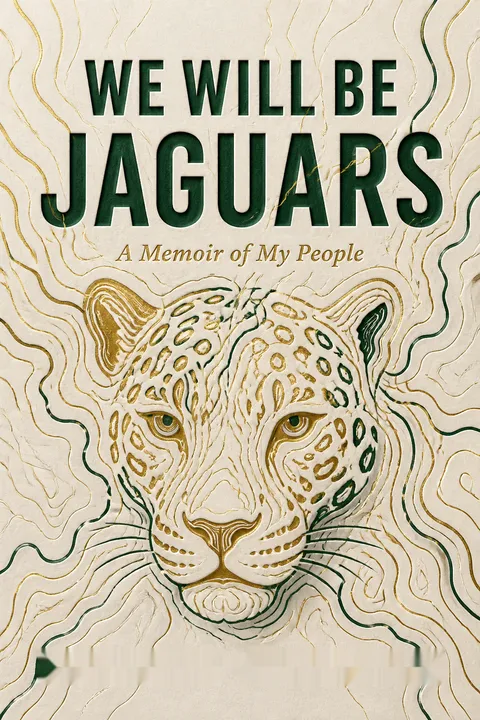
That joy enters the struggle directly. Waorani elders sing in court, families bring forest knowledge into their maps, and Nemonte returns home after the lawsuit succeeds. The legal result matters because it protects land where these ways of living can continue. In the final image, her brother Víctor is remembered as a jaguar among the forest spirits. The title’s promise is collective: to keep becoming a people on their own terms.
The book refuses to reduce environmental protection to preserving scenery or biodiversity. A forest is also a social world, sustained by practices, memory, food, and relationships across generations. This resembles the idea of biocultural diversity: cultural and ecological variety are intertwined, and damage to one can weaken the other. Joy is not a substitute for policy or material security, but it clarifies what policy is meant to protect. The memoir's challenge is to measure success by living continuity, not only by acres or court decisions.
Analysis
This memoir moves from a child’s bewilderment at airplanes and missionaries to a public struggle over territory, but its deeper subject is the contest over who gets to define reality. A plane can mean wonder, sickness, gifts, or invasion. A map can show an empty oil block or a densely known homeland. A Bible translation can introduce a new faith while also recasting local knowledge as darkness. The book’s key political insight is that extraction begins before drilling: it starts when a people’s account of their own land is displaced by categories that make that land available to others.
The narrative’s force comes from refusing a simple division between Indigenous purity and outside corruption. Nemonte learns from missionaries, works with international allies, uses technology, and enters court, while rejecting the idea that these tools should decide her people’s future. The distinction is not between using modern institutions and refusing them. It is between using them under community direction and being used by them. The Ceibo Alliance’s maps and legal strategy turn that distinction into practice.
The memoir also complicates familiar ideas of resilience. Nemonte’s survival is not presented as proof that trauma has made her stronger, nor does cultural belonging erase abuse or grief. Her family’s silence around painful events remains costly. Healing comes through a mix of chosen spiritual practice, renewed connection, and political action, without making any one of those a universal answer. The story’s emotional power is strongest when it lets contradiction remain: love and anger toward family, affection and suspicion toward outsiders, faith and doubt, victory and continuing danger.
Its argument reaches beyond conservation. Protecting a forest requires defending the institutions of everyday life that make it a home: language, kinship, food practices, memory, and community decision-making. The court victory matters, but the book measures its meaning by whether people can continue living, learning, and choosing within their territory.
People Also Read




Glossary
Wao Tededo
Waorani languageThe language spoken by the Waorani people. Missionaries translated Christian texts into Wao Tededo, but the memoir emphasizes that translating words does not guarantee that the ideas fit the community’s world. Language carries names, stories, ecological knowledge, and cultural distinctions that can be lost when translation serves only an outside purpose.
cowori
OutsidersThe Waorani term Nemonte uses for outsiders, including white people and other people from beyond Waorani communities. In the memoir, the category includes missionaries, oil workers, government officials, and allies, though they do not all act alike. The word marks a social boundary shaped by a long history of contact, distrust, and unequal power.
tokore
Worthless paper moneyA Waorani term for money, described in the memoir as meaning something like “worthless paper.” The word expresses the gap between money’s importance in the outside economy and its limited usefulness in forest life. As oil development expands, however, money increasingly affects choices, needs, and relationships within Waorani communities.
omere
The whole worldA Waorani word Nemonte explains as meaning “everything” or the whole of their world. It conveys a view in which people, forest, animals, spirits, and daily life belong to an interconnected whole. The term contrasts with outside systems that divide land into separate resources, property, or economic value.
the boa’s tongue
A metaphor for disorientationA recurring metaphor for the persuasive power of the outside world. Nemonte’s grandfather compares its influence to a boa’s tongue that mesmerizes animals and clouds their judgment. In the memoir, the image refers especially to the gifts, money, status, and promises that can draw people away from their own knowledge and priorities.
Ceibo Alliance
Four-peoples Indigenous allianceA coalition formed by Waorani, Kofan, Siekopai, and Siona communities to defend their territories and ways of life. Its work combines community priorities with practical projects, such as rainwater systems, and political strategies, such as mapping and legal action. The alliance is grounded in shared threats while respecting distinct cultures and histories.
free, prior, and informed consent
Communities' right to decideA principle that Indigenous peoples should be able to make decisions about projects affecting their lands without coercion, before those projects proceed, and with information they can understand. Nemonte’s community invokes this right against a government consultation process in which officials gathered signatures and fingerprints without ensuring that residents understood the documents or the proposed oil auction.
Ronda Petrolera
Ecuadorian oil auctionThe name used for Ecuador’s planned auction of oil blocks across the south-central Amazon. The proposed auction threatened Indigenous territories, including Waorani land. In the memoir, the government’s process is challenged because community members were asked to sign documents without adequate explanation, and a court ultimately blocked the auction affecting Waorani territory.
meñewëmpo
Father jaguarA Waorani spiritual role associated with a person believed to communicate with jaguar spirits and hold particular powers. Nemonte’s brother Víctor is given the name Mengatowe and described as destined to become a jaguar father. The concept reflects a worldview in which jaguars connect the living, the forest, and ancestral spirits.
Download PDF
Download EPUB
.epub digital book format is ideal for reading ebooks on phones, tablets, and e-readers.








