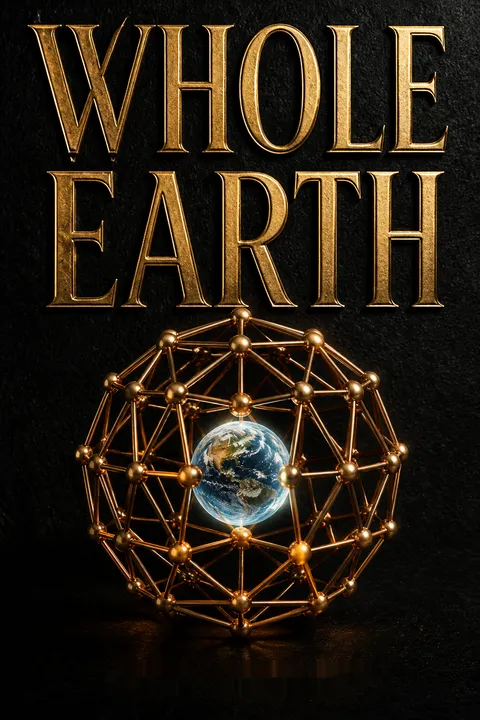


Key Takeaways
Let curiosity choose the frontier, but leave room to change course
A career by detours. As a boy, Brand devised elaborate schemes for exploring the woods and the American West. At Stanford, he tried biology, writing, photography, and military life, but none became a fixed identity. He left Army ranger training when its hardship seemed detached from learning, then found a better fit as a photographer and organizer. His life repeatedly followed that pattern: enter a new scene, notice what others overlook, and move on when it becomes familiar.
Freedom had a foundation. Brand often described himself as following ideas wherever they led. Yet a modest family inheritance meant he could spend years experimenting without a conventional job. Some ventures failed; others, including the Whole Earth Catalog, reshaped culture. His openness to chance was real, but it was supported by resources and relationships that not everyone has.
What's useful here is not the romantic idea that a career should be improvised, but the practice of keeping options open while learning in public. This resembles exploration in science: experiments are valuable partly because they reveal which questions deserve further work. Brand's frequent departures also expose a limit. Curiosity can become a license to abandon obligations, and his financial cushion made that risk less costly for him than for most people. The transferable lesson is to design small experiments and preserve room to pivot, while being honest about who bears the cost when a pivot leaves others behind.
Make the planet visible, then ask who gets to care for it
A change of scale. In 1966, Brand stood on his San Francisco rooftop and wondered why nobody had seen a photograph of the entire Earth. He turned the question into a public campaign, wearing a sign and handing out buttons to students, scientists, and officials. The image he sought was more than a striking view: it could make the planet feel like a shared home rather than a patchwork of separate interests.
Land taught the lesson. Brand's concern for ecology was shaped by childhood outdoors and by time with the Warm Springs tribes in Oregon. There he saw the consequences of a dam that submerged the village of Celilo and heard residents' fears that development could take more land. His multimedia project America Needs Indians! argued that mainstream America had lessons to learn from Indigenous relationships with place. The whole-planet perspective later became central to the Catalog's imagery.
A planetary image works like a map that changes the question being asked: instead of debating only local costs, it invites people to see connected systems. That shift is powerful for climate and biodiversity problems, which cross borders. But a shared view does not automatically create shared power. Brand's interest in Indigenous knowledge challenged the assumption that modern society alone knows how to manage nature, yet his project also risked treating Indigenous people as moral instruction for outsiders. Planetary solidarity is strongest when it includes the voices and authority of the people whose land and knowledge are involved.
Give people usable tools, not just arguments about self-reliance
Access beats abstraction. In 1968, Brand began the Whole Earth Catalog to help people in communes find practical equipment, books, and advice. The Catalog did not simply list products. It evaluated useful items, explained where to get them, and invited readers and contributors to improve its contents. Its mix ranged from farming and shelter guides to electronics kits and books on systems. The Last Whole Earth Catalog eventually sold more than a million copies.
A collective project. Brand's wife, Lois Jennings, handled essential work including finances, staffing, and production, while specialists such as Lloyd Kahn supplied hands-on building knowledge. The Catalog grew from this network, not from one editor's ideas alone. Its promise was that access to a tool or a clear explanation could let people teach themselves and act without waiting for a large institution to authorize them.
The Catalog anticipated a durable principle of education: people often learn more deeply when information is attached to a task they want to do. In modern terms, it joined discovery, instruction, and a route to action in one place. Its open contribution model also resembles a community knowledge base, where practical expertise is distributed rather than concentrated in credentialed authorities. Still, access is not the same as equality. A catalog cannot supply time, money, land, or political influence, and the work that makes a shared resource usable can remain invisible. Jennings's contribution makes that labor impossible to overlook.
Stay near movements without surrendering your judgment
Participation without conversion. Brand helped organize the Trips Festival, a 1966 multimedia event where the audience, rock music, lights, and performance blurred together. The festival helped build momentum for San Francisco's counterculture and music scene. Yet Brand never fully joined Ken Kesey's Merry Pranksters. He was wary of groups that demanded total commitment, and he became frustrated with charismatic leaders who treated their followers' lives as possessions.
Outsider status had costs. Brand also rejected much of the antiwar movement's politics, even while opposing the war, and the Catalog initially claimed to avoid politics. That claim was never fully credible: choices about tools, education, land, and whose knowledge mattered were political too. Brand's independence helped him cross between scenes and spot new possibilities, but it could also become detachment from collective struggle.
The distinction between belonging and surrender is valuable in organizations as well as movements. Groups need shared purpose, but strong identity can punish dissent and turn loyalty into a test of character. Brand's suspicion of charismatic authority is therefore a useful safeguard. His stance also raises a harder question: can someone remain above politics when deciding what counts as useful knowledge or who gets access to resources? The Catalog's supposedly neutral practicality still reflected choices. Independence protects judgment, but it does not exempt a person from explaining the consequences of those choices.
Design systems to adapt, because permanence is often an illusion
Systems change at different speeds. Through biologist Gregory Bateson, Brand became interested in coevolution, the mutual shaping of organisms and their surroundings. That perspective informed his magazine CoEvolution Quarterly and his later work on buildings. Architect Frank Duffy had described building elements that change at different rates, from a site's long life to the quicker turnover of services and interiors. Brand expanded this into pace layering, a way to understand how slower foundations and faster-changing parts interact.
Buildings are ongoing decisions. Brand admired MIT's Building 20, a temporary wartime structure that occupants repeatedly altered to suit new needs. In How Buildings Learn, he contrasted such adaptable places with grand designs that can become difficult to repair or repurpose. The key measure of a building, in this view, is not only its original appearance but what future users can make of it.
This is a strong alternative to treating design as a finished object. In ecology and software alike, systems remain robust when parts can change at different rates without destabilizing the whole. Adaptable buildings can reduce waste because they accommodate new uses instead of demanding replacement. The idea also challenges the prestige economy of architecture, where novelty at opening can matter more than performance over decades. Flexibility is not always virtuous, however. A structure that changes easily can also be poorly maintained or repeatedly patched. Adaptation needs stewardship, not just permission to modify.
Treat digital community rules as infrastructure, not housekeeping
The computer as a tool. Brand saw computing as a way to extend people's abilities, not merely as a corporate machine. His 1972 account of computer hobbyists introduced a general audience to a culture of experimentation and pointed toward personal computing. In 1985, he helped launch the WELL, an online conferencing system where people could exchange ideas and build community. Its rules tied users to identifiable accounts, but allowed pseudonyms.
Good intentions need design. Brand had earlier watched an anonymous online discussion deteriorate into impersonation and retaliation. The WELL's pseudonyms still gave people room to behave in ways they might avoid face to face. As the community grew frustrated with technical problems, arguments turned on its founders. Brand eventually left, believing the medium itself made empathy and productive disagreement difficult to sustain.
The WELL makes visible a central problem in digital design: a platform does not merely host behavior, it helps shape it. Identity rules, moderation, and technical reliability are part of a community's social architecture. The lesson aligns with safety engineering, where foreseeable failure modes are addressed before a crisis rather than blamed on individual users afterward. Yet accountability alone is not a cure. Real-name policies can expose vulnerable participants, while pseudonyms can protect them. The design task is not to eliminate anonymity, but to balance safety, privacy, and responsibility in a way users can understand.
Make long-term thinking an institution, not a personal virtue
A clock needs caretakers. In the early 1990s, computer scientist Danny Hillis proposed a clock designed to mark time across ten thousand years. Brand saw that the challenge was not only engineering a durable mechanism. Someone would also need to maintain it, preserve knowledge, and keep the project meaningful across generations. That insight helped turn the idea into the Long Now Foundation, which paired the clock with a broader effort to encourage long-term thinking.
Plans must remain adaptable. Brand's group studied Yucca Mountain, a government project intended to contain nuclear waste for millennia. They saw how fixed designs can become trapped by political conflict and changing assumptions. Brand's response was to favor long-term thinking that keeps options open and makes institutions capable of learning, rather than pretending anyone can predict ten thousand years accurately.
The clock is compelling because it makes an abstract time horizon tangible, but its deeper proposal is institutional: future generations need structures that preserve choices and knowledge. That connects long-range planning to organizational resilience, which depends less on a perfect forecast than on the capacity to revise decisions. The Yucca Mountain example sharpens the distinction between durability and rigidity. A facility may be built to last while its governing assumptions become obsolete. The clock's own challenge is similar: a symbol can invite attention, but only ongoing public purpose and accountable stewardship can keep it from becoming an expensive monument.
Judge environmental solutions by arithmetic, evidence, and human consequences
Pragmatism changed his alliances. Brand had helped shape environmental culture through the Catalog, yet he later argued for nuclear power, genetically modified crops, dense cities, and other technologies many environmentalists distrusted. He believed climate change demanded large-scale solutions and that human beings were part of nature, responsible for managing their effects. His position reflected conservationist thinking: use the natural world, but accept a duty to care for it.
Evidence does not settle every dispute. Brand emphasized the scale of energy demand and the limits of relying on renewables alone. His arguments drew fierce criticism, including from longtime ally Amory Lovins, who challenged his claims about nuclear power. The disagreements concerned costs, safety, energy reliability, and which risks should count. Brand's core demand was to test environmental preferences against real-world constraints rather than assume that a technology is harmful or beneficial by category.
Brand's approach usefully insists that environmental policy be judged against physical constraints, not only moral appeal. Energy systems must supply power when demand occurs, and land use, materials, and reliability matter alongside emissions. But arithmetic is never assumption-free: projected demand, construction costs, safety, waste, and the distribution of harms all shape the calculation. The strongest version of pragmatism therefore treats technologies as contestable options, not settled answers. Brand's willingness to revise his views is a strength; his confidence sometimes outruns the uncertainty and political tradeoffs that make an engineering solution socially difficult.
Use powerful tools as stewards, not as permission to play god
Responsibility grows with capability. In his later work, Brand and Patty Phelan supported Revive & Restore, a project exploring biotechnology for conservation. One proposal considered restoring the Xerces blue butterfly, believed extinct after its habitat in San Francisco was destroyed. The possibility of bringing back species or modifying endangered ones offered a new conservation tool, but it also raised questions about ecological consequences and whether resources should instead protect species still alive.
The scale of the claim changed. Brand's early call for individuals to become more capable became a broader argument that civilization must take responsibility for reshaping the planet. He did not regard human influence as something that could simply be stopped. The challenge, in his view, was to direct it toward repair. The butterfly became a vivid test of that belief: technology might restore what human activity helped erase, but intervention cannot guarantee a predictable result.
The conservation case for biotechnology is strongest when it supplements habitat protection rather than distracts from it. A genetic intervention may preserve options, but ecosystems are complex, and restoring one species cannot recreate the relationships that made its original habitat viable. This is a classic precaution problem: inaction has consequences too, especially when extinction is irreversible, while intervention can create new ones. Brand's emphasis on responsibility is important because human influence is already profound. The ethical standard should be transparent evidence, consultation with affected communities, and sustained monitoring, not technological possibility alone.
Analysis
Markoff's biography is less a record of one institution-builder than a study of how ideas migrate between scenes. Brand moves from ecology and Indigenous politics to multimedia, personal computing, online community, architecture, corporate consulting, and conservation biology. The connecting habit is not simple optimism. It is a preference for tools, feedback, and experiments that let people learn by doing. His projects repeatedly turn an abstract conviction into a practical interface: a catalog, a festival, a network, a building, or a clock.
That pattern helps explain why Brand can appear inconsistent. He abandons movements as they harden into orthodoxy, then returns to some of their original problems with different instruments. His changing views on government, technology, and environmentalism are not merely ideological drift. They reflect a recurring question: what intervention can work at the scale of the problem? But his answer often favors technical possibility and adaptive design over political analysis. That emphasis illuminates how tools empower users, while sometimes obscuring who controls the tools, whose knowledge counts, and who bears unintended costs.
The biography also complicates the myth of the self-made counterculture visionary. Brand's timing, social network, editorial skill, and access to family money mattered. So did the less celebrated labor of collaborators, especially Lois Jennings, whose management helped make the Catalog possible. His story is therefore useful not as a template for lone genius, but as a map of how institutions arise from relationships and shared work.
The deepest tension is between planetary responsibility and local accountability. A photograph of Earth invites a common identity; a long-lived clock asks people to imagine obligations beyond their lifetime; biotechnology proposes deliberate repair. Each can widen moral concern, but none guarantees wise action. Brand's lasting contribution is to make the question unavoidable: if humans have the capacity to reshape systems, what forms of learning, restraint, and governance should accompany that power?
Review Summary
Whole Earth receives mostly positive reviews, with readers praising its detailed account of Stewart Brand's life and impact on counterculture, technology, and environmentalism. Many appreciate the book's exploration of Brand's evolving ideas and his involvement in various movements. Some readers find the biography engaging and well-researched, while others feel it lacks emotional depth or becomes tedious. Overall, reviewers commend the book for its comprehensive portrayal of Brand's influential and multifaceted career.
People Also Read



Glossary
Whole Earth Catalog
A practical access guideA publication launched by Stewart Brand in 1968 to help readers find useful tools, books, services, and instructions. It combined short evaluations with information on where to obtain items and encouraged readers to contribute knowledge. Its focus on self-education and practical access helped connect countercultural communities, back-to-the-land projects, and emerging technology culture.
Access to Tools
Resources for independent actionThe Whole Earth Catalog's guiding purpose: make useful equipment and knowledge easier to find so individuals and groups can educate themselves and act. The phrase treats a tool broadly. It can be a physical object, a book, a skill, or information about how to obtain a service. Brand saw access as a way to increase personal capability.
Coevolution
Mutual change over timeBrand used coevolution as a broad way to understand how organisms, societies, technologies, and environments shape one another over time. The concept moved his thinking beyond isolated parts or simple cause and effect. It informed his magazine CoEvolution Quarterly and his interest in learning as a property of interconnected systems.
Pace layering
Change at different speedsA framework Brand developed from architect Frank Duffy's observations about building components that change at different rates. Brand generalized the idea to larger systems: slower layers provide stability, while faster layers adapt more quickly. Understanding their interaction can help explain how buildings, organizations, and societies preserve continuity while responding to change.
New Games
Participatory rule-changing gamesA movement Brand helped create around physical games that made participation, experimentation, and changing rules central. Rather than treating every contest as a fixed, winner-takes-all competition, New Games encouraged players to modify play and explore cooperation alongside rivalry. Brand's aim was to make competition more humane and to test whether rules themselves could be redesigned.
WELL
An early online communityThe Whole Earth 'Lectronic Link was an online conferencing system launched by Brand and colleagues in 1985. Users gathered in text-based discussions and built relationships that also extended into face-to-face life. Its design experimented with identity, user responsibility, and community norms, while its conflicts exposed how online communication can enable hostility as well as connection.
Long Now
A long-term civic perspectiveBrand and Danny Hillis used the Long Now idea to encourage attention to timescales longer than immediate political, commercial, or technological cycles. It became the premise behind a ten-thousand-year clock and the Long Now Foundation. The central challenge is not predicting the distant future, but creating institutions able to preserve knowledge, adapt, and consider obligations to future generations.
Information wants to be free
A digital sharing tensionA phrase Brand used to describe the tension between information's high value and the declining cost of copying and distributing it. The complete idea includes both pressures: valuable information may merit payment, while cheap reproduction encourages broad access. The shorter slogan became influential in digital culture, often obscuring the economic and ethical tradeoffs in the original formulation.
About the Author
Other books by John Markoff
Download PDF
Download EPUB
.epub digital book format is ideal for reading ebooks on phones, tablets, and e-readers.








