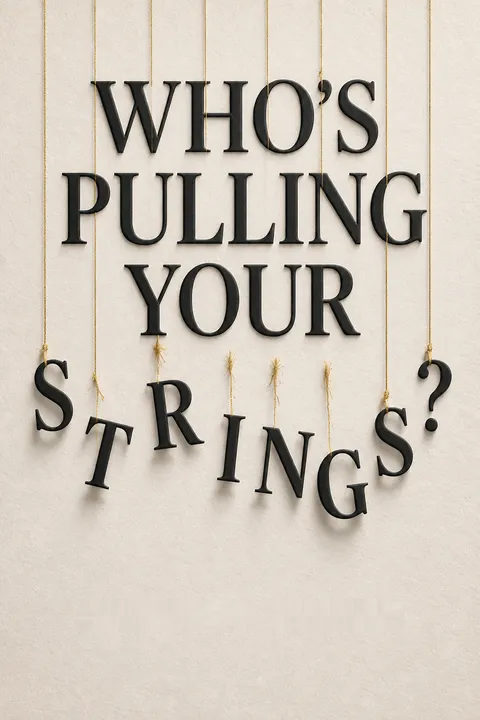


Key Takeaways
Treat hidden pressure as control, not ordinary persuasion
The dividing line. People influence each other constantly. Manipulation is different: it uses unfair pressure, concealment, or coercion to advance one person's aims without properly considering the other person's interests. Healthy influence is direct about its purpose and leaves room to refuse. Manipulation often disguises its agenda and makes refusal feel costly.
Watch the relationship. The book's cases span romance, family, school, and work. A boss hints that extra weekend labor will earn a promotion; a partner links compliance to love or commitment. Either can begin with apparently reasonable requests, then become a pattern in which one person's preferences dominate. The central question is not whether someone asks for something, but whether the relationship allows both people meaningful choice.
The distinction turns on process, not simply outcome. A parent or manager may strongly urge a choice for defensible reasons, but transparency and the freedom to disagree separate guidance from coercion. This resembles informed consent: people can evaluate a request only when its purpose and consequences are visible. At the same time, not every indirect request proves manipulation. Habit, embarrassment, or poor communication can also obscure intent, so repeated patterns and their effects matter more than a single awkward exchange.
Track what compliance buys you, and what refusal threatens
Follow the contingency. Manipulation usually works through two levers: a promised gain or a feared loss. The gain might be approval, money, love, status, or a hoped-for future; the threatened loss might be a job, a relationship, or freedom from conflict. Ask what the other person wants you to do, what they imply you will receive for doing it, and what they suggest may happen if you refuse.
Notice the shift. Francine, a young real-estate broker, accepted a senior colleague's promise of a profitable partnership. She took on late nights and weekend work, then faced anger and warnings when she asked when the deal would become official. A promised reward had become a threat of losing the opportunity. Mapping that change makes a confusing relationship easier to see.
This is a practical form of contingency analysis: identify which behavior is being encouraged, what consequence follows, and who benefits. It can reveal pressure that friendly language hides. The framework also applies beyond relationships, including workplaces where unclear promises can make labor feel voluntary while penalties remain implicit. Its limit is that incentives alone do not establish wrongdoing. A fair exchange can involve rewards and consequences too; the key questions are whether terms are clear, proportionate, and genuinely negotiable.
Your need to be liked can become someone else's steering wheel
Soft targets broadcast needs. Braiker identifies recurring vulnerabilities: people-pleasing, dependence on approval, fear of anger and conflict, difficulty saying no, a blurry sense of identity, low trust in one's own judgment, and the belief that outside forces control one's life. These tendencies overlap. Someone who measures self-worth by helping others may also fear rejection and rely on others to decide what is right.
Kindness is not the problem. Sally gives in to her mother's guilt-inducing demands about weekly family dinners because she fears hurting her mother and enduring the silent treatment. The cost spreads to her marriage and her husband's family. The book's self-assessment is intended to expose habits, not diagnose a person. A useful distinction is whether generosity is freely chosen or feels compulsory, even when it repeatedly harms the giver.
The model's strength is linking internal beliefs to observable boundaries. It explains why two people can face the same request but experience very different pressure. It also risks making vulnerability sound like an invitation or responsibility for someone else's exploitation. It is not. People can work on assertiveness while responsibility for coercive behavior remains with the person using it. Nor should independence mean refusing care: healthy interdependence includes asking for help and giving it without turning affection into an unspoken debt.
Judge patterns by what people do, not the motives they claim
Motives can be disguised. The book describes manipulators as pursuing personal advantage, control, and a sense of superiority, often while presenting themselves as helpful or fair. Some know they are pressuring others; some act from insecurity or fear and may not recognize their impact. Either way, a denial or an appealing explanation does not settle the question. Repeated behavior and its consequences provide better evidence.
Look for the pattern, not a label. The book discusses styles such as the calculating exploiter, the entitled self-promoter, the volatile partner, and the passive resister. Some exert direct pressure; others evoke predictable reactions through anger, withdrawal, or emotional upheaval. These categories are descriptive, not a reason to diagnose relatives or coworkers. In Cara's case, classmates kept promising acceptance while extracting money and favors, then dropped her once they got what they wanted.
Behavior-centered judgment is more reliable than amateur diagnosis. Personality labels can make a pattern easier to discuss, but they can also create false certainty about a person's character or capacity for change. A useful assessment stays close to the evidence: Is the conduct repeated? Does it disregard stated limits? Does one person consistently gain while the other absorbs the cost? This approach leaves room for context and repair without requiring the target to accept an implausible explanation.
Intermittent rewards can keep you chasing a relationship that hurts
Uncertainty keeps the hook. Positive reinforcement rewards a desired action. Negative reinforcement removes something unpleasant after compliance. The book also explains intermittent reinforcement, in which rewards arrive unpredictably. Its laboratory illustration contrasts a pigeon rewarded every time it presses a lever with one rewarded only now and then. When rewards stop, the intermittently rewarded pigeon keeps pressing much longer.
The pattern travels. Bob tries to recover the confident, affectionate partner he first knew, even as Cindy's sulking and outbursts increasingly dictate his plans. Occasional returns to warmth keep his hope alive. In another context, a supervisor might praise an employee unpredictably, then use anger or silence to secure compliance. A promised major payoff can also function as a hook, even if it never arrives.
Variable rewards help explain why inconsistent relationships can command so much attention: uncertainty invites continued monitoring for the next sign of approval. This is a useful behavioral lens, not proof that every unstable bond is deliberately engineered. People may be inconsistent for many reasons, and laboratory learning does not capture the full complexity of human attachment. The practical insight remains valuable: judge a relationship by its sustained pattern and cost, not by rare moments that briefly restore hope.
Measure the relationship by its toll, not its occasional good days
The cost is cumulative. People caught in manipulation often describe confusion, anxiety, resentment, guilt, and a growing sense that they cannot act freely. They may blame themselves, suppress anger, and lose confidence in their judgment. Bob's stress appeared as stomach pain; Francine lost sleep and social time while working toward a partnership that never materialized. Such effects do not prove manipulation on their own, but they are reasons to inspect the relationship closely.
Look beyond arguments. Ask whether one person's needs routinely take priority, whether you feel compelled to manage their moods, and whether your self-respect has declined. The book treats these reactions as clues because manipulators may deny their motives or refuse direct discussion. A private self-assessment can help organize what is happening, but it is a reflection tool, not a clinical diagnosis or a substitute for professional help.
The emphasis on the target's experience offers a useful route through deliberate ambiguity: effects can be observed even when intent cannot be proven. It also calls for care. Distress may arise from grief, incompatible expectations, or mutual conflict, not only manipulation. The strongest case comes from a repeated combination of unequal power, pressure against refusal, and deteriorating well-being. When symptoms are severe or persistent, clinical support can address the harm without requiring certainty about the other person's personality.
Delay your answer so pressure cannot make the decision for you
Interrupt the reflex. A first act of resistance is to pause between a demand and a response. Rather than agreeing automatically, say that the request needs thought and that you will respond later. This breaks the timetable that pressure creates and gives you room to decide what you actually want. A brief pause can also help steady breathing when anger, guilt, or fear rises.
Repeat, do not debate. If the other person challenges the delay, the book recommends a broken-record response: acknowledge the emotion being expressed, then calmly restate that you need time. Avoid getting pulled into defending your right to think. The aim is not to win an argument. It is to stop anxiety or guilt from making the decision on your behalf.
A prepared phrase functions like an implementation intention, a preselected response that reduces the chance of reverting to habit under stress. The technique is modest, but that is its advantage: it does not require proving bad intent or overpowering the other person. Its use should be adapted to context. In a workplace emergency, a prompt answer may be necessary; in a dangerous relationship, visible resistance may increase risk. Personal safety takes precedence over practicing a script.
Set limits, negotiate fairly, or leave when coercion remains the price
Resistance is a test. After buying time, a person can name the behavior, describe its effect, and state what treatment is acceptable. If the other person is willing to adapt, both can negotiate a workable arrangement instead of relying on pressure. Sally and her sister changed the family dinner pattern so Sally's husband's relatives were included. Bob, by contrast, ended his relationship with Cindy; Francine left the proposed partnership, and Valerie moved out rather than remain in indefinite uncertainty.
Some situations need distance. The book is about emotional manipulation, not physical violence or threats of violence. It also cautions against treating active substance abuse or pressure to commit crimes as ordinary relationship problems. In those situations, safety, distance, and appropriate outside help take priority over trying to negotiate or apply resistance techniques.
The strongest feature of this approach is that it treats resistance as information: a relationship's response to reasonable limits reveals whether mutuality is possible. Negotiation is useful when both parties can acknowledge needs and accept a no. It is not a universal remedy. Material dependence, workplace retaliation, and safety risks can sharply limit a person's options, so leaving may require planning and support. A lack of immediate change should not be interpreted as a failure of courage.
Rebuild self-trust by recording your thoughts and correcting the script
Practice a different story. Braiker recommends writing down difficult interactions, the feelings they produce, and the automatic thoughts that follow. Then identify beliefs that make refusal feel impossible, such as needing everyone's approval or assuming other people control every outcome. Replace them with credible alternatives: you can care about others without meeting every demand, and your judgment deserves a vote.
Make the change concrete. The book's cases show different routes out: Sally reset a family routine, Bob ended a harmful romance, and Valerie chose separation rather than stay in limbo. Cara redirected her attention from buying acceptance to school and volleyball, where she formed friendships. These outcomes are not one universal recipe. They illustrate the central task: regain enough self-trust to choose, rather than comply automatically.
Writing makes vague self-criticism inspectable. It can reveal a chain from event to interpretation to feeling to action, a structure shared by many cognitive approaches. The method is most useful when replacement thoughts remain believable; forced positivity can feel hollow. The book's focus on internal control also needs balance: people influence some outcomes, not all. Recognizing real constraints alongside available choices supports agency without turning every setback into a personal failure.
Analysis
Braiker's most useful contribution is not a catalogue of difficult personalities but a shift in attention. Instead of waiting for a manipulator to confess intent, the reader can examine the pattern of requests, rewards, threats, and consequences. This is especially effective because manipulation often thrives on ambiguity: a promotion remains just out of reach, a partner's affection alternates with withdrawal, or a relative makes refusal feel like betrayal. The reader gains a practical map of how compliance is maintained and where a pause or boundary can interrupt it.
The book also makes an important behavioral point: the target's compliance can reinforce the tactic. That account restores leverage to someone who feels powerless, but it needs careful wording. Reinforcement explains why a behavior may persist; it does not make the target responsible for another person's coercion. The distinction matters most in unequal relationships, where jobs, finances, housing, family ties, or safety constrain the ability to refuse. Resistance is not always equally available, and a strategy that works in a tense conversation may be unsafe in an abusive one.
The personality chapters offer recognition, but their diagnostic language is dated and should not become a lay checklist for labeling others. Traits overlap, context matters, and a harmful act does not establish a disorder. The book's own self-tests are best treated as prompts for reflection, not validated diagnoses. A contemporary reading keeps its strongest distinction, observable patterns versus unverifiable motives, while remaining cautious about causal claims. The cases supply a useful range of endings. Some relationships improve through explicit boundaries and negotiation; others end, and the target's life improves. This prevents a simplistic promise that assertiveness can repair every bond. The central standard is not whether the other person changes, but whether the reader can recover meaningful choice, self-respect, and safety. That is a more durable measure of success than winning an argument or securing a long-promised reward.
Review Summary
"Who's Pulling Your Strings?" received generally positive reviews, with readers praising its practical advice on identifying and dealing with manipulation. Many found it insightful and empowering, particularly for those in difficult relationships. Some critics noted repetitiveness and oversimplification of complex issues. The book's interactive approach and real-life examples were appreciated, though a few readers felt it lacked nuance in addressing power dynamics. Overall, most readers found value in its strategies for assertiveness and breaking manipulative cycles.
People Also Read








Glossary
Countercontrol
Resistance that changes the patternBraiker's term for the influence a target can exercise by changing their own responses to manipulation. When compliance stops rewarding the manipulator's tactics, the relationship's pattern can change: the manipulator may adopt different behavior, change tactics, or seek another target. Countercontrol does not mean manipulating back or guaranteeing that the other person will change.
Emotophobia
Fear of negative emotionsA term Braiker attributes to cognitive therapist David Burns. It describes an excessive or irrational fear of feelings such as anger, hostility, and anxiety, along with fear of the conflict or confrontation associated with them. This avoidance can make a person more likely to comply with pressure simply to prevent uncomfortable emotions.
Intermittent or partial reinforcement
Unpredictable, occasional rewardsA pattern in which a behavior receives reinforcement only some of the time, often on an unpredictable schedule. Braiker uses a pigeon pressing a lever for food to illustrate how irregular rewards can sustain behavior after regular rewards would have stopped it. In relationships, sporadic affection or approval may keep someone pursuing a reward that is no longer dependable.
External locus of control
Outcomes seem controlled externallyA person's general belief that events in their life are governed more by other people or outside forces than by their own actions. Braiker presents this outlook as a vulnerability because someone who expects others to control outcomes may be more susceptible to their influence. It does not imply that a person can control every circumstance.
Rorschach phenomenon
Others fill an unclear self-imageBraiker's label for the risk that an unclear sense of identity invites others to define a person according to their own needs. The comparison is to an ambiguous inkblot, onto which viewers project their interpretations. In relationships, weakly expressed boundaries and preferences can leave another person unusually free to shape the role someone occupies.
ABCD formula
Name behavior, feeling, and alternativeA communication structure Braiker uses to describe a manipulative action, state the feeling it produces, propose a different behavior, and explain how that alternative would feel. Its purpose is to make the interaction explicit without relying on accusation. It helps the target communicate impact and a preferred way of being treated.
The broken record
Calmly repeat a boundaryA resistance technique in which a person acknowledges the other person's expressed emotion, then repeats their own position without being drawn into debate. For example, someone can recognize that a requester is frustrated while restating that they need time to decide. Repetition keeps the conversation focused on the boundary rather than the pressure.
Prisoner's dilemma
A cooperation-versus-competition gameA strategic game in which each of two participants chooses whether to cooperate or compete, with the outcome for each depending on both choices. Braiker uses it to illustrate how a person who assumes everyone will compete may provoke defensive competition in others, then take that response as proof that cooperation is impossible.
Disease to Please
Compulsive approval-seekingBraiker's phrase for a pattern in which a person's self-worth becomes strongly tied to pleasing others and earning their approval. The person may say yes despite exhaustion, suppress disagreement, or feel responsible for others' happiness. The vulnerability lies not in kindness itself, but in feeling unable to choose when and how to give.
FAQ
What's Who's Pulling Your Strings? about?
- Focus on Manipulation: The book delves into the dynamics of emotional and psychological manipulation across various relationships, including personal, professional, and familial.
- Understanding Vulnerability: It highlights how certain personality traits make individuals more susceptible to manipulation and offers insights into recognizing these traits.
- Empowerment Strategies: Dr. Harriet B. Braiker provides practical strategies and resistance tactics to help readers regain control and break free from manipulative relationships.
- Real-Life Case Studies: The book includes case studies that illustrate the principles discussed, offering both cautionary tales and sources of inspiration.
Why should I read Who's Pulling Your Strings??
- Gain Insight: The book offers valuable insights into the nature of manipulation, helping readers understand why they may feel controlled or exploited.
- Practical Advice: It provides actionable advice and techniques to identify manipulators and protect oneself from their tactics.
- Universal Relevance: Manipulation is a common experience, and the book addresses a wide audience, making it relevant for anyone who has felt manipulated.
- Empowerment and Self-Discovery: It encourages self-reflection and personal growth, helping readers identify vulnerabilities and develop a stronger sense of self.
What are the key takeaways of Who's Pulling Your Strings??
- Recognizing Manipulation: Understanding the signs of manipulation and the common tactics used by manipulators is crucial for self-protection.
- Identifying Vulnerabilities: The book encourages readers to assess their own vulnerabilities and needs, which can be exploited by manipulators.
- Empowerment through Resistance: It emphasizes the importance of developing resistance tactics to reclaim control over one’s life and decisions.
- Five Methods of Control: The book outlines five primary methods manipulators use: positive reinforcement, negative reinforcement, intermittent reinforcement, punishment, and traumatic one-trial learning.
What are the best quotes from Who's Pulling Your Strings? and what do they mean?
- "If you are the victim...": This quote reassures readers that manipulation is widespread, and they are not alone in their experiences.
- "Manipulation respects no relationship boundaries.": It highlights that manipulation can occur in any relationship, emphasizing the need for vigilance.
- "You hold the key...": This quote empowers readers by reminding them they can change the dynamics of a manipulative relationship.
- "Manipulation is a form of emotional blackmail.": It underscores the coercive nature of manipulation, suggesting the use of emotional pressure to control victims.
How does manipulation work according to Who's Pulling Your Strings??
- Promise of Gain or Loss: Manipulation often hinges on the promise of a reward or the threat of a loss, compelling compliance.
- Levers of Control: Manipulators use various levers, such as money, power, love, and approval, to exert influence.
- Gradual Process: Manipulation typically evolves over time, making it harder for victims to recognize the shift from benign influence to coercive control.
- Five Methods of Control: The book details methods like positive and negative reinforcement, intermittent reinforcement, punishment, and traumatic one-trial learning.
What are the common personality types of manipulators described in Who's Pulling Your Strings??
- Machiavellian Personality: Characterized by manipulativeness and a self-serving nature, using charm and deceit to achieve goals.
- Narcissistic Personality Disorder: These individuals have an inflated self-image and a strong sense of entitlement, often disregarding others' needs.
- Borderline Personality Disorder: Marked by unstable relationships and intense emotional responses, manipulating through evoking strong feelings in others.
What are the tactics used by manipulators in Who's Pulling Your Strings??
- Charm: Manipulators may use flattery and affection to gain compliance from their targets.
- Silent Treatment: This tactic involves withdrawing communication to pressure the victim into compliance.
- Coercion: Manipulators may resort to threats or aggressive behavior to force compliance.
- Intermittent Reinforcement: Creating unpredictability in rewards, making victims more likely to seek approval or validation.
How can I identify if I am being manipulated?
- Emotional Reactions: Frequent feelings of confusion, anxiety, or guilt in a relationship may indicate manipulation.
- Loss of Control: A feeling of losing autonomy over decisions and actions can suggest manipulation.
- Patterns of Compliance: Consistently giving in to uncomfortable demands is a sign to reassess the relationship dynamics.
- Self-Reflection: Assess feelings and reactions; if you feel responsible for another's emotions, it may indicate manipulation.
What resistance tactics are suggested in Who's Pulling Your Strings??
- Setting Boundaries: Establish clear limits on what you will and will not tolerate to protect yourself from manipulation.
- Assertiveness Training: Develop the ability to say no and express your needs confidently to resist manipulative tactics.
- Playing for Time: Take a moment to think before responding to a manipulator's request to regain control.
- Labeling the Manipulation: Directly naming the manipulative behavior can disrupt the cycle of control.
How does Who's Pulling Your Strings? suggest I assess my vulnerabilities?
- Self-Inventory: Take a personal inventory of needs and fears to identify areas of vulnerability.
- Recognizing Hooks: Understand what you most desire or fear losing to recognize how manipulators might exploit these vulnerabilities.
- Reflective Writing: Writing about your needs and fears helps clarify your emotional landscape, making it easier to spot manipulation.
What are the emotional impacts of being manipulated as discussed in Who's Pulling Your Strings??
- Confusion and Anxiety: Victims often experience confusion about the manipulator's motives and feel anxious about their reactions.
- Resentment and Anger: Over time, manipulation can foster feelings of resentment and anger towards the manipulator.
- Diminished Self-Esteem: Being manipulated can erode self-esteem and self-worth, leading to feelings of inadequacy.
- Helplessness: Emotional turmoil from manipulation can lead to a sense of helplessness and frustration.
How can I maintain my status as a hardened target after reading Who's Pulling Your Strings??
- Regular Self-Reflection: Continue to journal and reflect on thoughts and feelings to identify any soft-target thinking.
- Practice Resistance Tactics: Regularly use resistance tactics to reinforce boundaries and assert needs.
- Seek Support: Surround yourself with supportive individuals who respect your boundaries and encourage growth.
- Consistency: Consistently applying learned strategies will strengthen your resolve against manipulation.
About the Author
Other books by Harriet B. Braiker

Download PDF
Download EPUB
.epub digital book format is ideal for reading ebooks on phones, tablets, and e-readers.








